We only had two days in Malaysia’s capital, and on the second day we decided to visit the Kuala Lumpur Bird Park, which calls itself the largest bird park in Asia. Here is what we saw there — and a little further down, the essentials in brief: how much a ticket costs and how to get there (information as of October 2026).
The Bird Park in Kuala Lumpur (KL Bird Park; in Malay, Taman Burung Kuala Lumpur) is located in the Perdana Gardens by the lake and covers about 8.5 hectares (20.9 acres). The park calls itself the largest walk-in free-flight aviary in the world.
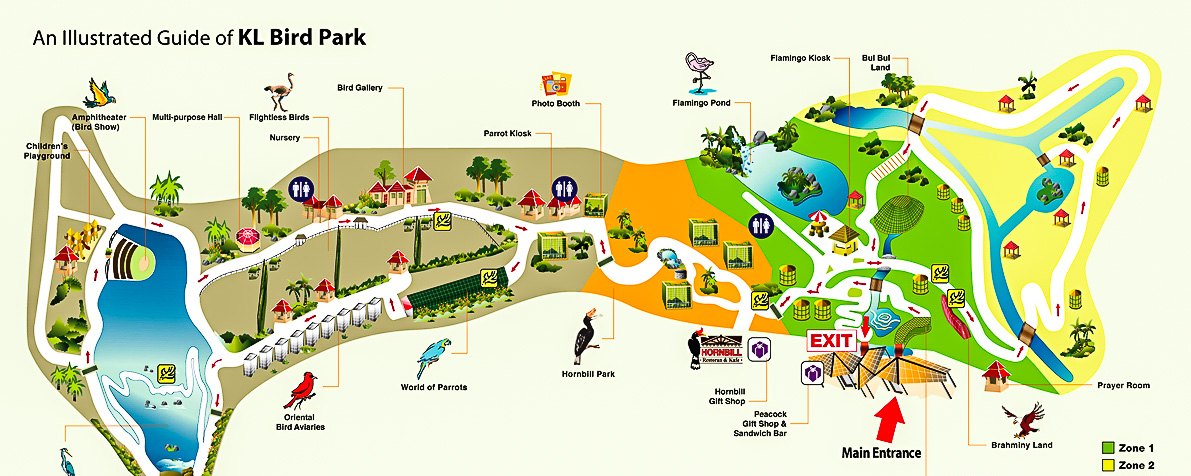
Its special feature is that most of the birds are kept without cages, unlike in rather dreary ordinary zoos: in zones 1–3 they fly freely, while in zone 4 they sit in individual cages and small aviaries. The park’s entire huge area is covered with netting to keep the birds inside.
It is best to come to the Bird Park in the morning, so that you have time to see everything, including the bird shows.
In short, as of October 2026. The park is open daily from 9:00 to 17:30. A ticket for a foreign visitor costs 90 ringgit (children aged 3–11, 70 ringgit); on the park’s website it is 10% cheaper if you buy at least a day in advance. The address is 920 Jalan Cenderawasih, Perdana Gardens. The easiest ways to get there are the Hop-On Hop-Off tourist bus (stop no. 22, “Bird Park”), a taxi, or on foot from the KTM Komuter Kuala Lumpur and MRT Muzium Negara stations — both about 600 m away as the crow flies. More details in sections 2 and 3 below.
1. A walk around the park
So, tickets bought, we entered the park through the souvenir shop (the exit is through the shop too, by the way — a clever marketing trick).
The park entrance:

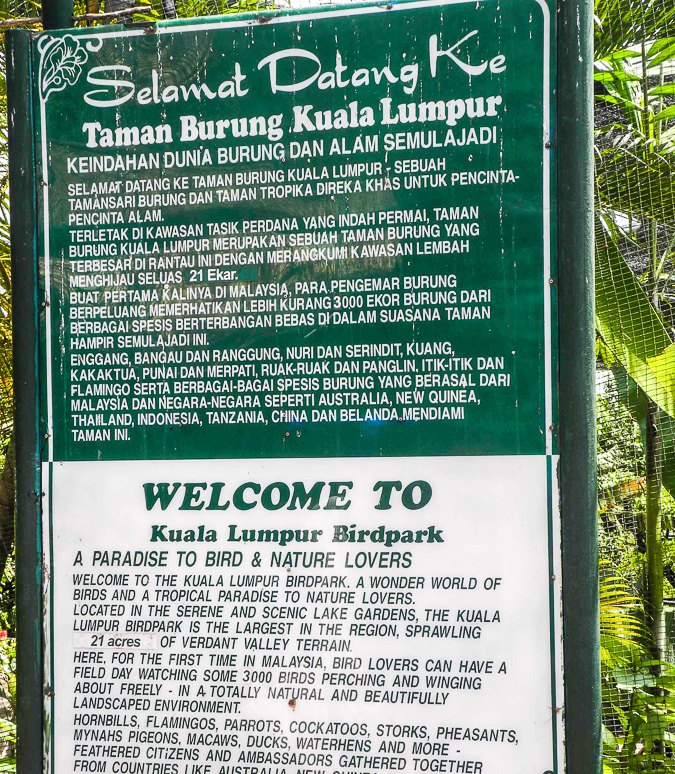
A board with general information:
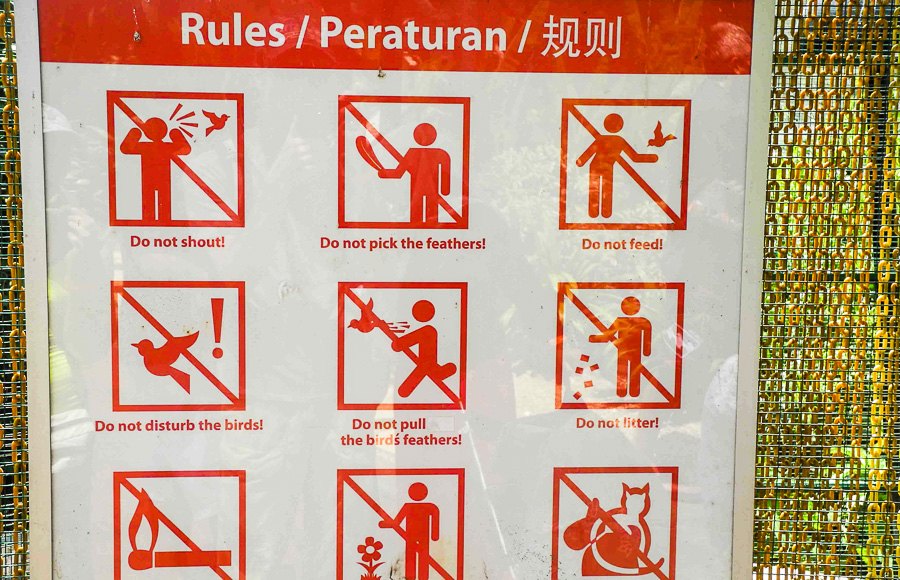
Bird park rules:
When you buy your ticket, you get a small brochure with a map.
KL Bird Park map:
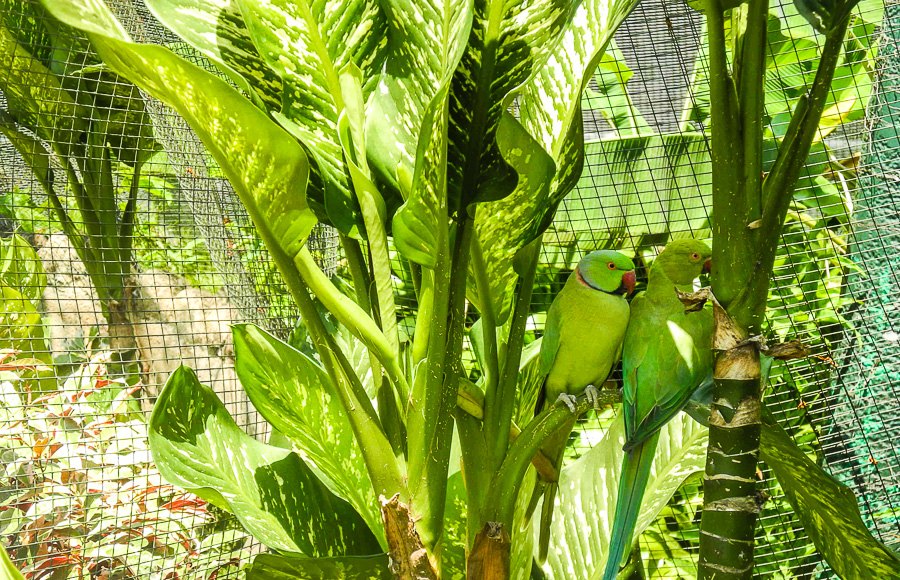
As soon as we entered the park, we immediately saw these cute little green parrots:
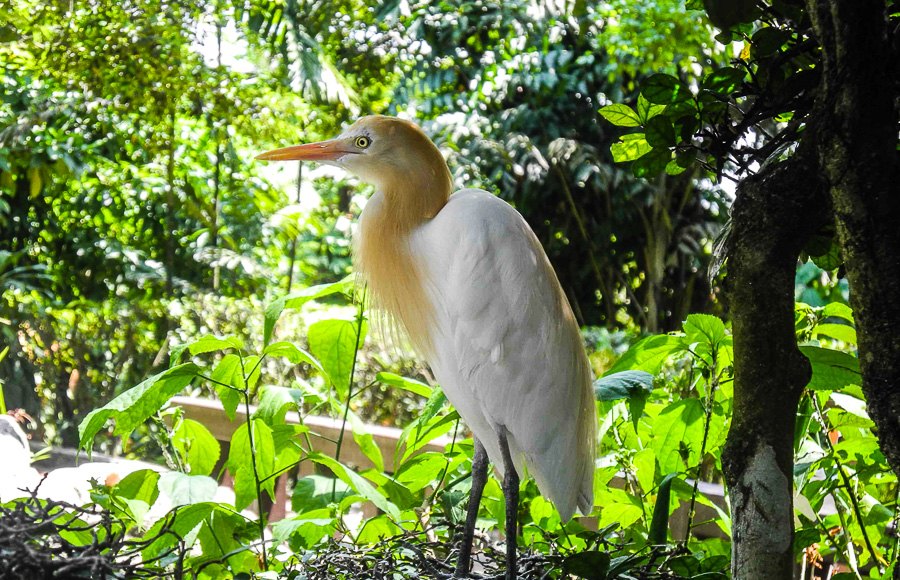
It is wonderful and amazing how close the birds are — they are not afraid of people at all. You can’t touch them, of course, but you can watch them going about their lives and take photos:
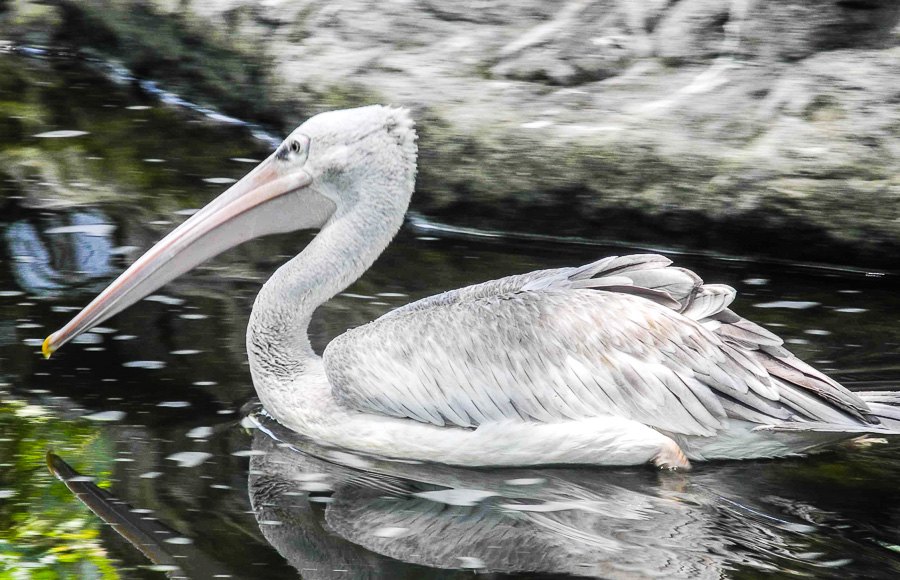
The pelican turns out to be huge, calm and graceful:
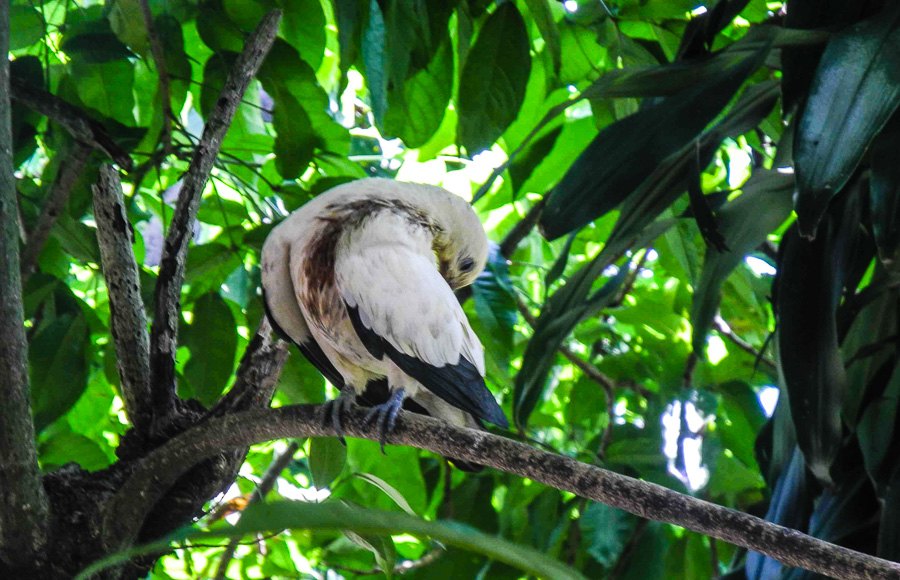
Next we reached the realm of pigeons — the bicoloured fruit dove, for example, looks like this:
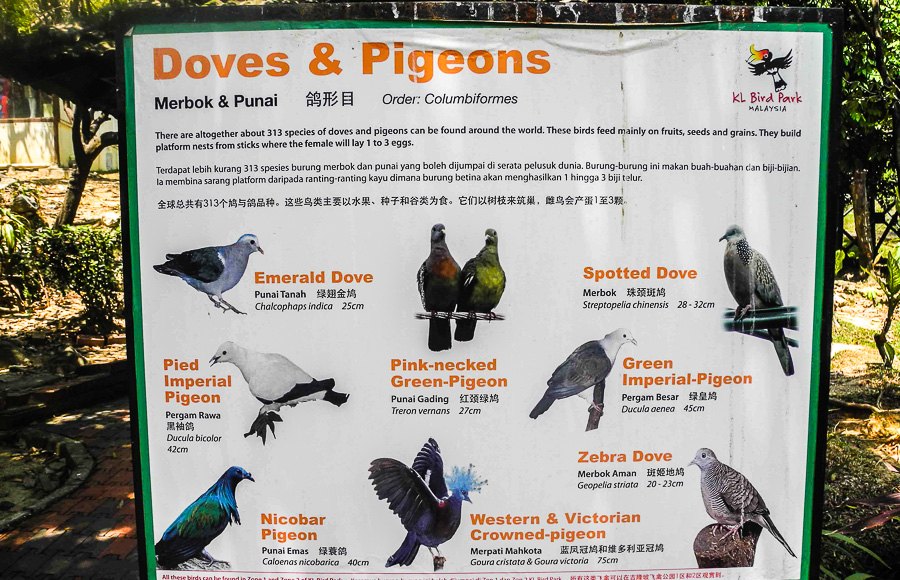
Every so often you come across signs with the birds’ names — all in English:
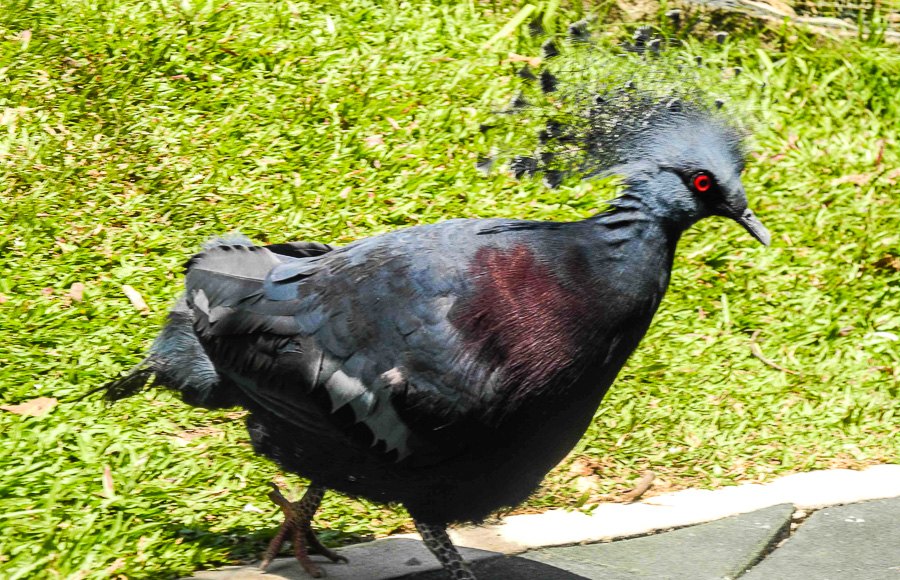
Who knew pigeons could look like this:
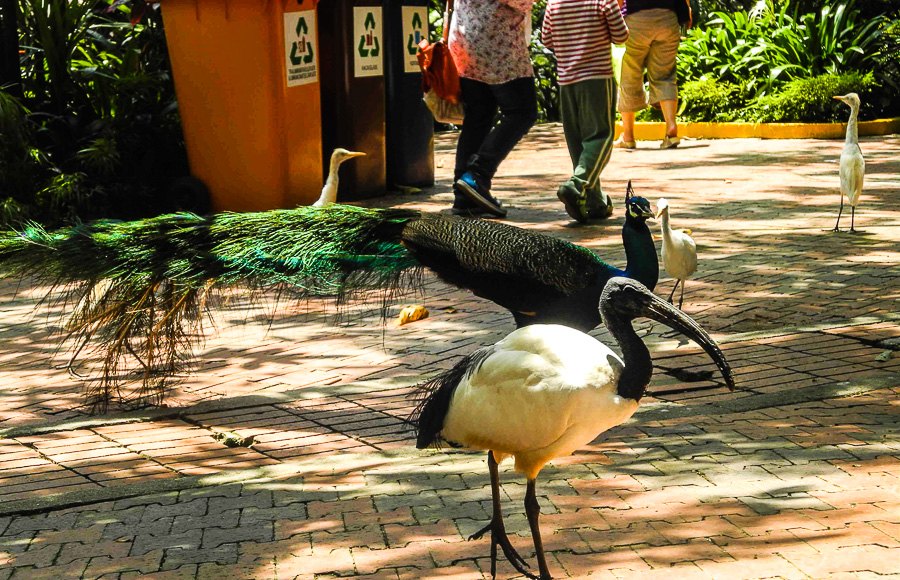
Birds stroll among the visitors, completely unafraid:
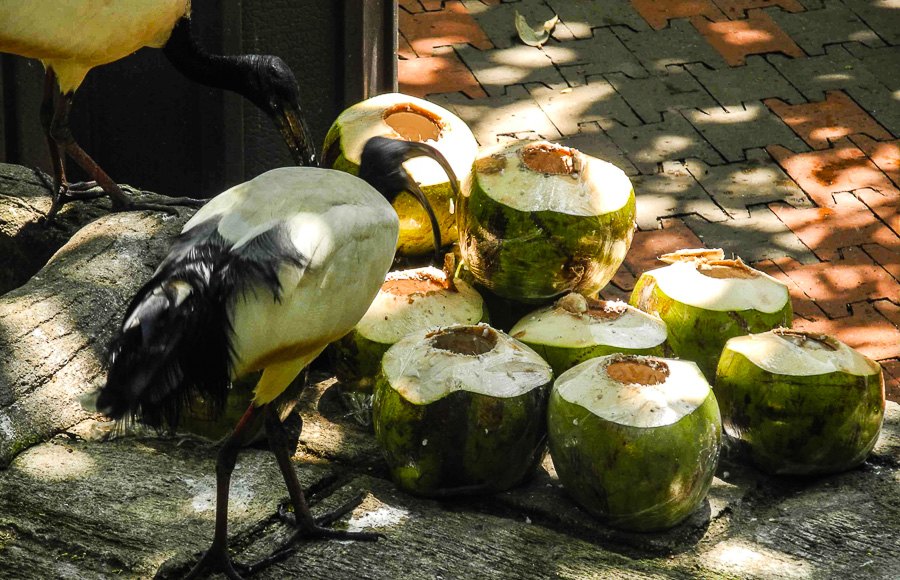
There is a café in the park where you can buy, say, a coconut. The leftovers get eaten by the birds:
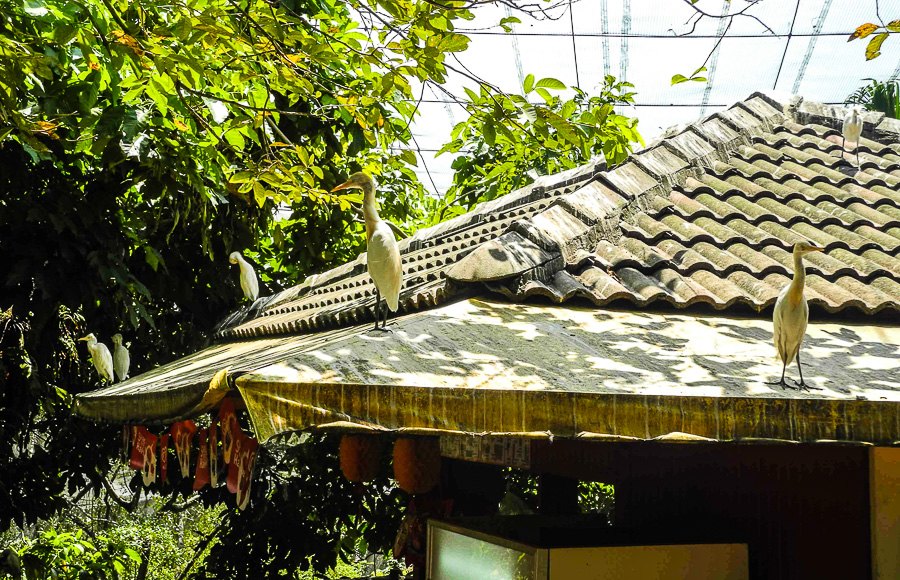
The birds took a liking to the café roof:
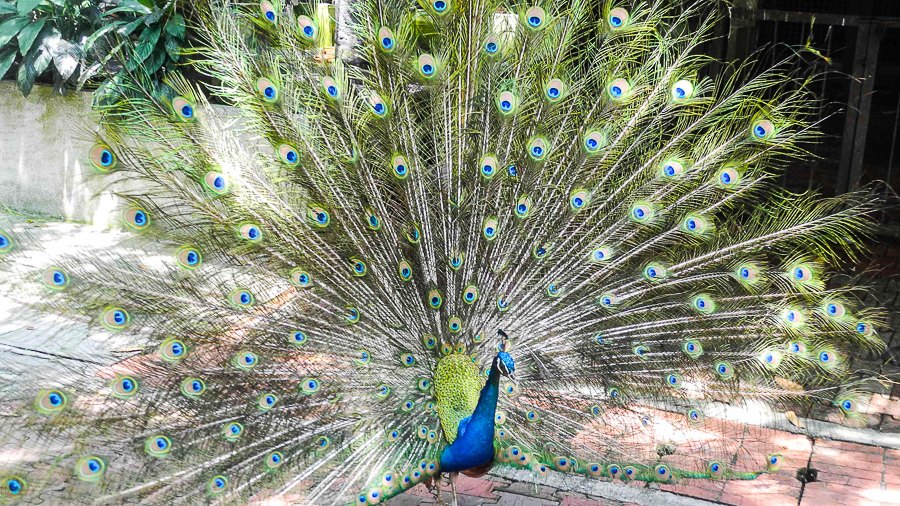
The peacocks are simply magnificent, especially when they fan out their tails, shimmering in every colour of the rainbow:
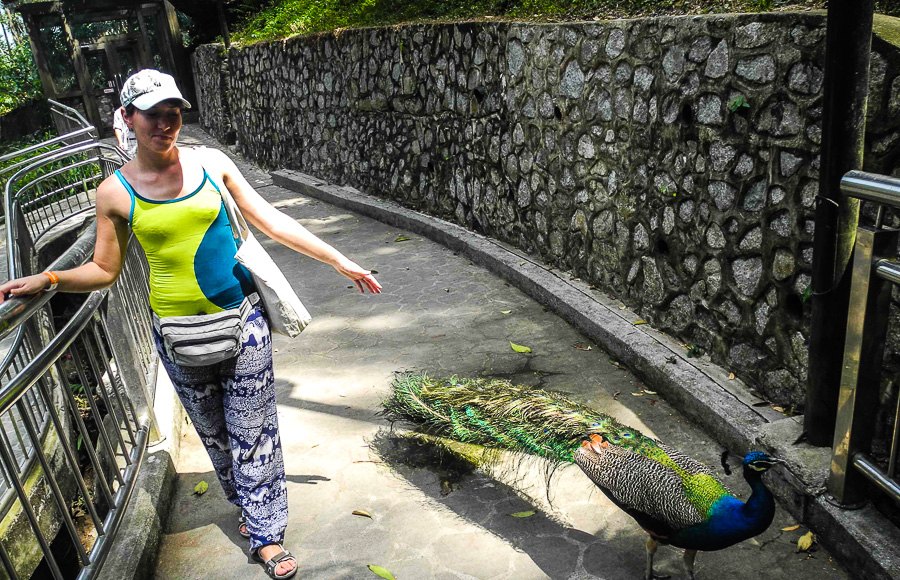
Next to a bird of paradise (oops, I seem to have dressed rather similarly — honestly, not on purpose!):
Interestingly, peacocks only fan out their tails near females, to attract them, shaking them comically as they do — we even recorded a video, see the end of the post.
The owls are kept in cages, presumably because they are predators.
I used to think that owls slept during the day and could only see in the dark. But this owl isn’t dozing:
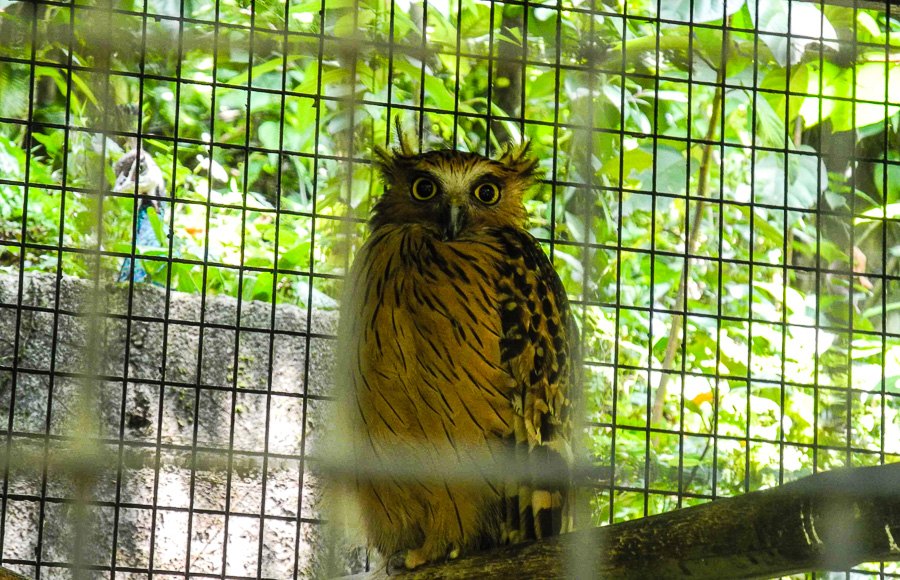
It turns out that owls see perfectly well in daylight; they simply hunt more effectively at night because their prey sees much worse in the dark. An owl cannot move its eyes, but its neck is extremely flexible — it can turn through as much as 270 degrees!
And what look like ears on an owl’s head are nothing of the kind! They are simply tufts of feathers, for camouflage. An owl’s real ears differ not only in size but also in shape, and they are positioned in different places on the head. The right ear sits lower and points upwards, so the owl can hear sounds from above. The left ear sits higher and points downwards, to pick up sounds coming from below. What an interesting bird!
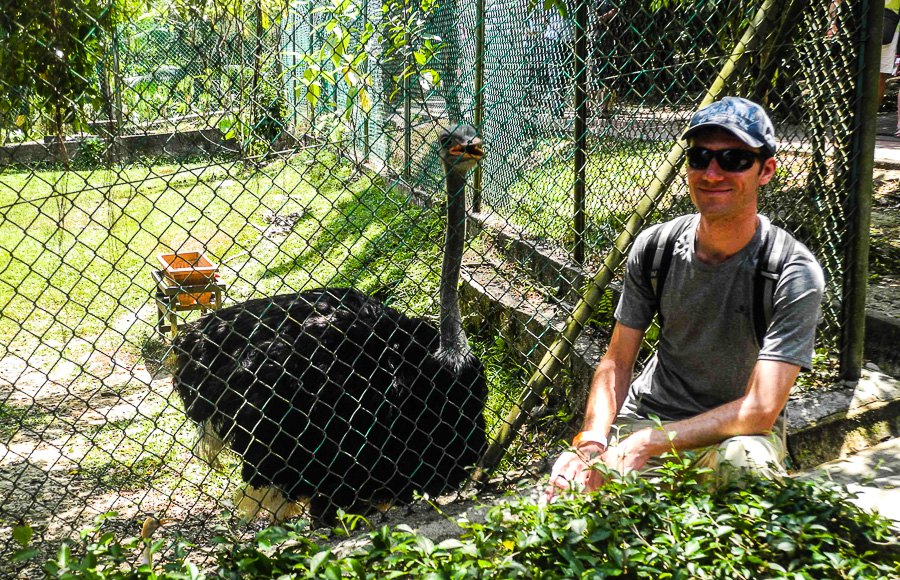
The ostriches are in enclosures too, though fairly spacious ones where they can run around to their heart’s content. One of the ostriches came over to have its photo taken:
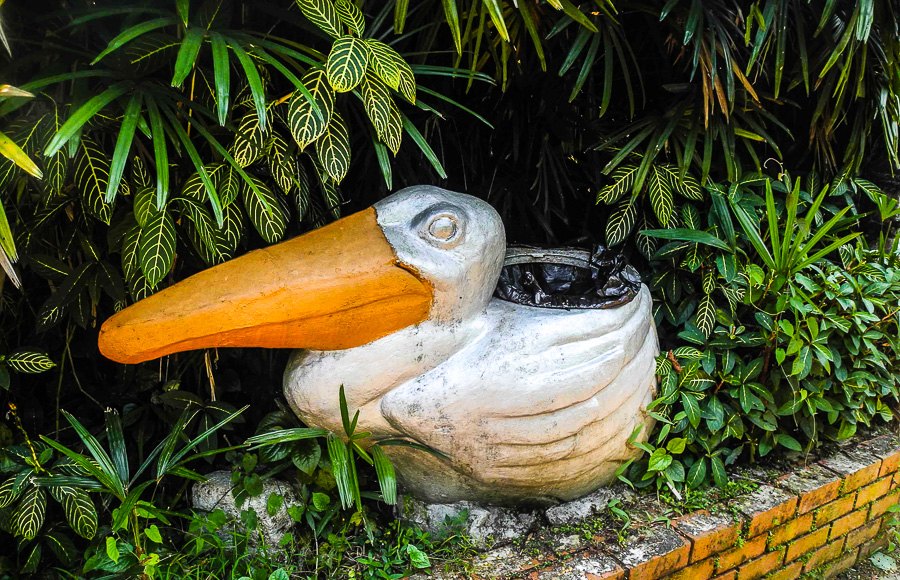
Even the bins are themed:
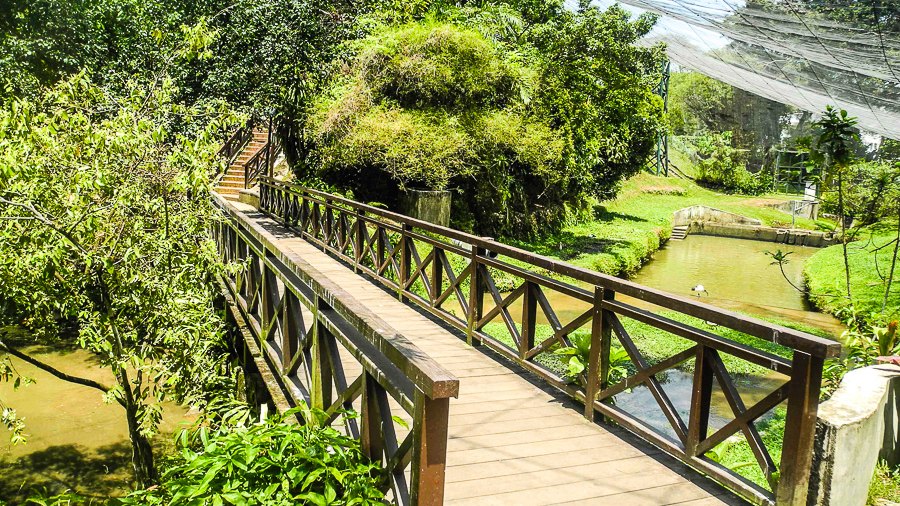
Across this little bridge you reach the part of the park where the waterfowl live:
Storks, which feed on fish (we filmed that too — see the end of the post):
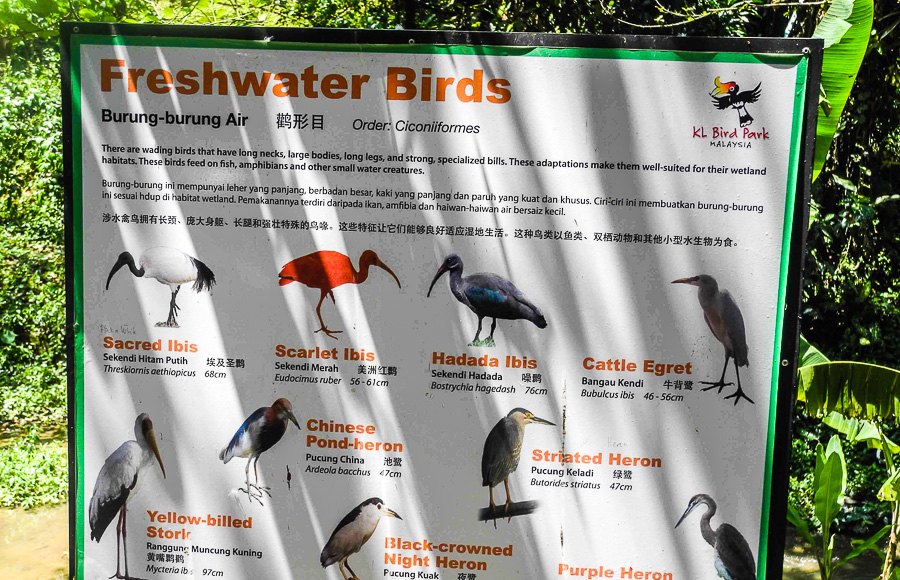
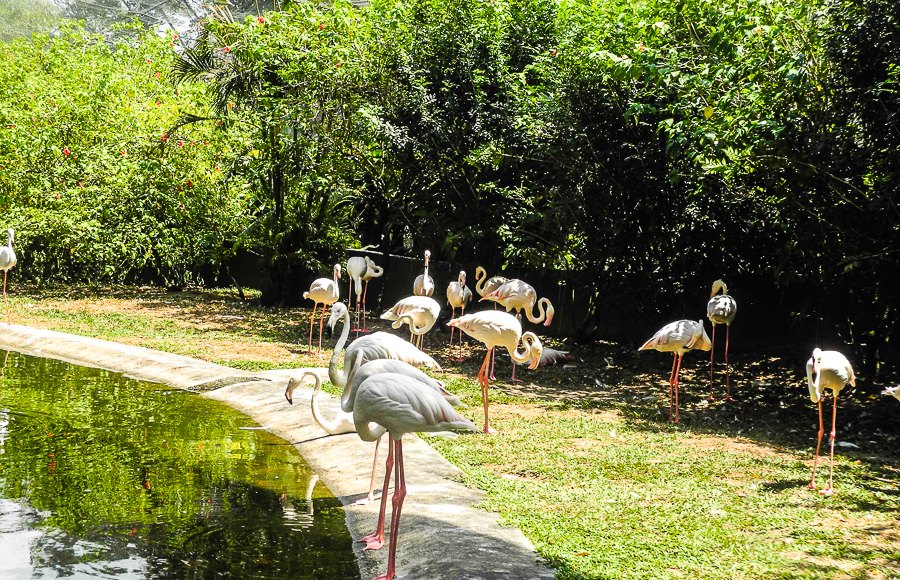
We met pink flamingos — so elegant:
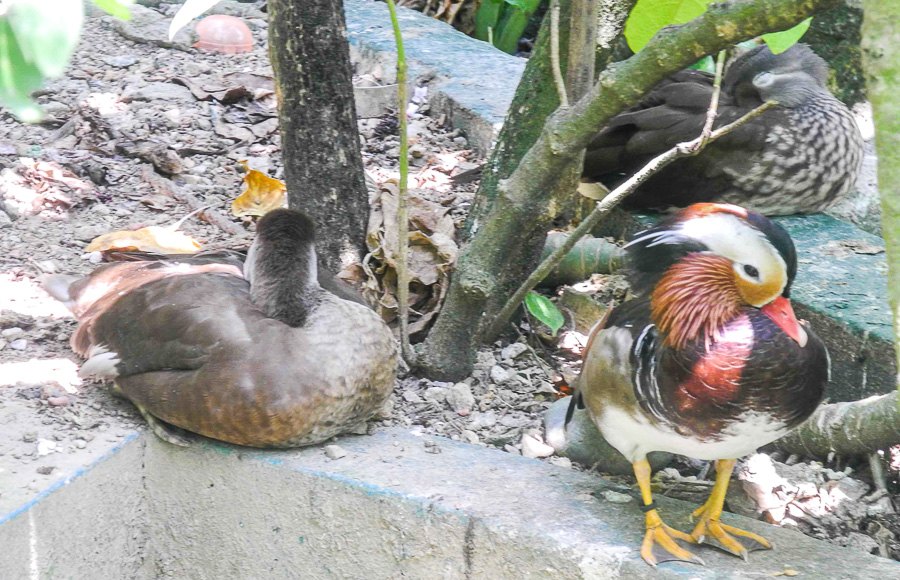
Pretty mandarin ducks:
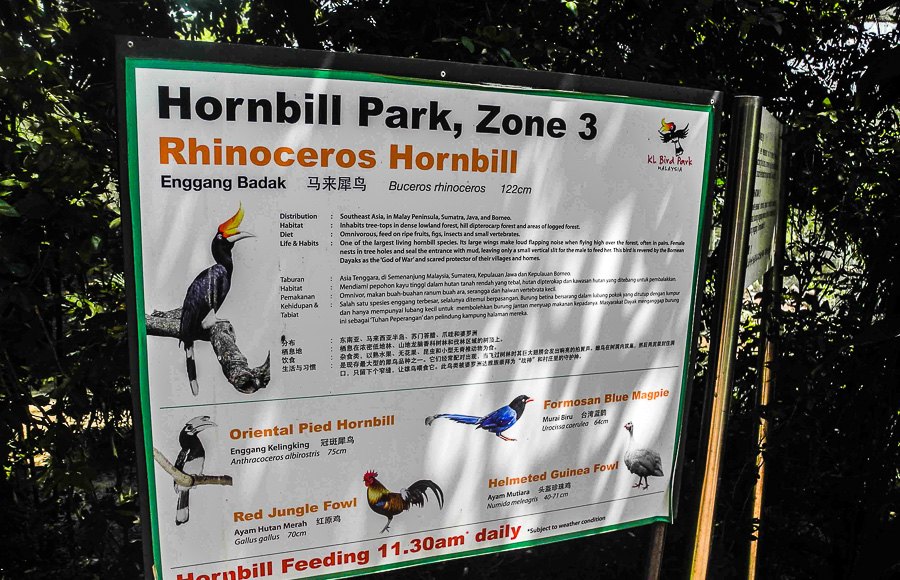
In zone 3, next to the hornbills, there are also some roosters:
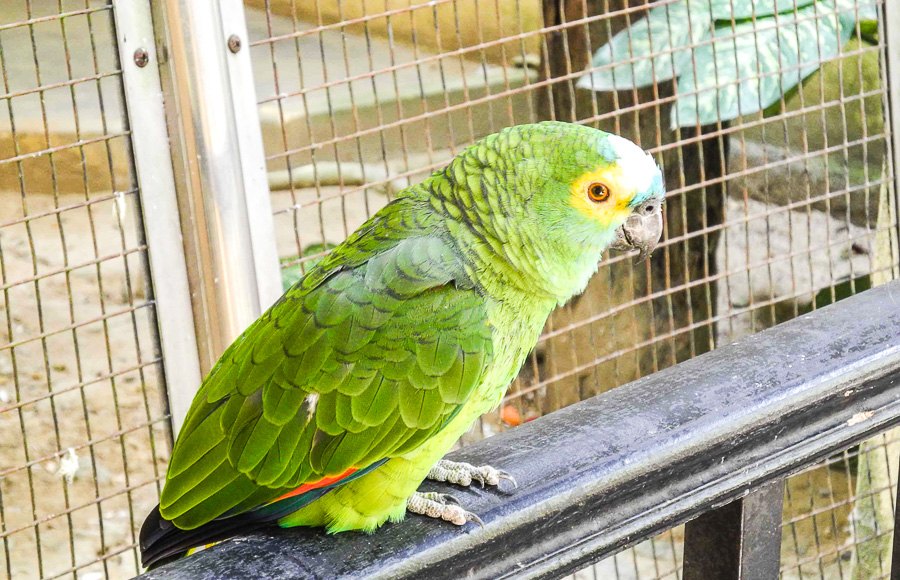
A separate zone is devoted to parrots. Most of them are in cages, but some do live outside — like this one:
Incredibly bright — literally every colour of the rainbow:
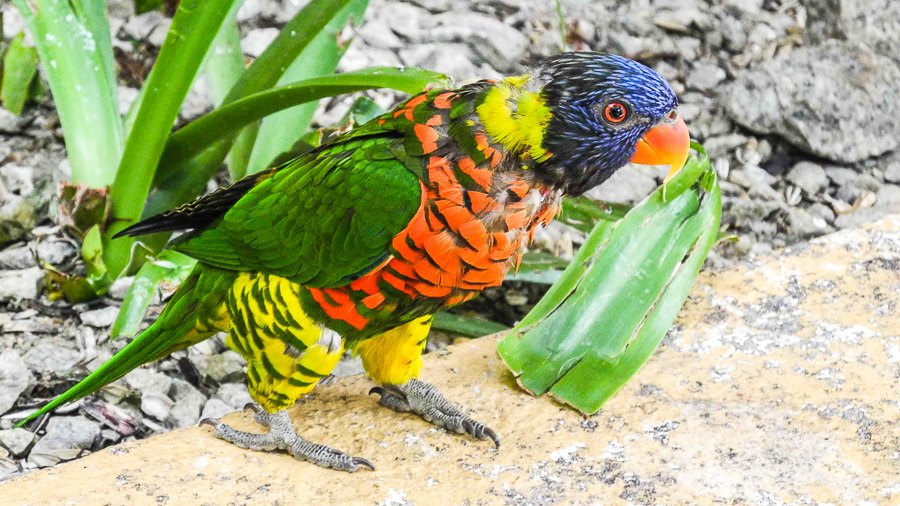
It sat within arm’s reach of us and, for some reason, kept squawking:
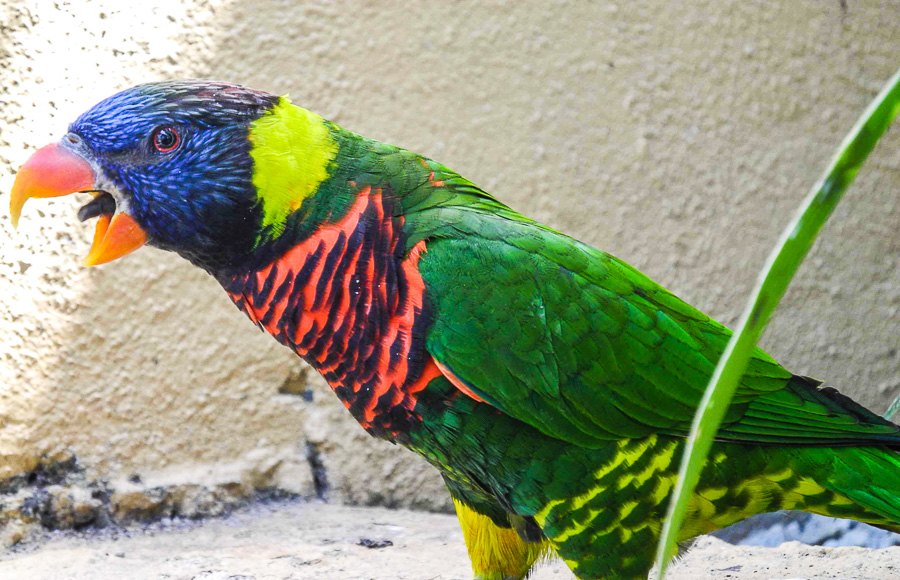
Parrots really are very noisy birds — maybe that’s why they’re kept apart from the others, so they don’t pester them?
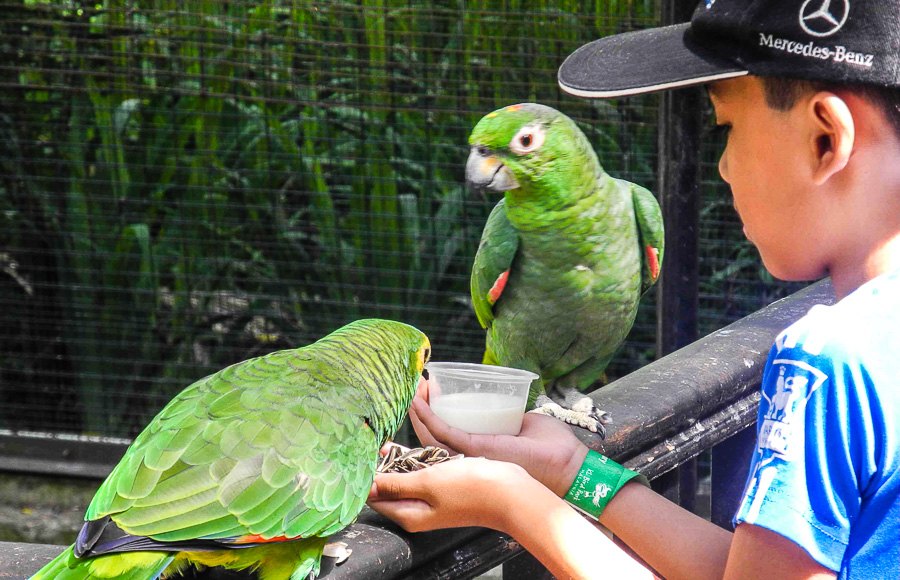
You can feed the parrots by hand with special feed:
After we had walked the whole park, it was just about time for the next bird show, so we decided to see what it was like. The whole show is in English and easy to follow. It lasted about 30 minutes, and we recorded a video, so you can watch it too:
The bird show now runs twice a day, at 12:30 and 15:30, with bird feeding sessions at various spots in between — see the schedule in section 2.
2. General information about KL Bird Park
The park’s official website: https://www.klbirdpark.com/
Ticket prices (from the park’s website, October 2026):
Adult — 90 ringgit at the ticket office or 81 ringgit online on the park’s website (10% discount; the e-ticket must be bought at least 24 hours in advance and is non-refundable)
Child (3–11 years) — 70 ringgit at the ticket office or 63 ringgit online
Concession tickets at 50 and 25 ringgit are only for Malaysian citizens and holders of Malaysian student and work visas. Back in 2014, an adult ticket cost 48 ringgit and a child ticket 38.
Opening hours: daily from 9:00 to 17:30, including public holidays (in 2014 the park stayed open until 18:00)
Daily activities schedule (from the park’s website, October 2026; may change in bad weather):
10:30 Feeding the free-flying birds
11:30 Hornbill feeding
12:30 and 15:30 Bird show (which we filmed on video) — in the amphitheatre in zone 4, free for all visitors
14:30 Eagle feeding
10:00–17:00 Lory feeding (zone 4) and ostrich feeding (while the feed lasts); 9:30–17:30 photos with birds
In 2014 there was also a 16:00 feeding of the grey openbill stork; it no longer appears on the park’s schedule.
3. How to get to KL Bird Park
1. We actually walked, but that’s an option for those staying nearby who enjoy walking.
2. By city bus Rapid KL T851 from KL Sentral to the Taman Botani Perdana stop (about 13 minutes, then roughly 600 m as the crow flies to the entrance). However, it only runs on weekdays, every 30–70 minutes (Rapid KL schedule as of October 2026); the B115 route that served the park in 2014 no longer appears in the current schedule.
3. By the KL Hop-On Hop-Off tourist bus: stop no. 22, “Bird Park”, on the Garden Route (buses run from 9:00 to 18:00 every 20–30 minutes, according to the operator’s website as of October 2026).
4. By KTM Komuter train (the Batu Caves–Pulau Sebang and Tanjung Malim–Pelabuhan Klang lines) to Kuala Lumpur station — that’s the old railway station, about 600 m away as the crow flies. The MRT Muzium Negara metro station (Kajang line) is roughly the same distance away.
5. You can always take a taxi.
4. Final impressions of KL Bird Park
We loved the park — it’s so great that almost all the birds simply fly around you. You feel as if you’re somewhere in the wild jungle, with the birds just living their lives while you quietly watch them. And the park really is very big, with plenty of interesting things to see.
If you have children, definitely drop into this wonderful park when you’re in Kuala Lumpur. There were lots of people with children, and the kids were simply delighted. The park has cafés, toilets and benches where you can sit, so if you get really tired there is somewhere to rest.
All in all, at the 2014 price the ticket was well worth it — it really is a great place!
Half a day is enough for the bird park.
5. Videos from the bird park
And finally, a few videos we shot at KL Bird Park.
The promised peacock video:
And another video, of the birds being fed fish: