Penang has plenty of sights not only in George Town but beyond it. Today I want to tell you how we visited the tropical fruit farm on Penang Island — that was in spring 2014.
In brief, as of October 2026. The farm (Penang Tropical Fruit Farm in Teluk Bahang) is operating: in early October 2026 it was posting news on its website and Facebook. It is open daily from 9:00, with last entry at 16:30. You cannot simply wander around the farm — visits are by guided tour only: at the prices in force since 8 August 2024, the tour costs foreigners 48 ringgit (children aged 5–12 pay 38), or 58 with a fruit plate and juice (children 48); under-4s go free. The farm has announced a price rise from 1 November 2026 but had not published the new prices as of 6 October 2026. Bus 501, which we took in 2014, no longer exists: you can get to Teluk Bahang on city bus 101, but the final stretch is only possible by Grab or taxi. Below is our 2014 account with notes on what has changed; for the island’s other places of interest, see our overview article about Penang.
When I was leafing through a Penang guidebook, I wanted to see an awful lot of places. But as it happened, Vladimir fell ill, and I didn’t much feel like going out and having fun on my own. So in the end very little time was left for sightseeing, and we had to choose what we most wanted to see. I had always wanted to see how tropical fruit grow. I had already managed to see some fruits growing wild during our travels around Asia, but I wanted the full picture — and besides, it is fascinating to see how these fruits are actually cultivated.
So when I learned that Penang has a whole farm you can visit to look around and also taste most of the fruits, I decided I simply had to go there.
1. Location
The tropical fruit farm is in the hills of Teluk Bahang, at 18th Mile Stone, Jalan Teluk Bahang, Teluk Bahang (coordinates from the farm’s website — 5.415081, 100.216906):
2. How to get there (our journey)
In 2014 there was no direct way to get to the farm from our guesthouse — you had to change buses. We could of course have taken a taxi, but as usual we used public transport. That is no longer possible: according to the Rapid Penang timetable for October 2026, no bus goes up to the farm, so by public transport you can only get as far as Teluk Bahang, and then continue by Grab or taxi (the farm itself advises the same).
At 10:00 we left our Crystal Guesthouse; the bus stop, as I mentioned, is right opposite the hotel. Seven minutes later we were already on the bus, route 101, to the Teluk Bahang stop. This route still runs: from Weld Quay via Komtar to the Hub Teluk Bahang terminus, and as of October 2026 it operates from 5:30 to 23:30; from Komtar the scheduled journey takes from 50 minutes to an hour and a half, most often about 1 hour 15 minutes.
The fare in 2014 was 3.40 ringgit per person. As of October 2026, the route from Komtar to Teluk Bahang is about 25 km, and for 21–28 km Rapid Penang charges the same 3.40 ringgit. If you plan to get around the island a lot, a Rapid Passport is available for tourists — in 2026 it costs 30 ringgit for 7 days of unlimited rides.
The bus goes via Komtar, where most people get off, but we needed to go further.
Part of the way runs along the coast, so the ride is anything but boring — you can admire the beautiful scenery. It is surprising that a city bus covers such distances; it turns out the whole island is ringed by public transport routes, and you can comfortably get anywhere on your own.
At 11:04 we reached the terminus, after which the bus turns around and heads back.
You can recognise the stop by the blue Escape sign:
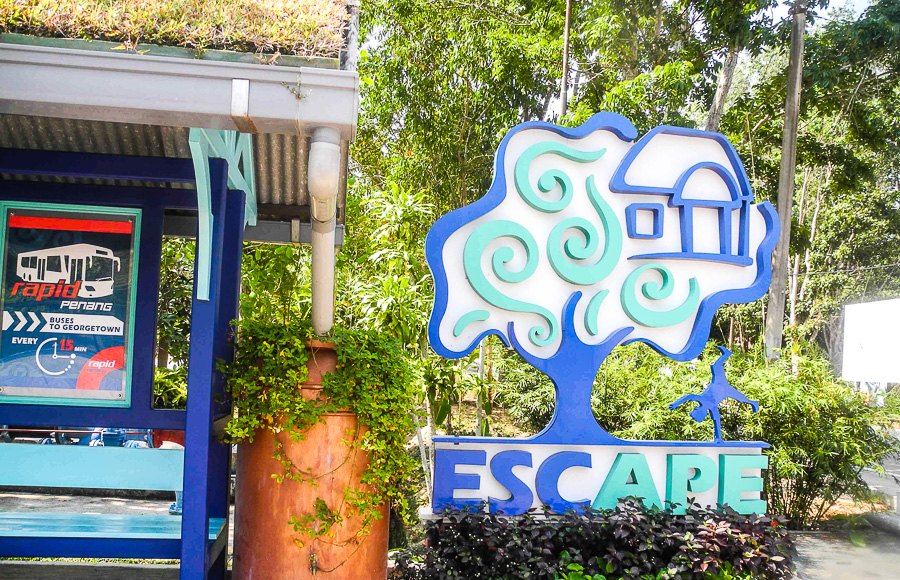
The stop:
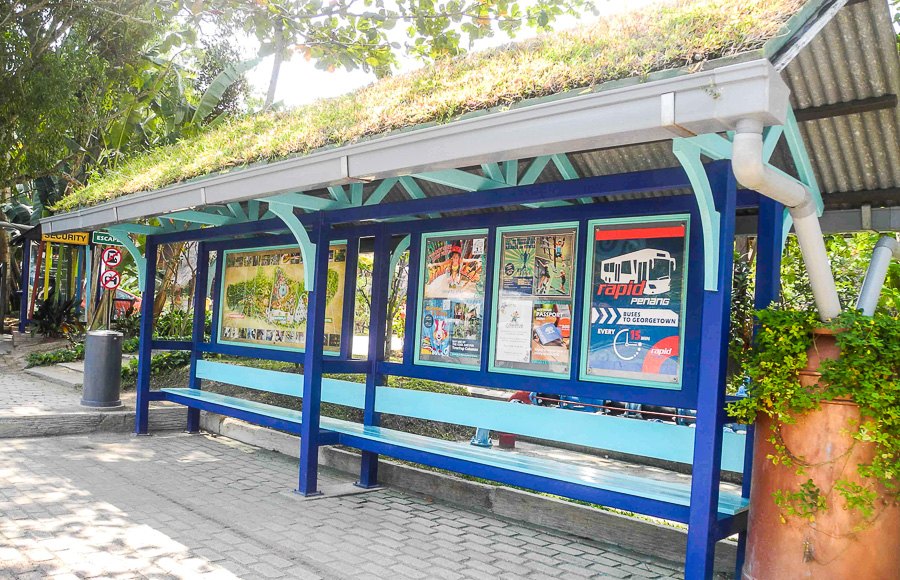
In 2014 we had to walk from here to the next stop and wait for the bus that went all the way to the farm. That bus no longer exists, so from the Teluk Bahang terminus call a Grab or take a taxi: the farm is almost 5 km away as the crow flies, and the road climbs uphill.
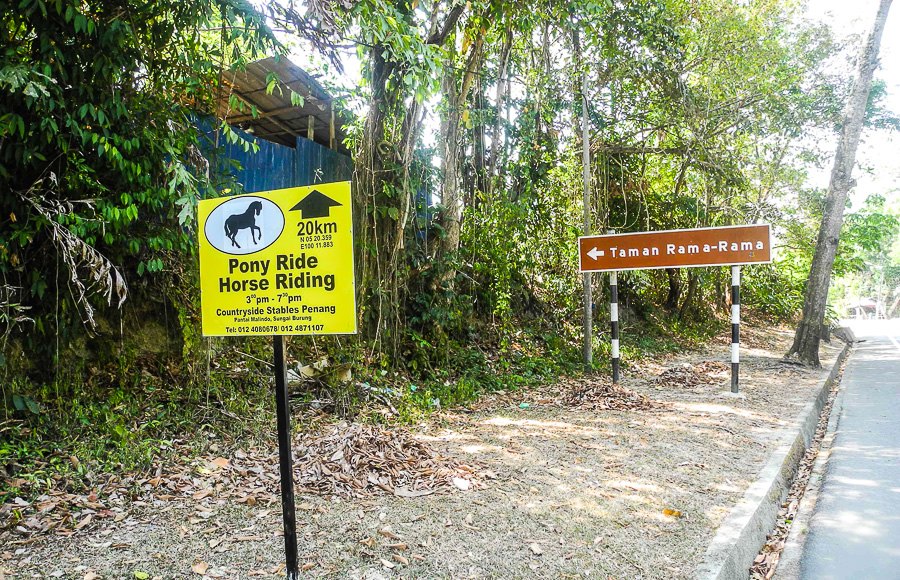
We walked past signs like these:
3. The stop by the butterfly farm
The stop is not far from the Tropical Butterfly Farm:
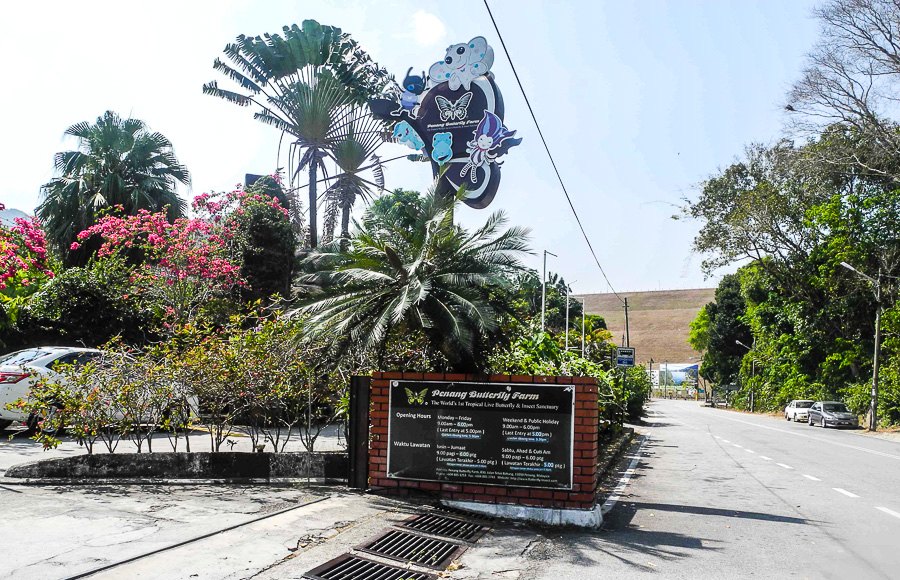
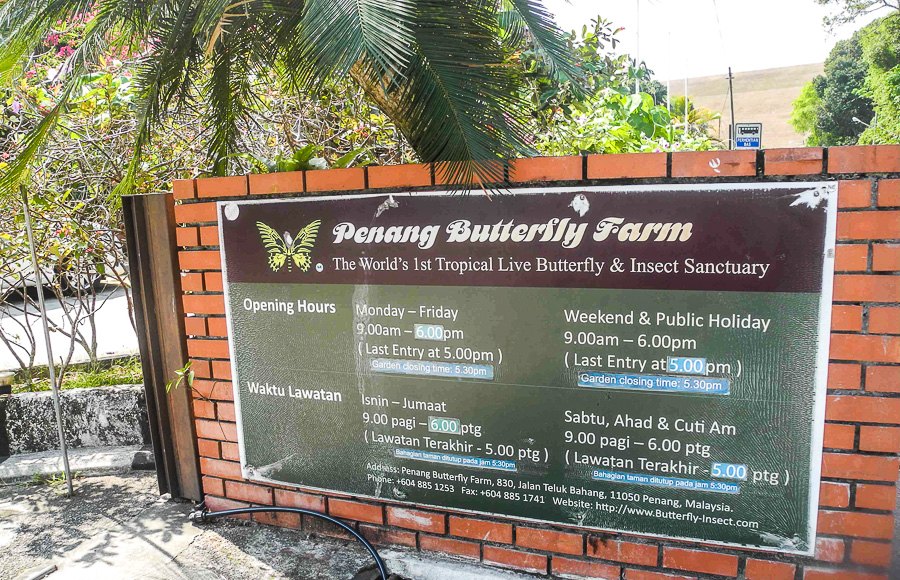
Opening hours of the tropical butterfly farm in Penang in 2014. It is now called Entopia: as of October 2026 it is open daily from 9:00 to 18:00, last entry at 17:00; tickets for foreigners cost 75 ringgit, and 55 ringgit for children aged 4–12 and seniors aged 60 and over:
We didn’t know how long we would have to wait; taxi drivers kept coming up and offering their services, but we patiently waited for the bus. Across the road from the butterfly farm there was a stop with a bench, so we sat there. Frankly, we already felt like taking a taxi, because it was very hot and waiting in that heat was unbearable. With a small child you should definitely take a taxi.
We thought about going to the butterfly farm, but we didn’t know exactly when the bus would come, so we just waited. For the trip, be sure to take plenty of water and something to snack on.
In the end the bus only arrived 2 (!) hours later. So we could easily have fitted in the butterfly farm. If you want to combine it with the fruit farm, an entrance ticket to Entopia can be bought in advance on Tiqets.
It was route no. 501 — back then it was the only one running there. In the Rapid Penang timetable for October 2026 there is no longer a route 501: the nearest stops to the farm are on route 404 in Sungai Pinang, almost 2 km away as the crow flies, while the 101 and 102 stops by Escape are about 4 km away.
The fare in 2014 was 2 ringgit per person. Note that Penang has a particular payment system. You pay on boarding, simply dropping the money into a special box. You cannot get any change out of it — even in 2026 Rapid Penang warns that the box gives no change, so have the exact amount ready in advance. A ticket comes out of the validator — keep it until the end of the ride.
At 13:10 we boarded the bus and rode to the farm. It was a short ride — by 13:23 we were already there.
4. A photo tour of the farm
4.1. The road from the bus stop to the entrance
The bus stopped opposite the gates; from there you have to walk up the slope:
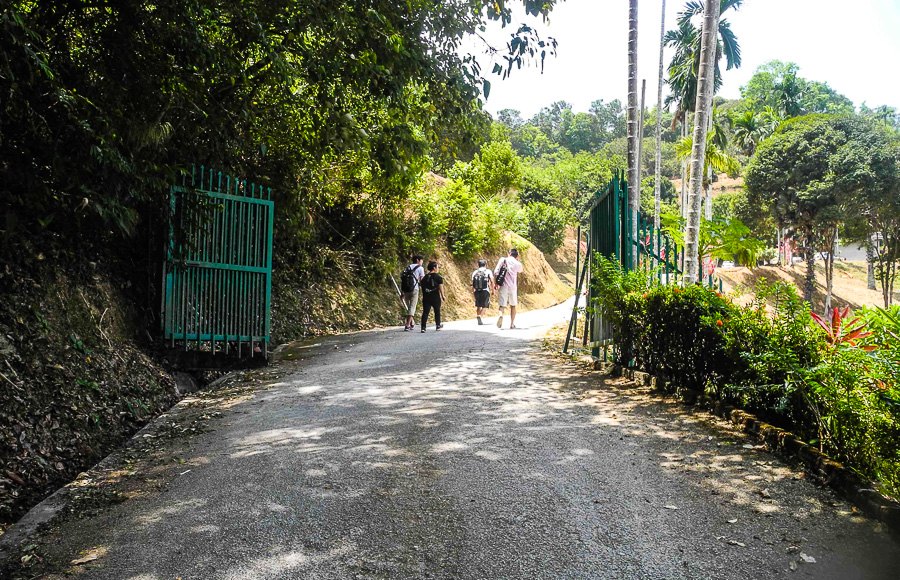
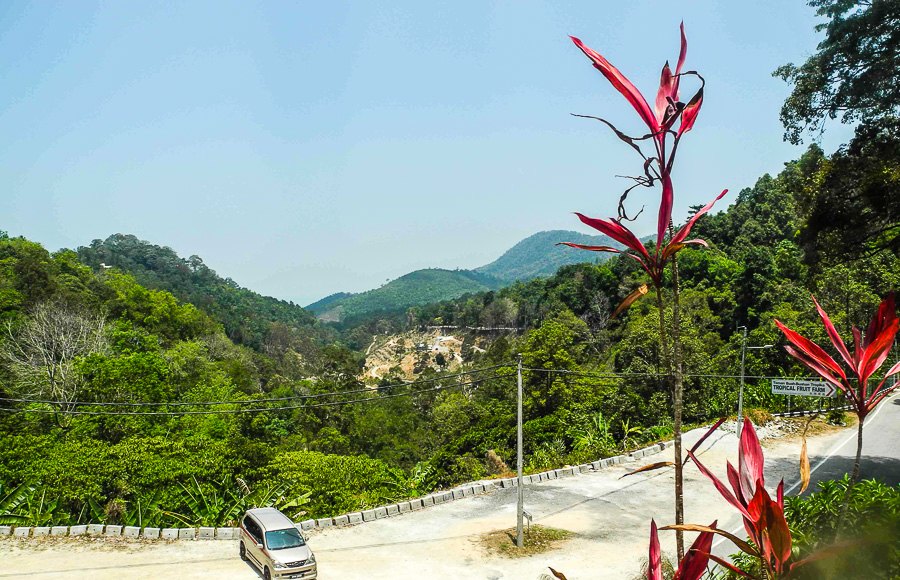
The view from above:
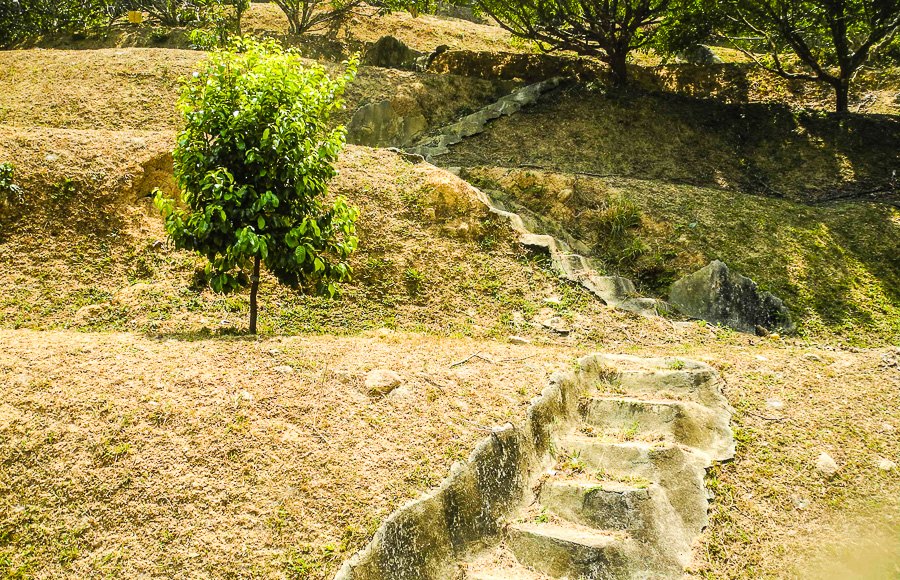
The farm is set in hilly terrain, so to reach some of the plants you have to climb steps like these:
We climbed the hill, where there is a small building selling tickets for the farm tour. You cannot just walk around the farm on your own — you have to wait for a tour.
4.2. The ticket office
Tickets are sold to the left of the fruit:
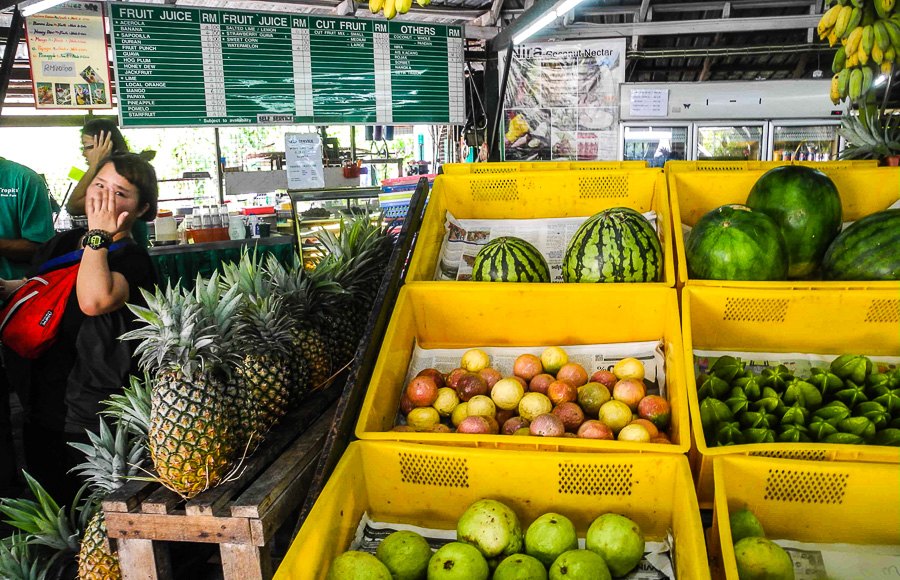
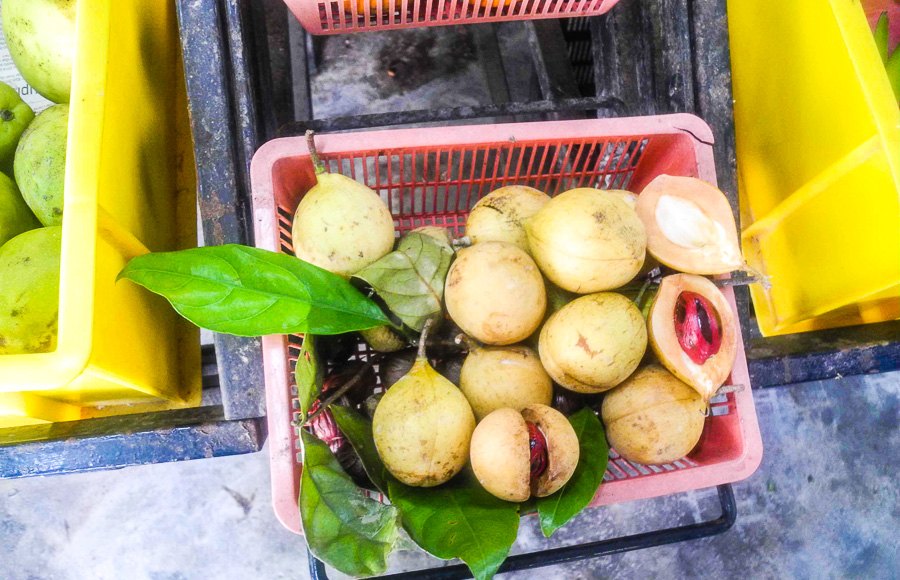
All the fruits are for sale, and they also sell freshly squeezed juices (from any fruit) and plates of cut fruit. In 2014 there was no point buying them: the fruit tasting was included in the ticket price. Nowadays the fruit plate and juice come only with the more expensive ticket, while the standard tour includes a tasting of fruit enzymes and honey.
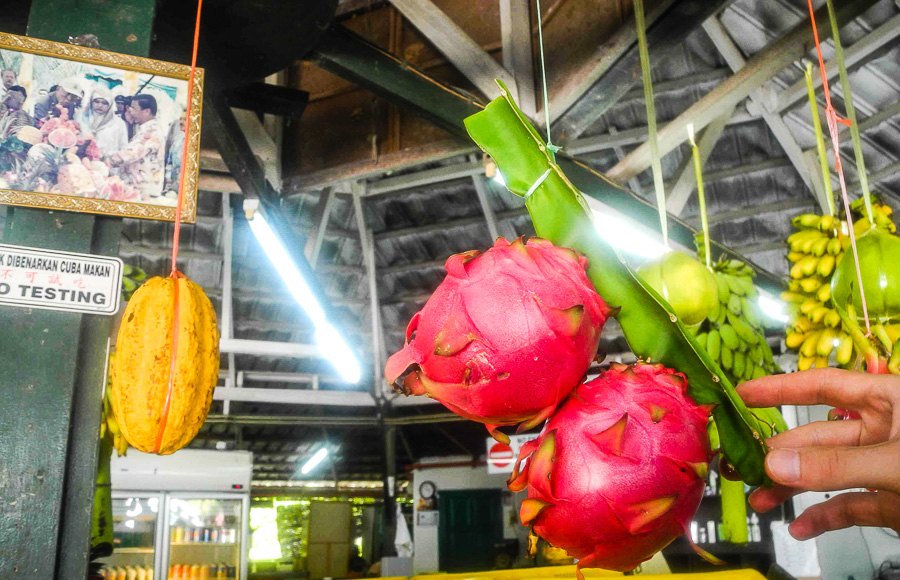
And here are dragon fruit, still on the branch:
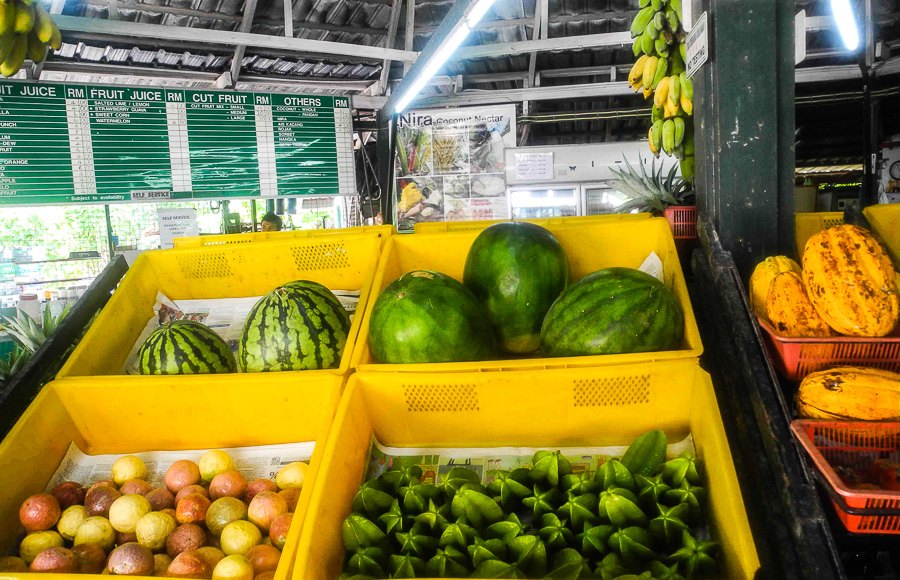
Watermelons (yellow-fleshed on the left, red on the right), cocoa beans, starfruit (bottom right — a star shape when cut):
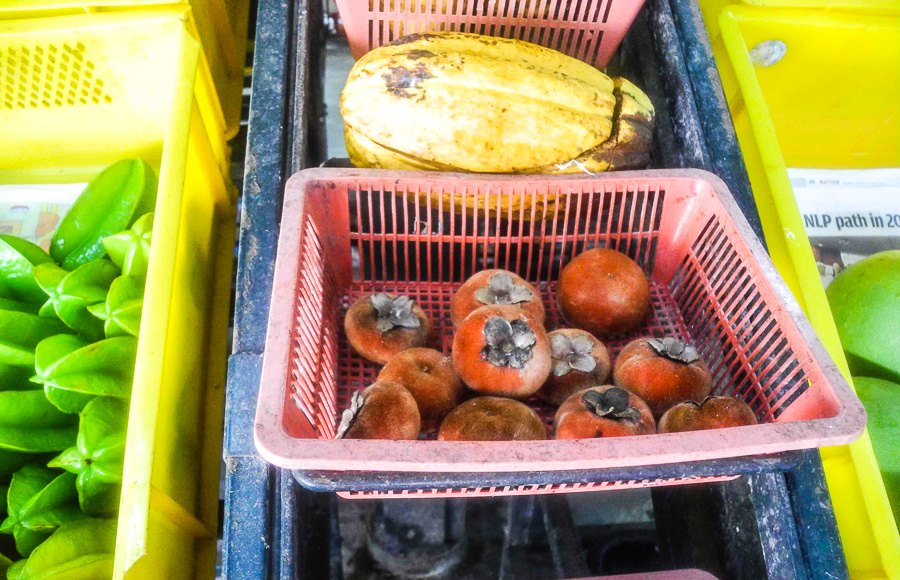
A strange velvety persimmon:
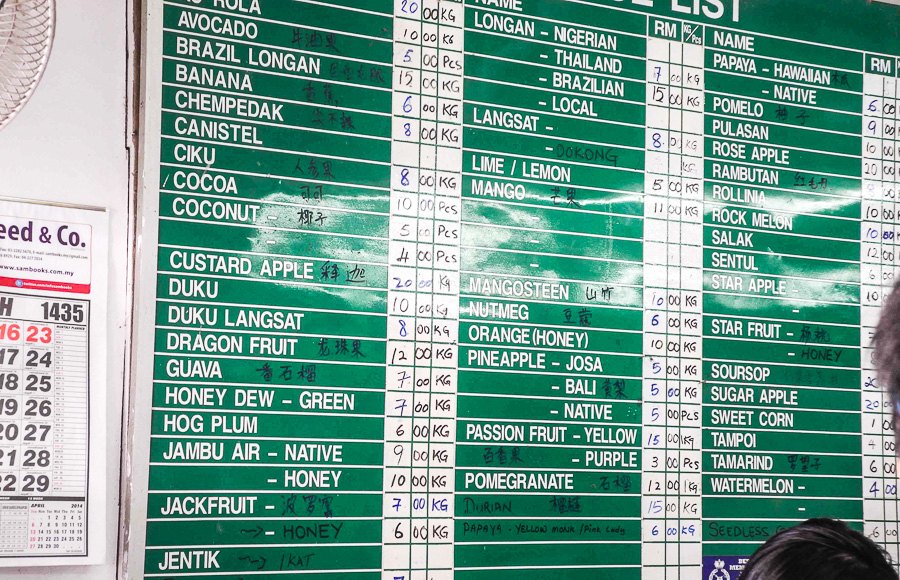
Prices for all the fruits in 2014 (price per kg in ringgit) — not cheap, though that is true of the rest of Penang too:
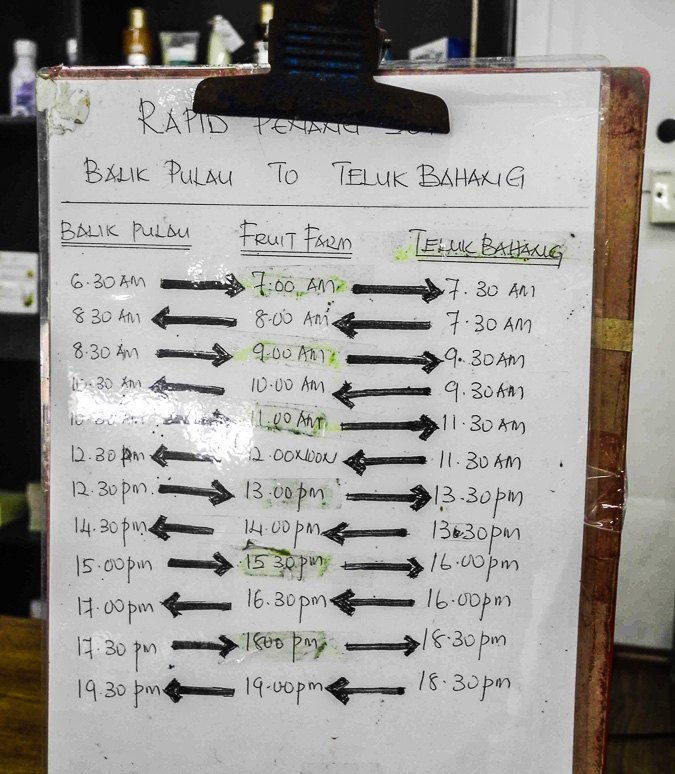
The bus timetable to the farm and back to the stop in 2014 (this route no longer exists):
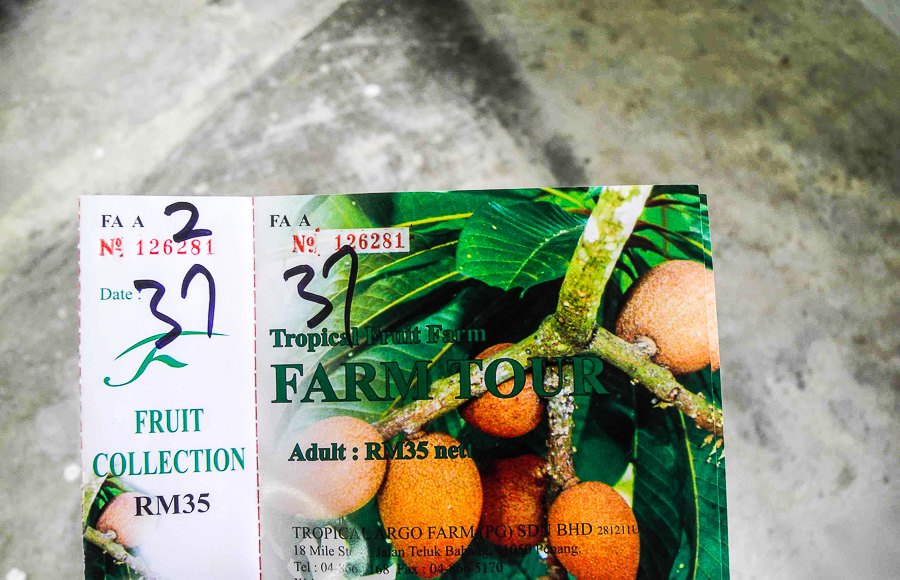
And here is our 2014 ticket — 35 ringgit per person. Now, at the farm’s prices in force since 8 August 2024, the tour for foreigners costs 48 ringgit, or 58 with a fruit plate and juice; from 1 November 2026 the farm promises a price rise. Tickets are sold at the on-site box office, and the farm’s website has an online ticket desk:
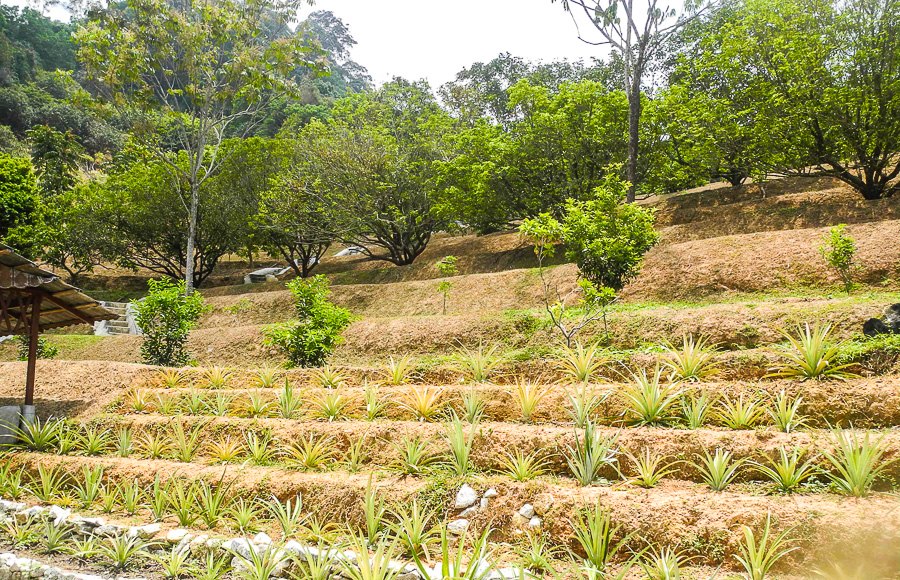
Views of the farm:
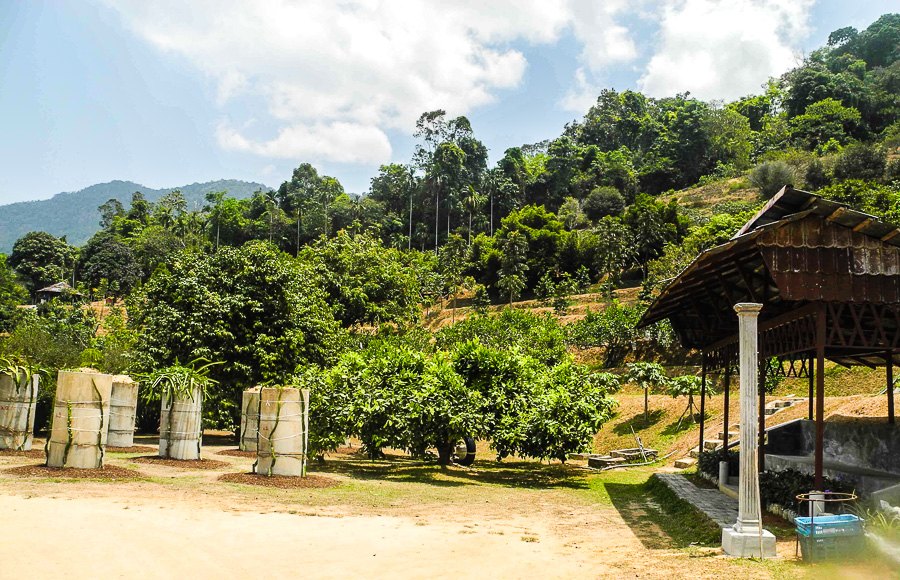
4.3. The tour of the farm
In 2014 the tour ran every 2 hours, so even if we had arrived earlier by taxi, we would still have had to wait for a new group — the bus was in fact timed to arrive at the farm for the start of a tour. Now, according to the farm, tours run all day from 9:00 to 17:00 (last entry at 16:30): the guided walk lasts about 30 minutes, and the whole programme about an hour. On weekdays no booking is needed; for weekends the farm advises booking in advance.
The tour started at 13:30. We were put into a small minivan and driven to the starting point of the tour:

There were about 10 of us in all, and quite an international crowd — a local guide, the two of us, a group of Chinese (students, apparently) and a couple from Iraq (!). When I heard they were from Iraq, I tensed up a little — some inner prejudice must have kicked in. That said, the girl looked European, and you would never guess from them that they might be, say, Muslims shut off from the world. Sociable, cheerful people. It is amazing how our ideas about people of other cultures can differ from reality. Travelling is wonderful when you get to see the world from a different side.
It is really great that the tour is guided — he told us so many interesting things about the different fruits, what each one is good for, how it is grown, and the history behind some of the names. Anyway, we had an excellent guide, joking and fooling around throughout the tour.
Naturally, the whole tour was in English, and there are no audioguides (nowadays, on request and if a guide is free, tours are also given in Chinese, Cantonese, Malay, Arabic and Indonesian), but our guide spoke quite clearly — with our intermediate level we understood about 80 per cent of what he said.
So, the tour begins. I didn’t memorise all the names, but I do remember a few things, and those are what I’ll tell you about.
This is how avocado grows:
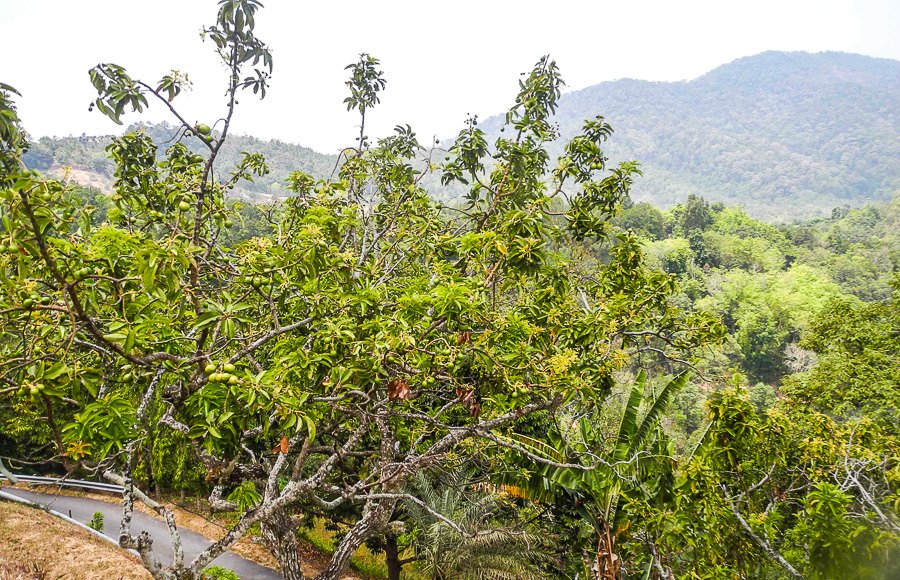
Yes, it is a fruit, not a vegetable, despite its neutral taste. In Malaysia avocado is not very popular, and therefore expensive. At the same time, it is a very healthy fruit, containing unsaturated fatty acids and essential amino acids. It is very good for getting excess weight back to normal. Though you had better not eat too much of it — it is a very fatty fruit.
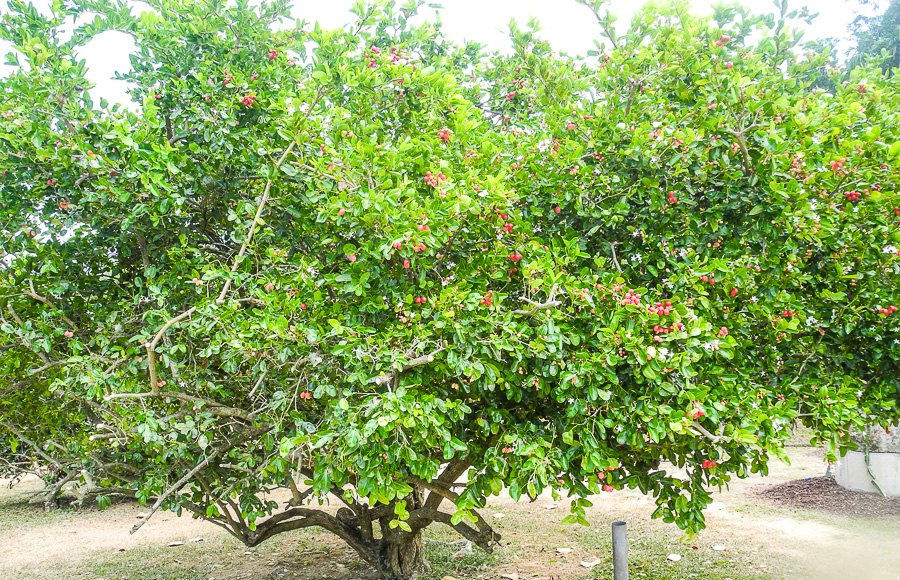
Next, some unknown berries (I didn’t memorise the name, but I can say for sure that I have never seen them on sale in any Asian country):
And this is how passion fruit grows:
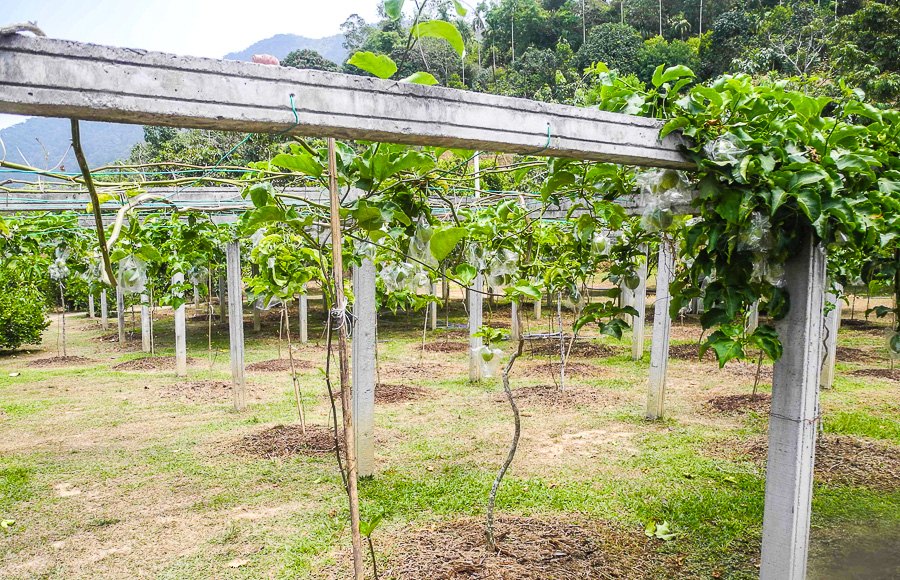
Every fruit is wrapped in film — to protect it from insects and birds. No pesticides are used here, so the fruit is completely natural:
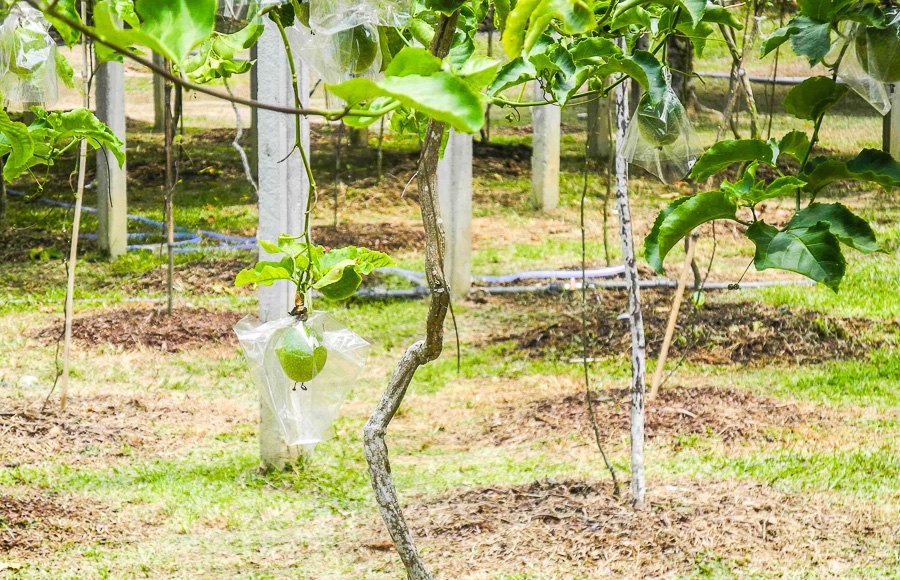
Passion fruit is one of the most aromatic fruits. If you have ever drunk an ordinary carton of juice labelled “tropical fruits”, you already know the smell and taste of passion fruit — it dominates in that juice.
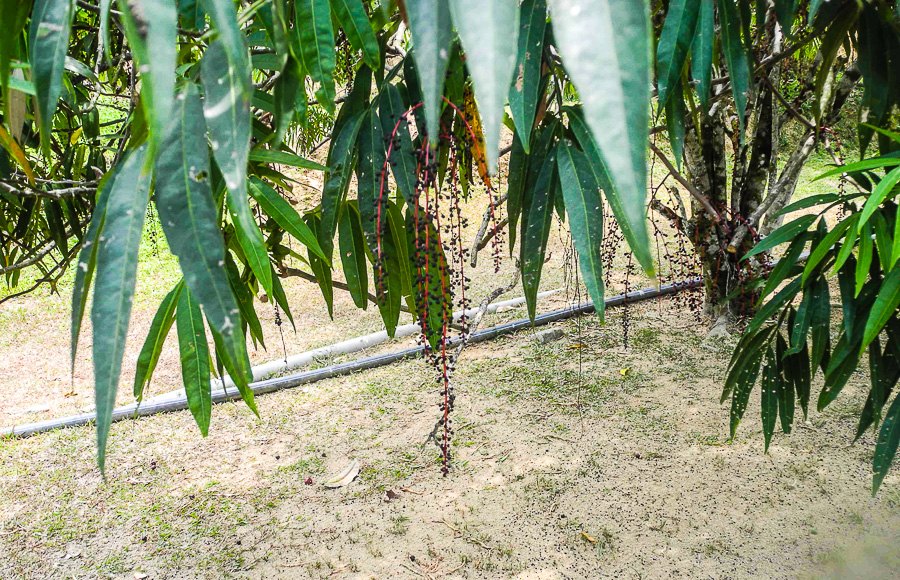
More unidentified berries — the guide mentioned them only in passing, saying they are not popular at all and you won’t find them on sale anywhere:
Rose apple:
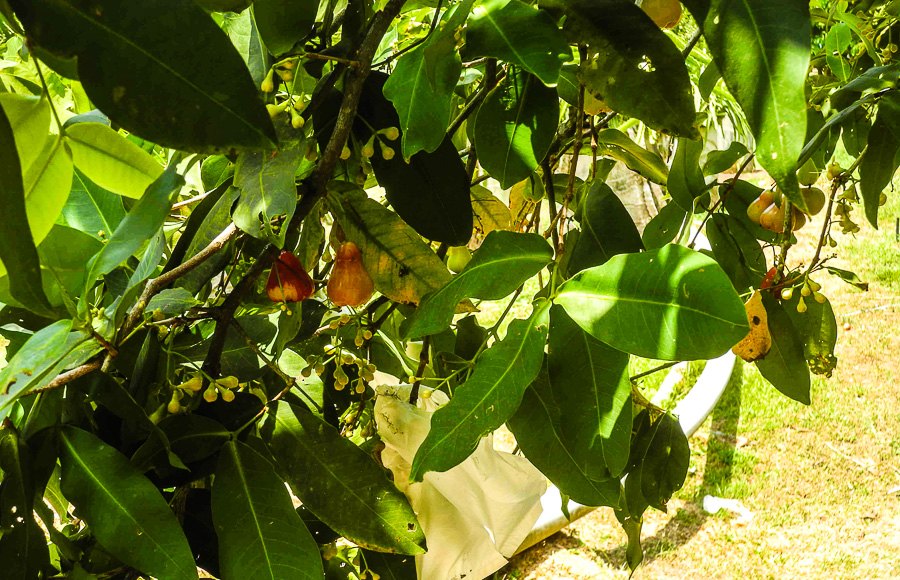
It tastes bland and is very watery, but that is exactly why people in Asian countries love it — it quenches thirst well.
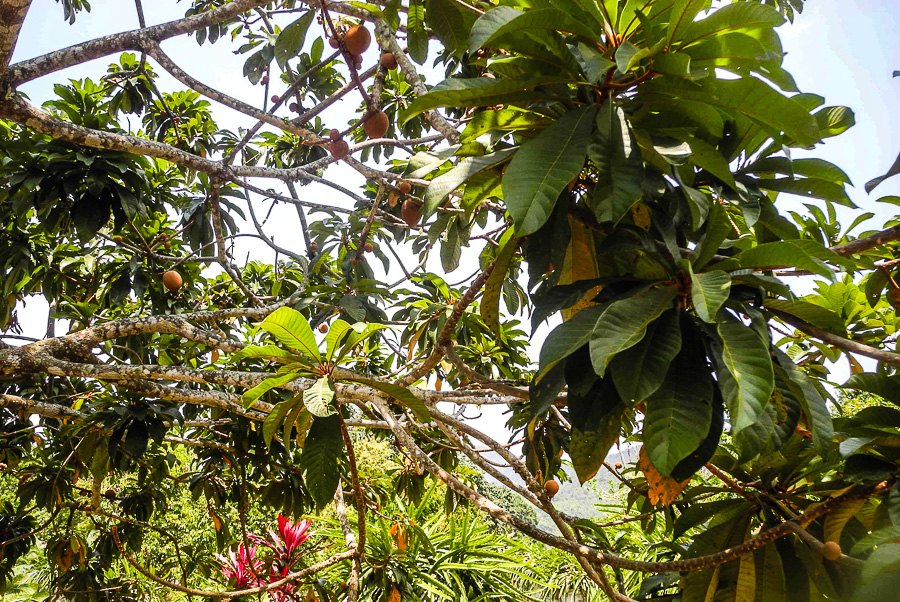
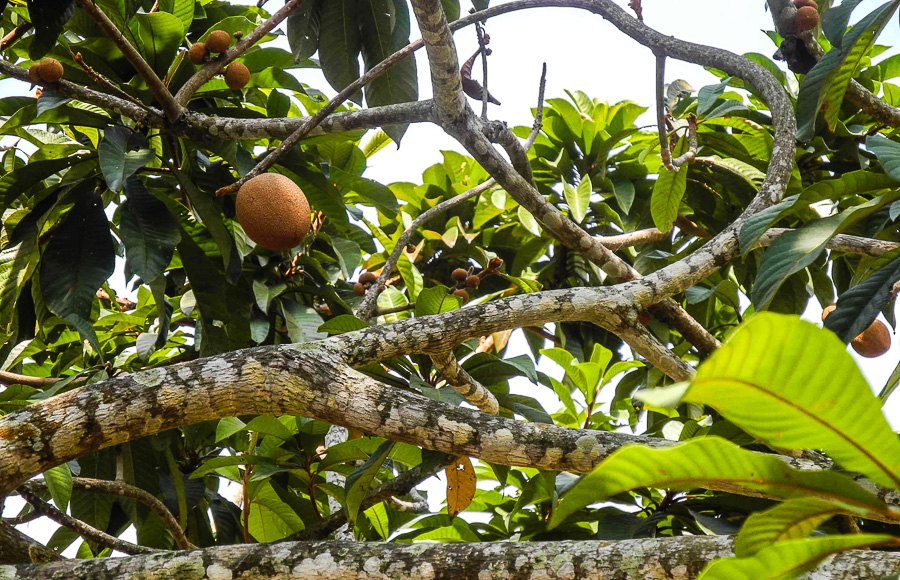
And this is sapodilla — very sweet, cloying, with a taste like caramel:
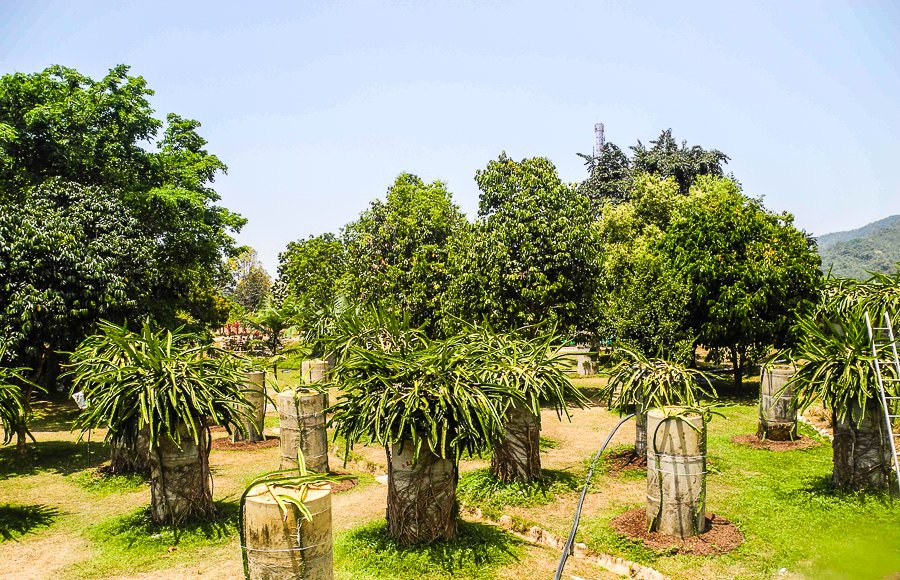
Cacti growing in tubs:
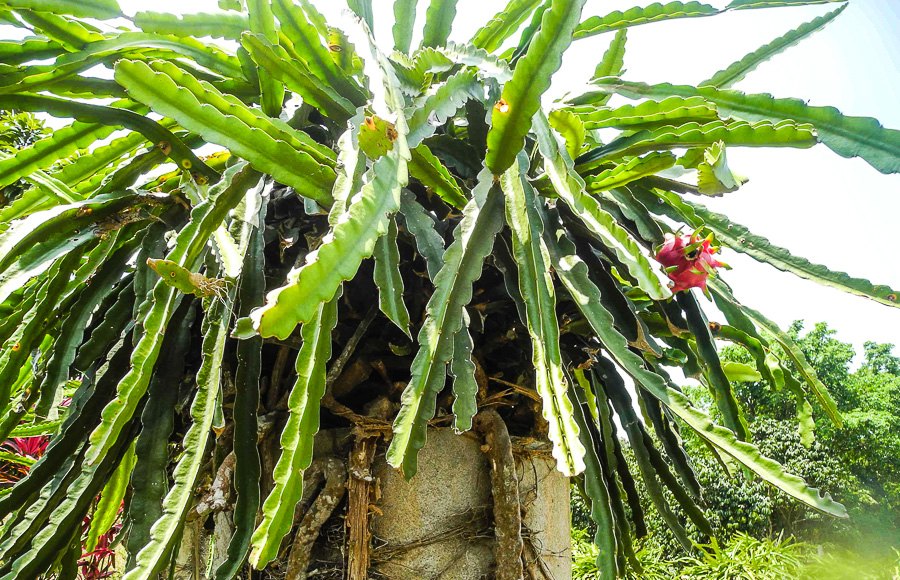
These cacti are unusual because dragon fruit (also known as pitahaya or pitaya) appears right on them:
More unknown berries:
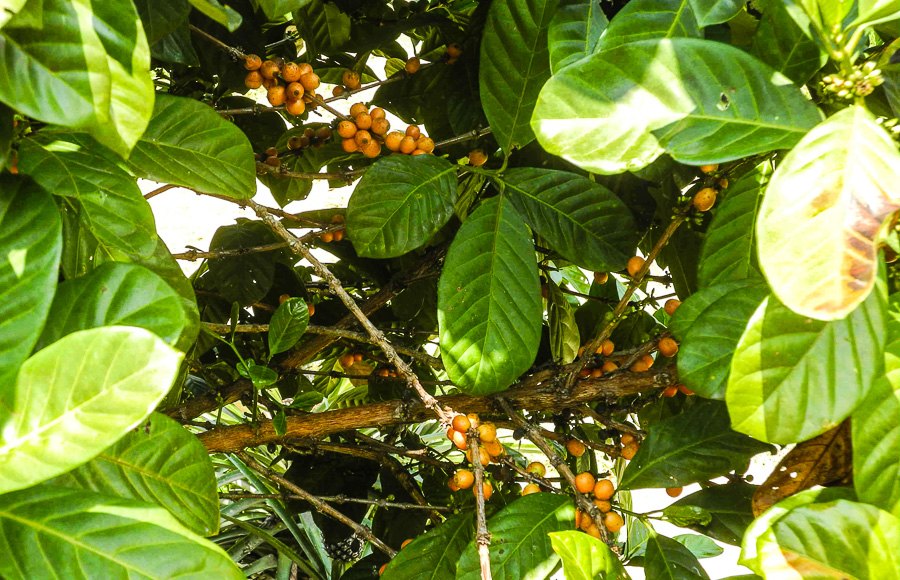
Strange as it is, I have never managed to come across any berries at Asian markets — yet here on the farm they grow.
Pineapple bushes:
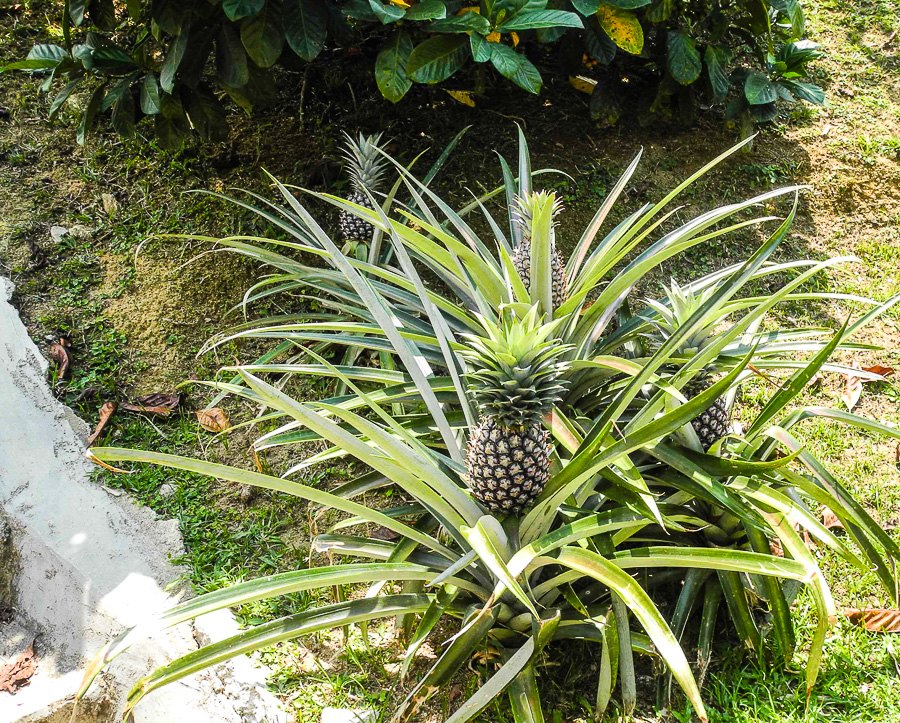
And this is our wonderful guide, telling us about pineapples (note the tiny little pineapple right in front of him):
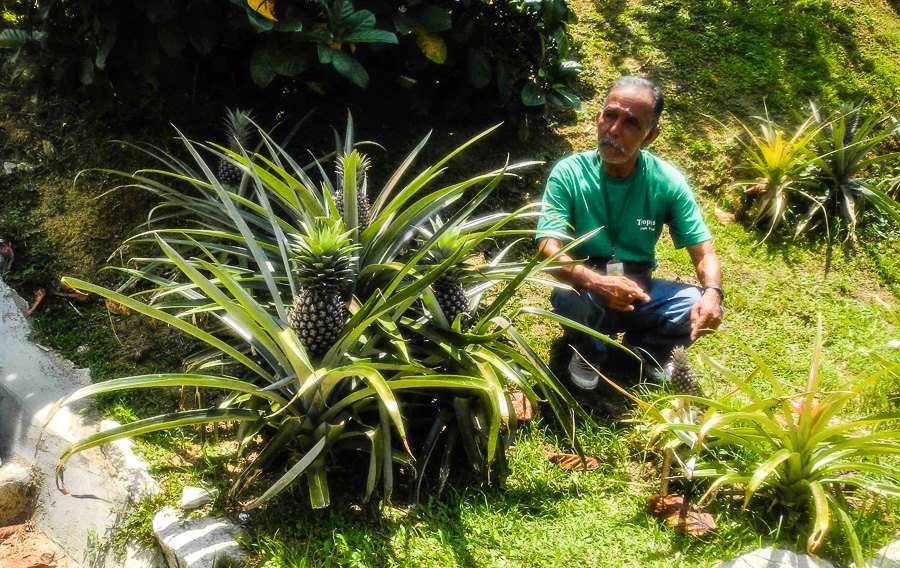
The guide told us that here pineapple is not recommended for pregnant women or for couples planning a baby, and the same is said about unripe papaya, which in Asia is popular as a vegetable in salads. This is a local belief retold by the guide, not medical advice — such questions are best discussed with a doctor.
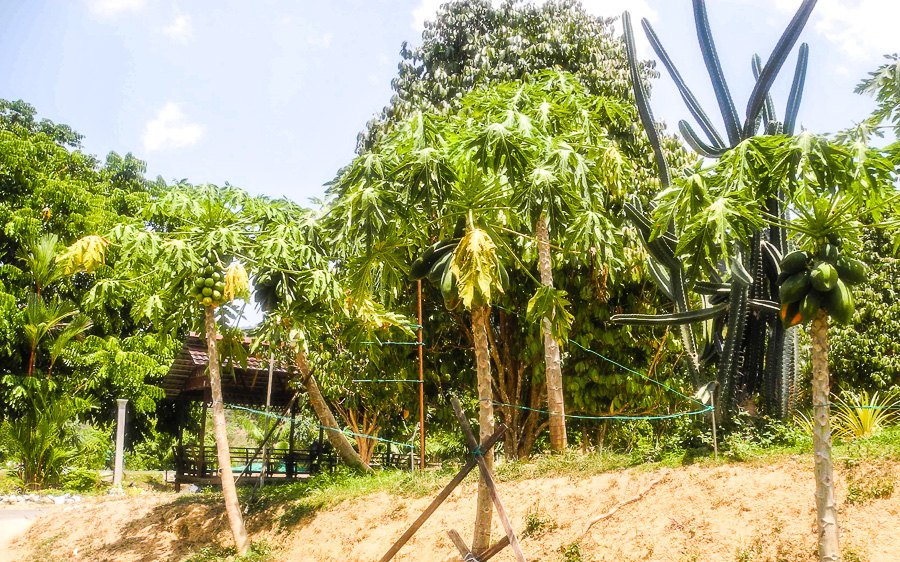
In the distance is another unusual cactus, though here it is more for decoration:
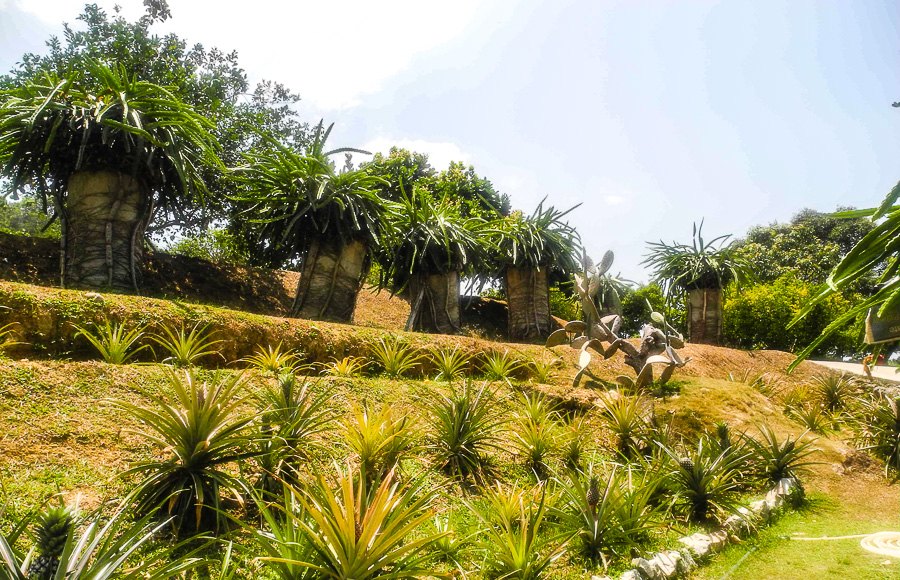
On the left — a cactus taller than a person; on the right — a still-unripe papaya:
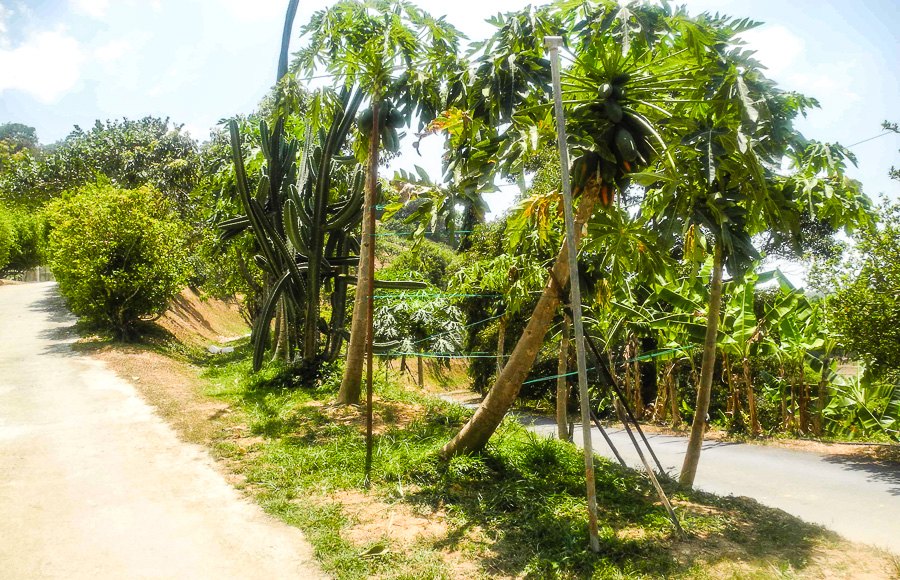
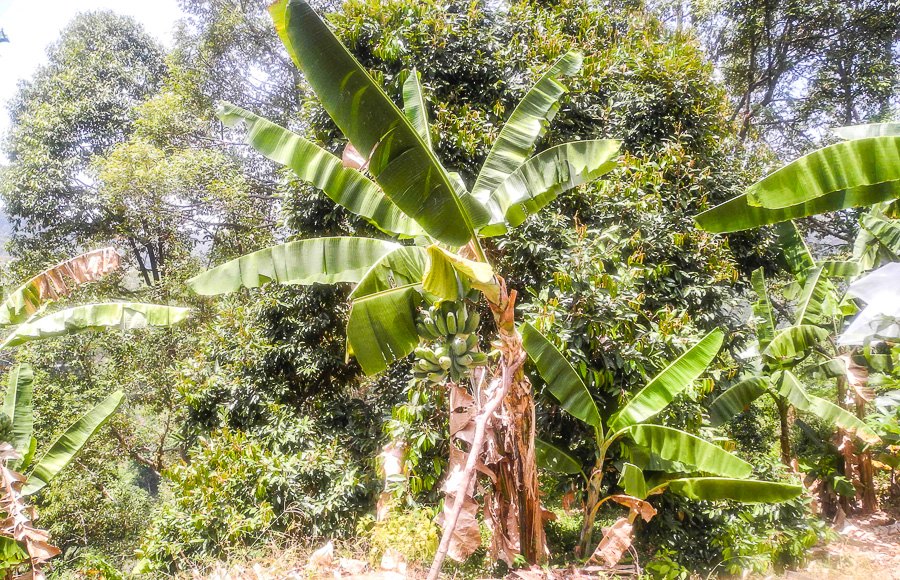
Green bananas:
Papaya again:
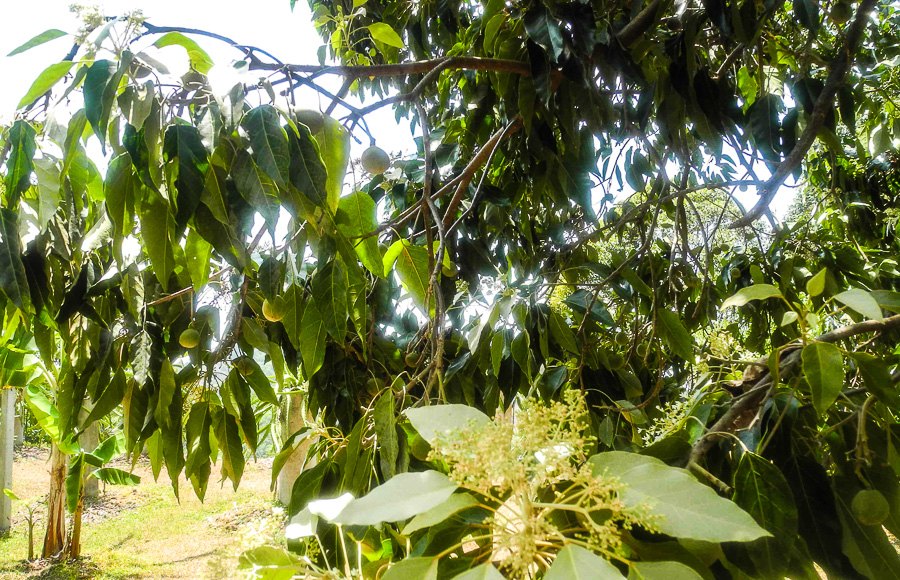
A pomelo, still absolutely tiny:
On the right, a tree spreads out bearing the guanabana fruit (also called soursop):
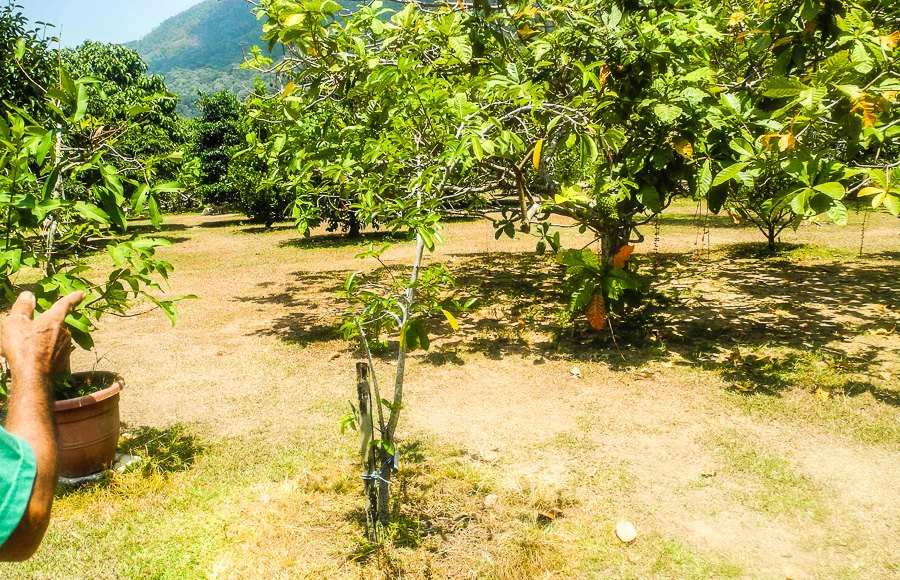
I really love the taste of guanabana — somewhat like yoghurt with a light sourness, a very nutritious fruit. Inside there are many small black seeds and fibrous flesh.
I have only come across it for sale in Cambodia and the Philippines; in Thailand, for some reason, it isn’t available.
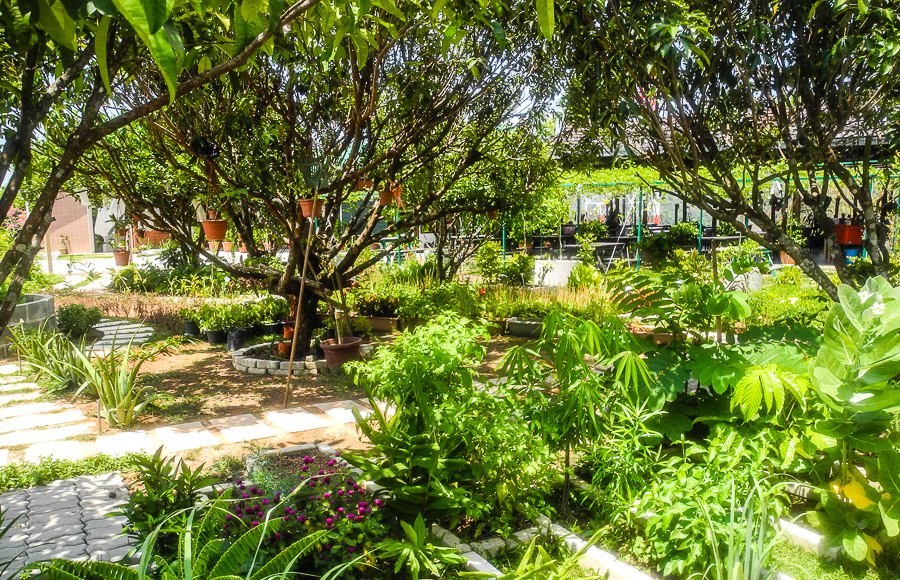
And here are simply views of the farm, with its multitude of plants:
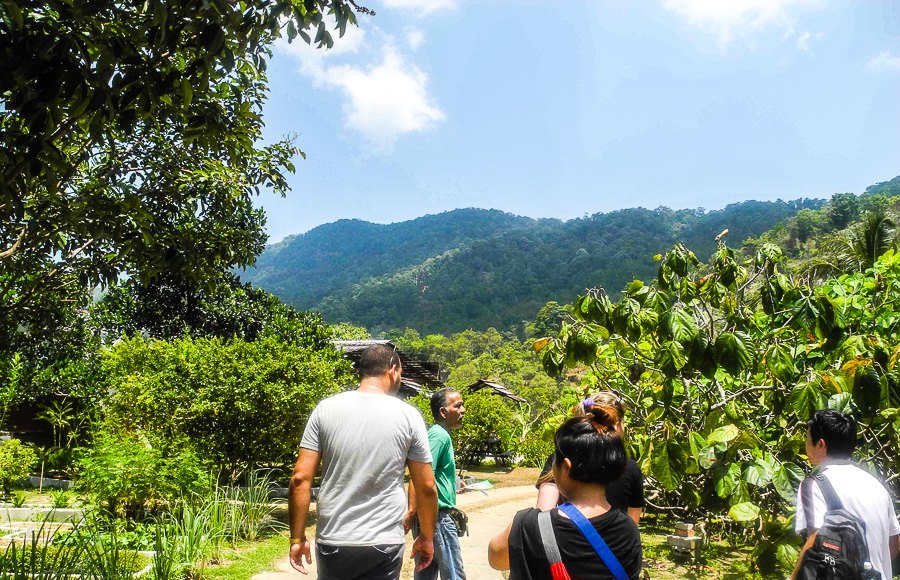
Our group on the tour — the tallest on the left is the guy from Iraq:
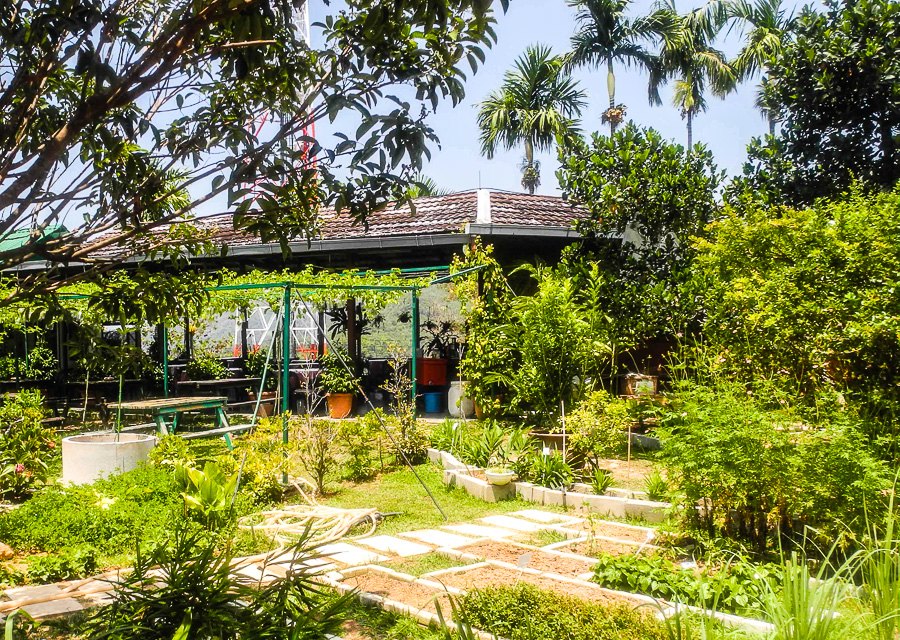
More views of the farm:
After we had walked round most of the farm, we reached the minivan waiting for us and drove on. The tour was over, and the tastiest part remained — the tasting!
4.4. Tasting exotic fruits
In 2014 the tasting didn’t take place outdoors, as I had imagined (I pictured myself walking around the farm picking whatever I liked :), but in a café. It was something like a fruit buffet. Lots of fruit, already cut up — you could take as much as you wanted and come back several times, and the staff kept adding new portions. Judging by the farm’s website, the buffet is now laid out only for groups that book in advance, while regular visitors are served fruit as a plate — it is included in the more expensive ticket, the one with the fruit plate and juice.
A photo of the buffet (already after our group had descended on it):
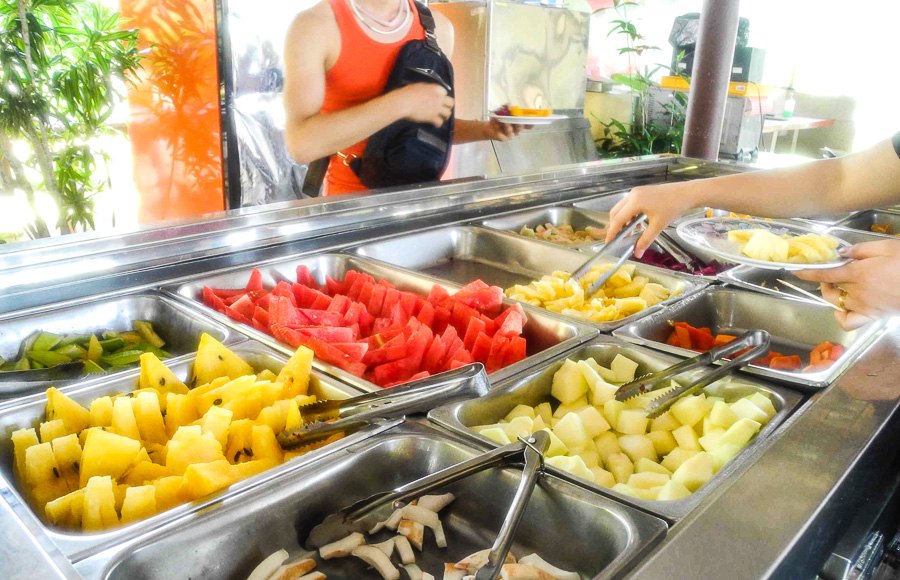
For some reason everyone emptied the pineapples at once, while the mango (incredibly tasty, by the way) lies untouched:
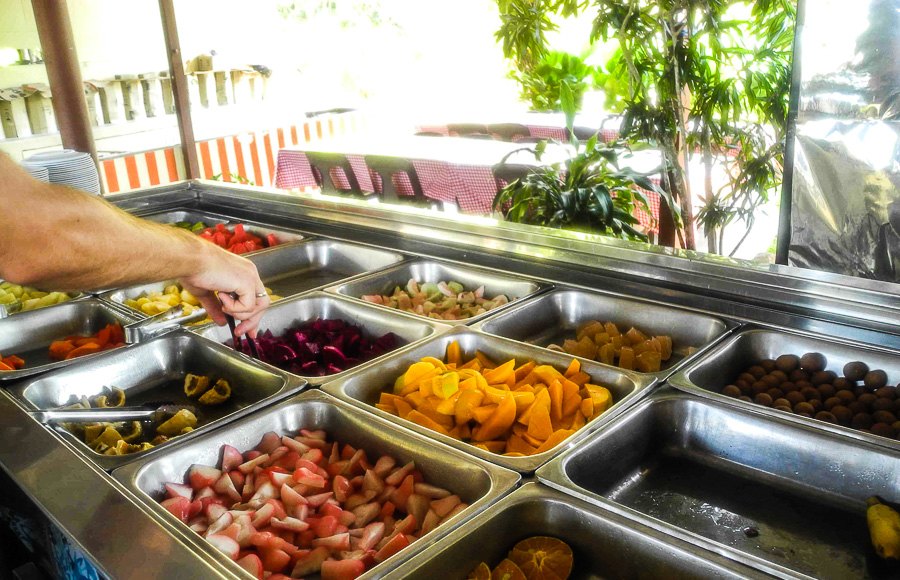
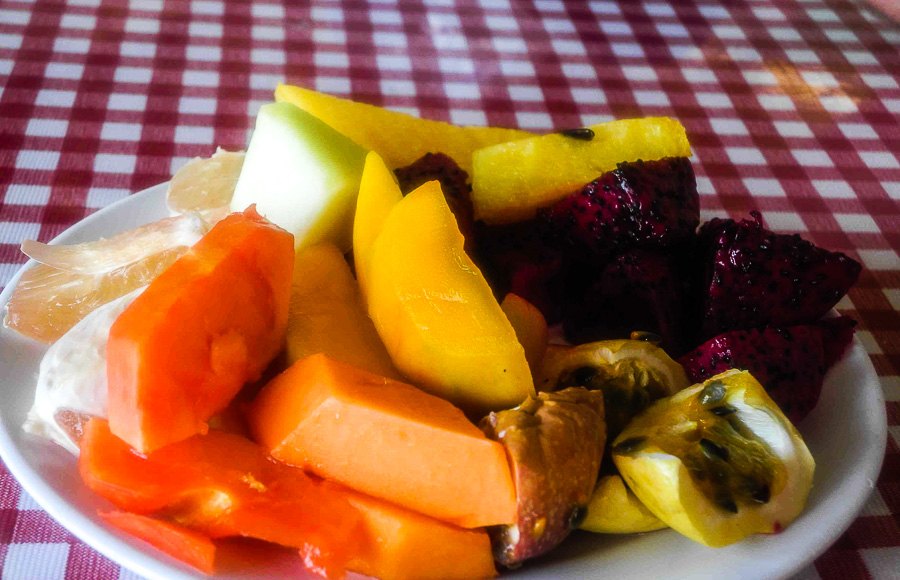
To start with, we helped ourselves to plates like these:
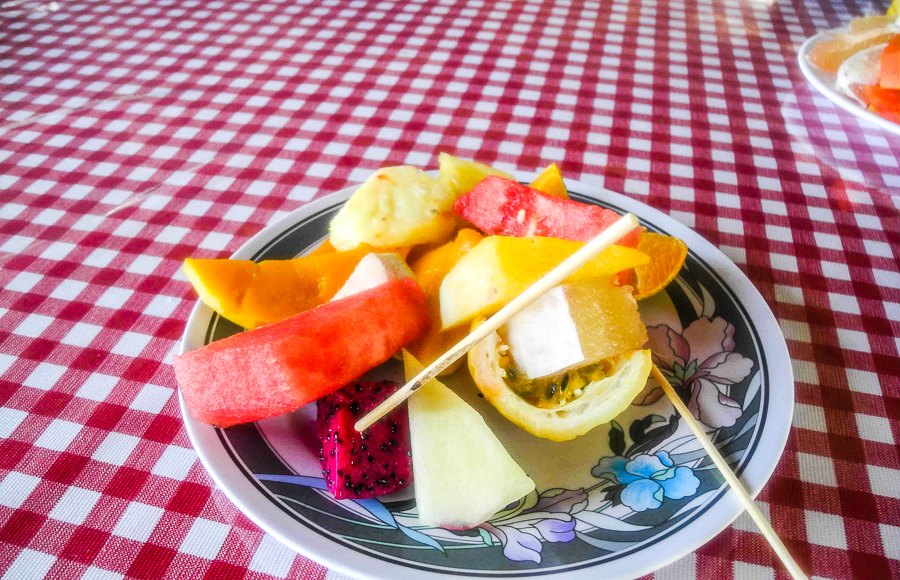
Papaya, mango, (yellow) watermelon, pomelo, melon, dragon fruit, passion fruit:
The café itself: 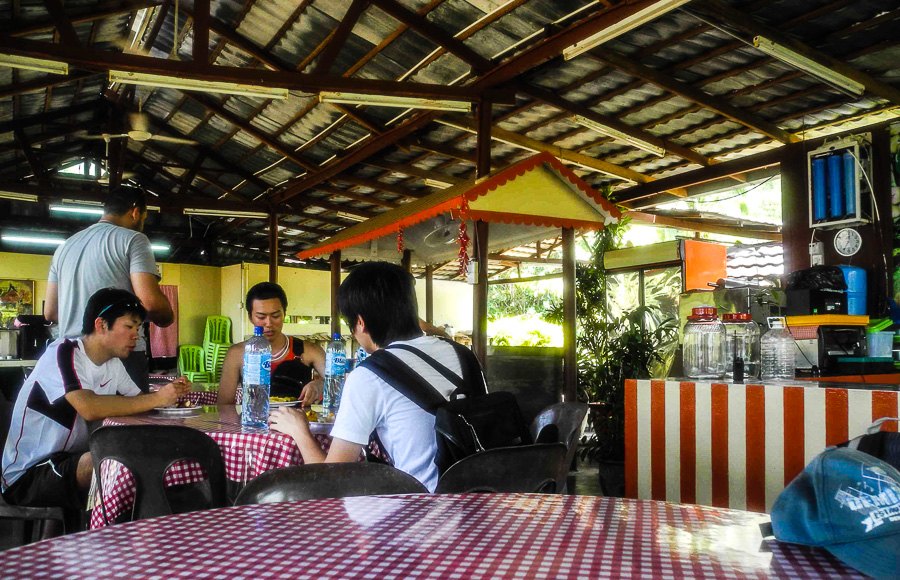
Besides the fruit, in 2014 the ticket price included one juice (from any fruit) and a smoothie (any fruits and combinations of your choice, with ice). Now the ticket with the fruit plate includes a fruit juice; the description doesn’t mention a smoothie:
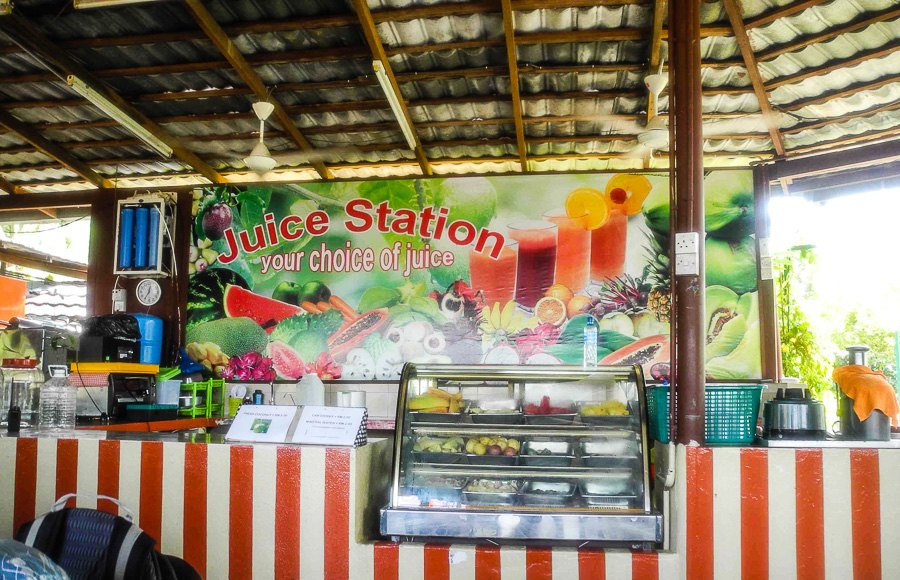
I recommend asking the barman which fruit combination tastes best, as not all fruits go well together.
I, for example, went for mango–pineapple–banana:
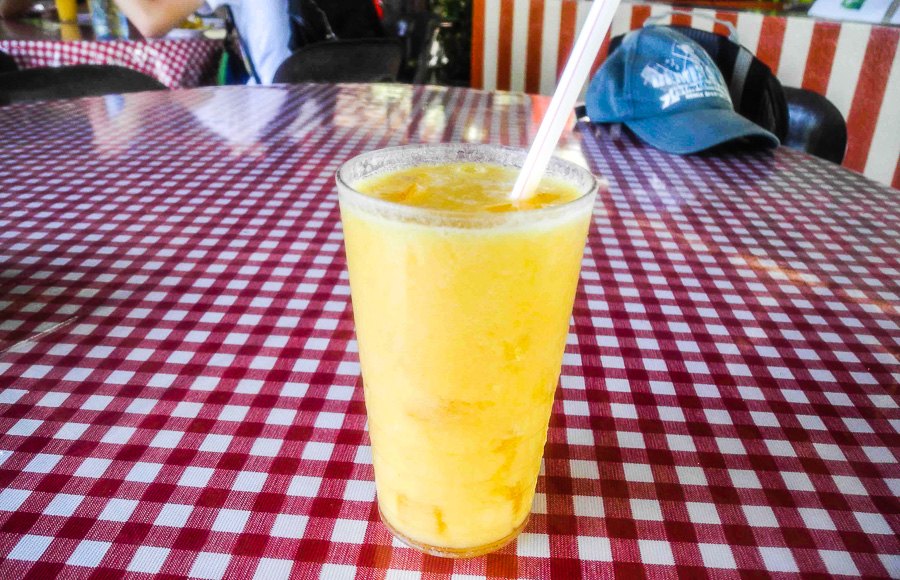
To be honest, I had never eaten my fill of fruit like that before 🙂 And for some reason almost all the fruits were far tastier than ordinary ones from a shop or market. Presumably they are straight off the branch and ripen on the tree rather than in crates.
So back then the ticket fully justified its price.
5. The journey back
After the whole tour ended, we were driven back to that gazebo/fruit shop where we had bought the ticket. While we were wondering how and at what time to travel back, the farm staff were already calling us to the minivan. It turned out that back then the ticket also included a transfer from the farm to the public transport stop. The farm’s website now says nothing about such a transfer, so it is best to plan the return journey (Grab or taxi to Teluk Bahang) in advance.
At 15:20 we were already at the stop, and a 101 bus arrived right on cue. We paid 3.40 ringgit each and rode to Komtar, which took an hour.
6. Trip summary
The trip turned out great! We were tired, of course, but we really enjoyed the farm — both the tour itself and the fruits. I never once regretted having to wait so long for the bus, although next time I would pop into the butterfly farm.