Koh Samui has several evening markets: almost every day of the week one opens in one of the island’s districts. Today I want to show you around the evening market in the Lamai area. The essentials first: according to 2026 travel guides, this market still takes place every Sunday, from roughly 17:00 to 22:00. The photos and prices below date from 2014.
1. General information about the Lamai market
The market is very easy to find — it can be seen from the ring road, and the McDonald’s sign works well as a landmark:
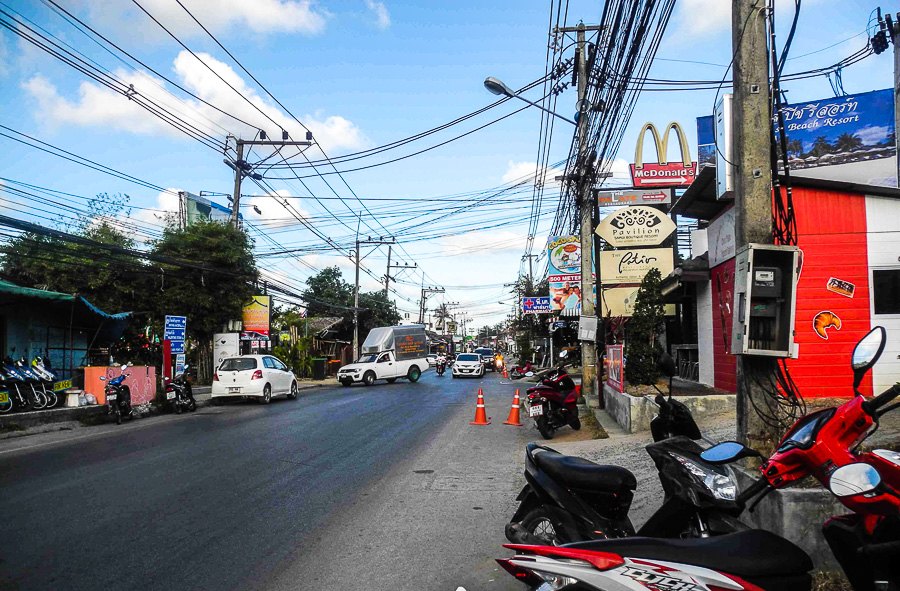
The market is organised as follows: two perpendicular streets are closed off and filled with numerous stalls selling all sorts of things.
The market runs only on Sundays: according to 2026 travel guides, the street is closed from roughly 17:00 to 22:00 (some older guides say until 23:00). When we visited in 2014, most stalls opened at around 17:00, so it makes sense to arrive about that time — it’s still light, but everything is already in full swing.
It’s convenient that prices are marked almost everywhere. All prices in this review are in Thai baht and date from 2014, so treat the figures below as a rough guide only and check the actual prices on the tags once you’re there.
The entrance to the market:
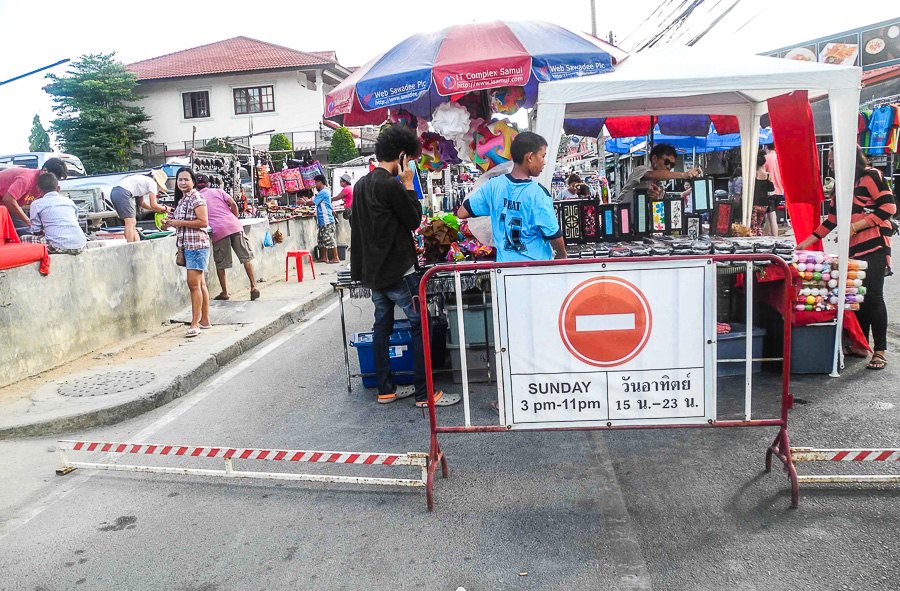
The market itself is pedestrian-only, so you need to park your bike somewhere. We usually leave ours on the shoulder of the ring road (though it’s often completely packed), and in 2014 there was also a paid car park right next to the market (about 10 baht). If you don’t have a bike, you can get here by songthaew — the red shared pickup that runs along the ring road.
So, we head into the market; it consists of two parts:
1) the road leading down to the sea is lined with stalls selling all kinds of tasty things.
2) the perpendicular road crossing the food lane is filled with stalls selling clothes, souvenirs, accessories, tableware, incense, cosmetics and so on.
You can wander around the market for a whole hour looking at all the unusual bits and pieces, and if you decide to have a bite to eat, it will take even longer!
First, let’s walk along the clothing row.
2. Photo tour of the market (2014)
2.1. Souvenirs and clothes
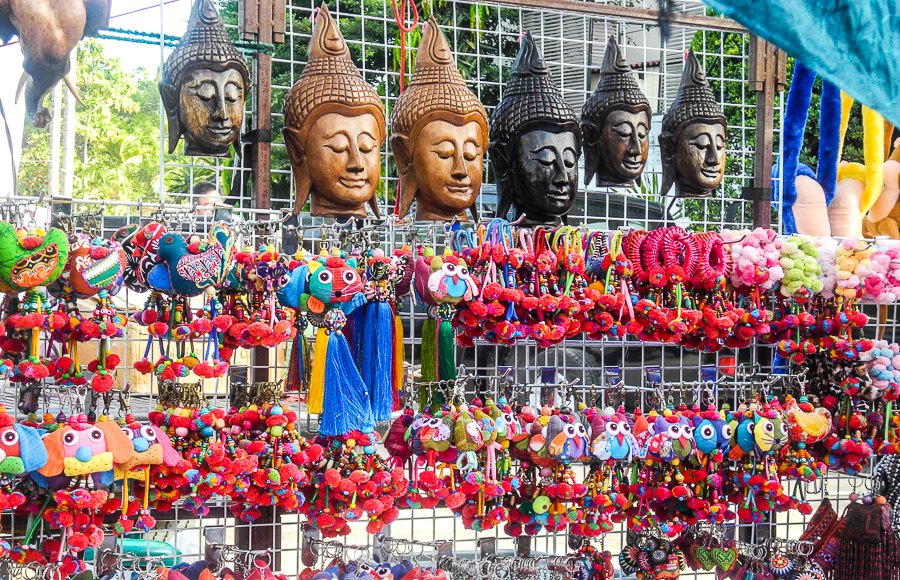
Loads of souvenirs — even Buddha heads:
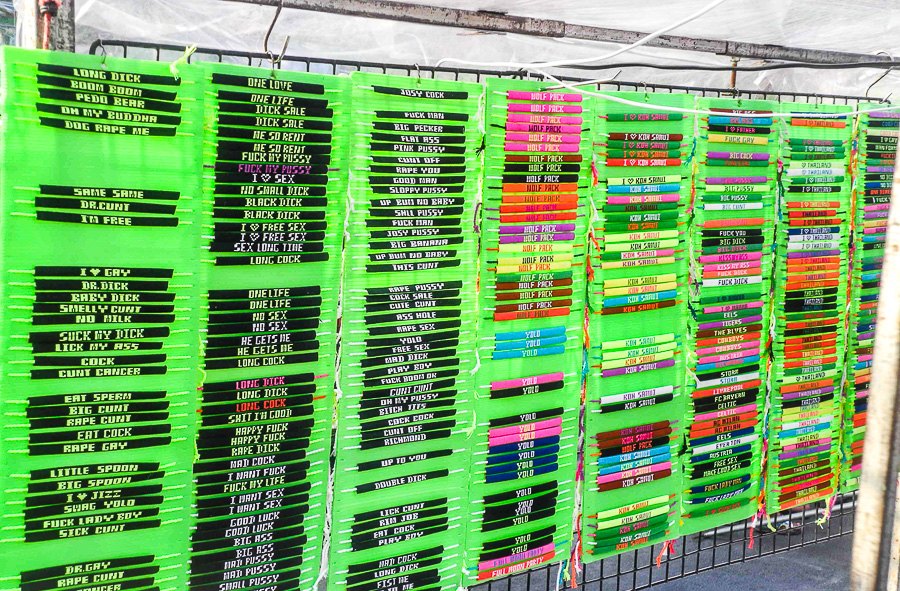
String bracelets:
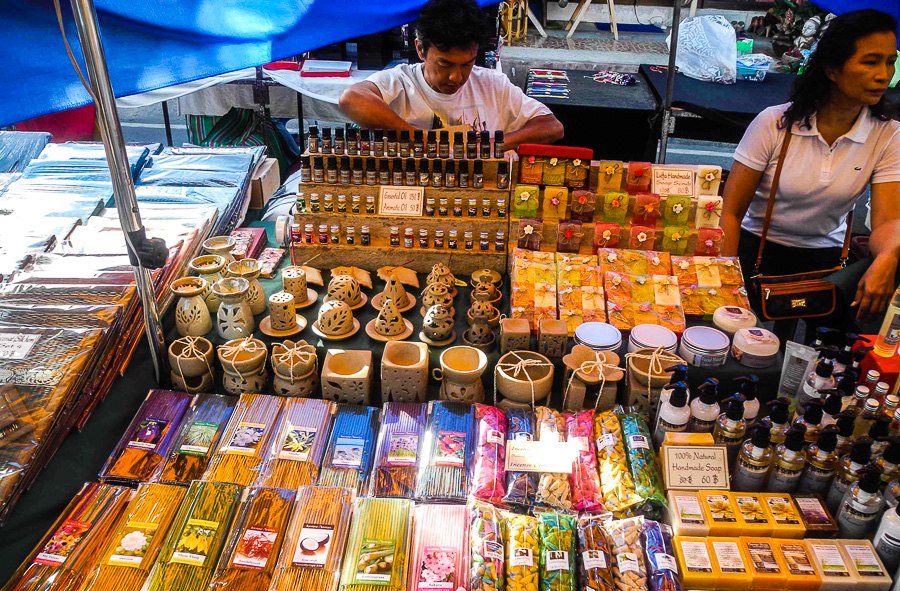
Handmade: soap, oil burners and incense sticks, various oils:
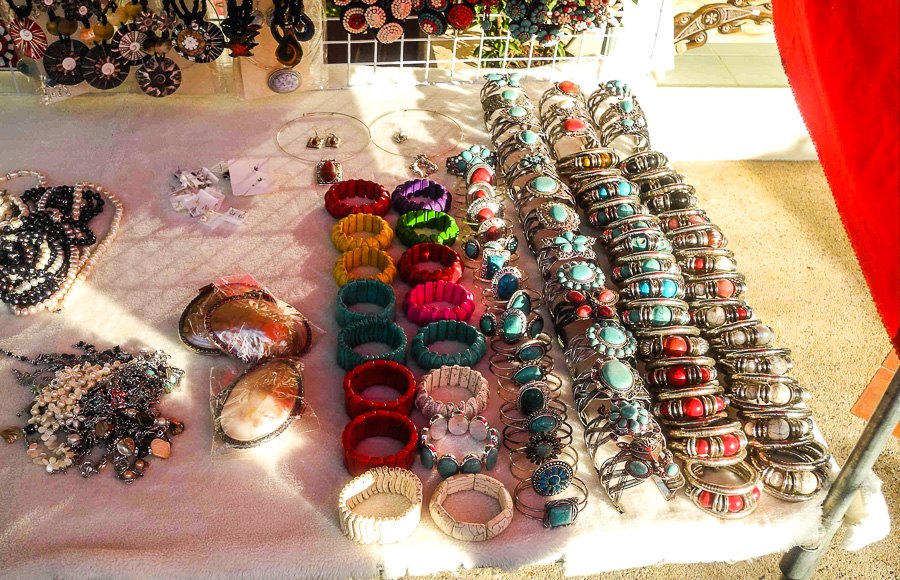
Bracelets:
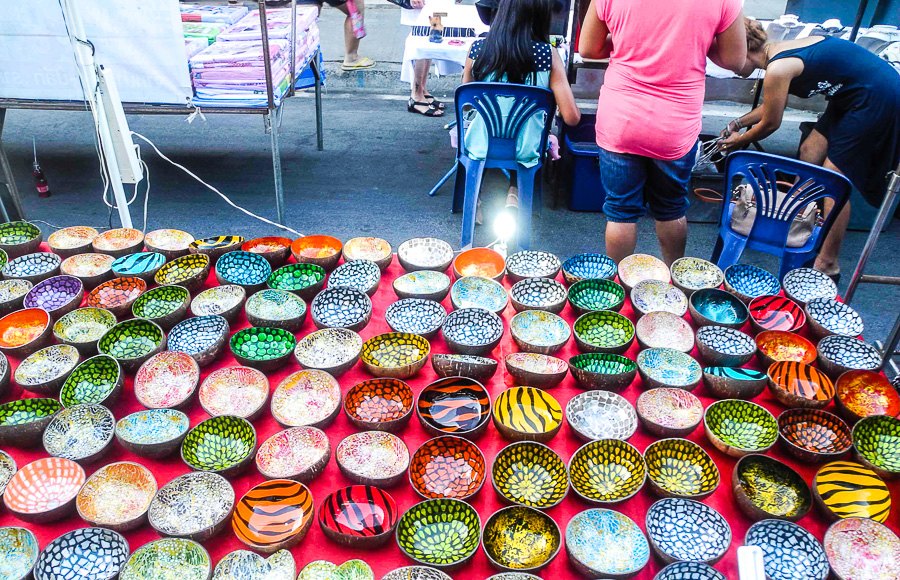
The most beautiful bowls — every one of them handmade.
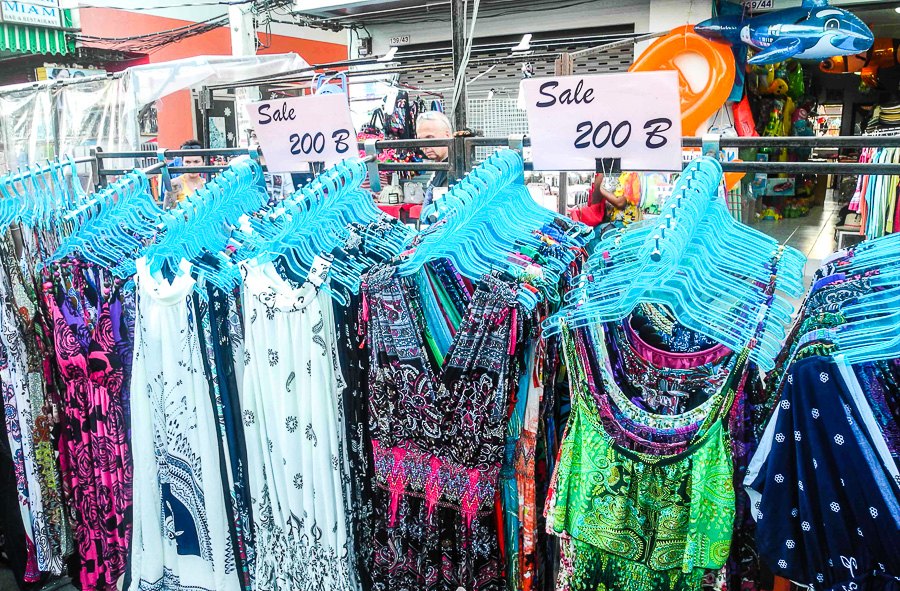
Inexpensive dresses at 200 baht:
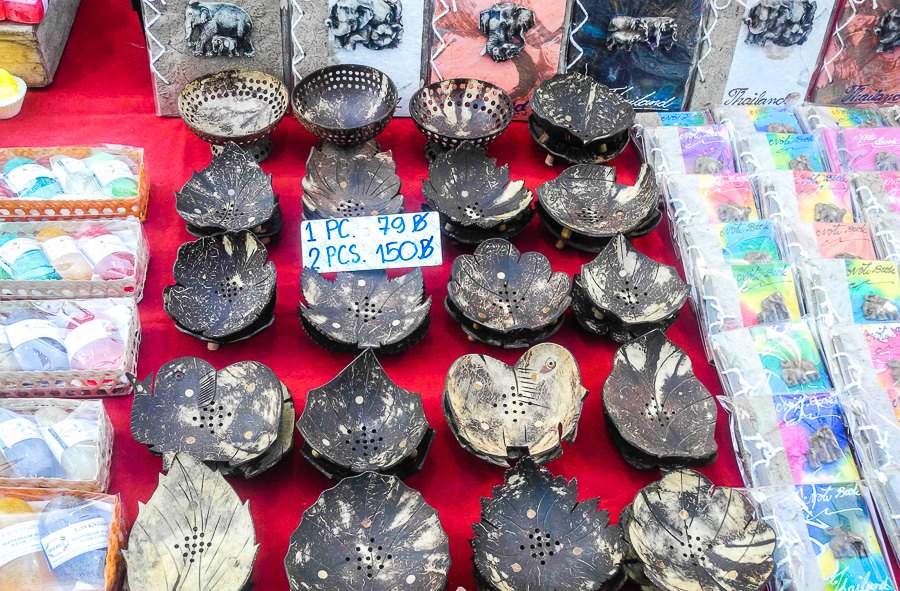
More little dishes of unclear purpose — stands, perhaps?
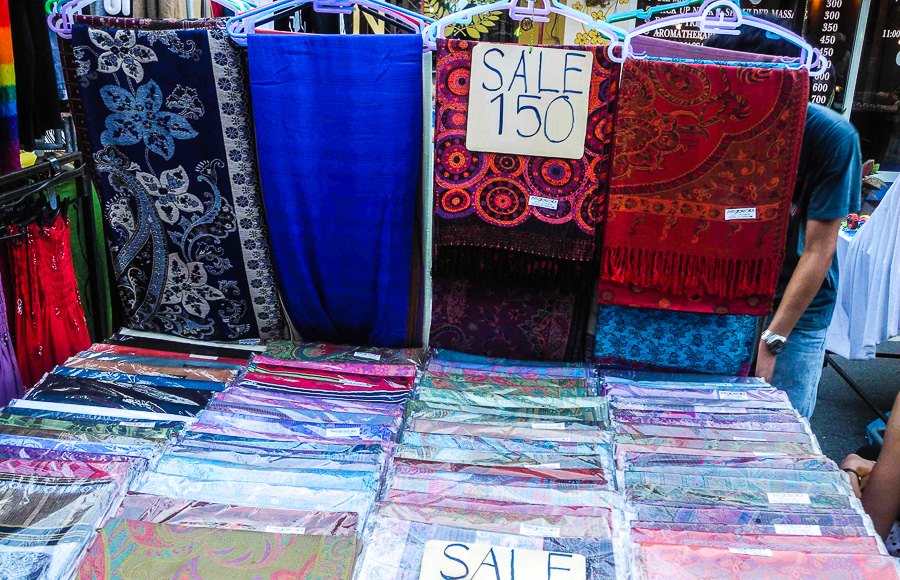
Pashminas:
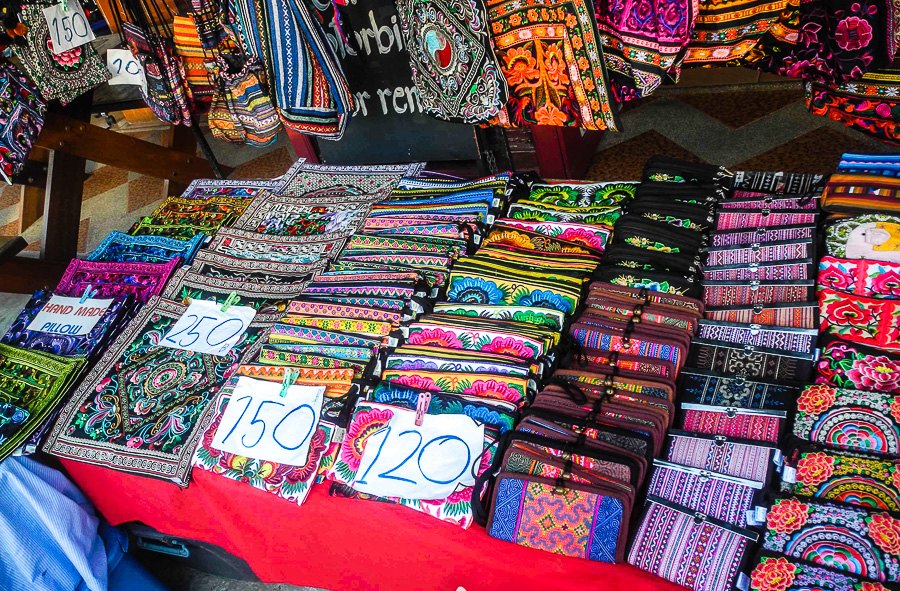
Brightly coloured make-up bags and little purses:
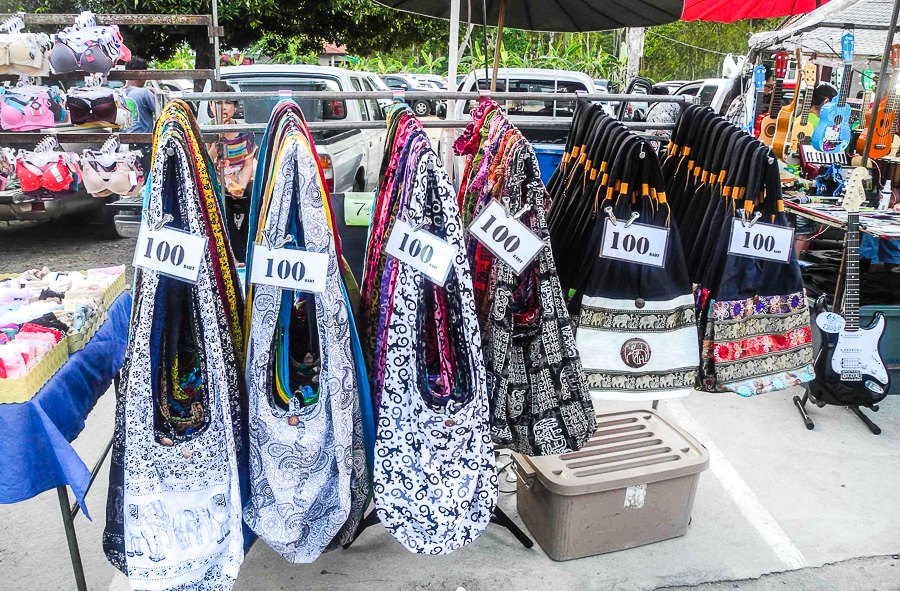
Fabric bags — all 100 baht:
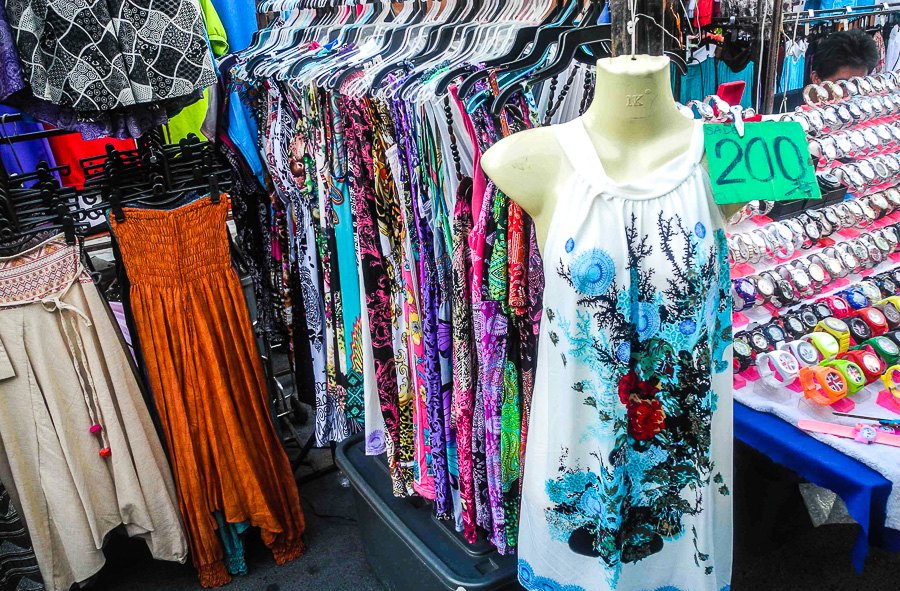
More dresses:
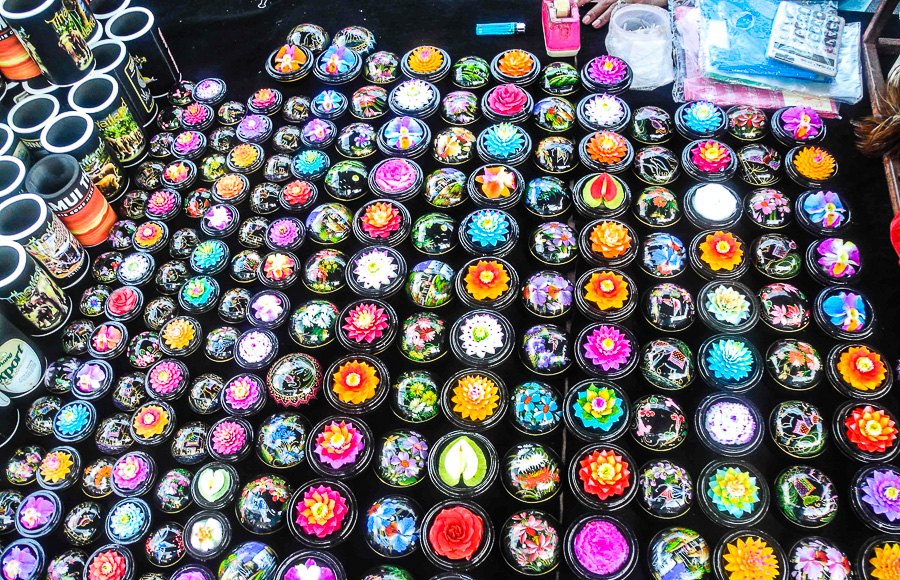
And this beauty is hand-carved soap, carved right at the market — a great gift:
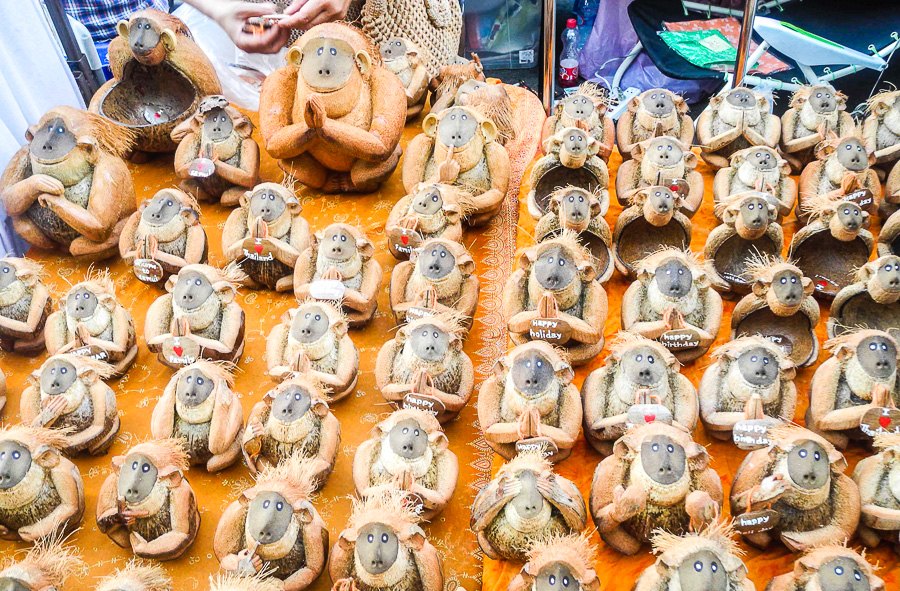
Another fun souvenir and gift — a monkey carved out of a coconut. The local craftsmen did a brilliant job!
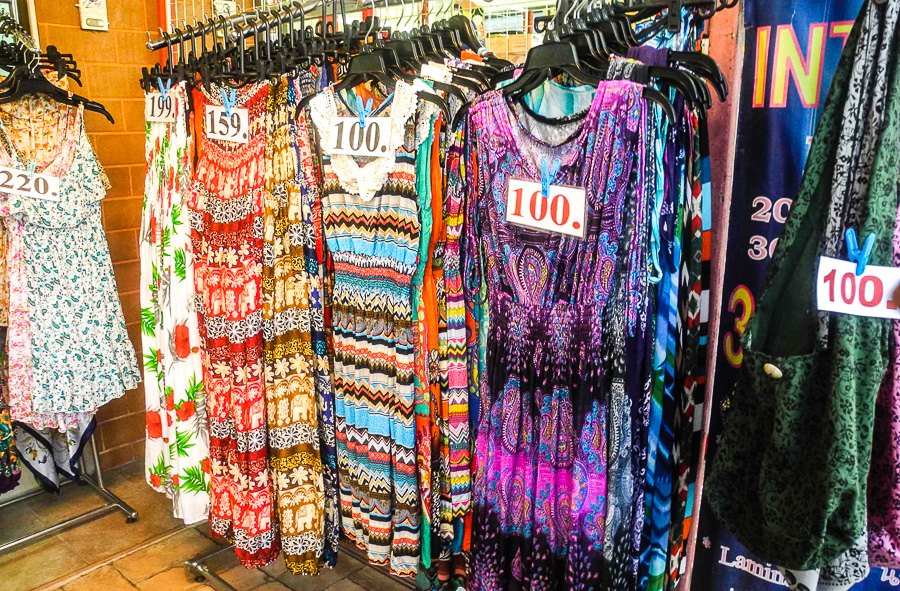
And here dresses are as little as 100 baht:
There is much, much more in this part of the market, but we’re heading on to its tastiest section — the food stalls.
2.2. Food at the Lamai market
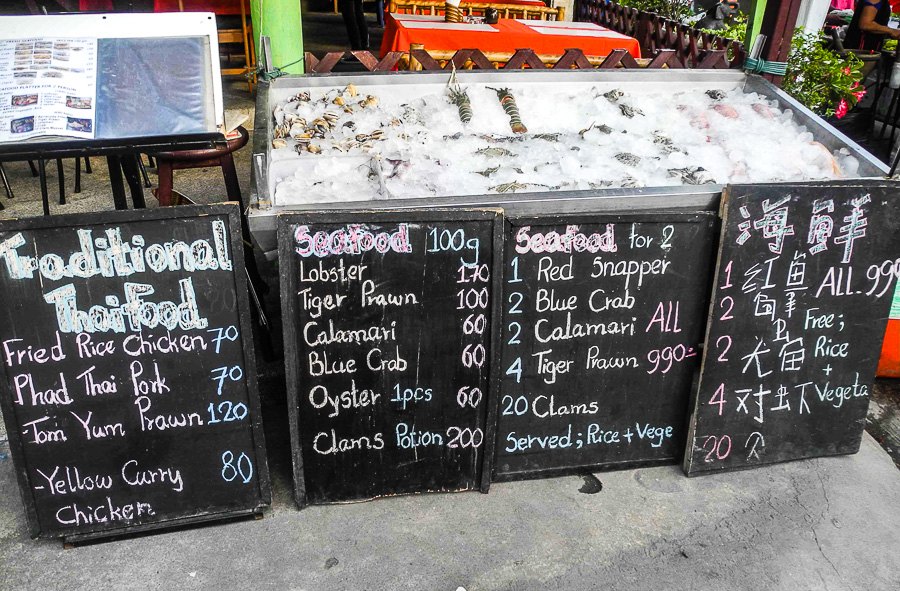
There are cafés alongside the stalls, so if you’re not keen on street food you can have dinner right there at a table in a café or restaurant.
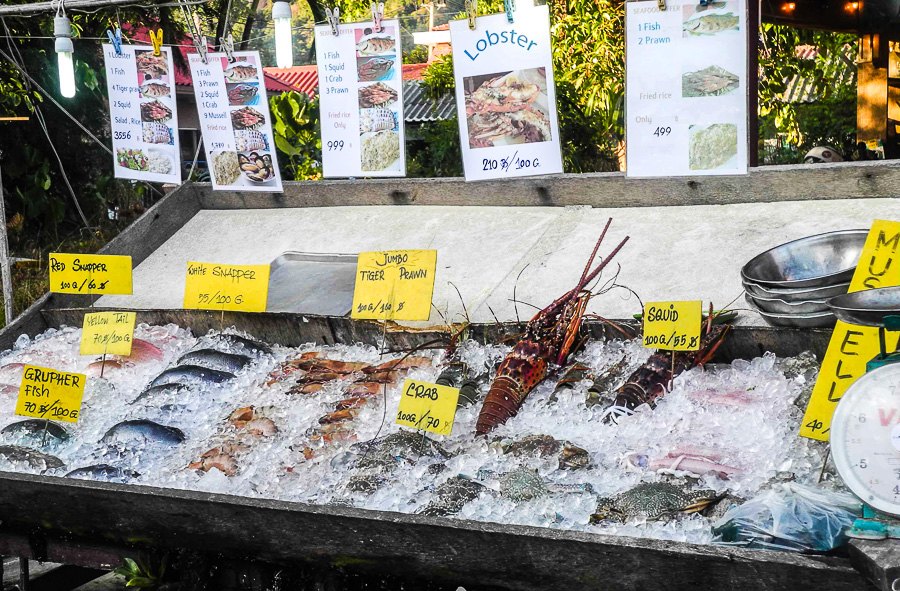
For example, try lobster at 170 baht, tiger prawns at 100 baht or blue crab at 60 baht (prices per 100 g):
Another similar café:
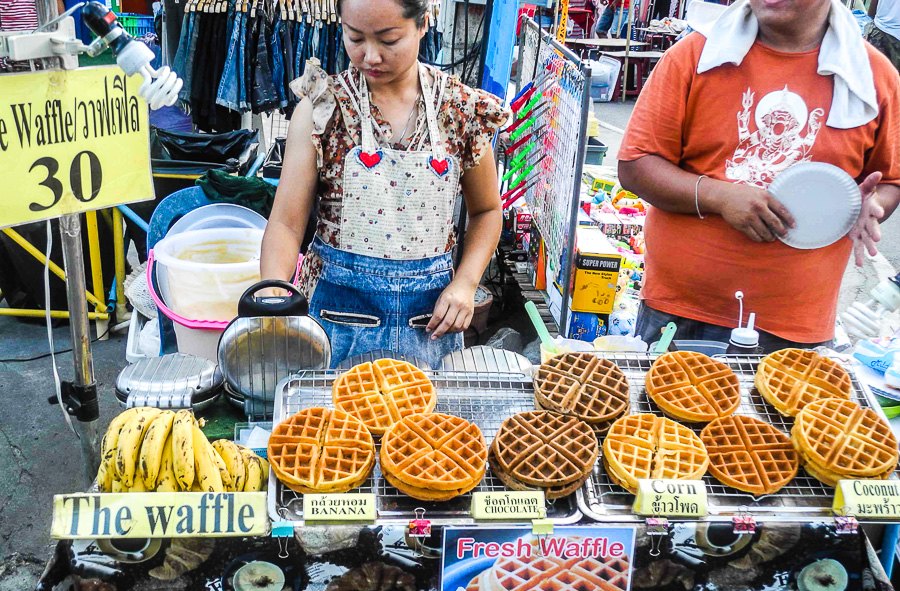
We walk on along the rows, with wonderful aromas coming from all sides — hot waffles, for instance (chocolate, coconut, banana, even corn):
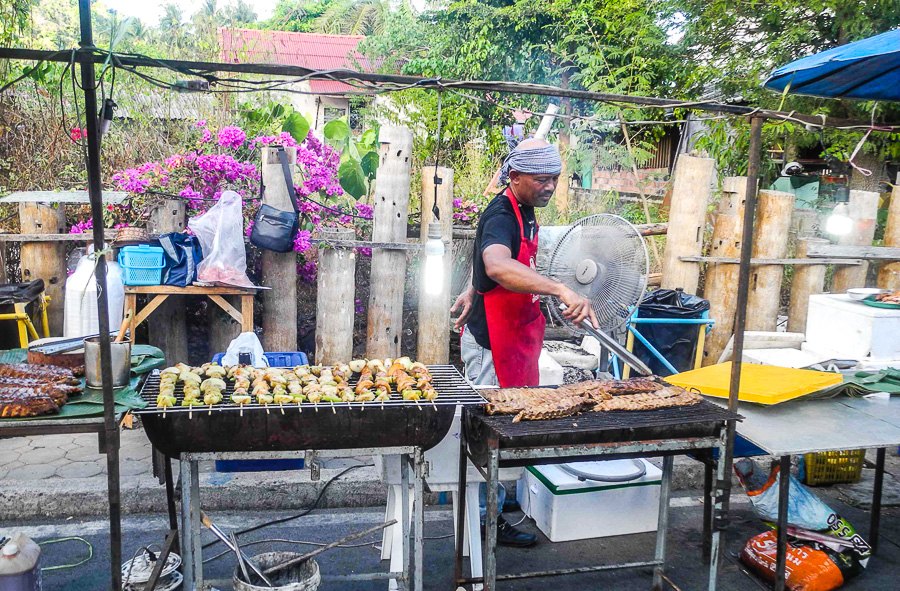
For skewer lovers:
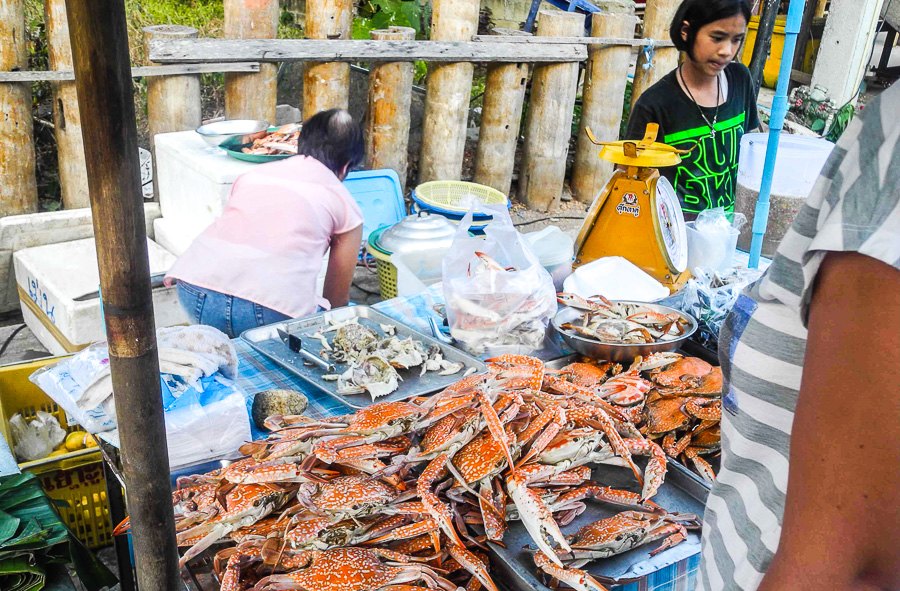
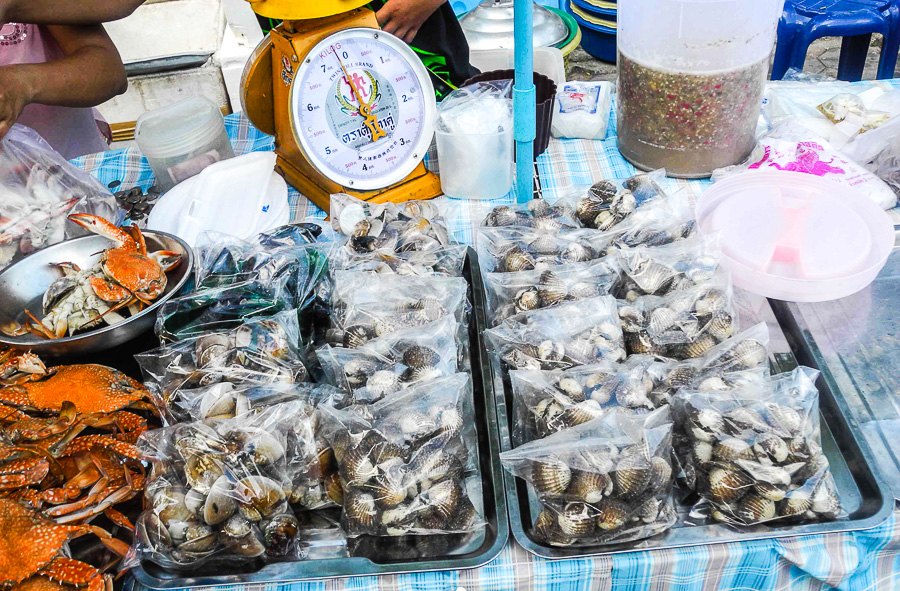
You can buy not only cooked food but raw food too, just like at an ordinary market. Crabs, for example:
Or mysterious shellfish, already portioned into little bags:
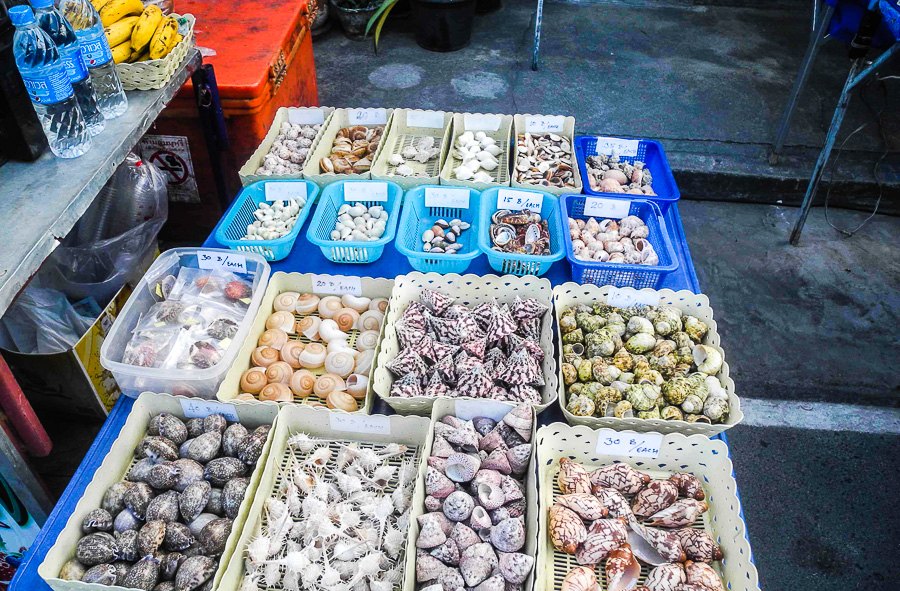
Ordinary seashells are sold here as souvenirs too — apparently gathered on the nearest beach:
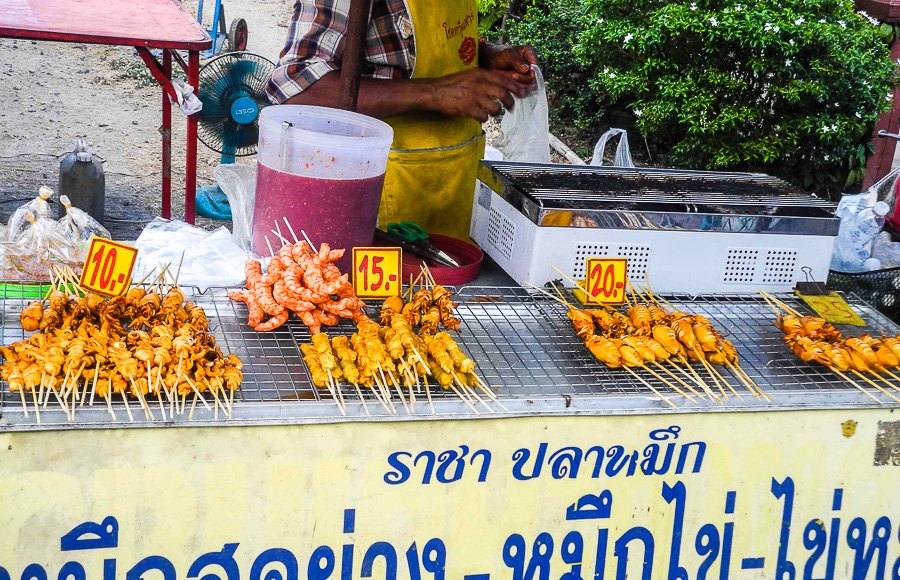
Skewers are made from just about anything: squid, chicken, crab sticks:
You can buy corn, which we love — boiled, grilled, or just the kernels on their own in a cup:
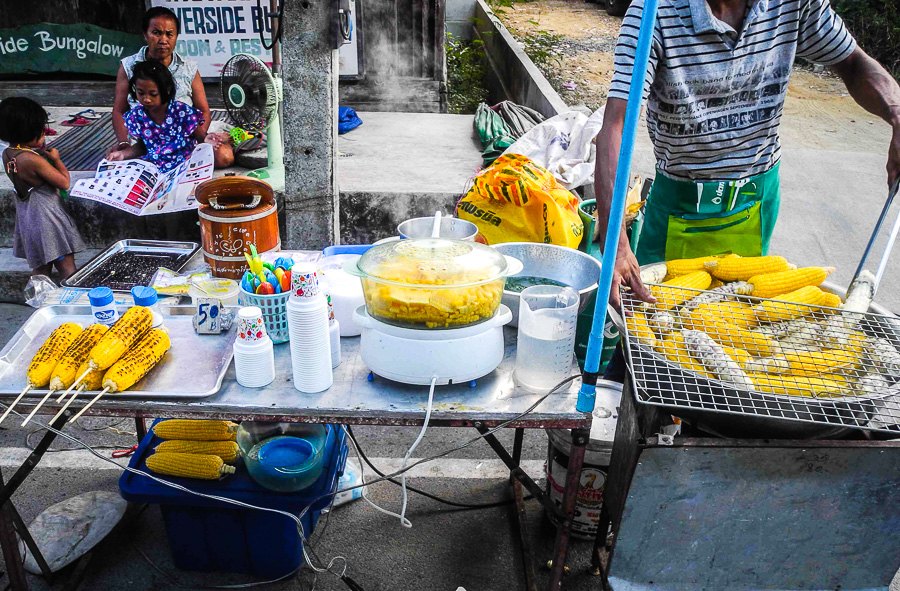
By the way, if you get corn in a cup, they put in a generous amount of butter, salt and sugar by default (a couple of spoonfuls!), and sometimes pour milk over it too. I once tried it like that in Bangkok — it’s better to ask straight away for it without butter and sugar (“no sugar, no butter”).
If you’re missing sushi, the market sells excellent sushi:
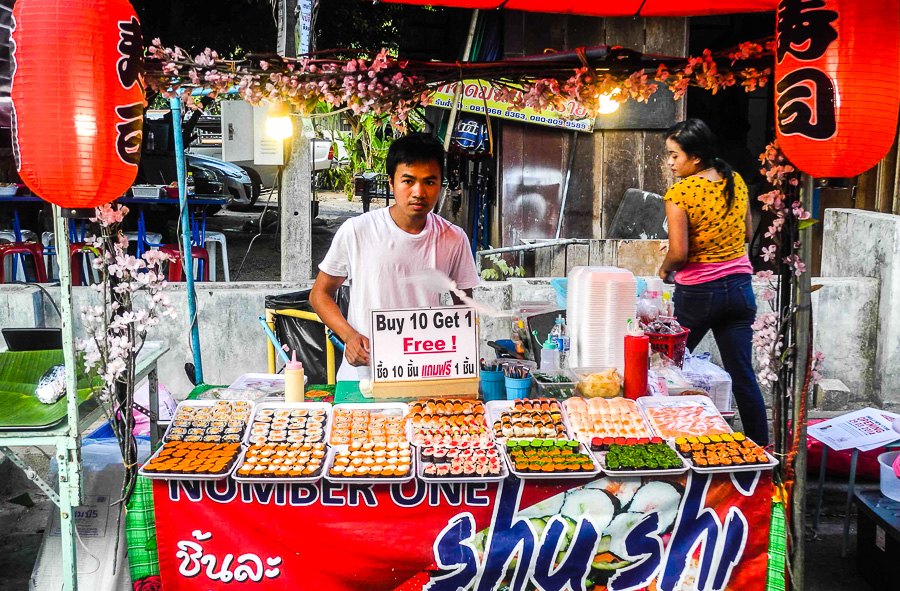
You pick any 11 pieces and pay for only 10 — that is, 100 baht. To choose your sushi you take a special box and tongs and put in whatever you fancy. Soy sauce, wasabi and chopsticks are included. We bought it several times — everything was always very fresh and we never had any stomach trouble.
And here are the same hot French waffles with chocolate, bananas and cashews, cooked right in front of you:
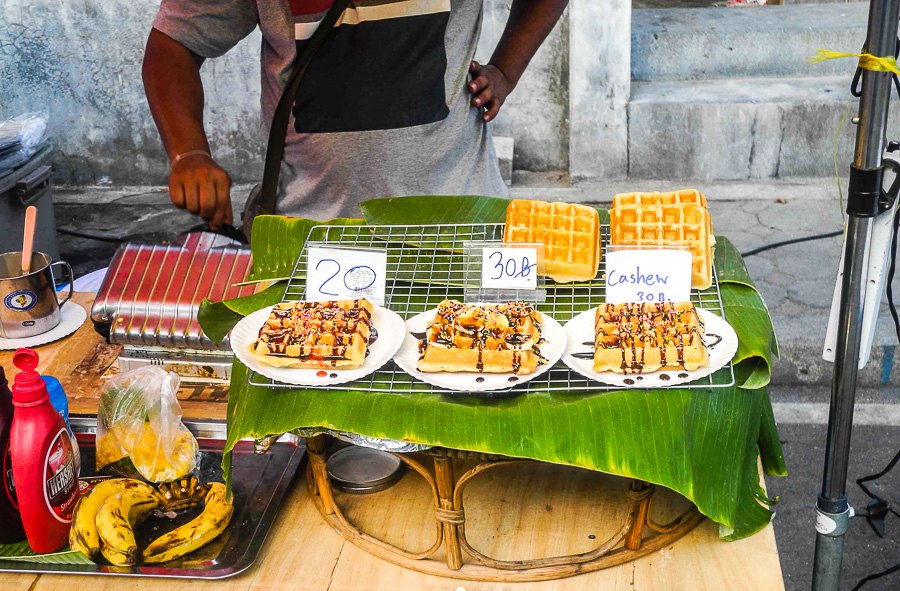
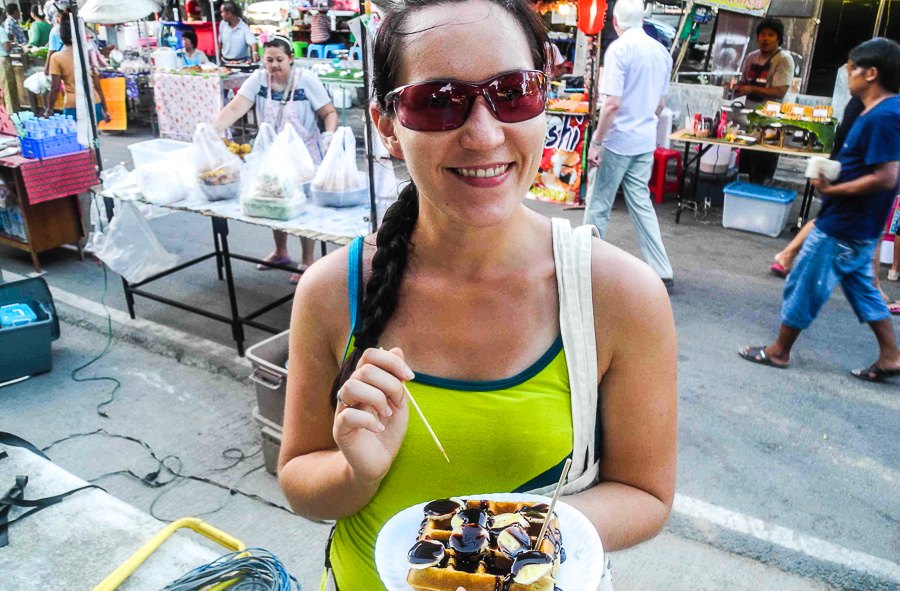
Well, how can anyone resist?! I couldn’t…
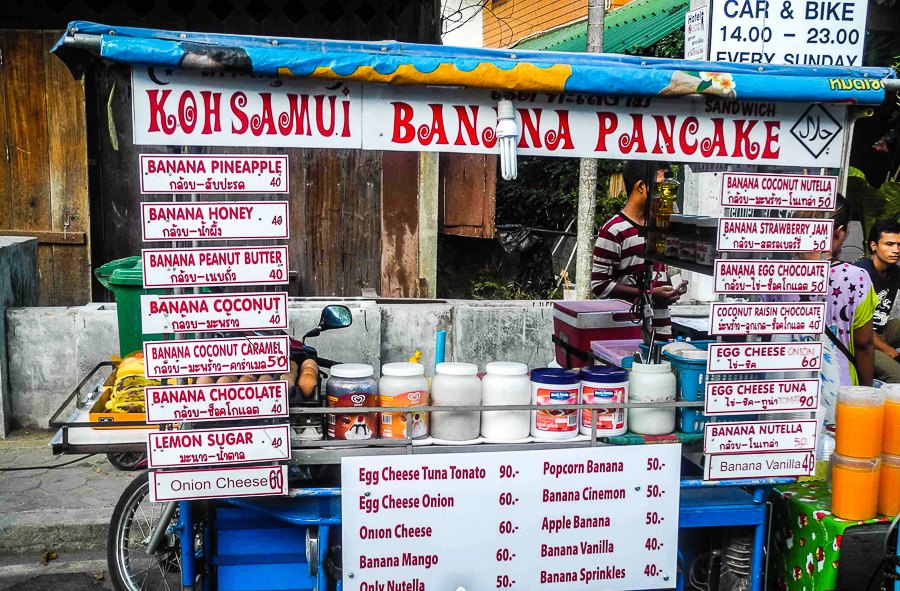
Thai pancakes with various fillings:
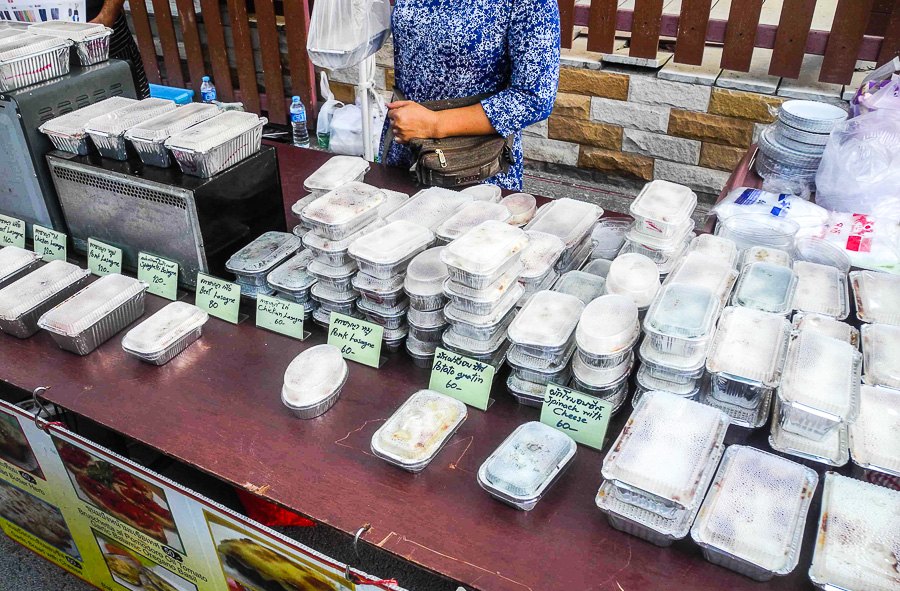
And here is an island of European cuisine — the food is ready-made, in foil packaging. Various kinds of lasagne, spinach with cheese; the prices are admittedly on the high side (from 60 baht for a small portion), but that’s always the case here with imported food:
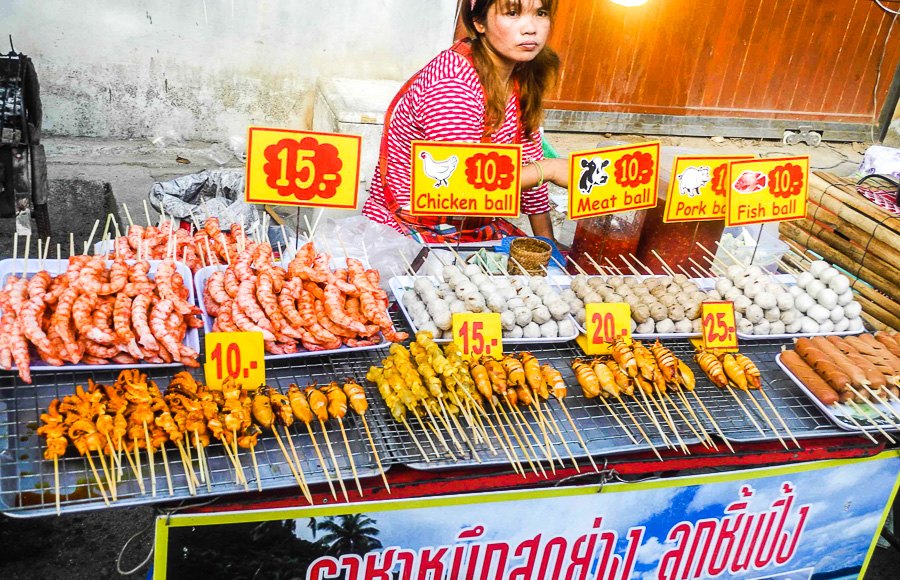
Skewers:
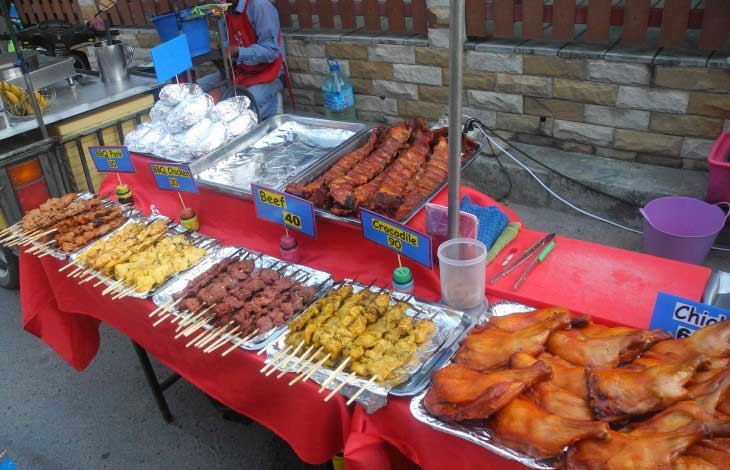
And here you can even try crocodile skewers:
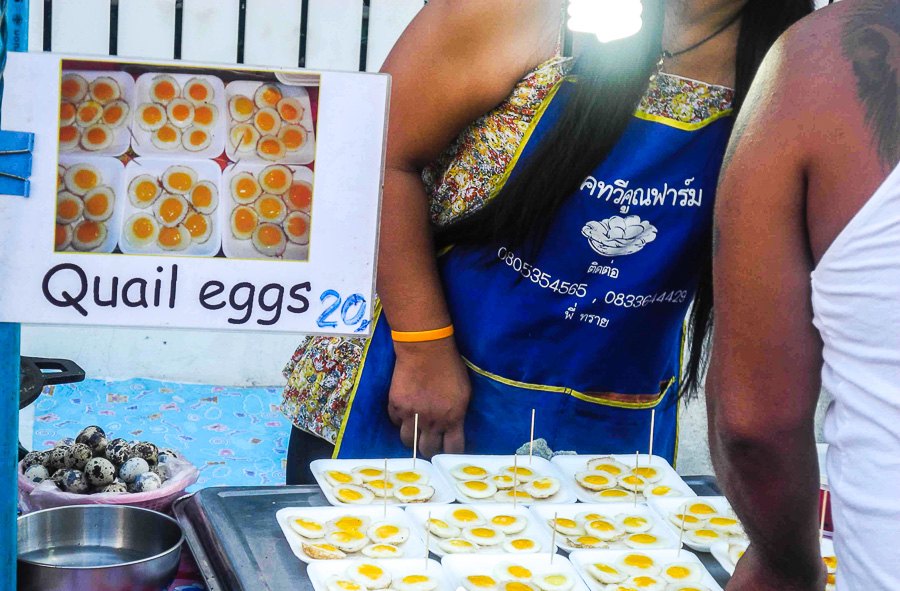
Fried quail eggs:
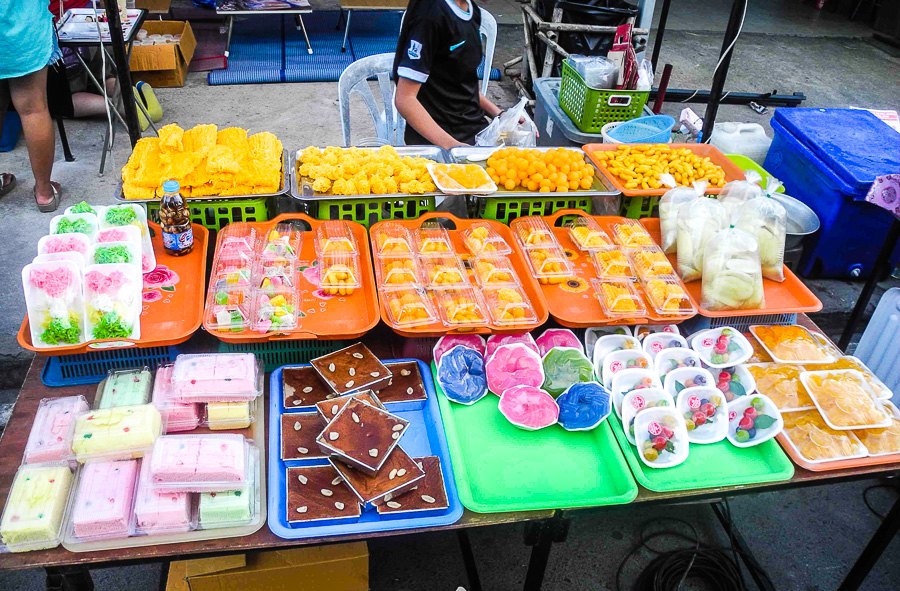
Thai sweets — for some reason we never got round to trying them; they looked too sweet:
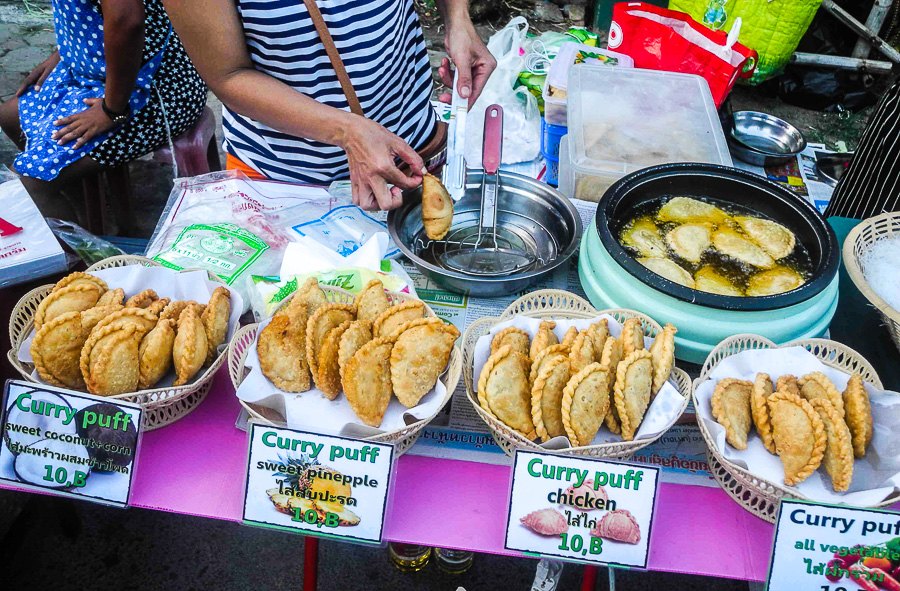
Pies fried in oil:
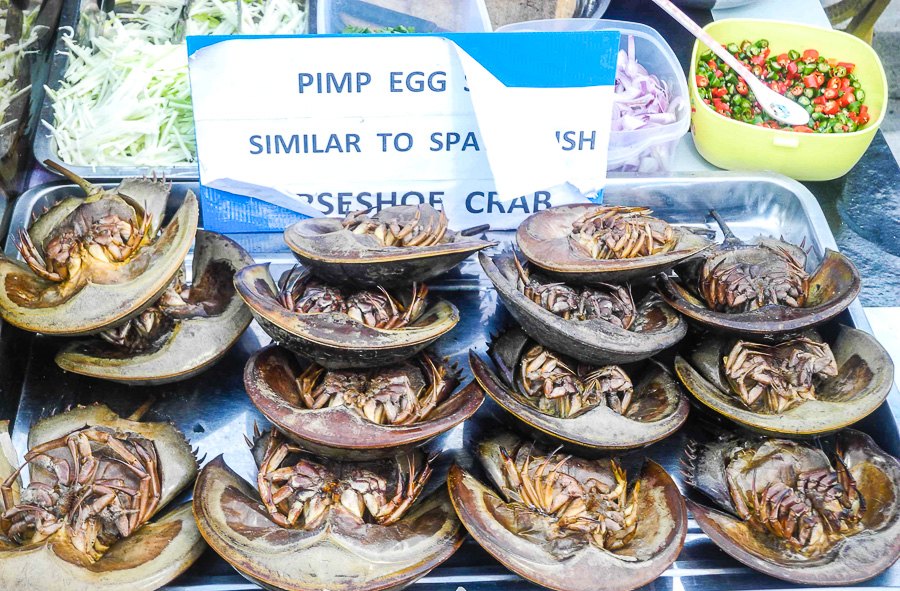
These monsters are frankly frightening to look at — it turns out they are horseshoe crabs, and only their roe is eaten:
And this is a perfectly familiar dish — fried rice with prawns and egg:
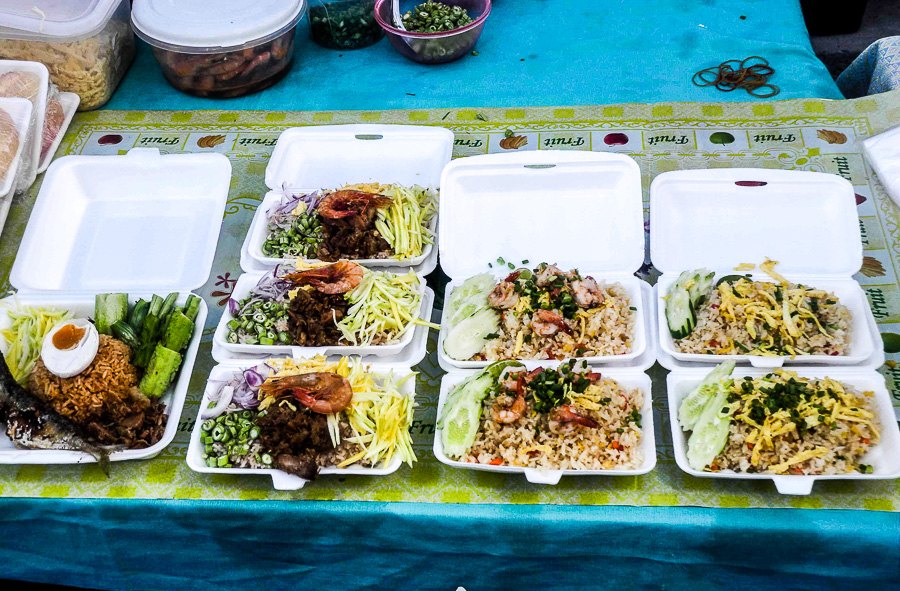
Besides the one-bite portions, you can buy a whole dinner:
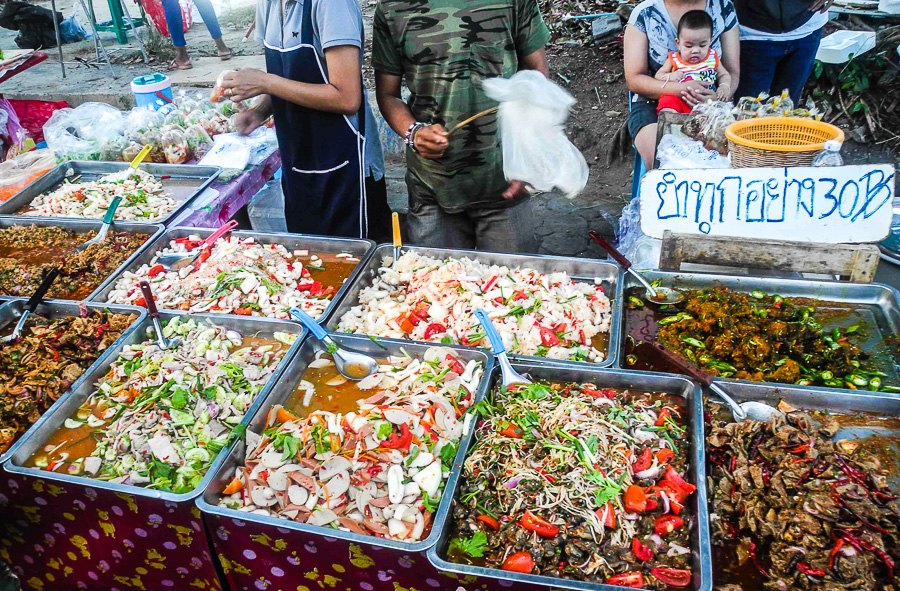
True, it’s quite unclear what ingredients all of this is made from, but mostly it’s meat, vegetables and chilli peppers.
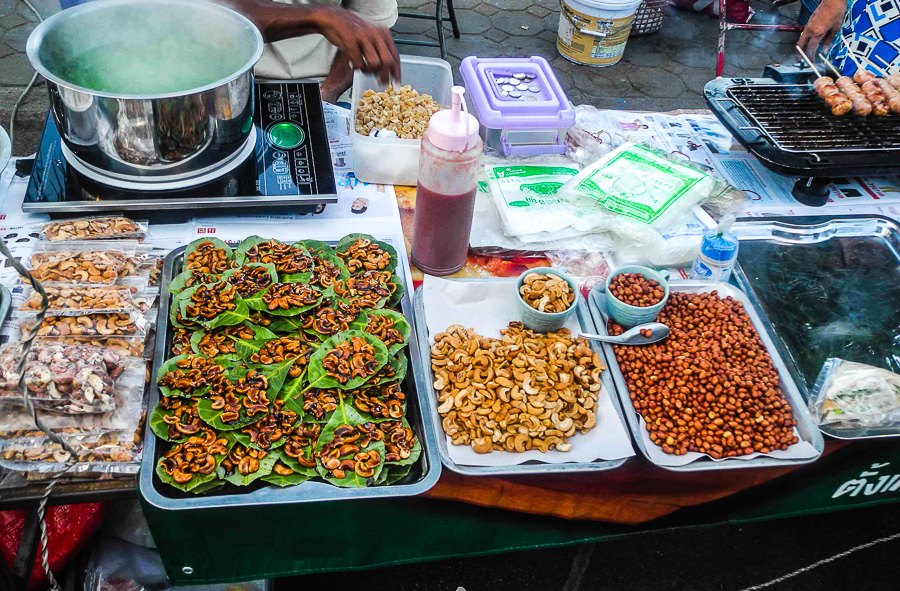
Roasted cashews and peanuts on some kind of leaves:
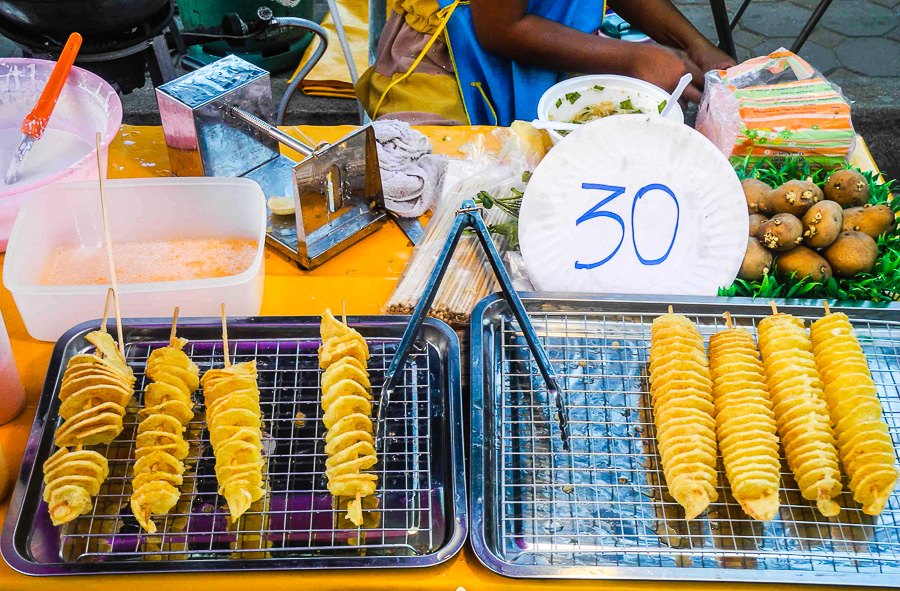
Homemade crisps are hugely popular:
Of course, this is nowhere near the full range: there are also fresh fruit, shakes, coconuts and coconut ice cream, alcoholic and non-alcoholic cocktails, and much more. Hopefully you now have a general idea of the evening (night) markets of Thailand, and of Koh Samui in particular.
3. Pad thai at the market
And finally, a word about one of the most popular Thai dishes — pad thai. In 2014 a stall where a Thai chef cooked it stood on the path closer to the beach. The pad thai turned out very tasty, and it came with spices, grated peanuts, lime, cucumber and fresh spring onion greens, all packed in separate little bags.