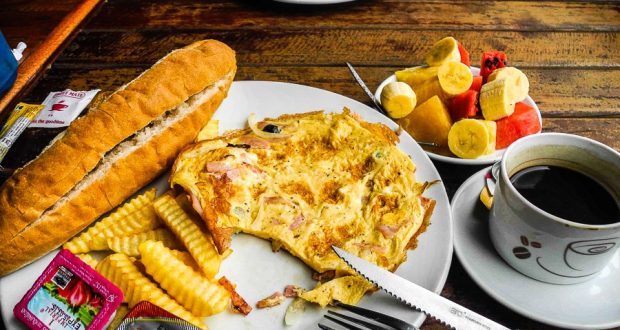
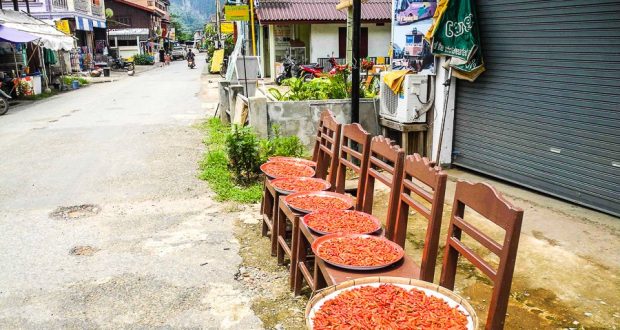
Vang Vieng is packed with things to do — tubing (floating down the river on a car inner tube), kayaking, bike rides through the picturesque surroundings, even hot-air balloon flights! But more than anything we wanted to see the caves, and there are a great many of them around Vang Vieng. We had never been inside a big cave before, so we decided to visit a developed one, Tham Chang Cave (it also goes by the name Jang Cave).
First the essentials, so you don’t have to hunt through the whole article. The cave is still there and open to visitors — it hasn’t gone anywhere or been renamed, it simply has two names: Tham Chang and Tham Jang. It lies roughly 2 km south of the centre of Vang Vieng, across the bridge over the Nam Song; the entrance coordinates are 18.9093, 102.4421, and any map or satnav will find it by those.
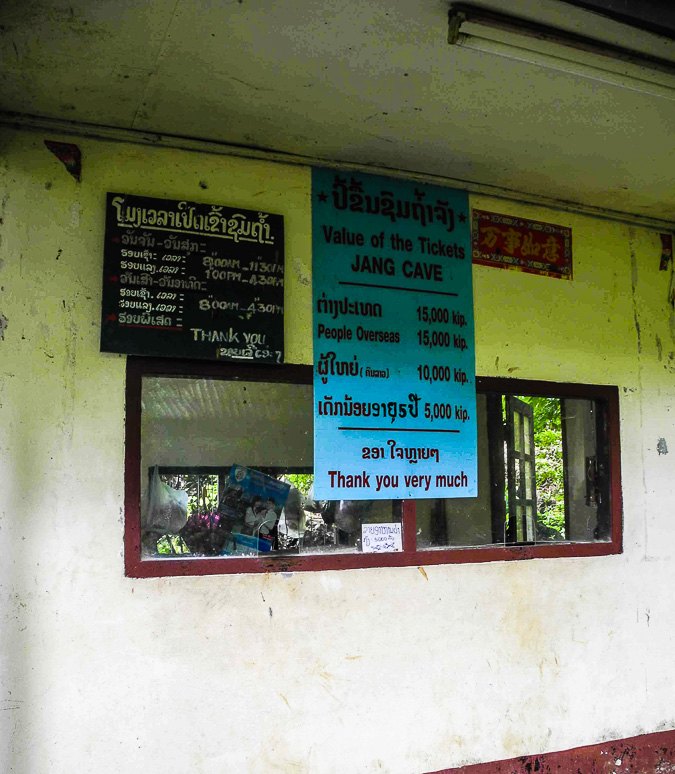
Admission is paid on the spot, in cash in kip — no description mentions card terminals, so bring small-denomination notes. According to reports from the last two years a visit comes to roughly 15–30 thousand kip per person: some people pay 15 thousand kip for the cave itself plus a small fee for the approach to it, while others pay a single fee of about 30 thousand kip at the gate. The exact amount will be announced at the ticket office: the site has no single official tariff, so I’m deliberately giving a range rather than one neat figure.
Opening hours: it opens at 8:00, closes between 16:00 and 17:00, and on weekdays the cave often has a midday break — roughly 11:00 to 13:00. That’s the main trap: turning up around noon and finding a closed ticket office is all too easy. It’s best to go in the morning.
From town it’s just over half an hour on foot or around fifteen minutes by bicycle, and from the lagoon at the foot of the cliff to the cave entrance itself there is a staircase of roughly 150–200 steps: worth bearing in mind in advance if you’re carrying small children or have troublesome knees. And yes, you can swim by the entrance — there’s a spring gushing from beneath the cliff, the water is cold and clear, and locals swim here.
When we walked there (the photos in this article are from 2014), the cave wasn’t on Google Maps, and we used an electronic map of Vang Vieng — simply a jpg image. There’s no need to struggle like that now: the entrance has coordinates — 18.9093, 102.4421 — and you just type them into a satnav.
The cave is located here:
You can ride there on bicycles or a motorbike, but from the tourist part of Vang Vieng the cave really isn’t far at all, so we walked from our guesthouse. The distance is short: from the southern bus station to the cave it’s about 1.7 km, and from the centre around two.
And one important update about Vang Vieng itself: the town has a railway station on the Laos–China line, north-east of the centre. That means you can get here from Vientiane not only by bus but also by train: as of October 2026 trains from Vientiane to Vang Vieng run seven times a day, with departures from 8:00 to 15:15; the journey takes from 50 minutes to 1 hour 20 minutes, and a second-class ticket costs around 200 thousand kip (fares from August 2026). Tickets go on sale only a few days before departure — three to seven days ahead, according to different summaries — and in high season they get snapped up fast.
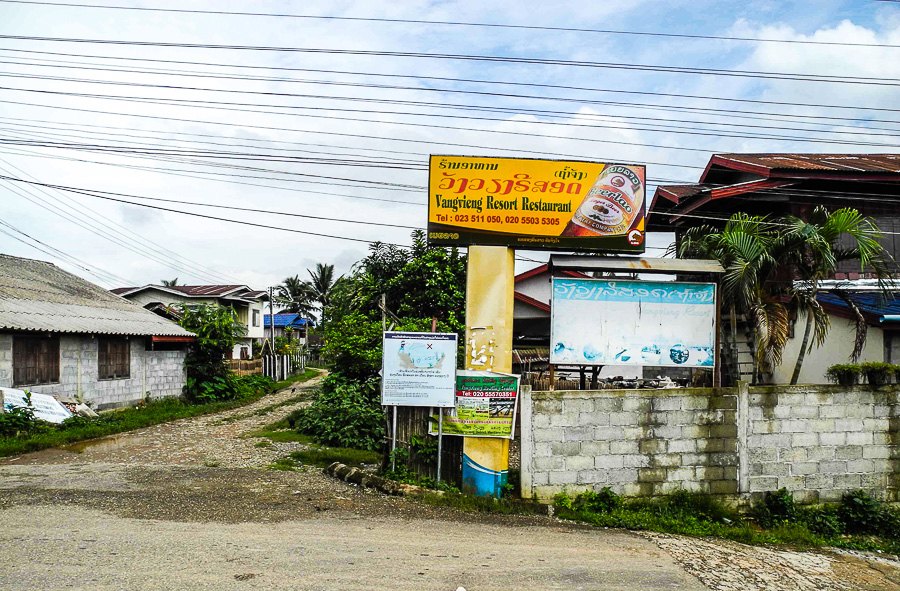
Walk along the street beside the river until you reach the Vangvieng Resort Restaurant sign:
Then turn right towards the cliffs and follow this path to the end:
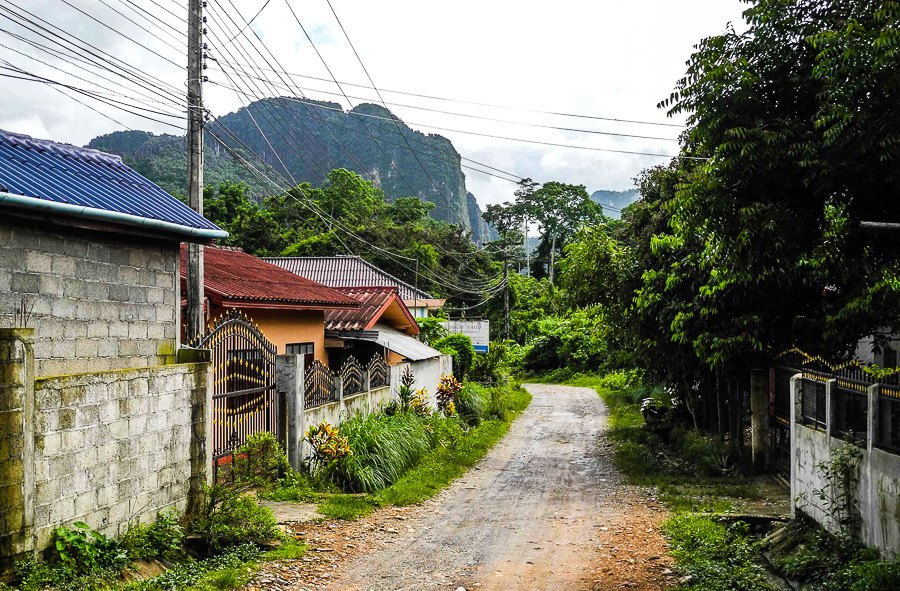
There are hotels here too, though they become fewer and farther between:
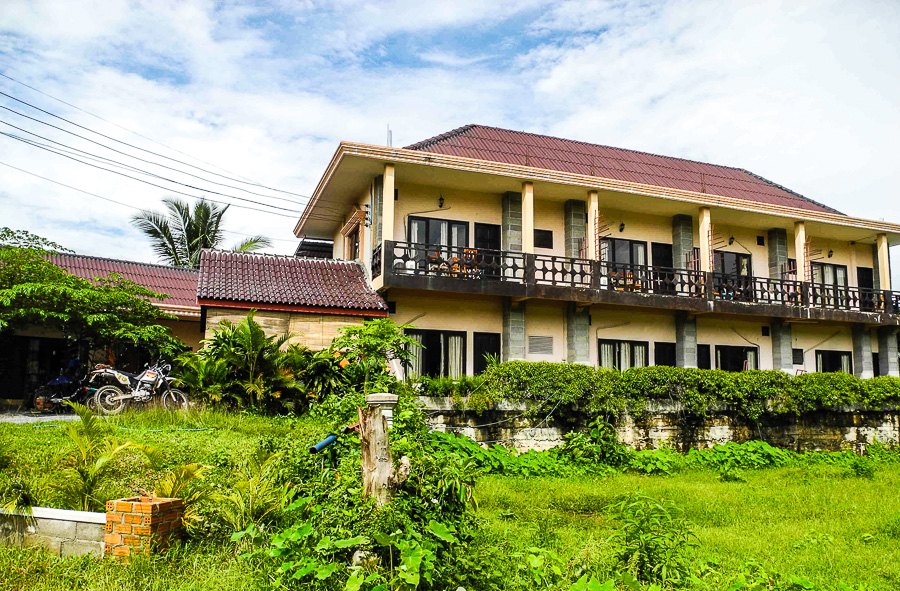
The nature is simply stunning, such beauty:
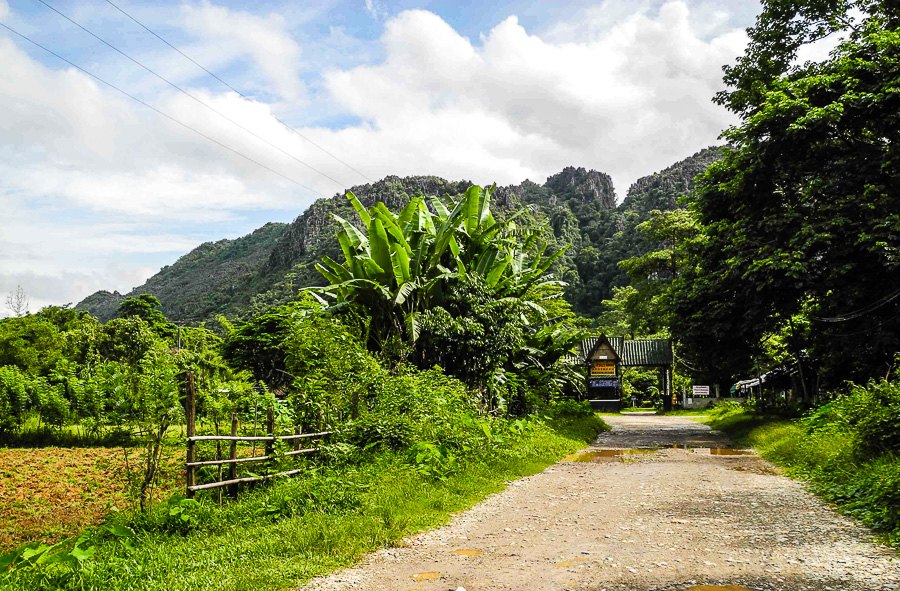
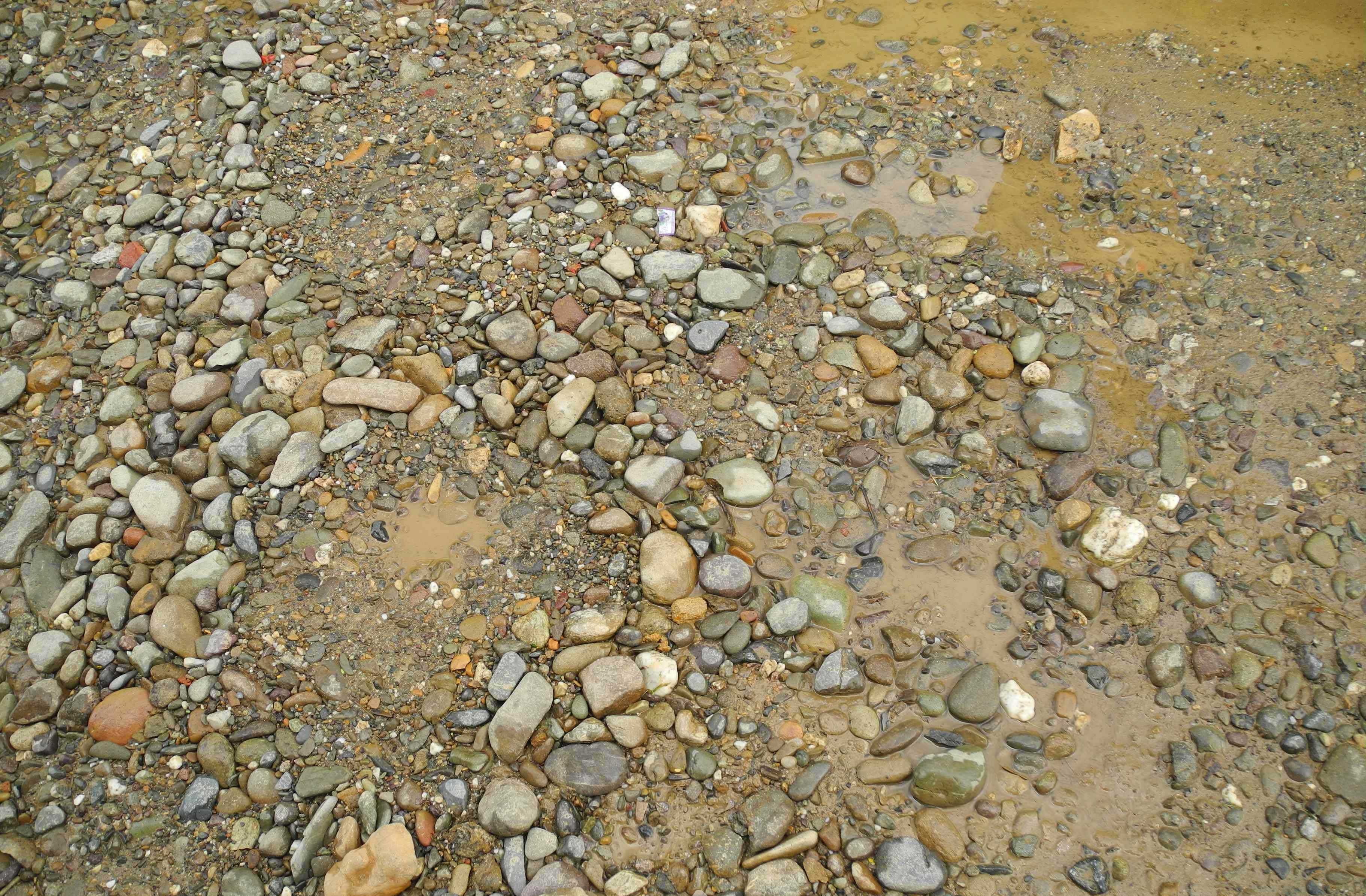
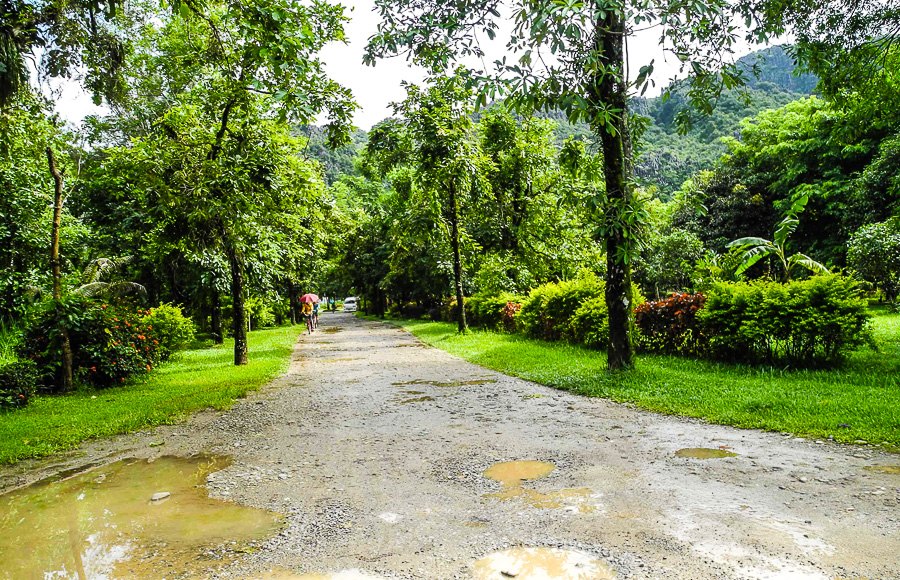
Underfoot, though, it’s mud and multicoloured stones — no asphalt, just an ordinary rural dirt road:
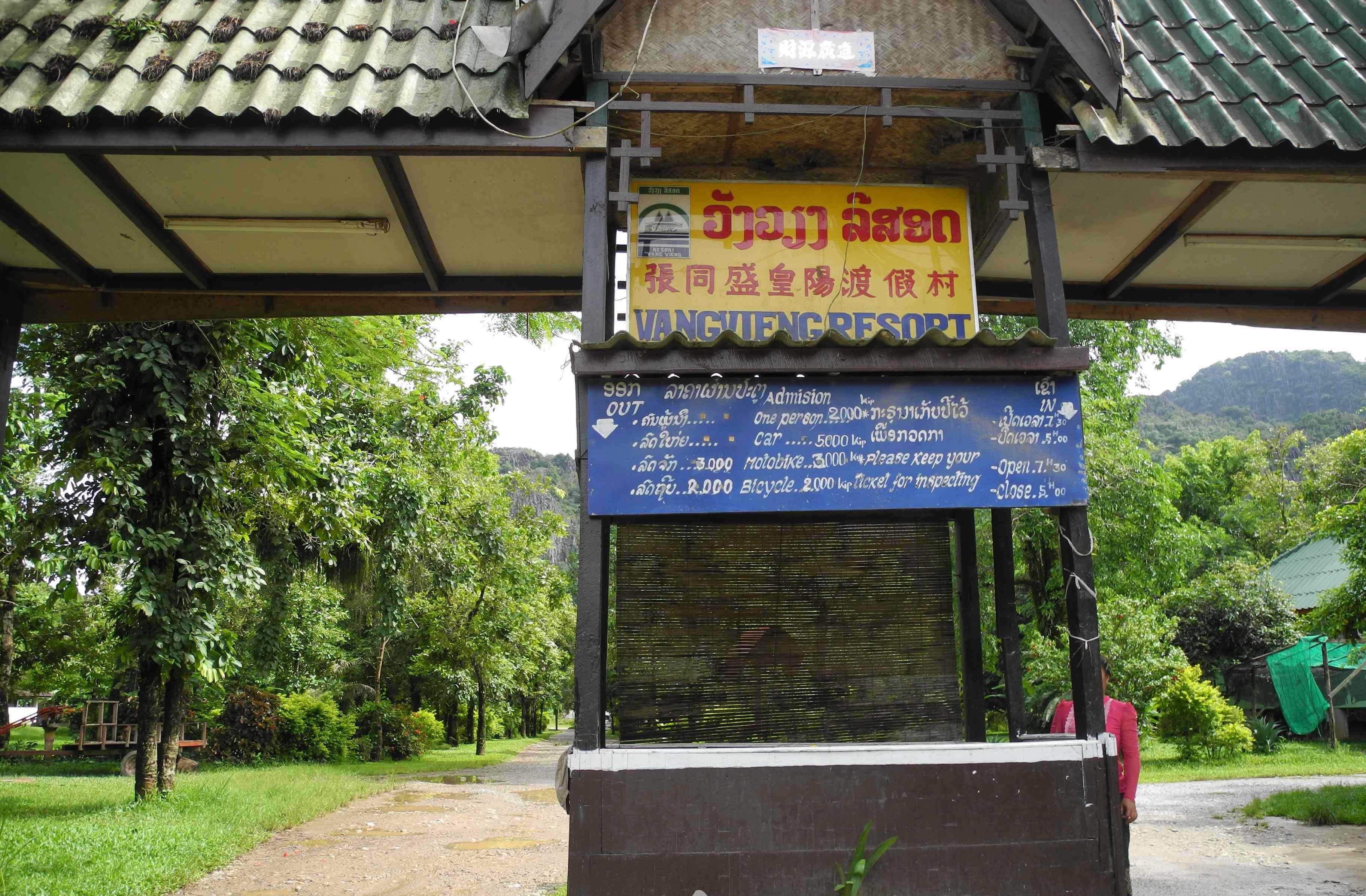
We reach an arch where you pay for the bridge crossing (some bridges here are toll bridges, as are all the natural attractions, but the cost is low, so it’s not much of a strain). The cost of this crossing when we were there was 2 thousand kip per person, 2 thousand kip per bicycle and 3 thousand kip per motorbike. Reports from recent years mention 5 thousand kip per person, so you’ll find out the exact amount at the gate. One more thing: the orange bridge in our photos no longer exists — according to a recent report it was washed away in the 2022 monsoon, the next one didn’t last long either, and there is now a new metal bridge in its place. For reference: on 16 October 2026 the Bank of Laos reference rate was 22,395 kip to the dollar, so 15 thousand kip is less than a dollar:
We carry on along the path beside green bushes to the bridge:
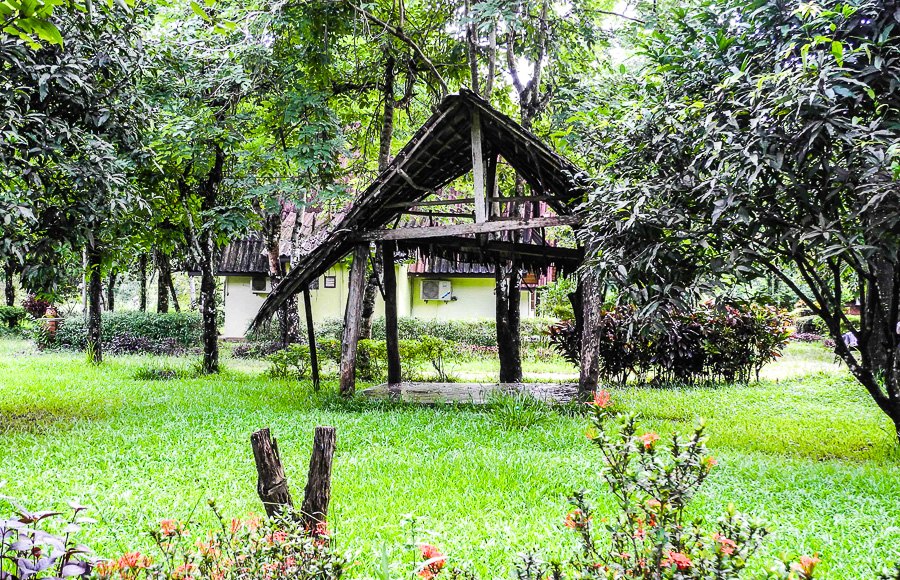
A gazebo straight out of a fairy tale:
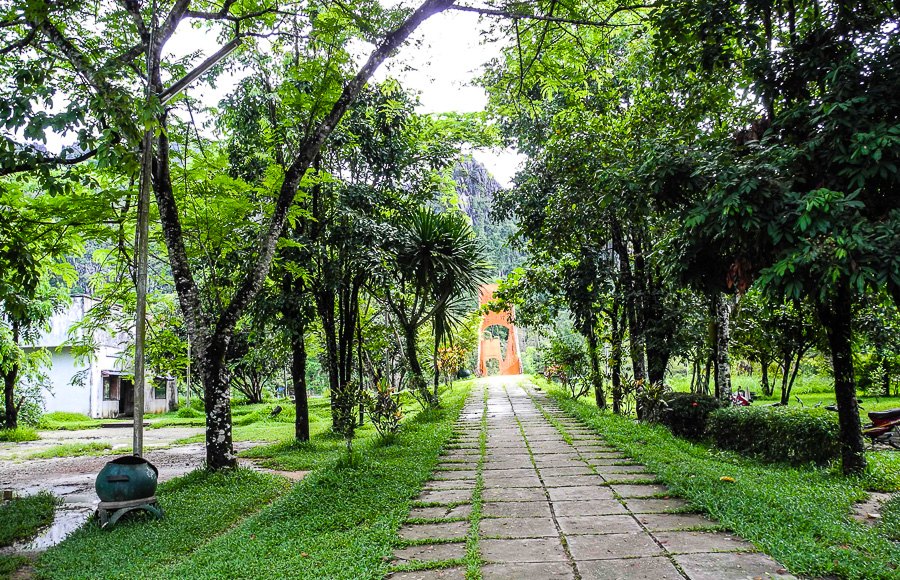
The orange bridge is already visible in the distance:
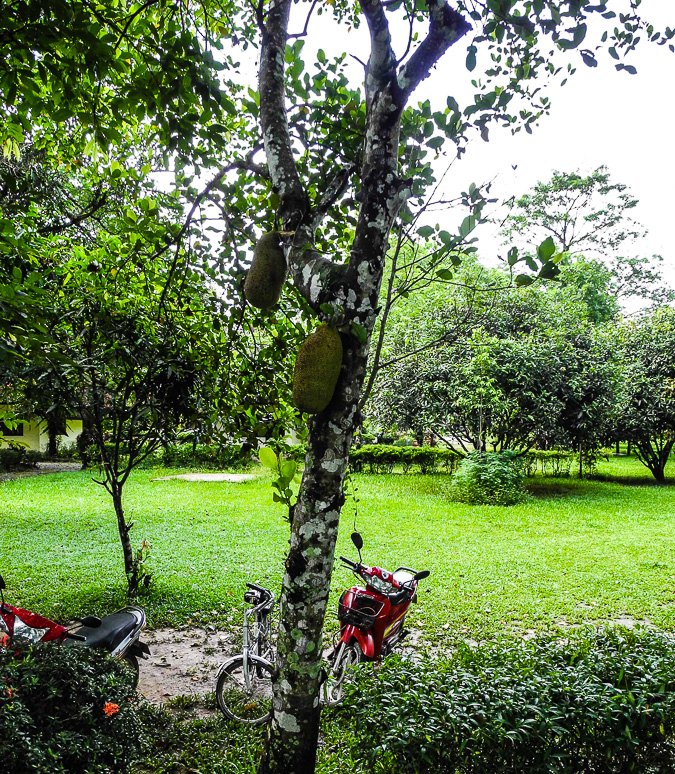
Jackfruit on the trees:
And here is the bridge — it really is picturesque here!
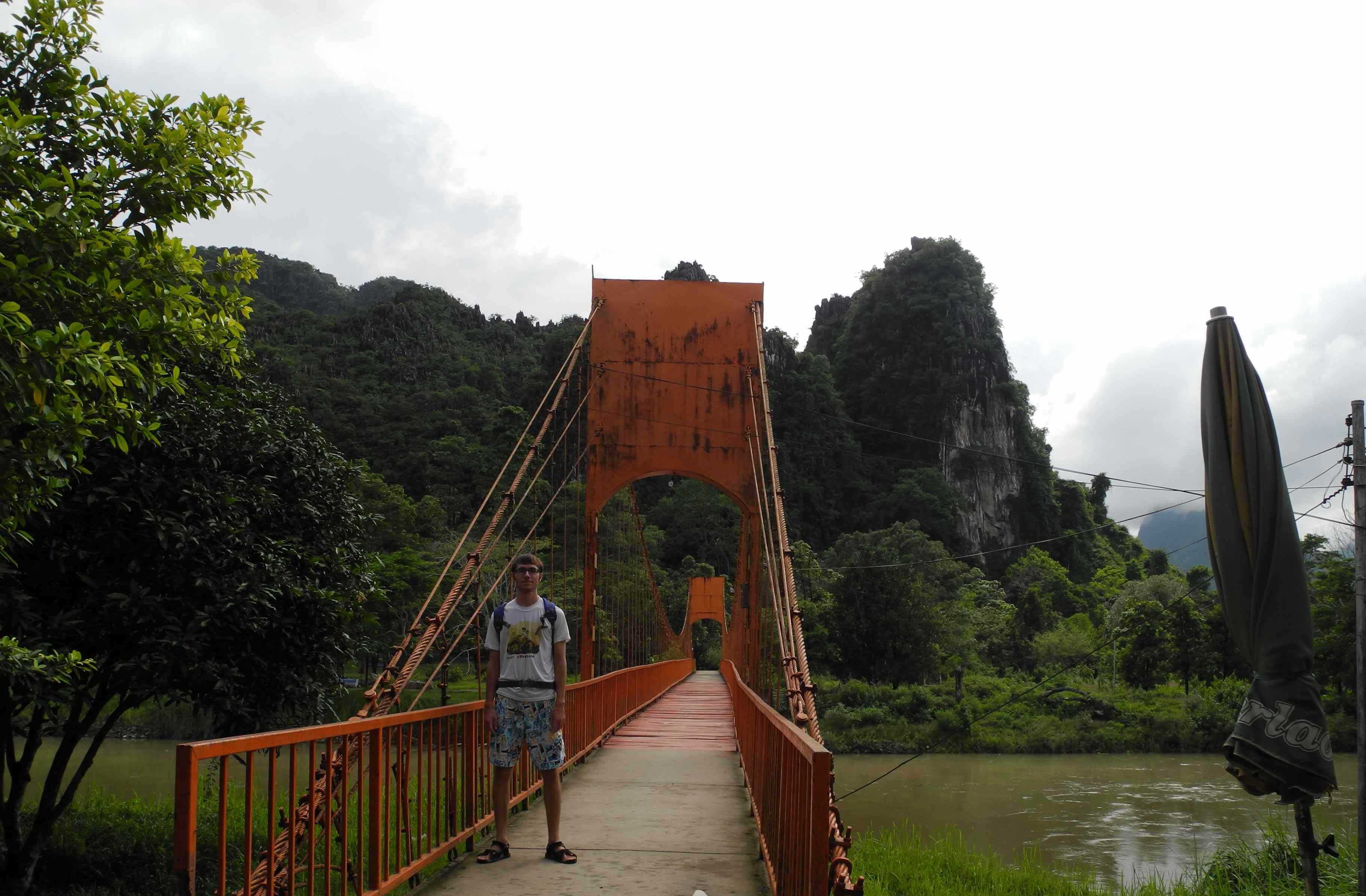
The bridge is fairly sturdy, especially compared with the rickety free ones.
The view from the bridge over the river and mountains. To reach the cave we need to go left, past the fruit stalls:
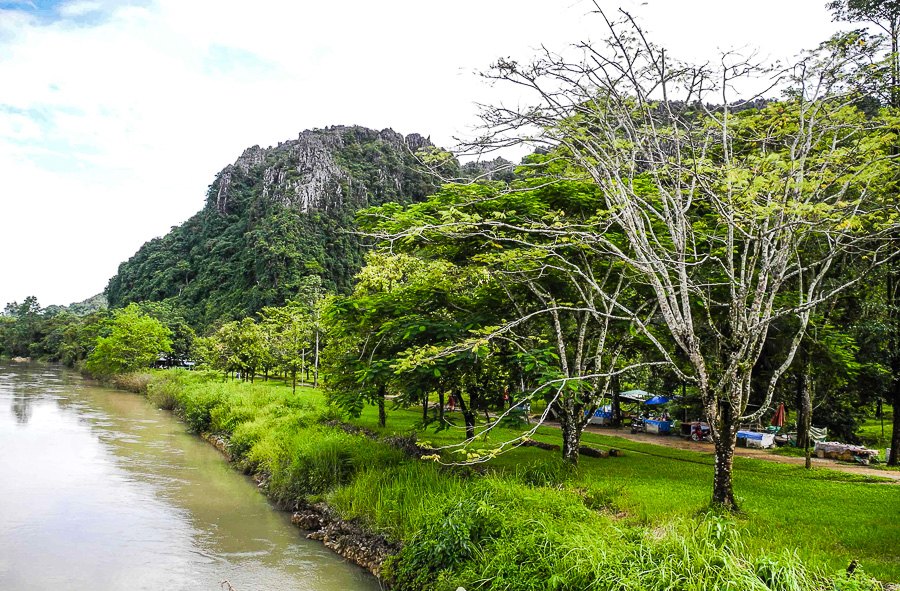
Then we follow the path through the thickets:
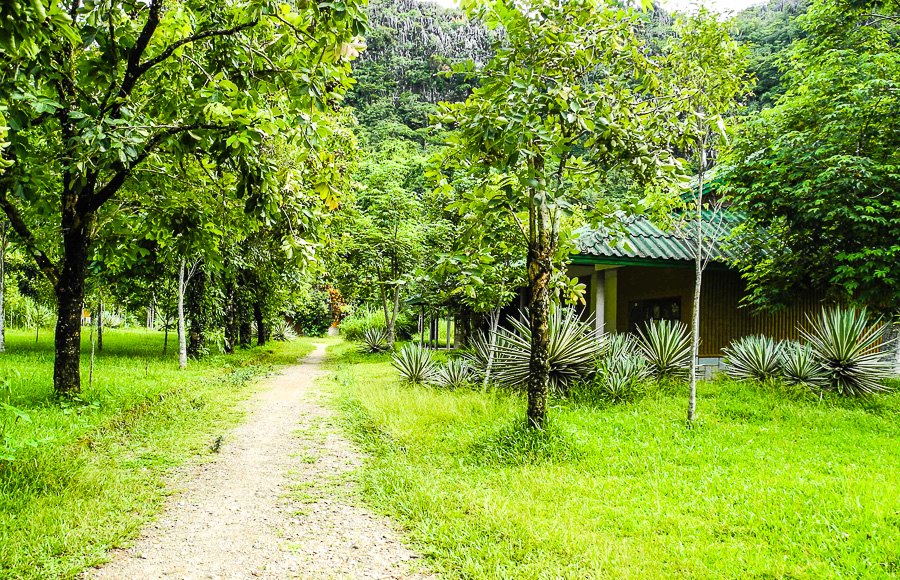
We walk past the bungalows:
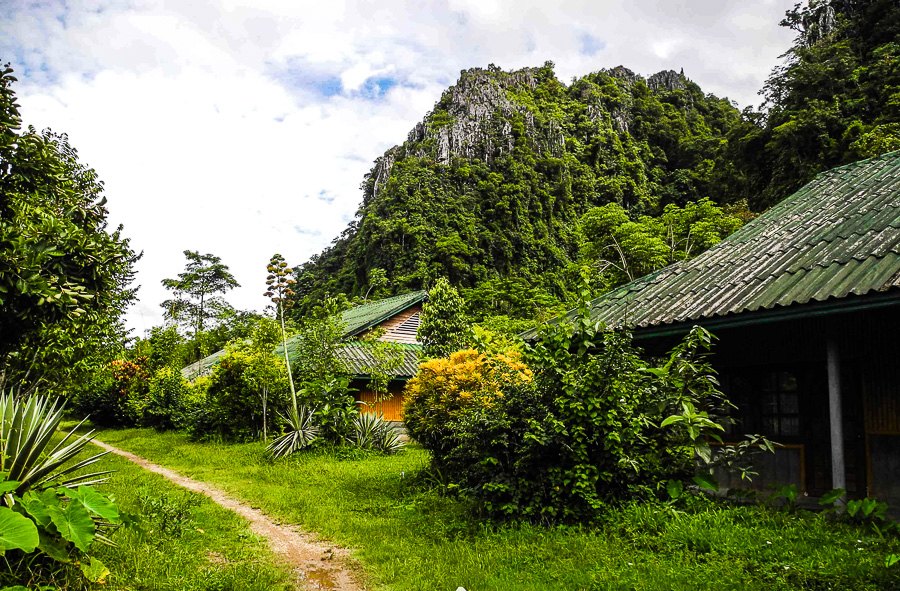
At last we arrive at the blue lagoon (this isn’t the famous Blue Lagoon of Vang Vieng that everyone writes about — the lagoon here is very small):
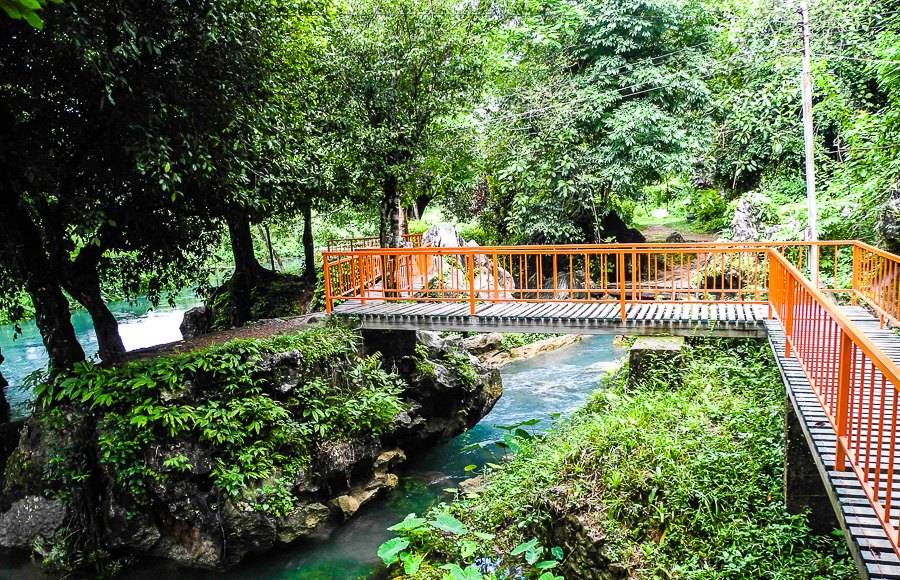
I’m struck by how beautifully everything here is arranged. Nature did its part — the setting is gorgeous — and on top of that people have fitted everything out wonderfully, as if creating a worthy frame for the natural charm of this place:
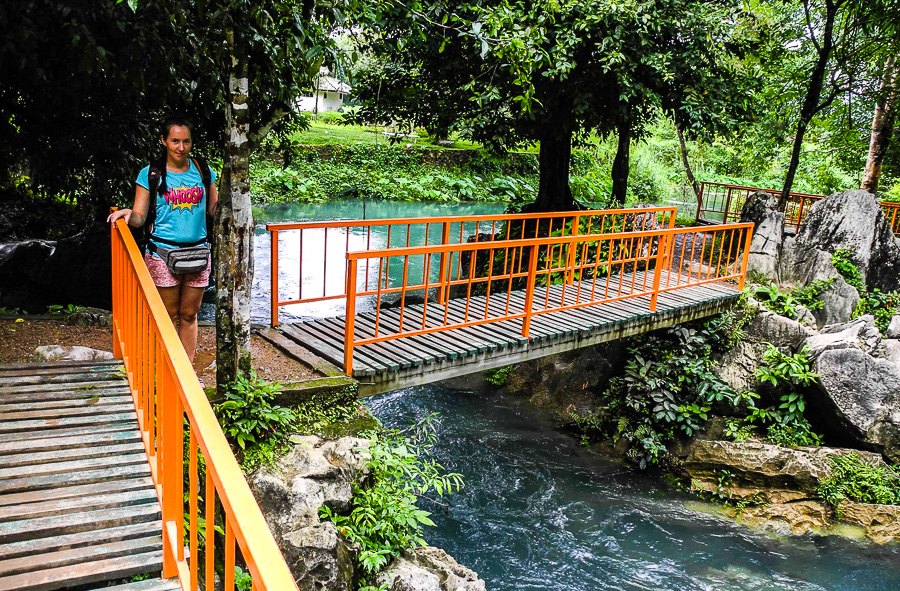
The water really is blue, and here’s why: it’s not a river but a spring that gushes from beneath the cliff at the foot of the cave, and the blue-green tint comes from minerals dissolved in the water. The water in it is cold and very clear.
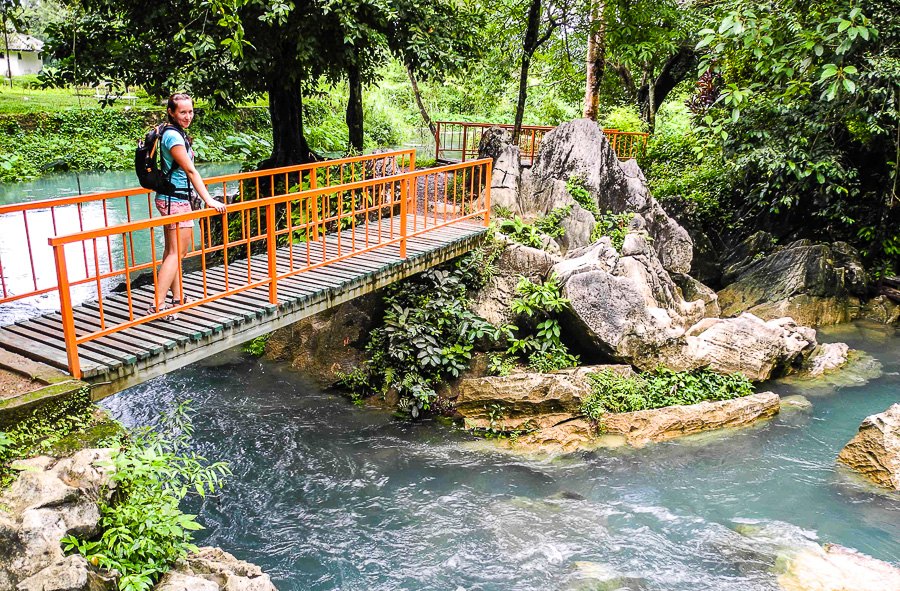
You can swim here too, by the way — a little ladder leads straight into the water. And the blue water flows right out of the cave; it’s a truly magical sight!
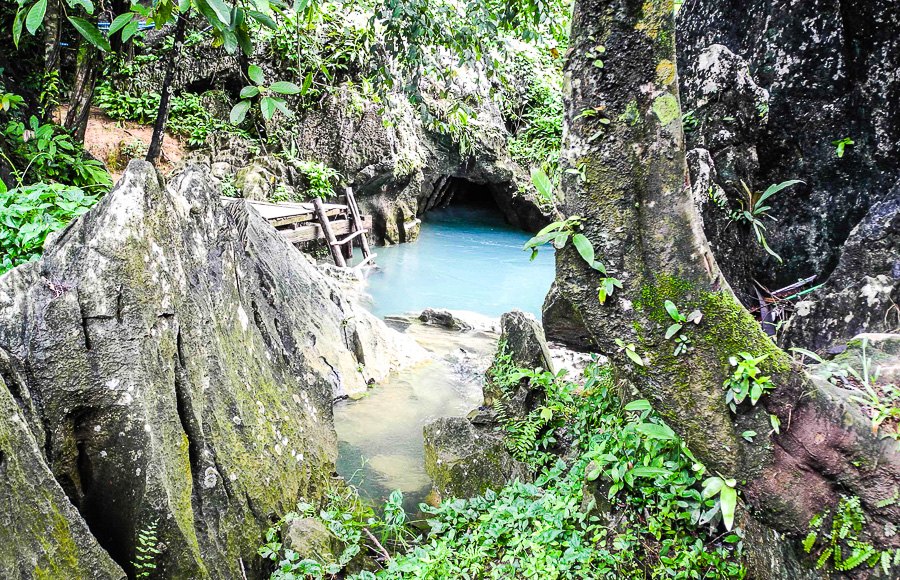
Once we’d explored the lagoon, it was time to head into the cave itself. Admission is paid; for foreigners it cost 15 thousand kip — and reports from the last two years quote the same for the cave, though at the gate they may instead charge a single fee of around 30 thousand kip, so count on 15–30 thousand kip per person and take cash in kip. For beauty like this it’s a trifling price either way, don’t you think?
Visiting hours: the cave opens at 8:00 and closes between 16:00 and 17:00 — different sources say 16:00, 16:30 and 17:00. More important is this: on weekdays the cave often takes a break from around 11:00 to 13:00, so it’s best to arrive first thing in the morning.
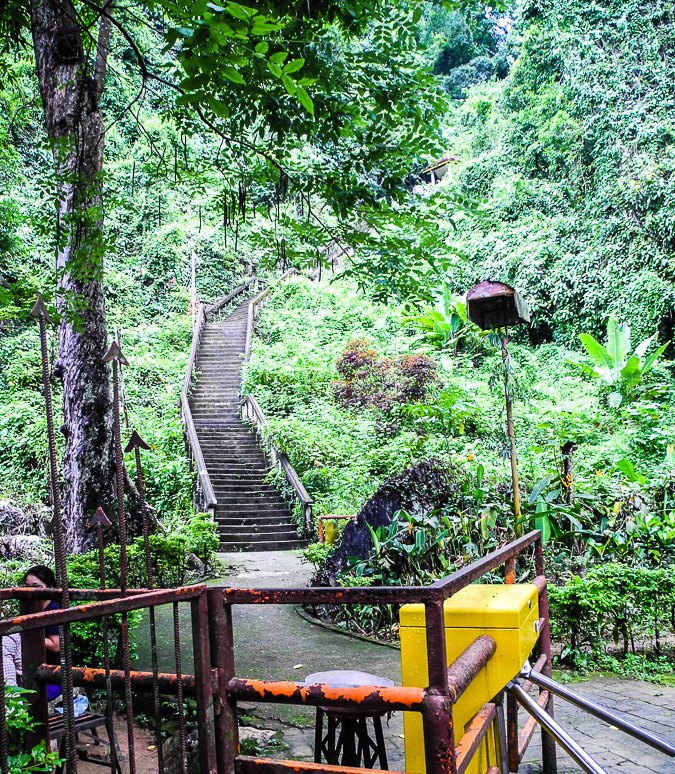
After paying we pass through the turnstile and climb the staircase — there are roughly 150–200 steps; the climb is short but very noticeable in the heat:
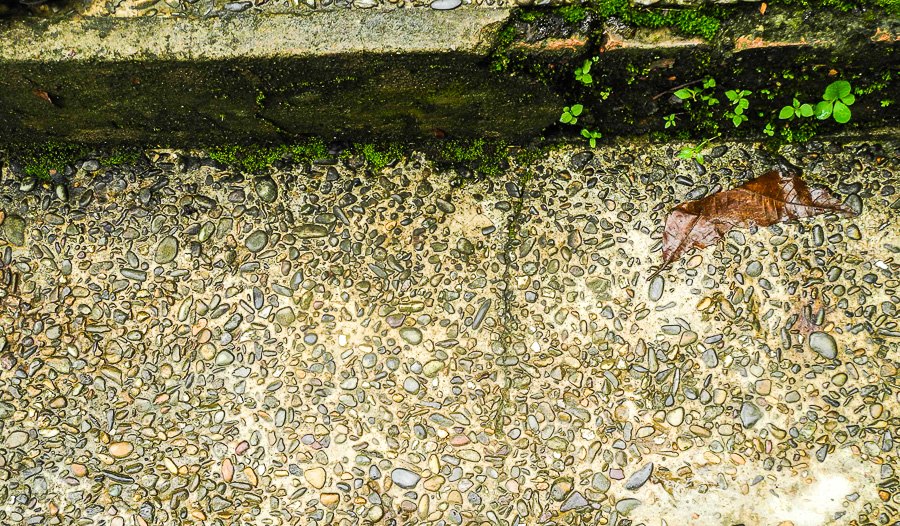
Every step is faced with pebbles:
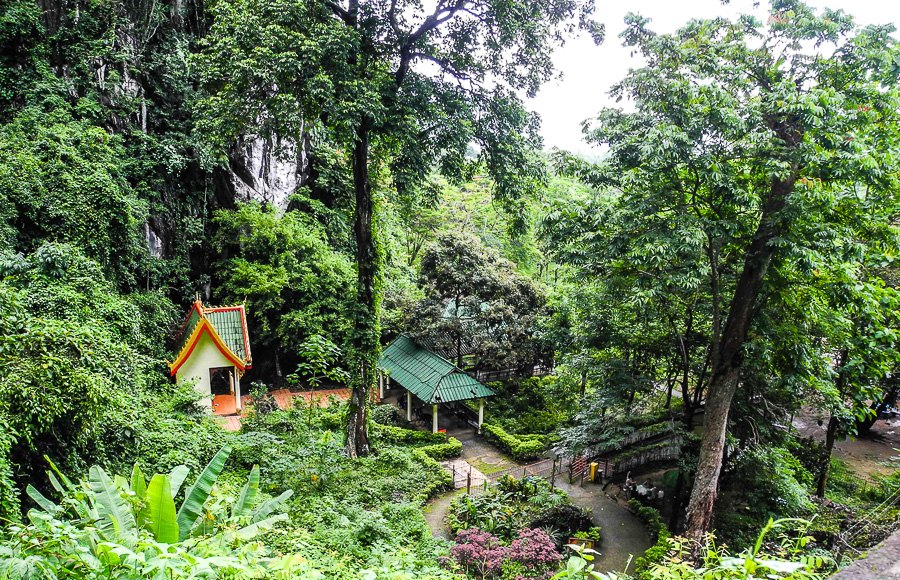
The view from above:
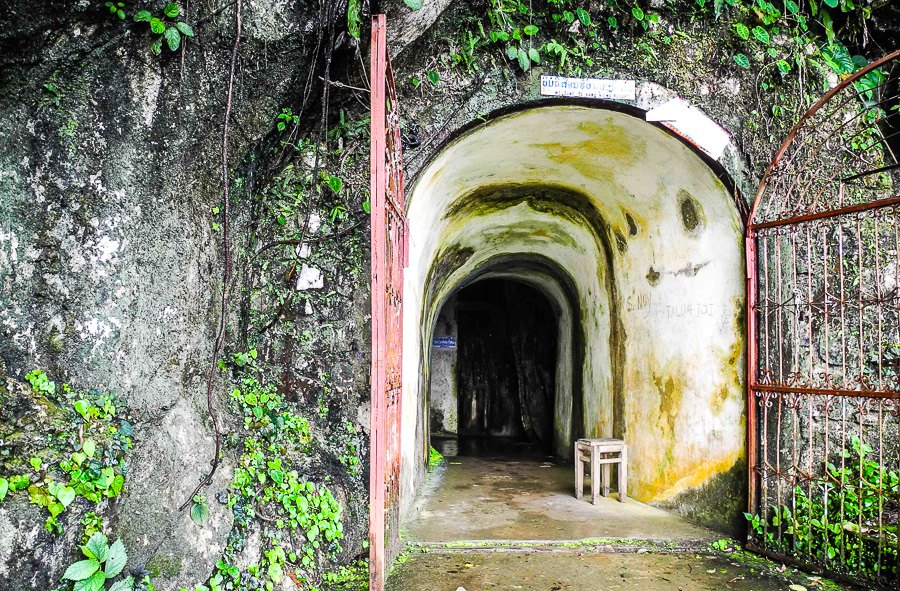
And here is the cave entrance. When there are no tourists the cave is locked — I wouldn’t want to be shut in there:
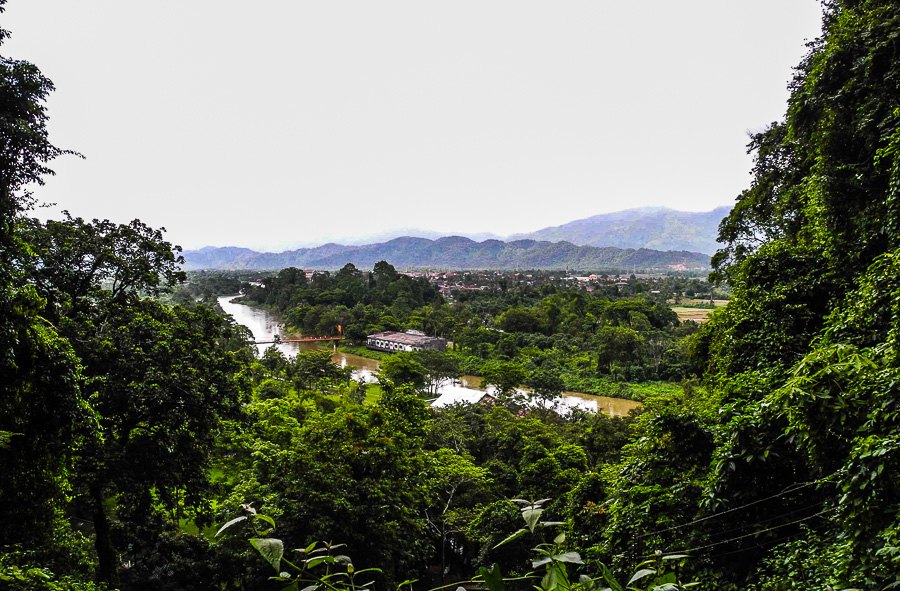
The view from the cave over the valley:
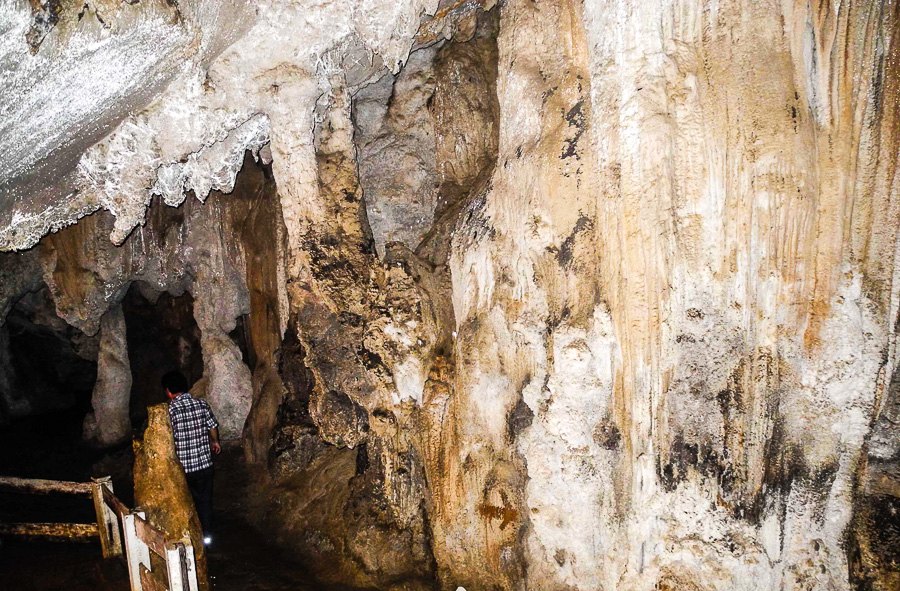
As soon as you step inside the cave, the camera lens fogs up — it’s so stuffy and humid in there, though cool at the same time. Water drips from the ceiling here and there, so be careful with your equipment:
Inside, the cave is equipped with convenient walkways and lanterns, so everything is clearly visible; you can even come here with children without worry — there’s nothing dangerous:
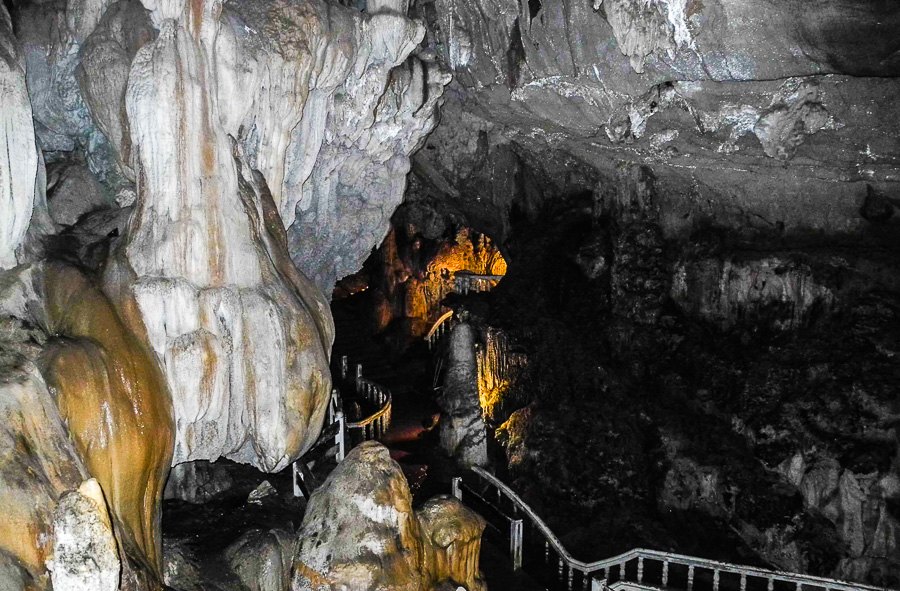
We had never been in such an enormous cave and were simply amazed by its size. And how wonderful cavers must feel when they discover yet another astonishing cave!
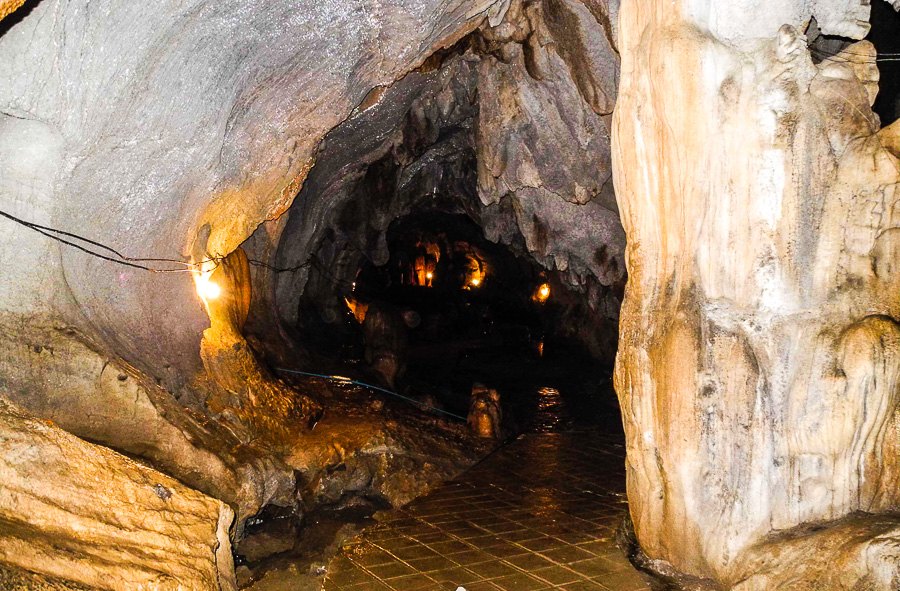
Here you can see the proportions and the size of the chambers:
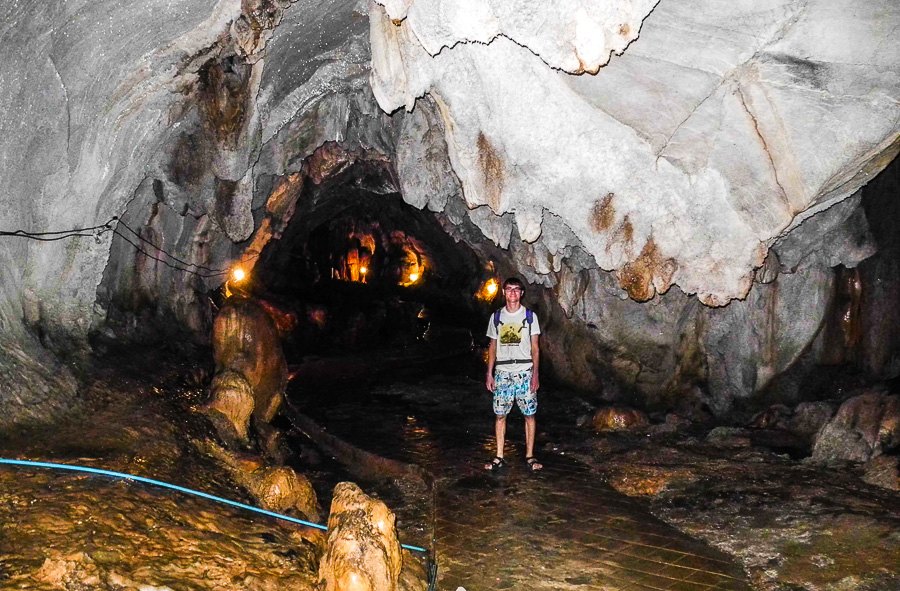
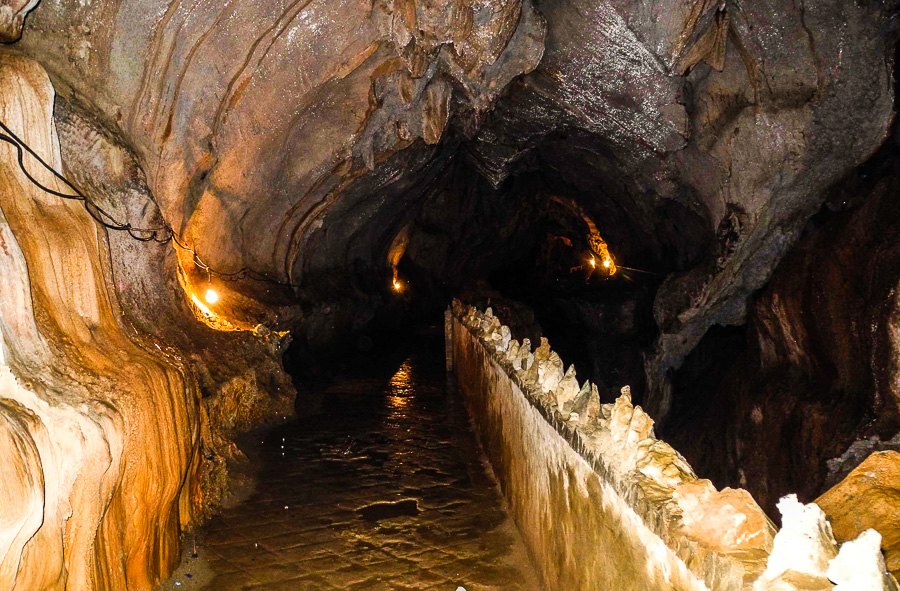
The walkways lead off into the distance:
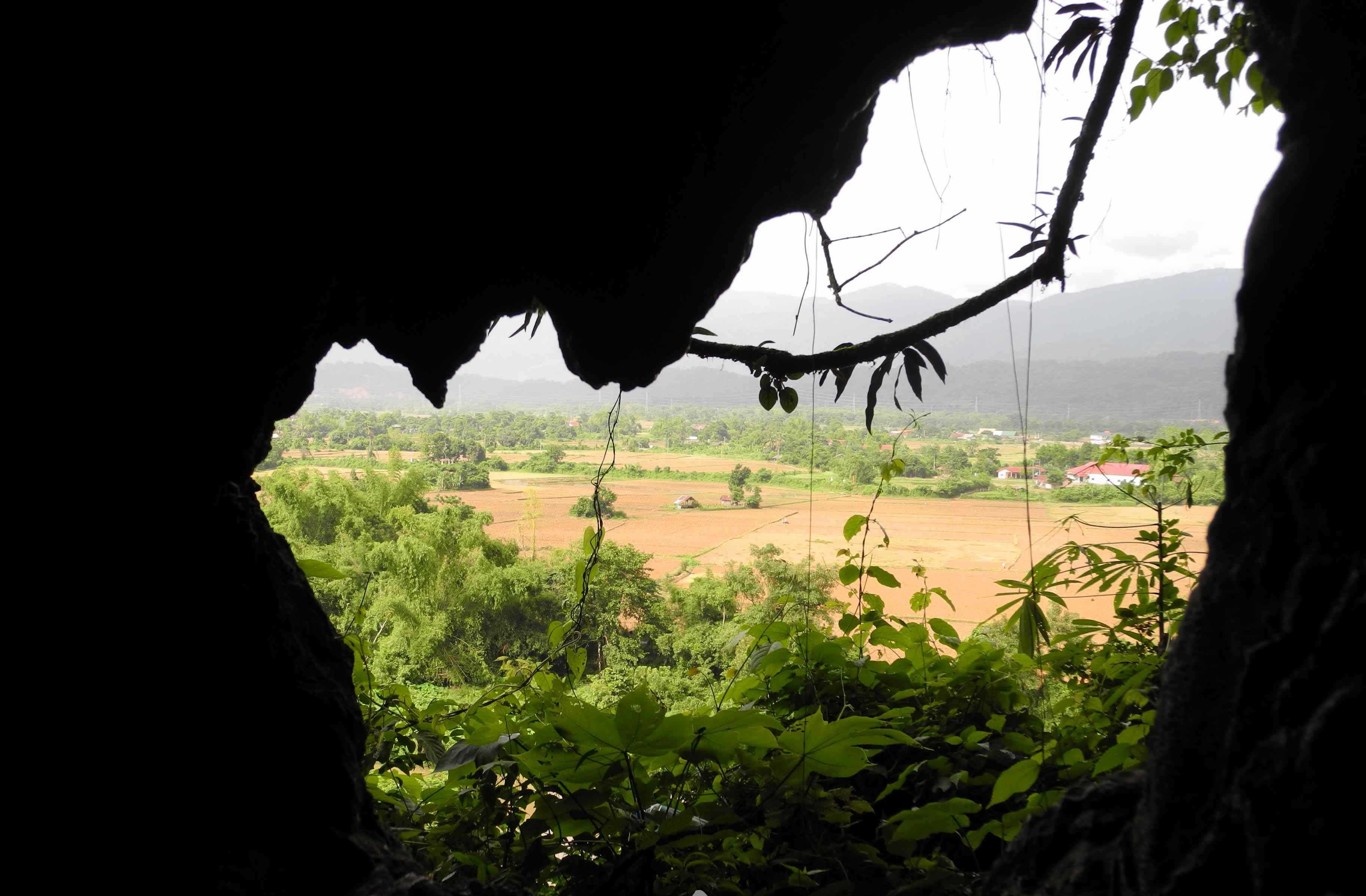
Suddenly a gap appears, and you can see the rice fields surrounding Vang Vieng:
A little further on there’s a viewing platform with a view over the river and Vang Vieng. Here you can clearly see how different the water in the river and in the lagoon is — the spot where the water from the cave flows into the river looks most unusual:
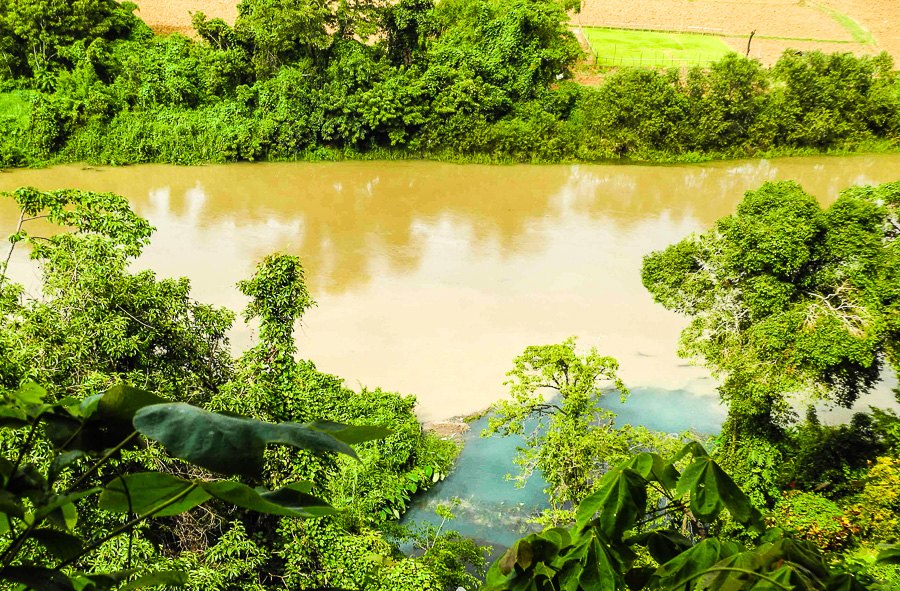
Beautiful!
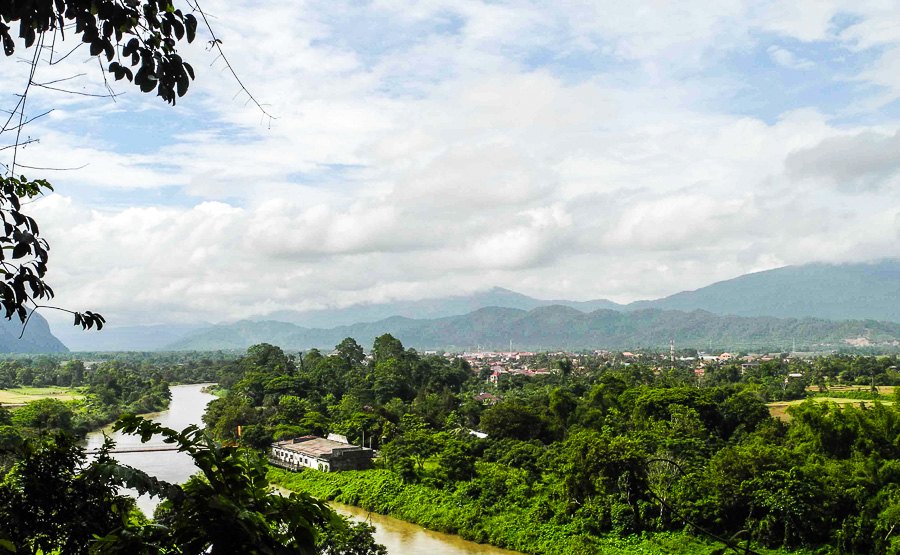
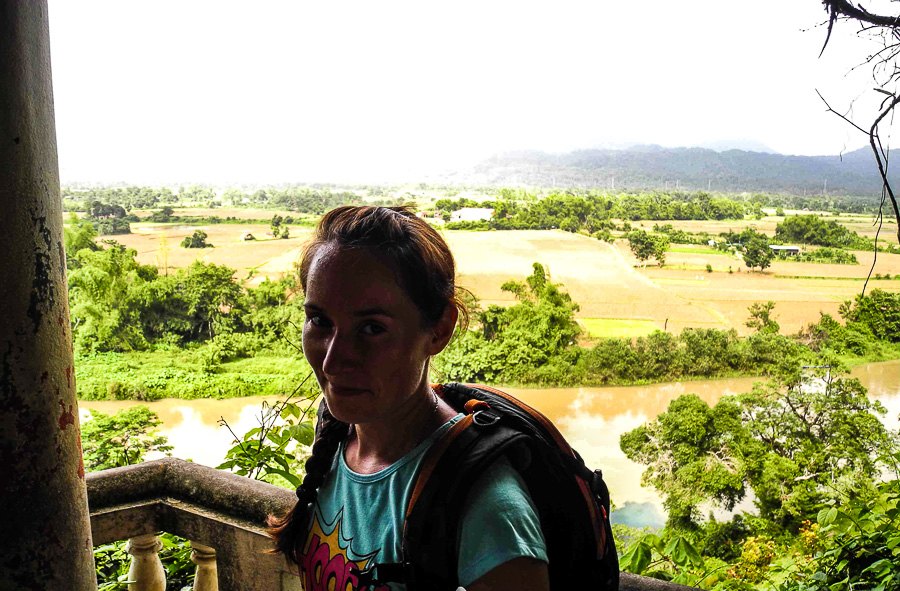
The viewing platform has a little balcony:
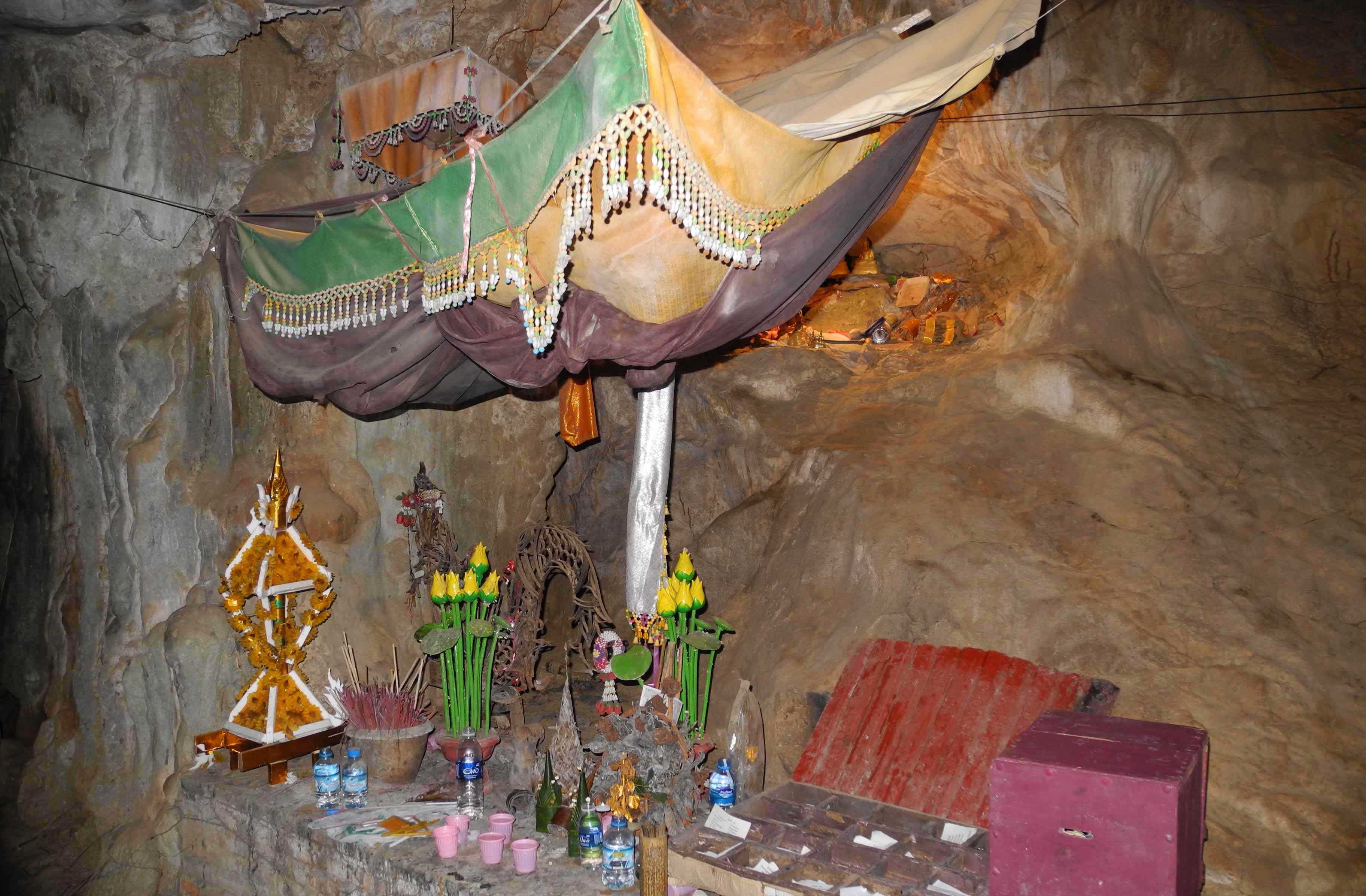
Nearby is a place of worship inside the cave:
The cave formations are enormous:
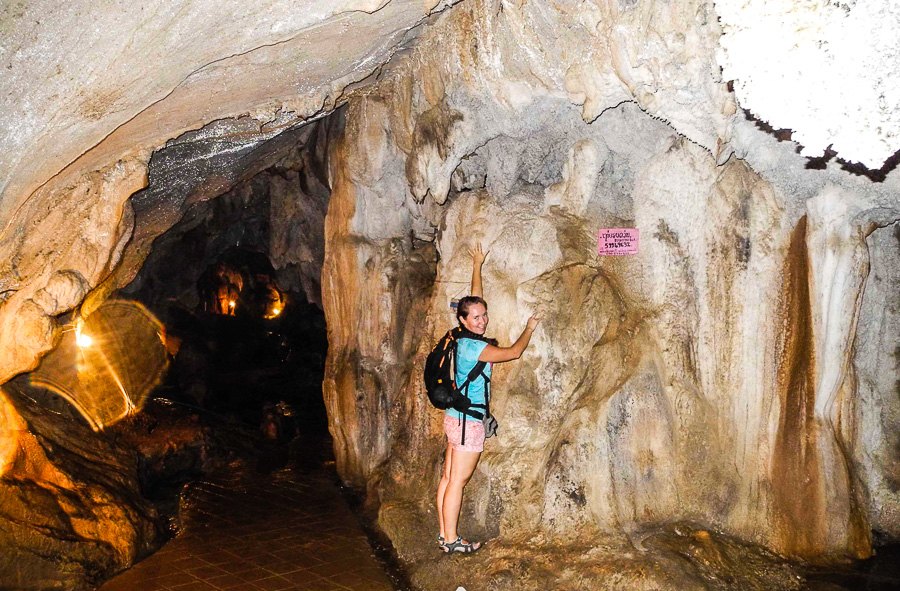
So many walkways and little staircases — you want to see it all:
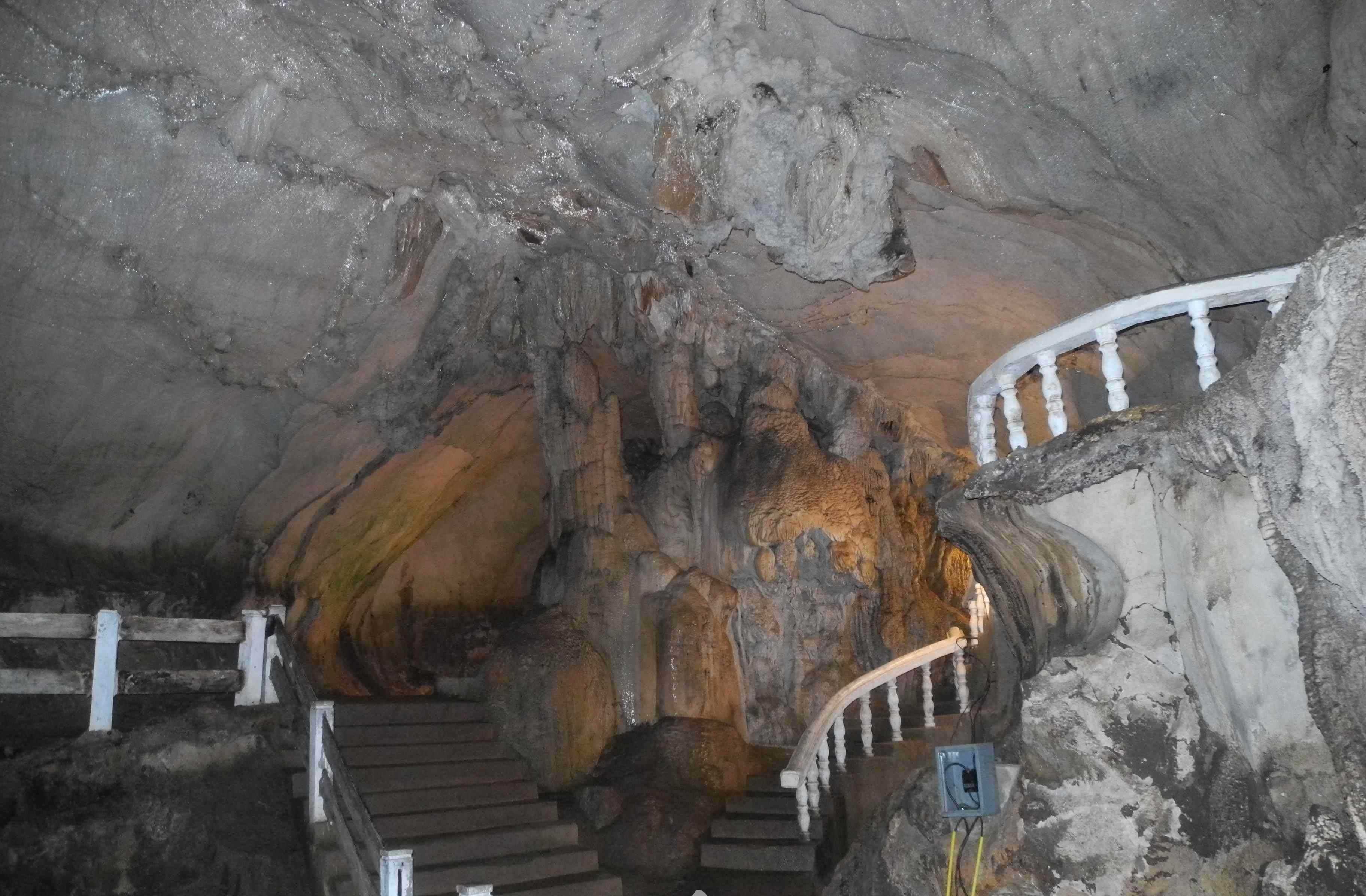
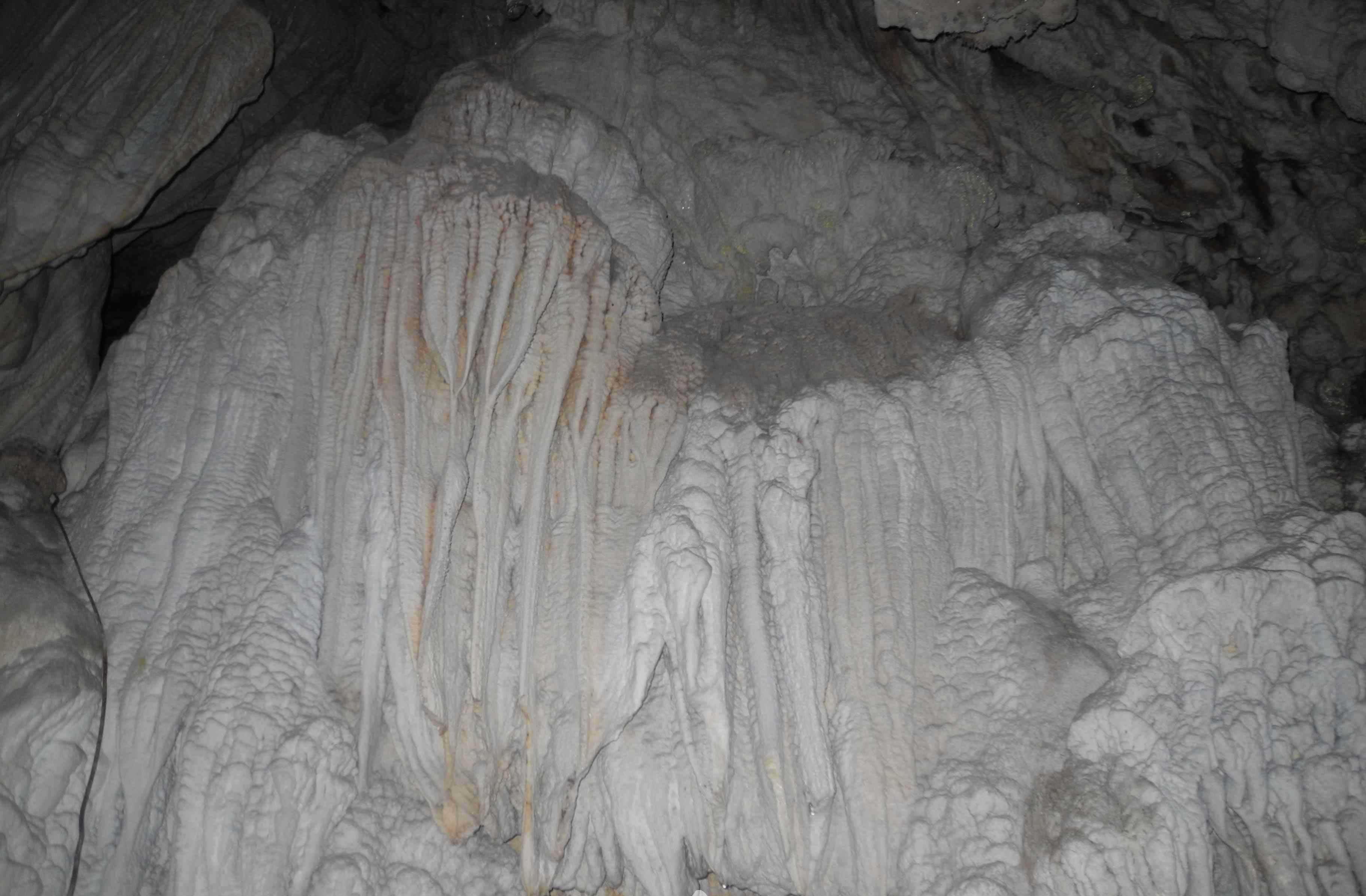
How many years did it take nature to make all this?!
Further on the cave is slightly flooded, and going that way feels rather eerie (especially given that besides us there was practically no one in the cave — just silence and dripping water, and who knows what lies further on). Adventure films about cave expeditions immediately spring to mind:
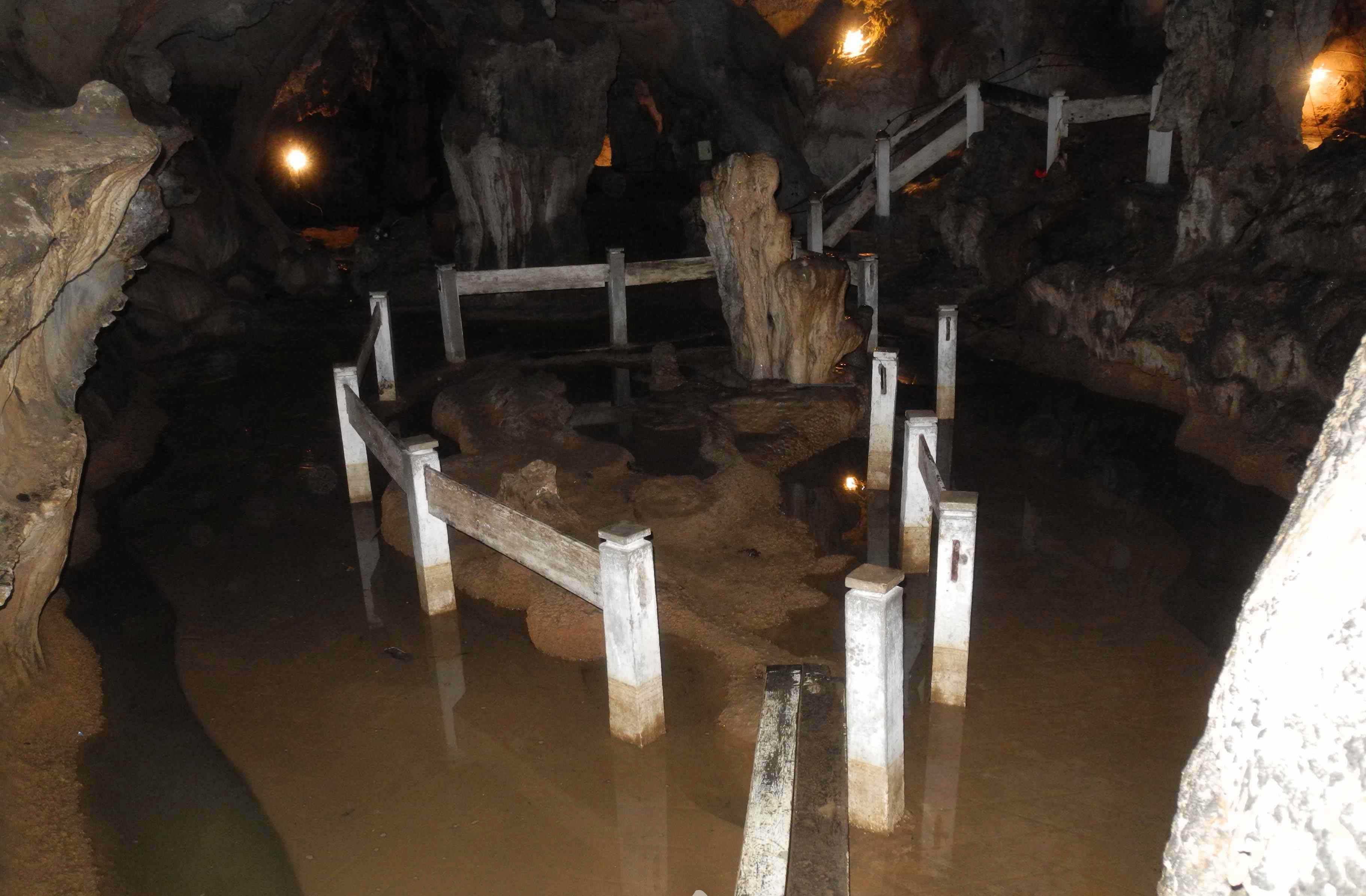
But we found a way to go further — to the right of the laid-out walkways there’s a less convenient spot, a small gap in the rock with no water in it:
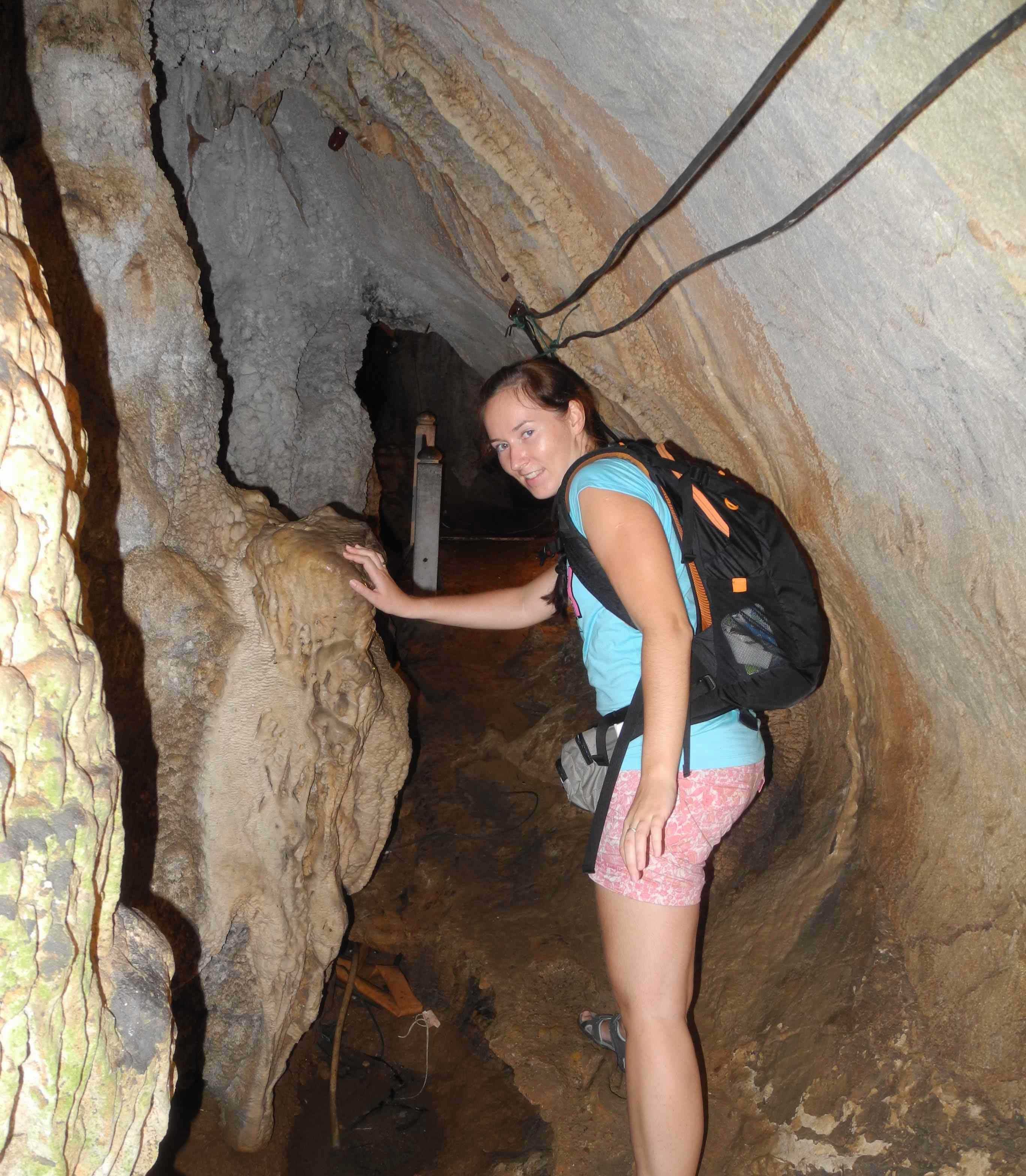
And beyond it, a chamber like this:
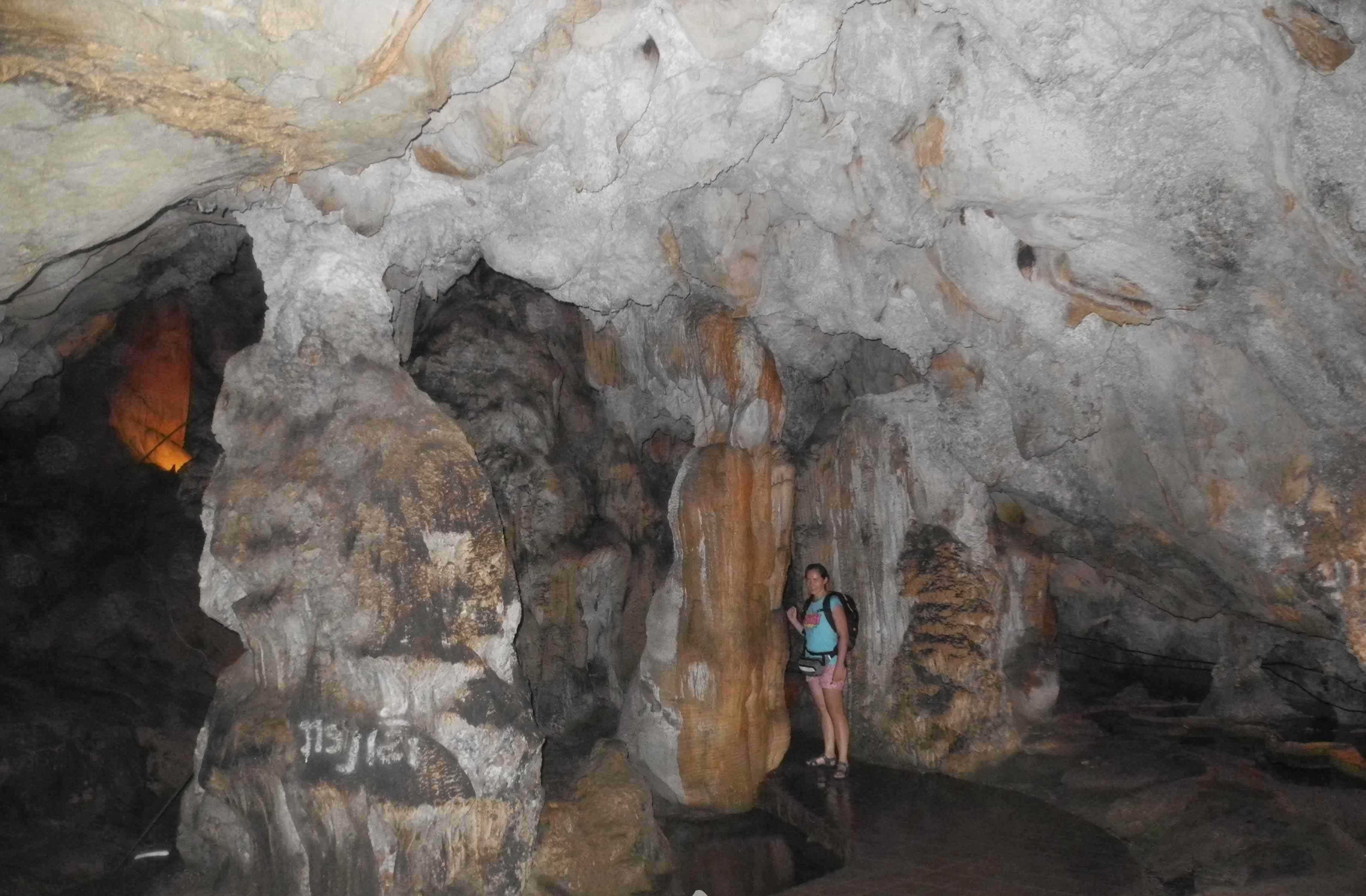
And that’s where the cave ends.
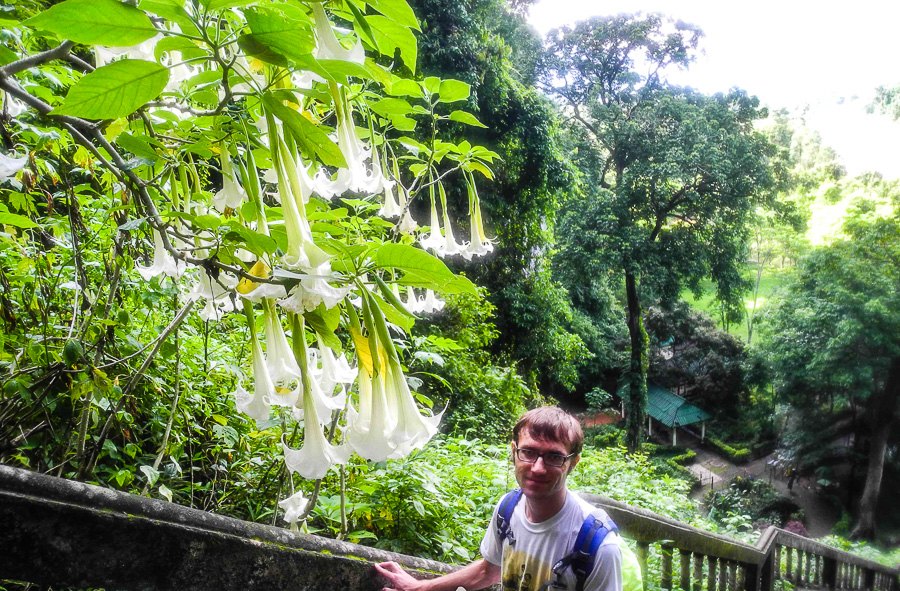
We leave the cave and head back down the staircase. Another wonder of nature — gigantic flowers; they really are the size of a head, it’s not an optical illusion:
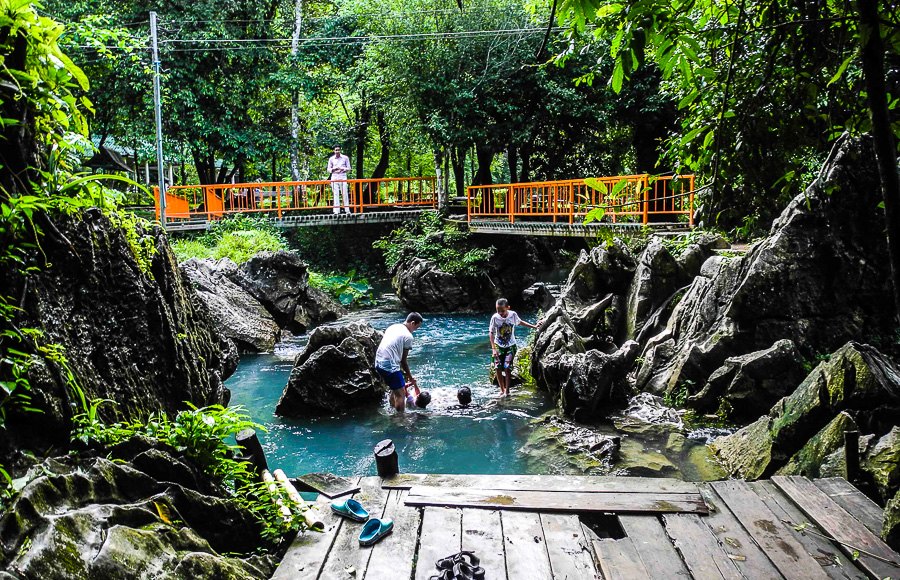
We went back to the lagoon once more; the locals were swimming away:
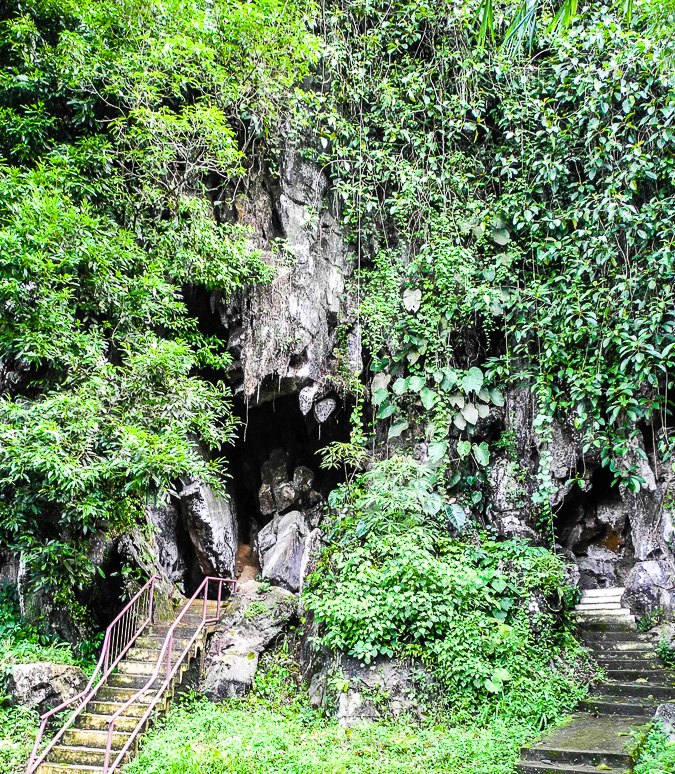
Besides Tham Cave there are other caves nearby, very small ones:
All in all, this cave really is worth visiting, even if you don’t like caves or are afraid of enclosed spaces (as I am). It’s simply an astonishing place — mysterious, enigmatic and alluring. Inside you get the feeling of being in a film. Although perhaps if you go with a crowd it’s not as interesting. We were lucky and were practically alone, so we managed to soak up the atmosphere of the place completely. I hope everyone gets to come here and enjoy it just as much.
And honestly, walking here in the morning, before anyone else arrives, is a pleasure of an entirely different kind.