How do you feel about food tourism? I genuinely believe that you cannot understand a local culture without its cuisine, and I try to sample a typical dish of the area in every country I visit.
Budapest’s Central Market is an excellent place to explore local food traditions. We’ll call in at the food court, see what you can buy in the market itself, and I’ll tell you about goods I never expected to see there (hint: a French delicacy).
1. General information about the market
You can get into the market from the very early morning, have breakfast and then set off for a walk around Budapest or an excursion. Opening hours (checked 17.10.2026): Monday to Friday — 6:00 to 18:00, Saturday — 6:00 to 16:00, Sunday — 10:00 to 16:00; on Hungarian public holidays the market is closed. The building is simply huge and located in the centre, which makes it very convenient both for getting to the market and for reaching the main sights from there. But let’s take everything in order. First, a brief dip into the market’s history.
1.1. A brief history
The market was built in the late 19th century. Samuel Pecz was appointed architect, while the building’s interior metal framework was designed by none other than Gustave Eiffel. Just before the opening, a fire broke out in the building, and the opening had to be postponed until the restoration work was finished. That is why the building bears the date “1896” even though it actually opened in 1897.
The building caught fire several more times afterwards, and it was very seriously damaged during the Second World War. For a long time the unique structure was in need of restoration, which was only carried out in the 1990s. What we see today is the result of that very restoration.
The building today:
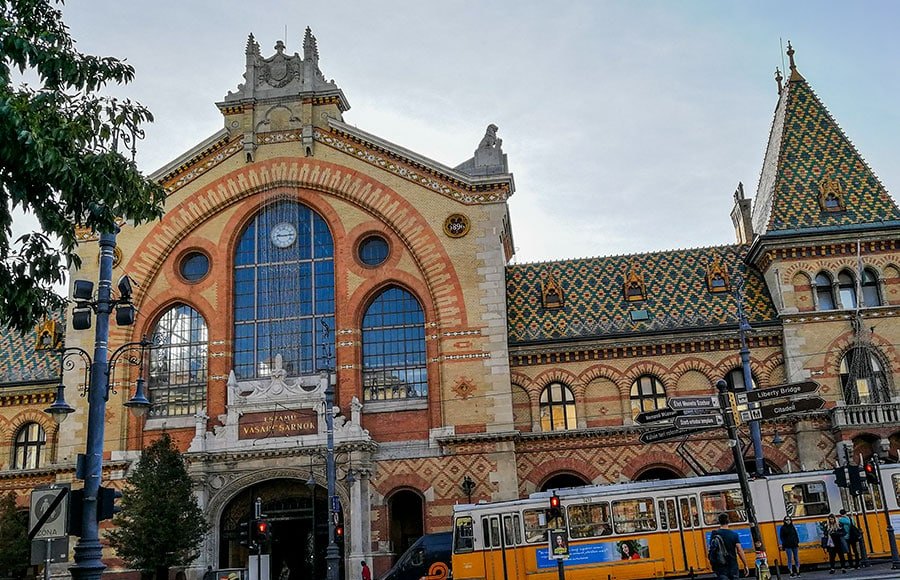
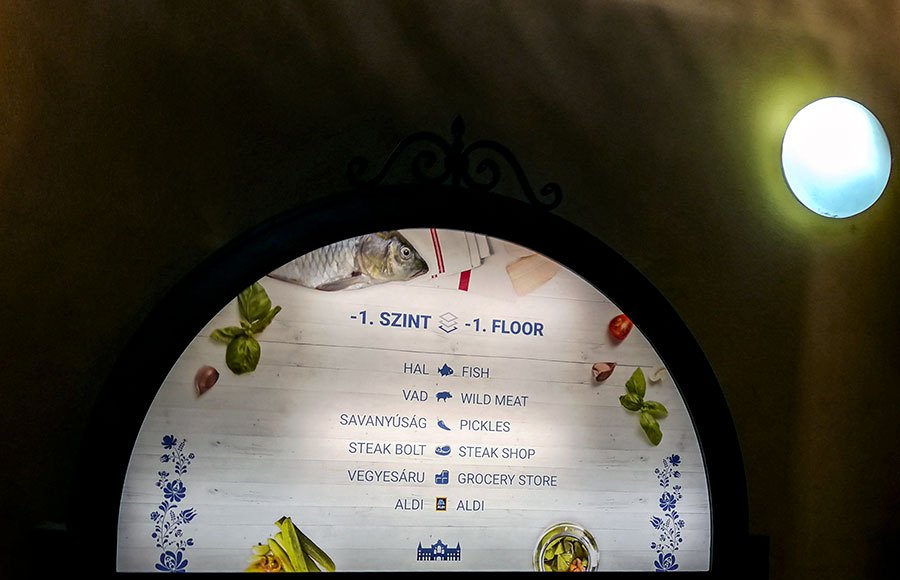
The building now has two floors, plus a basement level.
- Besides the stalls, the ground floor has paid toilets and several cash machines.
- The first floor is taken up by the food court, cafés and stalls selling all kinds of souvenirs.
- The basement houses an Aldi supermarket, plus a number of stalls selling pickles and fish. It used to hold the refrigerators for perishable goods.
The way down to the basement:
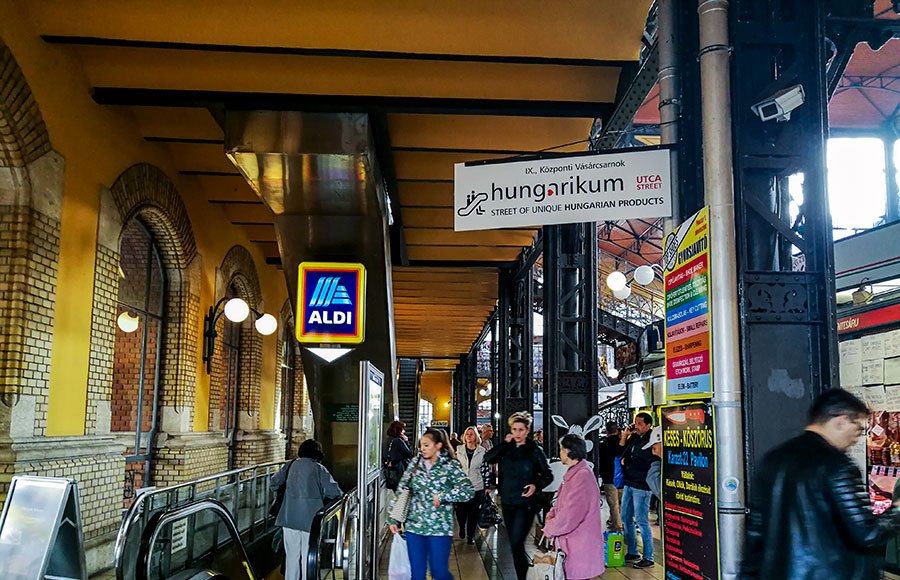
1.2. Where to find it
The market building is in the Ferencváros district, just beyond the Liberty Bridge. The exact address is Vámház krt. 1-3, 1093.
Location on the map:
1.3. How to get there
There are several ways to get to the market:
- on foot;
- public transport;
- taxi;
- Hop-On/Hop-Off bus;
- as part of a guided tour.
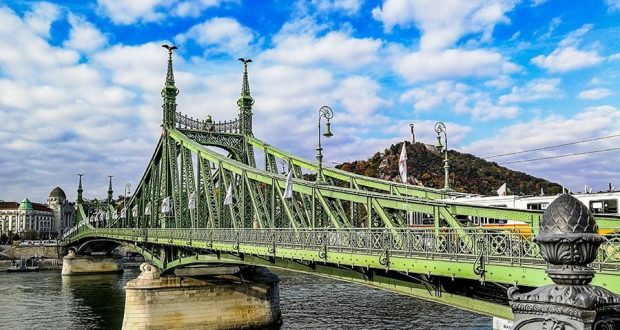
You can walk over from the nearest sight. The Liberty Bridge is right next door, and the market itself stands at the end of Váci Street, a sort of tourist and shopping hub of the Pest district.
By bus (routes 15 and 115), trolleybus 83 or tram (routes 2, 47, 48 and 49), ride to the Fővám tér M stop. Incidentally, the metro station has exactly the same name (line M4 will do). As of October 2026, a single BKK ticket costs 500 forints.
With a taxi it is simple — the Central Market is a well-known building and you will be taken there without any problem.
The Hop-On/Hop-Off sightseeing bus goes straight to the market — it is part of the bus route. The ticket is valid for 24 hours, there is an audio guide on board, and you can ride around all the sights. At the time of writing, a ticket cost €22 per person; check the current price when booking.
And now a little about guided tours.
Food tours of Budapest with local guides exist too — more on them below. It is best to go on such a walk hungry.
I didn’t manage to fit one into my 2019 trip, but I’ll definitely go next time. Just be prepared to eat a lot, and the food is mostly very fatty, salty and peppery.
There were also English-language tours devoted to the world of Budapest street food. On my 2019 trip such a walk cost $73 and lasted 3.5 hours; check current prices and schedules when booking.
There were shorter options too — brief tours of the Central Market itself. Tickets for a tour can be bought online.
1.4. When to visit
Opening hours are as follows:
- Monday to Friday — 6:00 to 18:00;
- Saturday — 6:00 to 16:00;
- Sunday — 10:00 to 16:00.
The market’s daily rhythm goes like this: it gets very busy at lunchtime, so coming to the food court for lunch is pointless (well, except as an experiment). It is much better to come earlier in the morning, when it is relatively uncrowded.
Entry to the market is free. If you are travelling in late December, bear the holidays in mind: 25–26 December and 1 January are Hungarian public holidays and the market is closed (this is a permanent rule of the operator), while on 24 December trading ends by 14:00 under Hungarian law. For the exact holiday schedule in a given year, see the market’s official page — check it a week before your trip. Transport runs differently on those days: on 24 December daytime routes finish at around 16:00, and on 25–26 December and 1 January a holiday timetable applies; see bkk.hu for the detailed service pattern on those days.
By the way, if you are in Budapest in December, drop by one of the city’s main Christmas fairs on Vörösmarty Square — that is the other end of Váci Street, which I mentioned above. In the 2026/27 season it runs from 13 November until New Year’s Eve: usually 11:00–21:00 (until 22:00 on Fridays and Saturdays), 24 December — 10:00–14:00, 25–26 December — 12:00–18:00, and on 31 December — until 03:00.
2. What you can buy at the market, and prices (photo review)
Wondering what is sold there and what unusual things you can try? Take a look. The prices in this photo review are from 2019, when I visited the market; the operator publishes current average prices for vegetables, fruit and meat on the “Árak” page (the latest reading there is 22.09.2026).
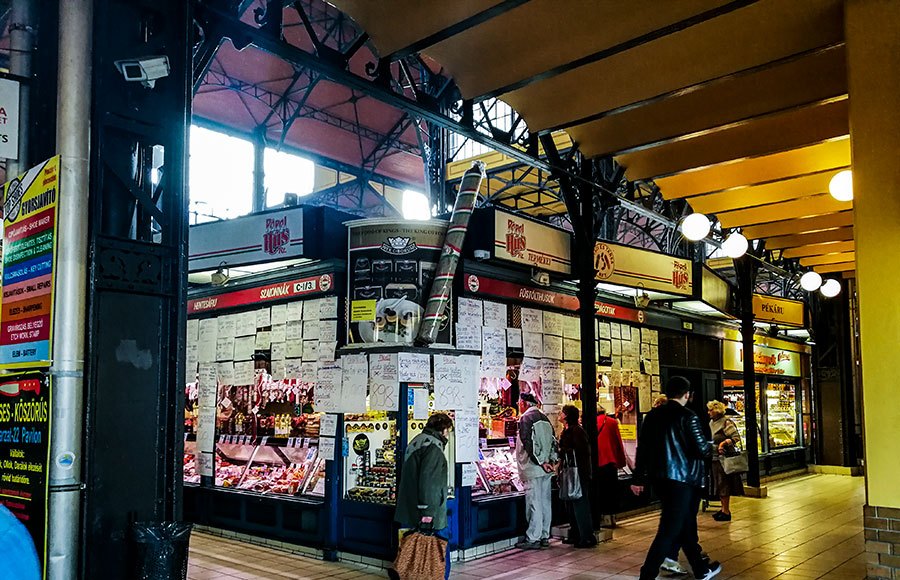
A view of the market:
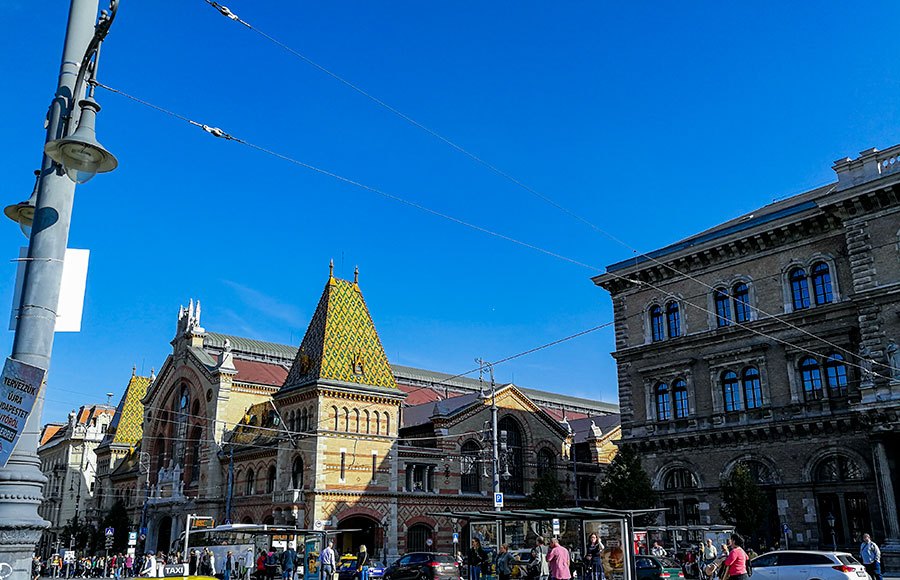
The entrance to the market:
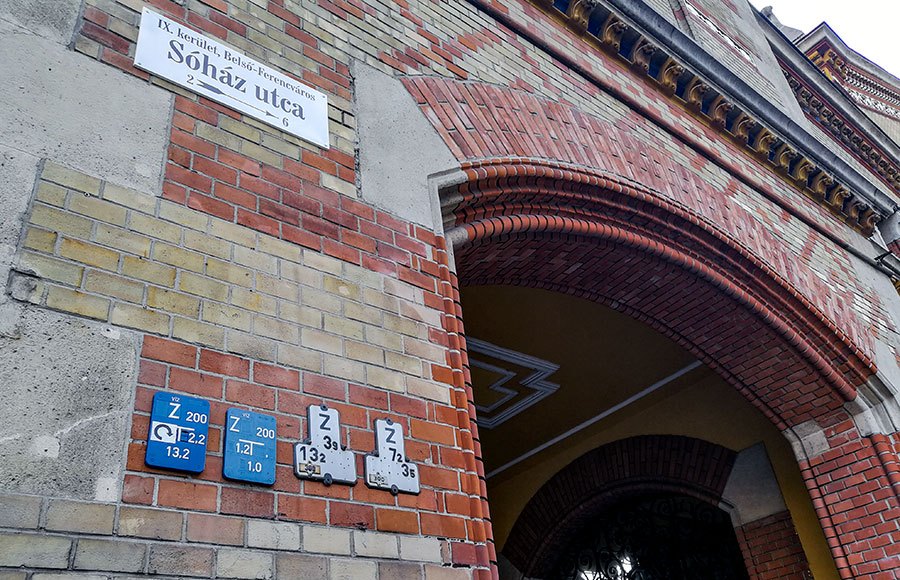
2.1. The basement
First, let’s look into the basement:
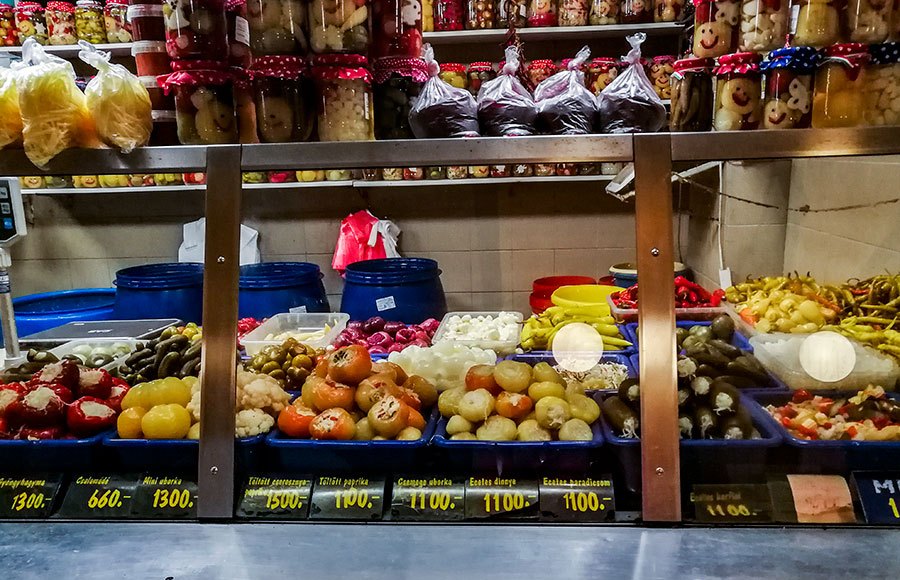
Fish, unusual meats (such as venison) and all sorts of pickles are sold down here. A stuffed pepper, for example, costs 1300 forints:
2.2. The ground floor
The ground floor is more interesting — this is where all the tastiest produce is sold:
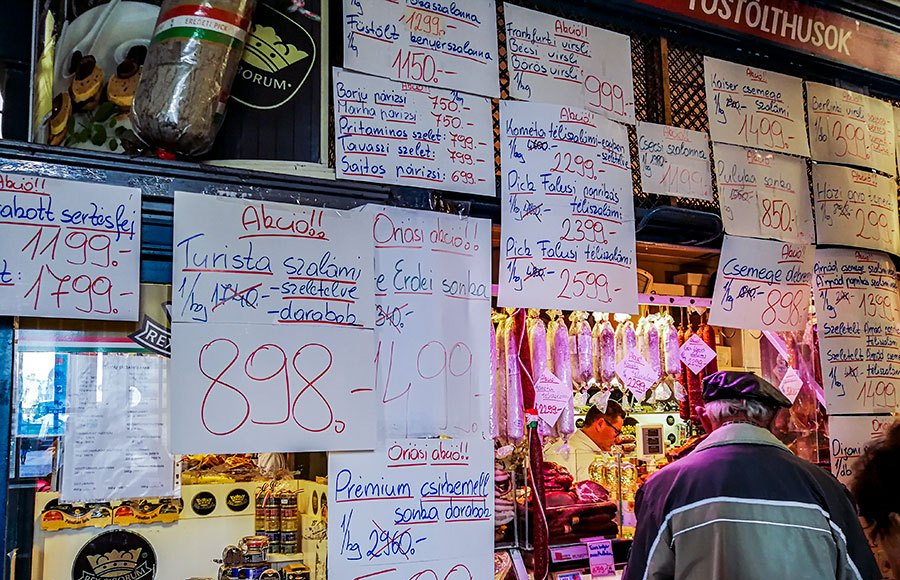
Salami, for example, can be bought for 898 forints:
Cream cakes at 400 forints; I liked the Isler biscuits at 500 forints; very tasty chocolate:
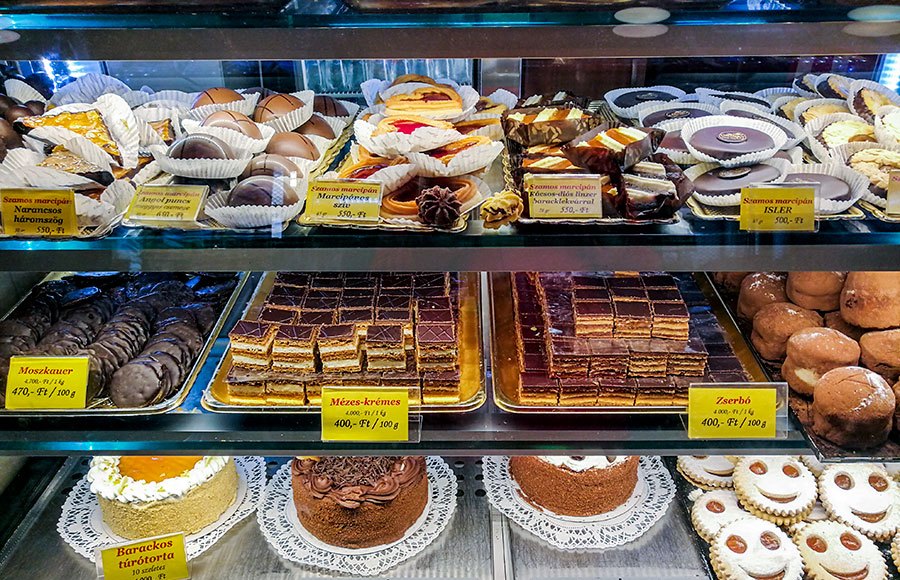
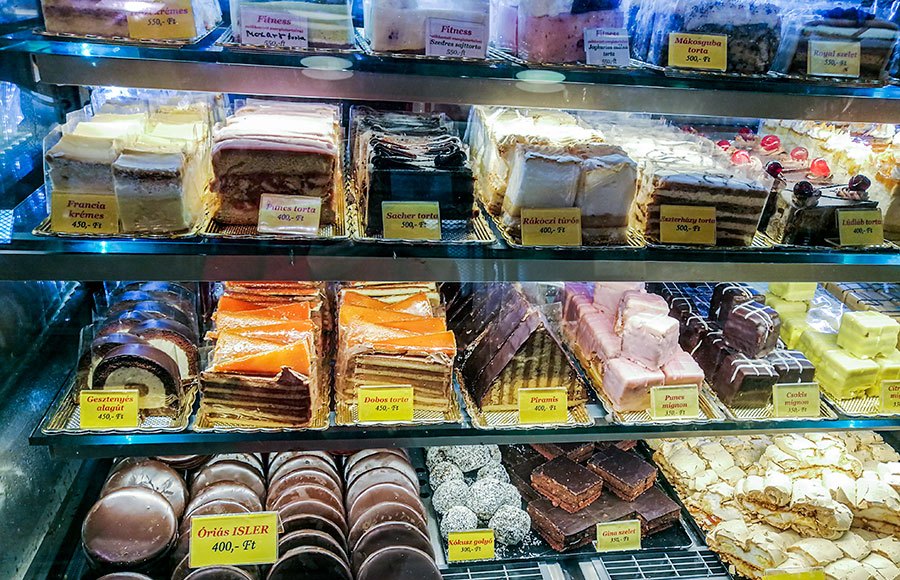
Prices for sweets are quite low — 400–500 forints gets you a solid slice of cake:
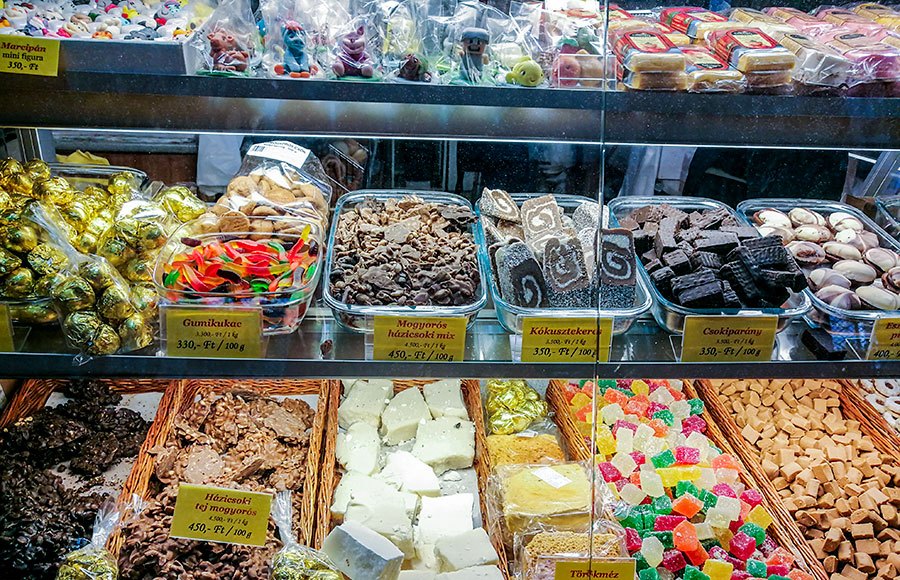
The jelly “worms” familiar from childhood cost 330 forints per 100 grams:
A classic Hungarian cheese roll for 450 forints and, of course, the famous strudels:
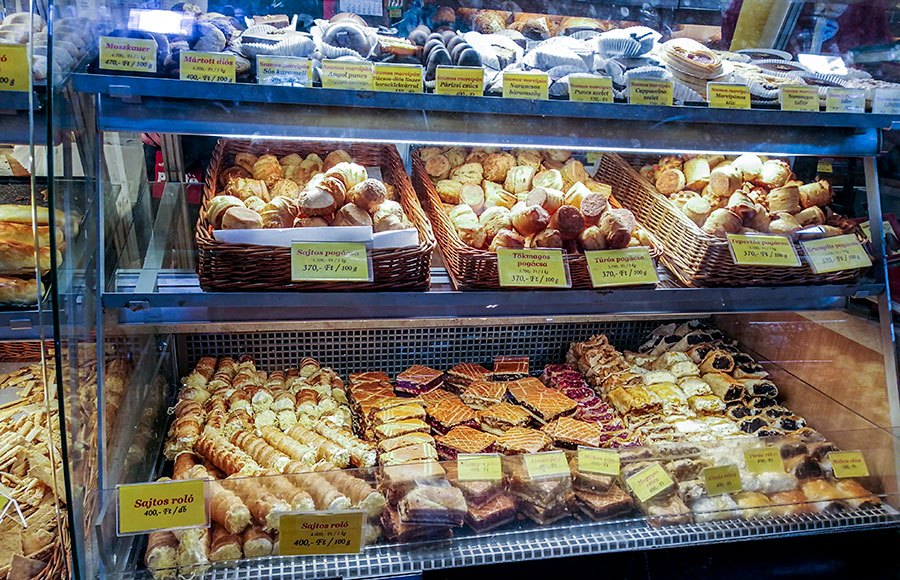
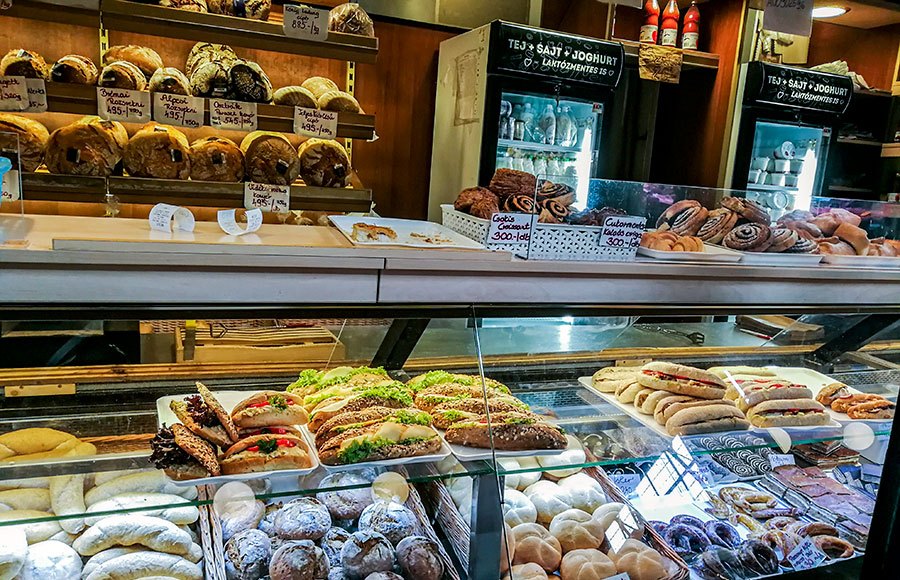
A variety of buns — poppy-seed (300 forints apiece), plain and bran (50–80 forints apiece), crescent rolls and croissants (370 forints per 100 grams):
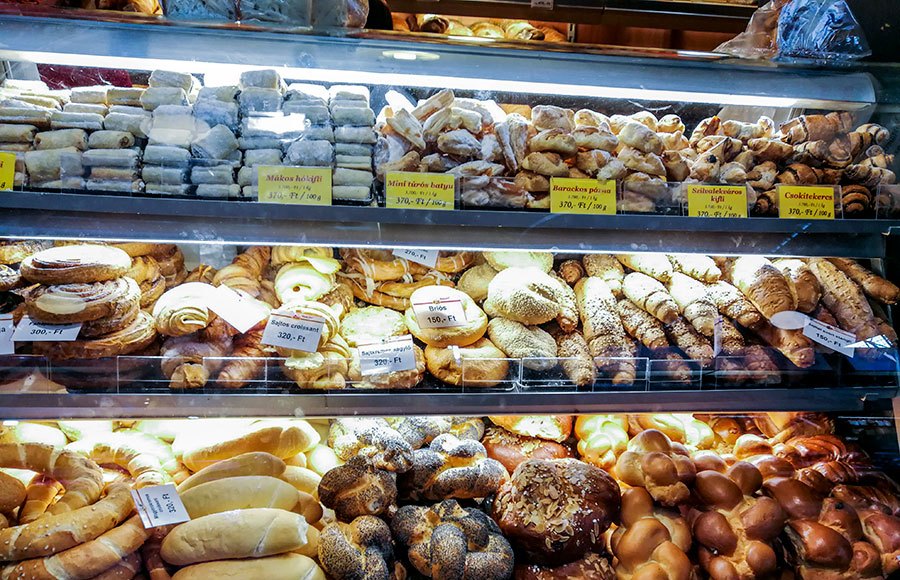
Poppy-seed rolls can be had for 300 forints:
A vegetable stall; prices at the market are quite reasonable (white cabbage 298 forints/kg, red cabbage 348 forints/kg):
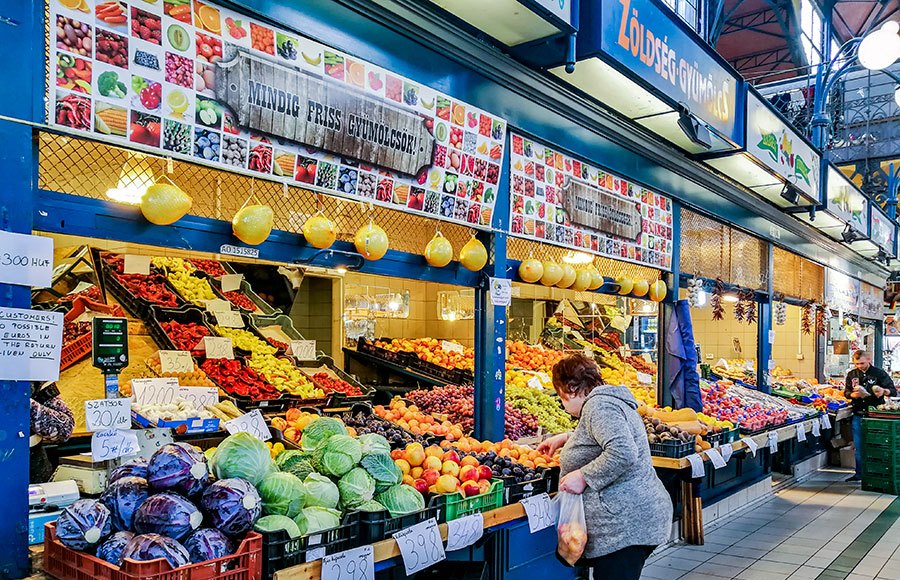
Produce here is sometimes even cheaper than in the local supermarkets:
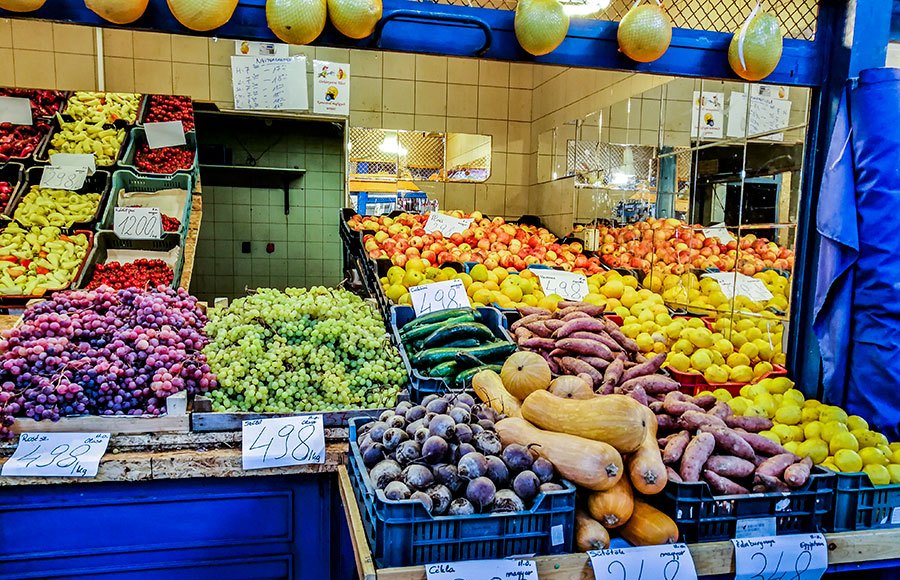
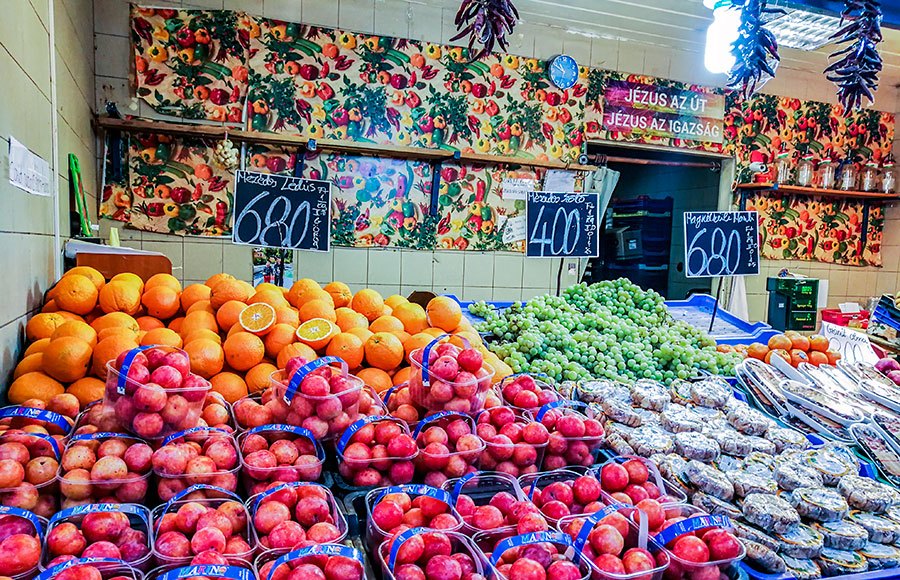
There are plenty of stalls, so you can pick the one that suits you best. At this one, for instance, the grapes are a little cheaper (400 forints/kg)
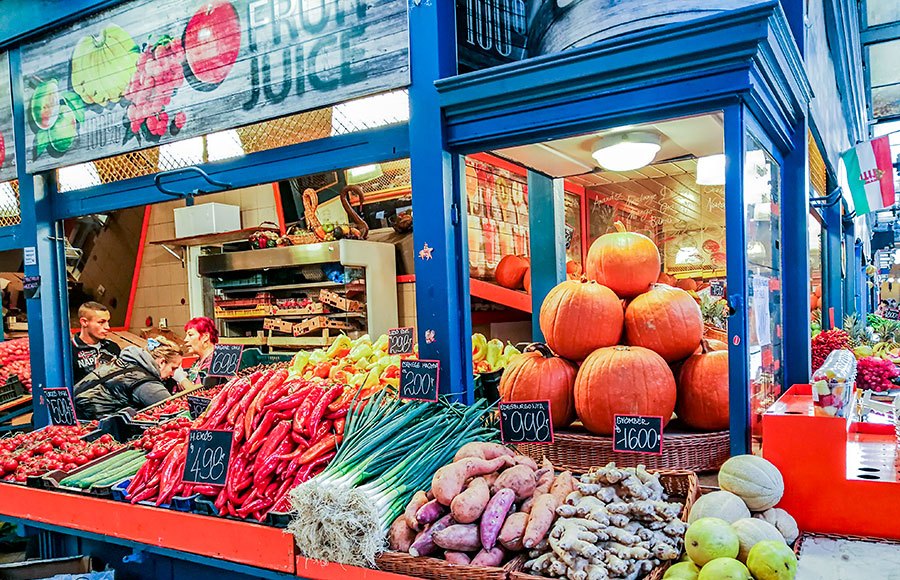
You could stock up for Halloween too — splendid pumpkins:
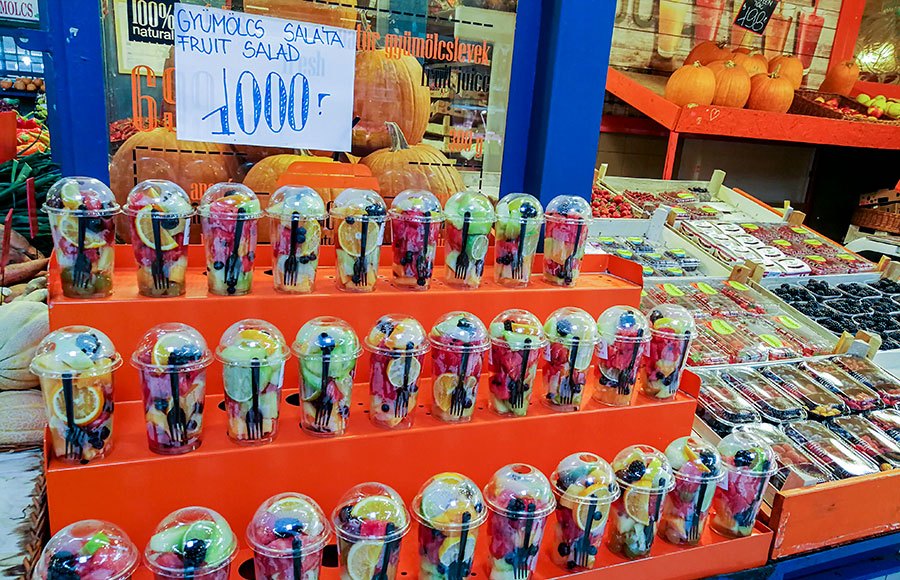
A fruit selection for 1000 forints:
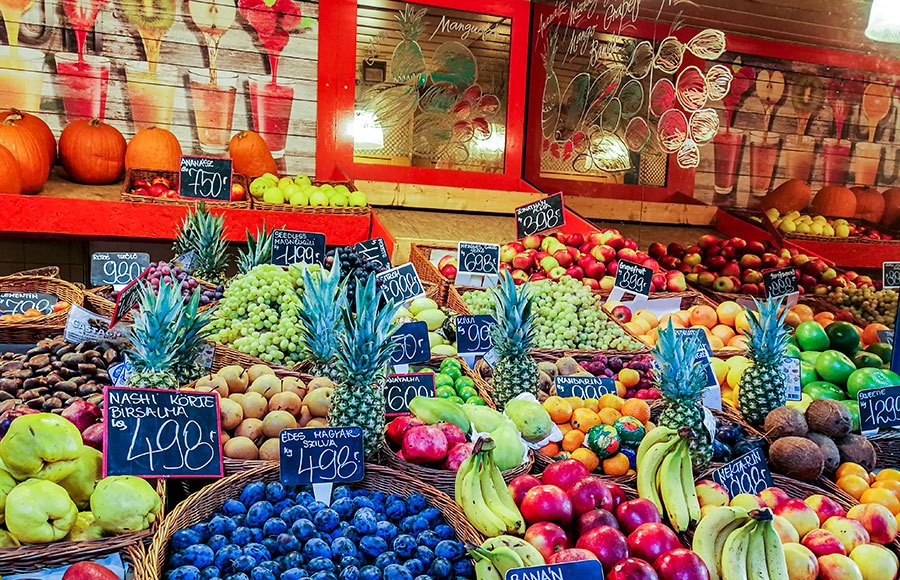
You can buy literally everything, produce from all over the world — bananas (598 forints/kg) and pineapples (750 forints/kg) included:
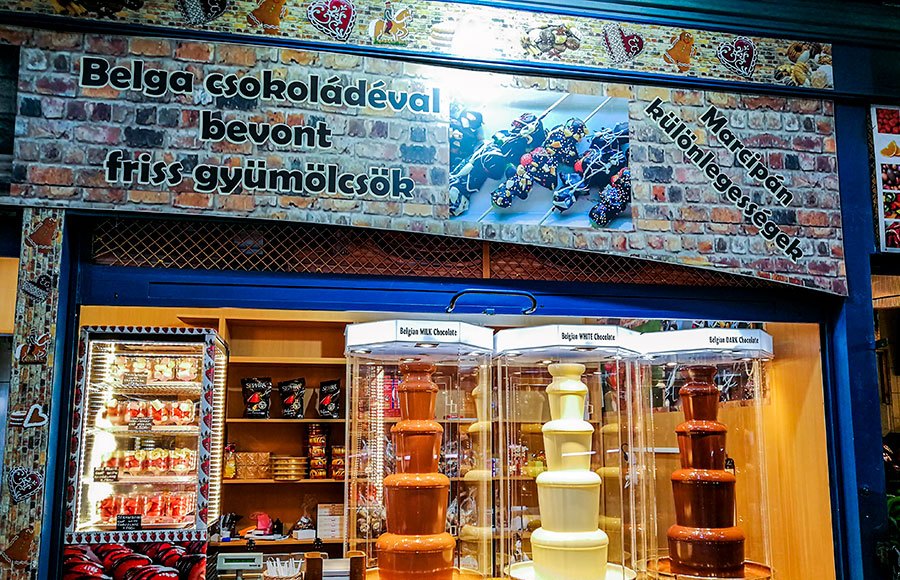
Chocolate fountains:
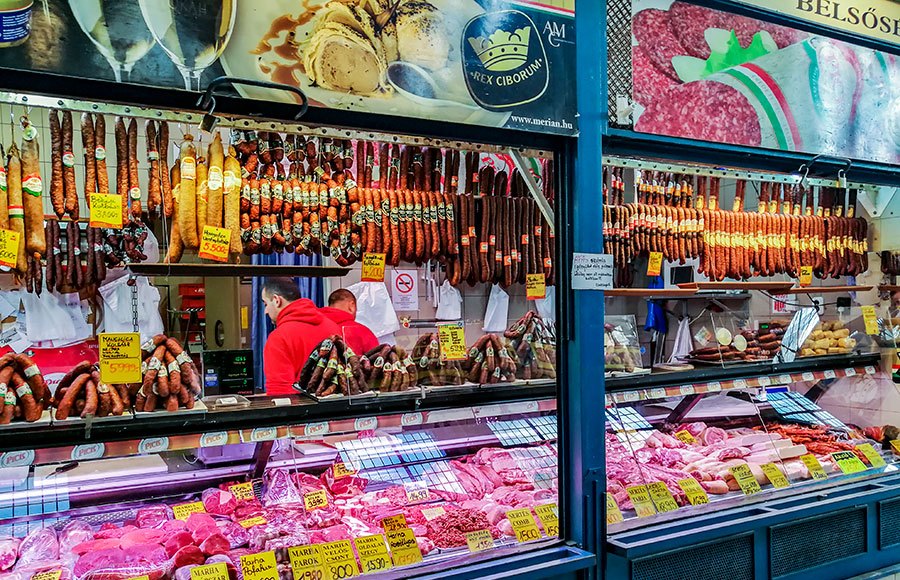
A stall with meat and smoked meats:
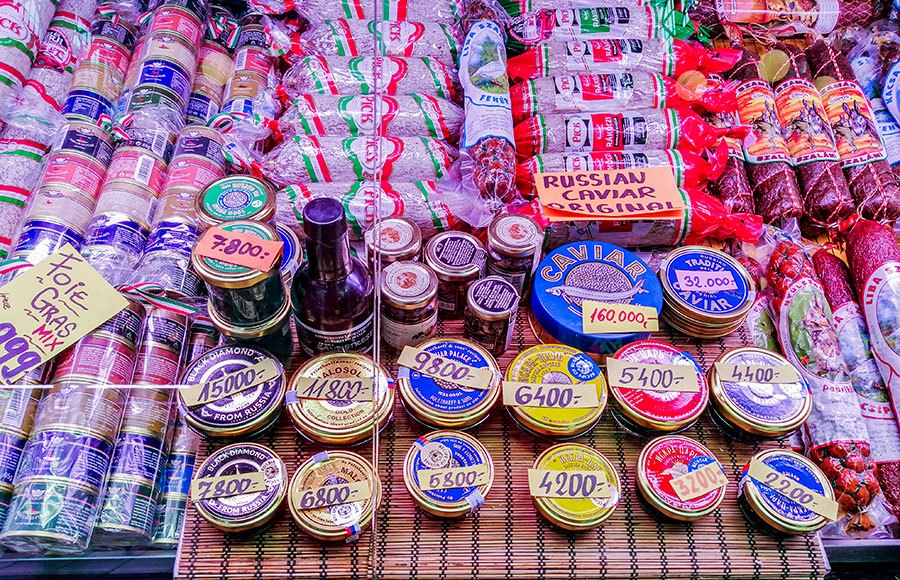
Various caviar (including Russian black caviar at 15000 forints), as well as sausages:
And another fruit-and-veg stall:
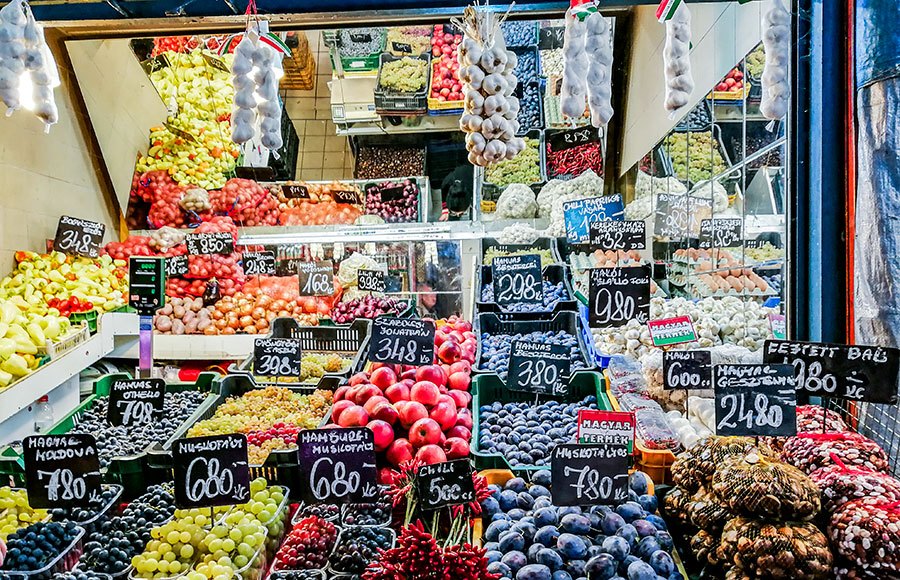
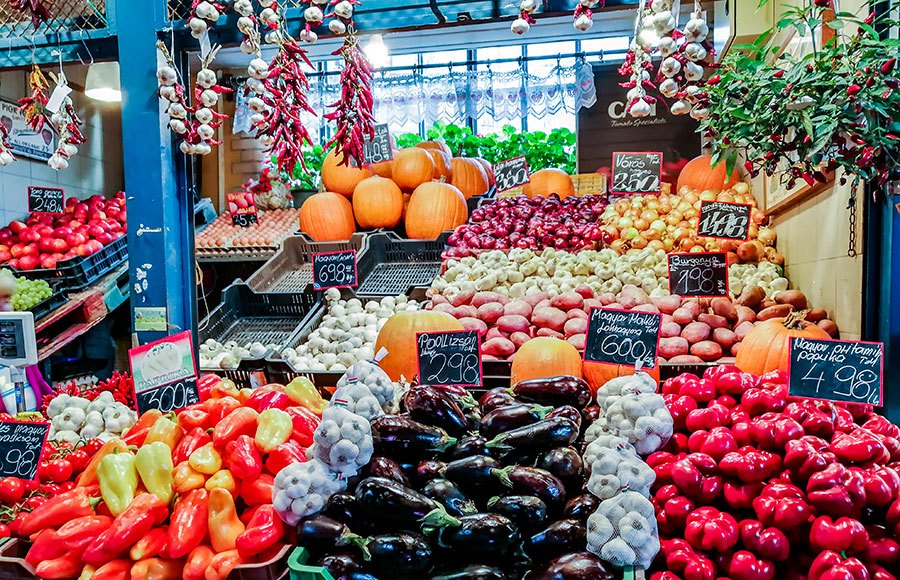
Aubergines can be bought for 298 forints/kg, garlic for 600 forints:
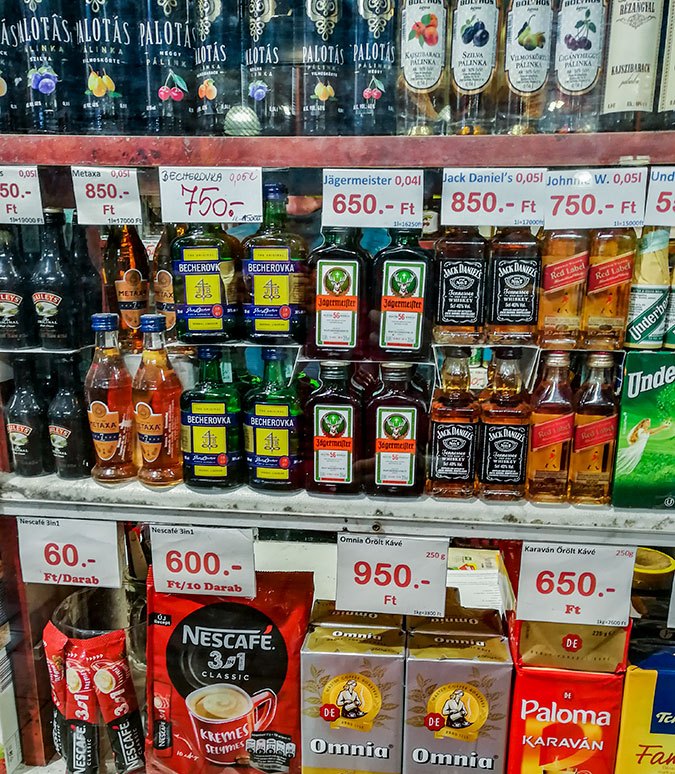
The ground floor also sells assorted alcoholic liqueurs and bitters (Becherovka from Karlovy Vary, for example):
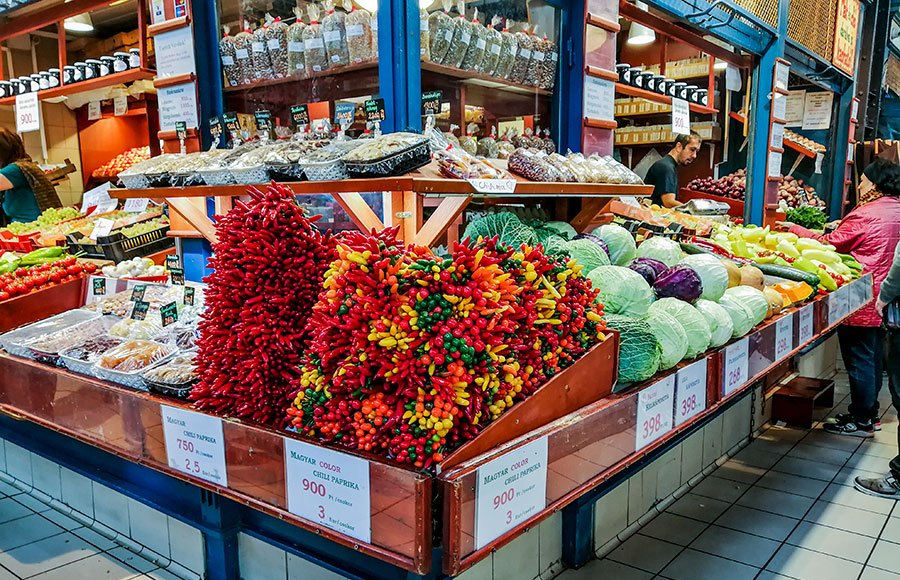
Another vegetable stall — here 750 forints buys you a dagger-hot Hungarian pepper:
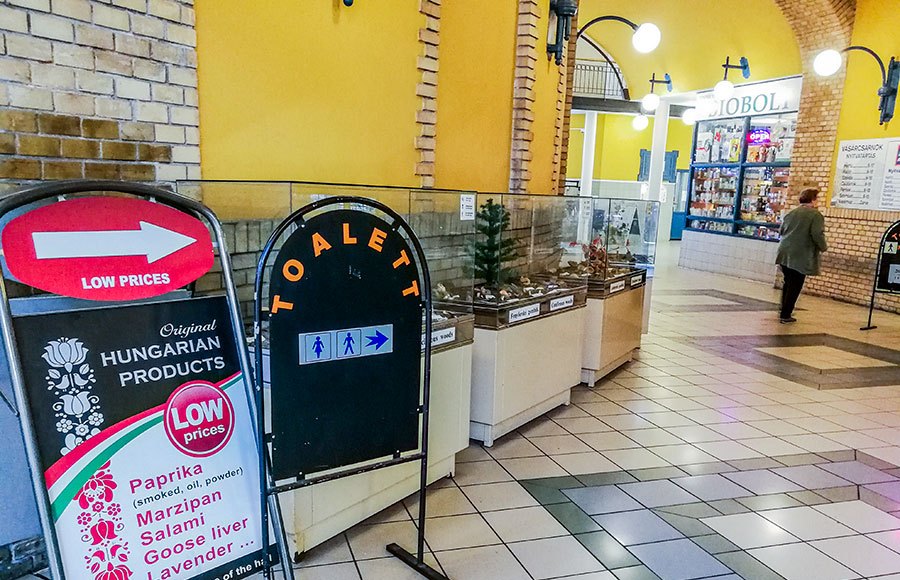
The market also has a toilet:
2.3. The first floor of the Central Market
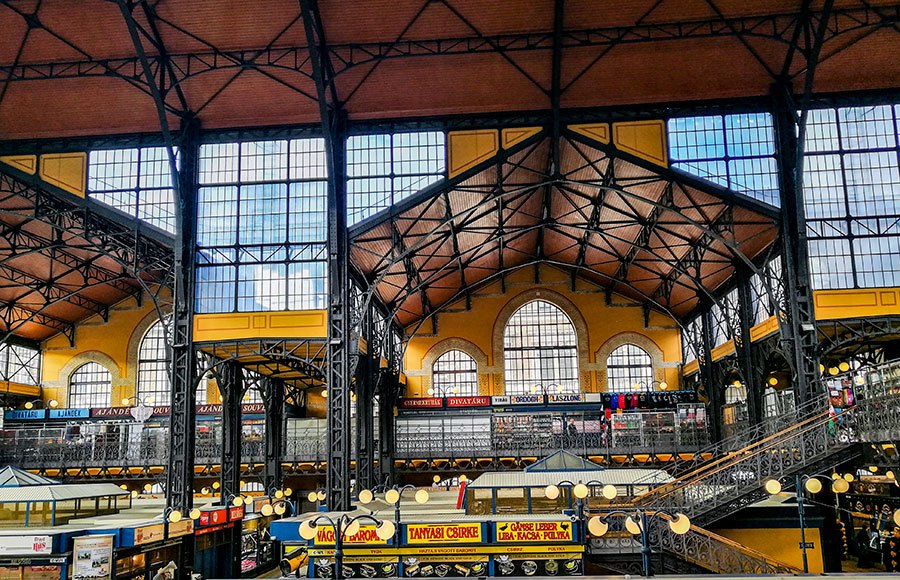
We head up to the first floor:
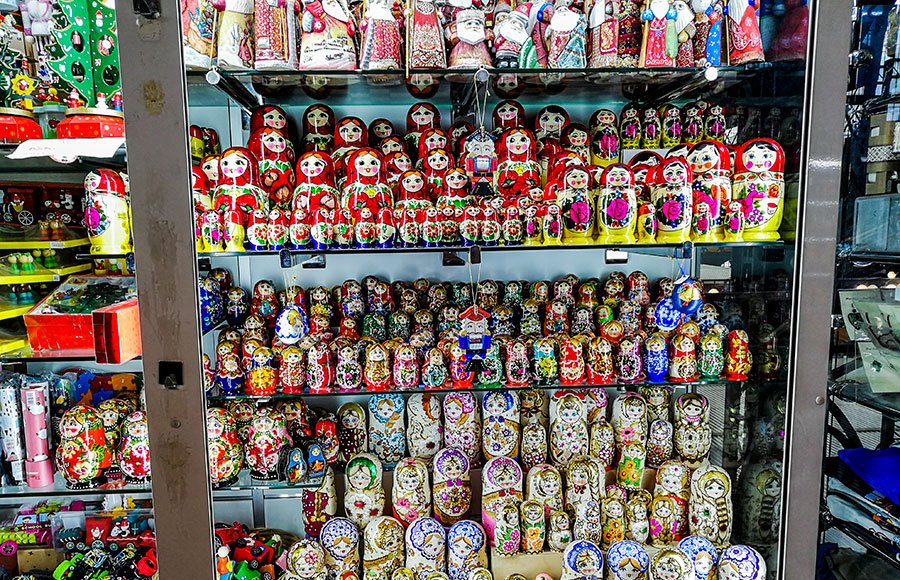
It is surprising to come across matryoshka dolls here:
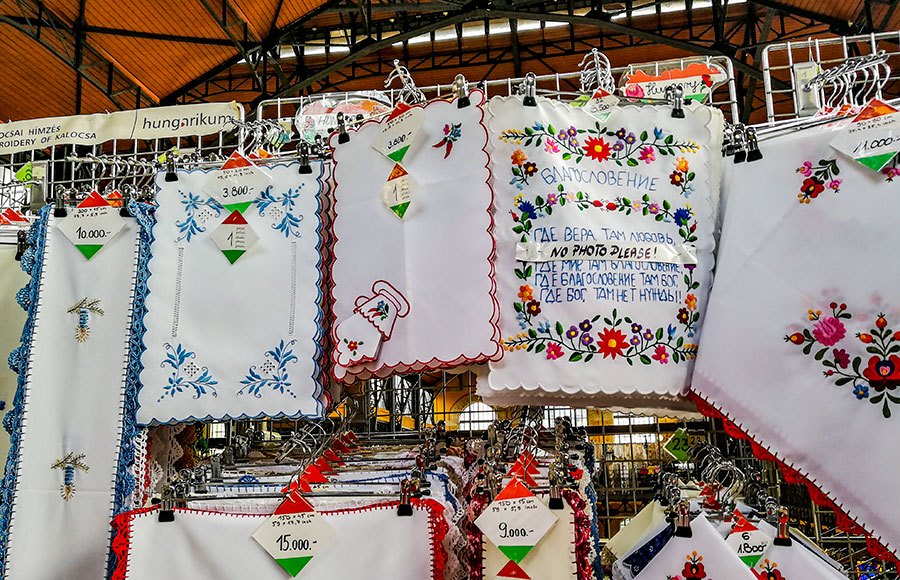
Rushnyk towels — for an Orthodox church wedding:
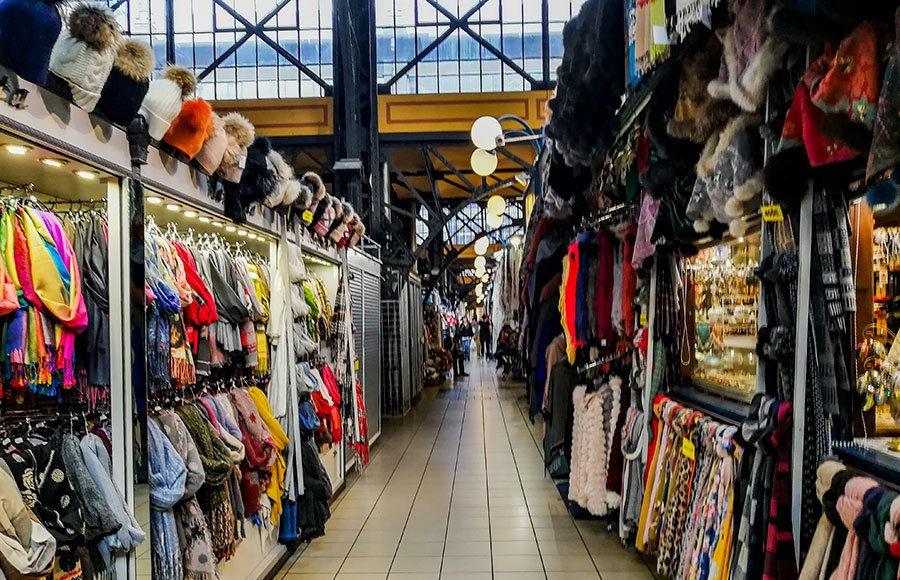
You can buy clothes here too:
3. The food court at Budapest’s market
Time for a bite — off to the food court. There seems to be plenty of room here, but at lunch you can barely walk through, let alone find a seat:
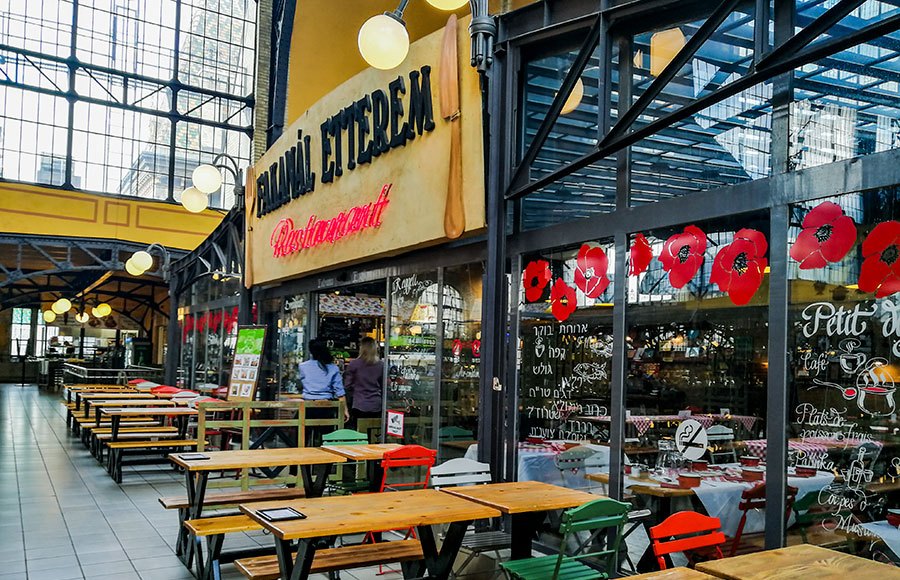
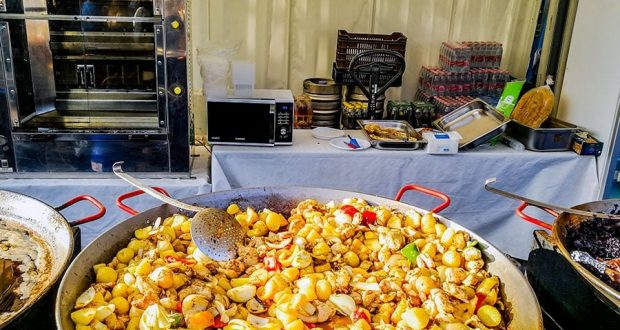
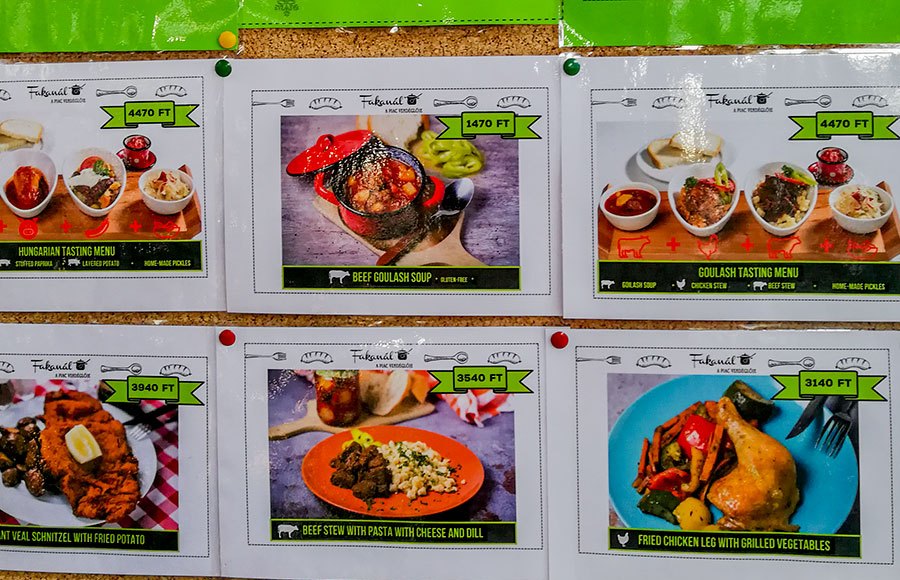
Goulash at 1470 forints; a sort of set “menu” (including goulash, beef stew, chicken and a sauce) costs 4470 forints:
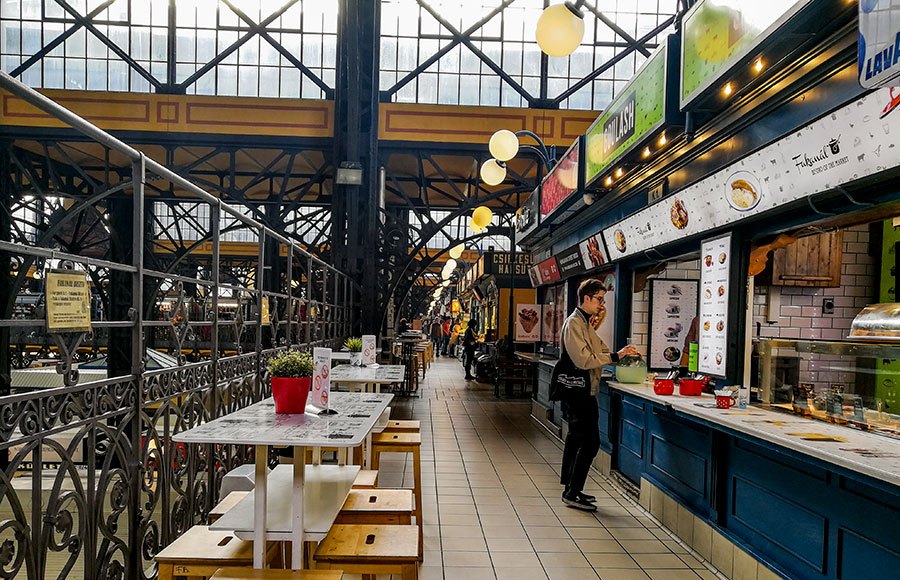
In the morning it is not crowded, but from lunchtime onwards you can hardly squeeze through:
When we were there in 2019, payment was cash only (cards were not accepted) — bear that in mind:
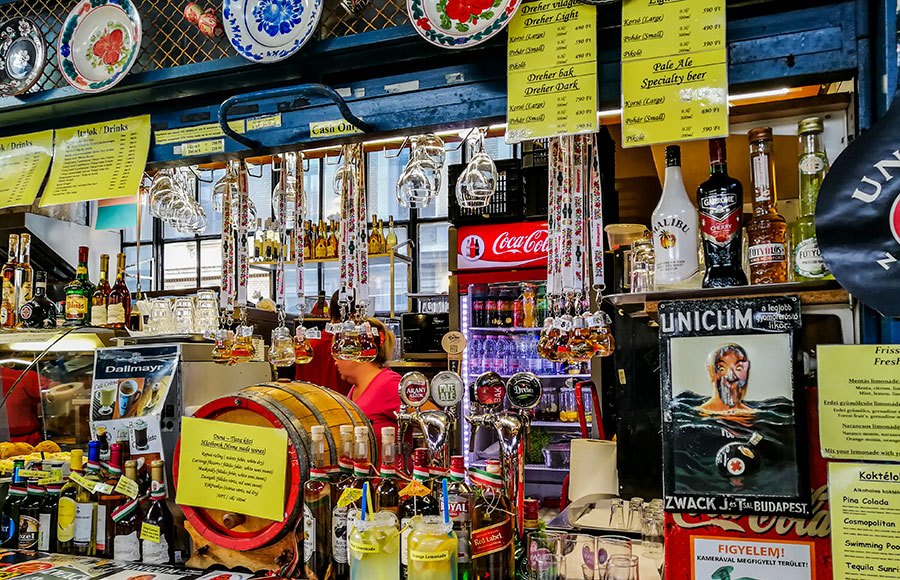
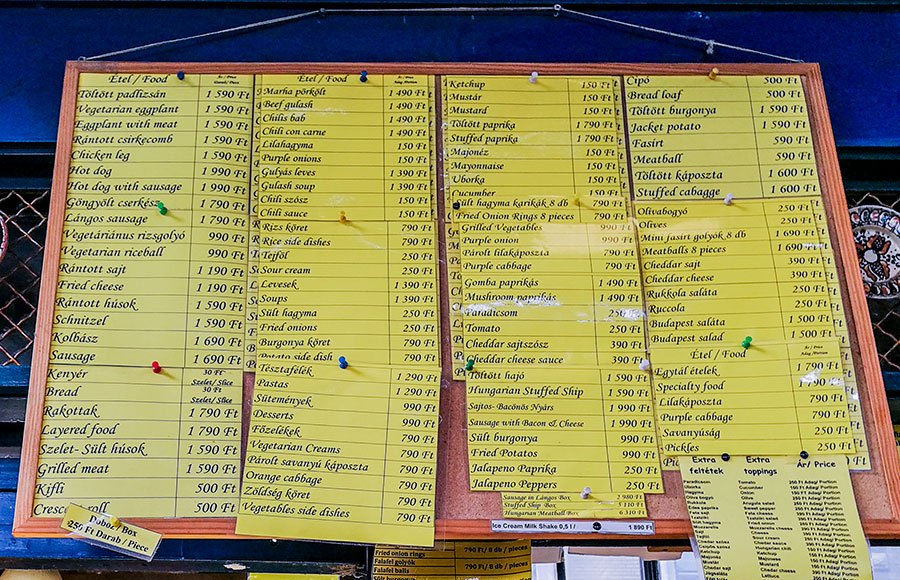
A menu (grilled meat, for example, will set you back 1590 forints, chilli sauce 150 and goulash 1390 forints):
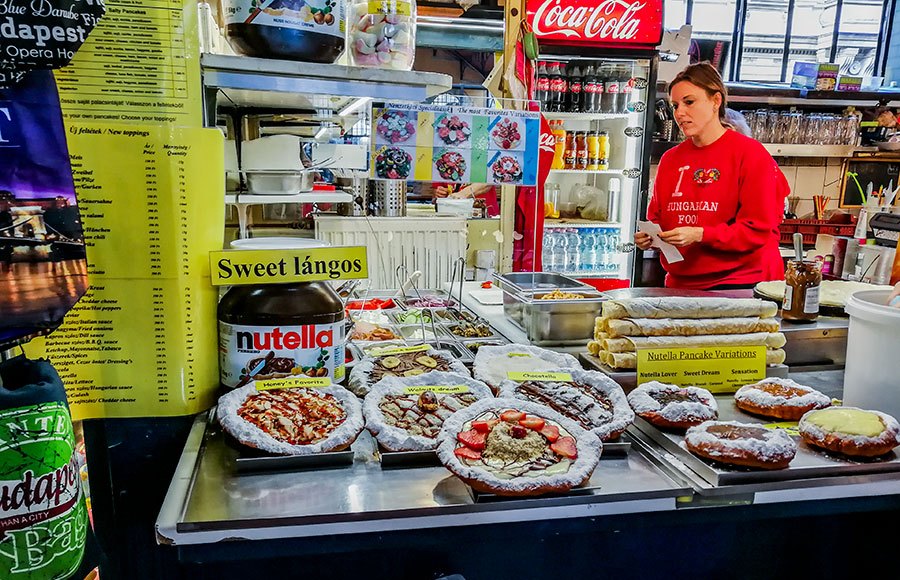
Pancakes and lángos with Nutella:
You can also have lasagne or pork stew:
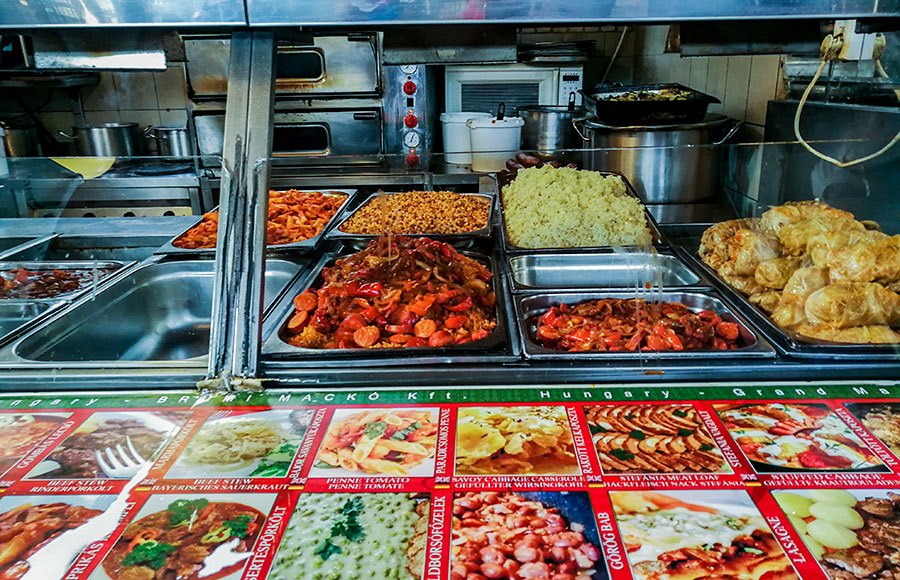
Prices at this establishment are somewhat higher than at the previous ones:
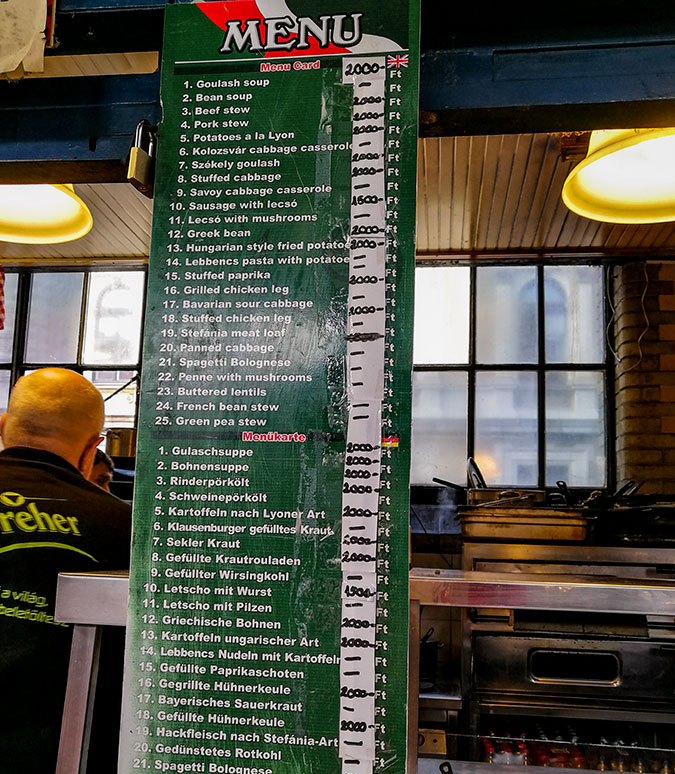
Hungarian stuffed cabbage rolls and meatballs (one of the national Hungarian dishes, along with pork stew, sausage and goulash):
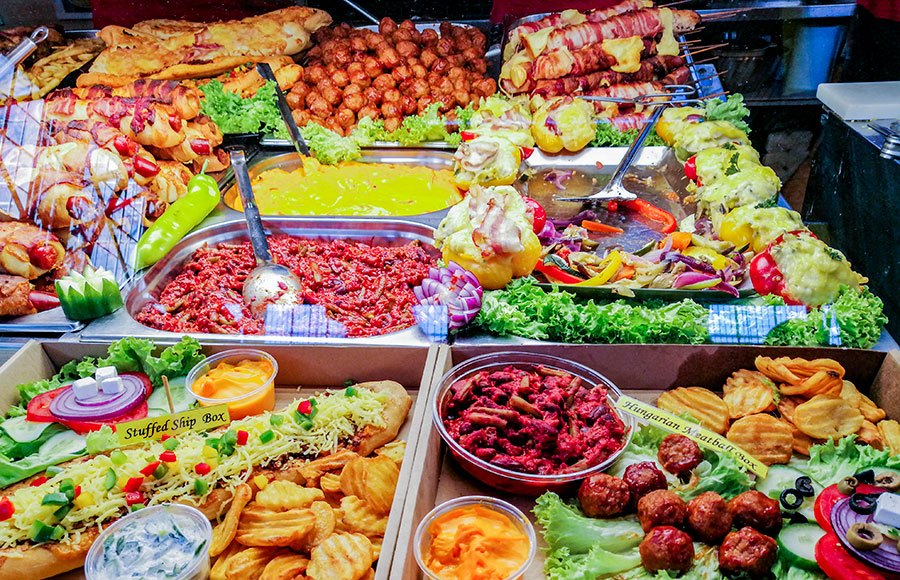
Even through the photos you can almost catch that delicious smell!
4. Unusual goods at the market – what to bring back from Budapest
Interesting goose-liver sets — one of these would make a fine souvenir gift:
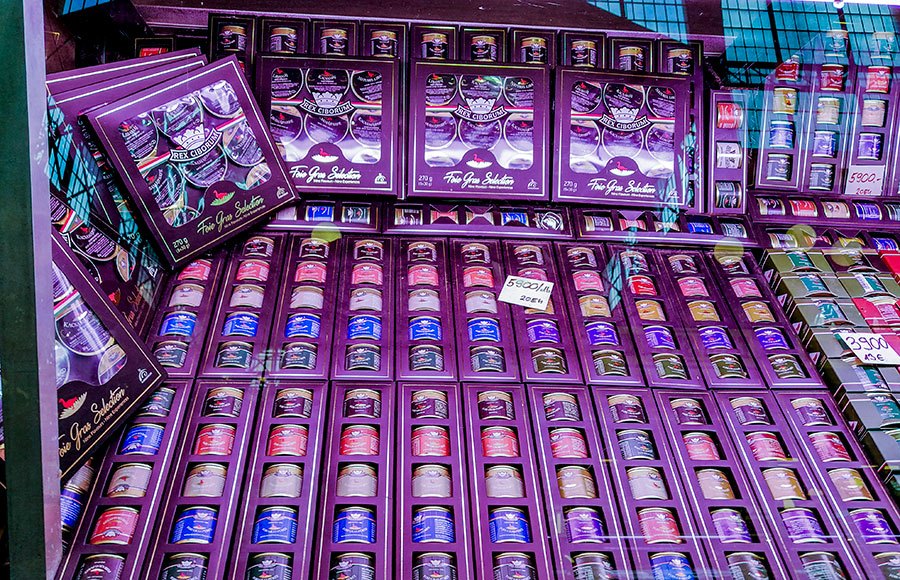
Hungary is the world’s second-largest producer of foie gras (after France, of course) — that was a discovery for me:
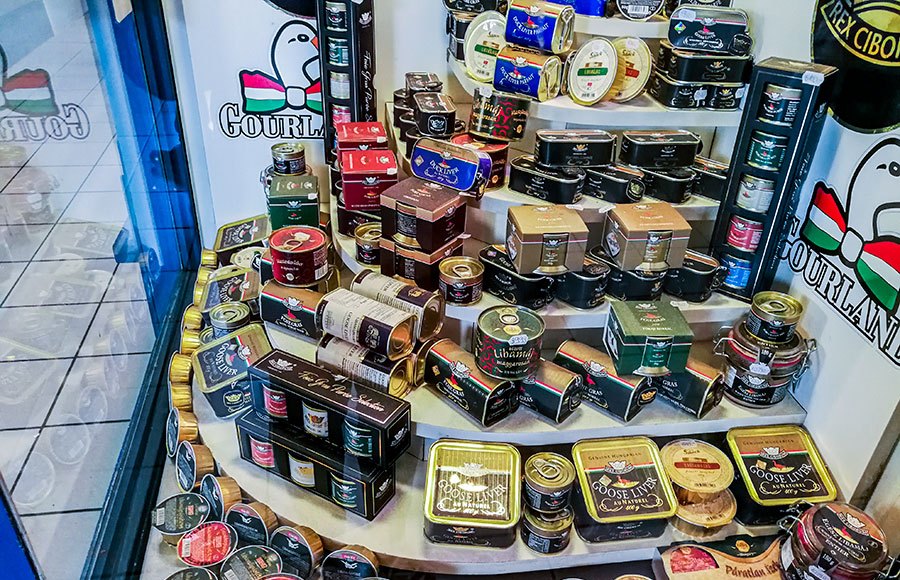
So picking up this delicacy to take home is a good idea (especially as prices are lower than in France):
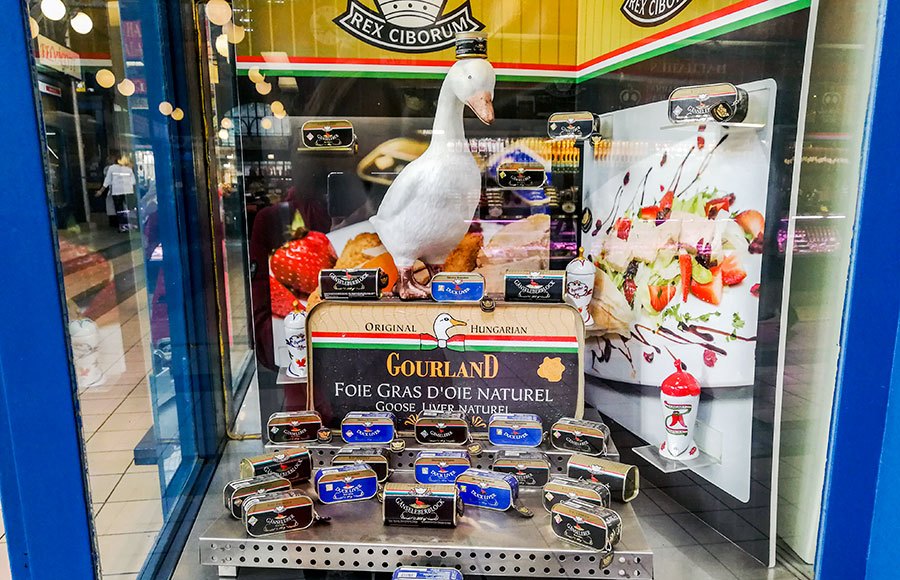
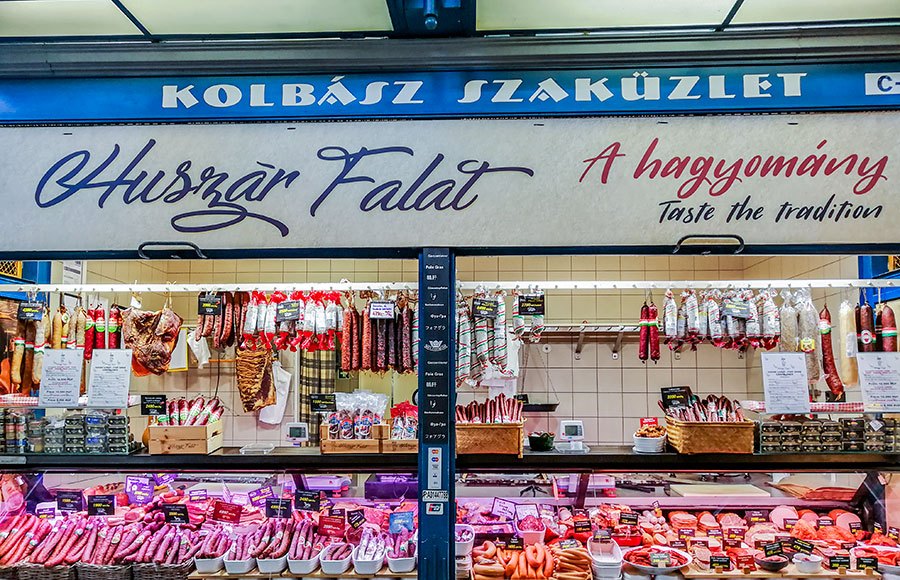
A sausage stall (Hungarians are very proud of this part of their cuisine and reckon their sausages are the best in the world):
Chocolate in smart gift packaging also makes a good souvenir:
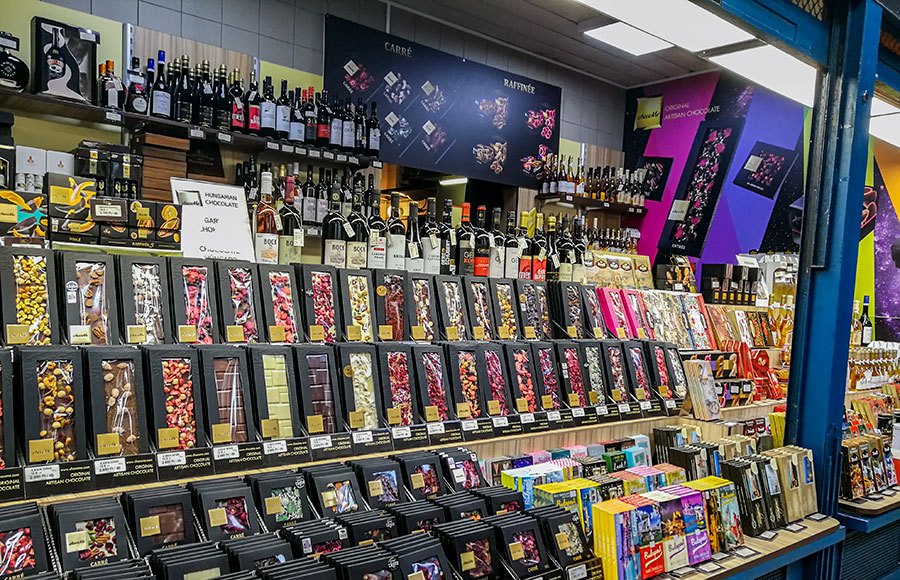
All in all, these are the things worth taking home as souvenirs:
- salami;
- chocolate;
- Tokaji wine or local liqueurs (specifically local ones — Unicum, for example);
- marzipan sweets;
- goose-liver products;
- paprika.
5. Conclusions
Either way, keep an eye on the prices. You cannot say this market has the lowest prices for everything of all the markets in Budapest. But many thousands of Hungarians shop here, and that is the best recommendation there is. In any case, everything is usually dearer in the supermarkets, so buying ingredients to cook with at this market is a good idea.
You can buy souvenirs here, but stick to ones connected with Hungary. That might be pottery (terracotta, black and white), mugs with shepherdess motifs, and leather goods (a wallet, for example).
Don’t count on this place as a restaurant — it is often simply too crowded. Better to go to a nearby café: it will be a little dearer (mainly because of the tip), but you can eat in peace in pleasant surroundings rather than sitting on your neighbour’s head.
Have you been to Budapest’s Central Market? Have you joined any food tours? What would you recommend? Tell us about your impressions — we look forward to reading your comments.