Quite unexpectedly, I ended up taking a short trip around Italy — I had never dreamed of visiting Italy, or even considered it as a destination. But things worked out, and I found myself in Milan and then Florence, managed to see an unbelievable number of sights, ate plenty of delicious food, switched off and relaxed (walking around 35,000 steps a day!) — and now I’m ready to share my impressions and the practical side of the trip.
In short: 10 days in Milan and Florence, travelling solo, cost me about €851 in 2018, not counting gifts and souvenirs — that figure includes the flight from Chelyabinsk, the visa, accommodation, museums and food. Prices have risen noticeably since then, so below, next to my 2018 spending, I’ve added prices for October 2026 wherever they’re known.
The first thing I want to talk about is the trip budget, since for most travellers it is one of the deciding factors when planning a journey.
Italy is considered an expensive country to travel in, but let’s look at how true that really is, how much money a short independent trip requires and how you can save. So, how much does a trip to Italy cost?
1. Trip details
I travelled alone, flew from Chelyabinsk in Russia and had no visa arranged in advance, so all these extra costs had to go into the budget.
The trip lasted 10 days, and in that time I visited two cities — Milan (where I arrived) and Florence. I travelled between the cities by bus, and around town by public transport or on foot.
For food I both ate in cafés and cooked for myself with supermarket groceries, which saved a significant amount.
The biggest part of the budget in Italy is accommodation — hotels here are quite expensive, among the highest prices in Europe. I decided not to stay in hotels and rented from local people (through Airbnb, of course), and even stayed in a hostel — more on that a little later.
The aim of my trip was to see as many sights as possible, so I didn’t economise on sightseeing (though even here I found ways to bring the total down).
If you travel at a normal pace (rather than in “see everything” mode), you’ll spend far less on sights.
For example, you can visit Milan’s main square for free:
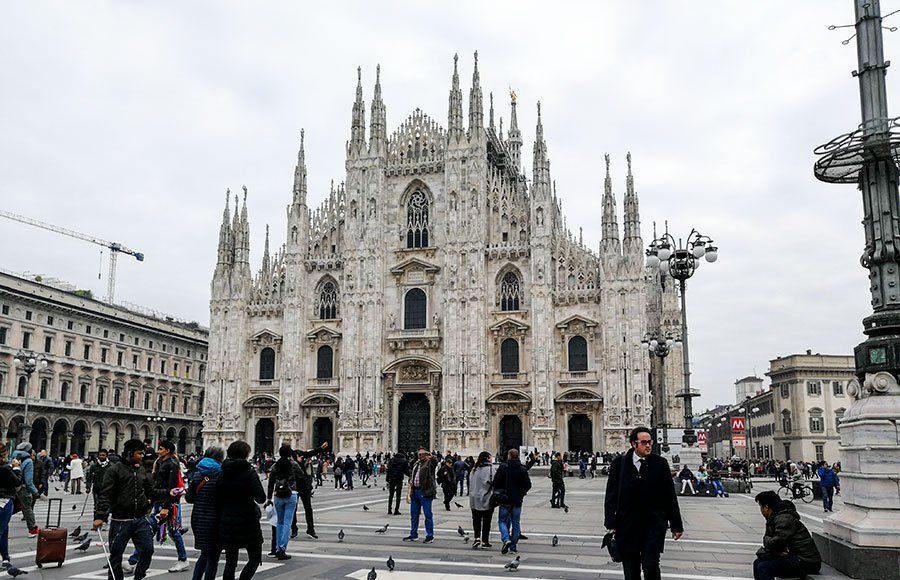
Now let’s break down each item of the budget separately.
2. Arranging the visa
In 2018 my nearest Italian visa centre was in Chelyabinsk, so that was where I applied. Without going into the whole process here, I’ll just say that the visa was issued very quickly (in about a week), but only for the dates of the trip.
Visa cost: €35 in 2018. Since 11 June 2024 the consular fee for a Schengen visa has been €90 for adults and €45 for children aged 6–11, according to the Italian visa centre.
Visa centre services: €40 in 2018. The visa centre only shows its current service fee once you choose your branch.
You can also arrange a visa through a travel agency, but that works out considerably more expensive (in my case, twice as much).
If you already have a visa, feel free to cross this item out of the budget.
3. Transfers and public transport in Italy
3.1. Transfers and travelling between cities
On this trip I used buses — the most budget-friendly kind of transport. If you plan ahead you can snap up discounted train tickets, but for me in 2018 train tickets worked out three times more expensive than bus tickets. For reference: in October 2026 a high-speed Frecciarossa from Milano Centrale to Firenze S. M. Novella (1 hour 54 minutes) was selling from €34 to €67 one way for dates 2–6 weeks ahead, depending on the departure.
Bergamo Airport is roughly 45 km from Milan, and lots of bus companies run between them, so I bought my ticket straight from the driver and booked nothing in advance.
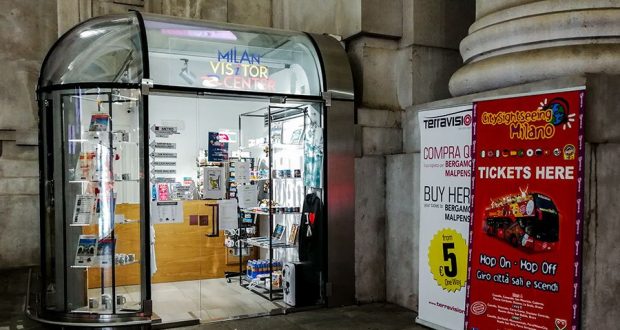
Tickets for the airport–Milan bus and back cost €10 in 2018. By October 2026 that had become the price of a one-way ticket: with Terravision an adult single from Bergamo to Milan Centrale is €10 and a return €18 (€5 tickets exist only on some services and in limited numbers).
I bought the Milan–Florence and return bus tickets through Omio (the service was still called GoEuro back then), before leaving home.
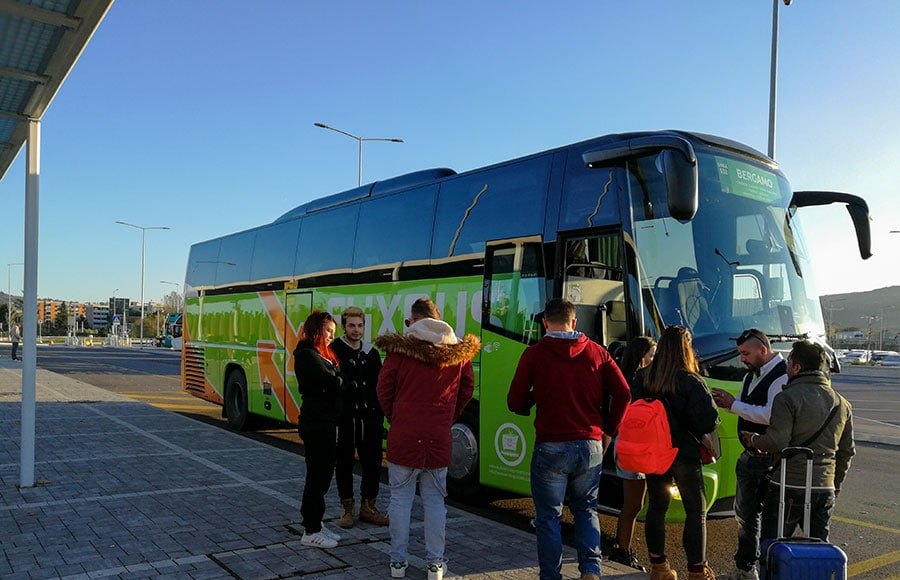
I bought them at the last moment (a week before the trip), so the Milan–Florence tickets turned out twice as expensive as Florence–Milan; bought earlier, they would have been cheaper.
In 2018 my Milan–Florence ticket cost €6.99 and the return €13.99. On top of that add the cost of getting into the city centre (the coach stations are not the most popular and sit a fair way out) — about €3 more.
Total for travel between cities: €34.
3.2. Public transport
In Milan I bought the tourist MilanoCard, which gave free travel on all kinds of public transport as well as discounts on sights.
I’ll count the whole cost of the card in this section, but bear in mind that it also partly covers sightseeing.
72-hour MilanoCard: €19 (2018 price; in October 2026 the three-day card costs €30).
A city bus in Milan:
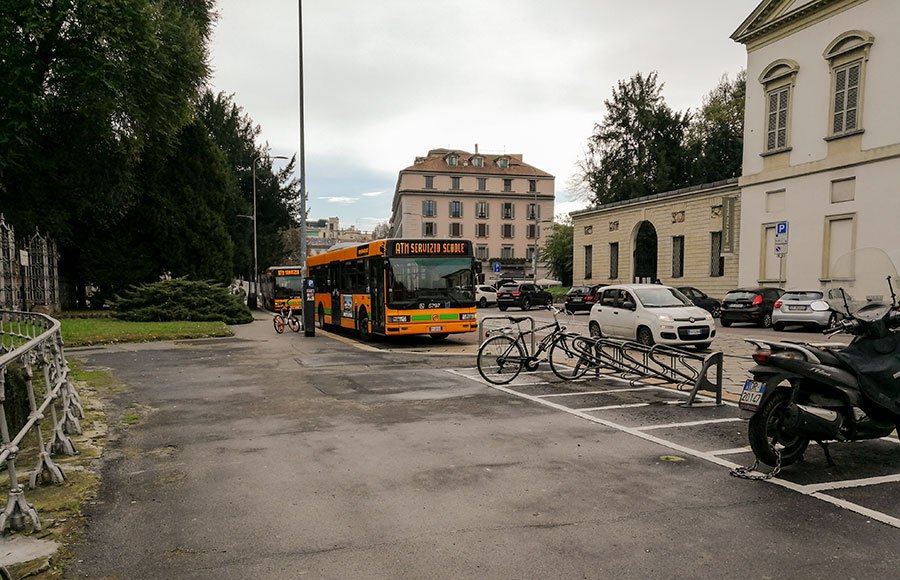
Incidentally, in 2018 the card included one Uber ride (up to €20) — that has since been replaced by a €5 taxi credit — but I never used the offer, as I had no need.
Extra metro journeys (before I collected the card, and on my last day): €4.50.
A single metro journey (or any other kind of transport within 90 minutes) cost €1.50 in 2018. The ticket has gone up since: in October 2026 it is €2.20, and if you pay by tapping the same bank card at the validator, no more than €7.60 is charged per day for travel around the city.
In Florence I mostly got around on foot, since I was staying not far from the centre, and only took the bus twice: €3 (in 2018; in October 2026 a single ticket in Florence costs €2).
Total for public transport: €26.50.
4. Accommodation
In Italy I managed to stay in three formats — a whole flat, a room and a hostel. Each experience was interesting in its own way.
As I mentioned above, I booked the room and the flat through Airbnb, which cut this part of the budget considerably. I also had credit saved up on my Airbnb account, which covered part of my accommodation costs.
In Milan I stayed twice. The first time I rented a flat: four nights in 2018 were listed at about €130, of which I paid only about €36 — the rest was covered by the credit.
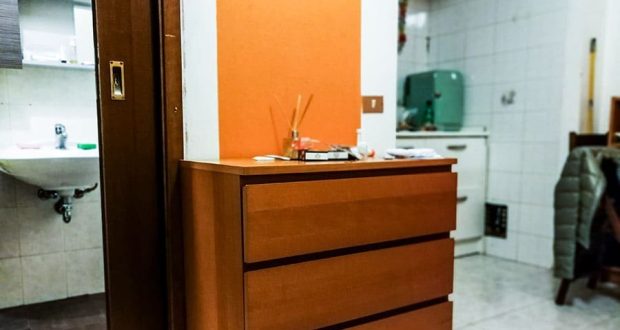
The flat in Milan:
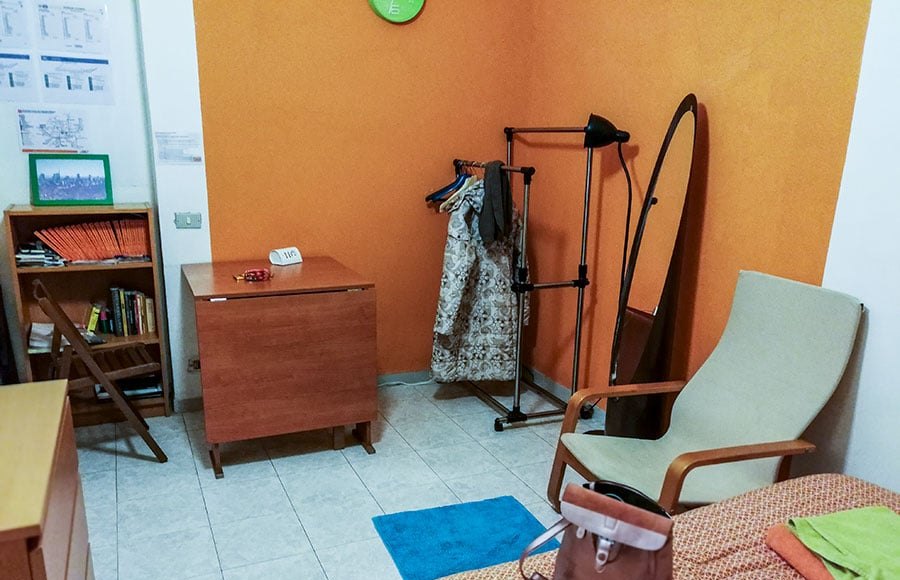
Renting on Airbnb becomes good value from three days onwards, as a cleaning fee is usually included in the price, so on my last day in Milan I stayed in a hostel (I arrived from Florence at 9 pm and had to leave again in the morning).
The hostel common room:
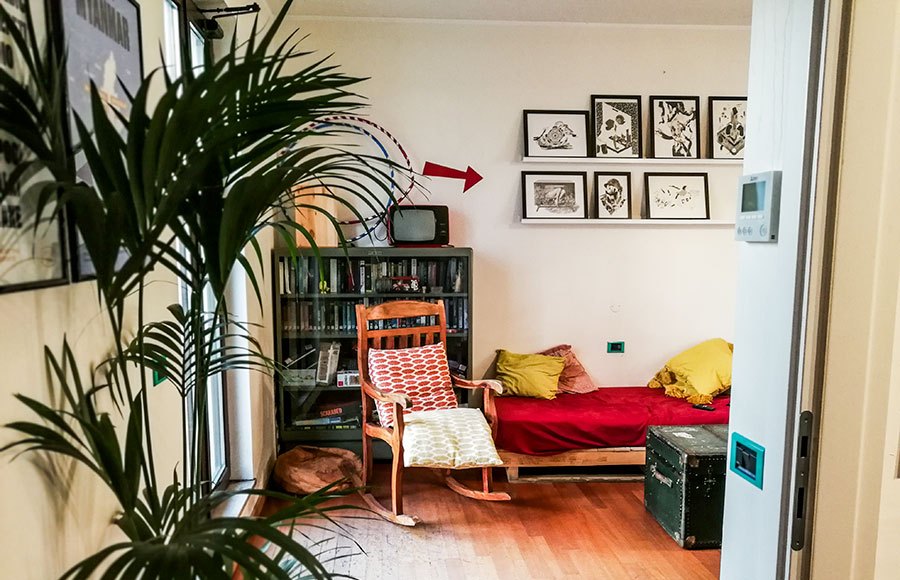
I found the hostel through its reviews (the best in Milan!): in 2018 one night in a six-bed women’s dorm cost about €34, and back then breakfast and dinner were included (according to the hostel’s website, breakfast is now paid and dinner is no longer included). In 2018 the lowest prices for this hostel were on Agoda.
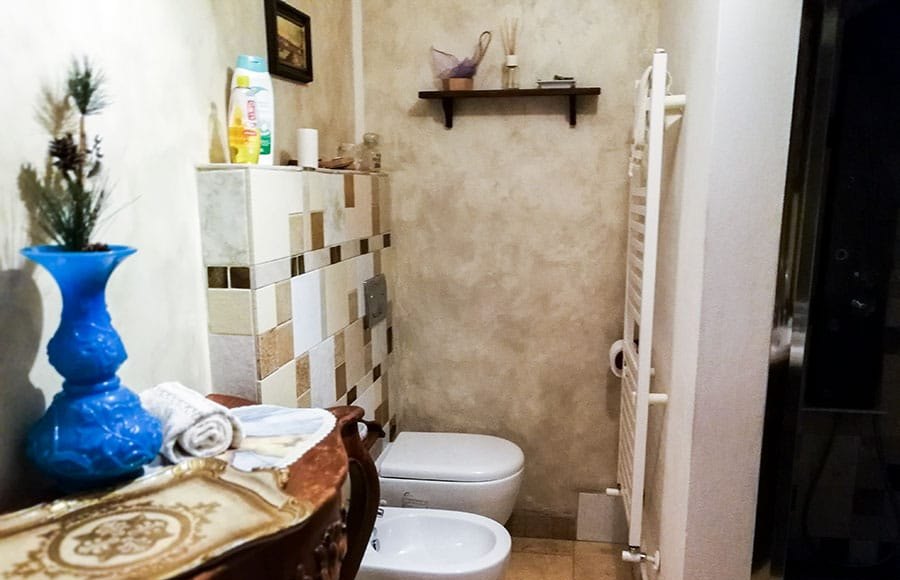
In Florence I rented a room with its own bathroom (simply gorgeous!) — four nights in 2018 cost about €112.
The bathroom in the Florence flat:
If you’re travelling as a pair, only the hostel cost needs doubling; the other prices stay the same.
Total spent on accommodation: €182 — in 2018 prices.
On top of the price of accommodation, Italy charges a tourist tax, collected locally per person for each night. In Milan, from 1 April 2026, that’s €3 in a hostel, €9.50 in a flat or B&B and €3–12 in hotels depending on their stars (City of Milan tariffs). In Florence, according to the trade publication TTG Italia (April 2026), it’s €3.50–8, charged for no more than 7 consecutive nights, and children under 12 pay nothing.
5. Sightseeing
I saw the maximum possible number of sights — some were free (churches, parks, squares), some paid.
In each city I also took a guided tour of the city, booked in advance. Because it was low season, the Milan tour had 5 people on it and the Florence one just 3 — practically a private tour for €20!
In the end I paid €40 for the two tours — those are 2018 prices.
Of the entrance tickets, the most expensive was the Pinacoteca Ambrosiana in Milan (where an original Leonardo da Vinci codex is on display) — €13 in 2018. Since 1 October 2026 only a combined ticket for the gallery and the San Sepolcro crypt has been sold, at €20.
In Milan every sight had to be paid for separately; the one thing I did buy was a card allowing entry to all the city’s civic museums over 3 days — €12 in 2018. Without the card, entry to each museum cost at least €5 then.
In total I saw around 20 sights, including museums, parks, Sforza Castle, old churches, the Duomo, the Galleria and the Monumental Cemetery.
I bought almost all my tickets on the spot, with one exception — the combined ticket for the Duomo. I bought it in advance on purpose, to avoid the queues, and it was worth it: instead of 2–3 hours in line I waited about 10 minutes. In 2018 the combined ticket covering the cathedral itself, the archaeological area and the Duomo terraces cost me €14. In October 2026 a similar combined ticket (cathedral, Duomo museum and terraces) costs €22 if you climb the stairs and €26 with the lift, and the archaeological area is no longer included.
The view from the Duomo roof:
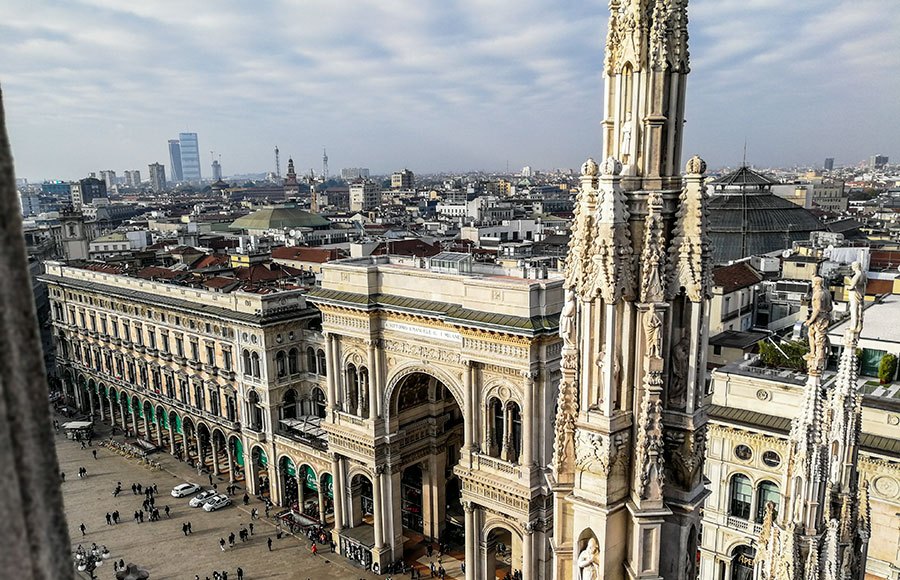
I bought the ticket on the English-language site Tiqets, which sells not only tickets for various attractions and events but also tours. As the site is international, it has a much wider range of offers, so it’s worth a look.
All tickets in Milan together cost me €65.50 in 2018. But I’d have spent more if I hadn’t bought the MilanoCard!
In Florence I bought the special Firenze Card tourist card in advance for €85 (the price is the same for 2026). It lets you visit almost all the sights freely over 72 hours (the list has 72 places, with about an hour for each). Naturally you won’t manage everything — some museums and palaces deserve a good three hours — but if you want to see as much as possible, the card can be useful.
Of course, you need to work out whether buying the card makes sense, but in my case the saving was considerable.
Another reason to buy the card is the separate queues for cardholders — you get into museums much faster than most tourists. And that really is great, it saves a lot of time! You don’t need to buy any extra tickets; the main thing is that what you want to see is on the list of places covered by the card.
If the card doesn’t pay off for you, tickets for individual Florence museums can also be bought in advance, for example on Tiqets.
I visited only one additional museum, which turned out to be private (a small Leonardo da Vinci museum), so the Firenze Card wasn’t valid there — a ticket cost €6 in 2018. The museum now operates at Via del Castellaccio 1/r, and in October 2026 a full-price ticket costs €10, or €8 when booked on its website.
In total I spent €195.50 on all the sights and tours, in 2018 prices.
6. Food
I tried to eat on a budget in Italy. In many reviews I’d read that when planning a budget for travelling around Italy you should allow €100 a day, with accommodation already paid for.
For me it worked out much cheaper, of course. The main tricks (ways to save) are: compare prices, go to cafés further from the tourist spots and buy food in supermarkets.
Every café has boards with prices at the entrance, so you can roughly estimate straight away what lunch or dinner will cost.
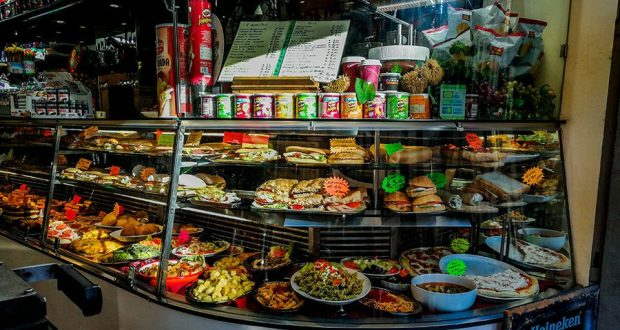
There are often special offers too. For example, in Milan after 6 pm many cafés and restaurants offer a so-called “aperitivo” menu — you buy a drink at a fixed price (for example, €8 in 2018) and can take any food from the buffet. In some places that’s just mini-snacks, in others a wide choice of proper food, so you end up with a full dinner for €8–10.
In Milan I had breakfast in the flat with supermarket groceries, and during the day bought inexpensive snacks.
In Florence small breakfasts were included at the flat, so I managed to save there too.
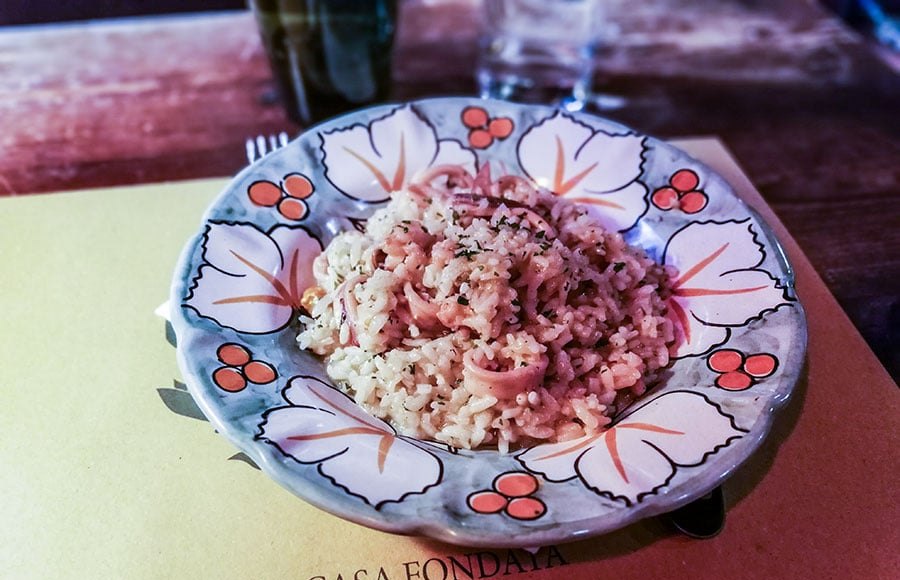
That doesn’t mean I stuck to a strict budget — of course I tried all the tastiest things (how can you not try the local dishes on a trip, especially in Italy?): risotto, pizza, pasta, the most delicious ice cream in the world… The memories alone make me hungry.
Seafood risotto at a famous café:
In total I spent €26 (supermarket shopping) + €114 (cafés) = €140 on food.
7. Phone and internet
Before the trip I bought a special Drimsim SIM card, which you can travel the world with. It works everywhere: as soon as you arrive in a country it activates straight away (you need to register the card beforehand).
I mainly needed the SIM for the internet — daily Skype calls, photos and stories on Instagram, Google Maps and audio guides. Both flats had working Wi-Fi, though in Florence the connection generally wasn’t great — too much interference.
The SIM cost €10 in 2018, and I spent €15 in total on usage.
Total for connectivity: €25.
8. Insurance
You simply won’t be granted a Schengen visa without insurance, so arranging it is essential. I compared different offers and in the end chose an inexpensive policy for €10.40 (2018 price). I bought it through a comparison site, where it worked out slightly cheaper.
Reviews for most insurance policies are roughly the same (both positive and negative), but the number of risks covered by this one was higher compared with others at the same price — so that’s the one I took.
9. Everything else (shopping, gifts, services)
Given that my baggage was limited to 10 kg, I bought very little. Though I did fancy buying a second suitcase just for shopping — there was so much wonderful stuff I couldn’t buy back home, or that was much cheaper — from delicious food to clothes, cosmetics and toys.
Top-quality produce at the market in Florence:
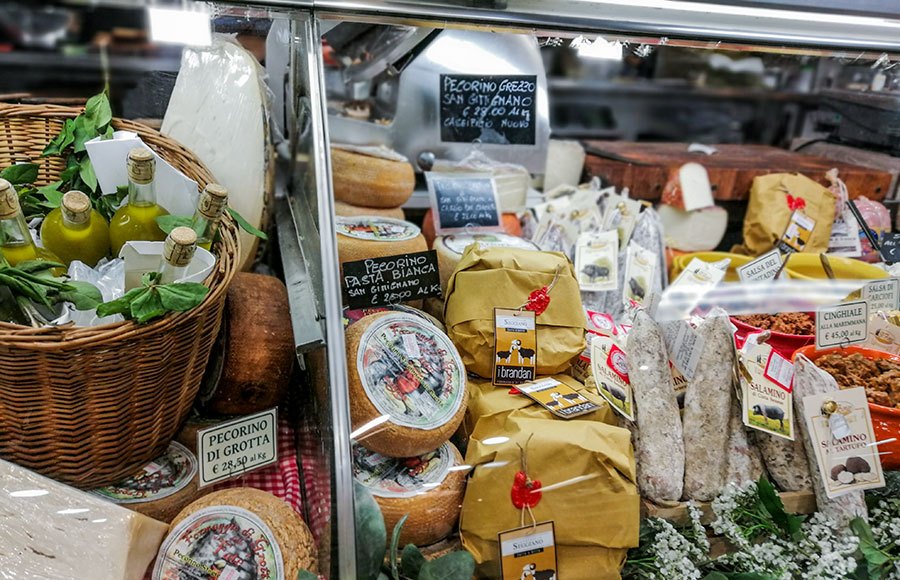
Shopping to take home: €95.40.
I also used left-luggage in Florence twice and spent €12 on it. Not an essential expense, but my route was planned in such a way that it was simpler to pay and leave the suitcase.
Total in the “everything else” section: €107.40.
10. How much does a trip to Italy cost — the verdict
Now let’s add up how much money a 10-day trip to Italy takes.
Excluding the optional spending on gifts and souvenirs, I spent about €851 on my solo budget trip — and those are 2018 figures. The same trip would work out noticeably more expensive now: by October 2026 the visa had risen from €35 to €90, the MilanoCard from €19 to €30, the combined Duomo ticket from €14 to €22, the Ambrosiana from €13 to €20, and a tourist tax has been added on top of accommodation. The cost of flights has to be worked out separately for your own trip.
Is that a lot or a little? It depends what you compare it with. Next to Turkey or Southeast Asia it’s expensive, of course. But compared with a ready-made package tour to Italy, an independent trip works out cheaper — and I visited two cities, while organised tours usually go to just one (most often Rome).
Write in the comments: have you been to Italy? Roughly what budget did you end up with, and what interesting things did you see? Do you know any other ways to save? Share your tips and impressions! Happy travels!