Today let’s talk about food prices in Florence. Every region of Italy cooks differently, but some Italian eating habits are the same all the way down the “boot”. Let’s look at what Italians actually eat, how to find budget cafés and which of the most popular dishes you should try.
Tuscany is famous for its vegetable dishes, yet Florence is the birthplace of the celebrated Florentine steak. I don’t know whether anyone will dare to try it — the original recipe involves minimal searing (in other words, it comes rare). There are more traditional dishes too — pasta, pizza and, of course, the famous gelato. And can you actually find an inexpensive café in such a touristy city, or are you doomed to pay a small fortune?
1. Where to eat in Florence
For locals, coffee is not an hour to an hour and a half of lingering at a table. They dash in, drink a thimbleful of espresso standing at the counter and leave — and that’s usually the end of coffee-drinking in Italy. What it costs now: according to price monitoring by the industry federation FIPE, average prices in Florence as of December 2025 are espresso €1.26, cappuccino €1.49, a panini €3.23, and dinner in a pizzeria on the “pizza plus a drink” basis €13.40. That’s a city-wide average, not a promise of that price in every bar by the Duomo. And keep the main thing in mind: this money buys coffee at the counter. Sit down at a table and a service charge may lawfully be added to the bill — and it must be printed in the menu you are given before ordering. More on that below.
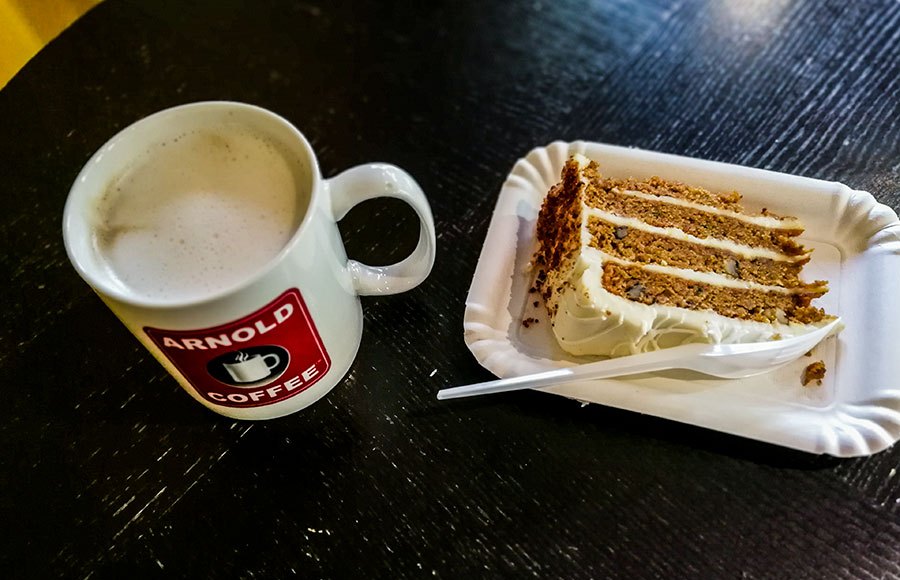
A café by the church of Santa Maria Novella. Coffee and carrot cake for €7.50 — that’s our bill from November 2018 (after Milan it seemed pricey, but the cake was certainly good):
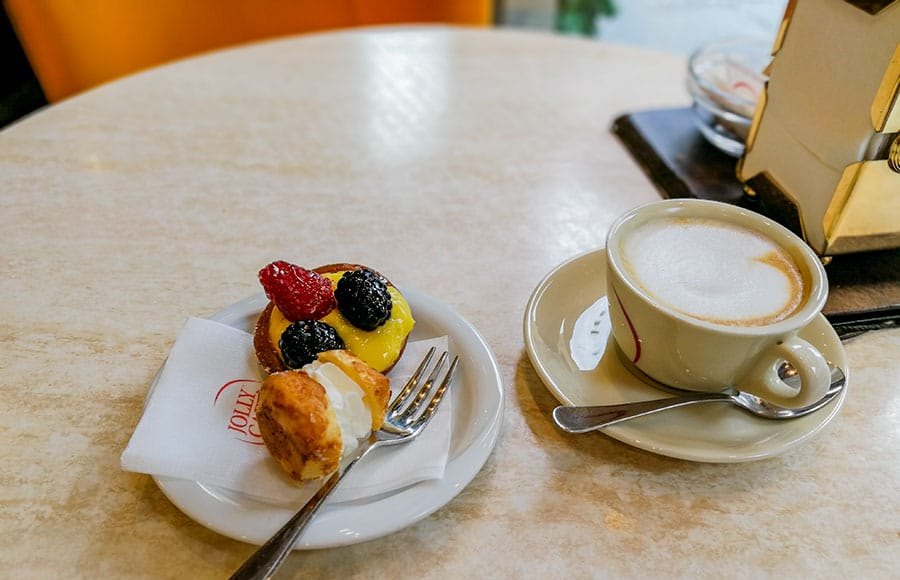
And for contrast — tiny pastries and coffee at a fashionable café, also €7.50, also November 2018. Let’s agree straight away: every sum in our photos below comes from that same November trip and is not today’s pricing. Fresh figures are given alongside in words, taken from publicly available menus and labelled with a date:
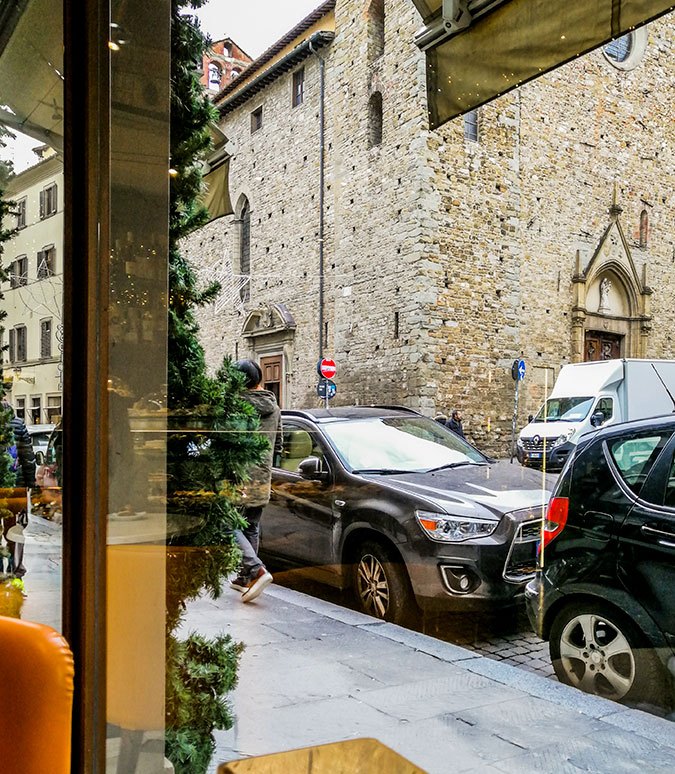
On the other hand, the café looks straight out onto the Cathedral:
Lunch or a snack means pizza, sandwiches, salads. Supermarkets sell fresh pre-packed salads, vegetable or fruit. At Esselunga I used to buy salads with fresh salmon and cucumber: a small 200-gram tub, yet filling. I saw plenty of office workers coming out of a business centre and heading in for exactly those salads. I’m deliberately not quoting the price of that salad — it’s from 2018, and the chain doesn’t publish its shelf prices openly. It works like this: Esselunga has a deli section with ready-made dishes and sushi, and you simply read the price on the pack. It’s still the cheapest lunch in Florence, cheaper than any café.
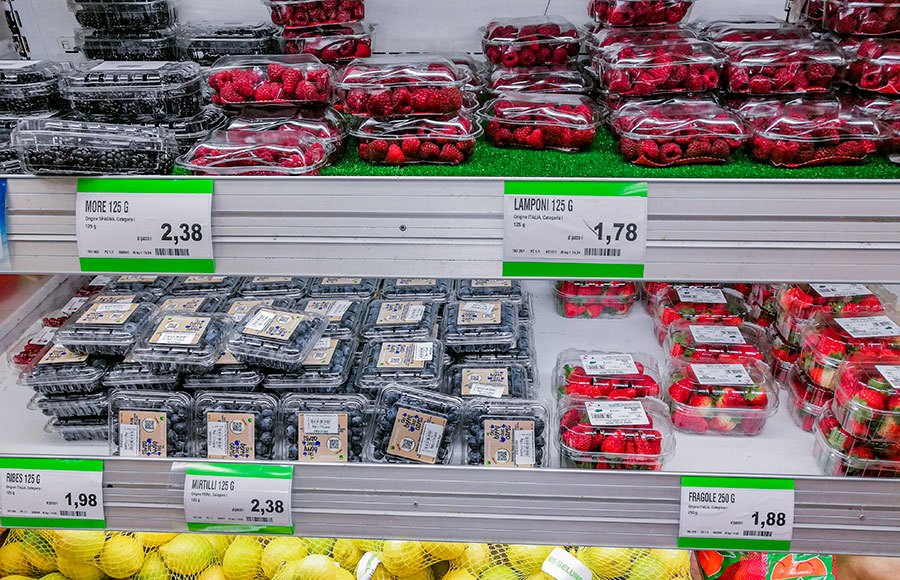
More on Esselunga later, but berries there, for example, were cheaper than anywhere else (a reminder: these price tags are from November 2018 — this particular store’s current prices aren’t publicly available, so treat the photo as a picture, not a calculator):
Florence’s signature dish is bistecca alla fiorentina. The steak really is huge and really is rare: if the waiter doesn’t ask how you’d like it cooked, you’ve come to the right place — that’s exactly how a Florentine steak should be done. But there is no single standard of “strictly two kilograms and five centimetres”, and Italians argue about it themselves. Tuscany’s tourist portal describes a cut 3–4 cm thick weighing 1.5–2 kg, while the Italian Academy of Cuisine gives 4–5 cm at around a kilogram (0.8–1.2 kg). So a restaurant may legitimately serve you a kilo-and-a-half slab or a piece half that size, and both will be “the real thing”. What it costs: at Trattoria Nerone, which I’ll come back to, as of October 2026 a fiorentina goes for €65/kg, and from the Chianina breed €79/kg. Do the maths up front: the steak is ordered by weight and usually shared by two, because nobody finishes a kilogram alone. Honestly, I didn’t dare eat a huge underdone steak, but if you’re a serious meat lover, do try it — reviews of the steaks are nothing but positive!
Interestingly, Italians themselves often go to a restaurant to eat pasta. Here pasta with sauce works like a starter; the meat or another main course comes afterwards. Be careful — pasta portions are big!
1.1. Types of place to eat in Florence
Italians often have breakfast out — but that’s a habit, not a law, and far from everyone follows it. At home people usually just have a cup of coffee, or milk, and not even always that. What you really need to know in advance is the schedule. Bars start breakfast at about 07:00, lunch runs 12:30–14:30, aperitivo goes from 18:00, and dinner is roughly 19:30–23:00. Turning up for dinner at six in the evening and being surprised by an empty room is the classic tourist mistake: the kitchen simply isn’t open yet.
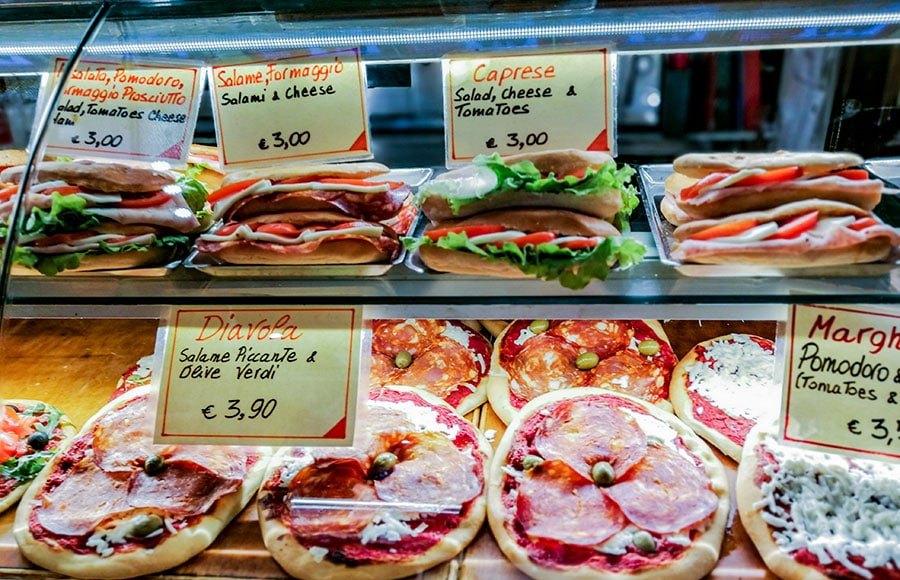
One of the tourist spots, not far from Ponte Vecchio. The price tag in the photo is from November 2018 and is different today; I gave the current city benchmarks for panini and pizza above:
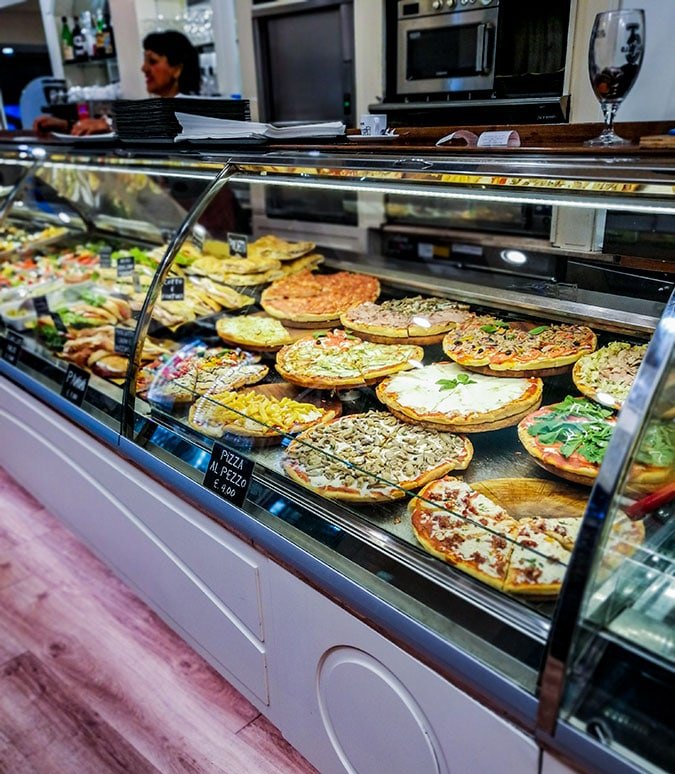
Breakfast, in any case, is preferred sweet — coffee with a croissant or a sweet bun (a brioche). So to the question “where should I have breakfast in Florence?” my short answer is: the nearest bar, standing at the counter — a cappuccino there averages €1.49 across the city (the same FIPE monitoring for December 2025), and there’s no need to travel to some “famous” café for breakfast. In the morning every café smells wonderful, of fresh baking and coffee. The coffee is very strong — that little thimbleful of espresso. You order it as “un caffè” — exactly like that, with a double “f” and the stress on the end. You don’t need to say the word “espresso” in a bar at all: say “caffè” and that’s precisely what you’ll be poured — it’s the default coffee. The counter price holds around €1–1.50, and the Florence average for December 2025 confirms it — €1.26. Just don’t transfer that figure to a cappuccino, a latte or a table: that’s different money.
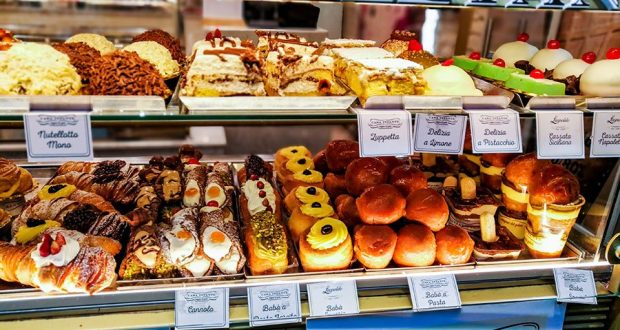
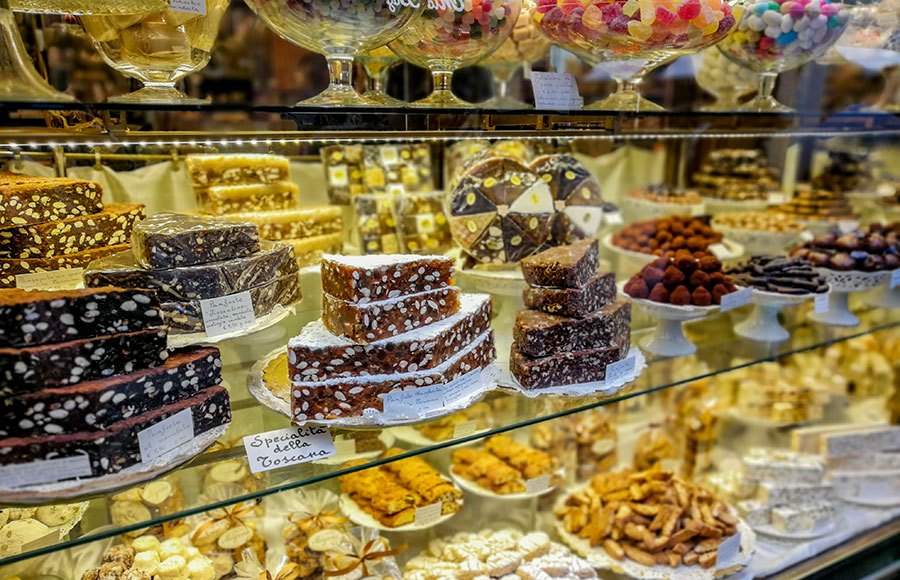
All over Florence there are shops with windows full of sweets:
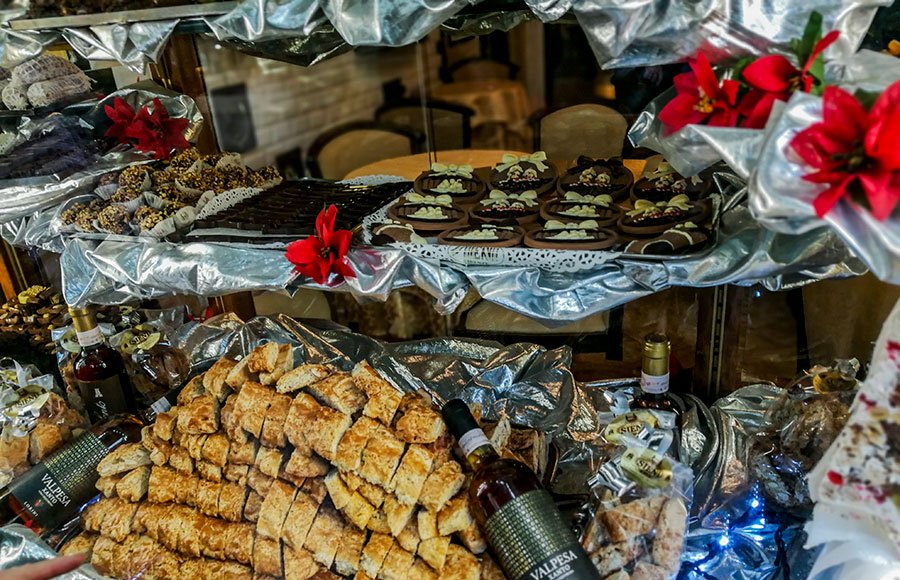
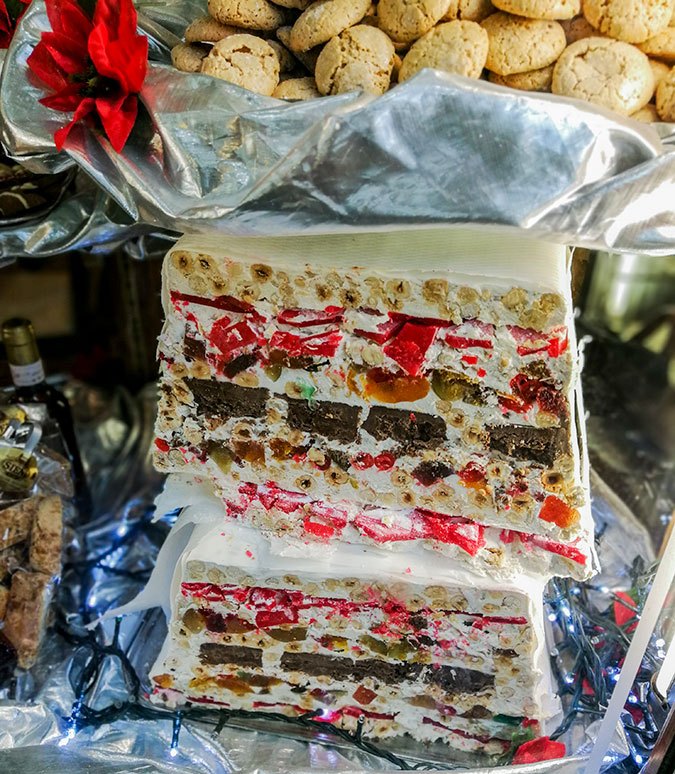
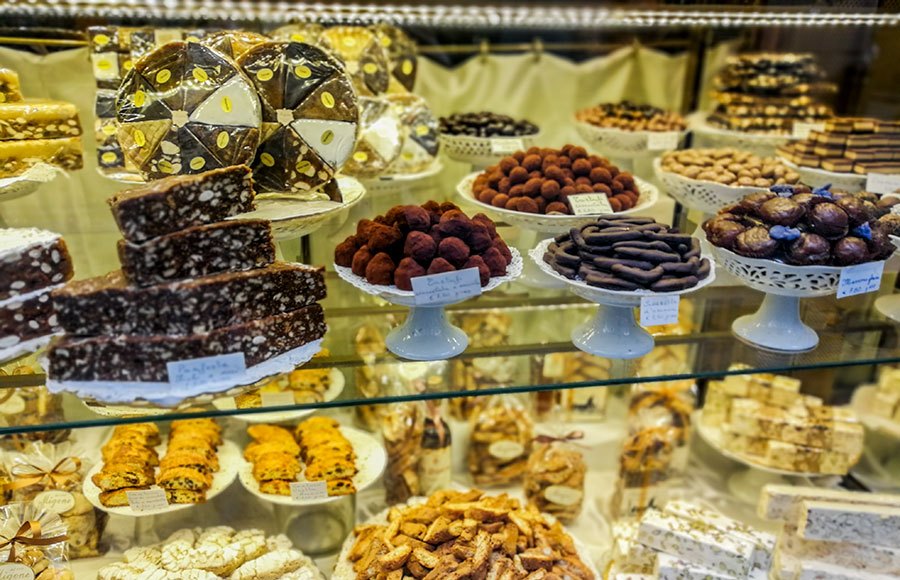
Torrone (nougat with nuts, dried fruit and chocolate) — delicious, and easy to bring home as a sweet souvenir:
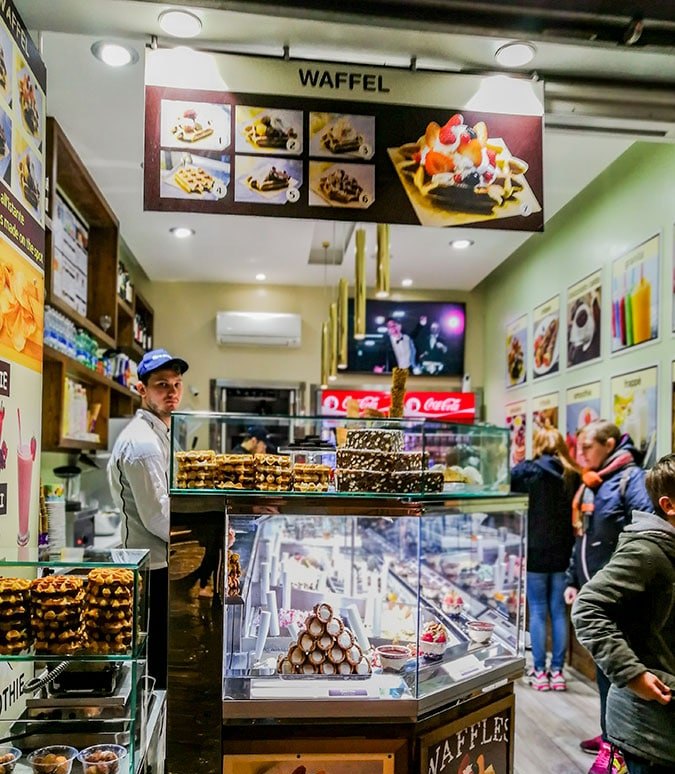
Or waffles — another great sweet snack:
Tourists, of course, get a huge choice of European and Italian dishes. What surprised me was how popular Korean, Chinese and Japanese cafés are in Florence, and they’re comparatively inexpensive. The reason is that a great many Chinese and Koreans live in Italy, having come there to work — and there are plenty of tourists too. Places like that are cheaper.
Another option is street food and bagetterie — cafés that sell only sandwiches. They’re popular with Italians too. Where are they? All over the city!
Then there’s tavola calda and tavola fredda. It’s spelt exactly like that, ending in “a”: tavola is a laid table, while tavolo is just the piece of furniture — so the sign you’re looking for is the feminine form. According to the Treccani dictionary, it’s an establishment or quick-meal service with hot and cold dishes — at the counter or at a table. There’s no single “pay by the size of your plate” scheme here: some places really do fill a tray for you, others are simply a counter of ready-made food priced per portion. Read the price tag — under Tuscan law it must be visible before you order anything.
In the evening it’s customary to eat more substantially — soups, pasta, meat. Italians most often have dinner at home with the family, but they also love getting out into town, or out of town, to spend an evening in a favourite restaurant.
Italians love traditional osterie — small, usually family-run restaurants in the traditional Italian style. Some of them rarely even have a printed menu. It’s the kind of place “for their own”, but they’re happy to feed tourists too. They’re usually inexpensive yet very tasty. You do, of course, have to look for such places away from the tourist districts.
Tuscan cooking is rich in vegetables. You can try lovely vegetable soups here — tomato, onion and so on. But Tuscan cuisine has a calendar, and hardly anyone warns you about it. Ribollita is a cold-weather dish: its flavour rests on cavolo nero cabbage, which is only properly good after the first frosts. Pappa al pomodoro and panzanella are the opposite — summer dishes, all about ripe-tomato season. Schiacciata alla fiorentina is carnival baking, and pan di ramerino is an Easter one. So if you’re served ribollita in July, it isn’t a fraud — but it’s not the flavour people eat it for in winter.
Trattorias are popular too, though they’re getting ever more “touristy”. A trattoria is roughly the same thing as an osteria — a small restaurant. In a trattoria you’ll find more pasta dishes and pizza.
1.2. Café prices
We managed to find a few interesting places too. For example, a café not far from the Pitti Palace:
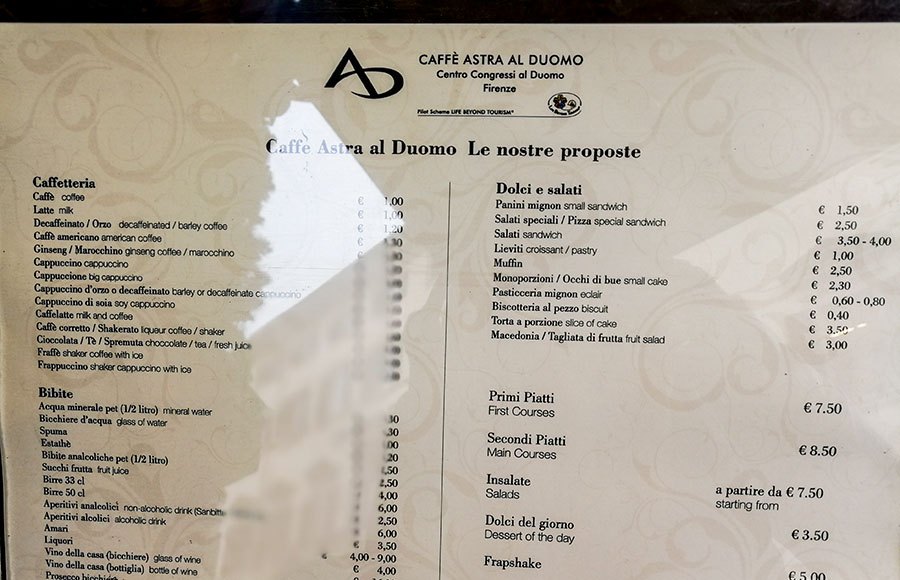
And this is the price list of a fashionable café near the Duomo (drinks and sweets only here):
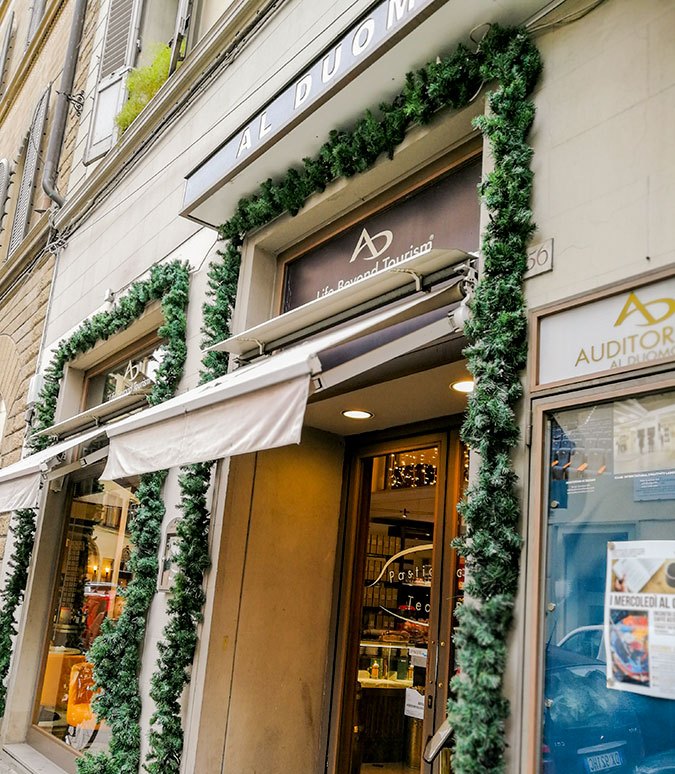
The café entrance:
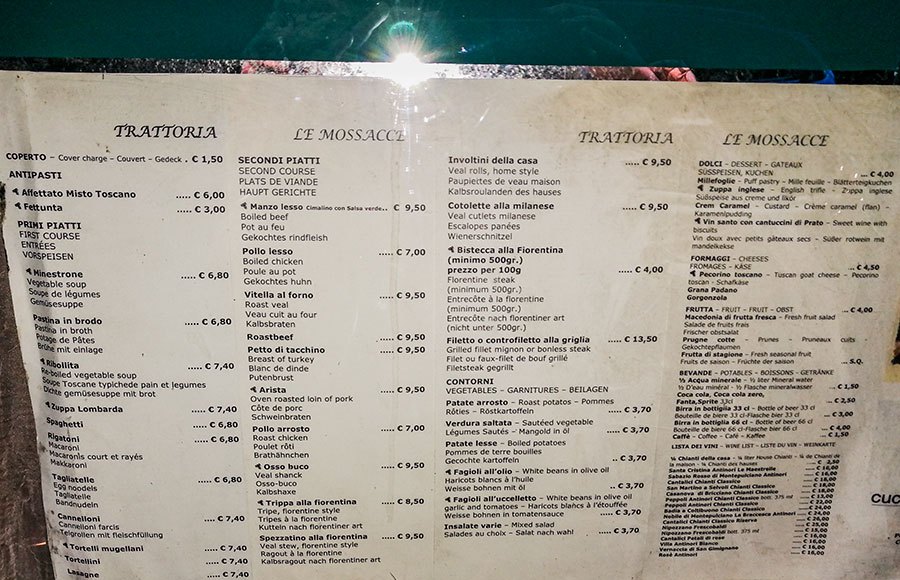
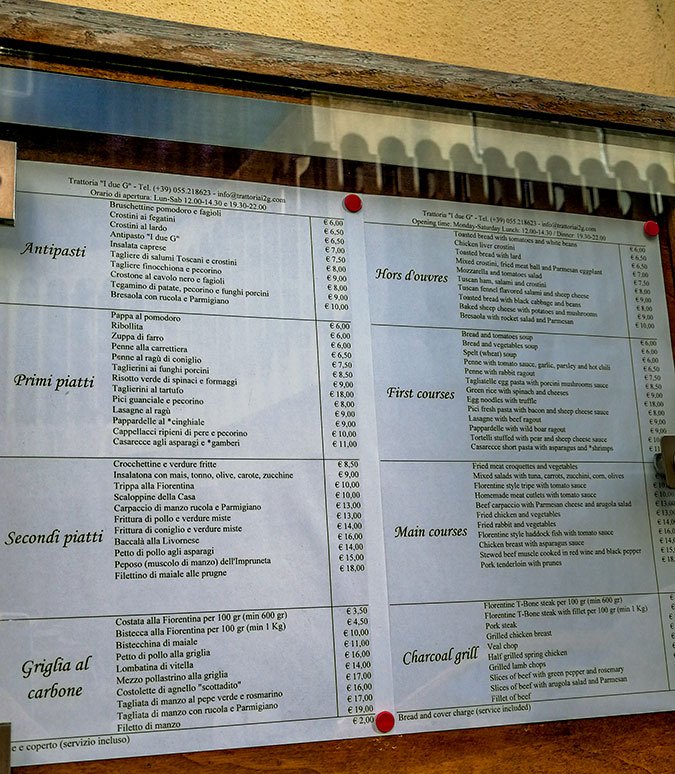
Prices in a small family restaurant — a photo from November 2018, when a Florentine steak there started at €20 for a 500-gram portion. What that figure looks like today I wrote above: €65 per kilogram and up. Treat the photo as a postcard from the past:
A restaurant in a non-touristy district:
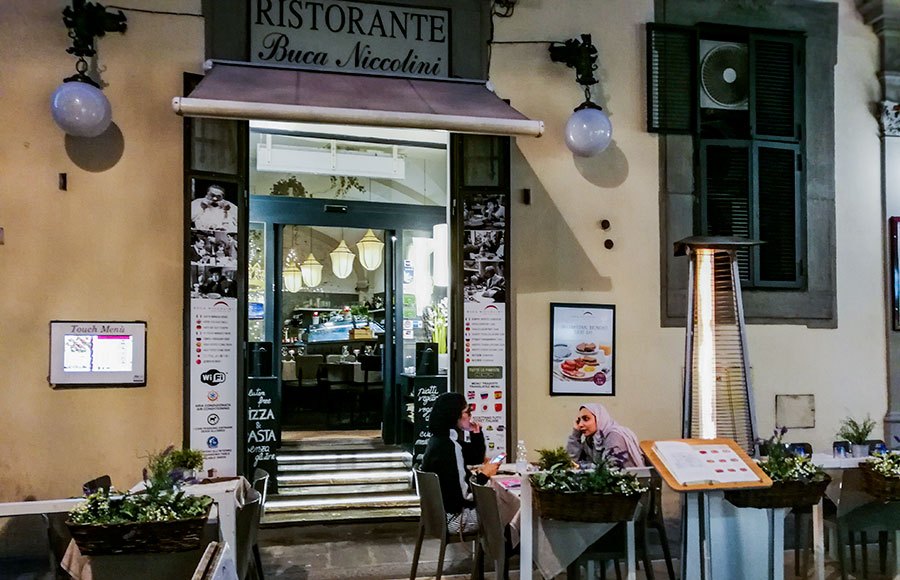
Some trattorias you simply can’t walk into — you need to book a table in advance, this one for instance (next to Santa Maria Novella station):
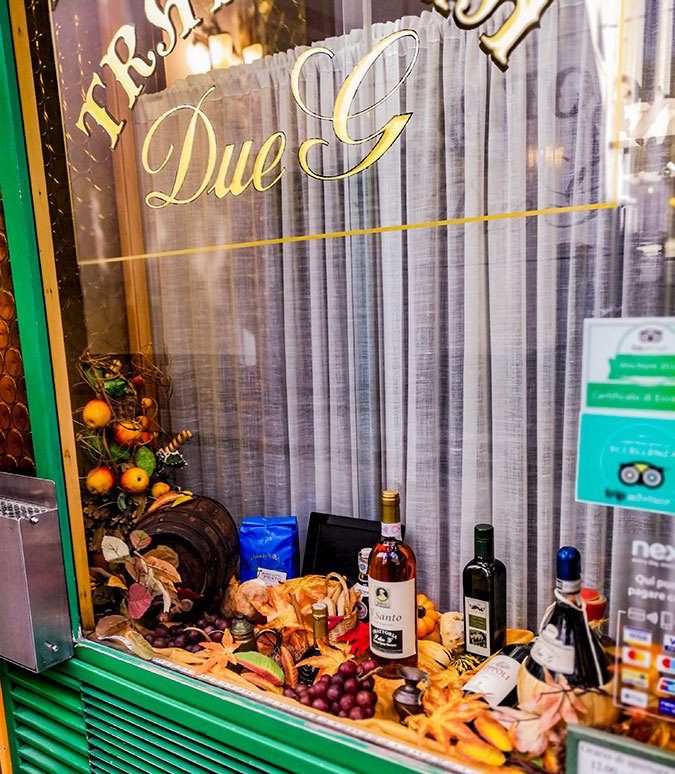
The menu:
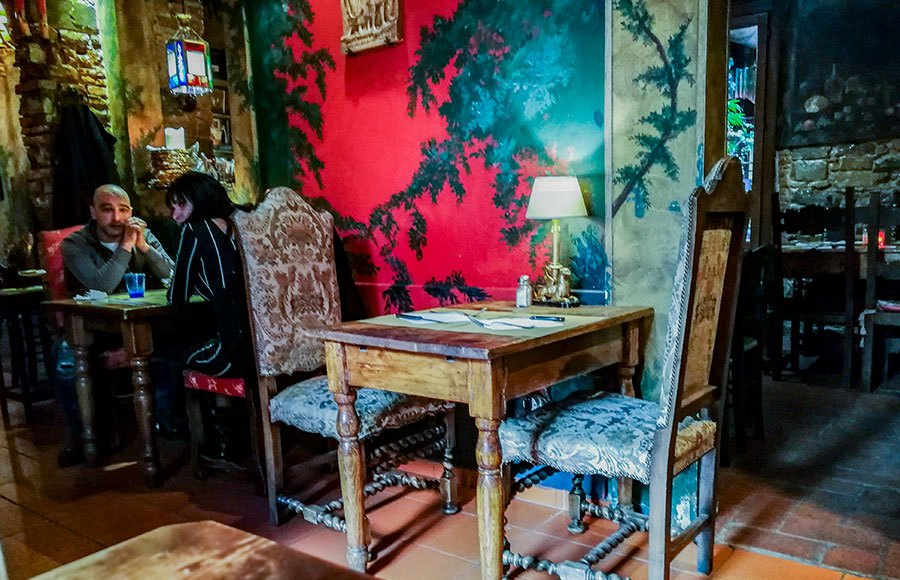
Not far from the Duomo (literally ten minutes away) I found an interesting little restaurant — Trattoria Nerone. The good news: it’s still open, in the same place at Via Faenza 95/97R, seven days a week. The official website gives the hours as 11:30–23:30, while an old version of the same site still shows 11:30–23:00 — a discrepancy within a single domain, so on the day of your visit it’s better to check the hours on the site rather than rely on my figure. Inside it’s full of atmosphere:
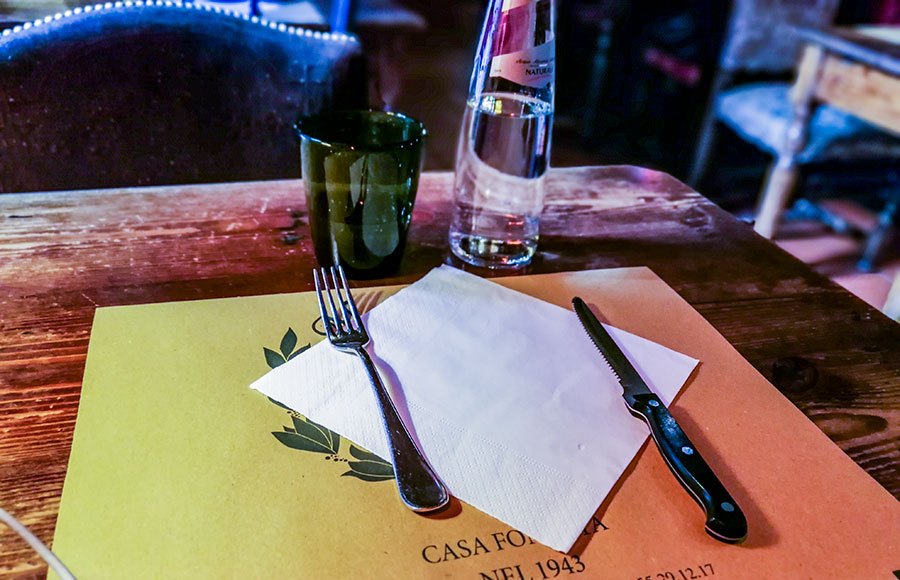
I really liked the interior:
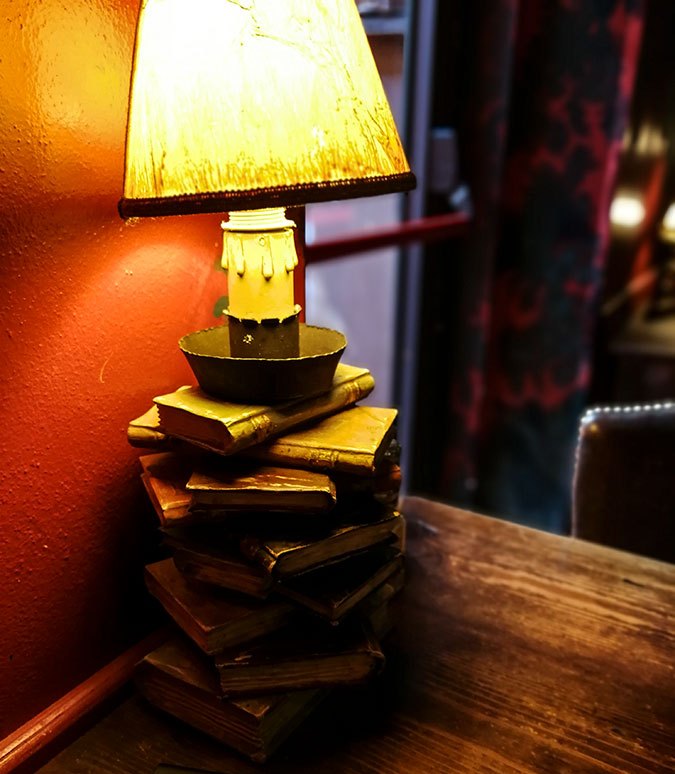
Interesting pieces of décor:
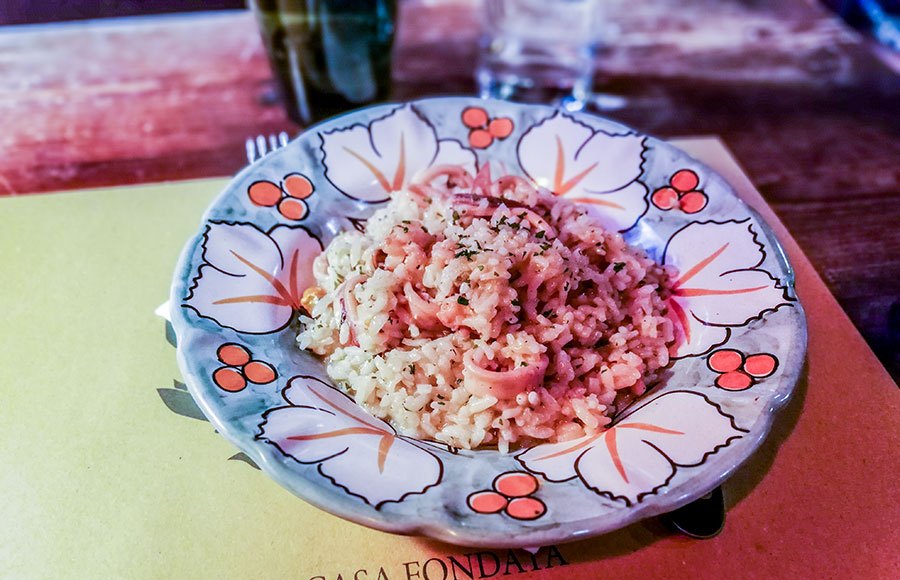
The seafood risotto is meltingly tender (the last time I ate seafood that good was in Thailand):
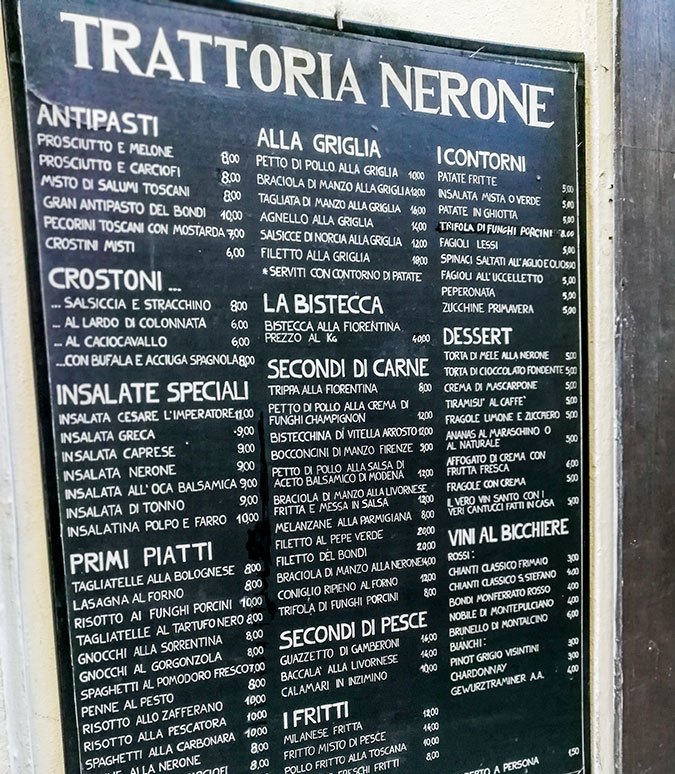
The menu in the photo is from November 2018; here is that same menu as of October 2026: espresso €2, cappuccino and caffè latte €3.50, soup €10, pasta €11–18, pizza €10–14, fiorentina €65/kg, Chianina €79/kg. This is a restaurant ten minutes from the Duomo — literally the most touristy part of the centre — so hold on to it as a reference point for comparing everything else:
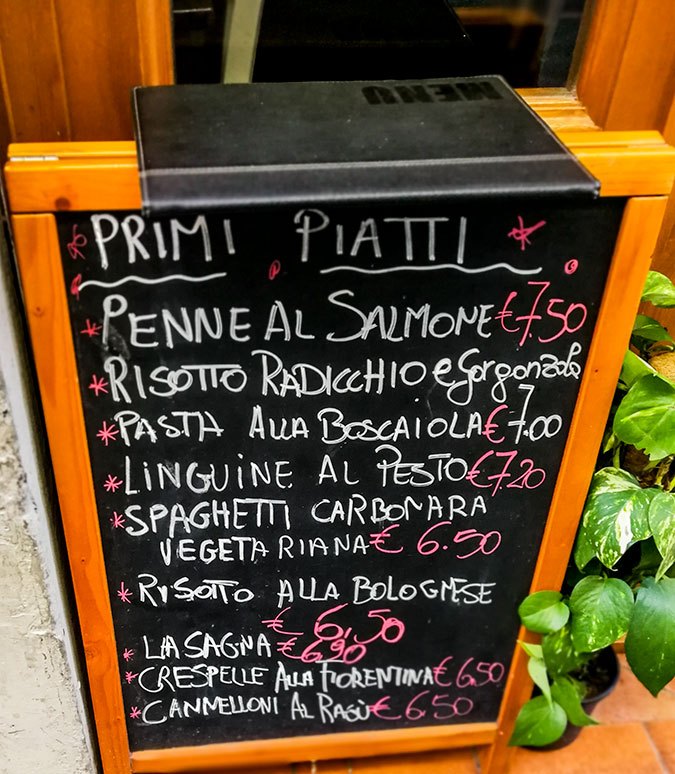
And here, for example, are the prices in a small café:
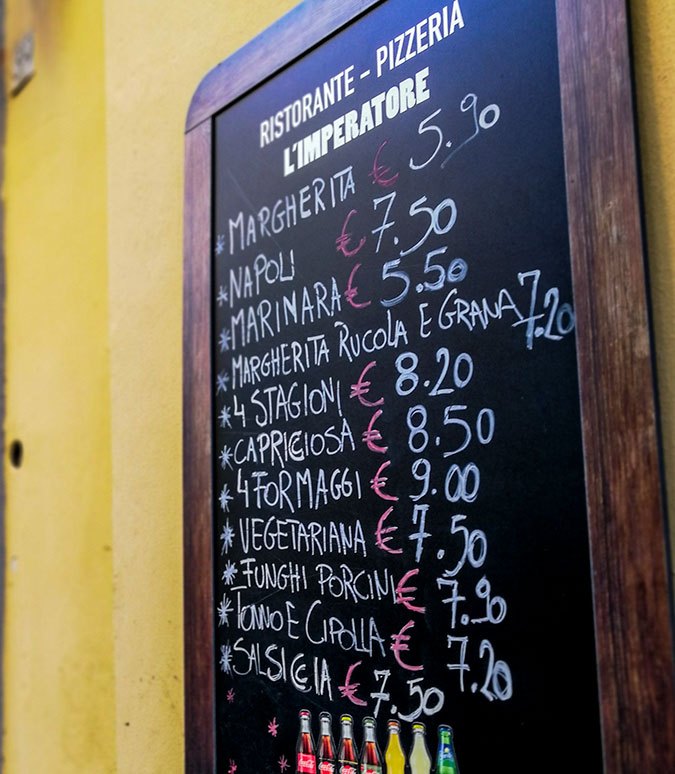
Pizza:
2. How to find a cheap and tasty café
I recommend strolling to the other side of the River Arno, towards the Pitti Palace. Look for cafés and restaurants in that area — fewer touristy places, more cafés for locals. They look much simpler too: no signs and menus in every language.
About the classic tip “look for a place with no English menu”, I’ll be honest: it has barely worked for a long time, and perfectly ordinary neighbourhood places print English menus these days. Instead of that clue, keep four things in mind that you are owed in Tuscany — they’re written into regional law, and you can safely point to them.
First: food prices must be readable from outside, before you’ve walked in and sat down. No price display at the entrance is already a warning sign.
Second: when there’s table service, the menu must be handed to you before you order, not after.
Third: the service charge must be stated in that menu. The famous coperto — a charge for the place setting, the bread and your seat — is legal in Italy, it’s not a scam; what’s illegal is failing to warn you about it in advance. If you see a line on the bill that wasn’t in the menu, you’re entitled to challenge it.
Fourth: shops and restaurants must accept at least one bank card — penalties for refusing have been in force since 30 June 2022 — and “we only take cash for such a small bill” is a violation. Carry some cash anyway: technology fails, and nobody wants an argument in the middle of lunch.
Ride a little way out of the centre and you land in a completely different Florence — towards Via Pisana, for instance. It’s an ordinary residential district with ordinary cafés and the same delicious coffee and sandwiches, just without the queue of tourists. From Santa Maria Novella station the convenient way there is on buses 6 and 13 — both run to Pisana, and the 6 goes further, to the Pisana Villa Strozzi and Pisana Monticelli stops. I won’t quote an exact journey time: Via Pisana is a long street rather than a single point, and the operator runs separate winter and summer timetables, so check the time on the day you travel. A city ticket from 1 August 2026 costs €2 and is valid on trams, city buses and some regional trains within the urban area; tickets bought before the price rise can be used up until 31 January 2027. There’s a big supermarket there too: Esselunga at Via Pisana 130/132, Monday–Saturday 07:30–21:00, Sunday 08:00–14:00; and a large Coop a little further on, in the Ponte a Greve shopping centre at Viuzzo delle Case Nuove 9/10, Monday–Saturday 08:00–21:00, Sunday 08:00–13:30. The price difference with the centre is real and noticeable. What I won’t give you is any kind of ratio: there are simply no comparable same-format menus for the centre and for Pisana, and any neat figure would have to be invented.
Another option is to ask a guide during an introductory walking tour of the city: in a couple of hours you’ll see the main sights, and along the way you can note where to eat in Florence.
McDonald’s fans will find one here too, but to my mind eating burgers and chips in Italy is dull. Local dishes are cheaper and far tastier.
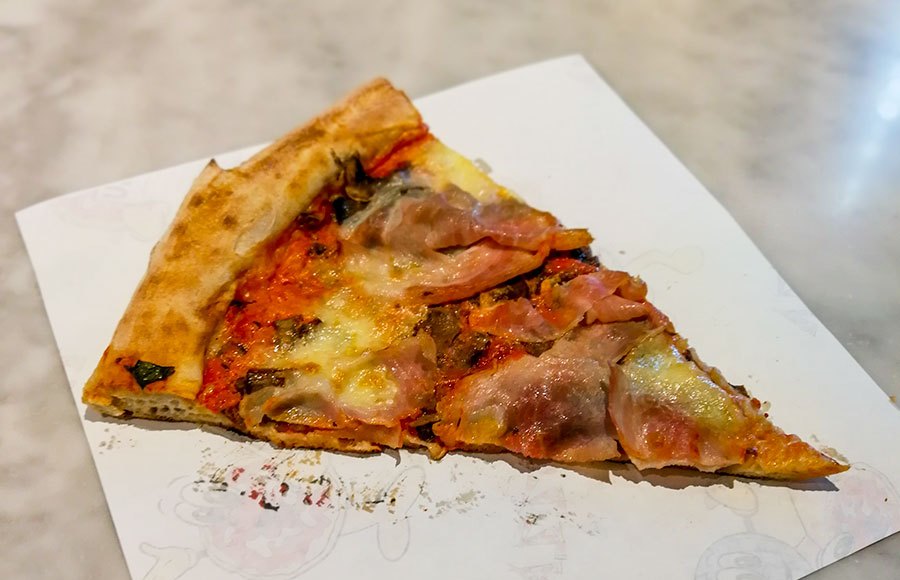
A slice of pizza in a genuine family pizzeria (behind the Pitti Palace) — the tastiest pizza of my life:
There’s always another way to find a good inexpensive café — ask the locals. If you’re staying in a hotel, ask at reception; they’ll certainly suggest something. Inexpensive restaurants exist in the city centre too, but they’re not so easy to find without a tip-off.
Here’s another idea — any food shop sells local sliced meats, prosciutto and cheeses. You can ask for literally three slices of any delicacy; the shopkeepers are used to it and won’t be surprised. Add bread, juice or yoghurt — and that’s lunch for two. I’m not naming a specific sum: it depends on what goes into your bag, but it’s reliably the cheapest way to have lunch in the city.
By the way, about the famous ban on eating in the street — the one that earned Florence the nickname of the “anti-panino law” city. I read about it in a guidebook too and couldn’t understand why the whole centre was calmly eating on the go regardless. We got to the bottom of it: the ordinance really did exist, but it never banned eating “anywhere in the centre”. It covered four specific places — Via de’ Neri, Piazzale degli Uffizi, Piazza del Grano and Via della Ninna — applied only between 12:00–15:00 and 18:00–22:00, and the fine was €150–500 (€167 if paid within 60 days). Crucially, it expired on 6 January 2019. No newer permanent ban on street eating across the whole centre appears in official sources. So a panini on the steps is fine. Do remember, though, that the city regularly introduces separate temporary restrictions for a particular square, for alcohol or for sitting on the steps — and the signs on the spot always outrank any article.
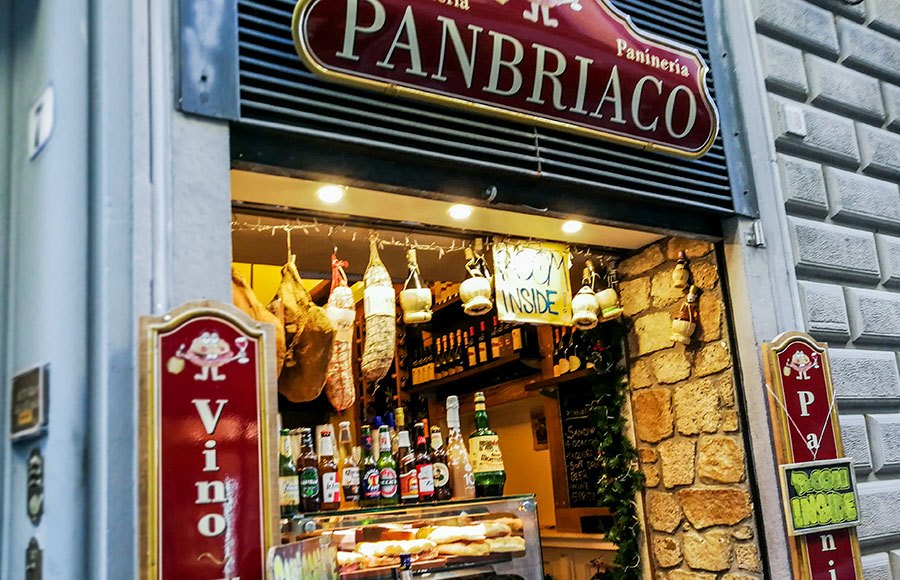
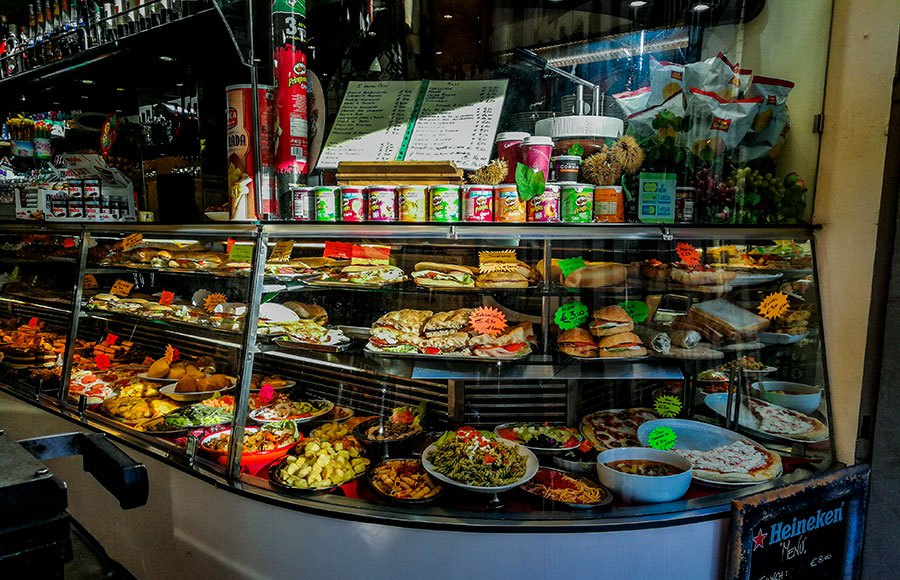
Here you can buy a panini or simply prosciutto by weight:
I also recommend looking in at the Central Market. Entry is free; you only pay for your shopping and your food. But there’s one important detail nearly everyone trips over: two different markets with different schedules live in the same building. Downstairs is the produce market — meat, cheeses, vegetables; it opens in the morning and closes around the middle of the day, and on Sundays and public holidays it doesn’t open at all. Upstairs is a food hall serving ready-to-eat food — it stays open noticeably longer and has almost no days off. I’m deliberately not giving exact hours: the municipality and the market’s own operator currently disagree, so check before you set out. Upstairs you order and pay separately at each stall, and the shared tables are first and foremost for people who’ve bought something. If the Central Market feels too noisy and too touristy, there’s a second option — the Sant’Ambrogio market east of Santa Croce: it’s smaller and more of a neighbourhood market, you can eat there too, and there are far fewer tourists.
Something like a local canteen, not far from the central market:
3. The best cafés in Florence, according to reviews
I’ll start with the thing it’s a shame to leave Florence without trying — lampredotto. This is genuine Florentine fast food: beef abomasum (the cow’s fourth stomach) simmered in broth, tucked into a round semelle roll with a green sauce or a spicy one. It’s sold from carts and little hatches — an establishment of that format is called a lampredottaio. The queue is people in work clothes, eating standing up, done in a couple of minutes. It isn’t “exotica for the brave” but an ordinary city lunch that Florentines have been eating for decades.
Alongside lampredotto, keep the rest of the short list that the municipal portal itself calls typical of the city: crostini with chicken liver, ribollita, pappa al pomodoro, panzanella and fagioli all’uccelletto. And the formats where locals look for all this are not restaurants with photos of dishes at the door, but lampredottai, wine shops called vinai and osterie. In a single phrase: go where people eat standing up and fast.
One more tip — many cafés have a menu of the day, a set lunch at a fixed price; the photo below shows such a menu from November 2018, so check the price on the spot. But do remember the rule, because it’s more useful than any figure: if a set menu is advertised at a fixed price, Tuscan law does not allow them to add either a coperto or a service charge on top, and any drinks not included in the set must be marked separately. So the menu of the day is also the most predictable option for your bill:
Travellers also recommend a café in the Oltrarno district — Amici di Ponte Vecchio on Via de’ Bardi. It’s open, which is good news. Money-wise, it’s like this today: in the official menu as of September 2026 the signature Covaccino Number One costs €9, the Summer and The Magic are €9.50 each, and the Gourmet is €9.90. That’s the price of one sandwich, not lunch for two, as you might have thought from the old reviews.
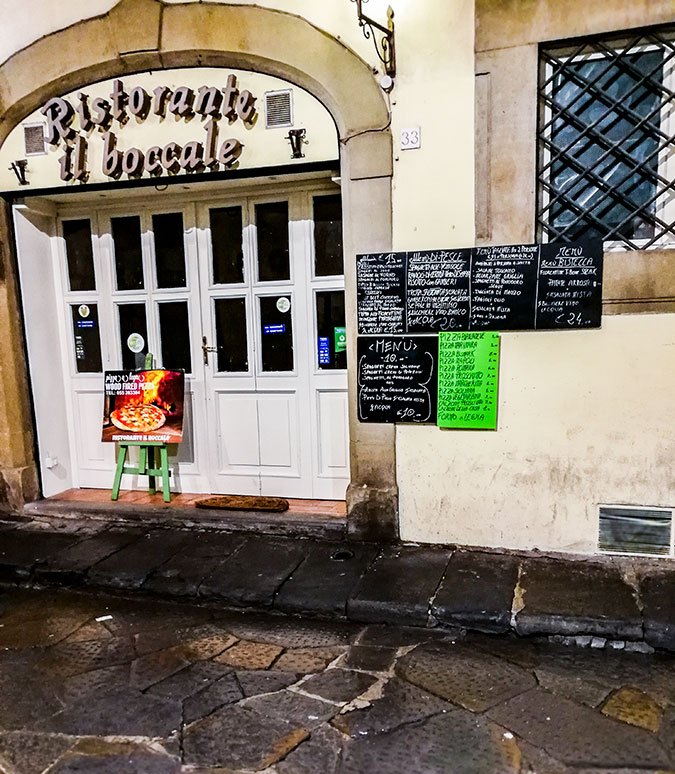
And here’s another pizzeria not far from the Pitti Palace, its sign sporting a TripAdvisor sticker:
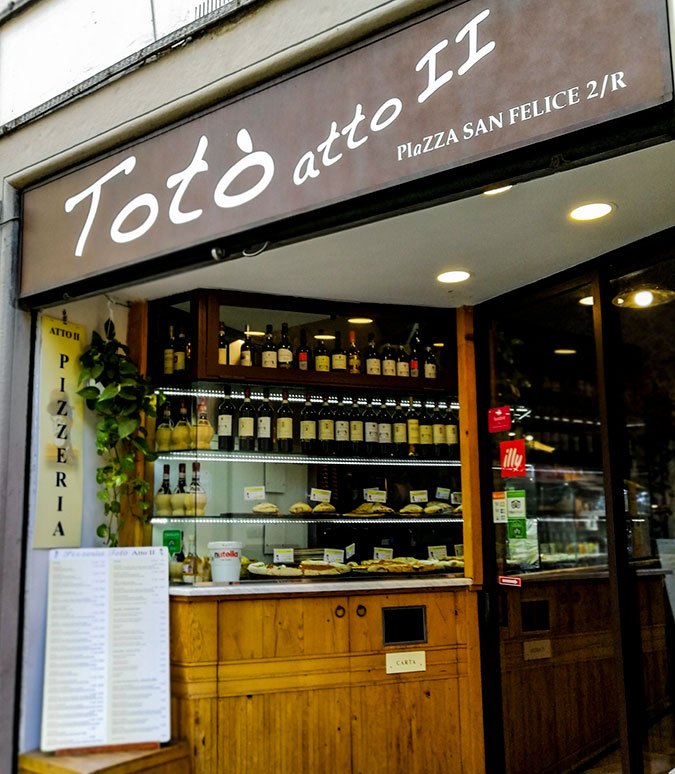
The traditional Florentine fast-food spot Tripperia Pollini is at Via dei Macci 126, between the Sant’Ambrogio market and Santa Croce. The name says it all: trippa is tripe, and tripe and lampredotto are exactly what they serve — no burgers, pasta or pizza. Judging by recent reviews the place is operating, but it has neither an official menu with prices nor reliable opening hours — the directories can’t even agree on which day it closes. So I’m not quoting a bill, and I advise going in the first half of the day: hatches like this close early, when the tripe runs out.
At Trattoria I Fratellini, Via Ghibellina 27 near Santa Croce, you can try all the best dishes of Florence. It’s open, but money-wise it’s no longer the modest trattoria it once was: as of September 2026 the average bill is given as €40, with tasting menus at €45–80. Individual dishes, though, are perfectly reasonable: pappa al pomodoro €12, trippa €14. So you can dine here without ruining yourself, as long as you skip the tasting set and the fiorentina.
4. Where to find the best gelato
The important thing here is not to stumble into a “commercial” place — where what you get is not real gelato but ordinary artificial ice cream packed with colourings instead of natural ingredients. Unfortunately there are many such places (pay attention to how many customers they have!).
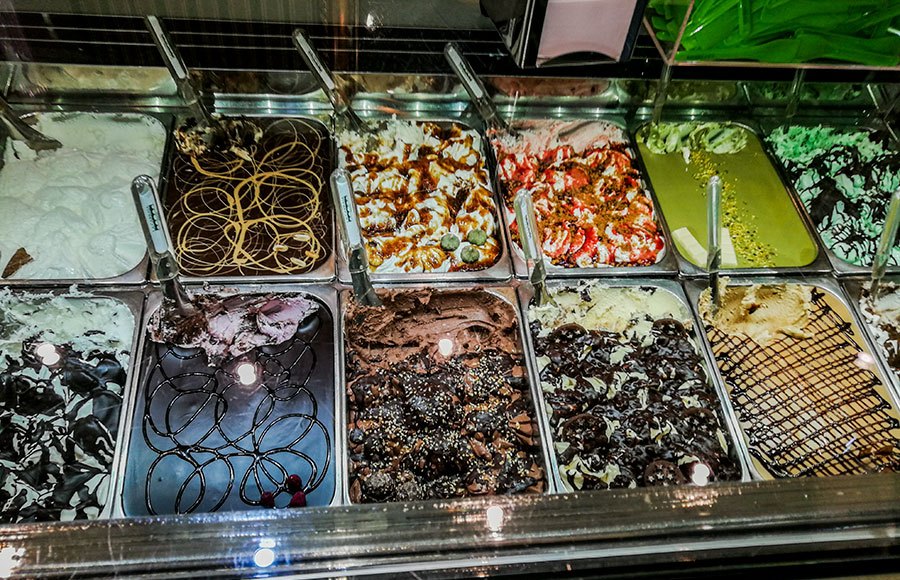
And here it is — gelato:
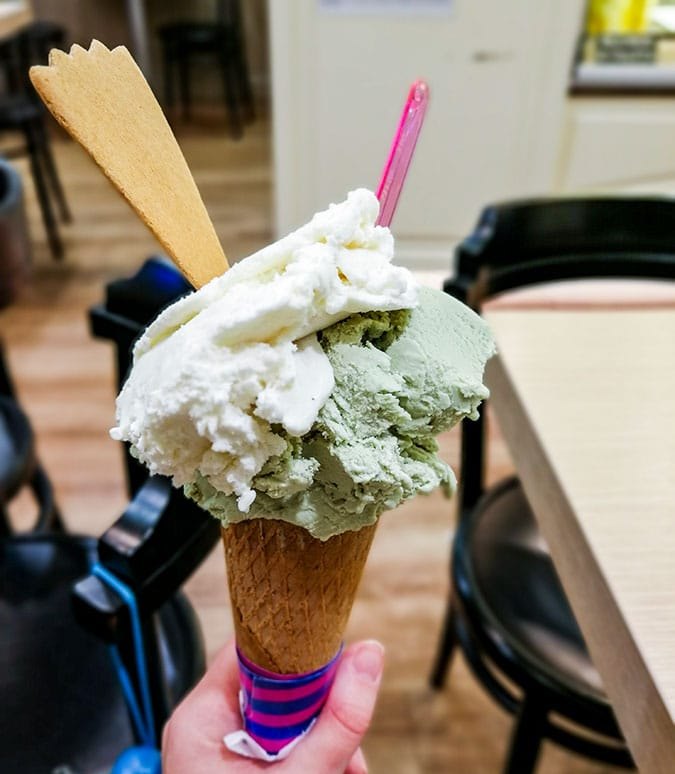
The tastiest ice cream turned out to be near the Ponte alle Grazie bridge (on the right bank of the Arno) — the flavour was simply unreal. I’m deliberately not quoting the per-scoop price from that trip: it’s from November 2018, and unfortunately we didn’t write down the gelateria’s name, so there’s simply nothing to check a current price against. The rule of thumb remains what it was: look at whether there’s a queue of locals at the hatch:
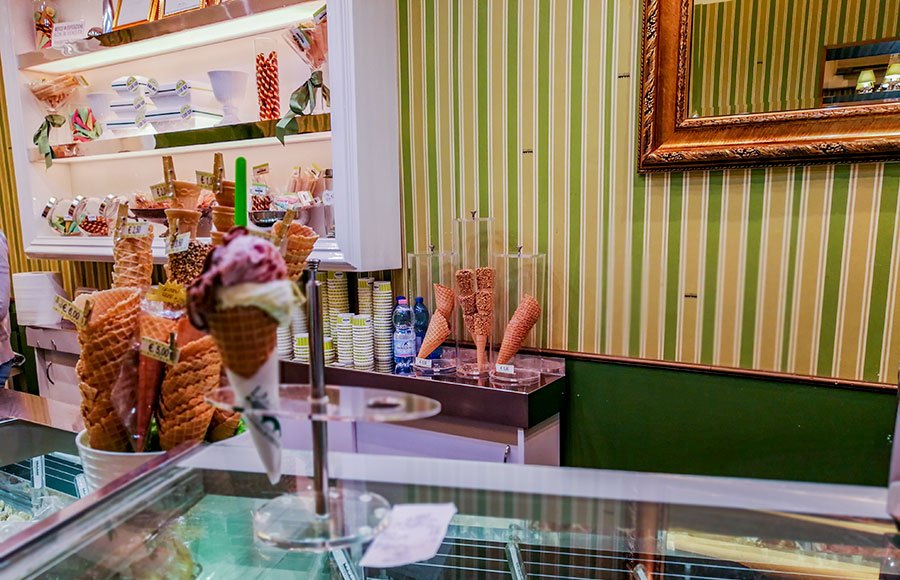
This is what a gelateria looks like inside:
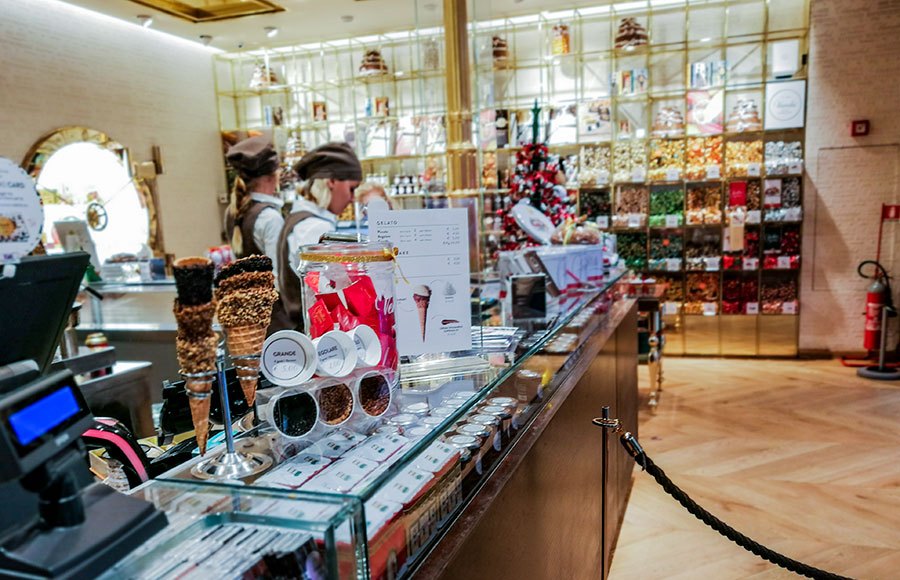
I can also recommend Venchi cafés — a chain, admittedly, but a very good one, where you can try dozens of kinds of ice cream. They’re all over the city, in the centre, even at the main station. The mark of the ice cream’s quality is the ever-present long queue.
It’s beautiful inside:
A real waterfall of chocolate, and it smells wonderful — every time you walk past this gelateria you want to go in, the aroma is that good:
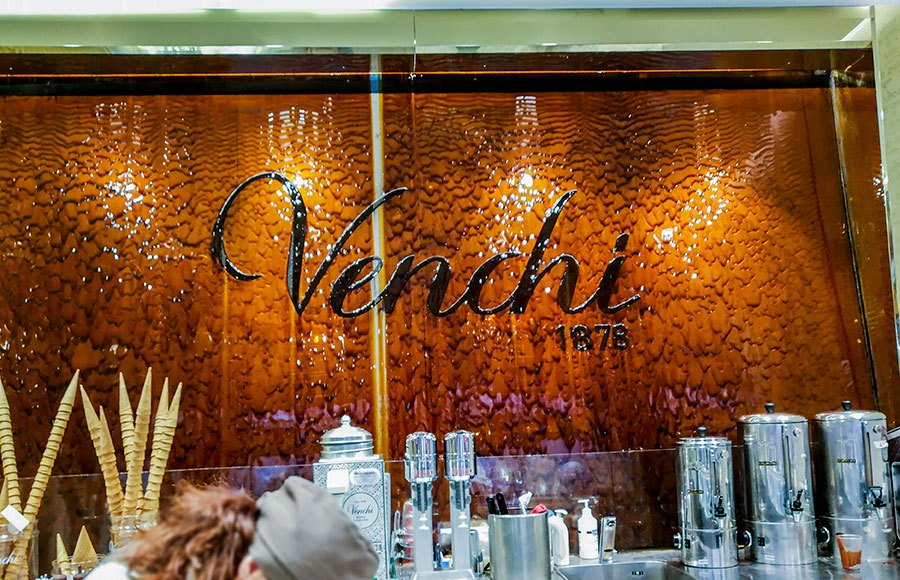
There are about ten kinds of chocolate ice cream alone here — can you imagine?
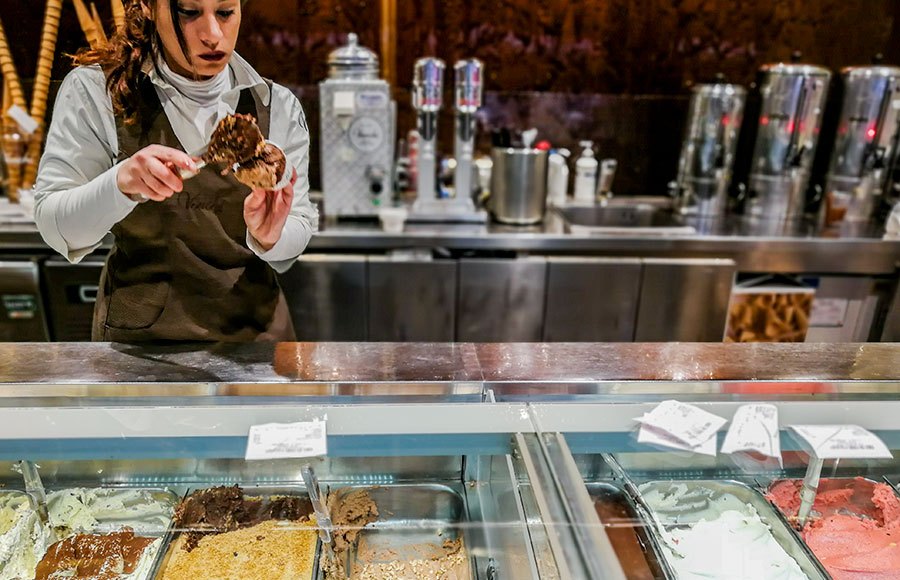
I went for three kinds of chocolate ice cream; in a waffle cone it would have cost more. Again I’m not writing the sum — that price is from November 2018, and the chain publishes no current official price list for gelato. What did check out is something else: the station branch really does still exist — Venchi Firenze Stazione Santa Maria Novella is on the chain’s current list of shops, so you can pick up an ice cream before your train:
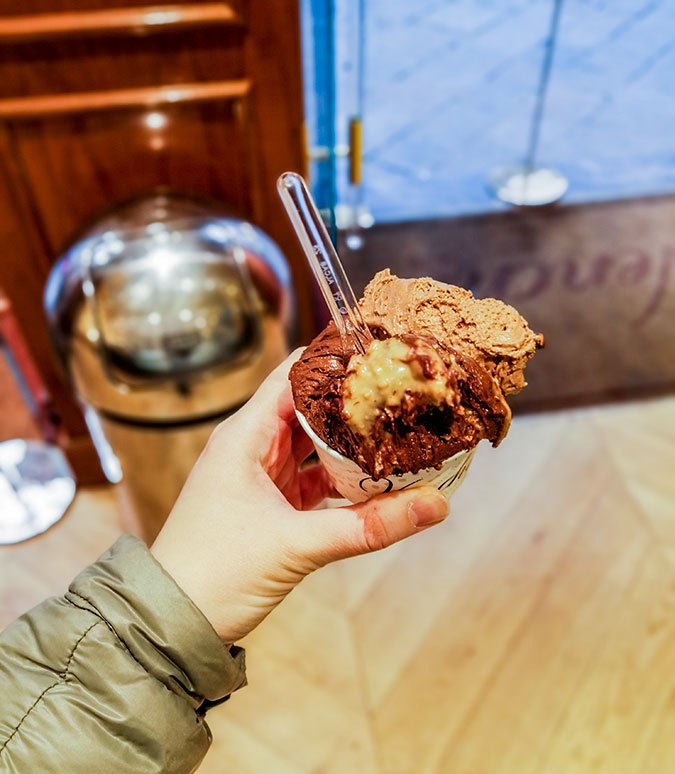
In general, the longer the queue, the tastier the gelato — you can navigate by that alone. Better still, ask a local where the good gelato is.
5. What food to buy to take home
I suggest looking at local wines — a perfectly decent Tuscan bottle in a supermarket costs noticeably less than the restaurant wine list might lead you to expect. I’m not quoting a figure; every shelf has its own. What is worth thinking about in advance is how much you’re actually allowed to take home, so check your own country’s rules before you buy.
Hard cheeses can be bought at the Central Market in Florence — ask for them to be vacuum-packed. You can taste all sorts of cheeses there, many of them soft, but soft ones are awkward to take home.
Florence is famous for its “Florentine steak”, and rightly so. Meat delicacies, salami, sliced cured meats, prosciutto — all can easily be bought in local shops or at the market. And a word about the border straight away, so you don’t have to part with your purchases at the airport: rules on bringing in meat and dairy products vary and they change, so check your destination’s current restrictions before you fly.
Look at olive oil (and other oils) with different aromatic herbs and spices — you can buy a litre bottle or sets of tiny bottles, literally for tasting. A good souvenir, but remember: oil, like wine, counts as a liquid at the airport. In hand luggage leaving the EU, each container may hold no more than 100 ml, and they must all fit into a single transparent bag of up to a litre. A big bottle travels only in checked luggage — or is bought in duty free after security, sealed and with the receipt. Sets of tiny “tasting” bottles, incidentally, are counted bottle by bottle, not as one set.
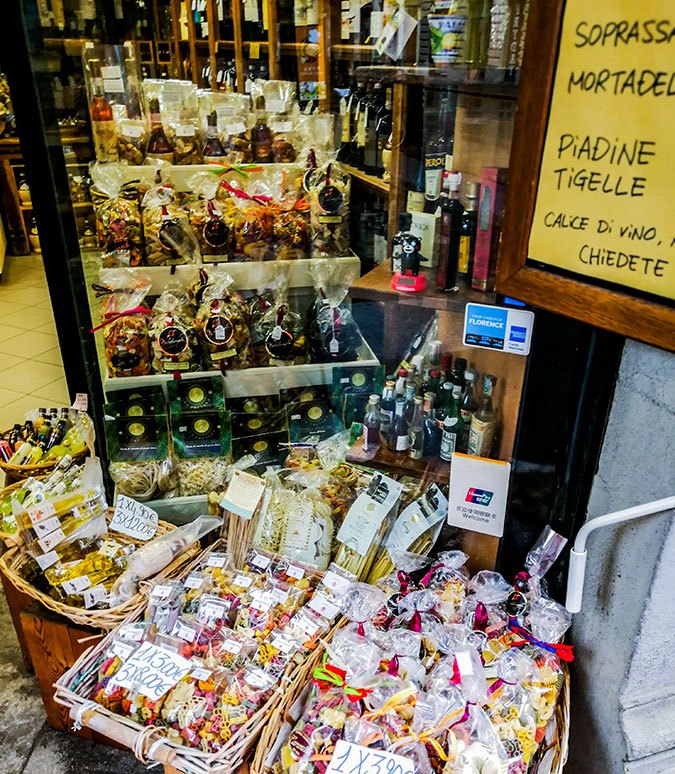
And of course all kinds of pasta — different colours, shapes and purposes. Do pay attention to the packaging: in a completely soft pack it will simply snap in transit.
And here’s the souvenir pasta:
You’ll often come across delicious sweets and chocolate. Florence has Lindt shops where the chocolates are sold by weight, all very fresh. I also recommend hunting for chocolate and original sweets at Venchi — in the same place as the good ice cream.
Sweets as a gift:
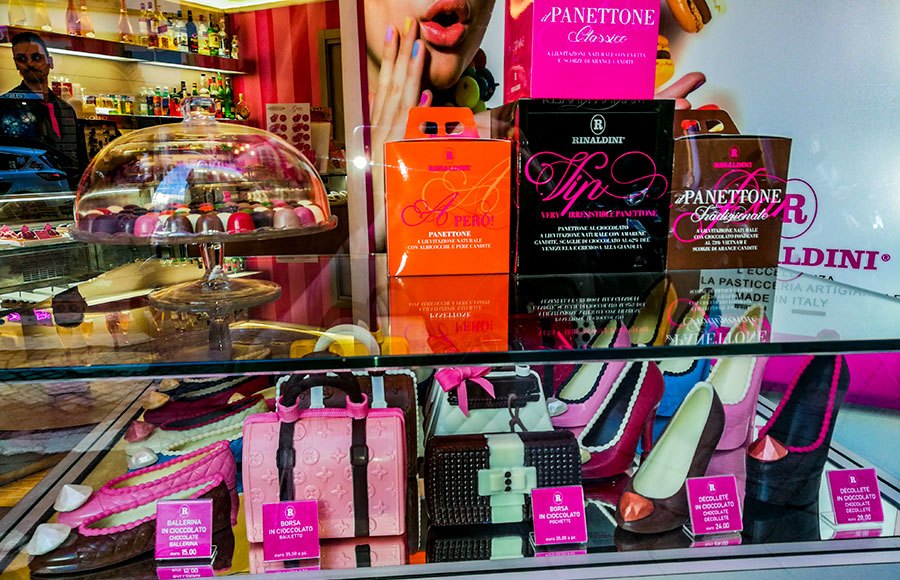
Chocolate souvenirs — it’s fun to give someone a chocolate shoe or handbag:
The chocolate truffles are simply exquisite:
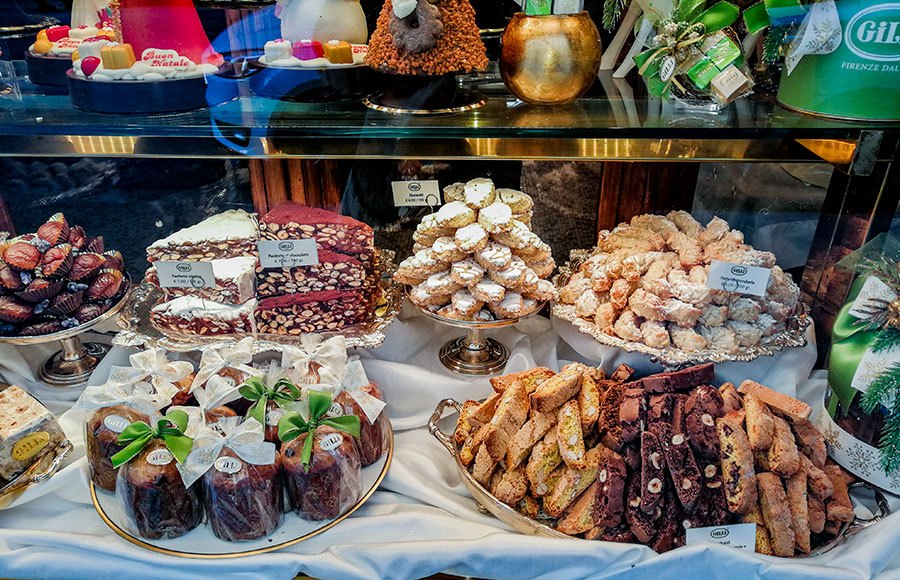
Plenty of options for sweet gifts:
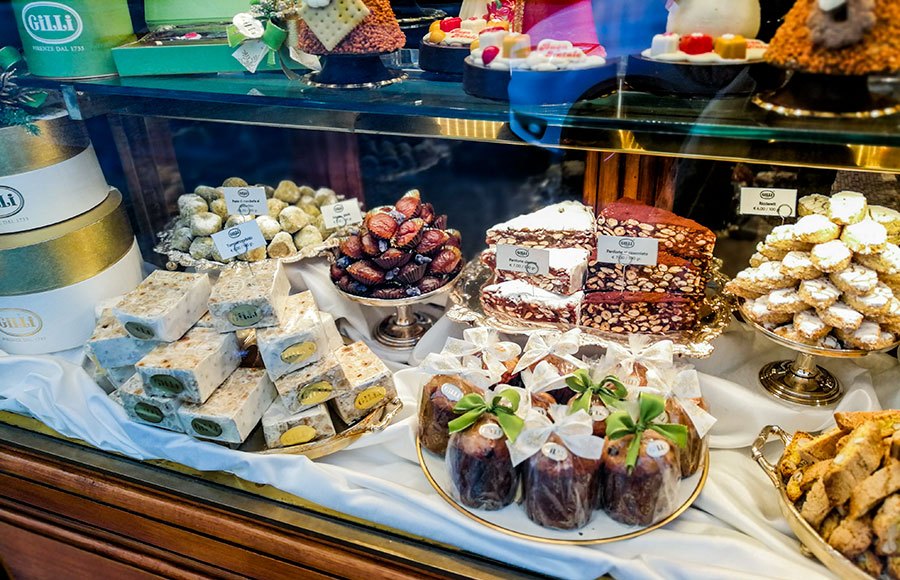
Some are already packed in portions — convenient to take home:
6. Conclusions
Florence is noticeably more expensive than, say, Milan — it’s a very touristy city. Inexpensive cafés need to be hunted down further from the sights, and that isn’t so simple. The food in Florence is delicious practically everywhere.
Florence also has food delivery, and if you’re renting a flat that’s handy: I rented a room, and the landlady once ordered enormous sandwiches — you couldn’t finish one in a single sitting. I’m not quoting the price of that order: it’s from November 2018 and someone else’s bill; check current offers in the delivery app itself.
And if you are renting a flat, see which supermarkets are nearby — Esselunga, Coop.
Take coffee in the centre, for instance. The stock line that a cappuccino there never costs less than five euros falls apart against the most ordinary central menu: at Trattoria Nerone, ten minutes from the Duomo, a cappuccino and a caffè latte as of October 2026 cost €3.50, while the Florence average cappuccino price for December 2025 is €1.49. Expensive places haven’t gone anywhere, but a double-figure bill for a cup is about a specific terrace with a postcard view, not about “the centre” in general. And no ratios for coffee on Pisana either: there’s nothing to confirm them with, there are no simultaneous same-format menus for the centre and Pisana, and Pisana itself is a long street where prices differ from one end to the other.
At Esselunga they sell ready-made salads, sandwiches, sushi, ready pizza and fruit salads — all packaged and fresh, in the deli section. I’m not repeating the prices from my trip here: they’re from November 2018, and the chain doesn’t keep its shelf prices in the public domain, so the honest thing is to read the label on the spot. It’s set up the same way in every branch: a chilled display of ready food, the price stuck on the pack, no microwave needed at the till — it’s eaten cold. The Via Pisana 130/132 store is open Monday–Saturday 07:30–21:00 and until 14:00 on Sundays — Sunday evening is generally a weak spot here, so plan ahead.
And an honest word about the daily budget. €20–30 per person per day in Florence is still realistic — but that’s specifically the economy scenario: a supermarket plus one inexpensive street snack or a slice of pizza. As soon as one proper restaurant meal is added to the day, that money runs out: a pizza with a cappuccino at Nerone already comes to €13.50–17.50, and the average bill at Trattoria I Fratellini is given as €40. This is calculated from publicly available menus as of September 2026, not official statistics, but it gives the right order of magnitude: two restaurant dinners a week and it’s already a different budget.
And the further you go from the centre, the more little local cafés there are. The downside, admittedly, is that they often don’t speak English — although for Italians, explaining things in gestures is no problem at all.
If you’ve already been to Florence and found interesting inexpensive cafés and restaurants, tell us about them in the comments! Do you prefer eating in cafés, or do you like quick street-food options? Do you try national dishes, or are you not one for experimenting?
You’ll find all our travel secrets in our blog and newsletter — subscribe for updates and share our stories with friends on social media. We always love new subscribers!