Andrássy Avenue in Budapest (Andrássy út) is one of the city’s most famous sights: a ceremonial boulevard about 2.3 km long that leads from the centre of Pest to Heroes’ Square and the City Park. The oldest metro line, M1, runs beneath it, and since 2002 the avenue, together with that metro line and Heroes’ Square, has been on the UNESCO World Heritage List. Below I explain who built it and how long the construction took, what there is to see on it today, and describe the fair I happened to catch there myself. Along the way you will also find out what Stalin had to do with the avenue.
1. A brief history
The new wide avenue was the idea of Prime Minister Count Gyula Andrássy: the narrow Király Street could no longer cope with the traffic from the centre to the City Park. Parliament approved the plan in 1870 and work began in 1871. Building the avenue meant demolishing the old houses, and around ten thousand people were left without homes for a time. The new buildings were designed by various architects, among them Miklós Ybl, the architect of the Opera House. The road itself was laid quickly, but the buildings took longer: the economic crisis of 1873 slowed the work, and the last stretch was only built up in 1885. And by the millennium of the Hungarians’ conquest of their homeland, in 1896, the first metro line had been laid beneath the avenue.
The avenue was ceremonially opened on 20 August 1876 under the name Sugárút (Radial Avenue), and in the mid-1880s it was renamed after Prime Minister Andrássy, under whom the construction had begun.
In 1950, under the socialist government, the avenue was given Stalin’s name, but not for long: as early as October 1956, during the uprising, it was renamed the Avenue of Hungarian Youth.
Andrássy Avenue closer to the Opera House:
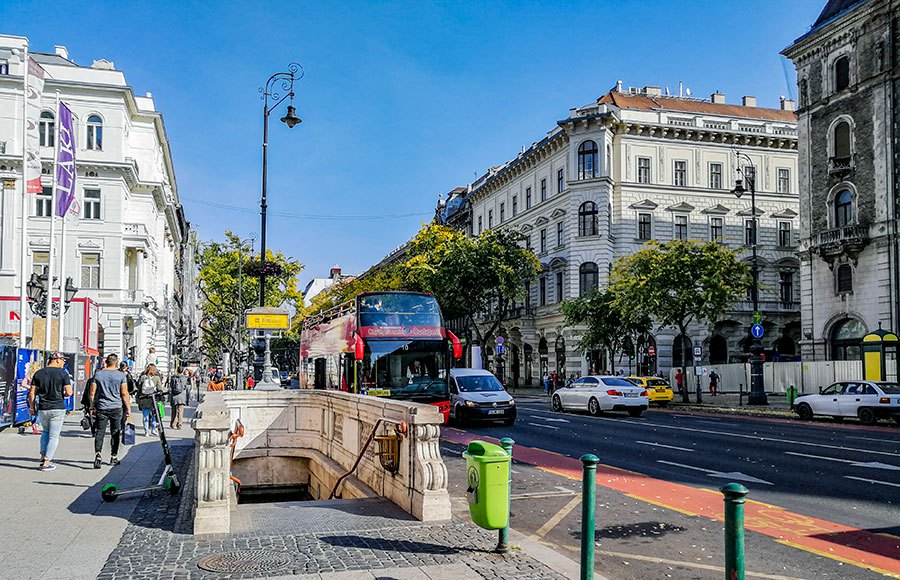
After the uprising was crushed they did not venture to restore the old name, and for all the remaining years of socialist Hungary it was the Avenue of the People’s Republic. Only in 1990 did it become Andrássy Avenue again.
A large-scale reconstruction ran from the late 1980s until 1996, restoring the road and the neighbouring areas as well as the underground utilities, including the metro. Since then the avenue has often hosted various events, exhibitions and fairs.
2. Useful information
2.1. Where it is
Andrássy Avenue lies between Heroes’ Square and Deák Ferenc Square; it has no specific address of its own, of course. It begins at Bajcsy-Zsilinszky út, a couple of minutes from Deák Square, crosses the Grand Boulevard at Oktogon and runs into Heroes’ Square.
The avenue’s location on the map:
2.2. How to get there
The best way to get to Andrássy Avenue is to come to Deák Ferenc Square or to Heroes’ Square – the avenue connects precisely these two squares. You can also walk from Erzsébet Square, though it is roughly a 30-minute walk from there to Heroes’ Square.
Ways to get here by public transport:
- metro line M1 runs directly beneath the avenue: stations Bajcsy-Zsilinszky út, Opera, Oktogon, Vörösmarty utca, Kodály körönd, Bajza utca and Hősök tere by Heroes’ Square (change at Deák Ferenc tér for lines M2 and M3);
- bus stop with the same name: as of October 2026 it is served by routes 20E, 30, 30A, 105 and 230, by route 210 on weekdays and 210B at weekends, and at night by routes 910 and 912 (route 105 also stops at the Opera and at Oktogon);
- trolleybus stop with a similar name: routes 75, 79 and 81 will do.
A taxi can take you to either end of Andrássy Avenue. But if you want to get to a fair while one is being held, it is better to book a car in advance.
You can also reach the avenue on a Hop-On bus tour. On the red City Sightseeing route, for example, there are stops along the avenue called Andrassy Avenue, Opera, Liszt Ferenc Square and Heroes’ Square (according to the route description on Tiqets, October 2026), so getting to Andrássy Avenue itself is no problem. A tour like this is a good way to see many of the city’s sights, stopping at the most interesting places. You can get off at any stop, and on the way every tourist can use an audio guide. The price of a ticket depends on the operator and the period of validity – check it for your own dates when booking.
2.3. When to visit
You can come to Andrássy Avenue itself at any time; the opening hours of the various attractions, fairs and similar venues are different in each case.
3. A photo tour of Andrássy Avenue (the fair)
I ended up on Andrássy Avenue several times during the trip (it is enormous!), but I only saw the fair next to Heroes’ Square, on the day of the Nemzeti Vágta national horse races, when we were writing this article. Bear in mind that in 2026 the Nemzeti Vágta races are held not in Budapest but in Szilvásvárad (3–4 October), so do not expect the racing fair by Heroes’ Square this year. At the fair you could buy street food, souvenirs, sweets and unusual handmade items. Let me show you what it was like.
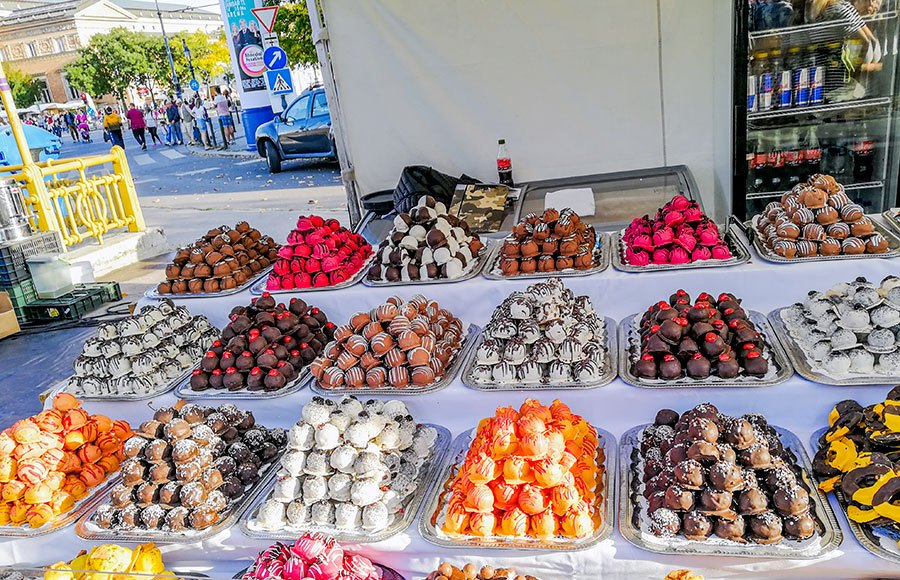
Looking at such a variety of flavours, you want to try every sweet:
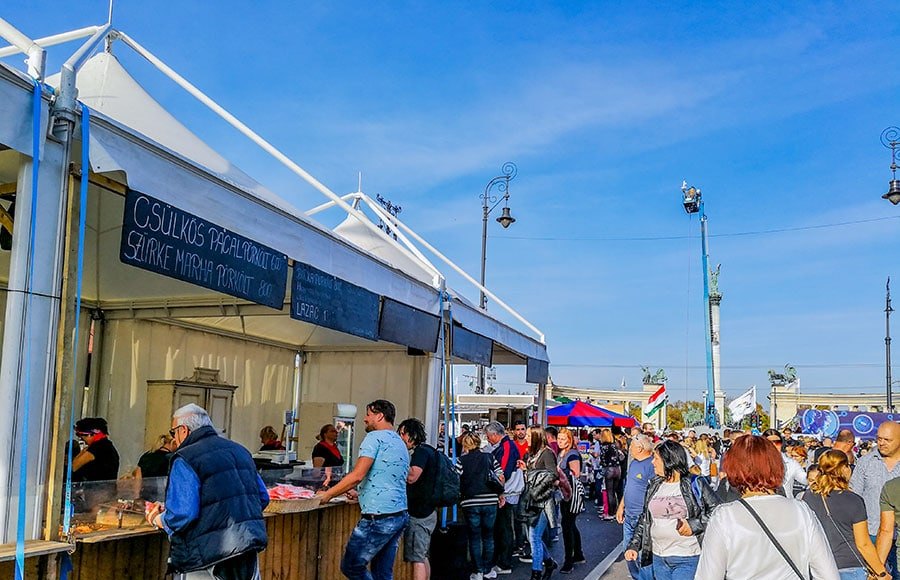
In the distance in this photo you can just see Heroes’ Square and the queue for food:
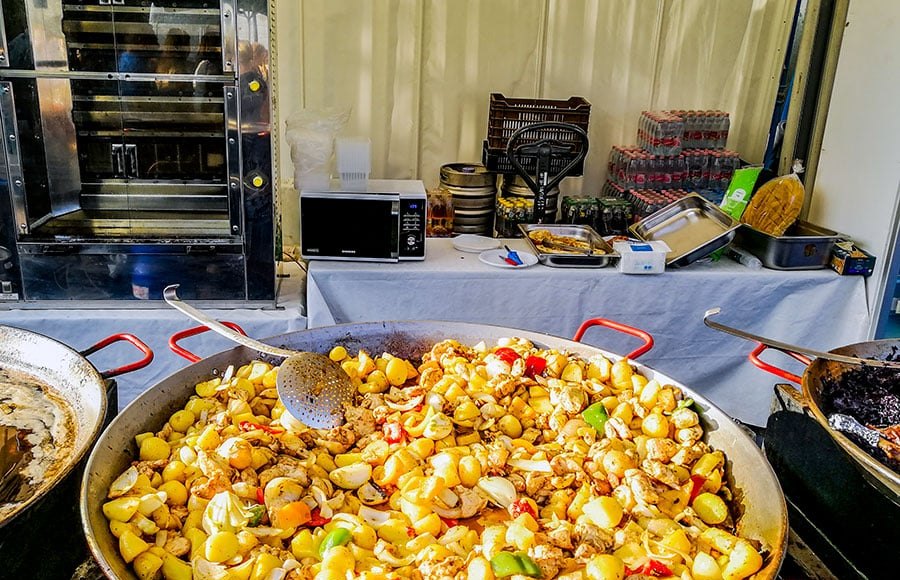
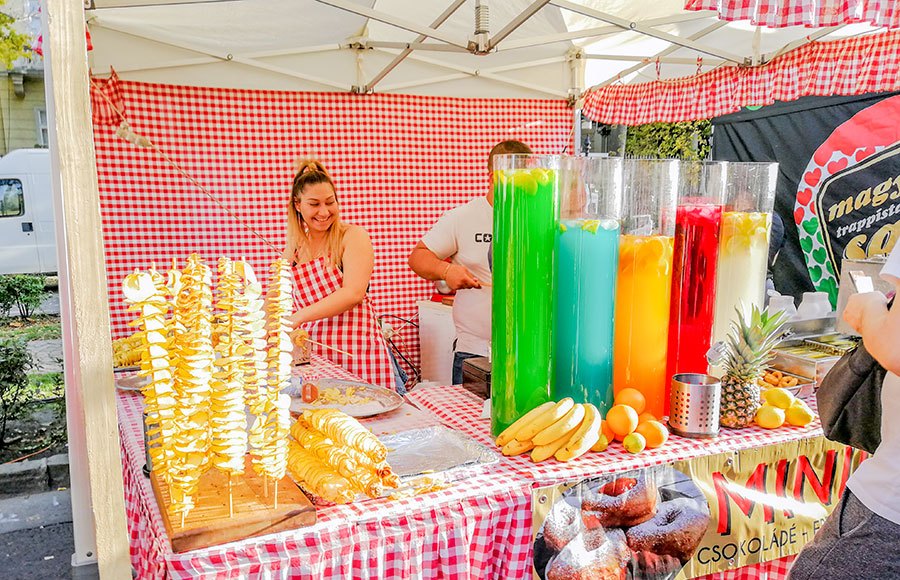
The pots they cook the treats in are simply enormous – would you try potatoes like these?
This stall is more reminiscent of a Thai market – the same crisps and drinks in lurid colours:
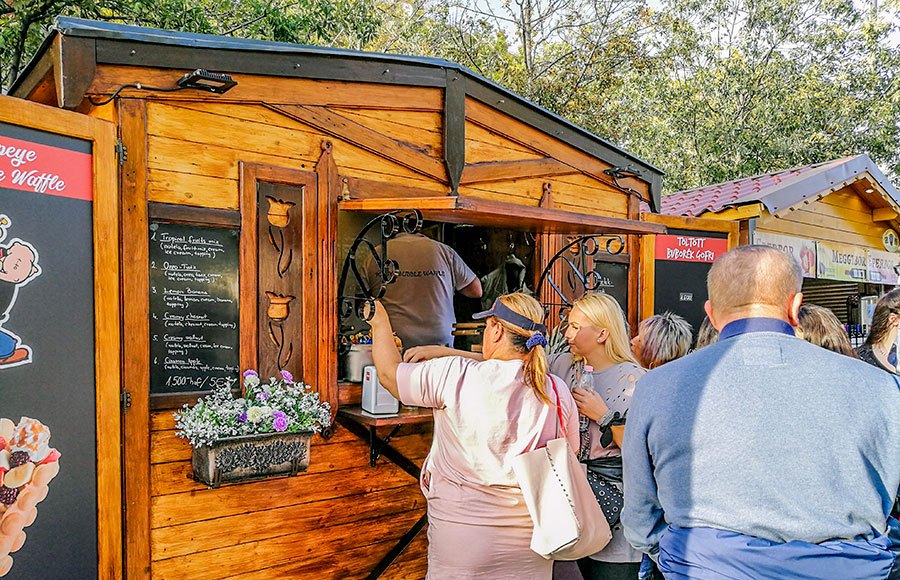
A queue you can hardly squeeze through:
In this open-air shop all the goods were made from lavender:
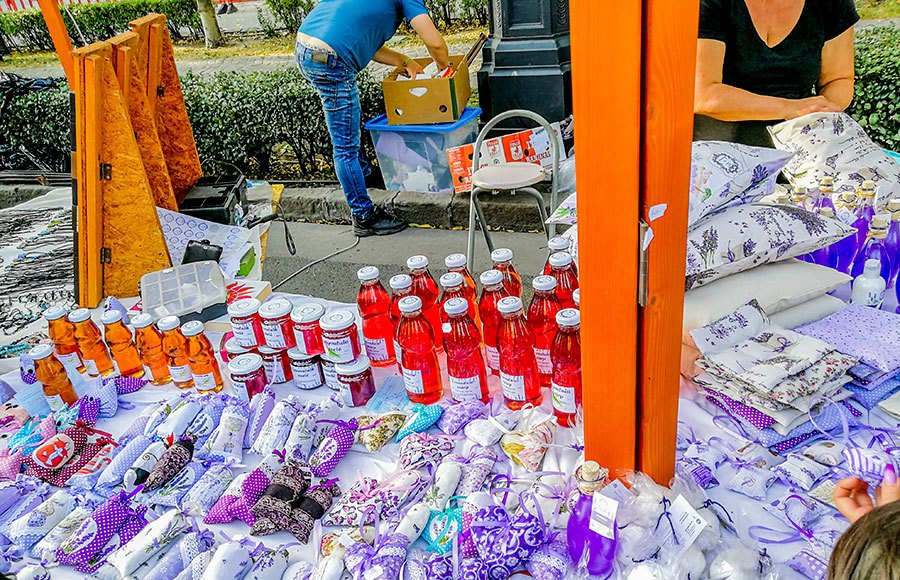
Very pretty. Presumably there are lavender fields in Hungary too – do you know?
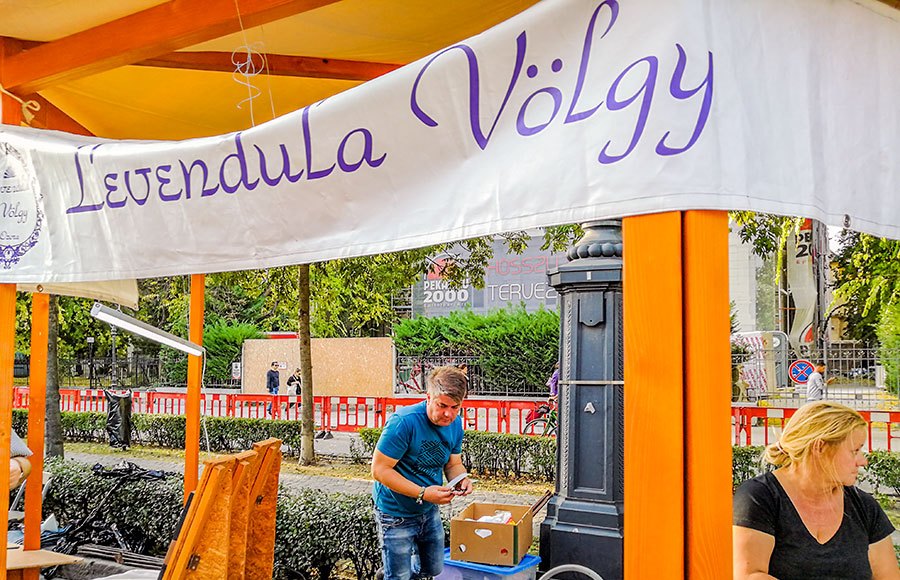
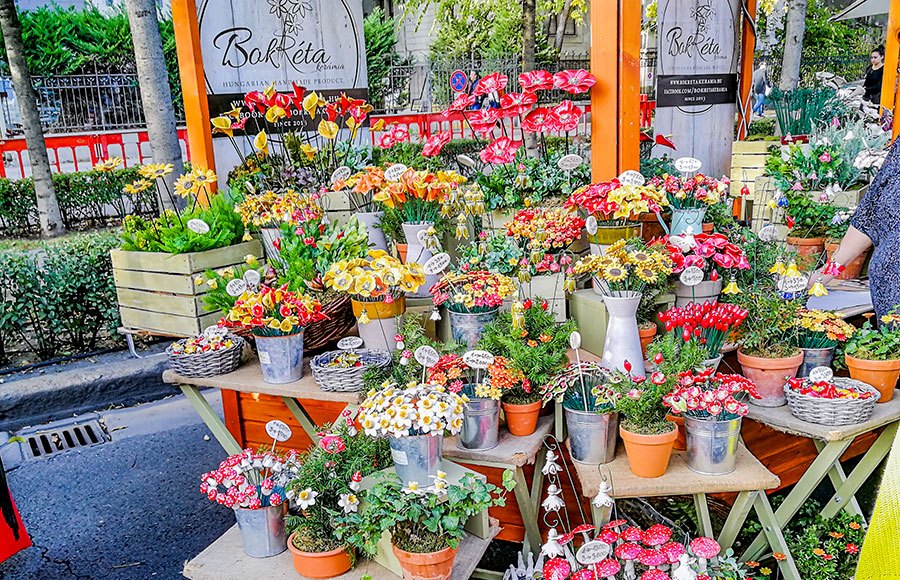
Strange artificial flowers:
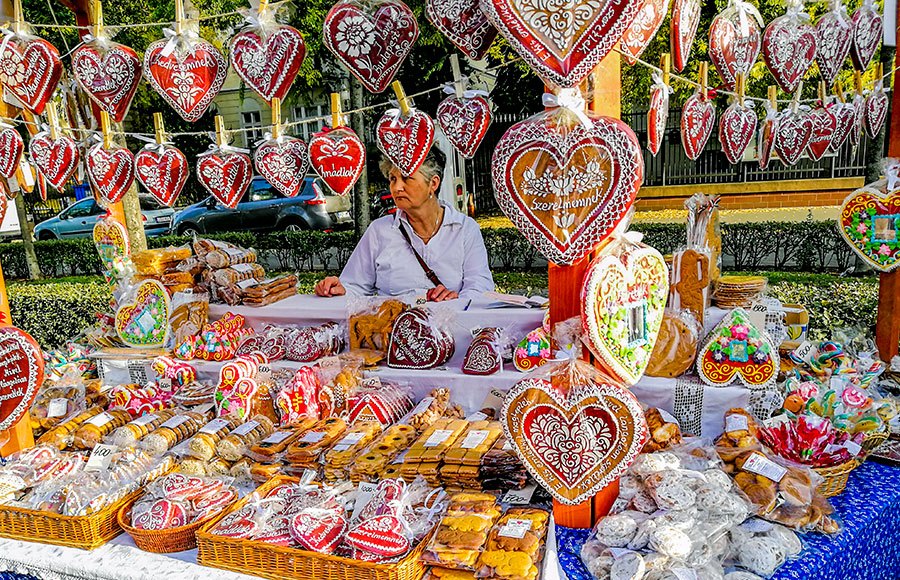
Souvenir gingerbread – a national treat here as well:
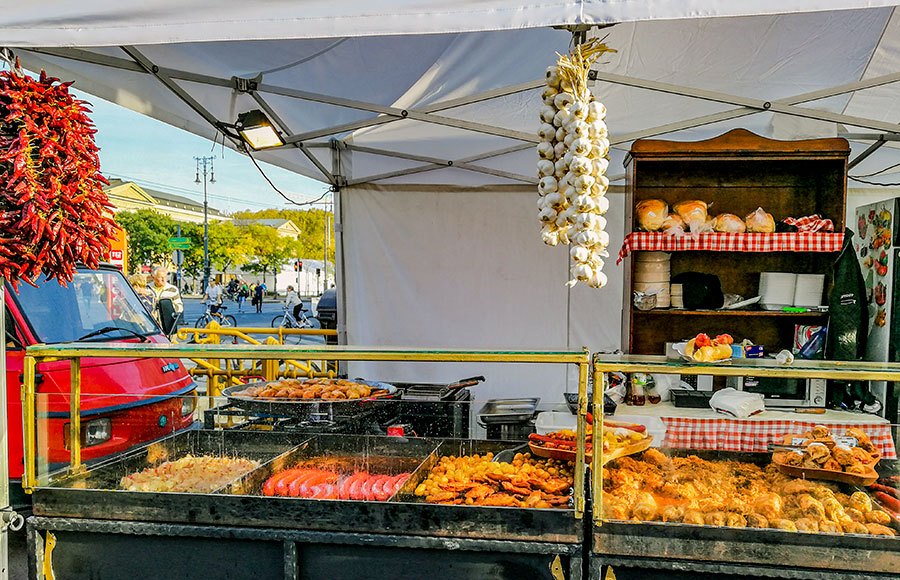
Fast food and a stylised display with chilli peppers – chilli is added to almost every meat dish and is considered a national treasure, so you can even buy it as a souvenir:
4. What else is nearby
Heroes’ Square is right next to the avenue – the avenue adjoins it. Ceremonial events are often held on the square, so there is very likely to be something to see. I have written a separate account of Heroes’ Square and the interesting things I saw there.
Városliget park is also nearby. I caught a military equipment exhibition there. It is not a permanent one, but the park is very beautiful – ponds, gardens, benches and cafés. You can stroll around all day, take a boat out, go into Vajdahunyad Castle or climb the tower and look over the park from above.
The Museum of Fine Arts is not far away either. There is a lot to see, so set aside a few hours for a visit. In particular, there is an interesting exhibition devoted to Ancient Egypt, and I have written a separate report on my visit to the museum. The museum also has a café where you can have a good lunch if you cannot find anything suitable on Andrássy Avenue (in 2026 it is open Tuesday to Sunday, 10:00–17:30, and only for visitors with an entrance ticket).
The city zoo also deserves a look. It has simply masses of animals (according to the census the zoo published in January 2026 – 7,452 animals of 658 species), and since July 2026 the central hall of the Biodome has housed an “Urban Oasis” – tropical plants and around 30 life-size models of prehistoric reptiles; there is a petting zoo too. I especially recommend visiting the zoo if you are in Budapest with children. I have described it in a separate article with photos and video.
5. Conclusions
The avenue adjoins Heroes’ Square, and fairs and festivals are often held here. During my visit the races were taking place on the square, so the whole of Andrássy Avenue had been turned into a street food court – a huge amount of all kinds of food that you can eat right there. It reminded me of the evening markets in Thailand.
The best time to visit is the month before Christmas or during festivals. On ordinary days the avenue turns into a perfectly ordinary Budapest street.
Do you like fairs like this? Would you risk trying food like that, or do you prefer cafés and restaurants? Tell us about your experience, especially if you have been to Hungarian events of this kind – it would be extremely interesting to read your comments!