When preparing for any trip, one of the most important tasks is to work out the travel budget. You need to take everything into account — from spending on transport and accommodation to all sorts of small daily expenses that can destroy your budget surprisingly quickly. In this article I will tell you how much a five-day trip to Prague cost me (that is exactly how long I spent there), and you can then estimate your own budget and plan your trip.
In short: when I wrote this article in 2019, five days in Prague cost me 27,657 Russian roubles (RUB), excluding the flights between Russia and Europe at either end of my trip — that covered the visa, accommodation, a travel pass, 16 paid attractions, a sightseeing tour and food. All the rouble amounts below are 2019 prices at the 2019 exchange rate. For anyone travelling now, the more useful reference points are the prices for October 2026 in Czech koruna (CZK): a 72-hour transport ticket costs 350 CZK, the Airport Express bus 200 CZK, and the main Prague Castle route 450 CZK.
Incidentally, I have also written about the budget for a ten-day trip around Italy in a separate post. But first, let me describe the format of this journey.
1. Trip details
Prague was one part of my two-week journey around Europe: I arrived by bus from Karlovy Vary (that is where I had found a cheap flight from Chelyabinsk) and left Prague by plane for Budapest.
I travelled alone, used public transport, visited as many attractions as possible, stayed in a budget flat, cooked my own breakfasts and dinners, and ate in cafés during the day.
The trip can definitely be called economical, yet as full as possible of experiences and places visited. In five days in Prague I managed to see most of the main sights, walk around the whole city centre and several outlying districts, look at Prague from above, wander with an audio guide, watch a film being shot and see the city on a guided tour.
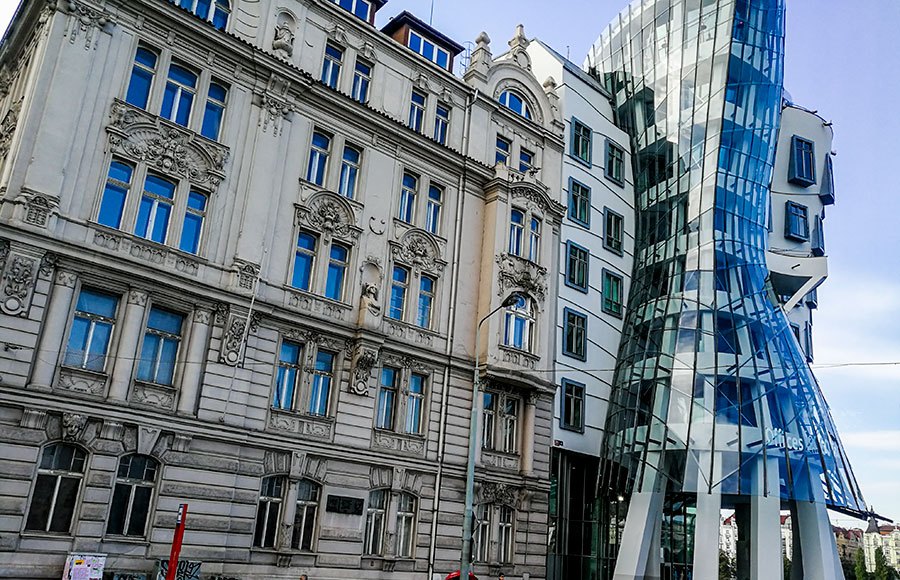
I spotted the Dancing House straight from the window of the tour bus:
More about my spending below.
2. Getting a visa
On my previous trip to Europe I was given a Schengen visa covering exactly the dates of the trip, so this time I had to apply all over again. I arranged the visa myself, through the Czech visa centre in Chelyabinsk, and in 2019 I was given a multi-entry visa valid for a year.
In 2019 the visa cost me 5,070 RUB in total. That sum included the cost of the visa itself (€35 at the time; since 11 June 2024 the consular fee for a Schengen visa has been €90 for adults), the visa centre’s services and courier delivery of the ready passport.
If you do not need a visa, or you already have one, feel free to cross this item straight off your budget!
3. Flights and transport
3.1. Flights
How to search for cheap flights, on which websites and what to look at — I covered all of that in a separate article.
My own route was a little different. I wanted to see several countries in one trip, so I found a super-budget flight from Chelyabinsk to Karlovy Vary, went on to Prague by bus, flew from Prague to Budapest and then continued to Milan. My flight home was from Milan.
I will write about the budget of the whole journey in one of my next articles; here I am counting only the Prague part. So the cost of getting to Prague (the bus from Karlovy Vary, 299 RUB) plus the flight to Budapest (1,833 RUB) came to 2,132 RUB for me.
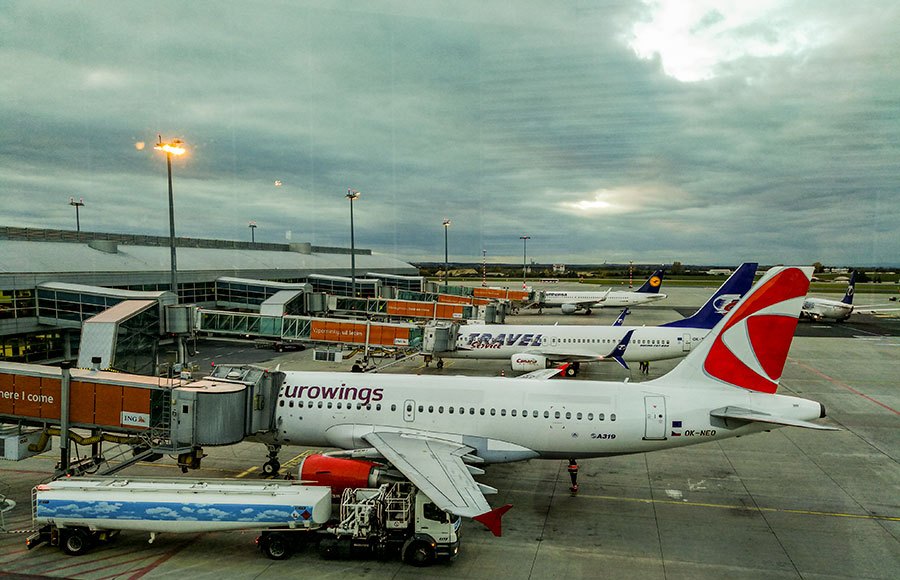
In fact, the ticket to Budapest itself cost only 807 RUB back then, in 2019; the rest was what I paid extra for priority boarding so that I could take both bags into the cabin. Either way it worked out incredibly cheap — it is hard to imagine flying anywhere for barely 800 roubles! I flew with Ryanair and, of course, had been deliberately watching out for the lowest fares.
3.2. Airport transfer
As for the transfer, the only thing to count here is the ticket from the main railway station to the airport — 45 CZK in 2019. I arrived in Prague at the bus station and took a tram straight from there into the centre. Today (October 2026) the Airport Express (AE) bus from the main station to the airport takes about 40 minutes and costs 200 CZK, and ordinary Prague transport tickets are not valid on it. It is cheaper to take the metro and change to city bus 100 or trolleybus 59, using an ordinary 90-minute ticket.
3.3. Public transport
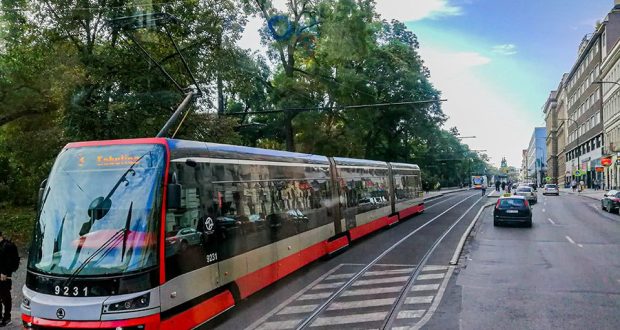
In Prague I bought a travel pass and a few single tickets as well. In 2019 you could not pay your fare on board (unlike in Karlovy Vary, for example): the ticket had to be bought in advance, and one bought through the app only became valid two minutes later. Nowadays trams, city buses and trolleybuses have terminals on board where you can buy a 30-minute, 90-minute or 24-hour ticket — contactless payment only — and it is valid straight away. In a metro carriage you cannot buy a ticket at all, only in advance, from a machine or in the app.
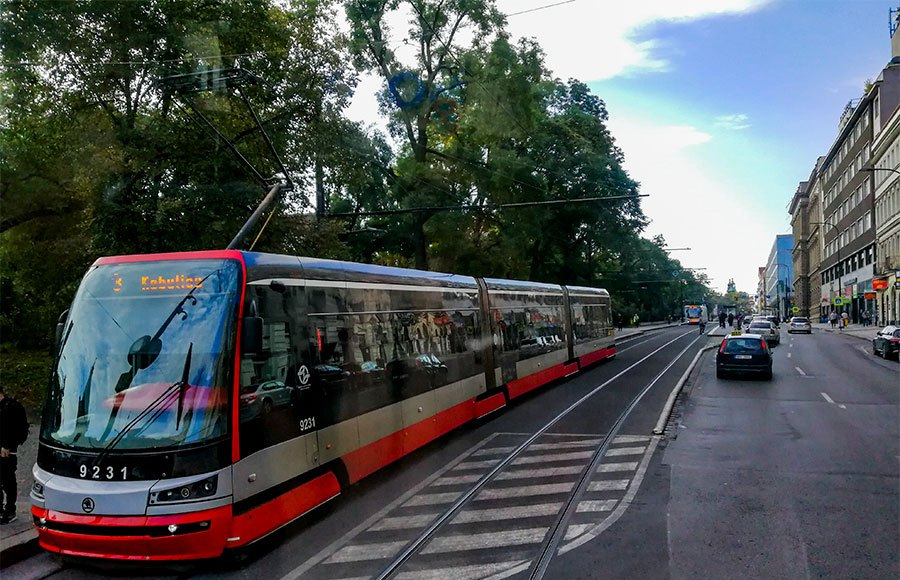
Modern trams in Prague:
Anyway, I had read horror stories about tourists being fined large sums practically every day, so I decided not to take the risk.
In 2019 a three-day travel pass cost me 310 CZK and the extra single tickets 80 CZK. As of October 2026, a 72-hour ticket costs 350 CZK in paper form or 340 CZK in the PID Lítačka app; 24 hours — 150/140 CZK; 30 minutes — 39/36 CZK; 90 minutes — 50/46 CZK. Tickets and routes are described in more detail in my article about transport in Prague.
4. Accommodation
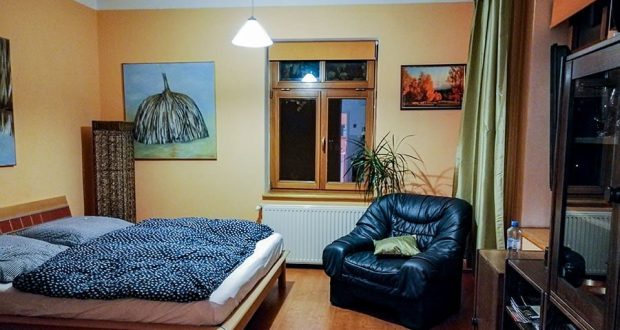
In Prague I stayed in this flat, which I rented through Airbnb in 2019. It is admittedly quite far from the centre (the Prague 6 district), but since I had a travel pass, getting into the centre was no problem at all. There were problems with the flat itself, but I have written about that separately.
The flat in Prague:
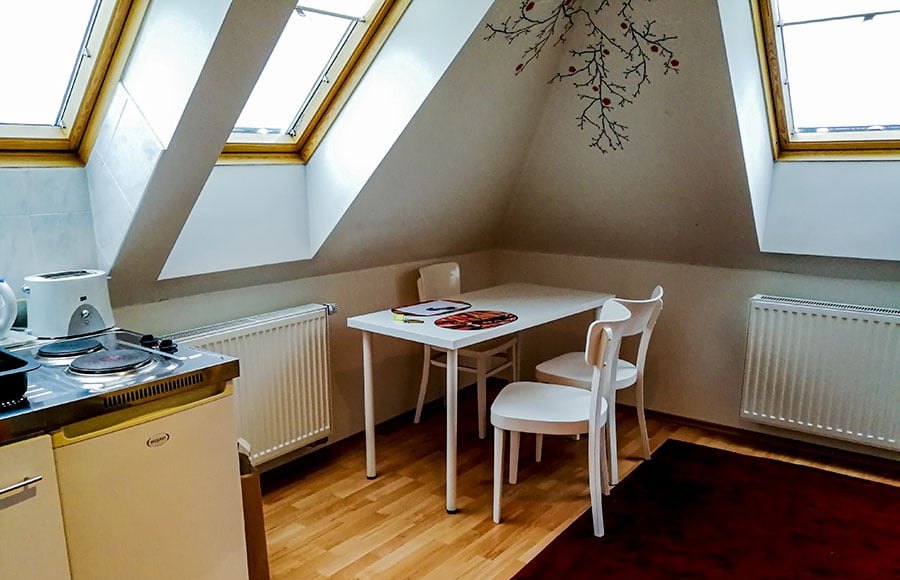
I chose the flat by reviews, photos, local infrastructure and, of course, price. At the time of booking it was one of the cheapest flats with a decent renovation that also fitted my other requirements.
In the centre, a rental flat or a hotel costs several times more.
The flat, including all fees, cost me 6,747 RUB for four nights in 2019.
5. Attractions
Now this is probably the most interesting item! In five days in Prague I saw such an incredible number of sights that I will probably be sorting through the photos for a year! And the blog already has about 60 articles on Prague.
I spent a long time wondering whether to buy the Prague Card tourist pass (similar to the Budapest Card and the Milano Card), but in the end I didn’t. Why not? With that many attractions on the list, a discount card would surely be worth it, wouldn’t it?
But with a card you have to do the maths, and for the particular set of sights I wanted to visit it turned out there was no saving at all — and the card is only valid for a limited time. I will write about the card in more detail separately: what it includes and when it is worth buying.
For now, let me add up the sum spent on attractions.
In every city I try to take a sightseeing tour first and only then explore on my own. In Prague I took a combined bus-and-walking tour; on the whole it was interesting, and in four hours the tour really did cover a huge amount. The only downside is that so much information comes at you all at once that by the end of the tour you can barely take anything in — the facts and events all blur together. The tour cost me €15 — that is the 2019 price.
As usual, some of the sights were free and some were paid.
Old Town Square, for example, is open to anyone completely free of charge:
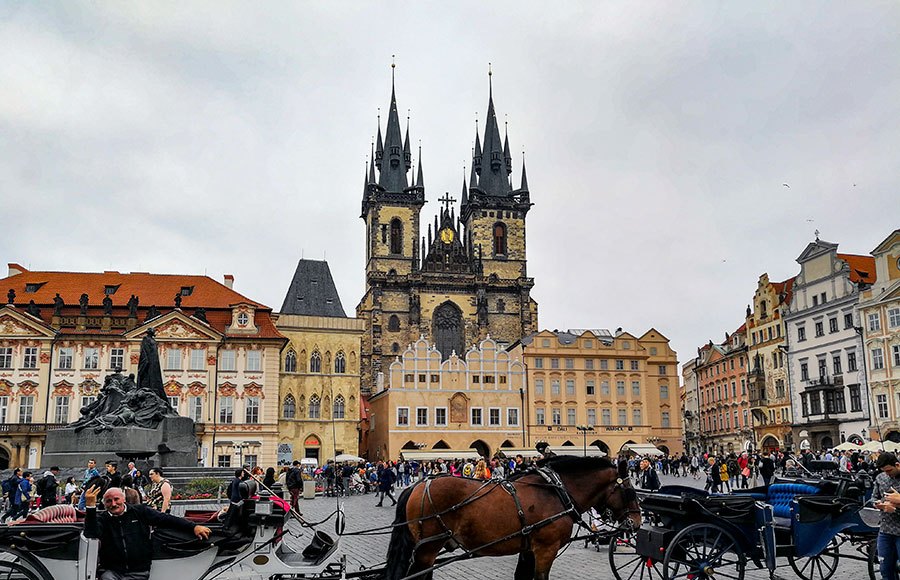
In total I visited 16 paid attractions, among them the Royal Palace, Vyšehrad, the Prague Loreto, the National Technical Museum, the Observatory, Strahov Monastery and the zoo.
All in all, in 2019 I spent 2,235 CZK on entrance tickets, plus €15 for the tour.
For reference, in October 2026 the main Prague Castle route (the Old Royal Palace, St George’s Basilica, Golden Lane and St Vitus Cathedral) costs 450 CZK, and the National Technical Museum 330 CZK. Tickets for many Prague museums and attractions can be bought in advance, for example on Tiqets.
6. Food
Since I was staying in a flat, I cooked breakfasts (and sometimes dinners) myself — luckily there was a huge hypermarket right nearby — and during the day I either bought something on the street or had a snack in a café.
A cheap but tasty snack:
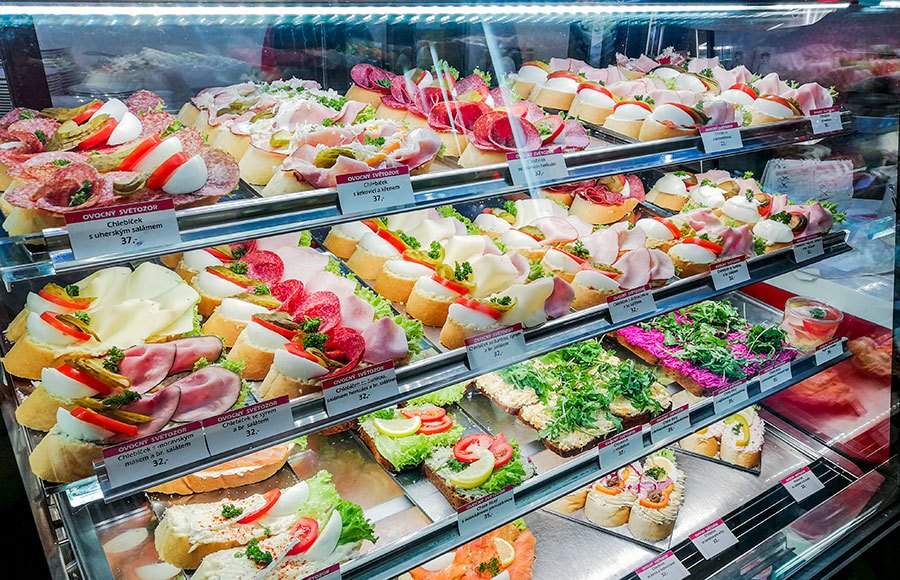
For lack of spare time I often went to cafés attached to museums. That was probably more expensive than looking for somewhere more budget-friendly, but I really did not want to waste time. So the standard trick — heading well away from the tourist spots — is one I did not use.
Supermarket shopping came to 700 RUB.
And I spent 2,770 RUB on cafés.
So in 2019 I spent just 3,470 RUB on food over the five days. Very budget-friendly, if you ask me.
7. Staying connected
I needed a connection for mobile internet and for calls to the owner of the flat (which, incidentally, is where most of the money went). I used the internet for Google Maps, audio guides, searching and Instagram. For Skype and for uploading lots of photos to cloud storage I used the Wi-Fi in the flat.
My SIM card was left over from my previous trip — I use Drimsim. It is convenient because there is no monthly fee: you pay only for the megabytes you use, which in Czechia in October 2026 costs €0.01 per MB. Admittedly, the terms have changed since 2019: Drimsim no longer gives you a number for calls — it is mobile data only — and if you do not use the SIM for 360 days, €3 a month starts being deducted from day 361.
In 2019 I spent about €7 on connectivity (and that was without having to pay for the SIM card itself).
8. Insurance
Insurance is compulsory — without it you will not be allowed into the Schengen countries. This time I arranged the policy online through an insurance comparison site, and in 2019 cover for the two weeks cost me 648 RUB.
You can also arrange insurance directly at an insurer’s office (does anyone still do that?), but doing it online is certainly more convenient. Incidentally, some bank cards come with free travel insurance — check whether you have one. Then you will not need to buy a policy at all.
The convenient thing about a comparison site is that it searches several insurance companies at once, so you can compare the terms, the prices and what each policy includes.
9. Miscellaneous (shopping, left luggage)
Unfortunately I did not buy any souvenirs or gifts in Prague, as I still had several flights ahead of me and did not want to fill my bags in advance.
So this section covers expenses such as left luggage (I left my big rucksack there on my first day in Prague and on the day I left) — €5 through the bagbnb service, which I was using for the first time — and paid toilets (usually 10 CZK; 2019 prices).
Left-luggage lockers at Prague’s main railway station:
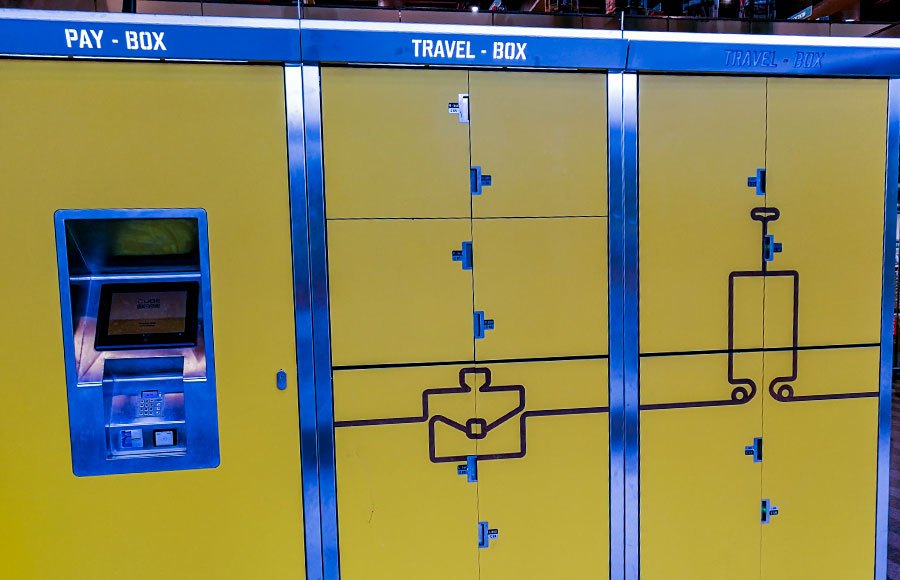
In total I spent 640 RUB in the “miscellaneous” category in 2019.
10. So how much does a five-day trip to Prague cost in total?
So how much did I spend on my sightseeing trip to Prague in the end? In 2019, adding up all the expenses, it came to 27,657 RUB. That includes absolutely everything — except the flights between Russia and Europe at the start and end of my trip, and those are a significant part of any budget.
Even so, travelling independently worked out cheaper than the package tours available at the time — and more comfortable too, thanks to staying in a flat rather than a basic hotel.
And if you travel for longer (10–14 days), the advantage grows exponentially — and in that time you can already see several countries. You saw how cheap the tickets to Budapest were in 2019! That makes for a much more interesting journey.
Do you count your spending when you travel? Share your budgets in the comments! What do you usually save on, and what can you never bring yourself to give up? Do share this article with your friends on social media — I am sure they will find it useful!