Prague spreads along the banks of the Vltava, so it is only natural that a city of this size has equipped itself with proper embankments. The river flows right through the centre: past Prague Castle and Charles Bridge, and further south beneath the Vyšehrad rock, at the foot of which begins the city’s liveliest embankment, Náplavka. The easiest way to get out on the water is the city ferry: as of October 2026 it accepts an ordinary Prague public transport ticket (CZK 36 in the app, CZK 39 for a paper one), while an hour-long cruise with an audio guide from Charles Bridge costs €15. In this article we look at the kinds of leisure on offer here, what you can see along the embankments and how to spend time on the water.
1. General information about the embankments
1.1. Historical background
The city simply grew up along the river. The river’s very name comes from an Old German word meaning “wild water”. In the past the river served the townspeople as a source of water and a place to do laundry — and in places, it must be admitted, as a sewer. Important goods and building materials were also brought into the city along the river, so the capital on the Vltava was built largely thanks to it.
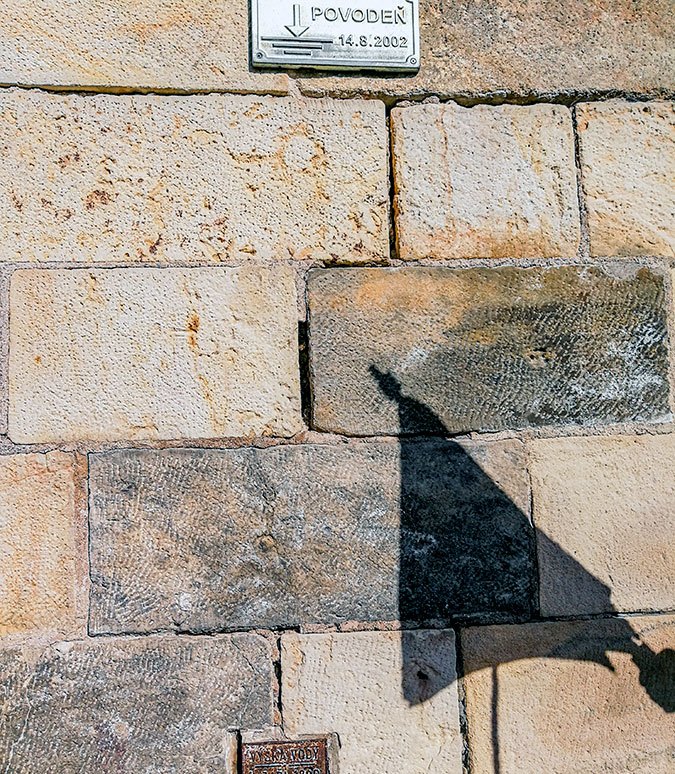
The river lives up to its “wild” character in Prague: its waters here are anything but calm. Moreover, Prague has suffered several floods. The most destructive of the recent ones struck in 2002, when a significant part of the city, including the metro, was damaged. In June 2013 the water rose again, and a state of emergency was declared in Prague for more than two weeks.
A marker remains under Charles Bridge showing the level the water reached during the flood:
Until roughly the middle of the 20th century winters were colder, and in the cold season the river froze over completely, turning into a giant ice rink for the city’s residents. According to Radio Prague, the last time the Vltava could be crossed on the ice was in 1978, and even then the ice was thin and dangerous. Climate is not the only reason: in the 1950s dams and reservoirs were built on the river, and since then it has barely frozen in the city, so winter pastimes of that kind are not on the cards for either residents or visitors to Prague.
1.2. Where to find the most interesting spots (beautiful views, piers, etc.)
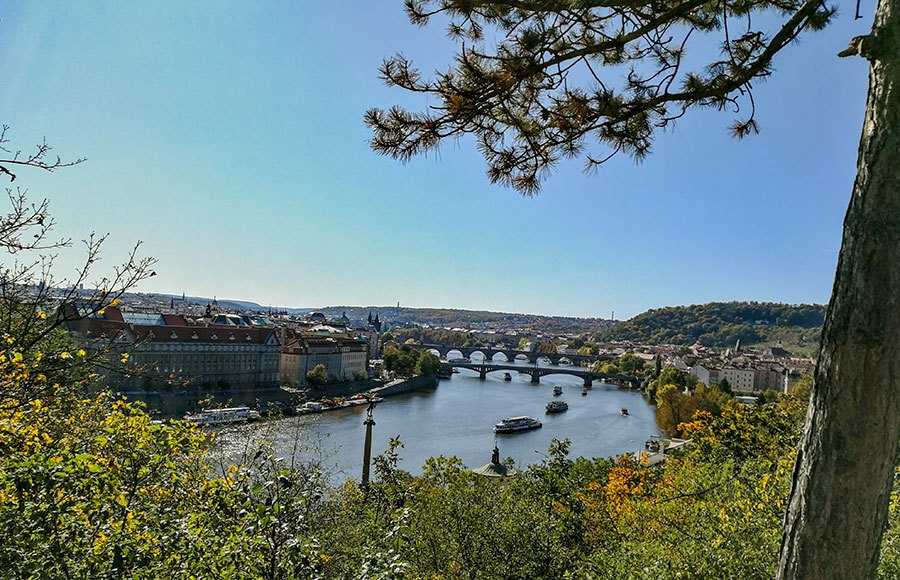
If you are wondering where the best viewpoints with a good view of the Vltava are, head to Letná Gardens. From here there is a fine panorama of the river and the boats scurrying across it. You can reach the park by walking down from Prague Castle as part of a short stroll.
View of the Vltava from the Letná Gardens viewpoint:
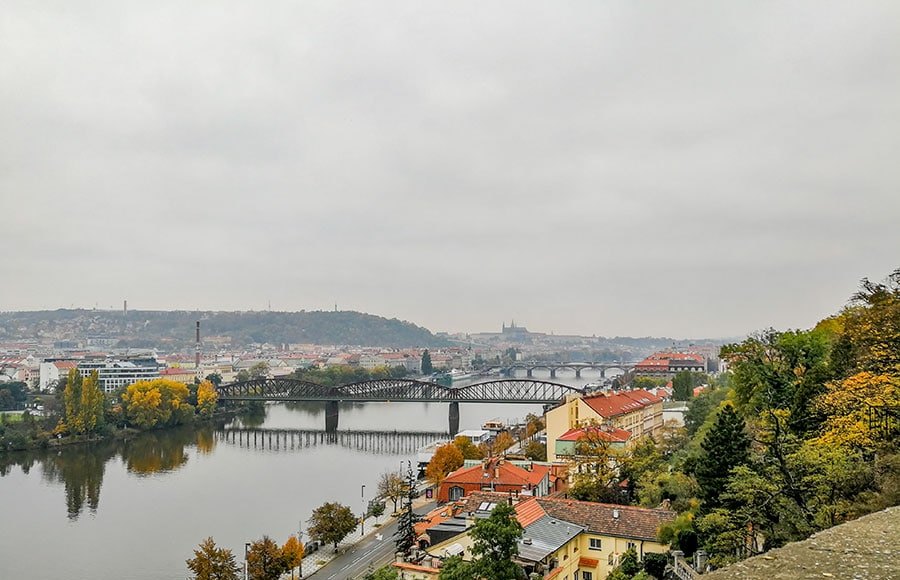
The Czech castle of Vyšehrad deserves a special mention. It is worth a visit in any case, but the views of the river from the castle above the Vltava are also excellent. You can imagine yourself a Czech queen (or king), especially as the monarch’s residence was once located right here.
View of the Vltava from Vyšehrad:
The piers lie along the river; as a rule they sit below the level of the embankment and you have to walk down to them. There is no room to list them all here, but there are five municipal piers on each bank of the Vltava alone.
1.3. Transport on the Vltava
Several piers stand on both banks of the river. Municipal river trams run between them, giving you views of the Czech capital from the Vltava.
Tickets for these ferries are the same as for ordinary public transport: as of October 2026 a 30-minute ticket costs CZK 36 in the PID Lítačka app and CZK 39 as a paper ticket, and 24-hour and 72-hour passes are also valid. Ferry routes are marked with the letter P: P1 and P2 run all year round, the others from April to October, and the ferries do not operate in high water or fog. Bicycles are carried free of charge.
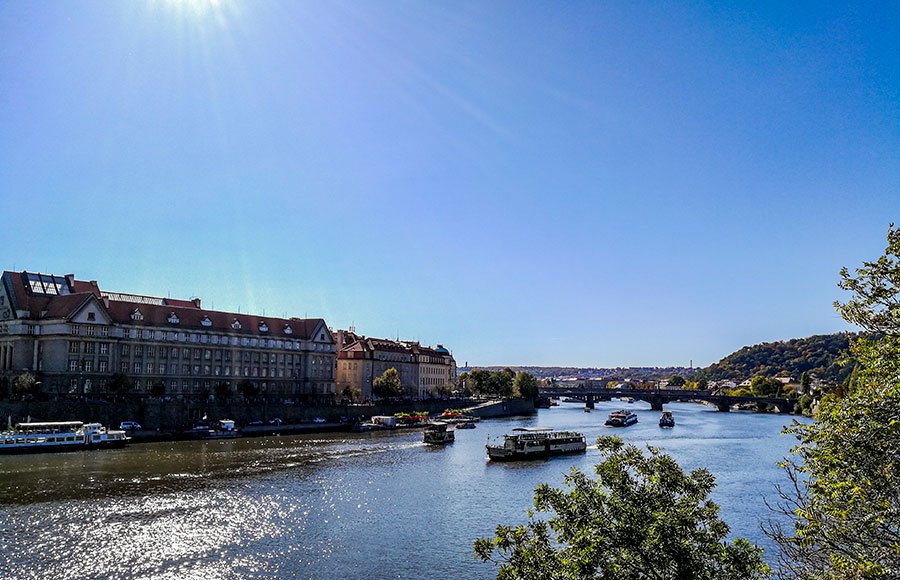
They follow set routes — or rather, they simply carry people from one bank of the Vltava to the other.
If you hold a Prague Card tourist pass, a river cruise is included free of charge. The card is now the plastic version of the Prague CoolPass: as of October 2026 it includes four Prague Boats cruises and the 45-minute Prague Venice cruise from Charles Bridge. A Vltava cruise is also included in the official Prague Visitor Pass city card, together with public transport. Here is the spot on the map by Charles Bridge from which the boats depart (and where they later return):
A 45-minute trip on the Vltava lets you not only admire the city from the water but also take a few memorable photos.
You can also take a separate river cruise. It takes about an hour and, as of October 2026, costs €15 per person; it starts at Charles Bridge and finishes by the Bedřich Smetana Museum. A very decent option if you want to see the city from the Vltava. There is a restaurant on board, but food and drinks are paid for separately, and the commentary about the city comes through an audio guide.
There is also another cruise option, this time lasting three hours. In that case you can admire the views of Prague in the evening and have dinner on board. The range of evening cruises changes, so it is best to check the departure time and price for your dates.
1.4. When to visit
You can stroll along the embankment around the clock; it is worth seeing it both in daylight and after sunset — the impressions are completely different.
2. Views of the Vltava
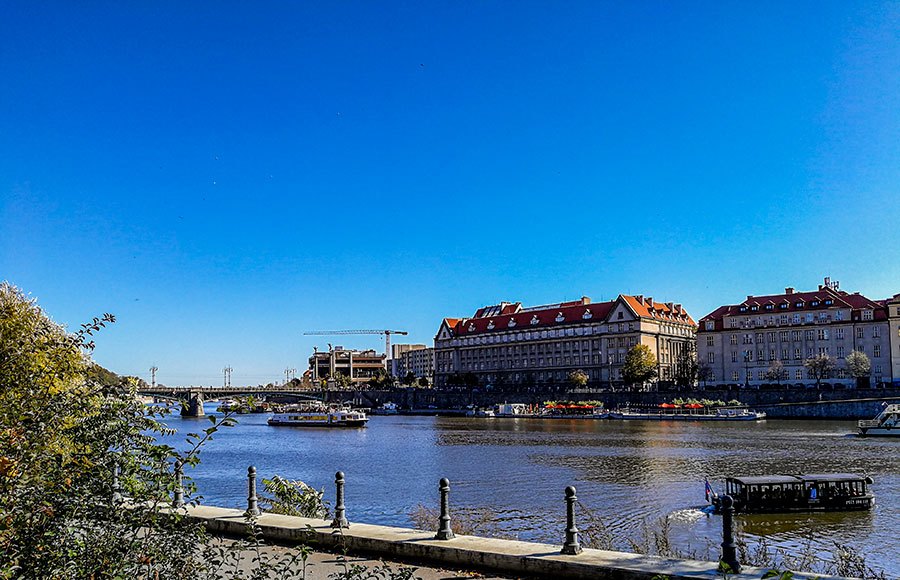
In the old part of the city the view is especially lovely — boats and beautiful historic buildings:
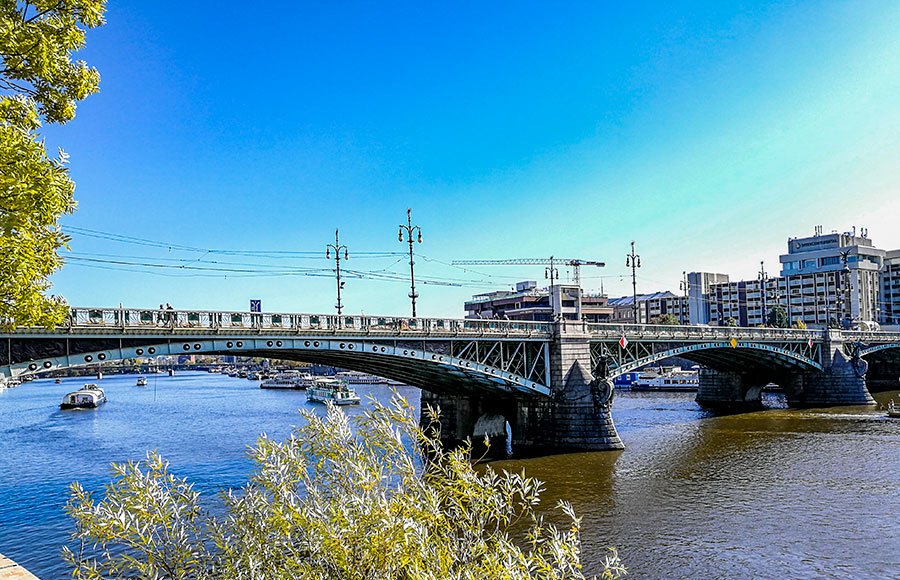
The bridges over the Vltava are very beautiful too, so beyond their purely practical role they also serve an aesthetic one:
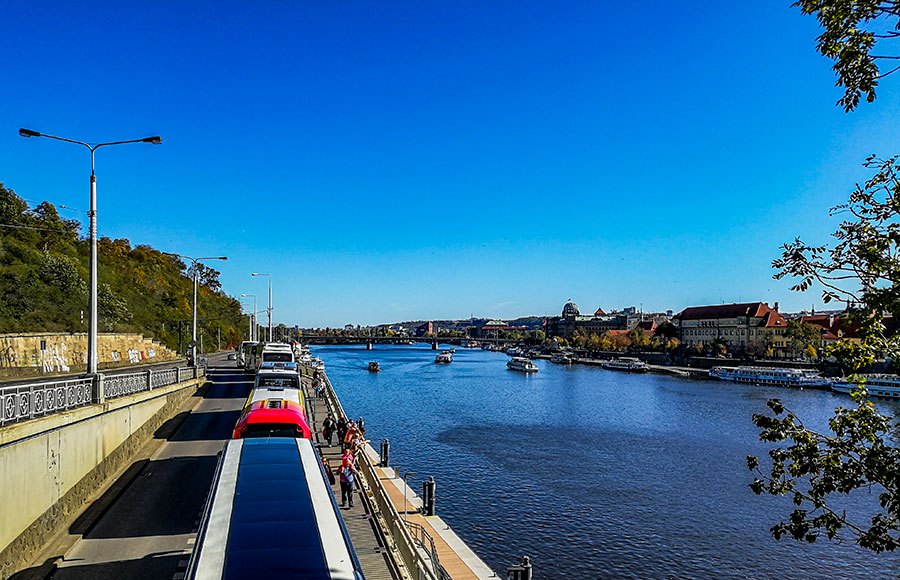
Not all of Prague’s embankments are pedestrianised:
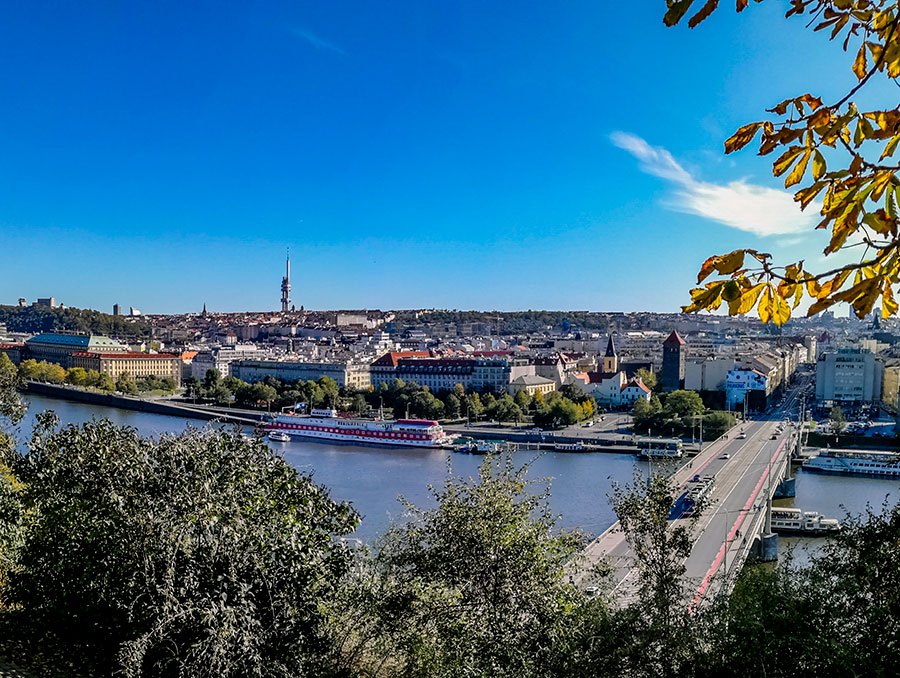
Prague’s TV tower can be seen in the distance, and if you cross the bridge, the Dancing House will be on your right:
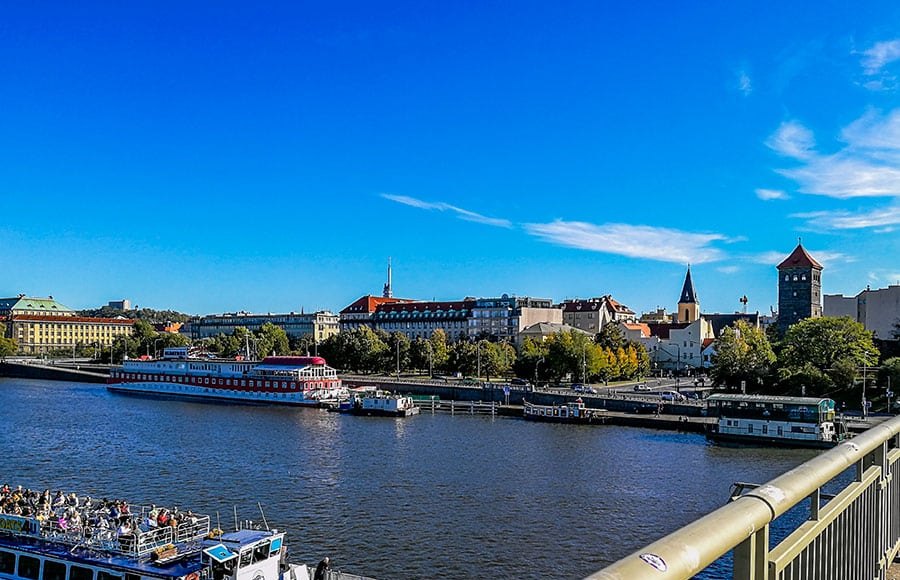
As you can see, pleasure boats also ply the Vltava:
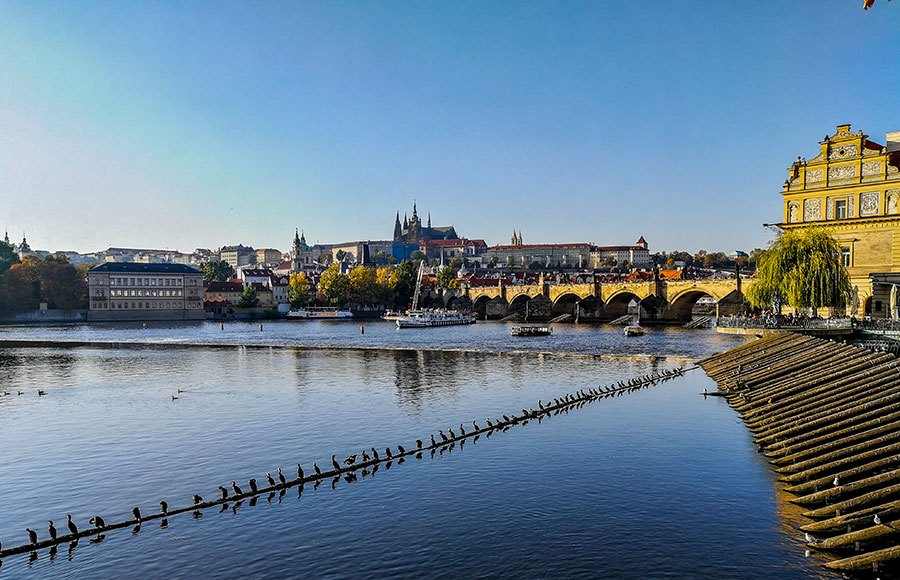
There are plenty of birds near the embankments — quite a sight:
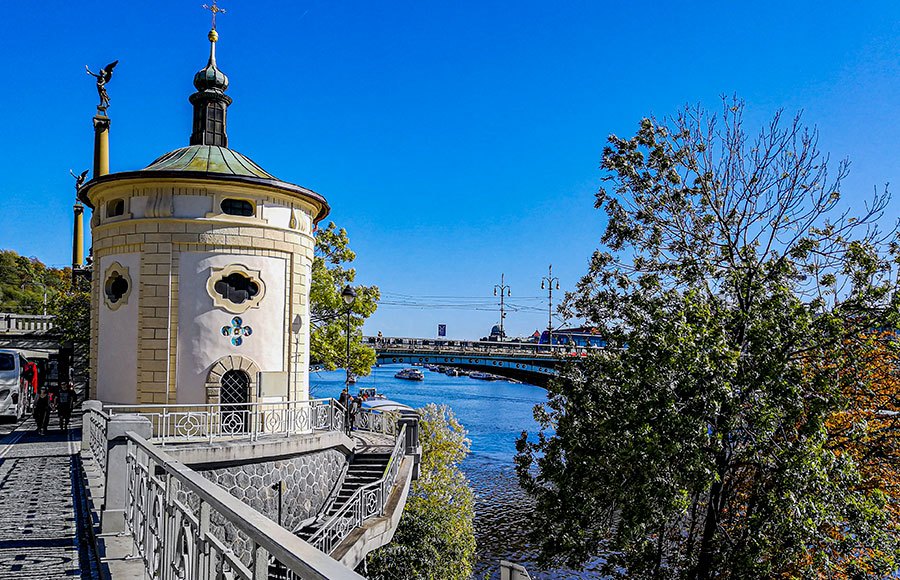
The Mary Magdalene Chapel:
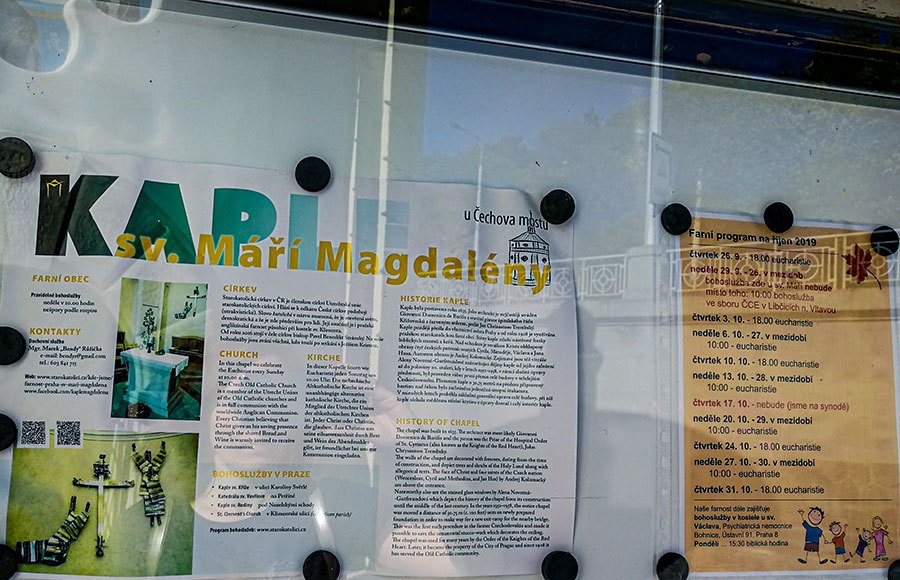
Service times:
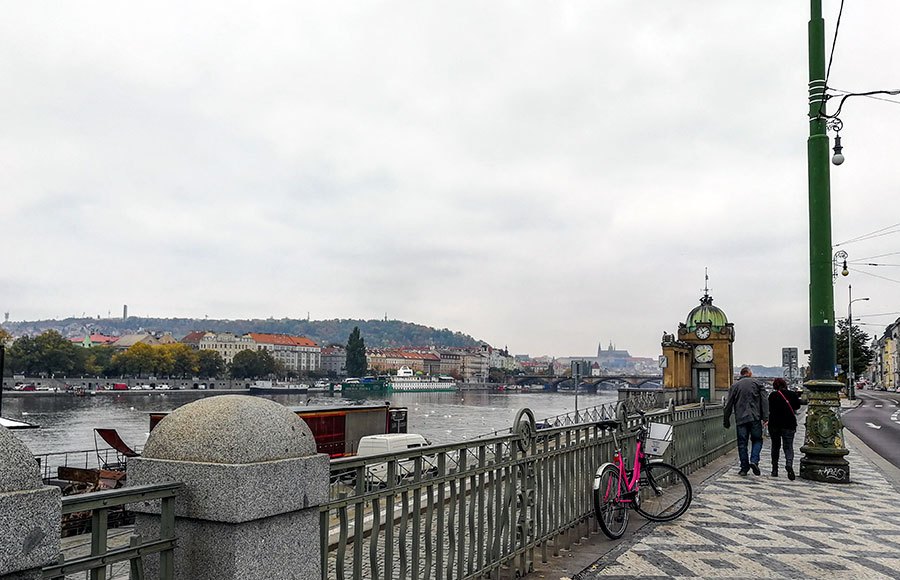
Walking along Prague’s embankments is a pleasure, even on a cloudy day!
3. Things to do and see nearby
On the Vltava embankment — specifically at Náplavka — there is always something to do, especially for younger visitors. There are plenty of concert venues, cafés and restaurants, so time flies. You can eat, dance and make new friends here. On Saturdays a farmers’ market opens: in 2026 it runs from February to December, from 8:00 to 14:00, and if a major event is taking place on the embankment it moves to the neighbouring Palackého náměstí square.
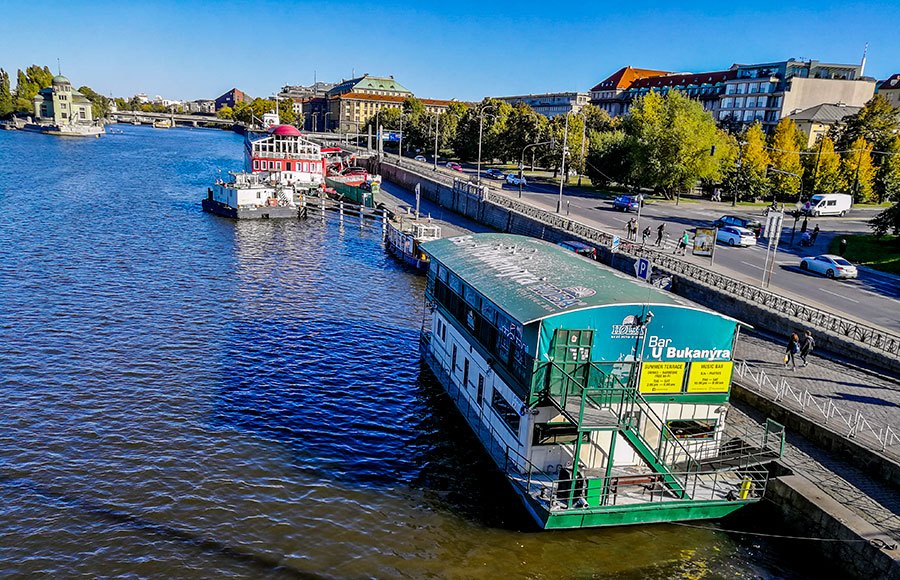
Some bars are set up right on the water, just like at seaside resorts:
If you walk along Alšovo nábřeží by the Mánes Bridge (further on it becomes the Dvořák embankment), be sure to look at the Rudolfinum (Alšovo nábřeží 12). It houses the Rudolfinum art gallery and hosts philharmonic concerts. Beyond its dignified appearance, the building is famous because the parliament of Czechoslovakia held its sessions here in the country’s early years.
On Masaryk Embankment you can see the Dancing House. This striking example of modern architecture appeared here in 1996 and looks highly unusual against the old buildings that surround it. Be sure to stop by and take a photo — it is one of the most Instagrammable spots in the city!
A ship-based centre called IQ Port used to be moored at Náplavka. In a playful, interactive way you could learn a great deal about the aquatic world, geology, space, optical illusions, human anatomy, energy and ecology, or the mysteries of the world. In virtual reality you could ride kayaks or motorbikes, and inside the centre there were robots you could chat with. In short, it was fun for children and adults alike.
This is what the IQ Port children’s centre looked like:
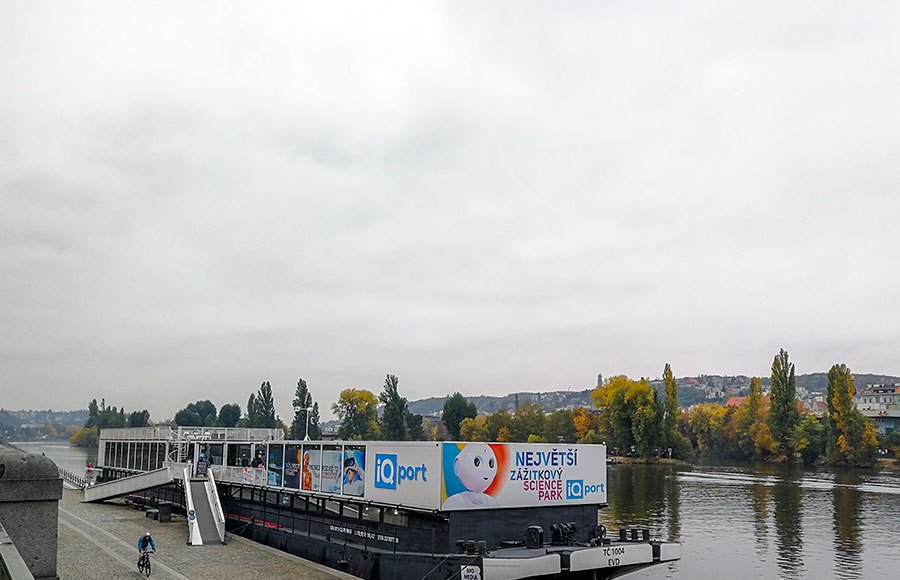
But you should not count on it now: according to an announcement on the centre’s website, the ship was moored at the embankment from June to October 2019 and sailed away in November 2019. There is no more recent news there (checked in October 2026), so the old prices and opening hours no longer apply.
For fishing enthusiasts the Vltava is also a great leisure option. As a genuinely living river alongside the city, it holds quite a lot of fish. One Czech Vltava fishing enthusiast, for example, landed several fairly large carp here without much difficulty, attracting quite a few onlookers. An unusual pastime for the centre of a big city — but an original one!
4. Conclusions and impressions
The views of the river from Prague’s high points around Letná Gardens and Vyšehrad are simply excellent. I highly recommend taking a river cruise if you are buying a Prague Card. If you don’t have the card, you can simply ride the ferry from one bank to the other on an ordinary ticket costing CZK 36–39 — it costs next to nothing and you gain a new, interesting experience.
But even without taking to the water, there is plenty of entertainment along the banks, for adults and children alike!
How did you spend your time in Prague? Did you walk along the embankments? Do you prefer them by day, in the evening or perhaps at night? Which venue on the embankment did you like best? We look forward to your comments!