Kayaköy is an abandoned Greek town on a hillside about 8 km from Fethiye, now an open-air museum. Under the official 2026 tariff, a ticket for foreign visitors costs €3; until 31 October the site is open 08:30–19:30, and from 1 November it switches to winter hours of 08:30–17:30.
We ended up here after exploring Fethiye: we had read nothing about the village in advance, simply found it on the map and went to see what was left of the ghost town.
Children under 8 enter free. Kayaköy is covered by the MuseumPass Ege at €95, which is valid for 7 days; the MuseumPass Akdeniz is not valid in Muğla province. Dolmuşes 3-4 and 3-44 run from Fethiye; from Ölüdeniz you need to change. Until 31 October you may not set out on the Kayaköy–Ölüdeniz mountain trail without a permit because of fire-prevention restrictions.
1. A brief history
To jump ahead for a moment: the village — or rather, what is left of it — made a huge impression on us, and we wanted to learn more about when it was built, why all its inhabitants vanished, and so on. Here is what we managed to find out.
The Greek settlement visible today took shape in the late Ottoman period, mostly in the 19th century. It bore the name Lebessos, and later Livissi. The area is linked to ancient Karmilessos and the 3rd millennium BC on philological grounds, but no archaeological finds older than the 4th century BC have been discovered here so far.
According to the official record for the site, 350–400 houses survive on the slope today, mostly two-storey and no larger than 50 square metres, along with numerous chapels, two large churches, a school and a customs house. The lower church is Panagia Pirgiotissa, the upper one Taxiarchis; the lower church is better preserved because it was used as a mosque until the 1960s.
So why is the village of Kayaköy empty today?
The Greek Orthodox residents of Livissi left the area amid the turmoil of 1922–1924, and the Lausanne Convention of 30 January 1923 legally formalised the compulsory population exchange between Greece and Turkey. There was no single expulsion immediately after the treaty was signed — it was a drawn-out and far more painful process. Although Turks and Greeks had lived peacefully side by side on this land for centuries, the Greeks had to leave, and the village was left completely empty. It was never resettled and gradually fell into ruin.
On 25 April 1957 a powerful magnitude-7.1 earthquake struck near Fethiye — by then the village had long stood empty. There are no precise figures on how many of Kayaköy’s houses were destroyed by that particular quake.
2. Practical information
2.1. Opening hours
Kayaköy has been designated a historic monument and is now an open-air museum.
According to the 2026 site record, until 31 October Kayaköy is open daily from 08:30 to 19:30. From 1 November 2026 the winter schedule applies: 08:30–17:30.
If you are making a special trip, it is still worth checking the official listing for the site or calling the Fethiye museums directorate before you set off: +90 252 614-11-50 — the seasonal timetable may change.
2.2. Admission
Since 1 March 2024 the admission fee for foreign visitors has been set in euros, and in the official 2026 price list entry costs €3; at the ticket office the amount is converted and taken in lira. Children under 8 enter free, and a separate rate applies to Turkish citizens.
Museum card: Kayaköy is included in the MuseumPass Ege — as of October 2026 it costs €95, is valid for 7 days from first use and allows one visit to each site in the region. The MuseumPass Akdeniz is not valid here: Muğla province is not covered. The citizens’ Müzekart and the tourist MuseumPass are different products.
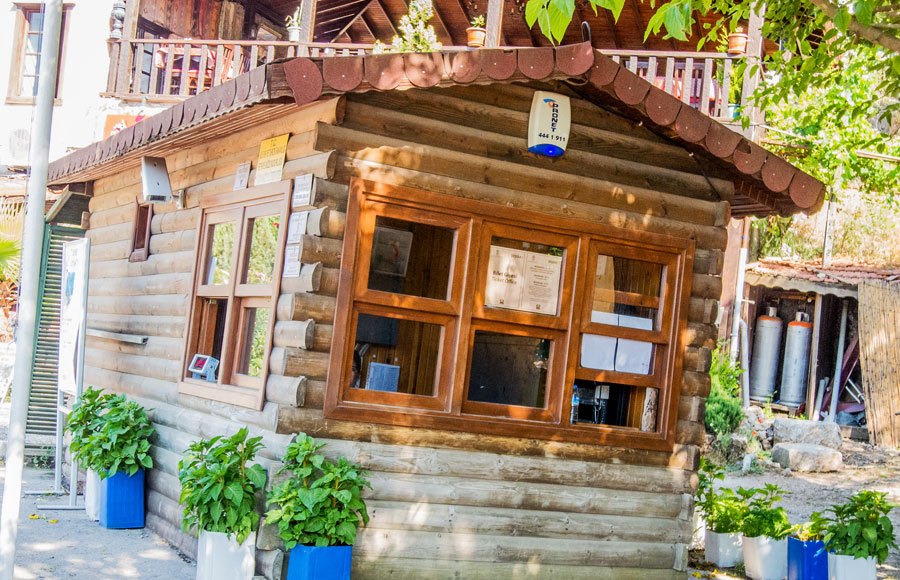
The ticket office at the entrance to the village: 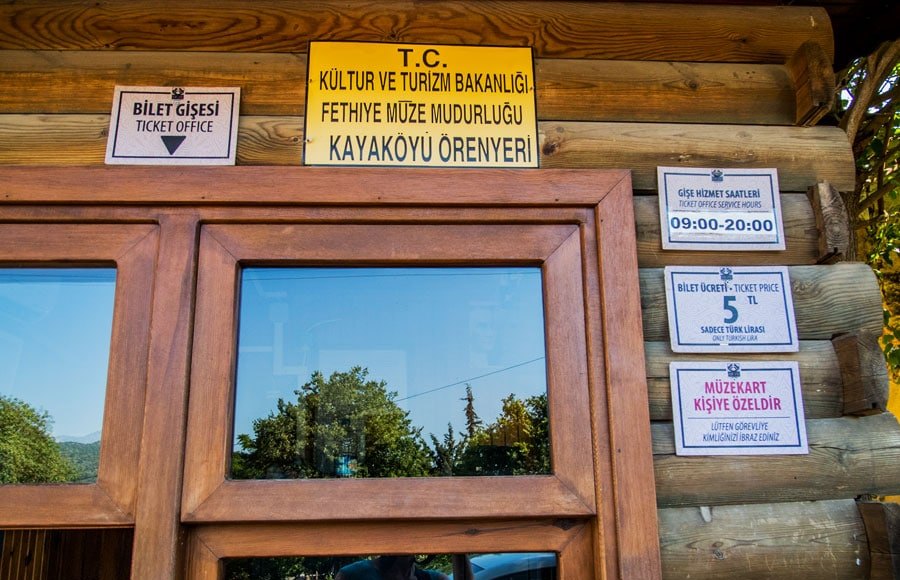
2.3. Location and how to get there
Kayaköy lies between Fethiye and Ölüdeniz, about 8 km from Fethiye. Its location on the map:
The easiest way to reach Kayaköy is from the dolmuş rank in Fethiye, which is located here:When we travelled to Kayaköy, the minibus displayed a sign reading Kayaköy or Kaya, and we waited 20–30 minutes for it. Today two official lines run from Fethiye Köyler Garajı: the infrequent 3-4 via Keçiler and the main 3-44 via Ovacık and Hisarönü.
According to the official MUTTAŞ timetable (updated 18 September, checked 9 October 2026), the 3-44 leaves Fethiye on weekdays between 06:45 and 19:00 and returns from Kayaköy between 07:15 and 20:00, mostly once an hour, in places every 30 minutes. On Saturdays and Sundays the bus runs hourly: from Fethiye between 07:00 and 19:00 and from Kayaköy between 08:00 and 20:00. Line 3-4 runs on weekdays only, four times a day. The Fethiye Köyler Garajı–Kayaköy fare by electronic card is ₺89 for adults and ₺50 for students. You can pay by bank card on any bus, but the operator does not quote a separate fare for it. Check the timetable via the link before you travel, as it may change.
From Ölüdeniz there is no direct official service from the beach: take the 3-40, get off in Hisarönü or Ovacık and change to the 3-44. As of October 2026 each of the two legs costs ₺56 by electronic card — ₺112 in total, plus the wait for the connection. In a taxi, ask the driver to switch on the meter: we found no confirmed fixed fare from Fethiye.
You certainly will not miss your stop, because the abandoned houses are visible from afar:
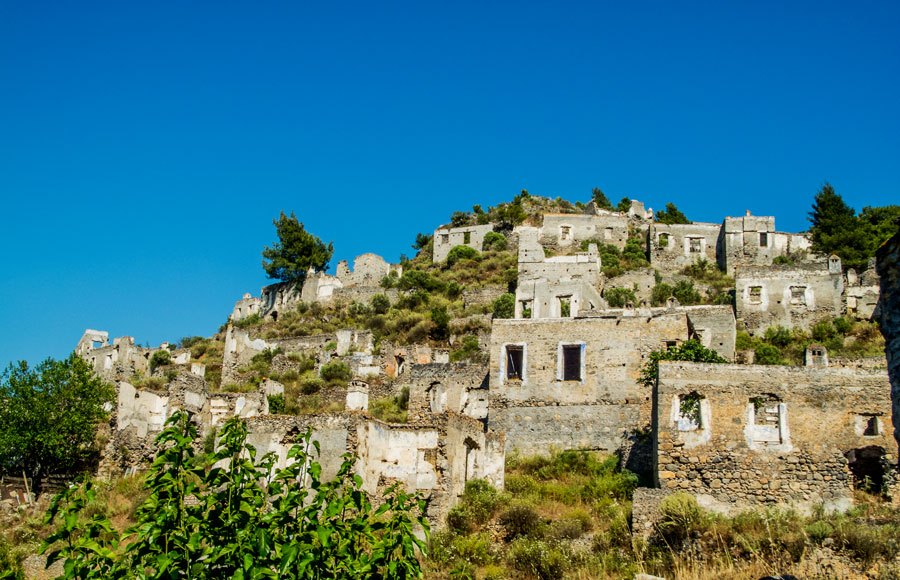
The dolmuş stops directly opposite the entrance to Kayaköy, and the driver will be sure to tell you that you have arrived.
At the entrance you will see signs showing where everything is in the village:
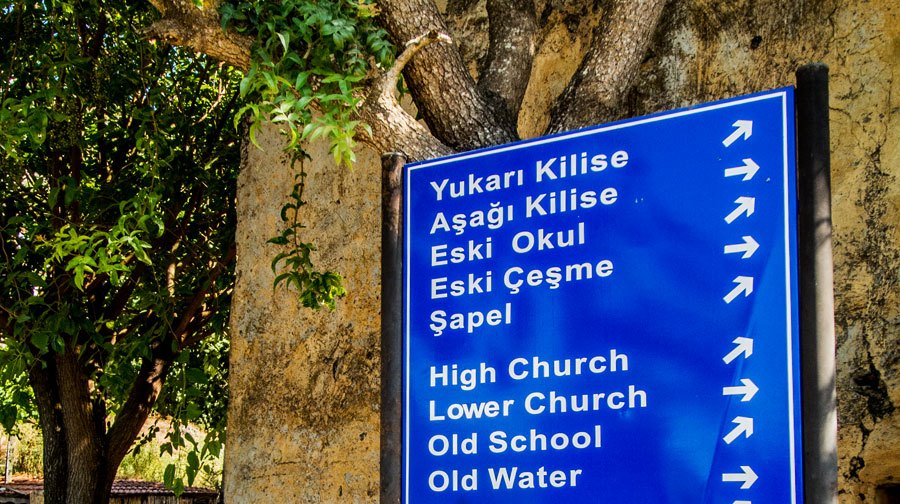 But first you need to buy a ticket. The ticket office is housed in a small wooden hut:
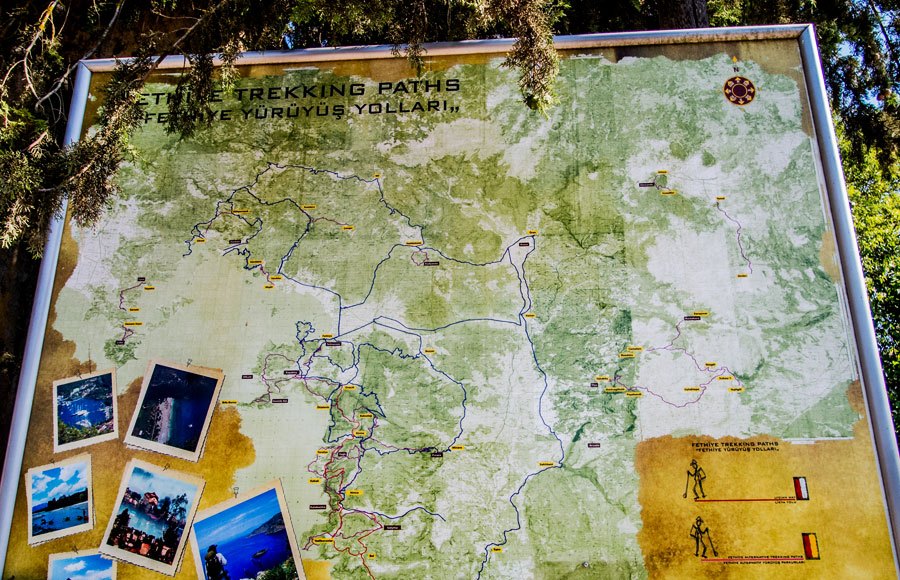
On the map below, Kayaköy and the surrounding trails are marked. The path over the mountain to Ölüdeniz is roughly 4.5–6 km and 1.5–2.5 hours one way: loose stones, a steep descent and little shade call for proper footwear, water and a GPS track. Until 31 October 2026 you may not set out there without a permit: the Kayaköy–Ölüdeniz forests fall within a fire-ban zone. After that date, first check whether the governorate has extended the restriction.
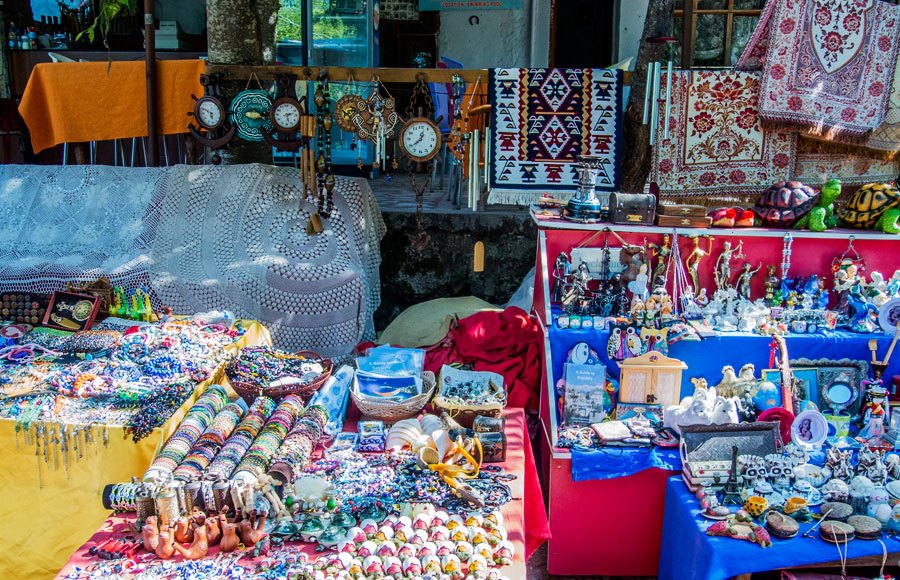
We arrived in the village towards evening, so we decided to wander only around Kayaköy itself. As this is above all a tourist spot these days, all sorts of souvenirs are sold at the entrance:
3. A photo walk through the ghost town
And now let us walk the streets of this abandoned place. The entrance to Kayaköy:
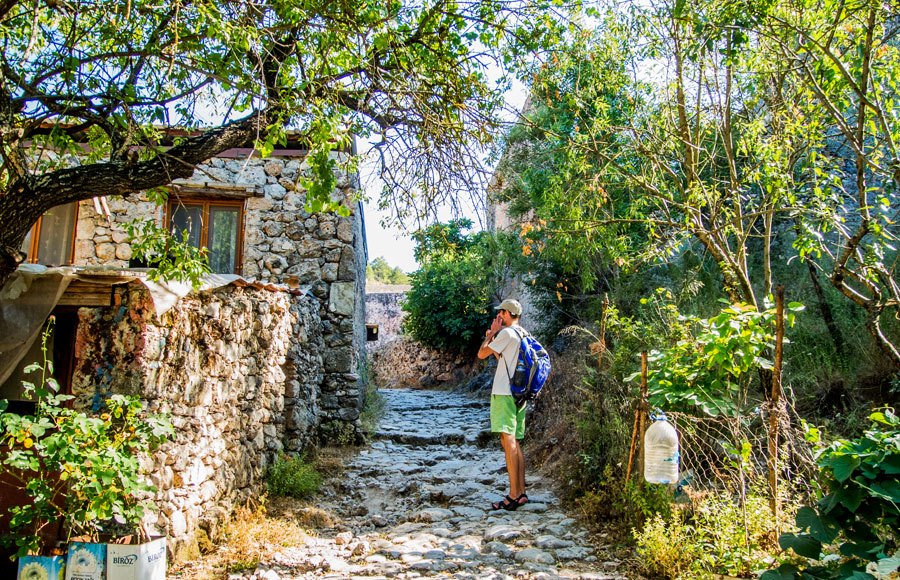
All the paths and streets look like this:
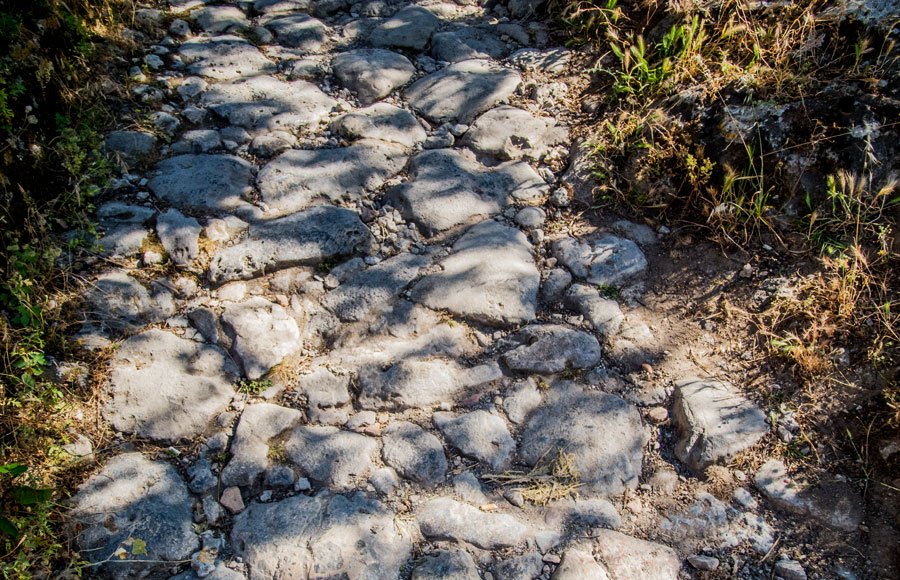
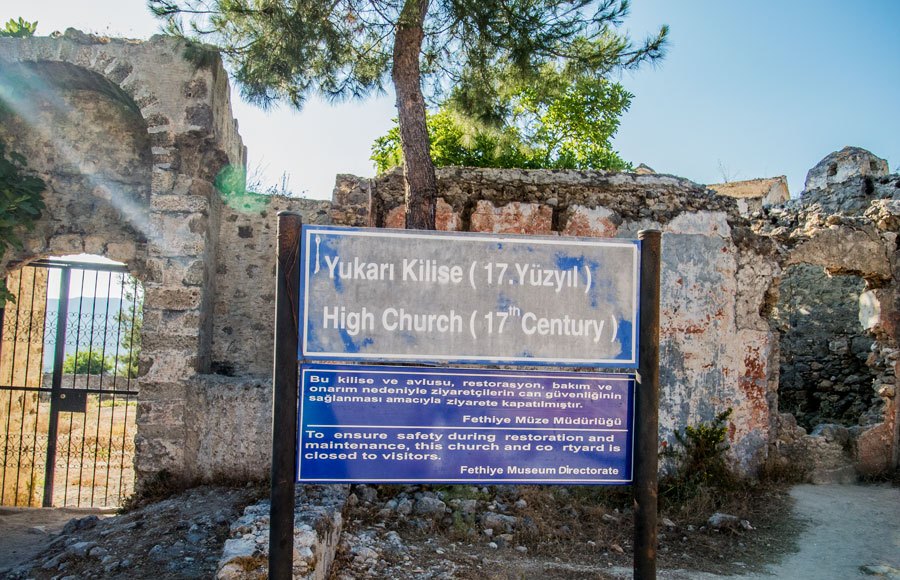
Stick to the open paths and follow the route marked by signs on the houses: do not enter unstabilised buildings and do not climb over the fences. The churchyards of both large churches are officially closed until restoration work is complete. In almost none of the houses has anything survived except the walls:
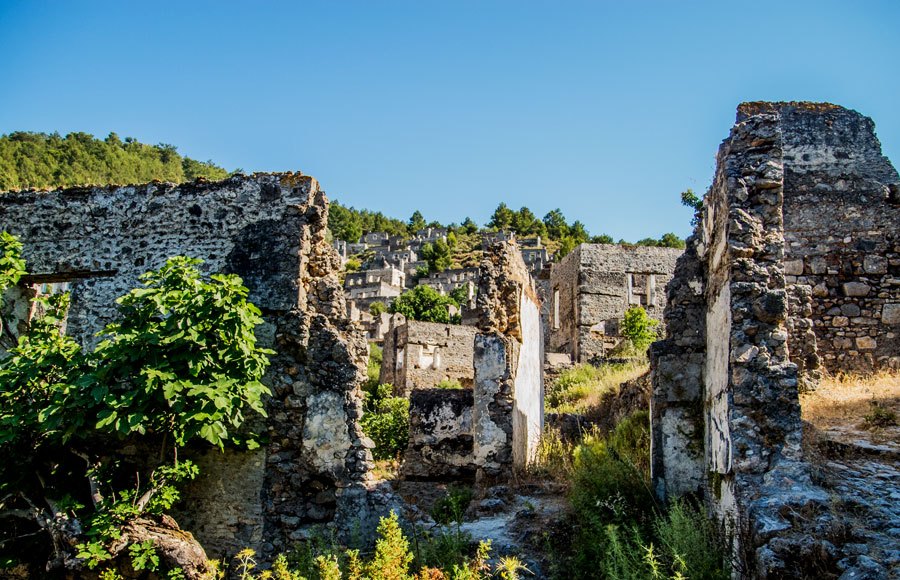
On a street of the deserted village:
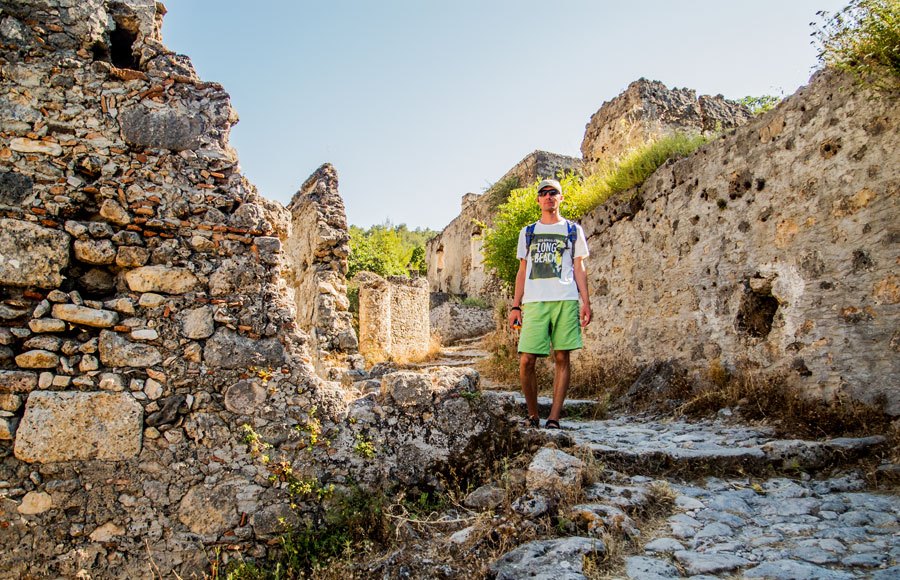
A distinctive feature of Kayaköy is that all the houses stand on a mountainside — only Greeks built settlements like this, while the Turks preferred to live on the plains:
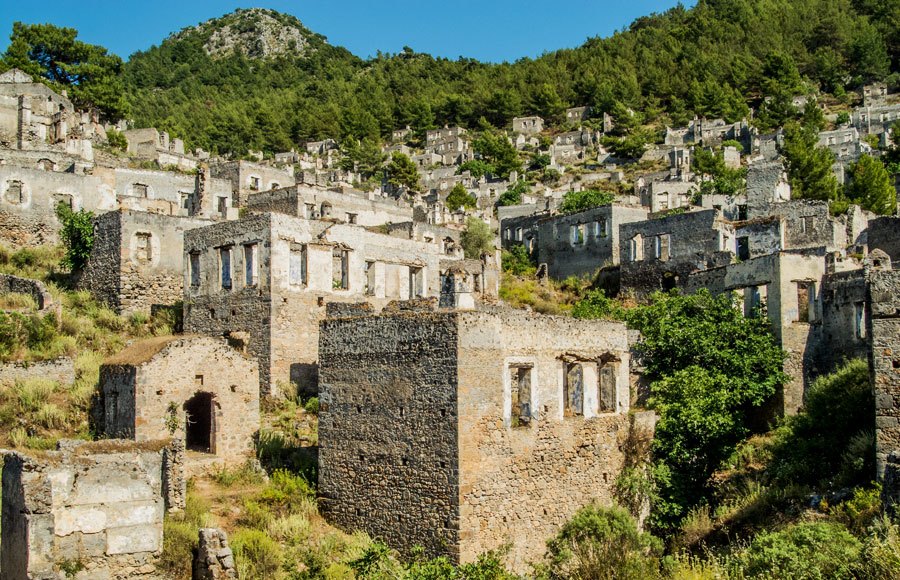
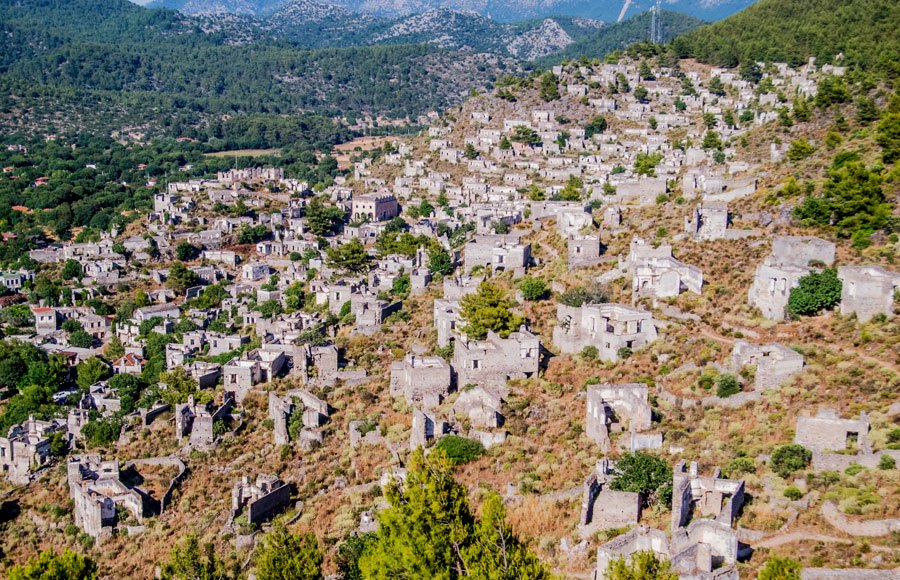
The village is enormous — you could even say it was a whole town:
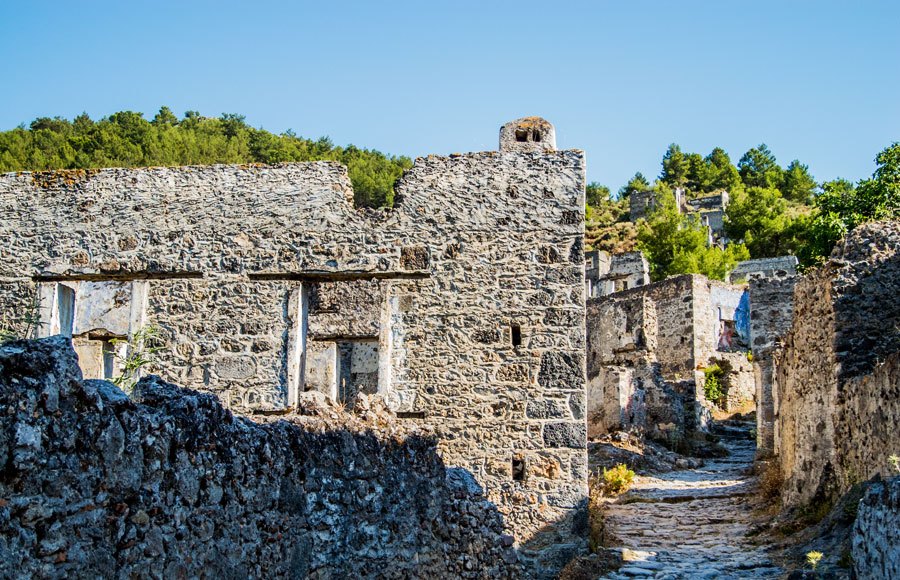
Many streets are simply overgrown with grass:
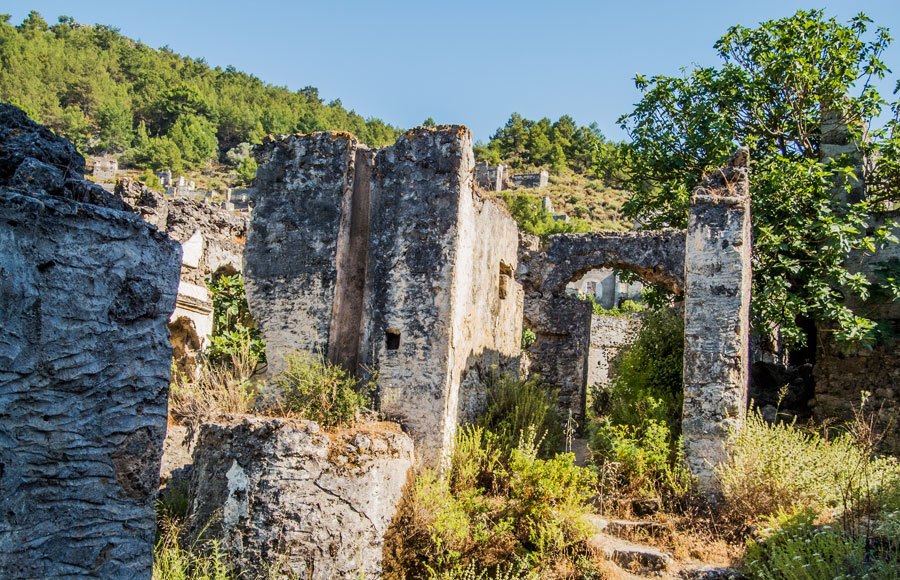
One of the best-preserved buildings is the upper Greek Orthodox church of Taxiarchis:
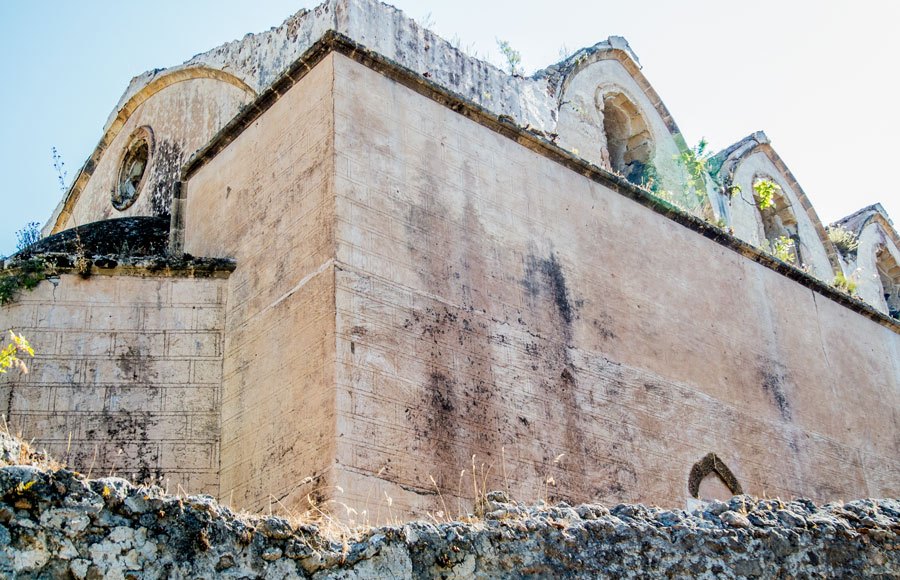
During our visit the church was closed. In the official register its churchyard is closed until restoration work is finished; the authorities give neither an exact reopening date nor whether work is under way right now:
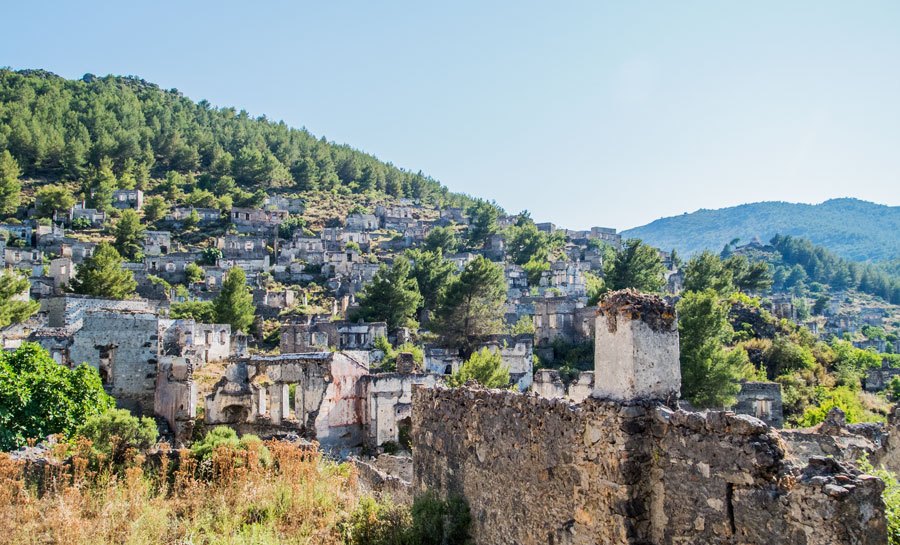
A view of the town — somewhere beyond those mountains is the sea:
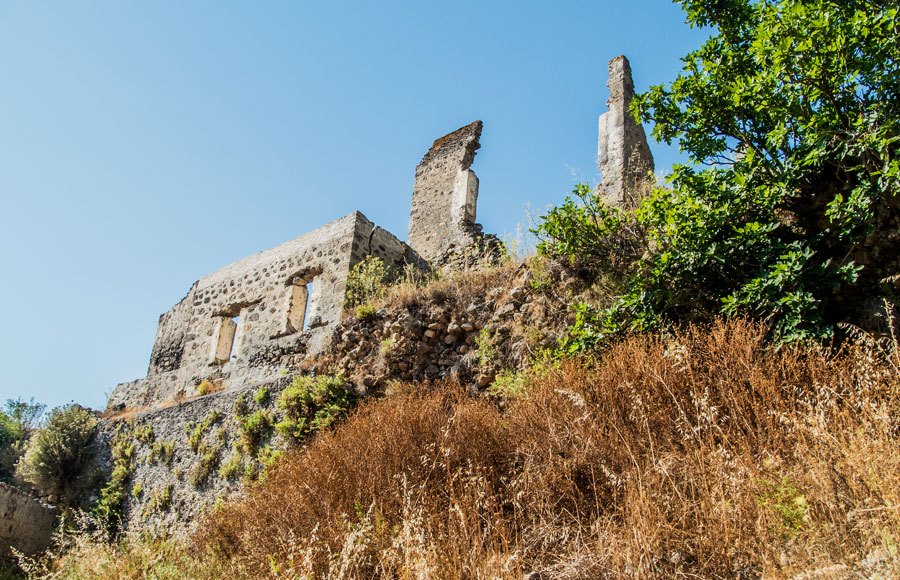
All that is left of a house:
Around every corner, more and more houses come into view:
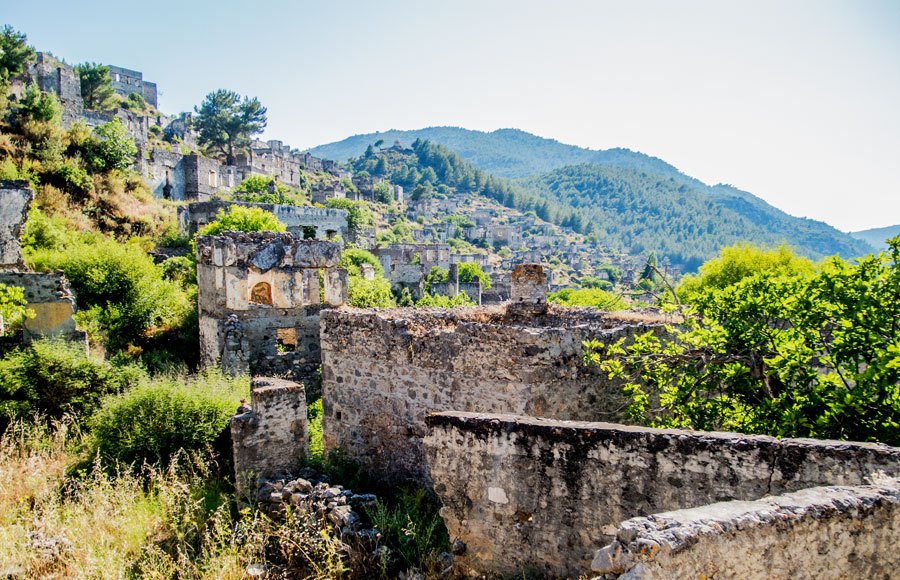
The lower church of Panagia Pirgiotissa has survived in better shape — it was used as a mosque until the 1960s:
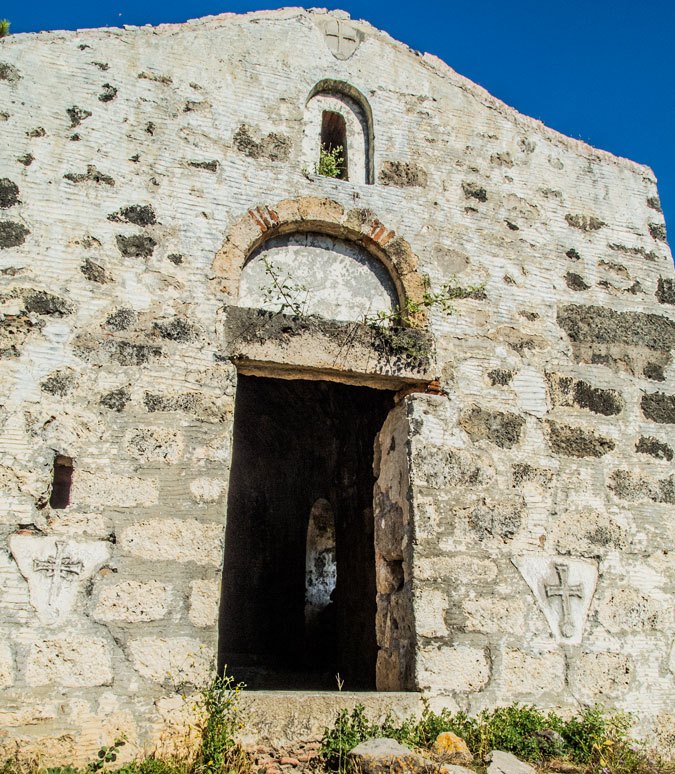
Some houses have astonishingly even walls:
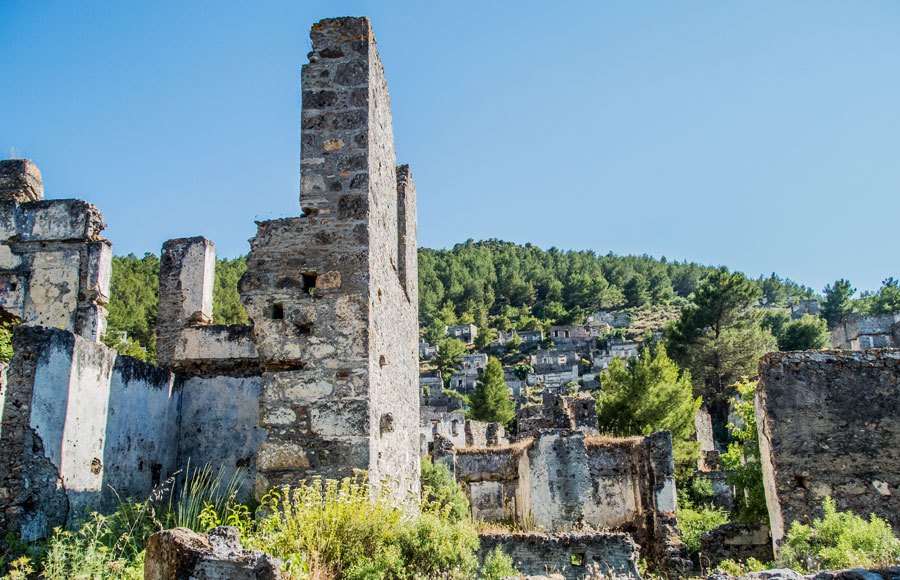
The pre-sunset sun paints the houses red:
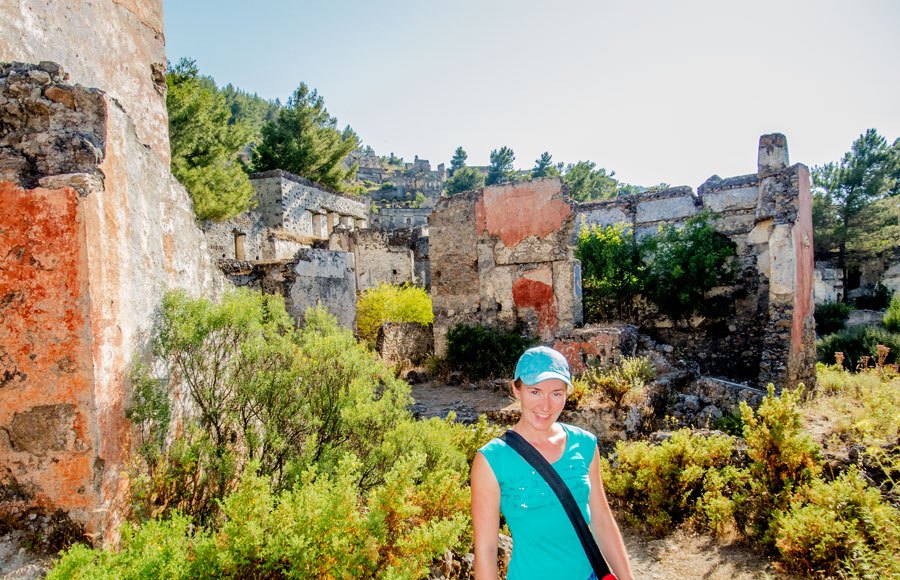
On the ruins of the abandoned village:
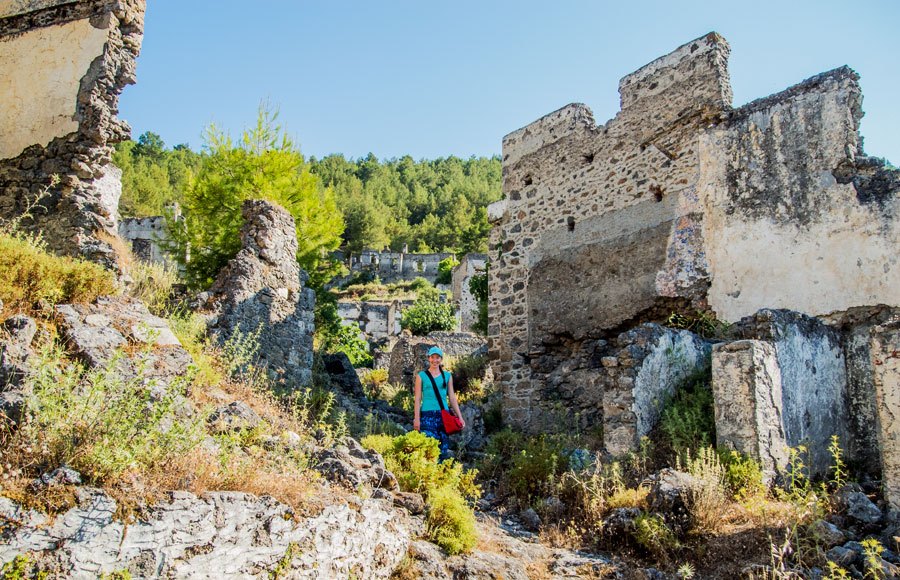
Here the streets are almost invisible beneath the grass:
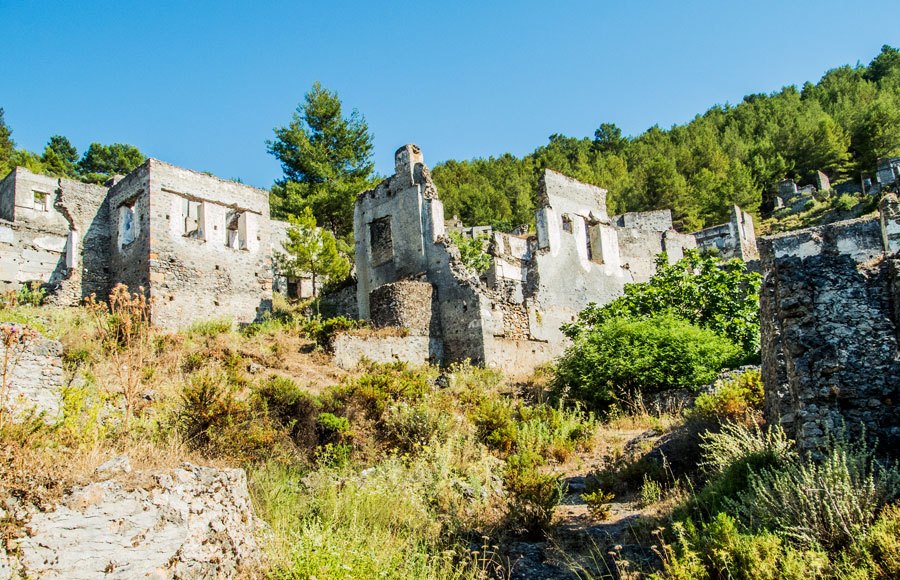
And here the streets are so narrow and uneven that they seem straight out of the Middle Ages:
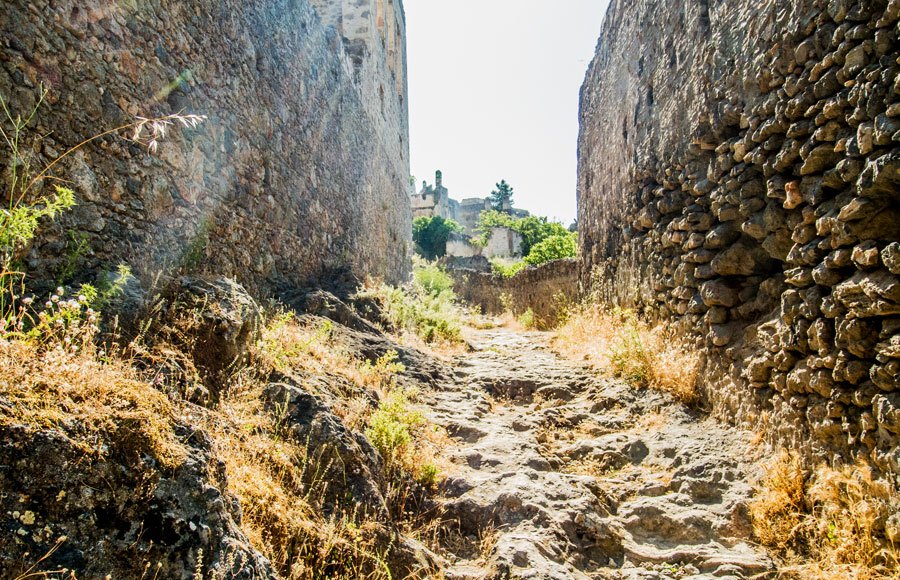
At first we meant to take just a short stroll through a small part of the town, but without noticing we ended up almost on the far side. Can you see the building with arches on the left of the photo? That is the upper church of Taxiarchis, whose churchyard is closed until restoration is complete:
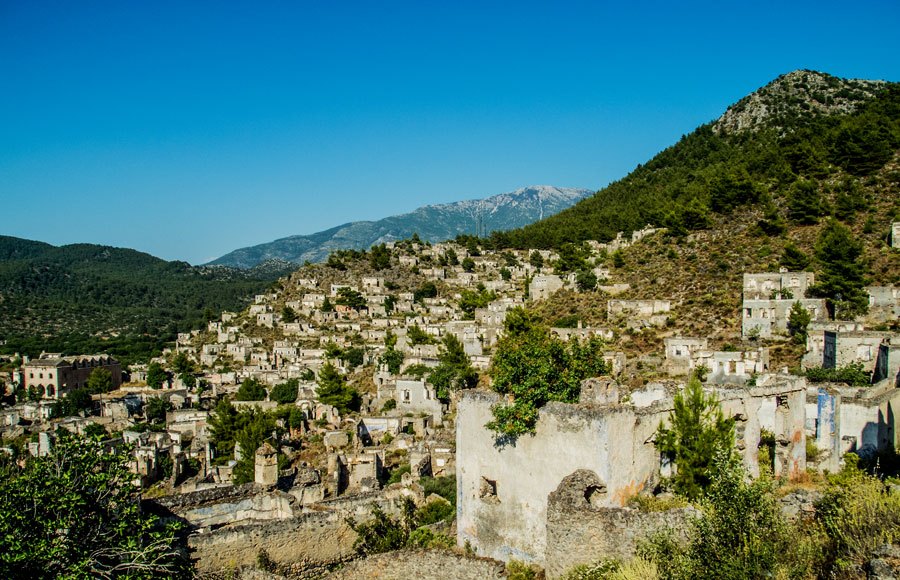
Meanwhile we climbed to the very top of the hill — beyond that tree the sea comes into view:
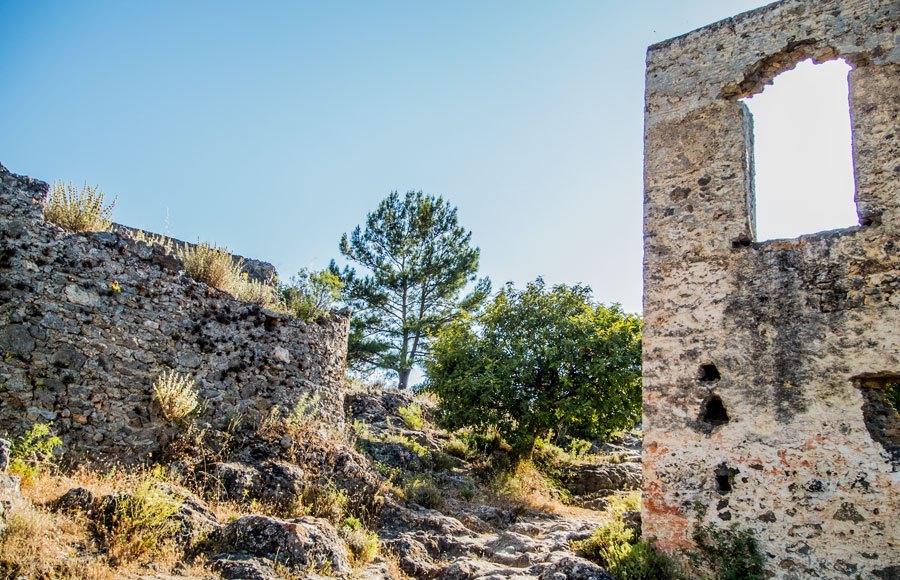
And here is the view of the sea:
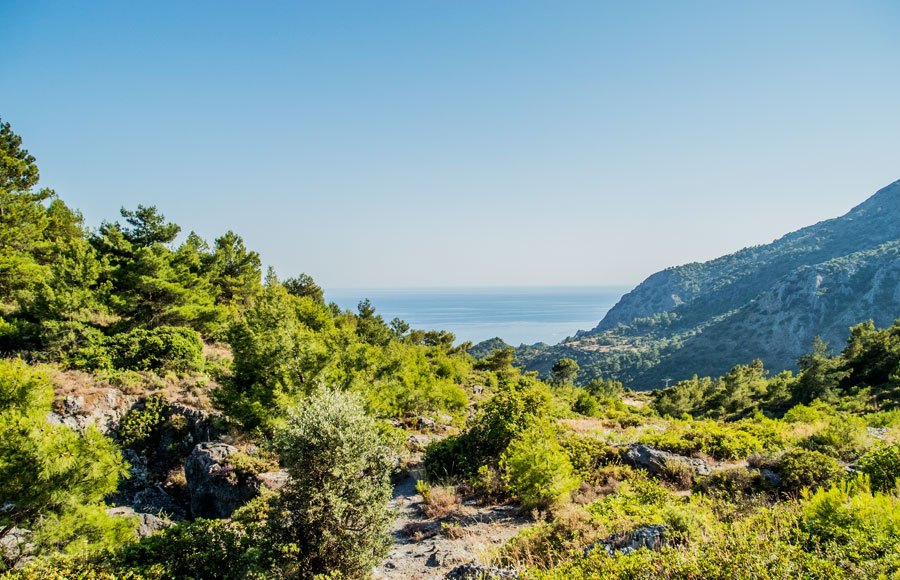
We turn to look back at Kayaköy — from here almost the whole village lies in the palm of your hand:
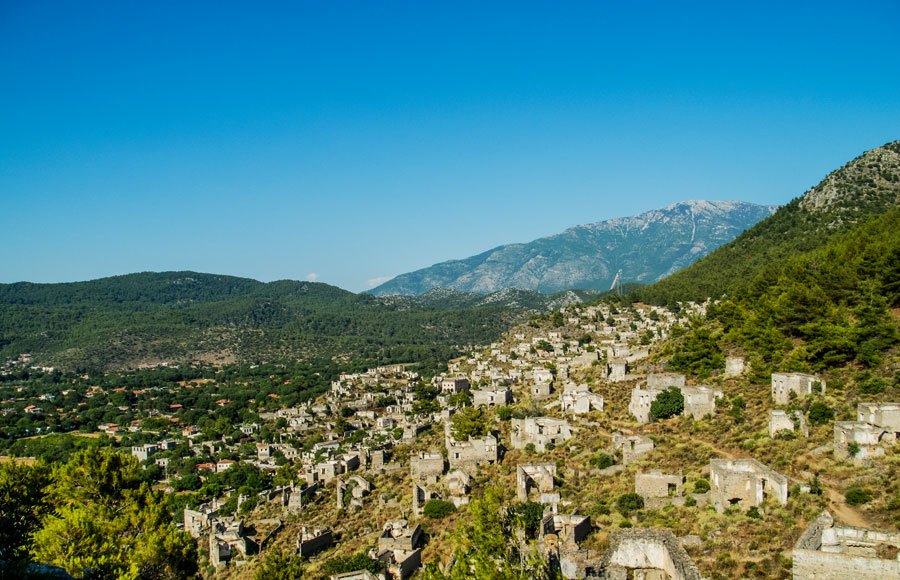
At the highest point of the village stands a small hut, and beyond it there are only mountains and sea:
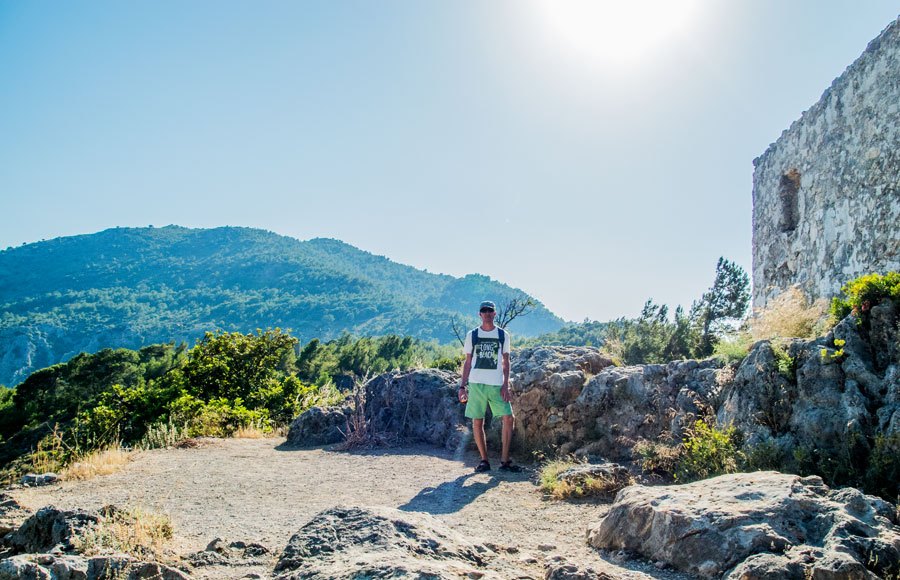
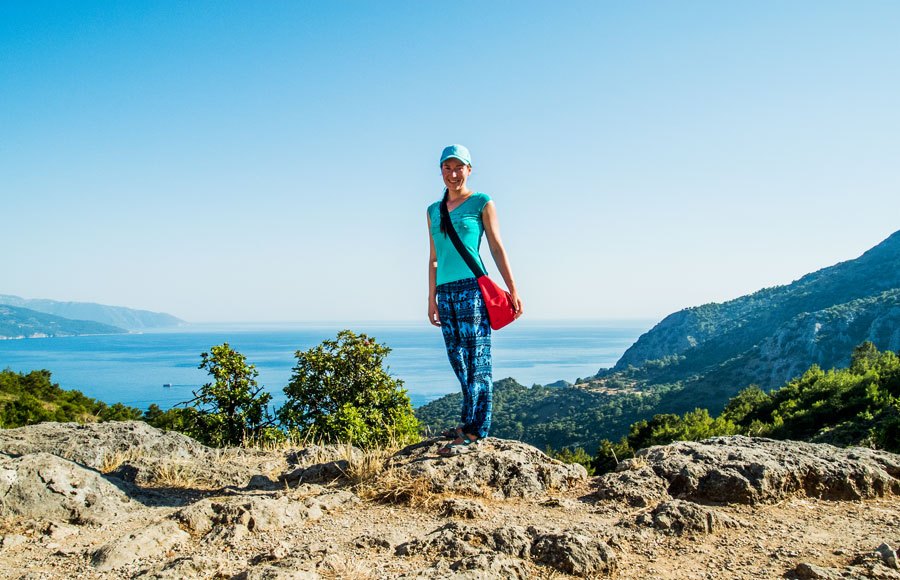
A stunning view:
The empty eye sockets of abandoned houses:
4. Conclusions and impressions
We spent about an hour and a half walking around Kayaköy and in that time covered almost the whole town, from the entrance to the highest point. I do not know whether it gets busy during the day, but towards evening there was almost nobody there, and that made it feel rather eerie. It is a very strange feeling to walk through a place where life once bustled and only silent stones remain. I certainly would not want to find myself there at dusk.
That said, Kayaköy left us with an unforgettable impression — we had never been in such a vast abandoned village before, and it was a genuinely interesting experience. I do not think this is a place to bring children, or somewhere to come looking for historic monuments. The site is heavily ruined, and there are no truly remarkable antiquities here. Even so, the atmosphere itself is highly unusual, so if you have never been to a ghost town, do make the trip to Kayaköy. It is also worth climbing to the high viewpoint along the open route, without stepping beyond the fences, to admire the valley and the coastline.
Have you been to Kayaköy — did you like it? What other abandoned towns have you visited, and where would you recommend going? Tell us in the comments.