An interesting fact: the territory of modern-day Turkey holds the remains of not one but two of the Seven Wonders of the ancient world. Naturally, we didn’t pass up the chance to see both (the first was the Mausoleum at Halicarnassus). Today I want to tell you about the Temple of Artemis at Ephesus, which was built not far from ancient Ephesus.
1. A brief historical background
The Temple of Artemis was built in the 6th century BC in honour of Artemis, the patron goddess of the city of Ephesus. Her cult here goes back to deep antiquity — even before the Greeks appeared in these parts, the city worshipped a goddess known as the “Great Mother”. The Greeks called her Artemis and erected an enormous temple, incredible by the standards of the day, in her honour.
Artemis is one of the most important goddesses in ancient Greek mythology: patroness of all living things on earth, goddess of the hunt, chastity and fertility — beautiful, but cruel.
A very unusual spot was chosen for the temple — a swamp. Legend explains it this way: buildings were often destroyed by earthquakes, and the architect hoped that the damp soil would act as a shock absorber. Archaeologists confirm only the wet environment itself and the silt deposits; the builders’ intention remains a legend. The temple did not vanish all at once: it was quarried for stone over the centuries, and the remains were gradually buried in silt during seasonal flooding.
Once the temple was completed (construction took almost 120 years!), its dimensions are given in different ways — from 110–115 m long and 55 m wide up to 130 × 68 m, because several temples stood on this spot. The later one is believed to have had around 127 columns, each roughly 18 m high; the earlier one had 106. So it really was an impressive sight.
In Istanbul we managed to see what the temple actually looked like in its day. This is a miniature copy of the Temple of Artemis from Istanbul’s miniature park:
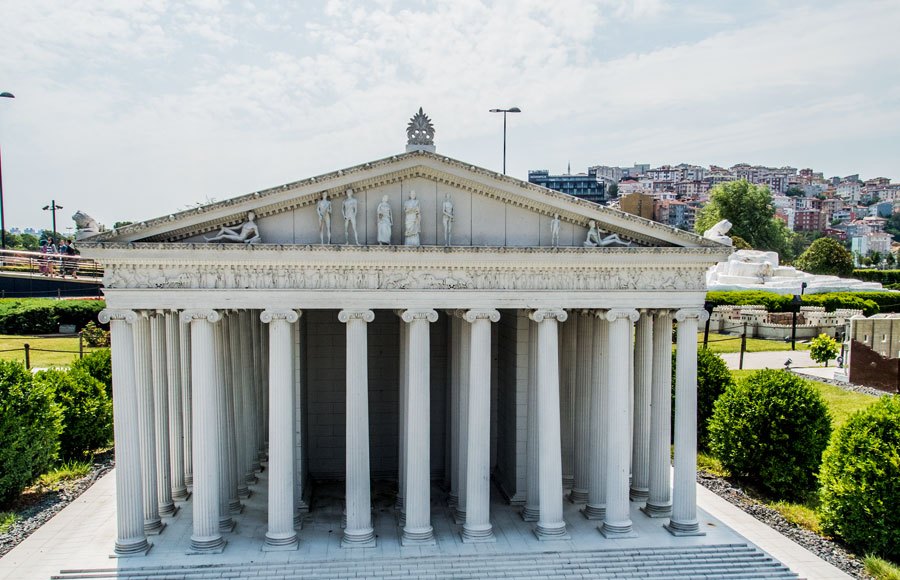
Interestingly, the temple’s role went beyond its direct purpose — it was also a financial centre: money was stored here and deals were concluded; in effect, the sanctuary worked as a bank.
But the temple did not stand for long — in 356 BC a madman named Herostratus set fire to the Temple of Artemis. Key structural elements were made of wood, so only the columns were left. Why did Herostratus do it? By his own account, he wanted to go down in history forever. And he succeeded, even though the authorities of Ephesus banned any mention of his name. One historian wrote the madman’s name down anyway, and it entered history.
The temple was rebuilt, but — contrary to a widespread version of events — not by Alexander the Great: although he offered to pay for the construction, the Ephesians refused, and the new temple was raised only after his death. In AD 263 it was plundered by the Goths, and the sanctuary gradually fell into decline.
2. Practical information
Today little remains of the once-magnificent Temple of Artemis — just a single column assembled from fragments. So you should not expect anything grandiose; this is, after all, a lost monument of the ancient world.
2.1. Visiting time and cost
The site is not guarded in any way, so you can enter freely at any time — there are no set opening hours and no ticket office selling tickets.
2.2. Where it is and how to get there
The temple stands close to the small town of Selçuk, right at the entrance to the town, so you can even reach it on foot. You can also take a local dolmuş bus from Kuşadası, or walk from the nearby ancient city of Ephesus.
It works well to go to Ephesus first and then, if you have time left, call in at the Temple of Artemis as well. As far as I know, many tour agencies offer an excursion that covers both places.
Location on the map:
We first drove to Ephesus, wandered around its ruins, and afterwards walked to the Temple of Artemis. Then it took us five minutes to reach the bus stop in Selçuk, and we rode a dolmuş back to Kuşadası.
Incidentally, the road from Ephesus to the Temple of Artemis is quite convenient — a pavement and a cycle path run alongside the highway.
The footpath from Ephesus to the Temple of Artemis:
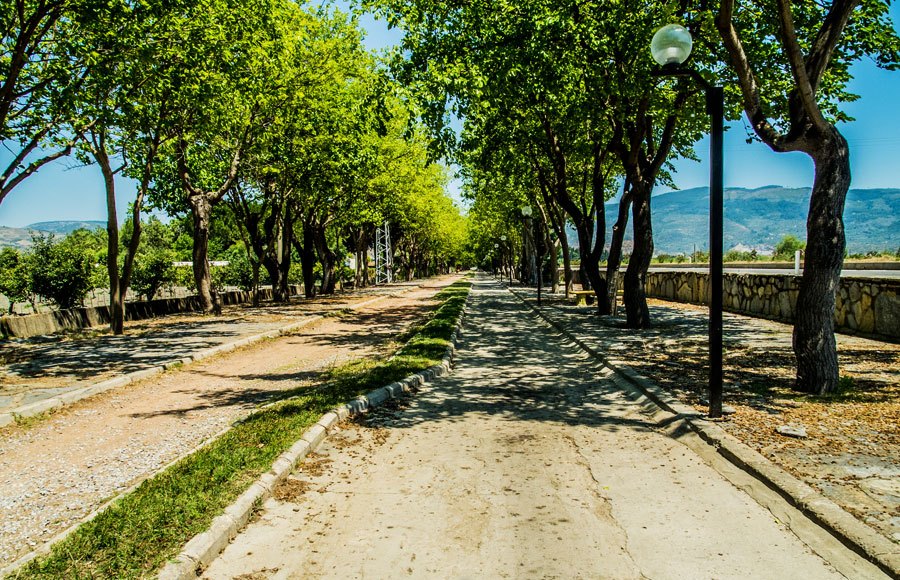
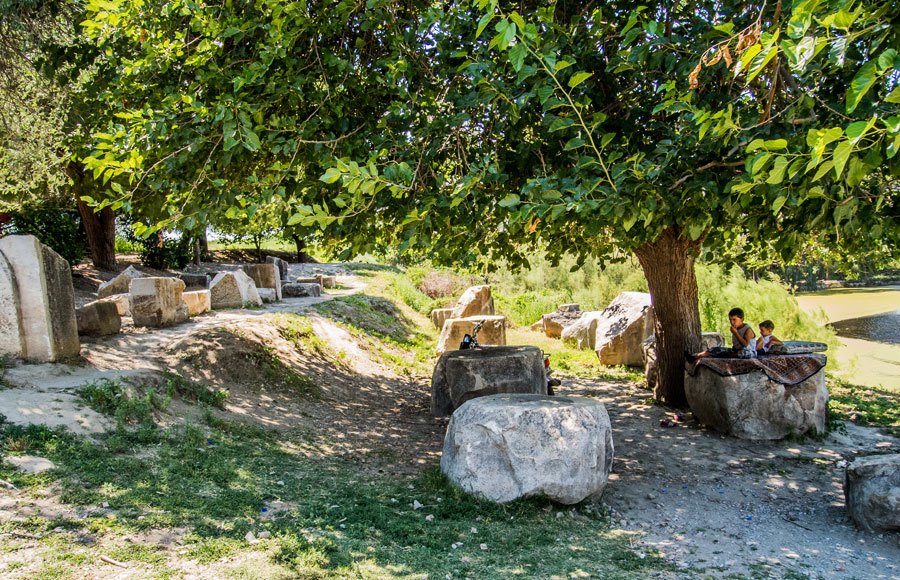
Amusingly, locals come to this walkway for picnics — we happened to see a family spreading out a rug right on one of the paths.
You certainly won’t miss the Temple of Artemis, as there is a signpost on the road:
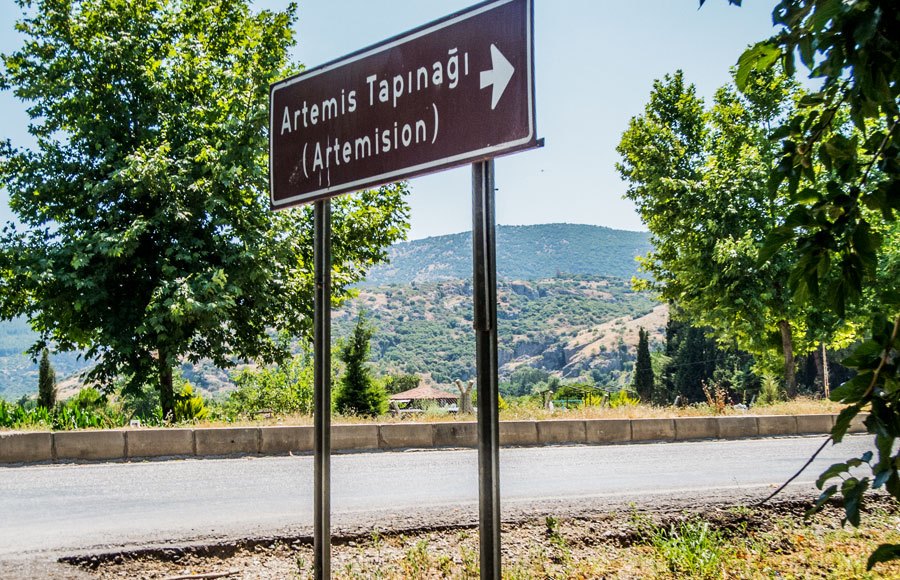
3. What remains of the Temple of Artemis
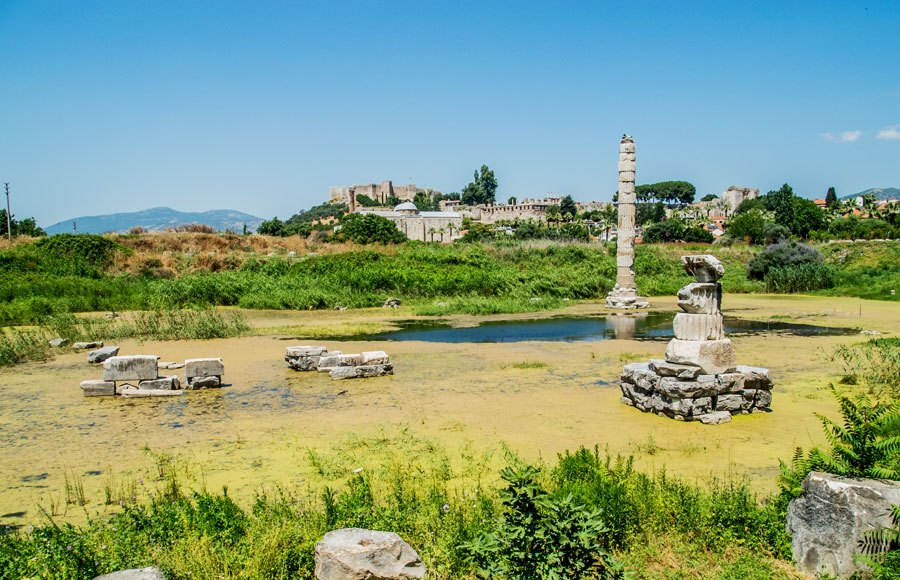
We turned off at the sign, hoping to see one of the Seven Wonders of the World — and this is what we saw:
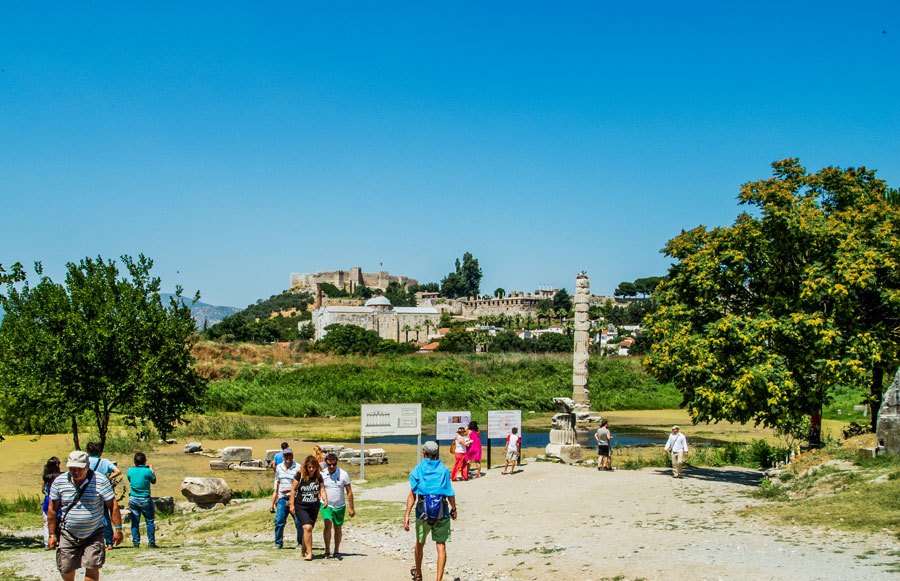
Crowds of tourists and a huge swamp with fragments of the temple. Just why not all the stones ended up underwater is a mystery:
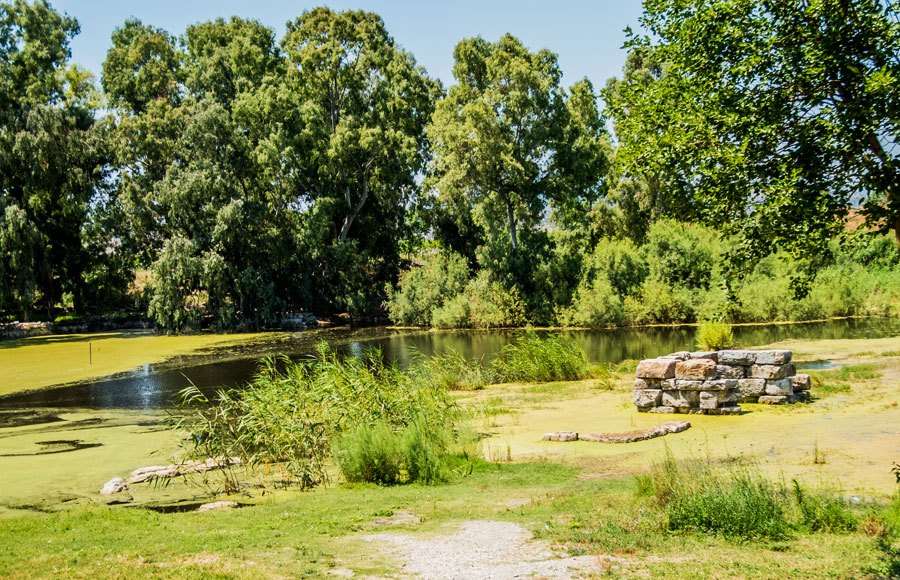
Plan of the Temple of Artemis:
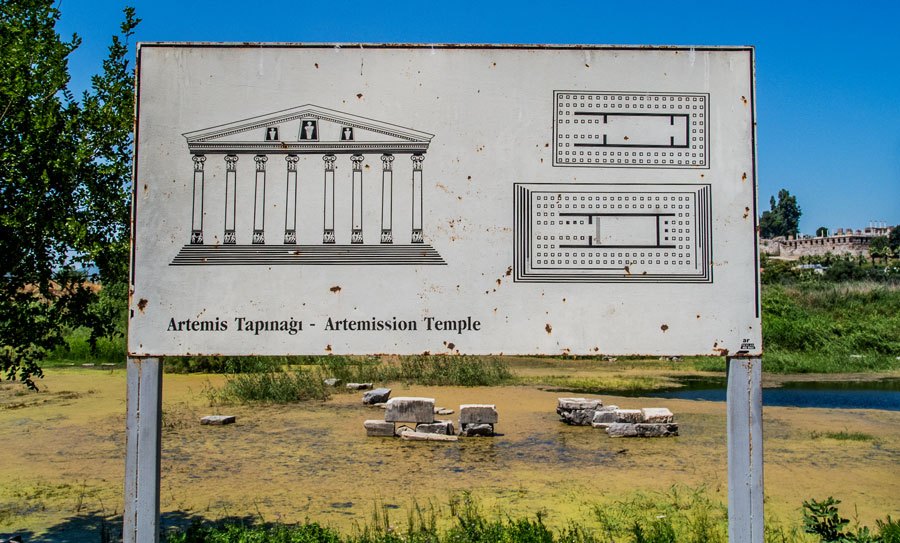
This is all that remains of one of the Seven Wonders of the World — incidentally, the original columns were 4 metres taller than this reconstructed column:
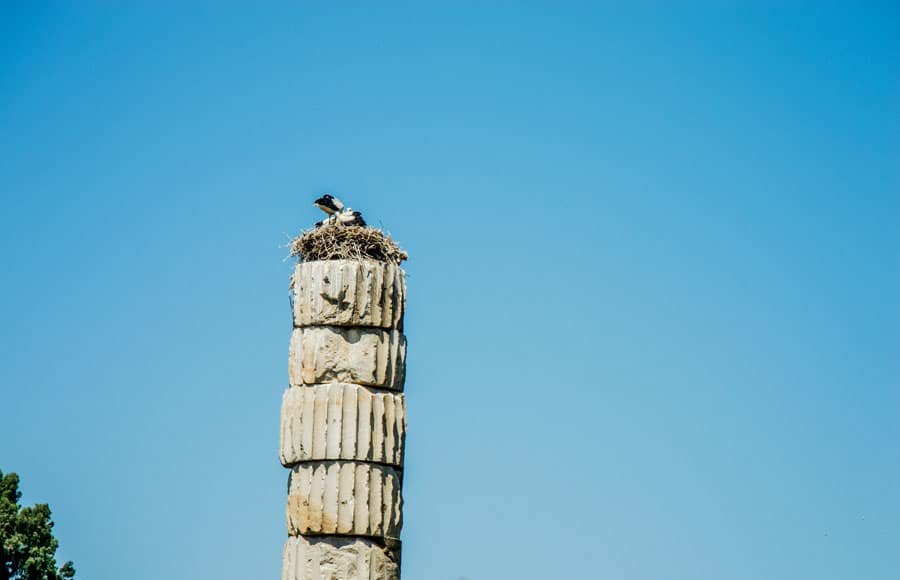
And storks now live on the very top of the column:
Some of the fragments lie on dry land:
There is also a small souvenir stall on the adjacent grounds, as at any tourist site.
Frequently asked questions about the Temple of Artemis
Has the Temple of Artemis survived to the present day?
No. The site of the temple is a waterlogged plot scattered with fragments, with a single column standing over it. The column did not survive intact: it was assembled from drums dating from different periods in 1973, and the original columns were about 4 metres taller. The photos in this article show exactly what any visitor sees today.
What is the Temple of Artemis at Ephesus famous for?
It is one of the Seven Wonders of the ancient world. The temple took almost 120 years to build; the later one is believed to have had around 127 columns roughly 18 metres high, the earlier one 106. Sources give the dimensions differently — from 110–115 × 55 metres up to 130 × 68 — because several temples stood on this spot.
What was the temple used for?
Its direct purpose was as a sanctuary of Artemis, the patron goddess of Ephesus; the cult on this site is older than the Greeks — before them, a goddess called the “Great Mother” was worshipped here. But the temple also functioned as a financial centre: money was stored in it and deals were concluded, so the sanctuary effectively acted as a bank.
In which city is the Temple of Artemis?
By the town of Selçuk in Turkey’s İzmir province, right at the entrance to the town, a couple of kilometres from ancient Ephesus. The site is unguarded: no ticket offices, no opening hours — you can simply walk in. You can walk there from Ephesus along a pavement with a cycle path.
Why does so little remain of the wonder of the world?
The temple disappeared gradually. In 356 BC it was set on fire by Herostratus, and since important structures were wooden, only the columns of the building were left. The sanctuary was rebuilt, plundered by the Goths in AD 263, then quarried for stone over the centuries, while seasonal flooding covered the remains with silt.
4. Conclusions and impressions
Of course, I had expected a little more from the ancient temple than just a swamp and a single column. I hadn’t read anything about the temple beforehand — I simply wanted to see what was left of it. Making a special trip there is probably not worth it: there is nothing much to look at, unless you just want to soak up the place and imagine how it all once looked.
But after visiting Ephesus it is well worth calling in — the temple is very close by, and the road is scenic and convenient. It is amazing, all the same, how much stronger nature is than anything built by human hands: just as there was a swamp here before the temple was built, so almost a couple of thousand years later there is still a swamp here.
Incidentally, the temple housed an unusual statue of Artemis which, of course, no longer exists. Even so, in one of the hidden corners of Ephesus we found a copy of that very statue (completely atypical of Ancient Greek sculpture).
Have you ever seen any of the wonders of the world, or been to the places where they once stood? What does it feel like to stand somewhere so significant, with such a rich history? Which ones are worth visiting? Share in the comments!