Istanbul has two huge airports: Istanbul Airport (IST) and Sabiha Gökçen. Atatürk Airport was closed to scheduled passenger flights on 6 April 2019 — all flights moved to the new Istanbul Airport (IST), and the old airfield now handles only business aviation. Sabiha Gökçen, the second airport, sits on the Asian side of the city far from the centre, yet it is very popular with budget travellers.
Its main drawback used to be the awkward location, but that changed on 2 October 2022, when metro line M4 was extended right to the terminal: Kadıköy is now 52 minutes away for 46.20 lira, and at weekends the line runs all night.
Our old verdict — “the only drawback is the awkward location, you have to get there with changes” — is completely out of date. The whole night routine with a taxi to Taksim, necessary because the ferries do not run at night, is simply not needed today. What else has changed:
- on 29 December 2025 the rebuilt Terminal 1 opened — the airport now has two terminals connected by a 240-metre bridge;
- Wi-Fi has been free and unlimited since 26 March 2025;
- the bus ticket to Taksim used to cost 14 lira; now it is 485 lira — 34 times more expensive;
- direct buses now run from the airport to Sultanahmet and Beyazıt Square.
All prices below follow the official Istanbul tariff in force since 20 July 2026.
1. General information
Sabiha Gökçen Airport is considered mainly a low-cost-carrier airport, but standard airlines fly from here too.
Airlines operating from the airport:
- Pegasus Airlines
- Turkish Airlines
- AJet (the name of the former AnadoluJet since 2024)
- SunExpress
- AirArabia
- Air Baltic
- Air Serbia
- transavia
- flynas
- Corendon
- Qatar Airways
- Wizz Air
- Azerbaijan Airlines
- Flydubai
The airport’s official website: sabihagokcen.aero
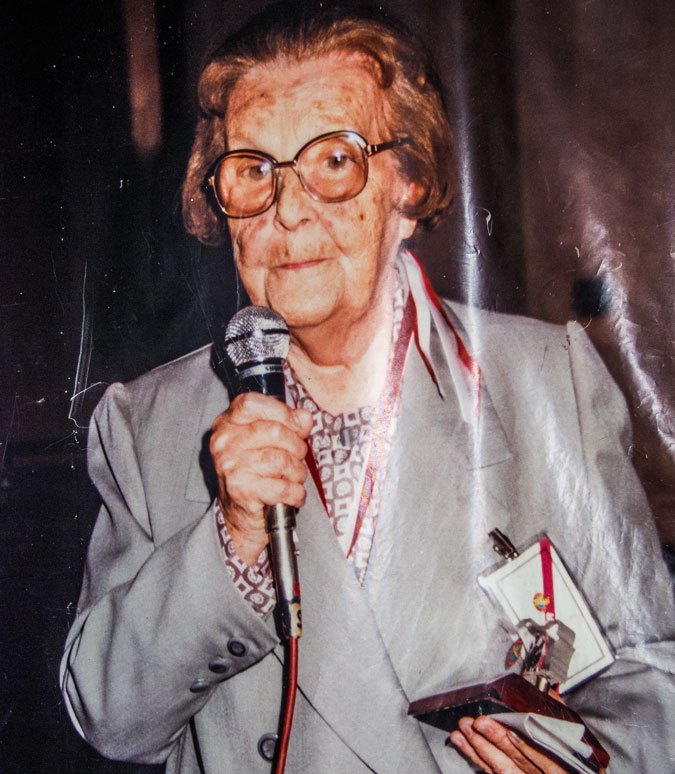
Sabiha Gokcen International Airport is named after Sabiha Gökçen, the adopted daughter of President Atatürk, who became the first female military pilot in the history of Turkey.
A photo of Sabiha Gökçen from the airport’s archive:
2. Where Sabiha Gökçen Airport is and how to get there
The airport is in the Asian part of the city, quite far from the main tourist sights, so it is a little harder to reach than Atatürk Airport.
Its location on the map:
We stayed in Istanbul in the Sultanahmet district, not far from Eminönü Square. During the day, getting from Eminönü to Sabiha Gökçen Airport is fairly simple — first take a ferry to the Kadıköy pier, then the Havataş bus straight to the airport — but at night or early in the morning it is much harder.
The main reason is that ferries do not run at night: they only start at 07:00, so there is no way to reach Kadıköy.
This problem has now been solved, and solved elegantly. On 2 October 2022 the M4 metro line was extended to the airport with the opening of Sabiha Gökçen Havalimanı station. On weekdays the metro runs from 06:00 to midnight, and on Friday and Saturday nights the M4 runs all night (a double fare applies after 00:30; the normal fare returns at 05:30).
The whole line from Kadıköy to the airport is 33.5 kilometres with 23 stops and takes about 52 minutes. It costs an ordinary city fare — 46.20 lira with an İstanbulkart; there is no special airport surcharge. For comparison, paying by bank card directly at the turnstile costs 65 lira — 40% more.
How to reach the European side. There is no direct metro link to the Marmaray: ride the M4 to Ayrılık Çeşmesi station (about 48–50 minutes) and change there to the Marmaray, which runs under the Bosphorus. Judging by the tariff document, no transfer discount applies on the Marmaray, so budget 46.20 plus 37.40 lira. The second option is to ride the M4 to its Kadıköy terminus and continue by ferry.
What did we do?
We could, of course, have booked a transfer or taken a taxi all the way to the airport, but we decided to save money.
Early in the morning — before dawn, at 04:00 — we walked to Eminönü, where a taxi can always be found. The taxi took us to Taksim Square for 20 lira, and there we boarded the Havataş bus running directly to the airport.
If you know another, cheaper and simpler way to get from Eminönü to Sabiha Gökçen Airport at night, tell us in the comments!
There is no need to buy bus tickets in advance: buses leave as they fill up and run every 30 minutes. The first bus from Taksim now departs at 03:00 and the last at 22:00. In the opposite direction, from the airport to Taksim, buses run from 06:30 to 01:30, with additional services between 01:00 and 04:00 for passengers of delayed flights. And here is our bus, which we boarded straight away:
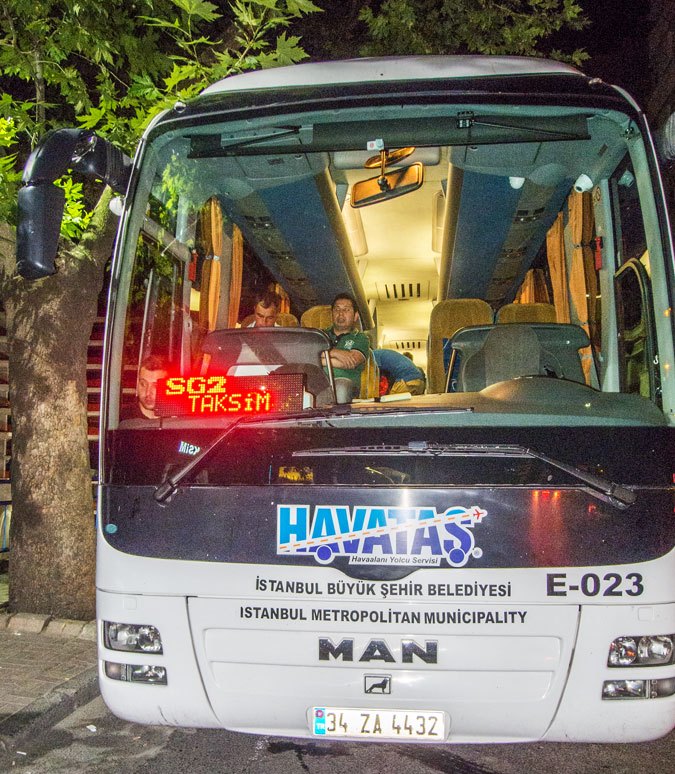
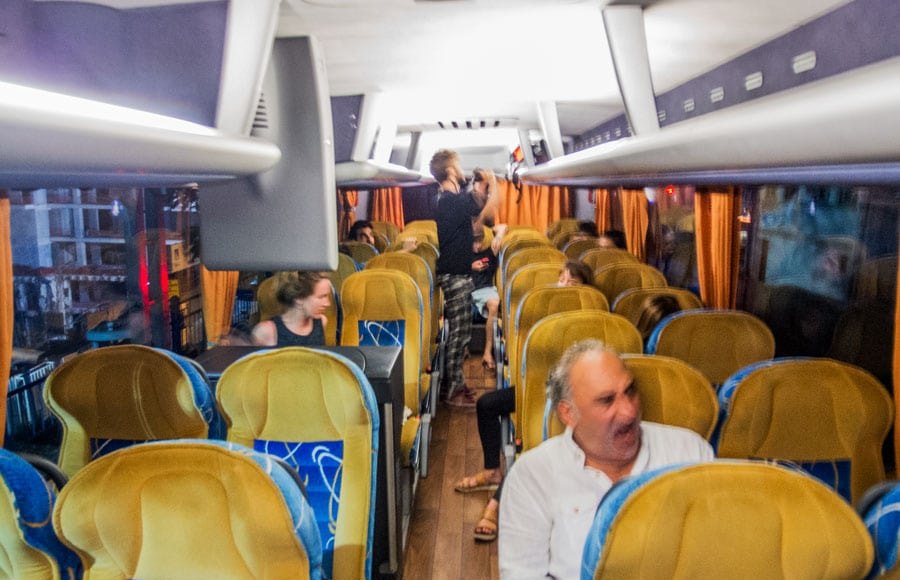
The bus is comfortable, and you can have a nap on the way:
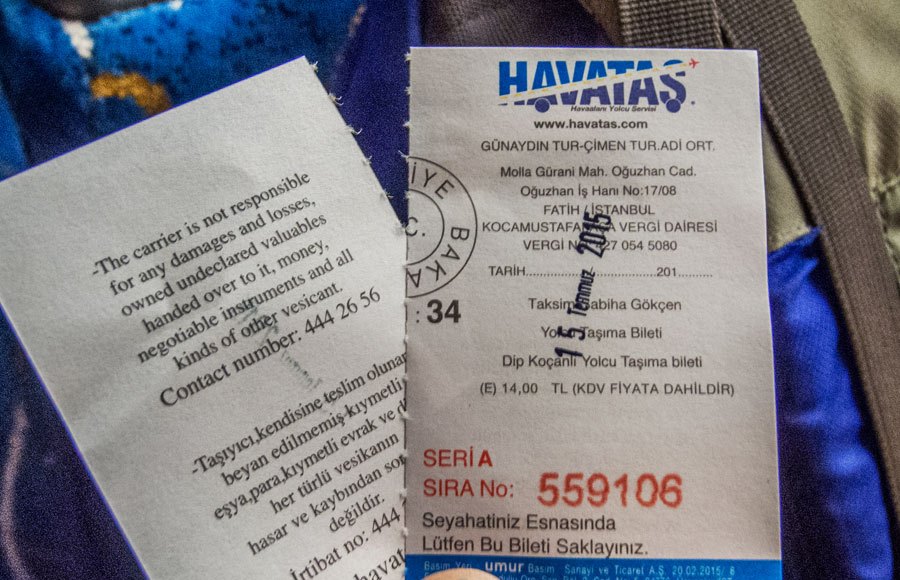
Tickets from Taksim to the airport cost 14 lira per person back then and could be bought on the bus. Here are our tickets — and a vivid illustration of what has happened to Turkish prices: today the same ticket costs 485 lira, almost 35 times more. The bus to Kadıköy costs 300 lira and takes about an hour. The bus is called HAVABUS — the same carrier that operated as “Havataş” at the time of our visit; there are no concessions or transfer discounts on these lines.
Be careful with prices found online: at least three different sets of HAVABUS fares circulate — 485/300, 440/270 and 367/227 lira. The first pair is correct: we cross-checked the carrier’s website against the official city tariff and they matched.
At 04:48 the bus set off. Travel times quoted online vary widely — it all depends on the time of day and the traffic. We hit a small jam at the entrance to the Asian side of Istanbul, stood in it briefly and reached the airport in 45 minutes. In total we spent 48 lira for the two of us; a taxi would have cost at least €50.
3. Finding your way around the airport
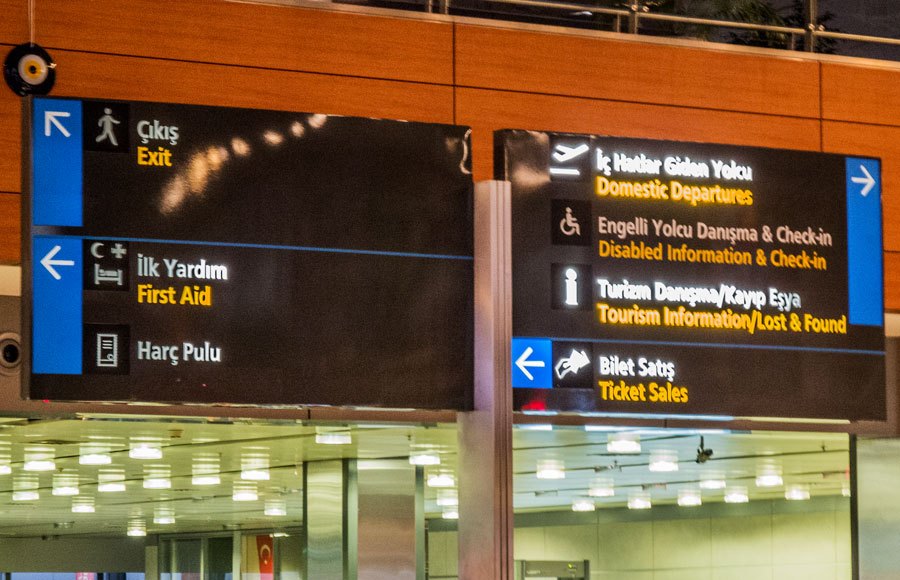
It would be hard to get lost in the airport — there are wayfinding signs everywhere:
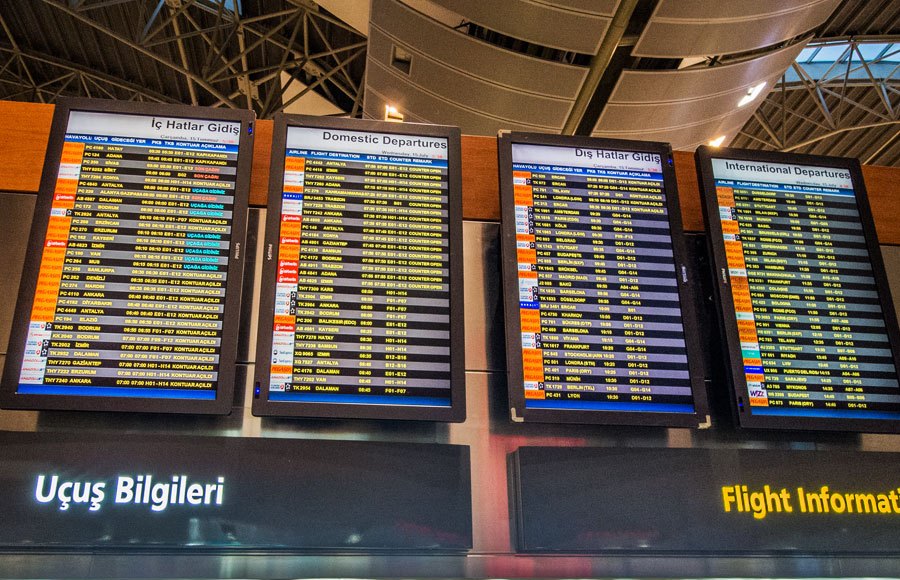
Right after entering the terminal you can check the status of your flight on the departures board:
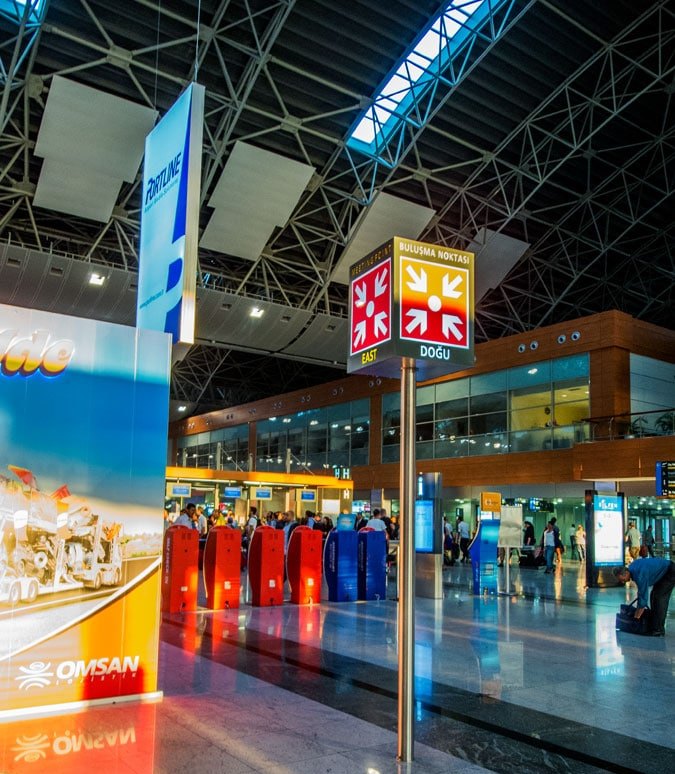
If you do manage to lose each other, the airport has two meeting points where you can find one another. One is in the eastern part of the airport:
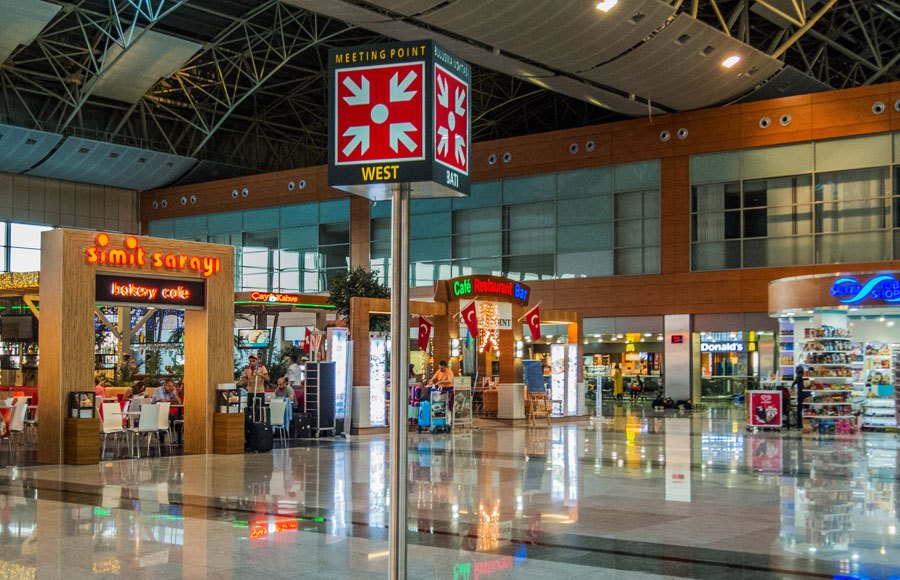
The second is in the western part:
3.1. Airport layout
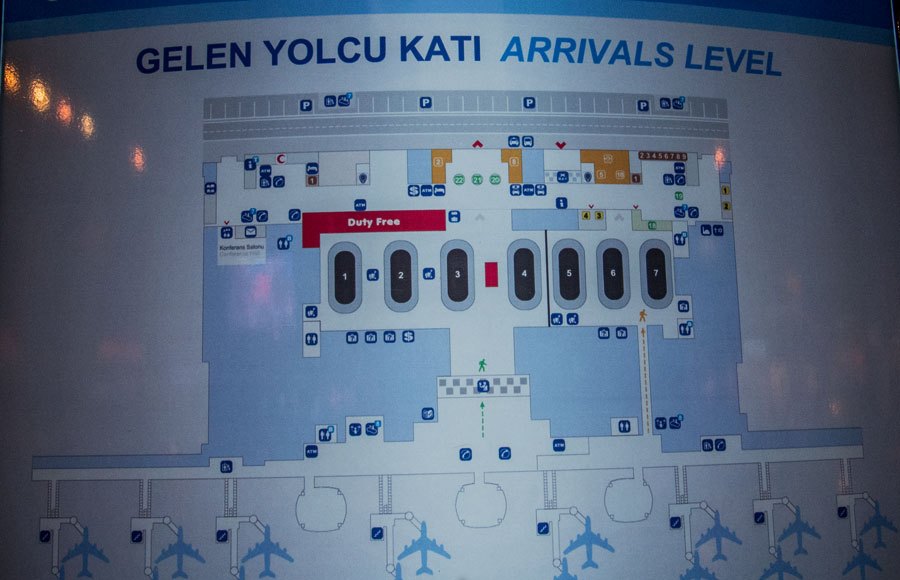
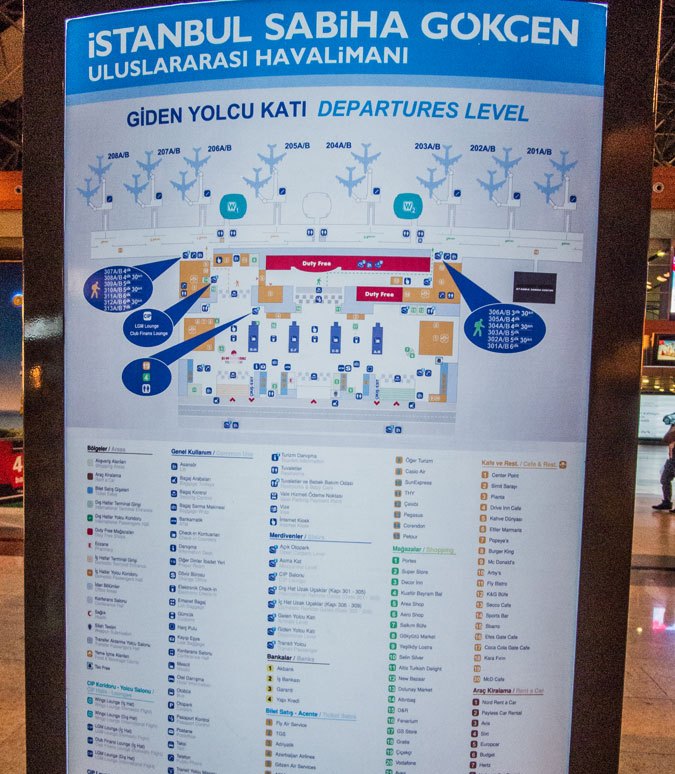
Passenger arrivals are on floor 1 and departures on floor 2.
Map of the arrivals area:
Map of the departures area:
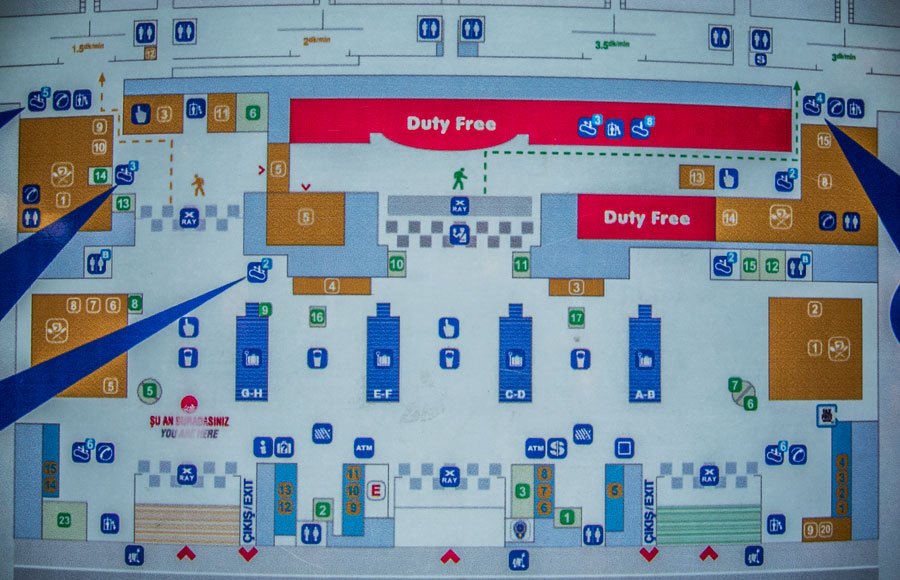
Floor 2 of the airport:
4. Check-in and boarding
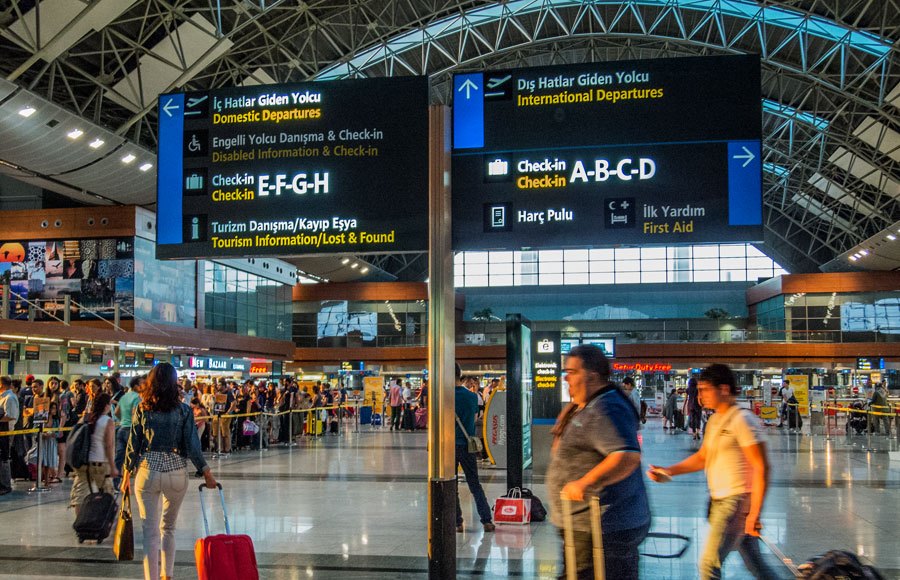
The departures area is on floor 2: domestic flights in the left wing, international flights in the right wing.
We pass through baggage screening:
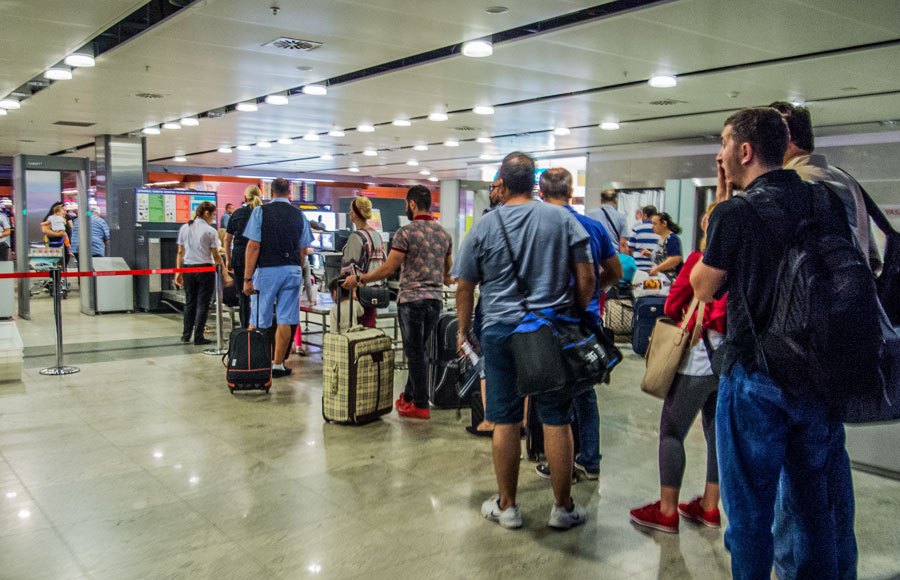
Then we check in for our flight. On the departures board, each flight has the letter of its check-in row next to it. Signs help you work out where your row is:
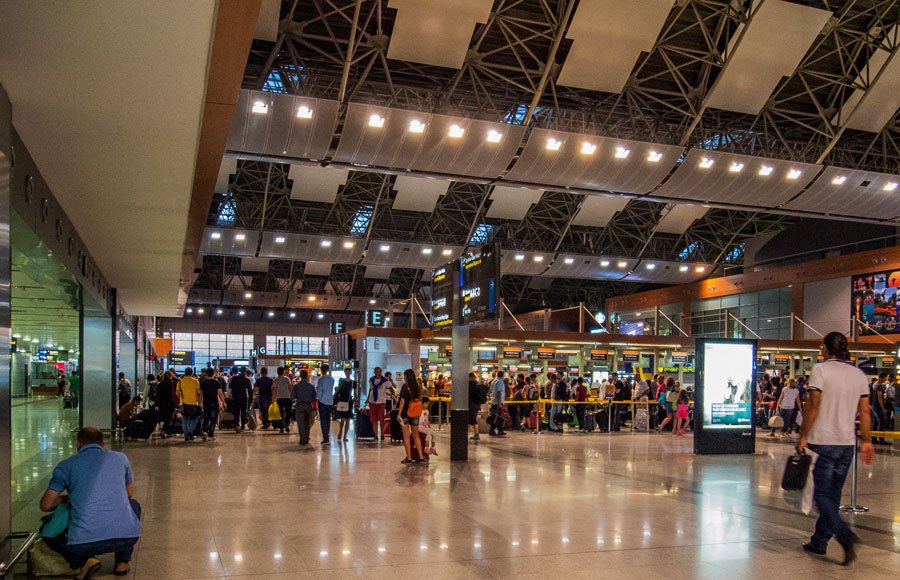
The letters are shown on columns, just like at Bangkok’s Suvarnabhumi Airport:
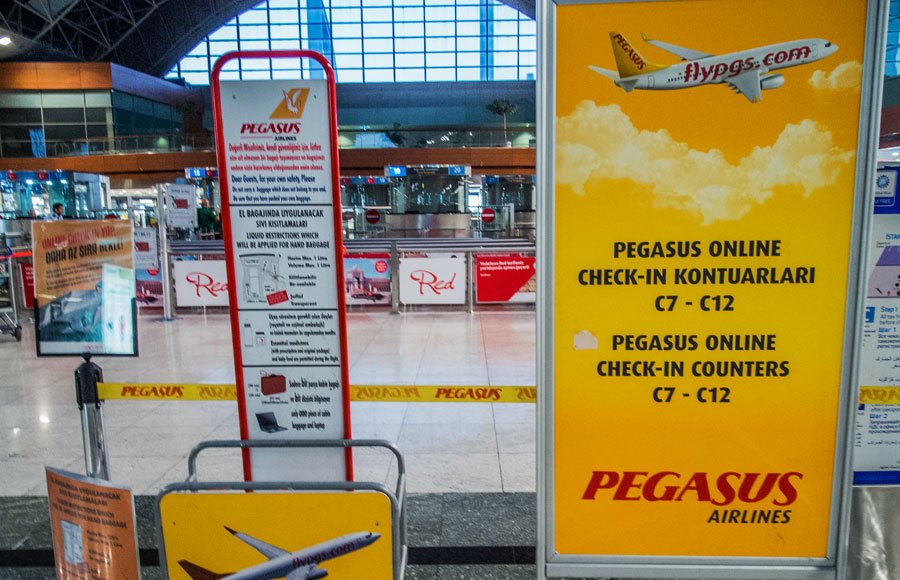
Each airline has its own requirements for the size and weight of baggage and hand luggage. Not far from the check-in desks you can check whether your cabin bag meets the rules of the low-cost carrier Pegasus: if the bag fits into the gauge and is not overweight, it will be accepted as hand luggage — otherwise you will have to check it in.
The gauge with scales for checking:
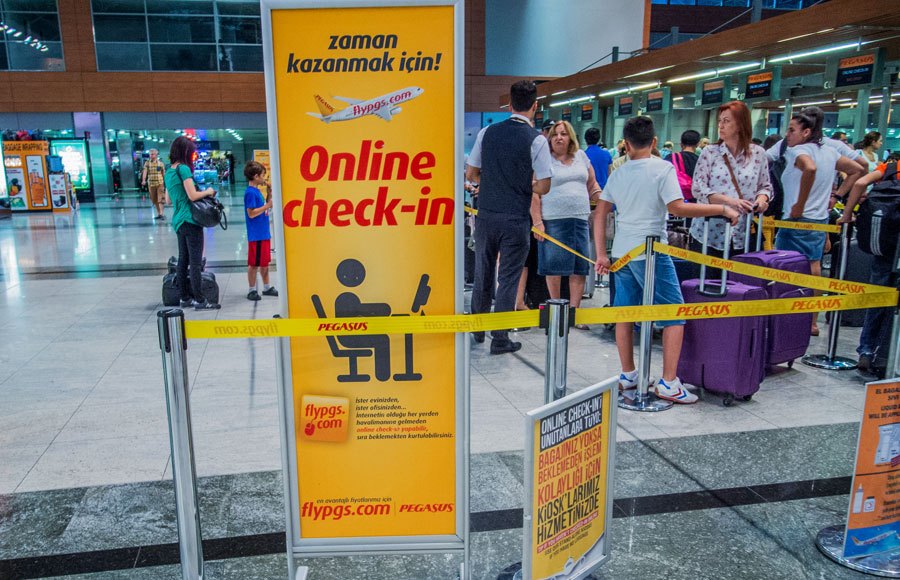
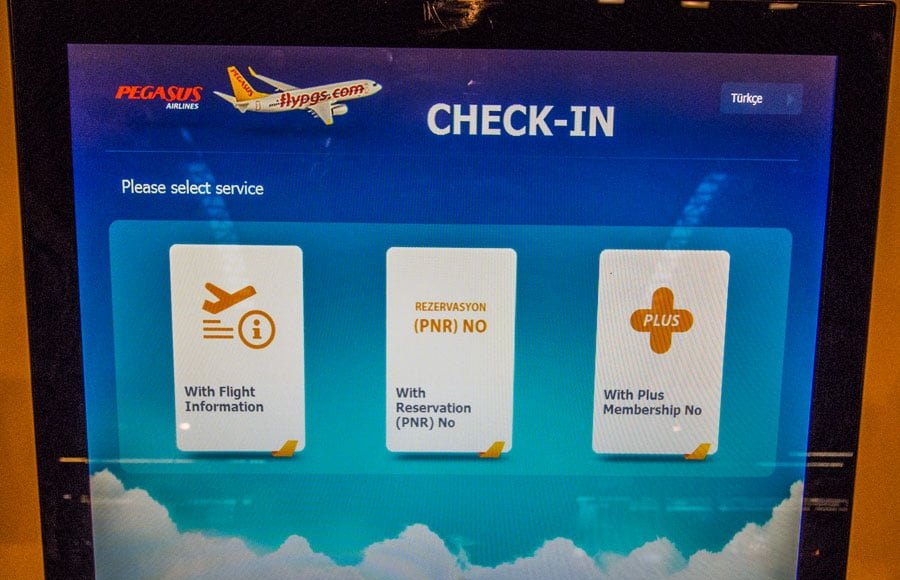
For some airlines’ flights you can check in online and avoid standing in a huge queue — at Pegasus, for example:
Fortunately, there are self-service online check-in kiosks right in the airport, so if you did not manage to check in from home (or your hotel), you can do it at the airport:
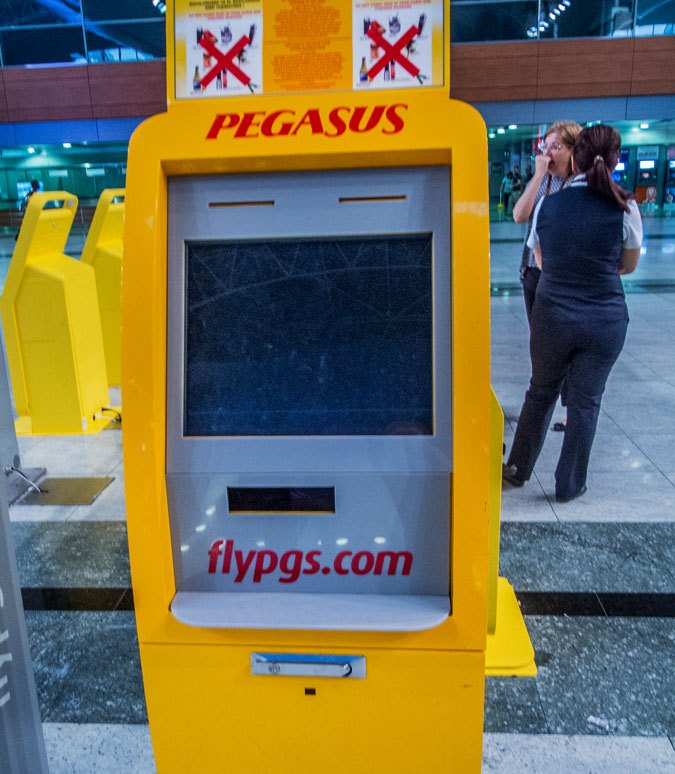
Online check-in for a Pegasus flight at Sabiha Gökçen Airport:
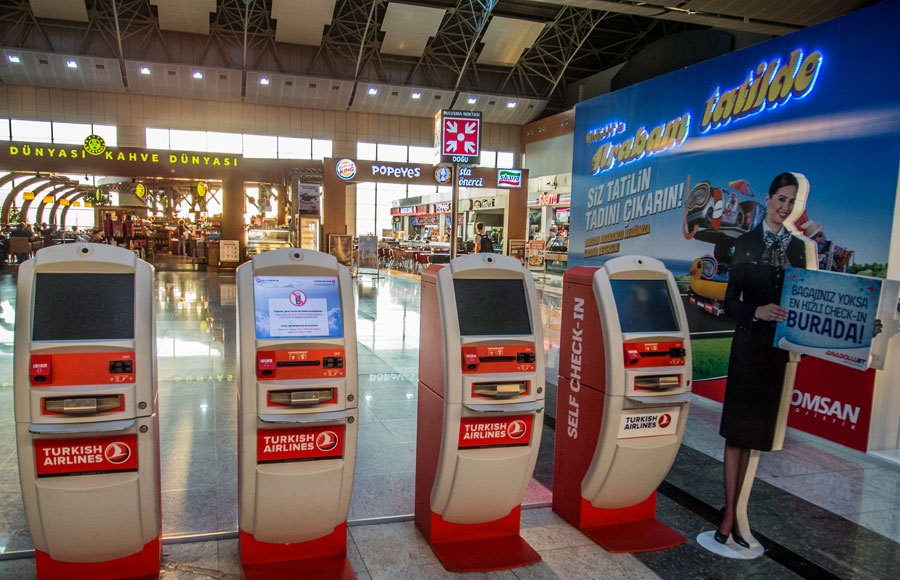
Turkish Airlines has similar kiosks — you can check in there and avoid the long queue at the check-in desk:
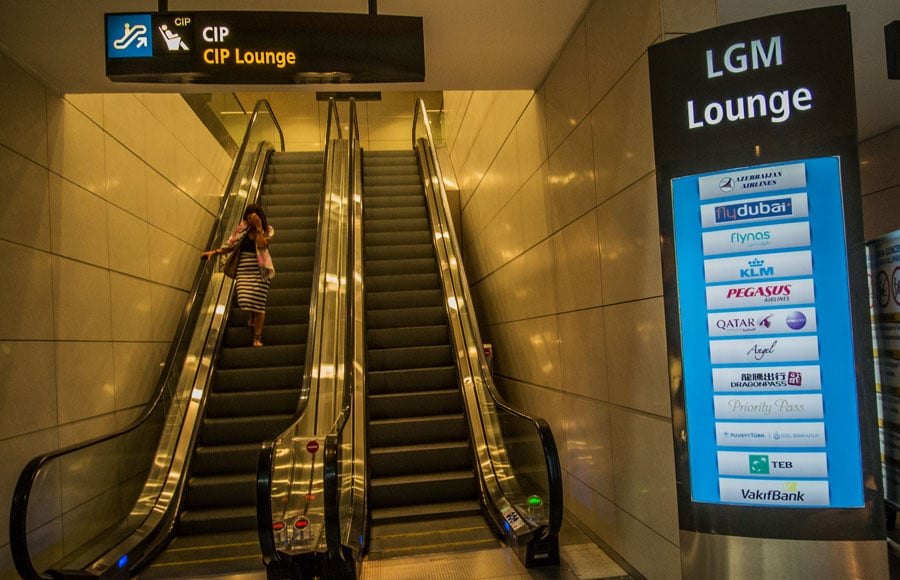
Some airlines offer their business-class passengers a separate waiting area — the CIP Lounge:
The departures area is split over two levels: boarding gates and duty-free shops on the first level, cafés on the second:
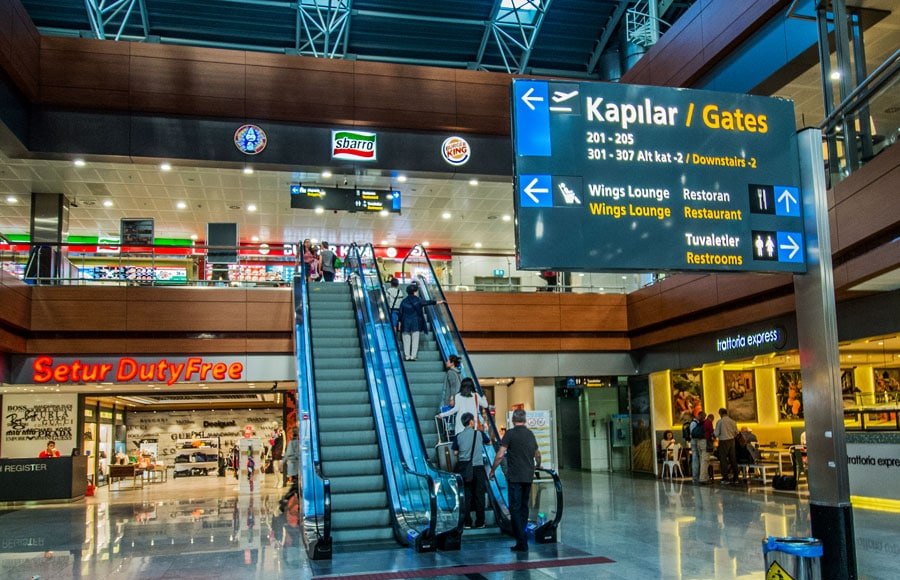
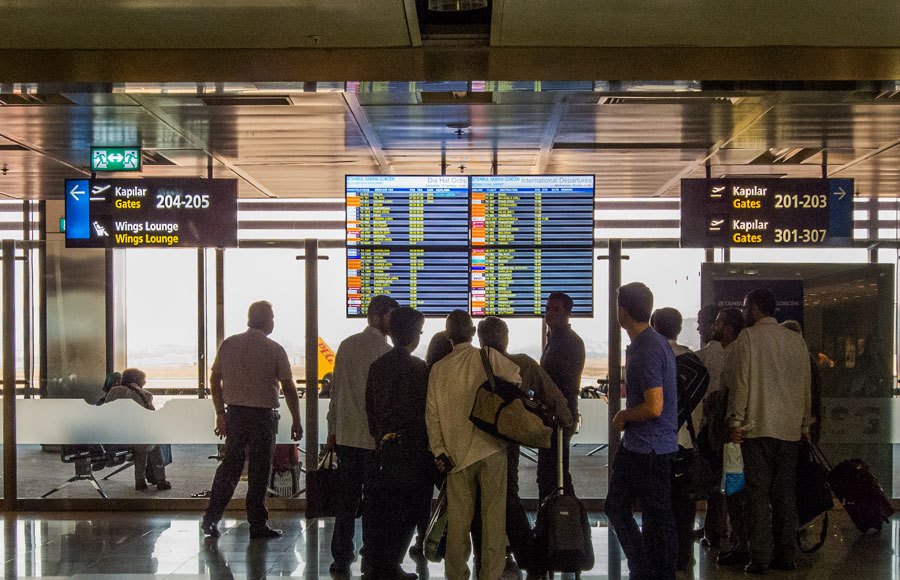
Just before the gates you can check your flight status one more time:
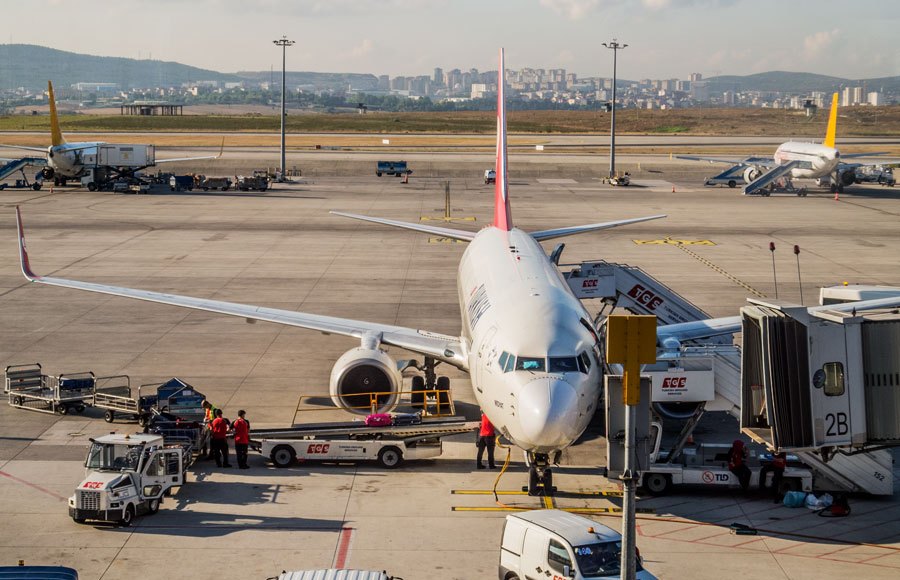
I love watching the runway!
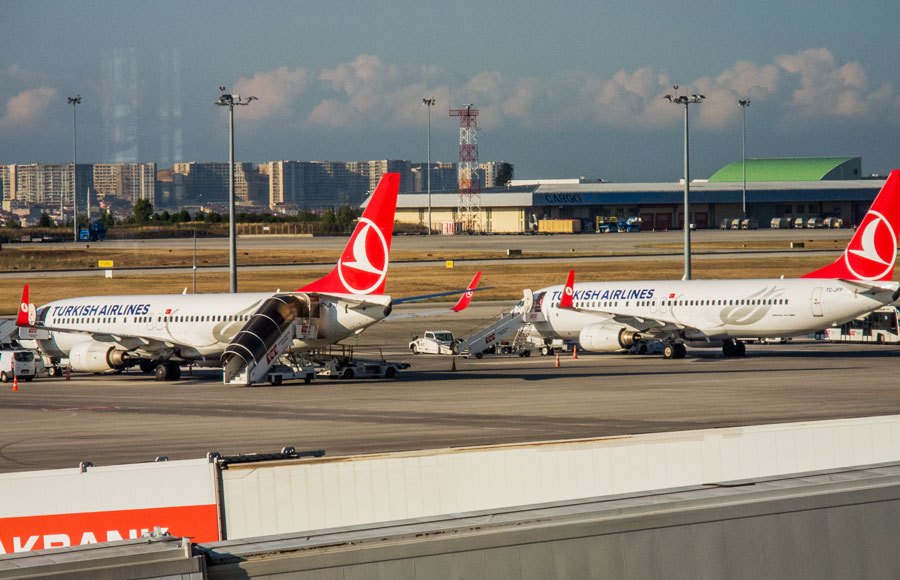
The bright-red tails of Turkish Airlines:
A Pegasus plane — we flew to Belgrade on one of these:
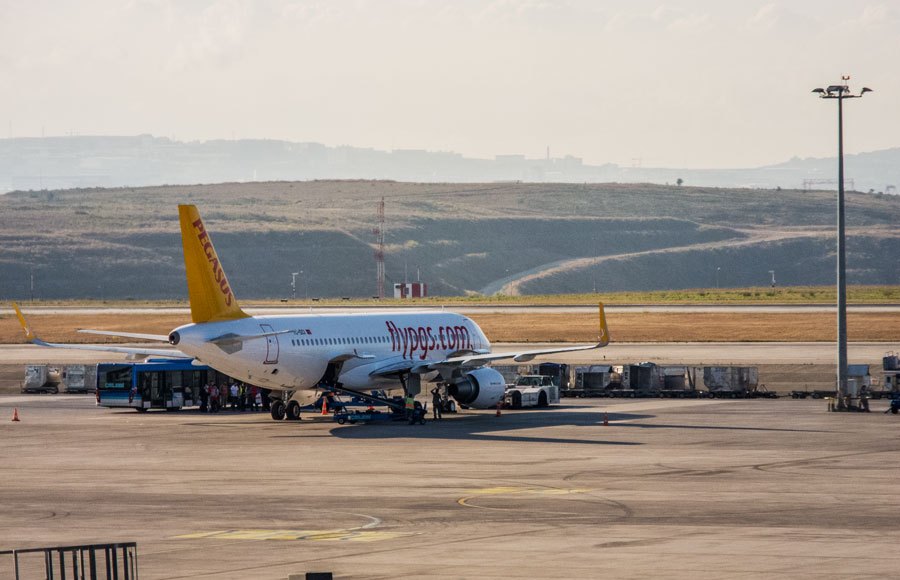
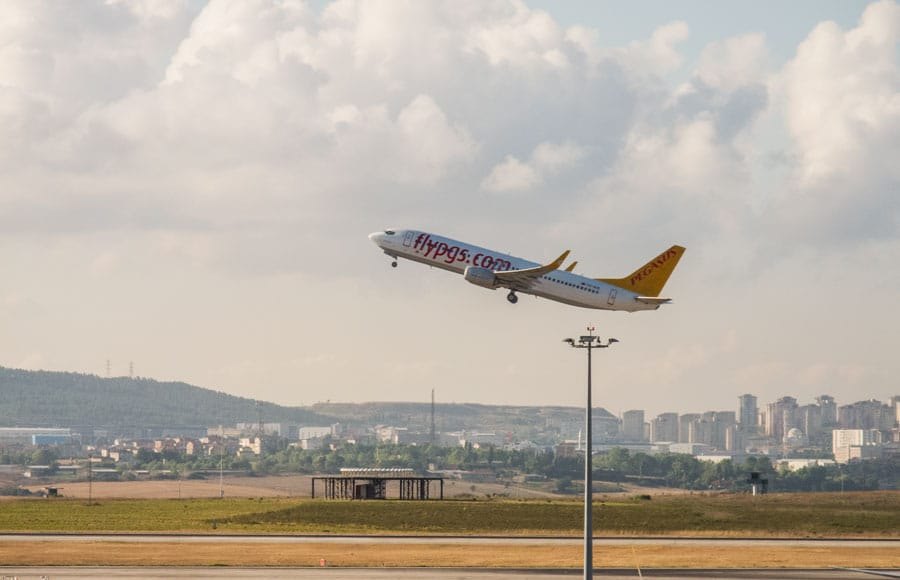
And off it goes:
5. Getting from the airport to the city
Right in the airport we spotted a very handy map showing how to get from Sabiha Gökçen to different districts of the city:
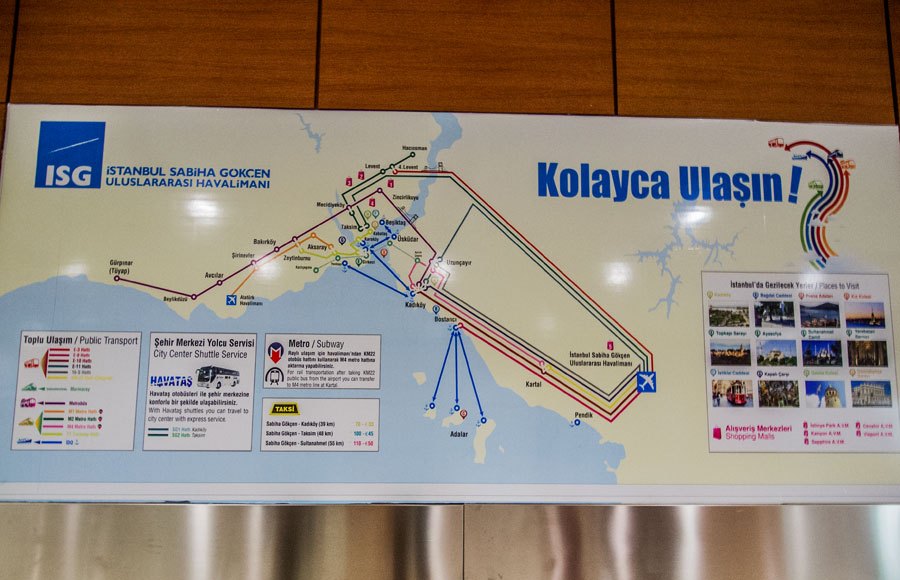
The main options:
- by metro M4 — this option did not exist in 2015, and today it is the best one: 52 minutes and 46.20 lira to Kadıköy, the station is right at the airport, and at weekends the metro runs all night;
- by HAVABUS express bus (the former “Havataş”) — to Taksim Square for 485 lira or to the Kadıköy pier for 300. Board opposite the exit on the arrivals level; the buses are white;
- straight to Sultanahmet or Beyazıt — the official city tariff now includes airport routes HVL-13 (to Sultanahmet, 405 lira) and HVL-14 (to Beyazıt Square, 420 lira). Previously the only direct bus from Sabiha Gökçen to the European side ran to Taksim. To be honest: we found these routes in the tariff table but could not confirm the timetable or the boarding point — check on the spot. There is also an inter-airport route, HVL-10 to IST, for 530 lira;
- by city bus E-10 (runs to Kadıköy) — it still operates, but it is now the worst option: 87 minutes against 52 by metro and twice the price, 92.40 lira against 46.20. The E-11 express, which also ran to Kadıköy, has been withdrawn, and the metro is recommended instead;
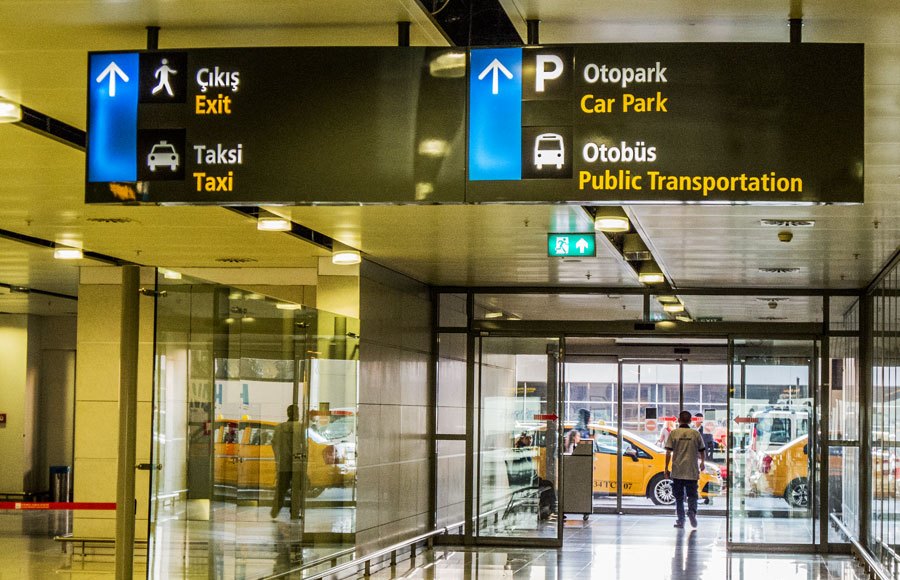
- by taxi — at the time of our visit a ride to Sultanahmet cost about €50. The Istanbul tariff from 20 July 2026: flag fall 71.94 lira, 47.92 lira per kilometre, minimum fare 230 lira; there is no night tariff in the city, and bridge tolls are charged on top of the meter. You can find a bus or a taxi right outside the airport exit:
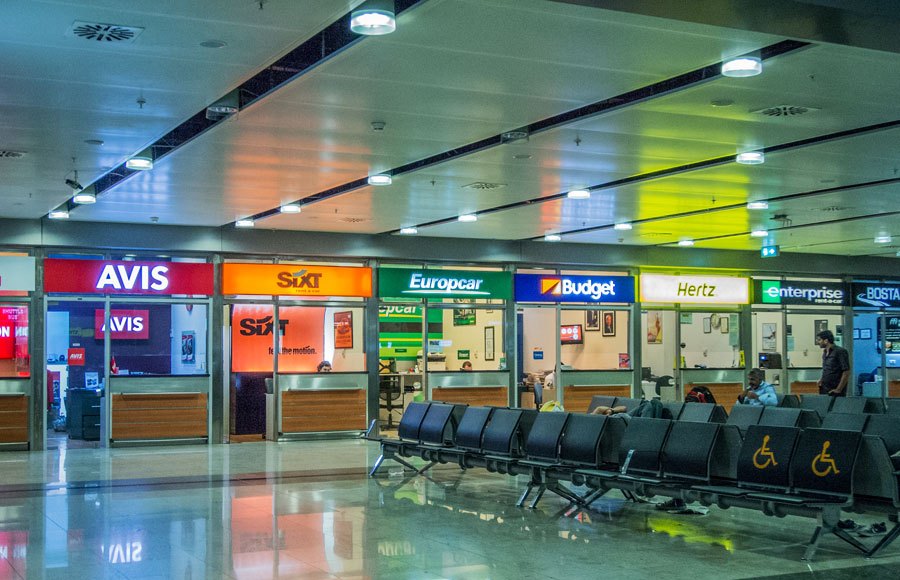
- by hire car. You can rent a car right at the airport or book in advance through the Localrent service. The airport has car-rental desks from a wide range of companies:
- by booking a private transfer online. If you want to save time at the airport, you can book an individual transfer in advance.
6. Where to eat
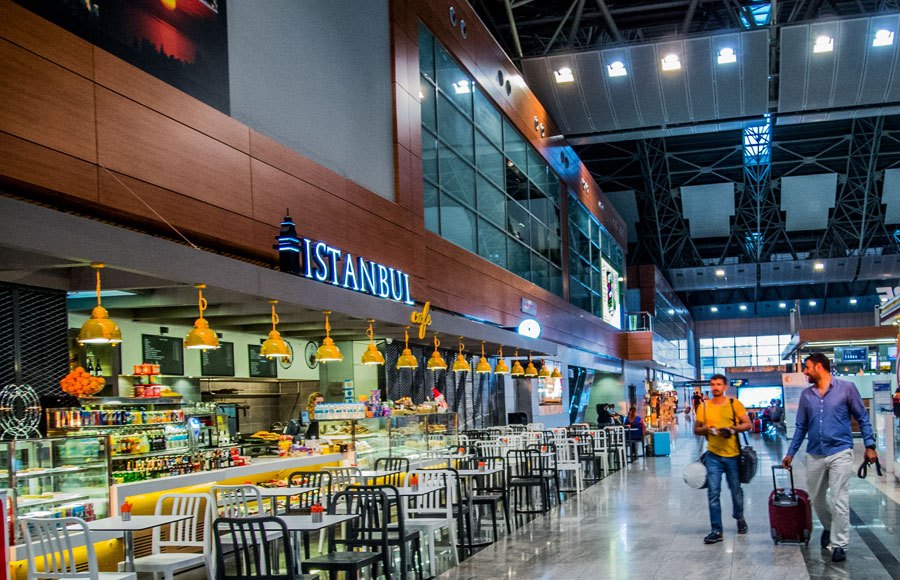
It is very hard to go hungry in Turkey, even at the airport. The numerous cafés serve all kinds of food — Turkish, European, fast food and quite healthy options.
One of the cafés:
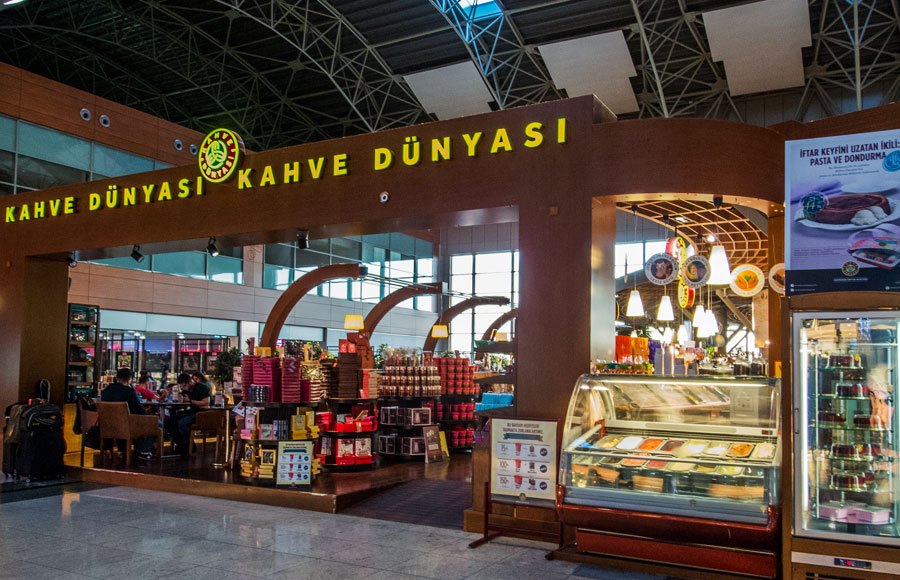
Another café, combined with a shop selling souvenirs and Turkish sweets:
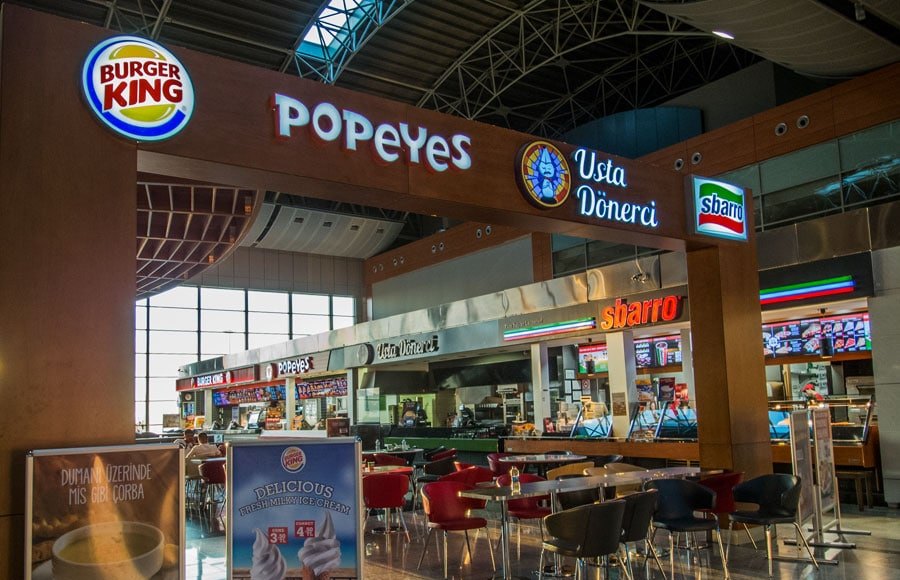
Fast-food chains:
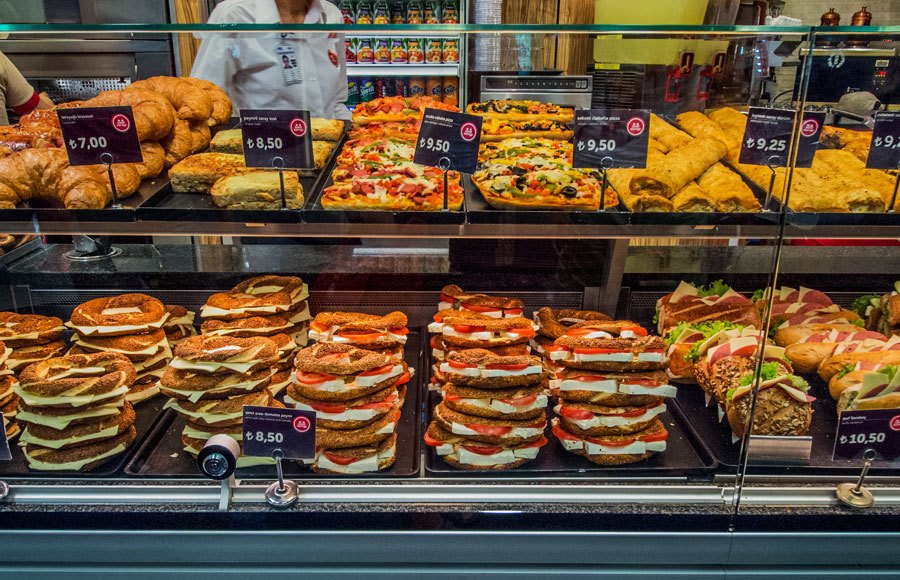
Delicious pastries:
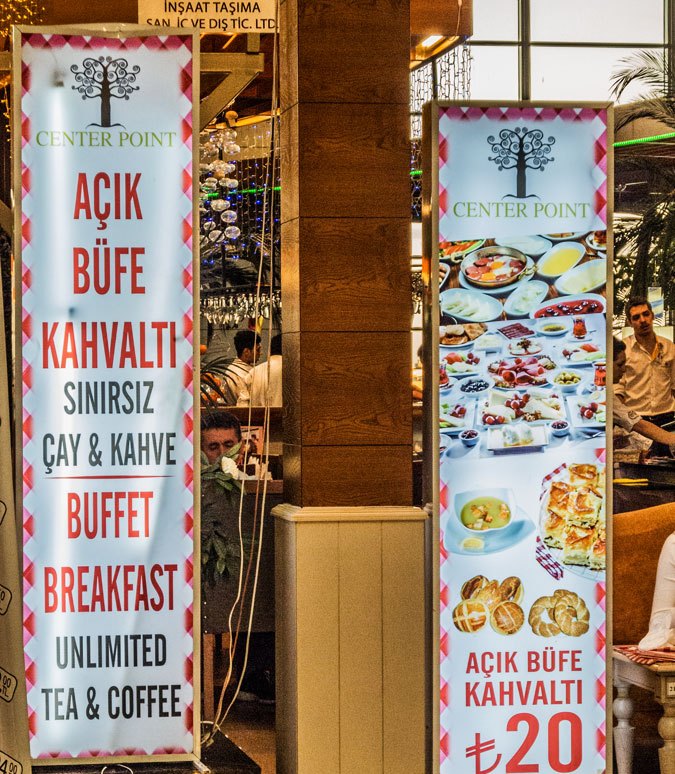
Huge Turkish breakfasts for 20 lira — though here we have to disappoint you: that was the 2015 price, and there are of course no breakfasts at that price in the airport today.
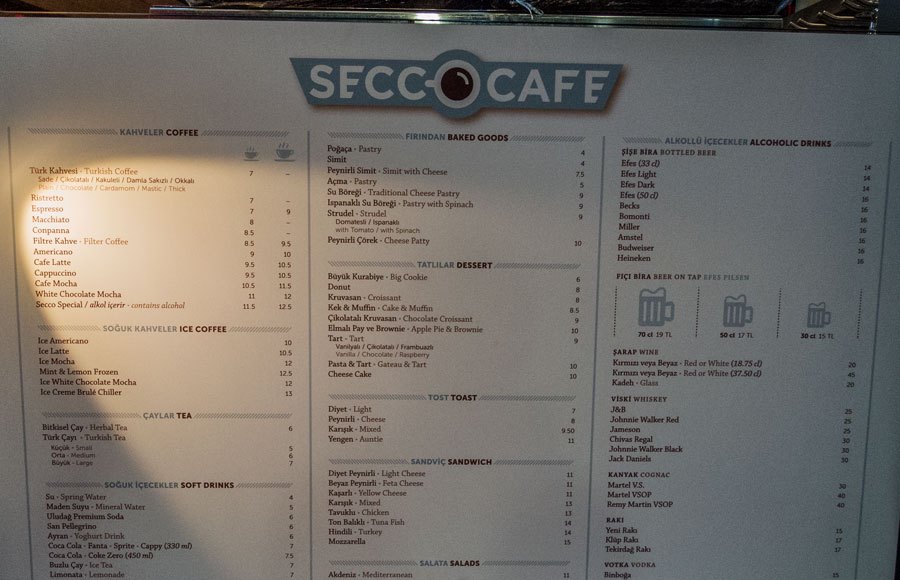
The menu of one of the coffee shops:
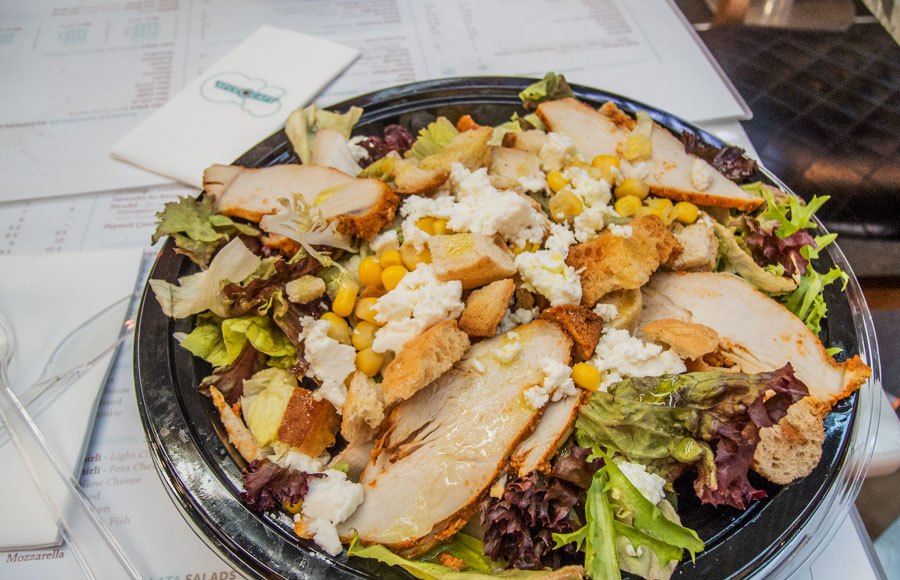
European dishes, though, are cooked with a Turkish twist here. This, for example, is what a Caesar salad that cost 13 lira looked like:
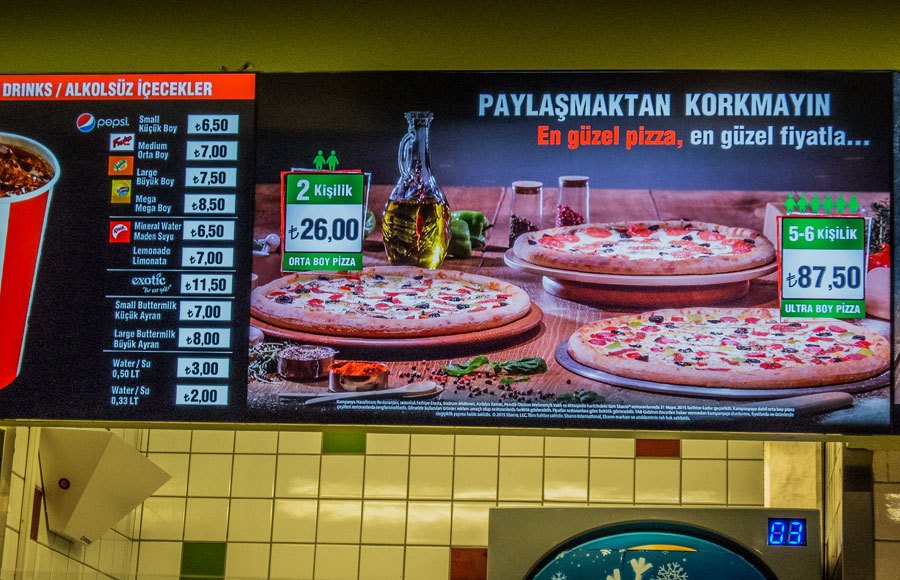
And now to the point: Sabiha Gökçen is one of the most expensive airports in the world for food. That is a recurring theme of reviews in recent years. We could not find exact prices for September 2026 and will not invent any, but the ballpark is this: in 2023 a breakfast of “two simits, tea and water” cost 638 lira here, and burgers sold for 405–580 lira against 100–210 lira at the same chains outside the airport. In 2024 a receipt for 2,500 lira for a börek with ayran went viral. Coffee at the airport Starbucks costs €8–9.
The practical conclusion: eat before you get to the airport, and inside buy little more than water. And beware of one trap: an article circulating online about sandwiches for €22–32 is about IST airport, not Sabiha Gökçen — do not confuse the two.
You can have pizza too if you really want to, though the prices bite:
7. Other services
What else is there at Sabiha Gökçen Airport? Pretty much everything you would find at other international airports.
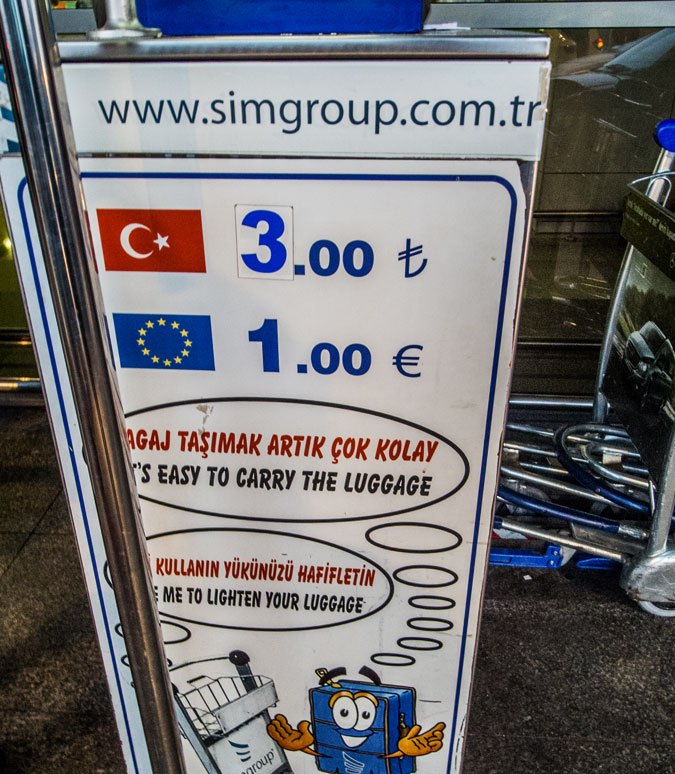
Luggage trolleys, for example — at the time of our visit they cost 3 lira or €1. We were unable to confirm the current price: the official website says only that the terminal has plenty of trolleys and does not specify whether they are paid. It was the same at Antalya Airport:
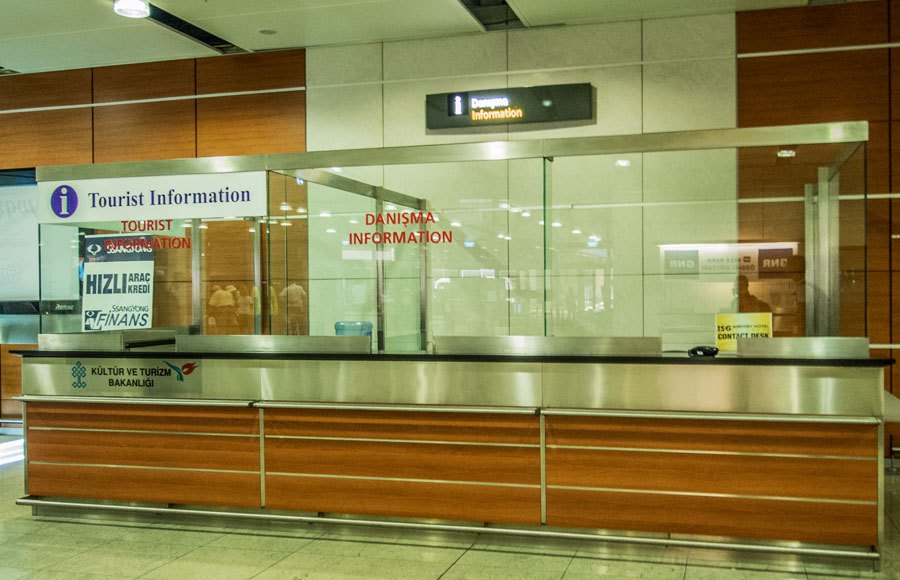
Any questions that come up can be resolved at the information desk:
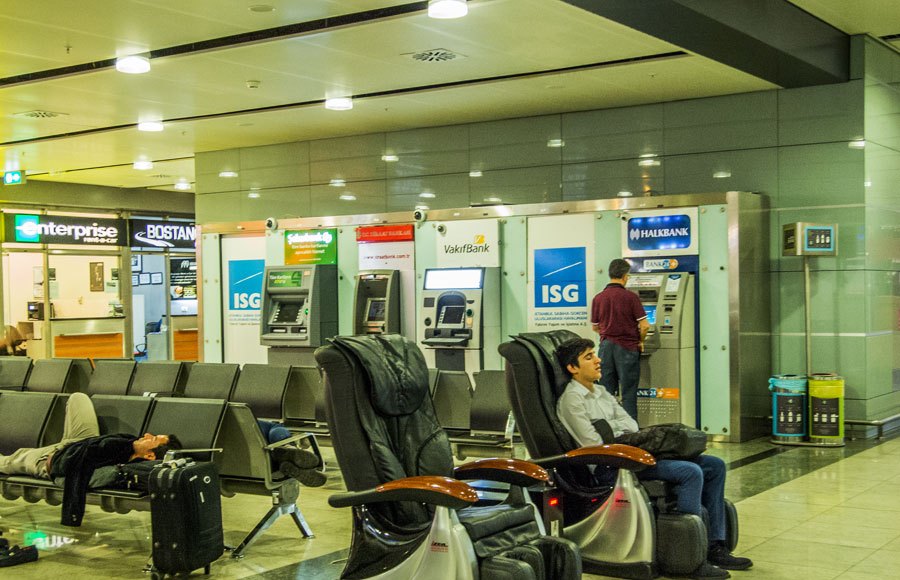
The airport also has massage chairs, which are rather sweet to doze in:
7.1. Luggage wrapping
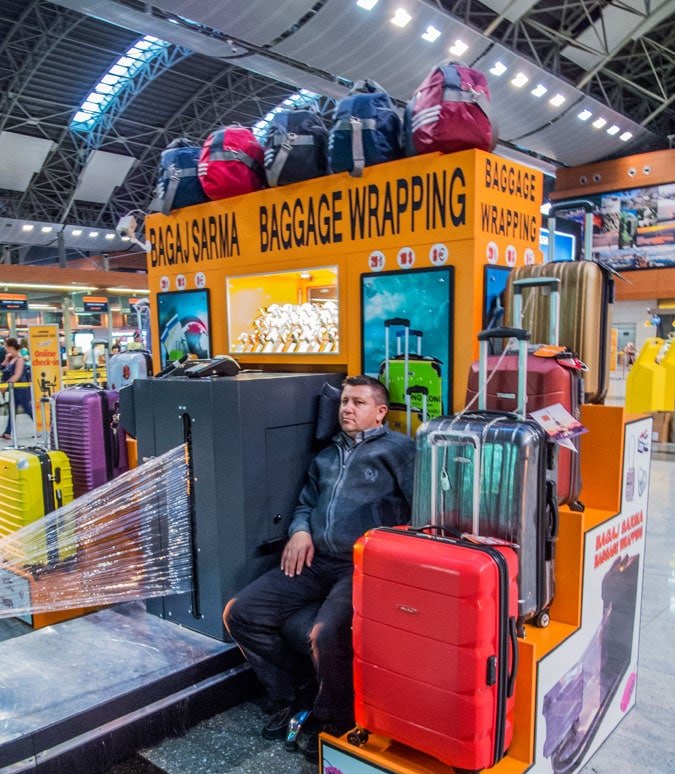
Do you use luggage-wrapping services? We do, most of the time — there is less chance of something spilling out of a bag or of a dishonest airport employee deciding to inspect its contents.
Wrapping one item of luggage costs $10, regardless of size:
7.2. Internet
When we flew, internet access in the airport was paid and connected through special terminals. That is no longer the case. Since 26 March 2025 Wi-Fi at Sabiha Gökçen has been free, with no time limit — the airport officially lifted the previous one-hour cap. The paid kiosks in the photo below are that very old service, now defunct:
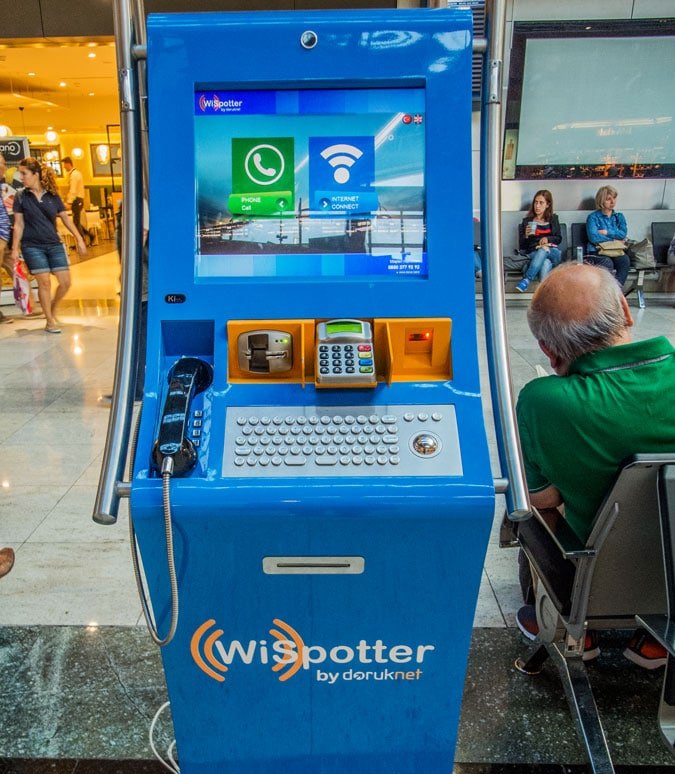
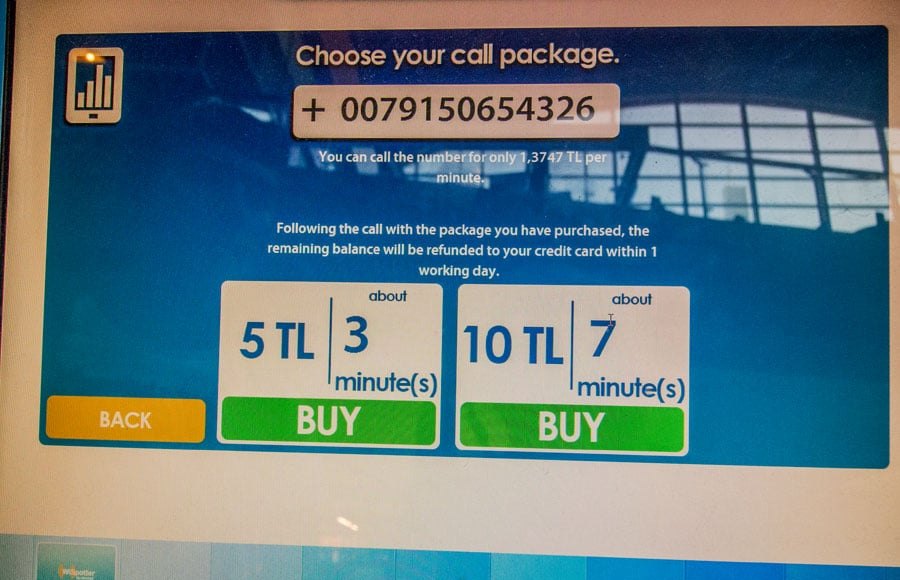
From the same kiosks you could also call anywhere in the world: 3 minutes of conversation cost 5 lira. Today, of course, nobody uses these machines — it is simpler to buy a local SIM card or switch on roaming:
7.3. Left luggage
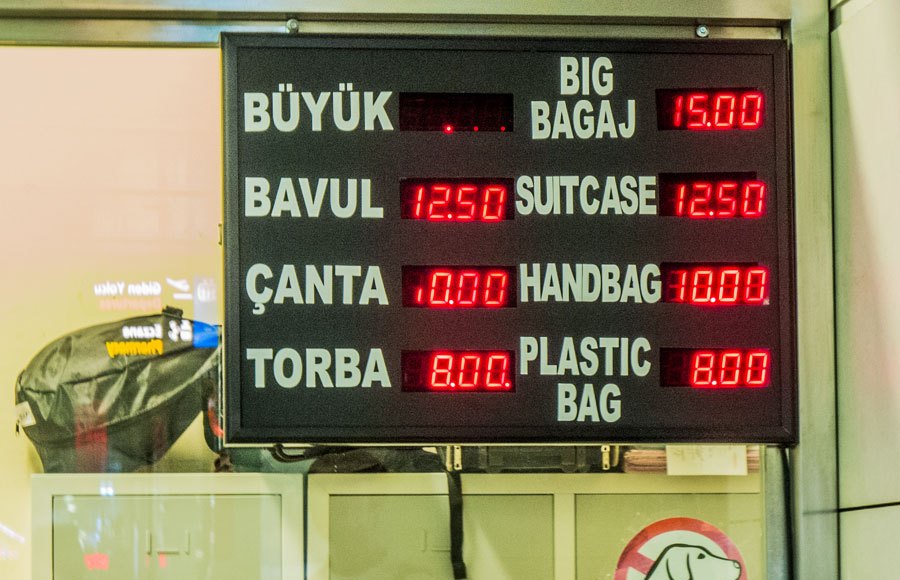
If you have come to Istanbul for a day or two, it may be easier not to drag your bags around but to leave them in the airport’s left-luggage office:
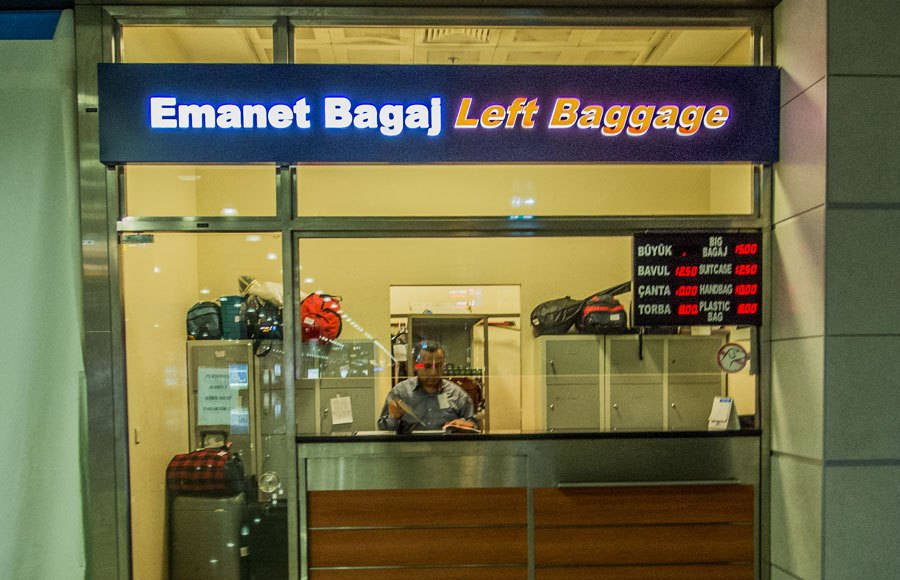
The price depends on the size of the bag: at the time of our visit it was 8–15 lira. The left-luggage office is still there and works around the clock, on the international arrivals level; the operator is Store&Go. Payment is per day, but the official website publishes no figures, and third-party sources differ twofold: some quote 230–445 lira per day depending on size, others 150–250. The latter are most likely prices of private left-luggage services nearby rather than the airport’s own. Incidentally, if you come across the claim that “there is no left luggage at Sabiha Gökçen”, that is not true — the official website confirms the service:
7.4. ATMs and currency exchange
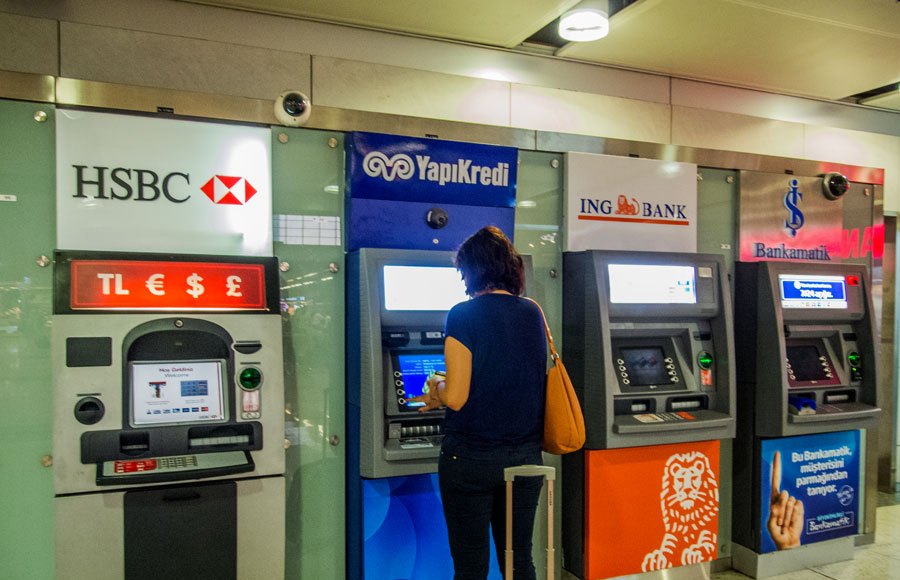
On arrival you can withdraw cash at one of the ATMs; they dispense lira, euros, US dollars and pounds sterling:
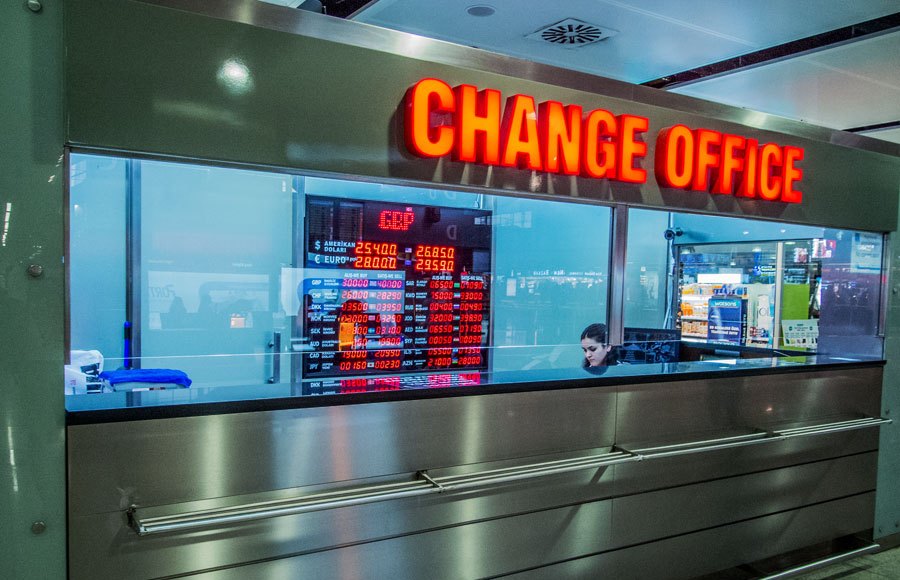
You can also change cash at a currency-exchange office, though the rate at the airport is not favourable:
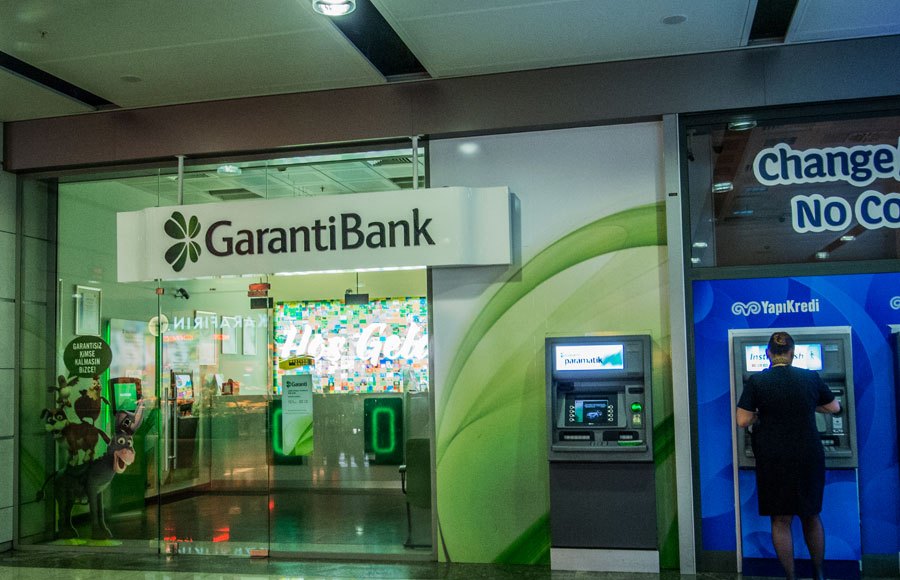
There is even a full bank branch:
7.5. Shops
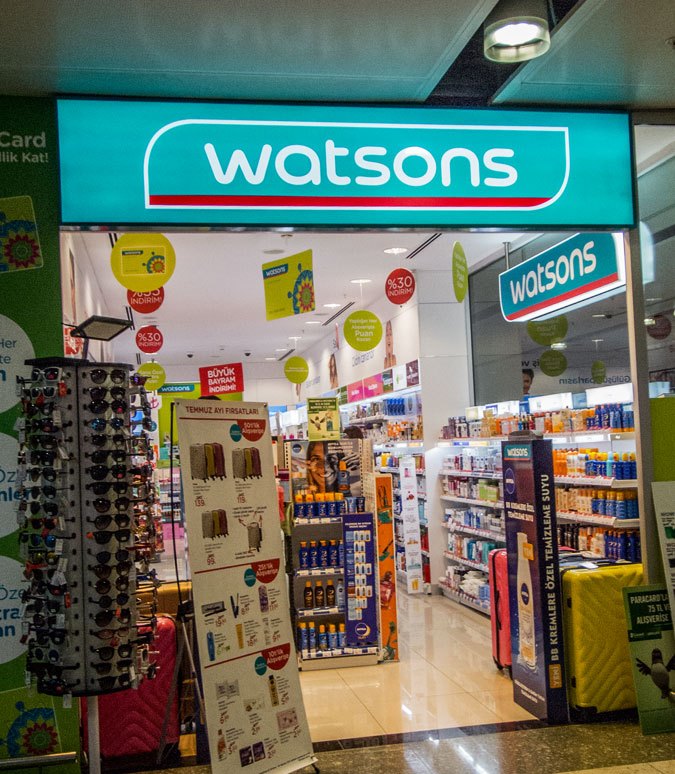
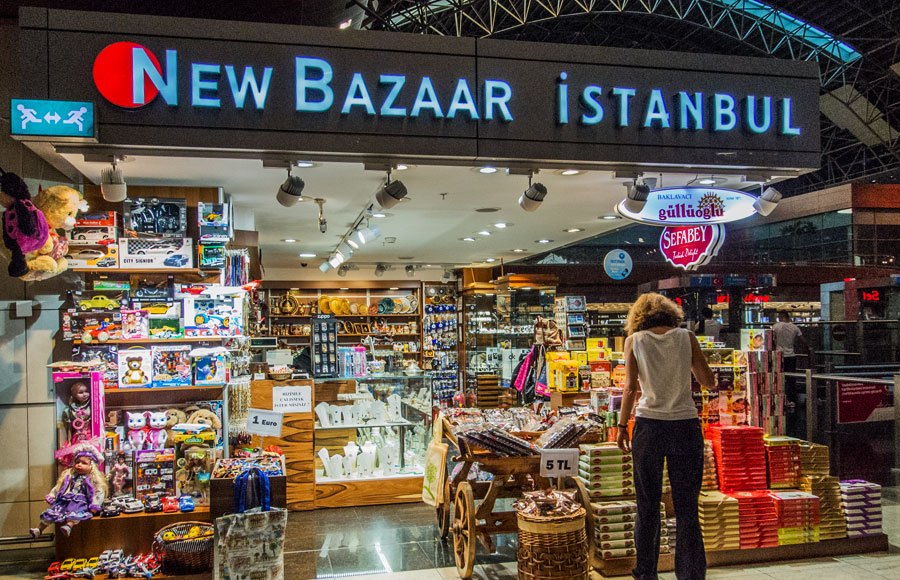
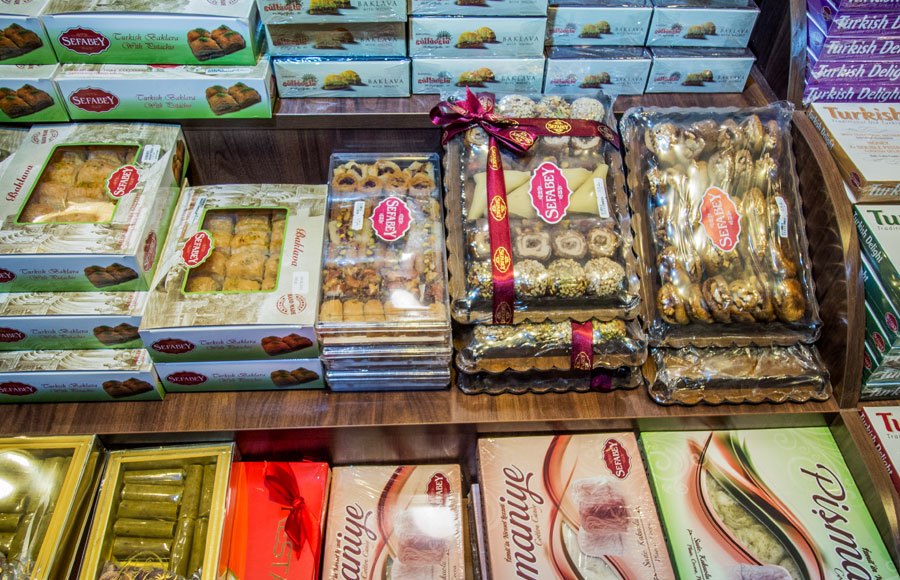
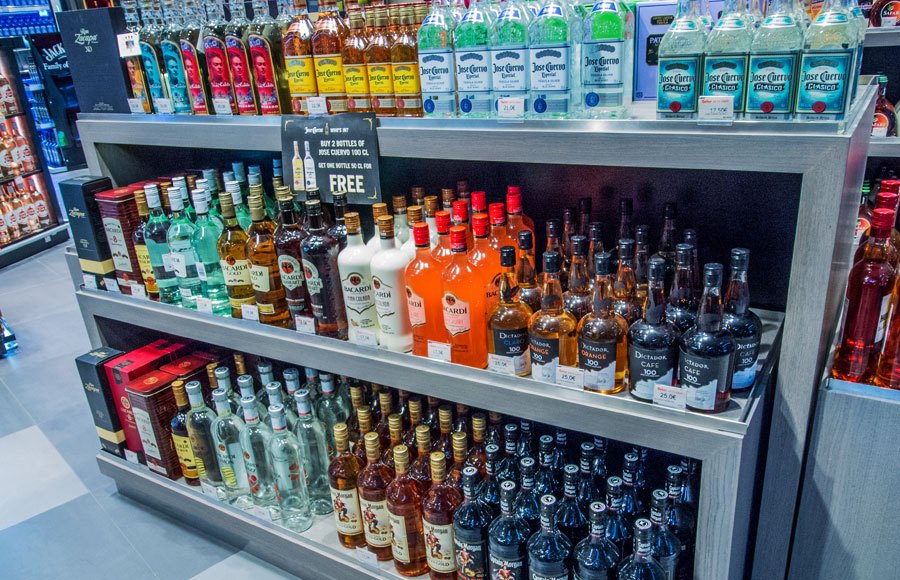
Besides the duty-free zone, the airport is full of ordinary little shops.
A pharmacy:
Souvenirs and sweets:
The sweets look so appetising you just want to buy them:
Alcohol in duty free:
7.6. Lost luggage
If your luggage fails to arrive, you will have to go to the Lost&Found desk:
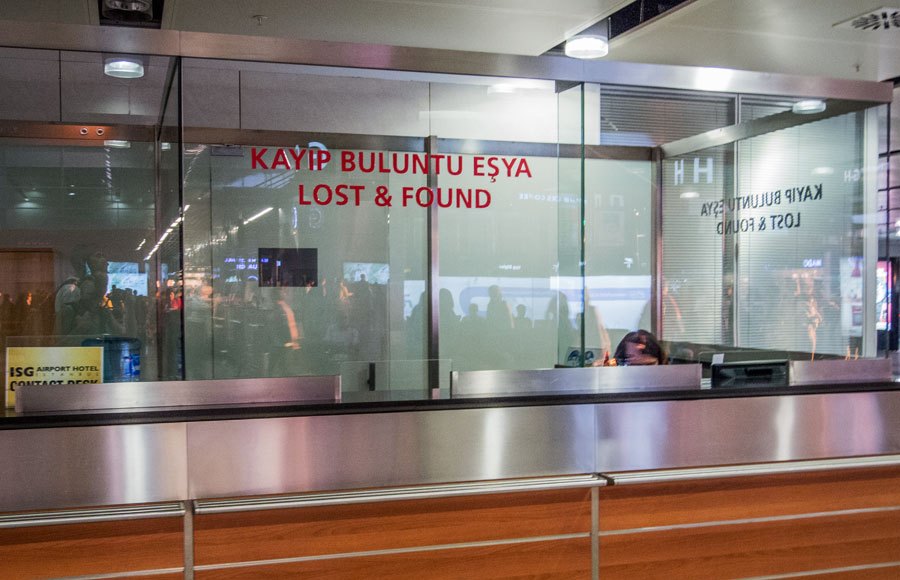
There you will need to fill in a form with your contact details and hotel address. If the luggage is found, it will be sent straight to your hotel. And if it never turns up, the airline is obliged to compensate you for the loss.
7.7. VAT refund
You can claim a Tax Free refund at the airport when leaving Turkey:
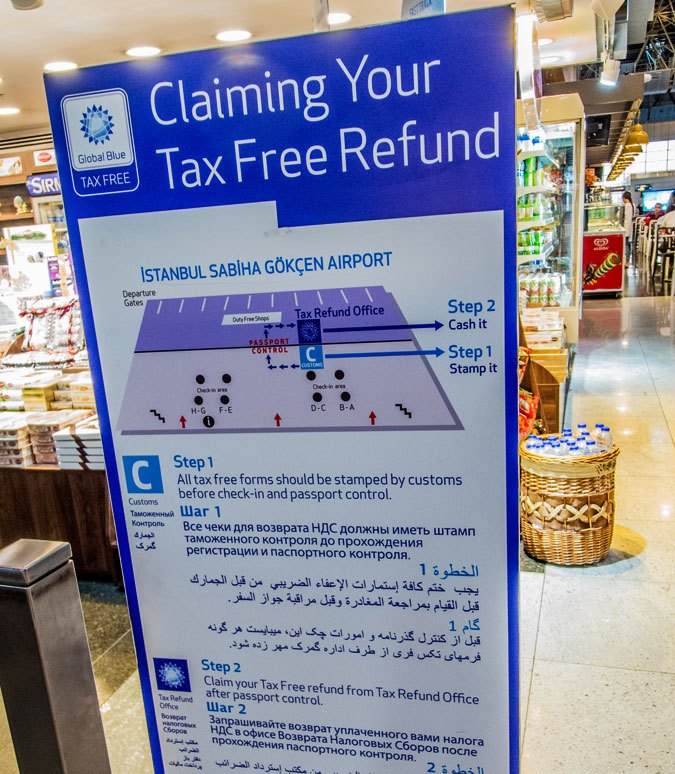
To do this, you need to see a customs control officer before passport control and show all the necessary documents — the specially issued purchase receipts and the declaration — as well as the goods themselves. The officer stamps your documents, and with that stamp you can collect the tax refund after passport control.
7.8. Where to buy a SIM card
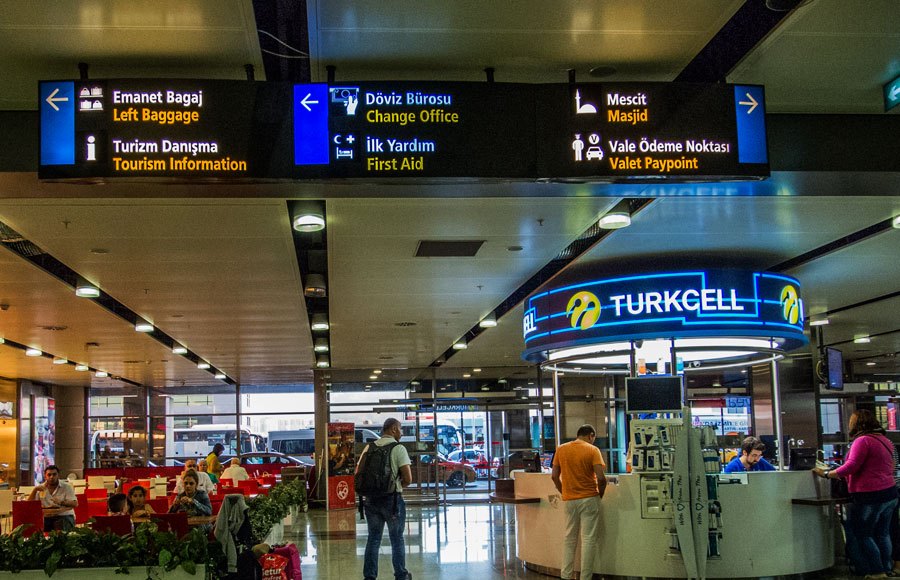
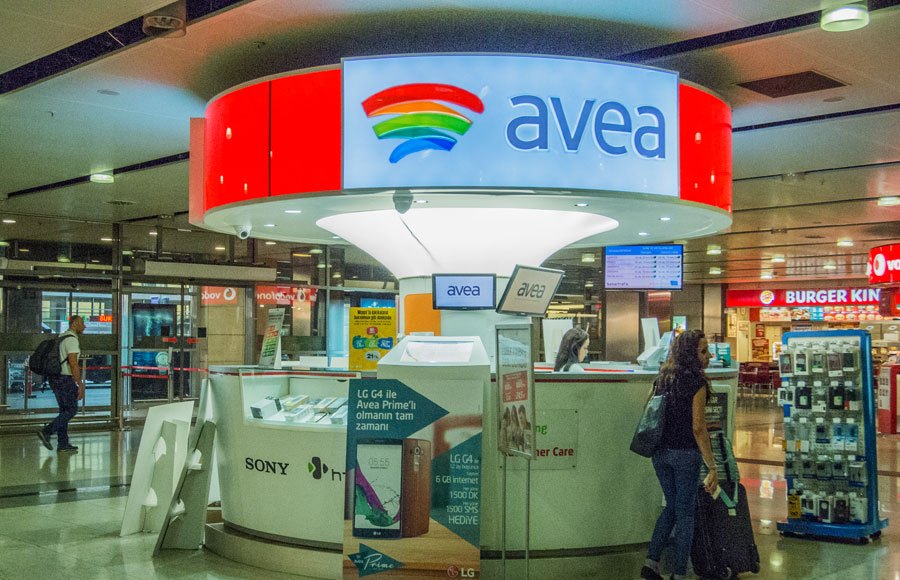
You can buy SIM cards from local mobile operators right in the airport. They are sold on floor 1 in the operators’ own offices.
The Turkcell office:
The Avea office:
In Turkey we relied exclusively on hotel Wi-Fi, so we never bought any local SIM cards. If you do need a SIM, bear in mind the IMEI restriction: a phone works with a Turkish card only for a limited period, and registering it is expensive.
8. Overall impressions
On the whole the airport is not bad at all — clean and convenient. As it happened, we spent almost four hours there; that is enough time to walk around the whole airport, have a snack in one of the cafés, buy something in duty free and watch the planes taking off.
The airport is big. At the time of our visit its area was 200,000 square metres; now, after the reconstruction and the opening of the renovated Terminal 1 in December 2025, the two terminals have a covered area of 265,000 square metres. The terminals are linked by a 240-metre walkway bridge, and there is a four-storey hotel with 128 rooms next door. Passenger traffic in 2025 exceeded 48 million people.
The airport’s location is no longer a drawback either: since October 2022 the metro has run right to the terminal, so there is no need for awkward changes of transport. The current line-up is as follows:
- cheapest of all — metro M4 to Kadıköy: 46.20 lira and 52 minutes, and it also runs at night at weekends;
- to Sultanahmet — metro M4 to Ayrılık Çeşmesi plus the Marmaray under the Bosphorus, about 84 lira in total; or the direct HVL-13 bus for 405 lira, if it is running;
- to Taksim — HAVABUS for 485 lira, about an hour and a half;
- first thing, buy an İstanbulkart: it costs 165 lira and saves you 19 lira on every ride. The “50 lira” price still circulating in guidebooks is long out of date.
A word about money. The airport has 29 ATMs and 24-hour exchange offices, but the rate here is roughly 8–15% worse than in the city. Change a small amount to cover your first few hours and the rest in the city. And always withdraw cash in lira, declining conversion into your card’s currency — that loses you up to 10%.
Have you been to Sabiha Gökçen Airport in Istanbul? What did you think of it? How did you get there? Tell us in the comments!