I love wandering around local markets: the fruit and vegetables there are much fresher than in the shops, the choice is wider, and prices are almost the same as in the supermarkets. Markets are also wonderfully colourful — you immediately feel immersed in the culture of the region, with so many aspects of local life laid out in front of you.
This post is about the market in Sihanoukville. It is called Phsar Leu and it is the biggest traditional market in the city — this is where locals come to shop. You will find it on Makara Street:
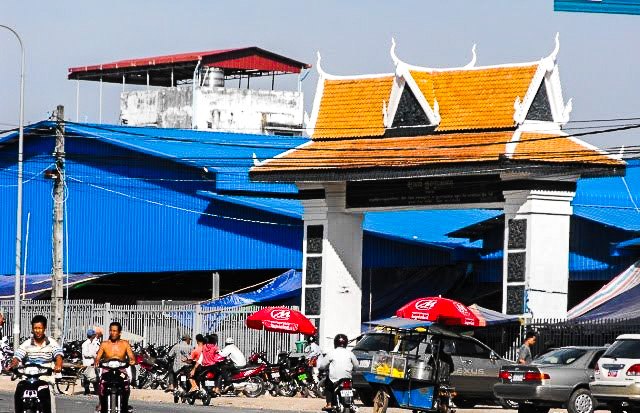
The entrance to the market:
The market is covered, so it gets pretty stuffy and hot inside, and it is best to go in the morning. It opens at around 07:00. When this article was written (January 2014), trading was already winding down by 15:00; guidebooks from 2026 say the market stays open until roughly 18:00–19:00 (some list 07:00–18:00 daily). It is still in the same place and still trading: in reviews from May 2026, the heat under the roof is still being compared to a sauna.
My first impression was awful — as if I had been plucked out of blissful calm and dropped into a cesspit. Huge crowds, noise everywhere, and very, very dirty — and I am not exaggerating, VERY. Wear closed shoes. Because of the heat everything spoils quickly, so the seafood and meat are constantly doused with water, and all that liquid runs under your feet — or straight onto them. It is best not to walk past the meat stalls (or the seafood ones, for that matter): the smell is really strong.
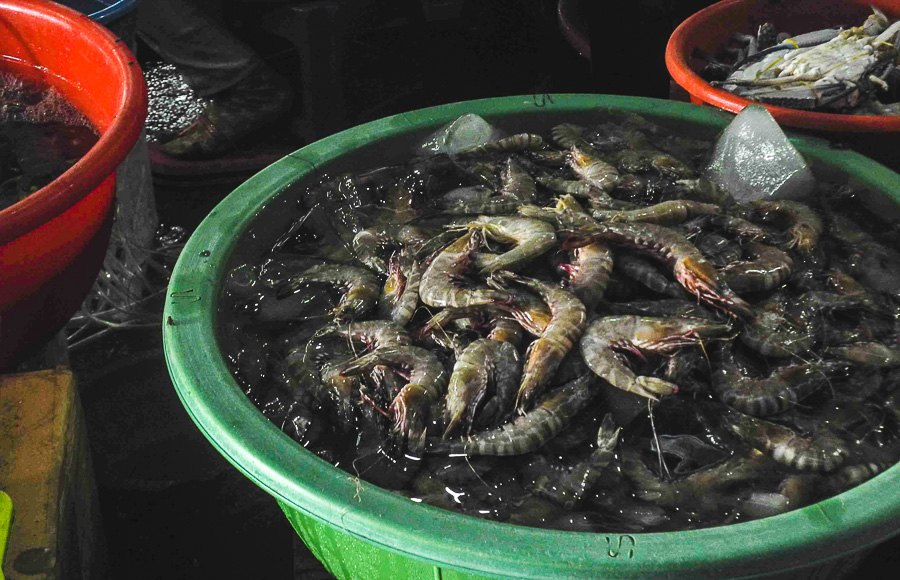
Although the temptation to try prawns this huge is hard to resist:
Some kind of mysterious shellfish:
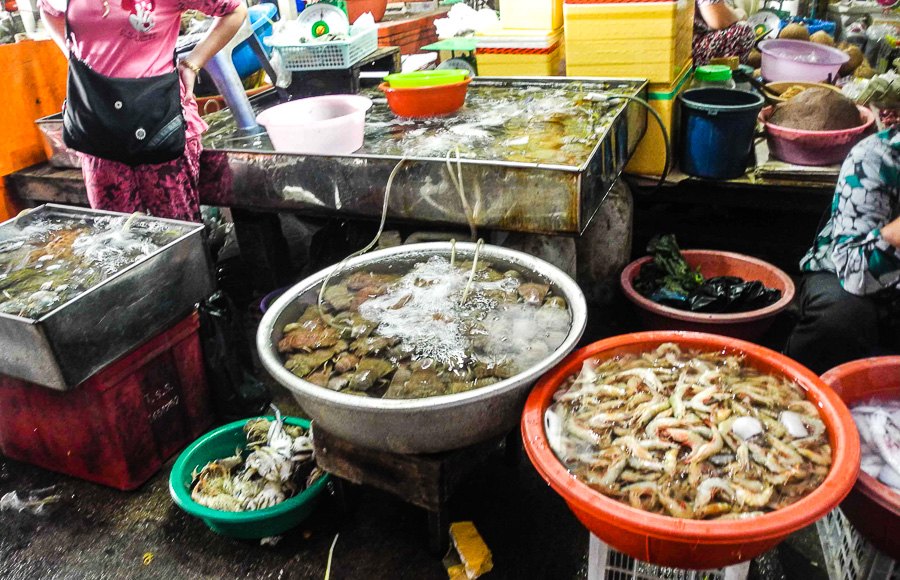
There is everything here — blue crabs, prawns of every size, squid, all kinds of fish, and it is all fresh (if you come first thing in the morning):
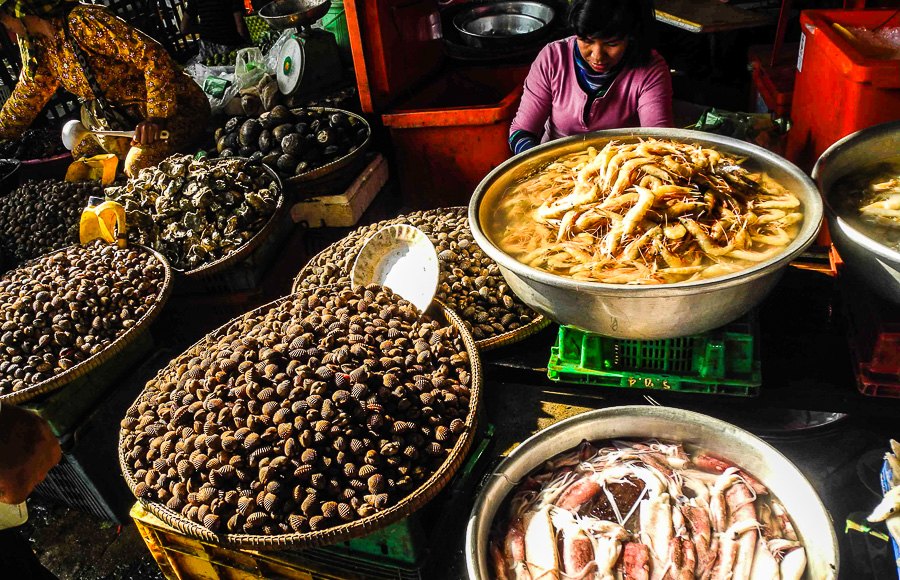
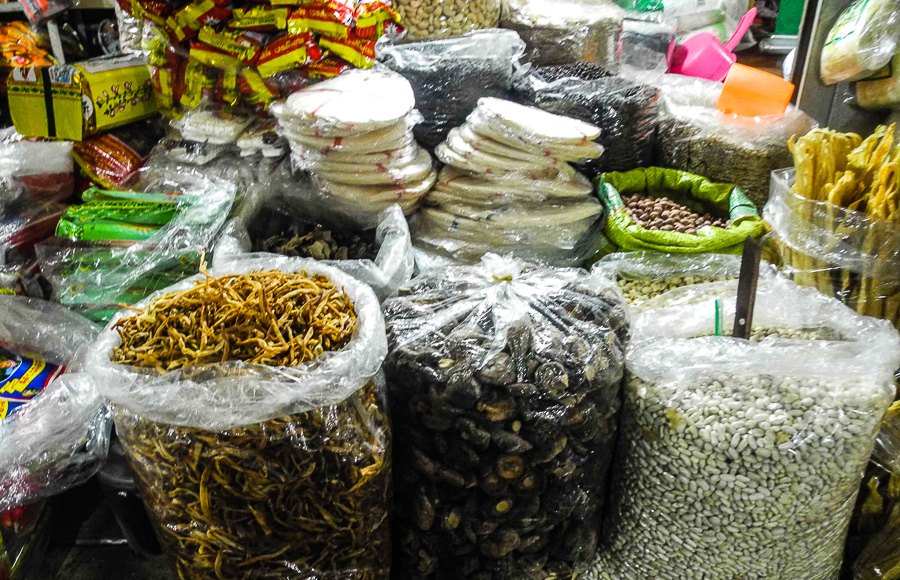
Besides raw seafood there is plenty of the dried kind, plus sacks of dried mushrooms, grains and spices:
But of course I came to the market for the fruit! Where else could you find such variety?
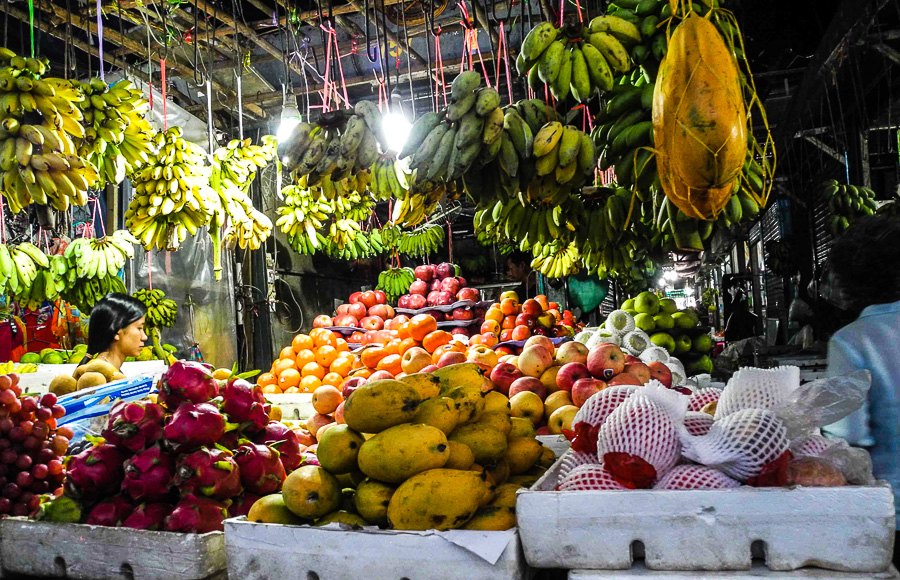
The seller is practically invisible behind mountains of fruit:
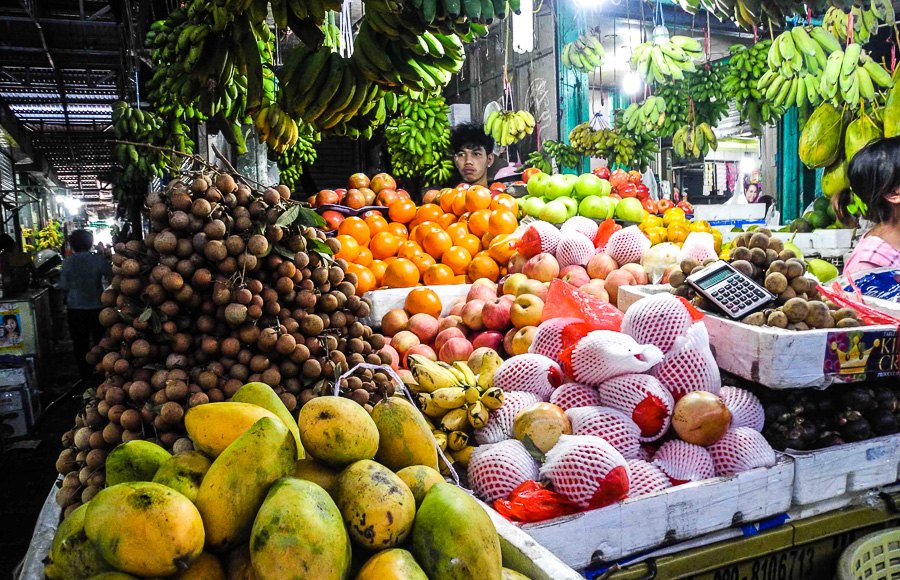
And the vendors happily tuck into what they sell, too:
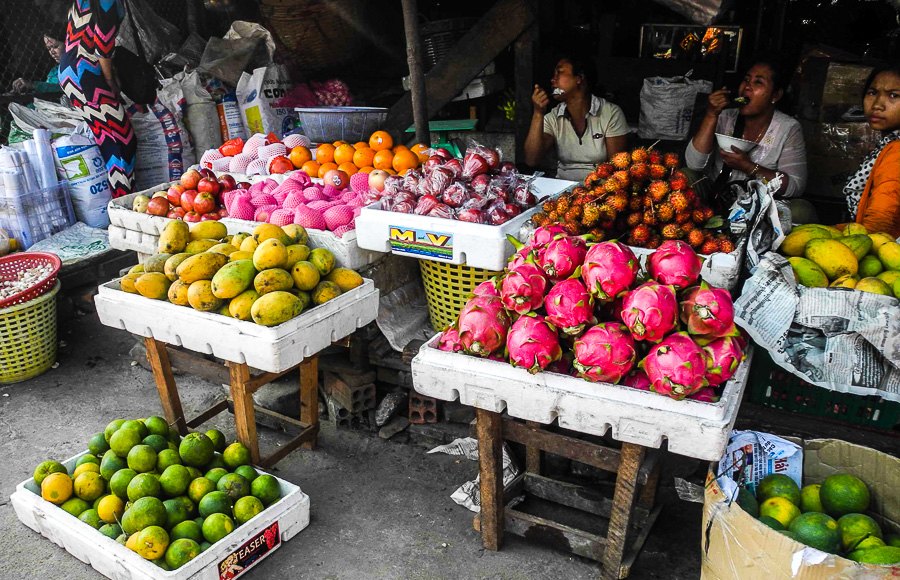
There is so much fruit that it does not even fit on the stalls — some of it ends up lying on the road:
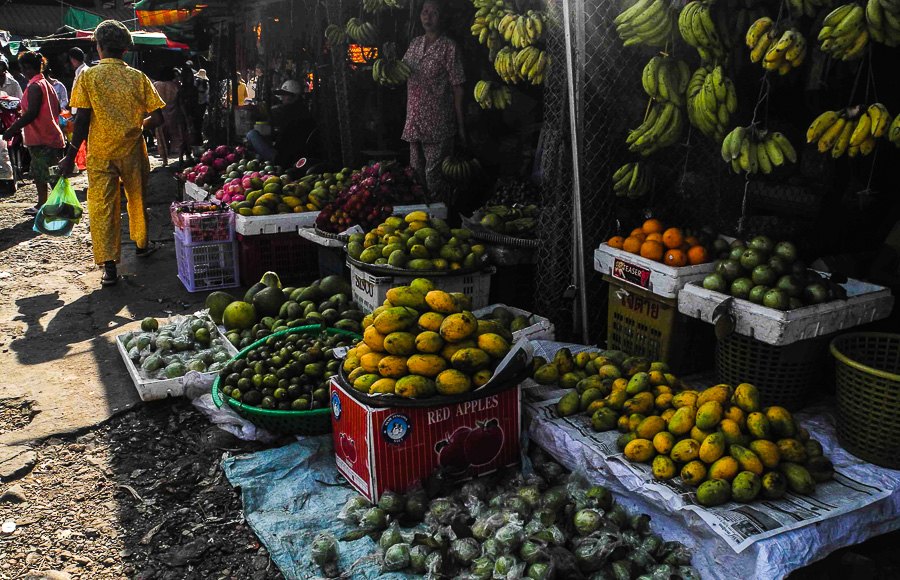
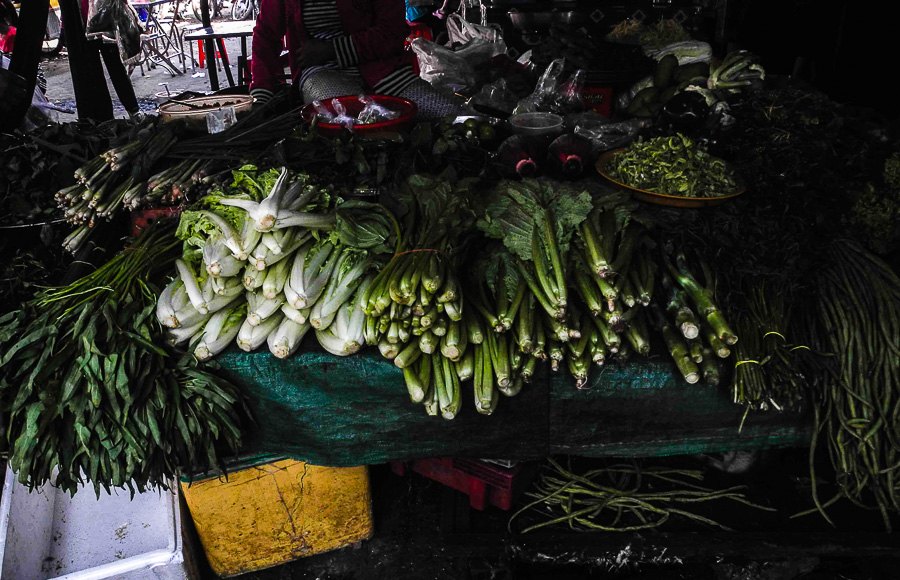
Plenty of greens:
By the way, it is best to come to the market with Cambodian riels. Dollars are accepted too, but the exchange rate at the market is very poor — it works out cheaper to change your dollars there first and then do your shopping. The rate is this: one dollar is roughly equal to 4,000 riels. It has barely moved in 12 years: the National Bank of Cambodia’s official rate on 16 October 2026 was 4,067 riels to the dollar.
Prices here are as of January 2014, when this article was written. For example, I bought mango at 6,000 riels per kilo — that is $1.50 — even though the price I was quoted was $2.
Haggling is not only possible but expected — though instead of knocking the price down, vendors will usually pop something extra into your bag. For the same money you end up with more fruit.
The market is enormous and sells practically everything, not just food. There are household goods, clothes and cleaning products, plus rows of little local cafés. Coconut milk is made right there at the market, so you can buy it fresh with no additives. There is freshly squeezed juice too (pomelo and passion fruit juice were on offer — I imagine they simply use whatever fruit is in season). How I had missed it — I had got used to drinking mandarin juice in Bangkok.
There are even hairdressers there — right in the middle of the food stalls, with someone getting a haircut…
All in all, it is an incredibly colourful place, and you absolutely have to visit.