I’d already ridden around the temples of Angkor by tuk-tuk (I described that trip in my previous post), and this time I decided to cycle between the temples to get the best photos of Angkor Wat. This is a 2014 account; everything you’d need for such a trip today — tickets, opening hours and rules — is summarised immediately below (checked in October 2026).
In brief, as of October 2026. A cyclist needs the same park ticket as everyone else: an Angkor Pass costs $37 for 1 day, $62 for 3 days (the days can be used within a week) and $72 for 7 days (within 30 days). It is sold only by the state operator Angkor Enterprise — on the website angkorenterprise.gov.kh or at the ticket office on Road 60, 4 km from the centre of Siem Reap; tickets bought anywhere else are not valid. For the 3- and 7-day passes you need a photo, and children under 12 enter free of charge. The park is open from 5:00 to 18:30, Angkor Wat itself from 5:00 to 17:30. If you buy a ticket for the following day after 16:45, you can enter the park that same evening for sunset. And dress with the temples in mind: shorts and skirts above the knee and bare shoulders are forbidden by the rules in sacred places.
Since my previous post already included lots of photos of Angkor, here I’ll only show the temples that were new to me.
A caveat straight away: I’m no cyclist at all, not even a beginner. I’d ridden a bike as a child — the kind you can attach two extra wheels to at the back, a kids’ bike, basically — and then for a few days when I went to Cyprus (cycling there is a real pleasure, of course: dedicated cycle lanes, beautiful views…). Anyway, I decided to hire a bike on trial first and ride around the neighbourhood. The town turned out to be very small; in about an hour I’d criss-crossed it from end to end. Life only bustles in the very centre, which is mainly where tourists spend their time once they’re tired of contemplating the temples of Angkor.
But ride about ten minutes from the centre along the Siem Reap river and the pushy tuk-tuk drivers vanish, replaced by ordinary rural life. It may shock some people that a town with an international airport — the country’s main tourist centre — actually looks like a poor little village (though you won’t notice that if you only stay in the very, very centre). I suppose I’d already got used to such sights, though. And I’d watched so many travel reports and videos that I expected exactly this picture from the start 🙂 Maybe that’s why, on the whole, I like it here and nobody particularly gets on my nerves.
So, after riding around for a bit, I decided to extend the bike hire for the next day as well, so that I could set off for Angkor in the morning.
About the traffic on the streets:
Cambodia drives on the right, so I didn’t have to worry too much. Not too much — because I did end up having to concentrate, especially at the very beginning.
First, there are no cycle lanes here, of course; you have to ride in the general flow of cars, mopeds, bicycles and people 🙂 And yes, there are mostly no pavements either, so pedestrians walk in the same flow of traffic 🙂 Great fun all round.
Secondly, the rules carry no real weight here. Amazingly, everyone rides straight through red lights as if nothing were wrong, so pedestrians need to be extremely careful. Riding on the wrong side of the road, into oncoming traffic, isn’t considered out of the ordinary either. That genuinely scared me. I was riding unsteadily, the handlebars wobbling constantly in my trembling hands, and I had no desire to crash into anyone. Yet every so often a cyclist would suddenly appear right in front of me, or a tuk-tuk driver with passengers. All in all, the road became a real ordeal for me.
For reference: I hired the bike from a rental place next door to my guesthouse, at $2 a day for a brand-new bicycle (those are 2014 prices, from when this was written — check current rates at the rental shop). Rental places usually had simple city bikes back then (at $1 a day), but that day they’d run out and I ended up with a road bike (as I later found out).
Of course, I had no idea that a road bike is designed only for perfectly smooth surfaces and that a mountain bike would have been better for my trip. In principle the road was good almost everywhere, though there were some less pleasant stretches. Presumably the proximity of Angkor had left its mark, and the roads, unlike in the rest of Cambodia, are quite passable.
So, I woke up early, in time for the start of breakfast (it was at 07:00, even though they’d originally said it began at 06:00). I had a quick bite, and by 07:30 I was on my way to Angkor.
This was the route I chose for my ride:
I could, of course, have done the Grand Circuit instead — I’d even seen a report about just such a ride — but I wasn’t up to that kind of feat (and rightly so).
From here on it’s simply photos of Angkor Wat and my times along the way.
At 08:14 I arrived at Angkor Wat.
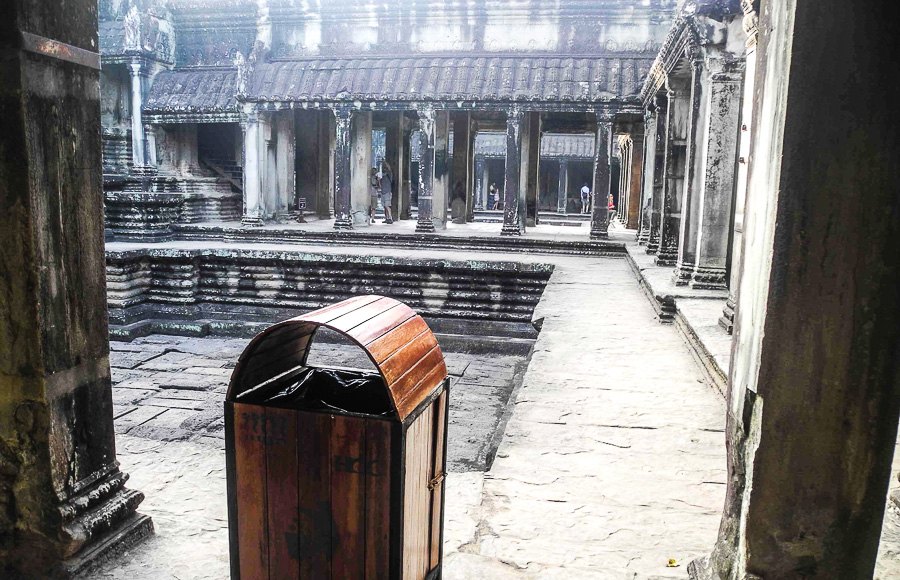
Civilisation has reached even the ancient temples: inside Angkor Wat there’s a litter bin like this one:
At 09:30 I finished looking around Angkor Wat and set off for the Bayon.
At 09:49 I was already by the temple.
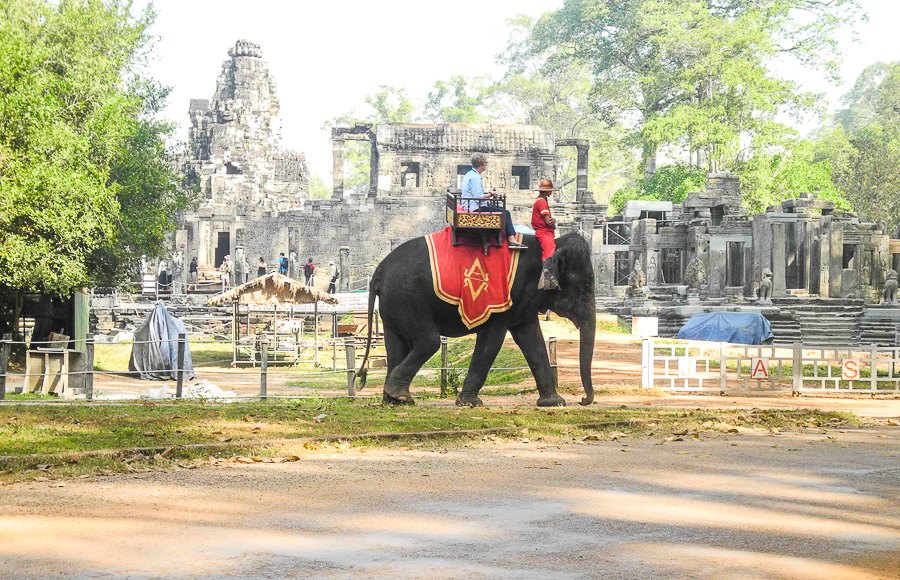
Just before the Bayon I came across a black elephant:
One of the faces of the Bayon:
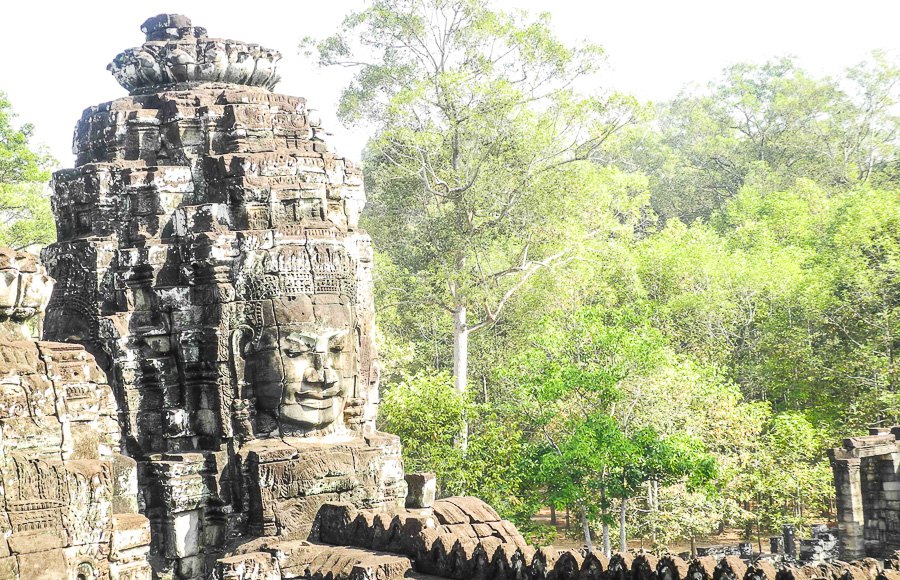 Bayon temple
By 10:30 I was on the Terrace of the Elephants:
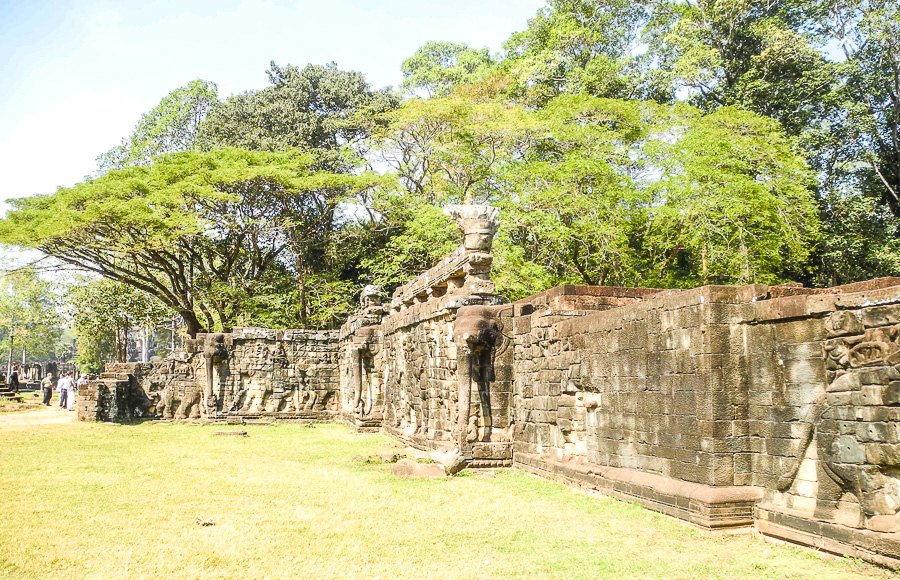
Not all the statues are authentic; some of the ruined elements of the ancient temples are replaced with modern replicas. It was especially striking at the entrance to the Terrace of the Elephants: first, an authentic lion statue:
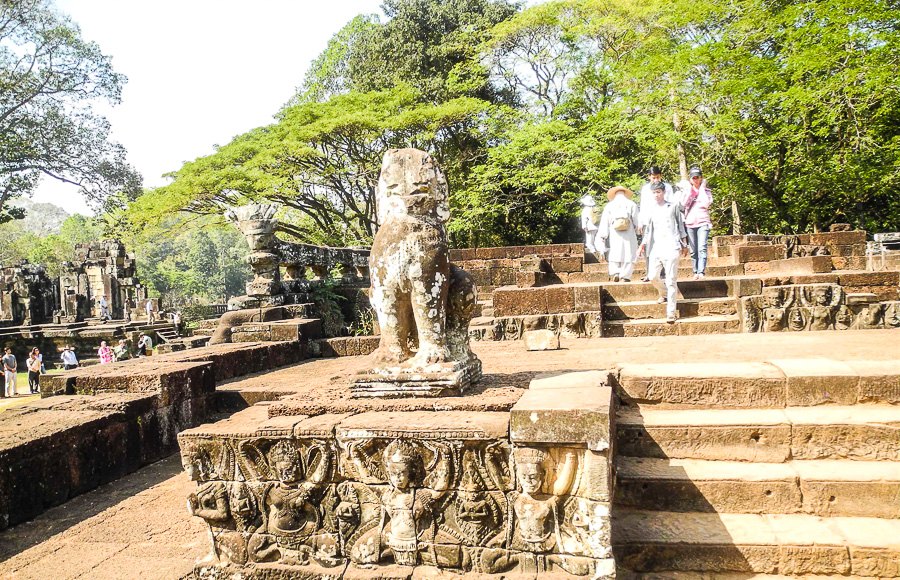
And to the right of it, a new one:
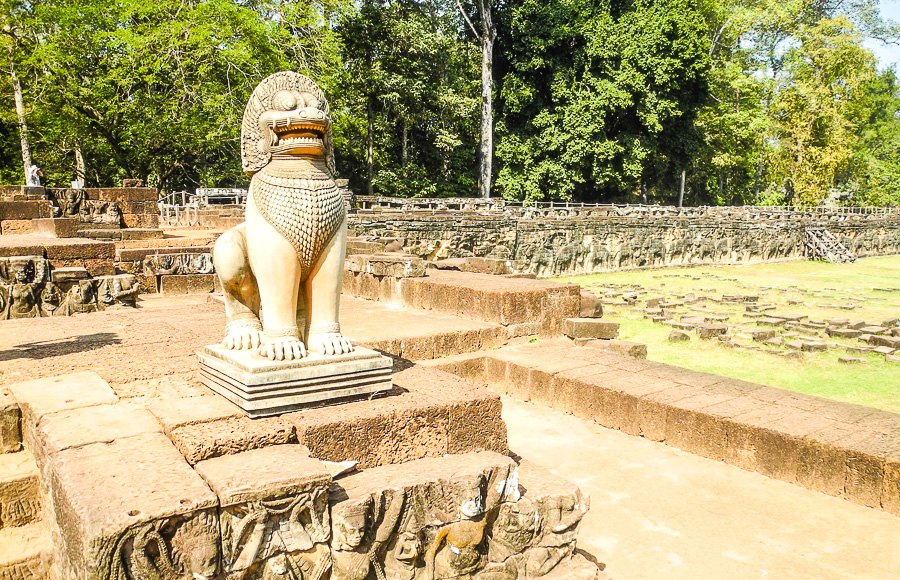
In my opinion it would have been better without it at all — it looks completely out of place against the ancient stones.
Then I walked on to the Baphuon.
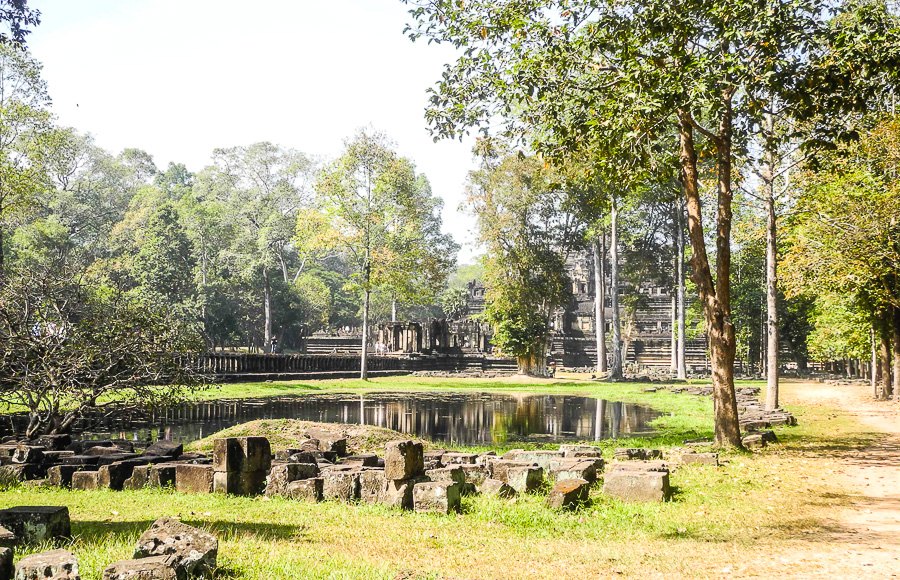
The picturesque surroundings:
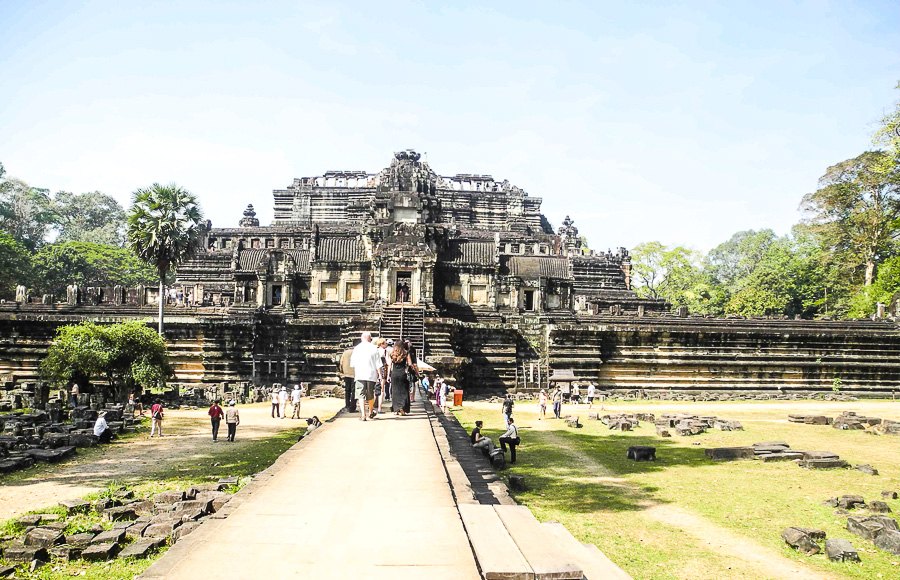 Baphuon temple
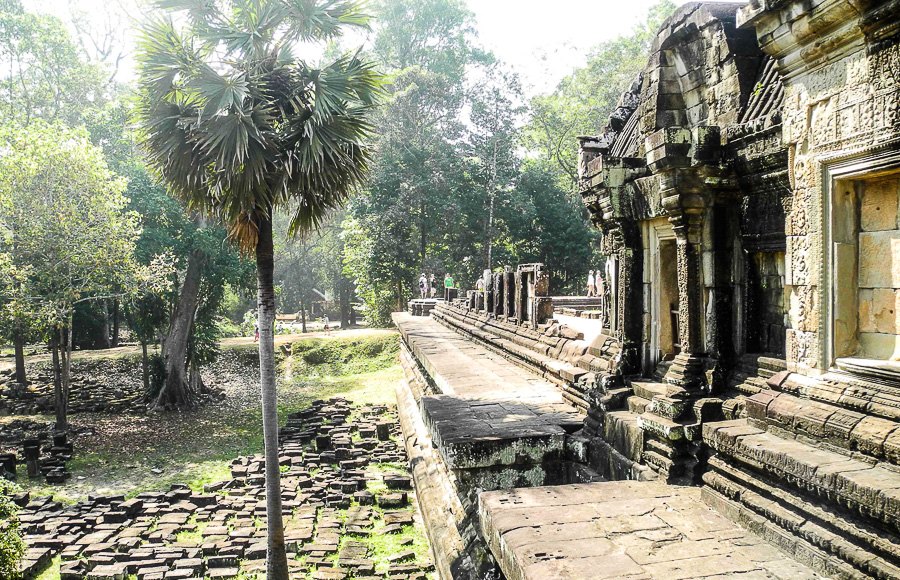
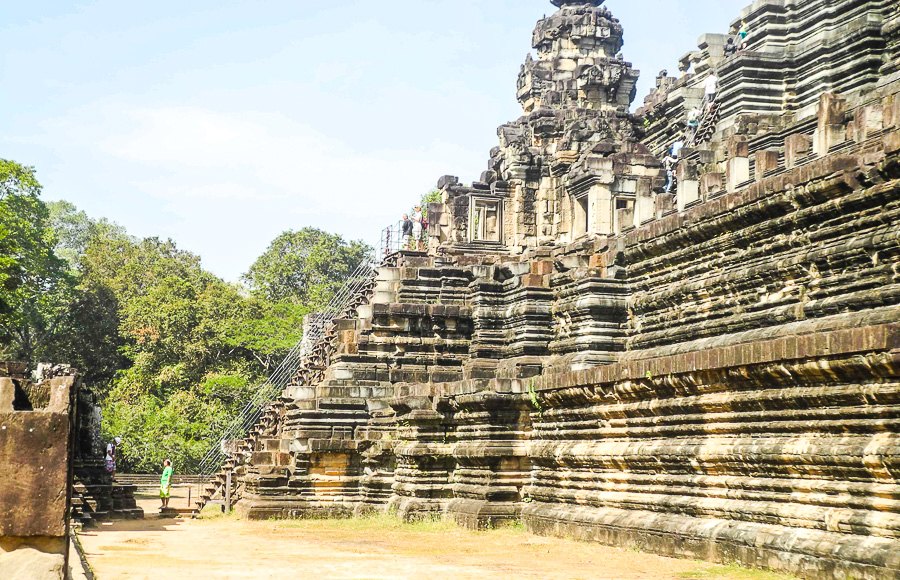
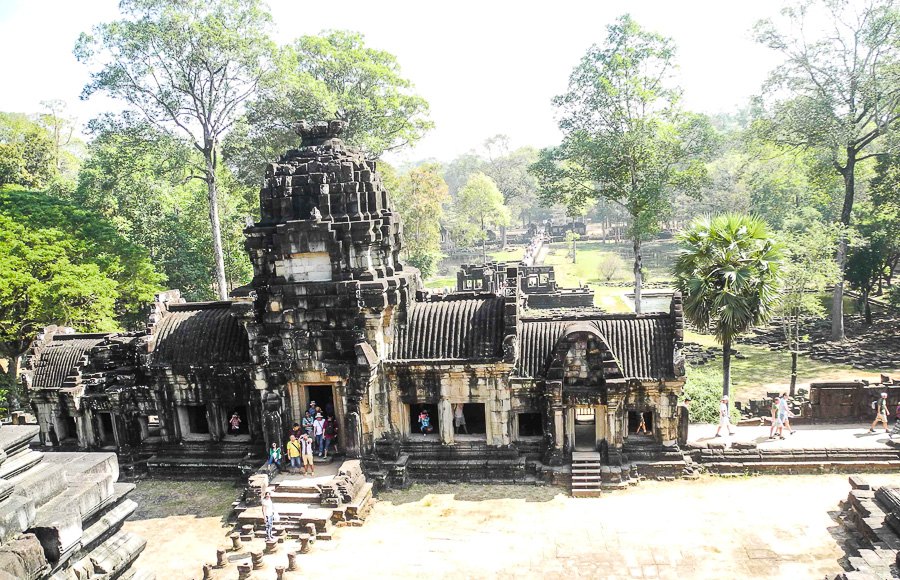
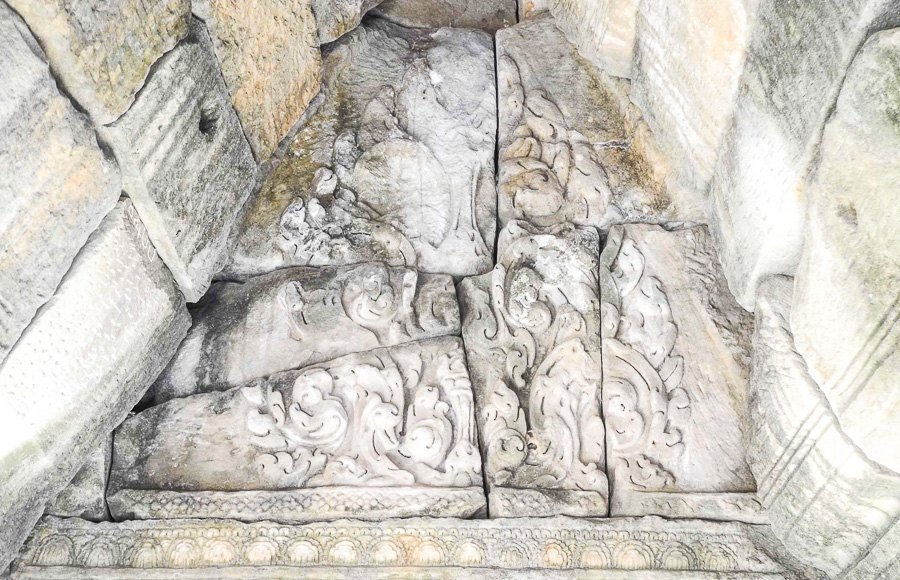
An unusual ceiling in the Baphuon temple — it’s amazing how these stones are fixed in place, how they fit so tightly against one another that they don’t fall down:
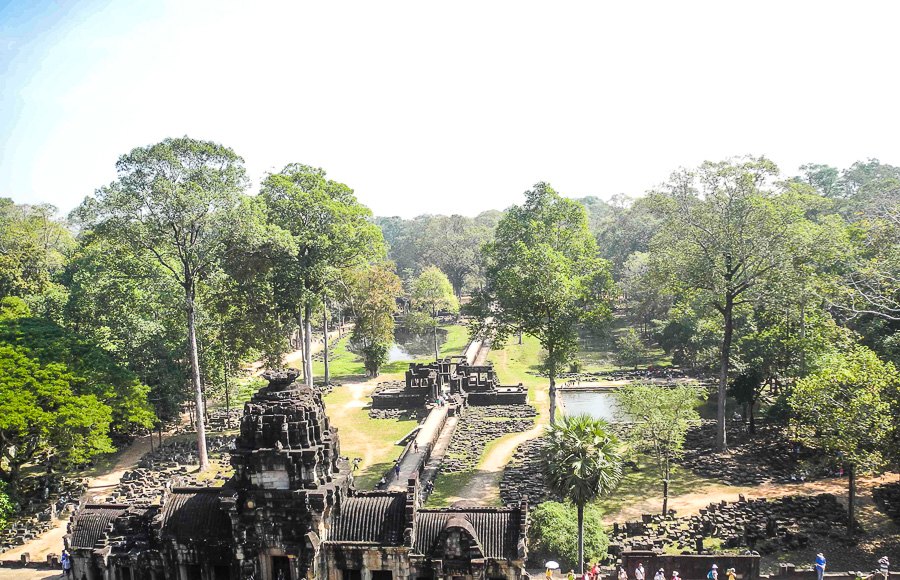
At 11:00 I climbed to the top of the Baphuon; this is the view from the upper platform:
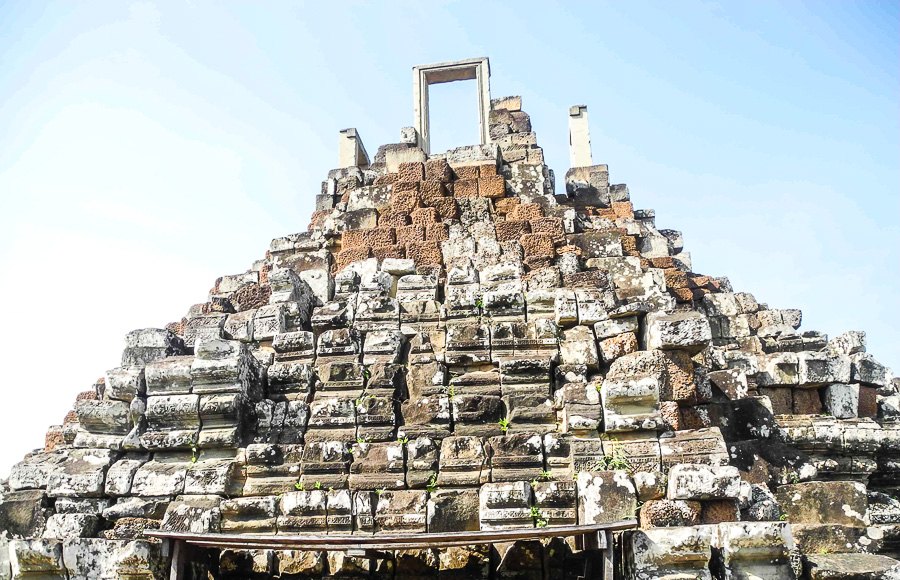
The door (window?) at the very top of the temple looks very symbolic:
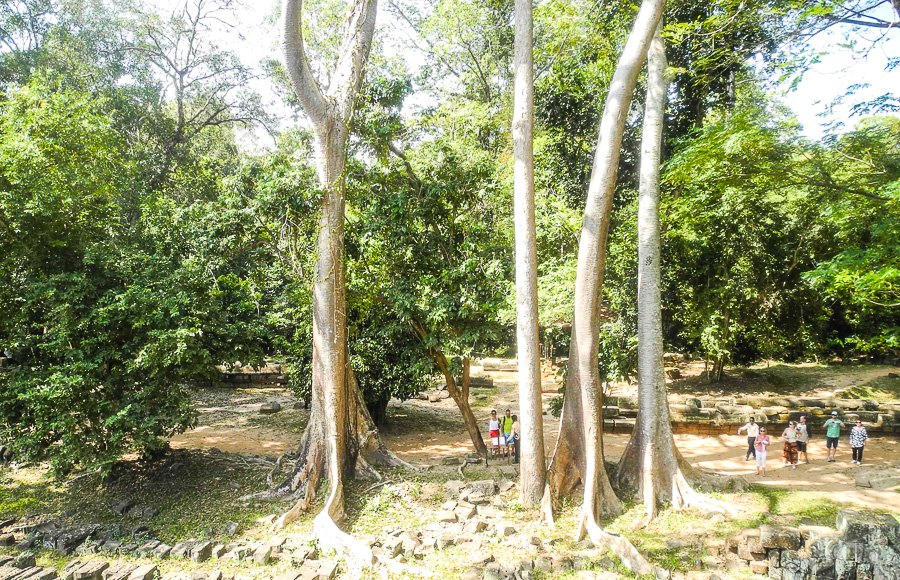
A photo that shows just how enormous the trees are that swallow up whole temples:
For a long time I couldn’t work out what temple this was — it wasn’t on Google Maps:
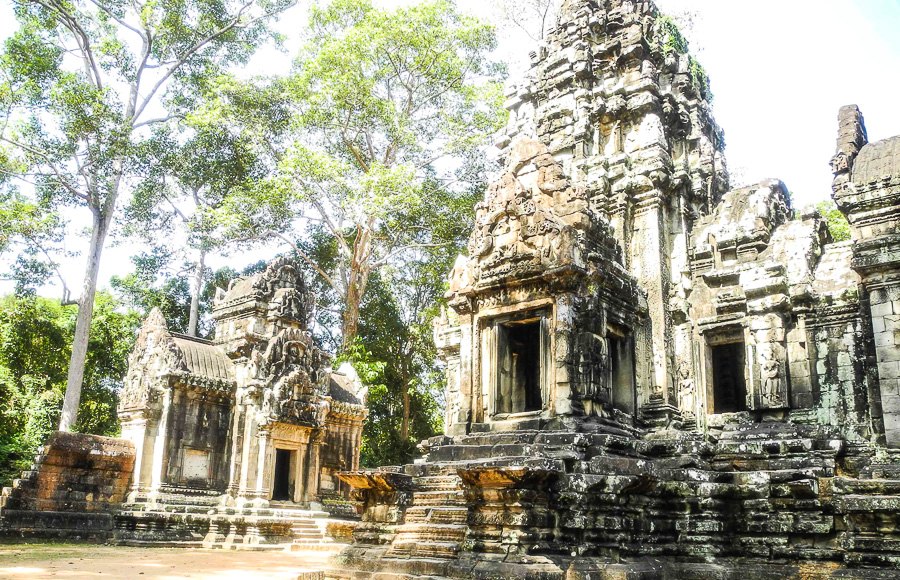
Then I found a sign saying it was the Phimeanakas Temple:
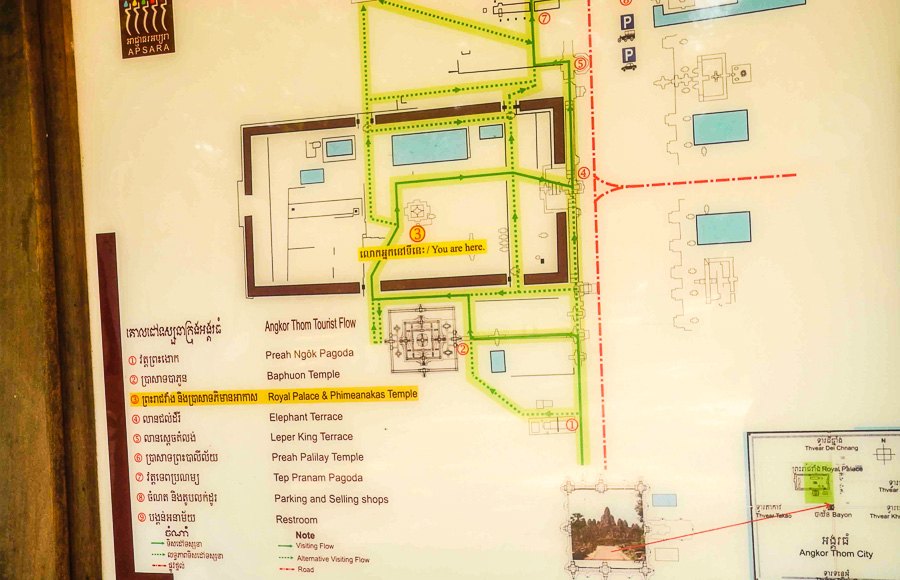
At 12:19 I reached the temple of Thommanon — nothing remarkable to look at — and moved on almost straight away.
At 12:47 I was at Ta Prohm (also known as the Angelina Jolie temple), which ended up being the one I liked best of all.
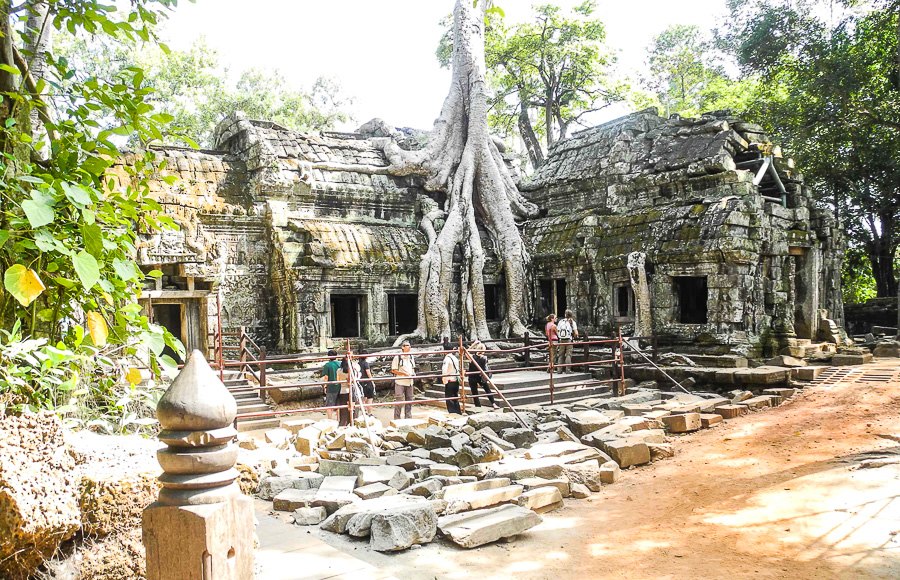 Ta Prohm
At 13:35, having wandered around Ta Prohm, I set off on the way back, this time by a different road.
And at 15:05 I arrived, tired but happy, at my guesthouse. Hooray — I did it! I’d never been so glad of a cold shower (the water even seemed too warm 🙂 and I fell asleep almost straight away for a couple of hours.
My conclusions: a bicycle works perfectly well as transport for the Small Circuit — it’s not too tiring, just a decent bit of exercise for a beginner (provided you’re in reasonable physical shape, of course). Take plenty of water with you; you can always get a bite to eat at the cafés not far from the temples. There are plenty of toilets too, usually just before you reach a temple — look around, there are signs everywhere. I also regretted not bringing elastic bandages for my knees. Towards the end of the ride I could feel how tired my knees were getting; maybe I hadn’t adjusted the saddle height correctly, but in any case cycling puts a fair amount of strain on the knees. And I think cycling gloves would have been a good idea too, because your hands get rubbed sore by the handlebars. Incidentally, in Asia many girls wear gloves (especially when riding a bicycle) because they’re afraid of getting sunburnt — a tan isn’t fashionable here.
It’s best to set off early, of course — catch the sunrise (the park opens at 5:00) and cover more ground before the heat sets in.
Also bear in mind that this was the so-called “cool” tourist season; in the hot, dry season (March–May) I definitely wouldn’t recommend bike rides around Cambodia — it’s too much strain on the heart.