So here we are in Tagbilaran (Bohol island, Philippines). The previous day had been an extremely full and tiring one — fifteen hours on the road, after all — yet our plans for this day were no less ambitious.
On Bohol there were two things we absolutely wanted to see: the Chocolate Hills and the tarsiers — and, if time allowed, the island’s other sights too. It all had to fit into a single day. Here is our route for the day:
View larger map
We left the hotel at about 9:00. We really ought to have set off around 6:00, because time ended up being desperately short, but we needed to withdraw some cash and buy some food. The evening before, we hadn’t managed to withdraw any money from the ATM, so we went to the bank at opening time to try to withdraw at the counter.
The best landmark in town is the church.
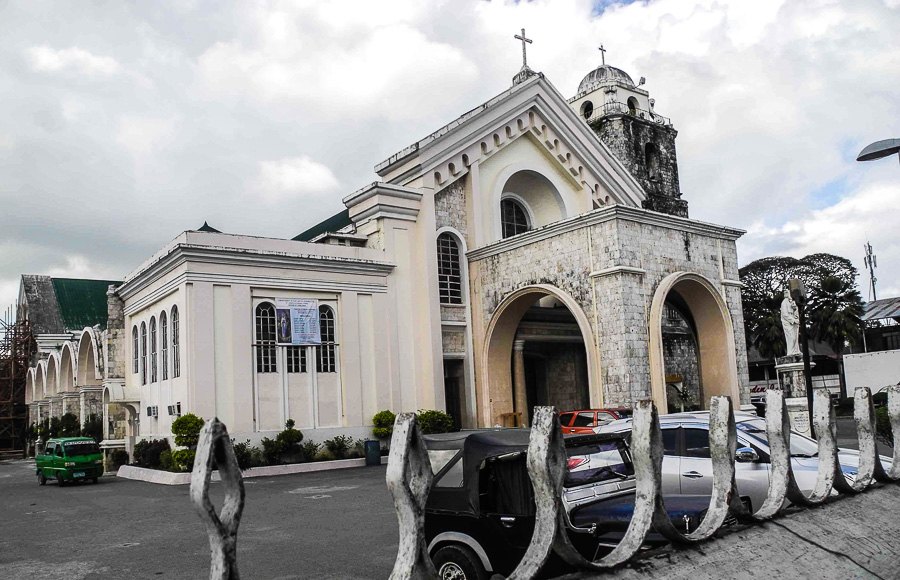
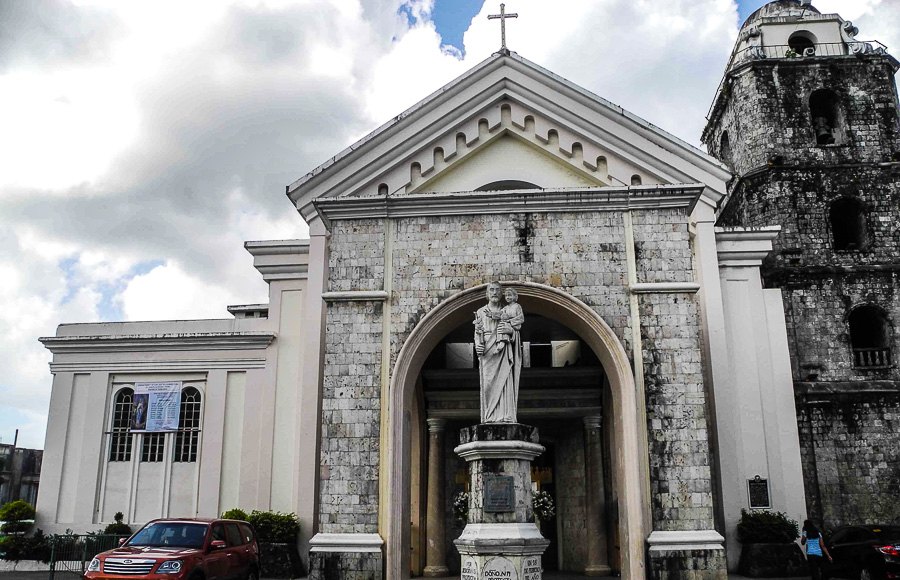
Just past it lies the town centre, with large shopping centres, banks and so on.
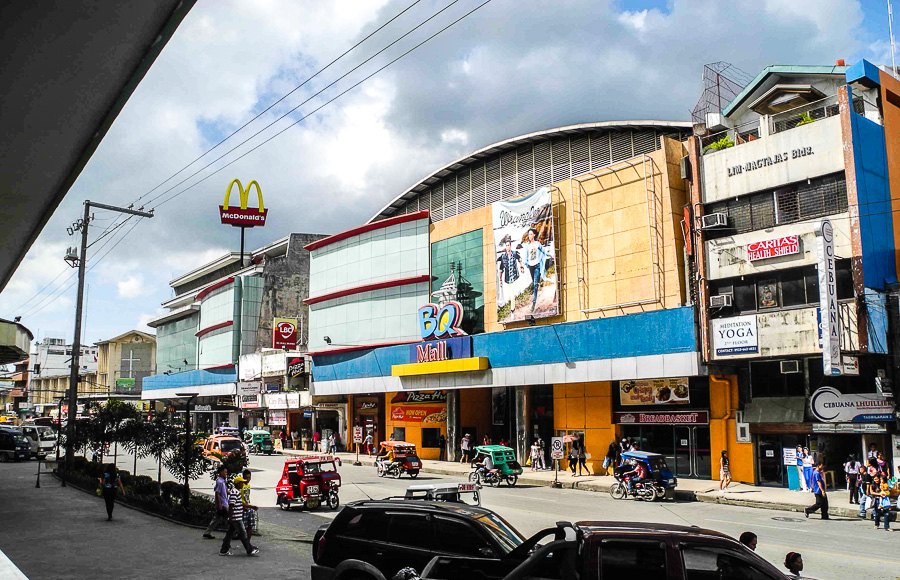
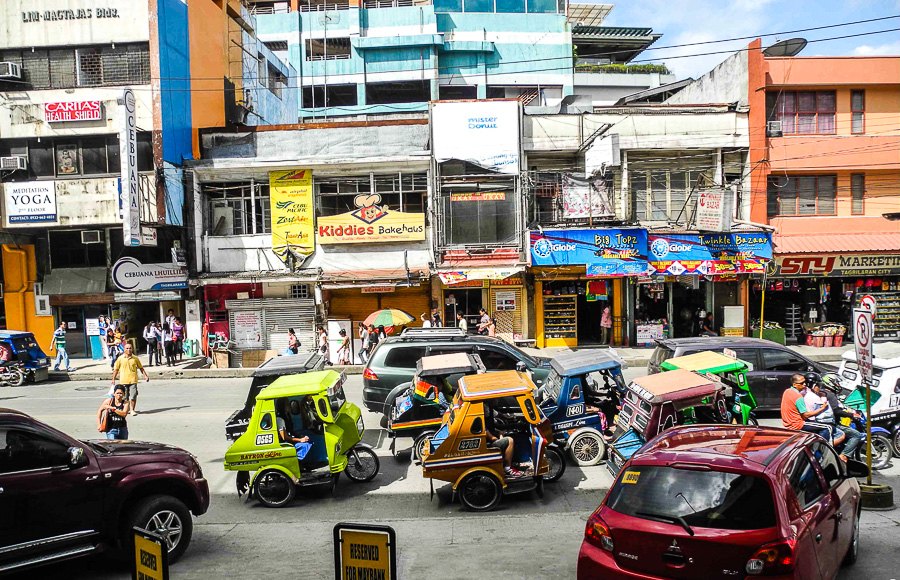
At the bank we were told that money could only be withdrawn from an ATM — and one belonging to a different bank, Metrobank — so we headed there. The fee was 200 pesos per withdrawal (this and the other prices from our trip were as they were in 2014), but there was nothing else for it.
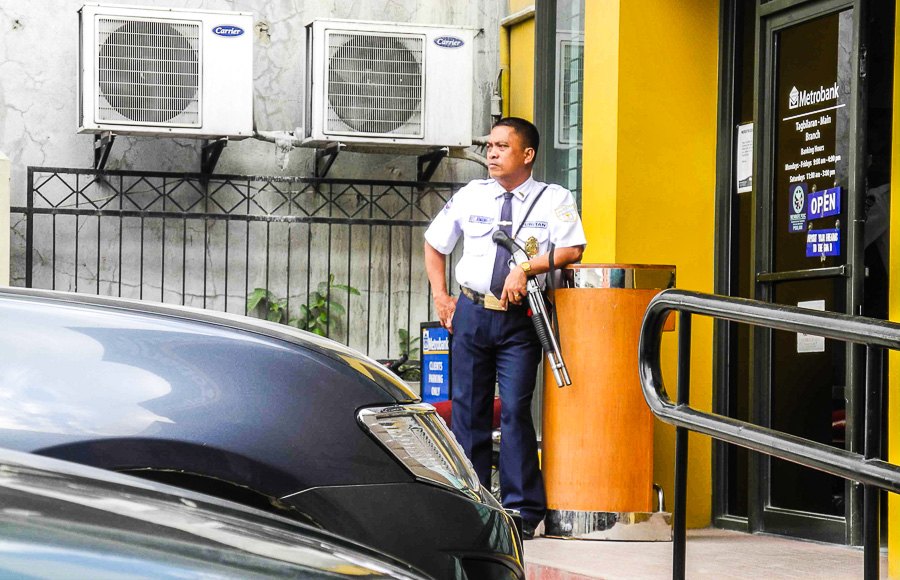
All told, between hunting for the bank, standing in queues and going to the supermarket, about an hour and a half slipped by.
Tagbilaran’s bus station is next to the Island City Mall; we got there by tricycle for 20 pesos (drivers usually ask for 30, but we haggled down to 20).
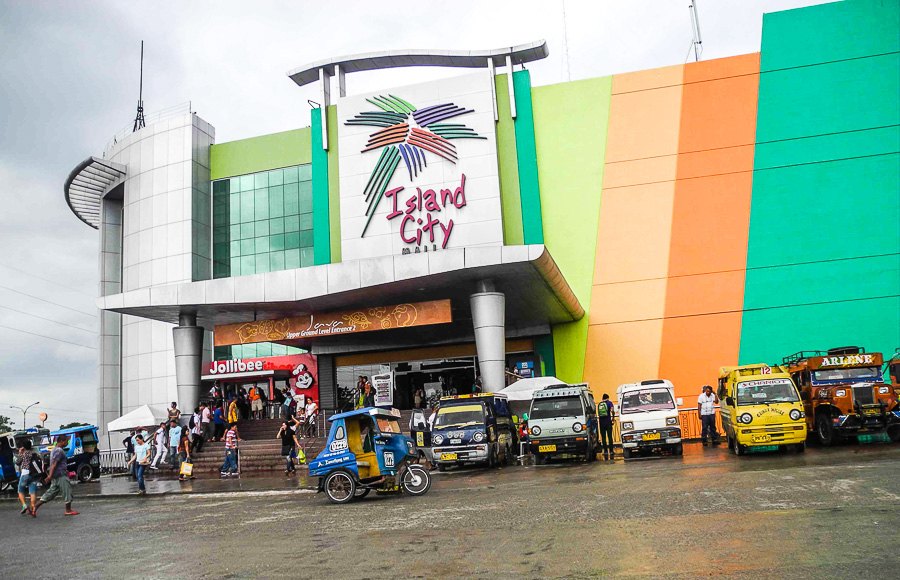
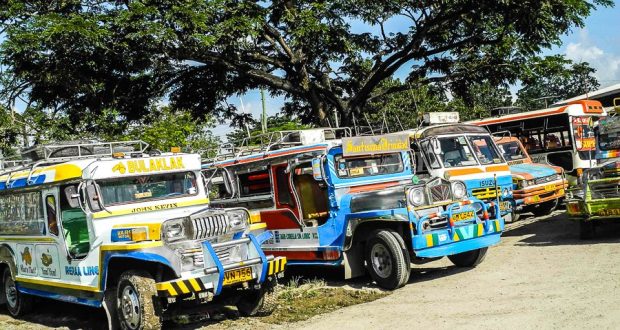
If you stand with your back to the City Mall, the market is directly across the road, and the bus station is diagonally to the left. You have to walk past a rank of jeepneys (the local shared minibuses) in every colour of the rainbow:
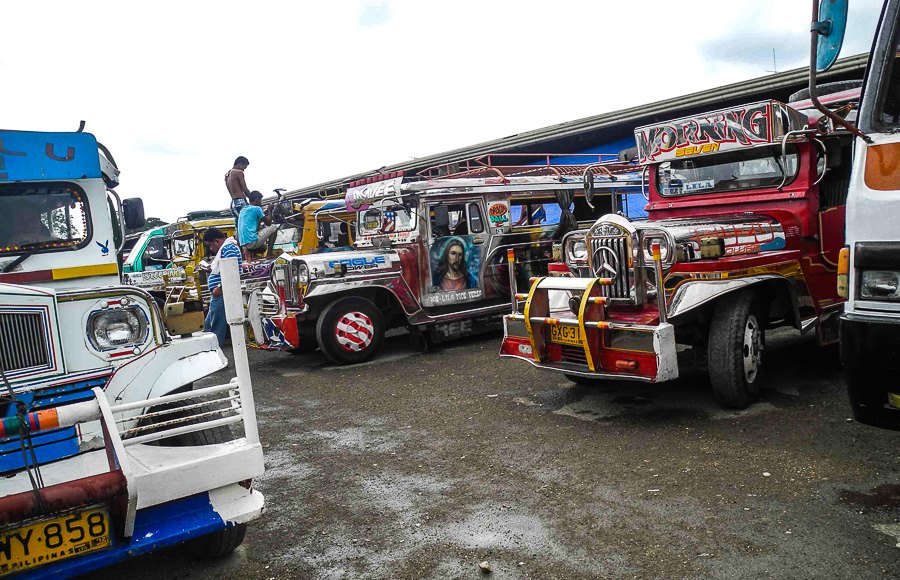
Interestingly, everywhere in the Philippines people at the entrance to bus stations would ask us where we were going and walk us right to the bus we needed. They never asked for money, pointed us to the next departure (rather than the most expensive tourist option) and told us the fare straight away. Perhaps it is an actual job — I don’t know. Anyway, the moment we reached the station we were escorted to a bus bound for the town of Carmen. The Chocolate Hills were first on our plan, and the viewing platform is just before Carmen.
There are no ticket offices at the station; tickets are bought on the bus. A conductor collects the fares, helps passengers on and off, and spends the whole journey standing in the bus doorway, watching out for potential passengers.
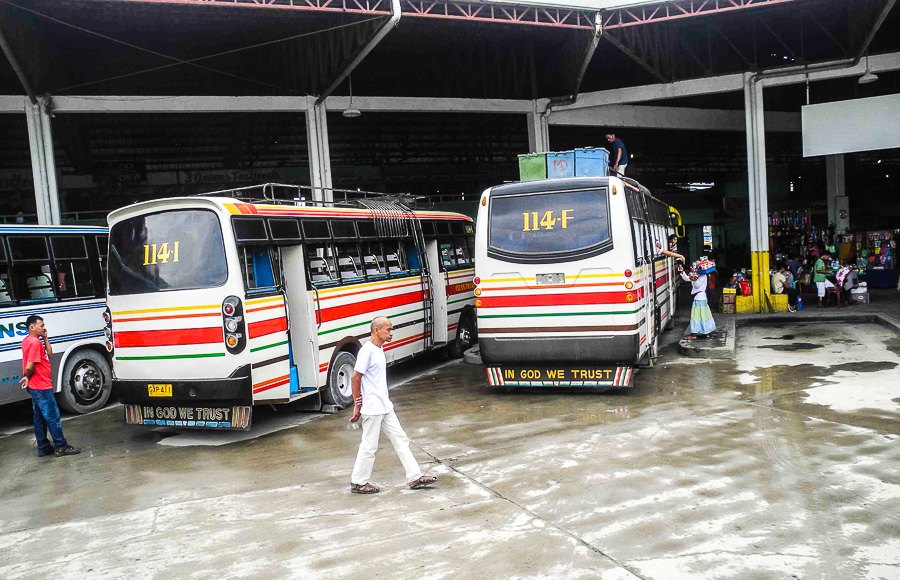
We didn’t have to wait long: at 11:00 we pulled out of the station, having asked to be dropped at the Chocolate Hills, and were charged 60 pesos each. It was an ordinary bus — no glass in the windows, no air conditioning either, so it is neither cold nor hot. The best kind of bus in the Philippines, and the cheapest to boot.
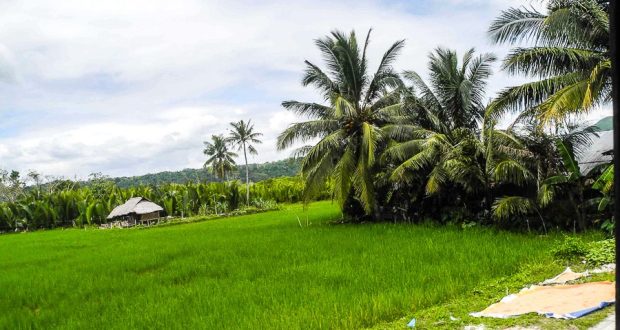
The road is wonderfully scenic and the views are stunning; I quite simply fell in love with Bohol. I want to go back, for a couple of weeks at least.
Views from the bus window:
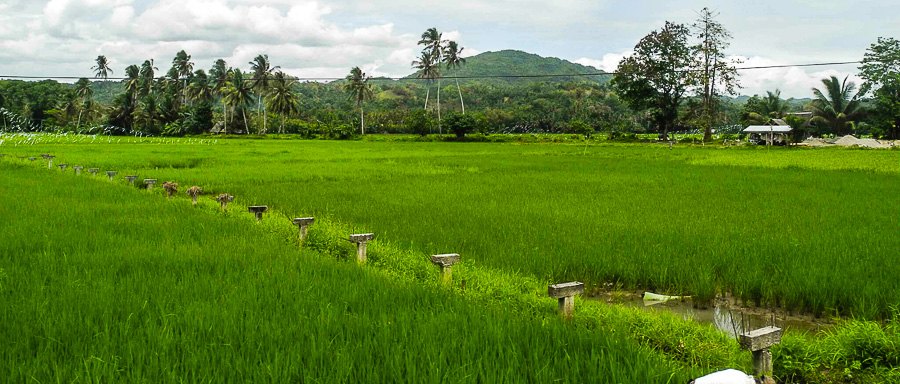
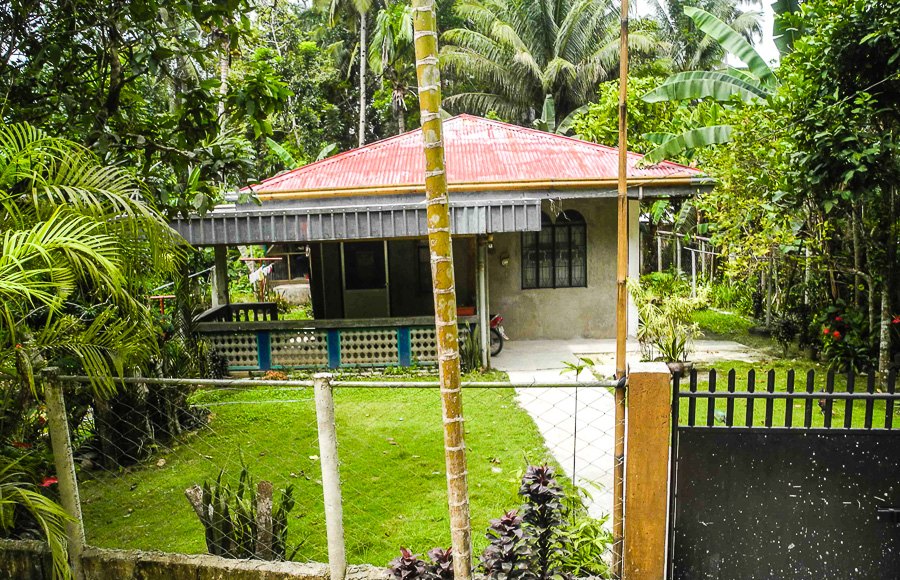
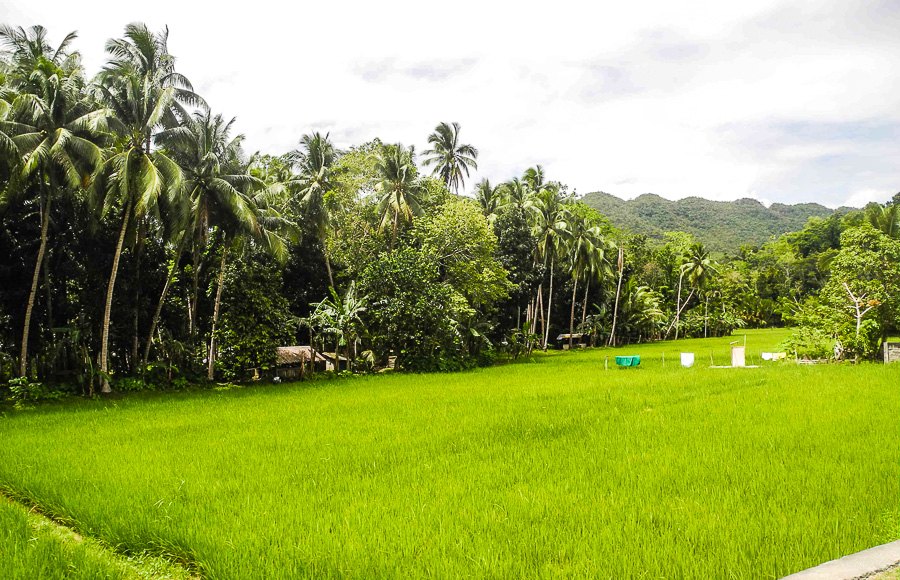
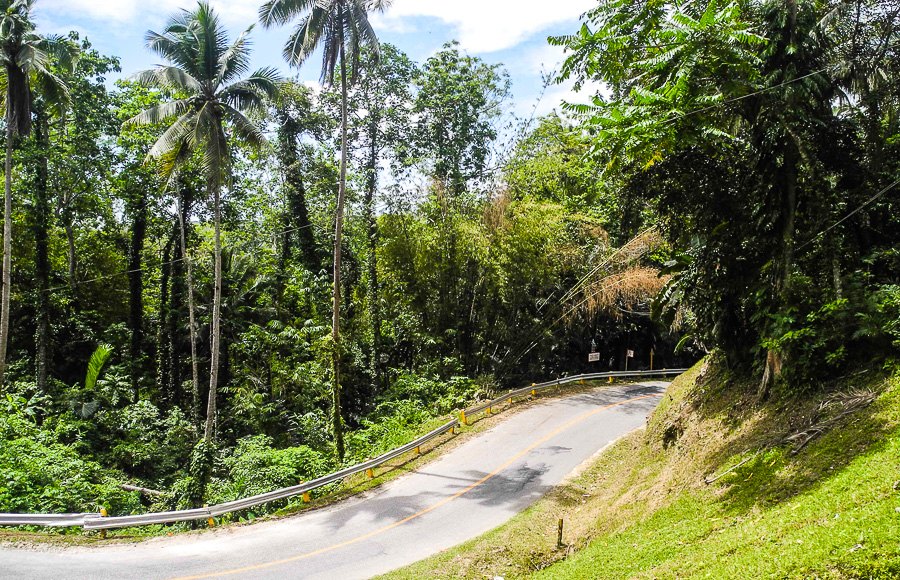
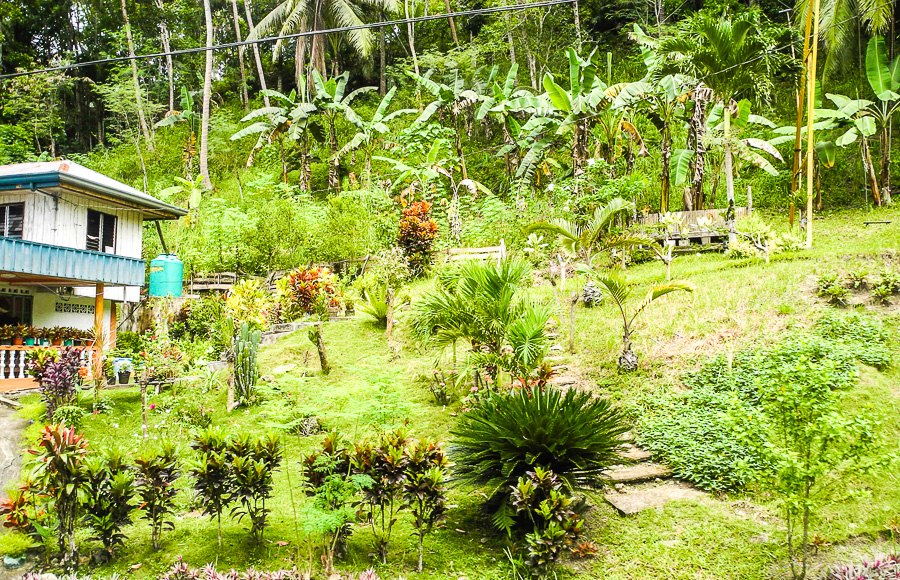
You can feel the Spanish influence (the Philippines was a Spanish colony until fairly recently) — there are plenty of Spanish place names: Valencia, Sevilla, Toledo. Yet every sign is in English only, which really surprised me: absolutely everything — road signs, the names of schools, bridges and shops, product names on price tags and receipts. I didn’t see a single sign in Filipino. Well, actually, there was one — something written on the window of an old bus — but that was the one and only sign I saw on the whole trip. Even the schoolchildren’s exercise books were all in English.
According to Wikipedia, the Philippines has two official languages — Filipino and English — so it is paradise for travellers: people will understand you everywhere.
At 12:40 we arrived at the stop by the hills. One other girl also got off to see the hills; everyone else on the bus was local, presumably bound for Carmen.
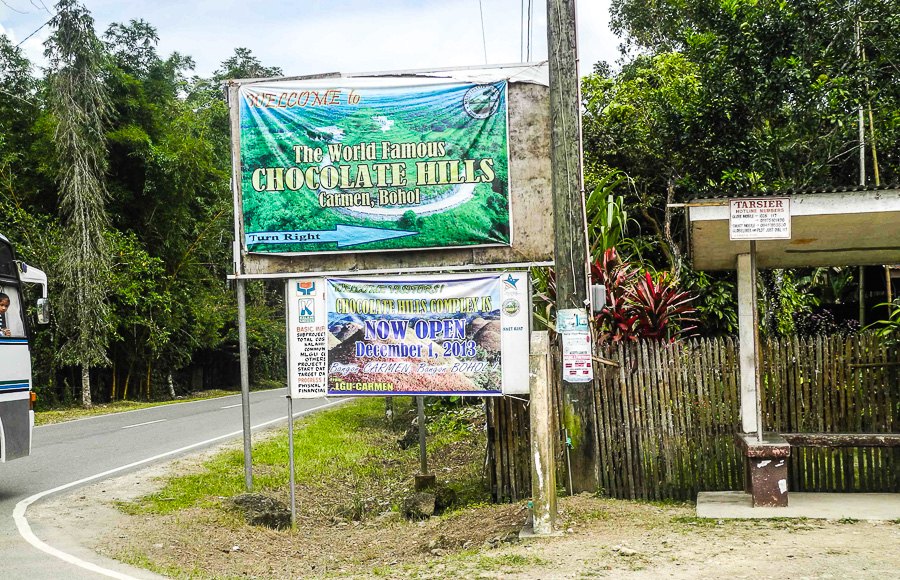
Back then a ticket cost 50 pesos for an adult and 10 for a child. It costs more now: since October 2025, entry to the viewing platform in Carmen has been 150 pesos (children aged 6–12 pay 75 pesos, under-fives go free), and it is open daily from about 8:30 to 17:30 (checked as of October 2026).
Tickets bought, we set off up the road to the viewing platform. Taxi drivers offered to drive us up, but we declined — the walk is only about 15 minutes.
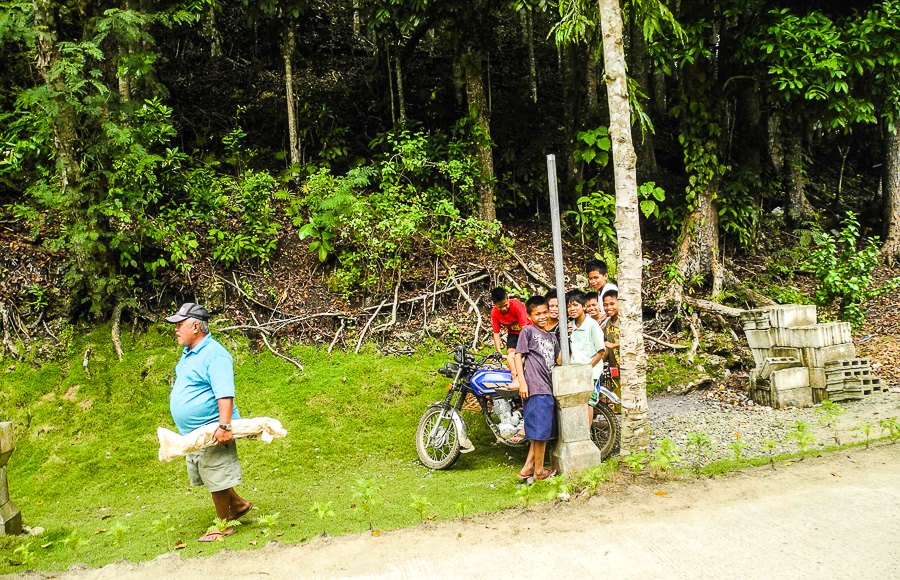
On the way we passed some local children who, for some reason, became shy, huddled together and stared at the foreigners — that is, at us:
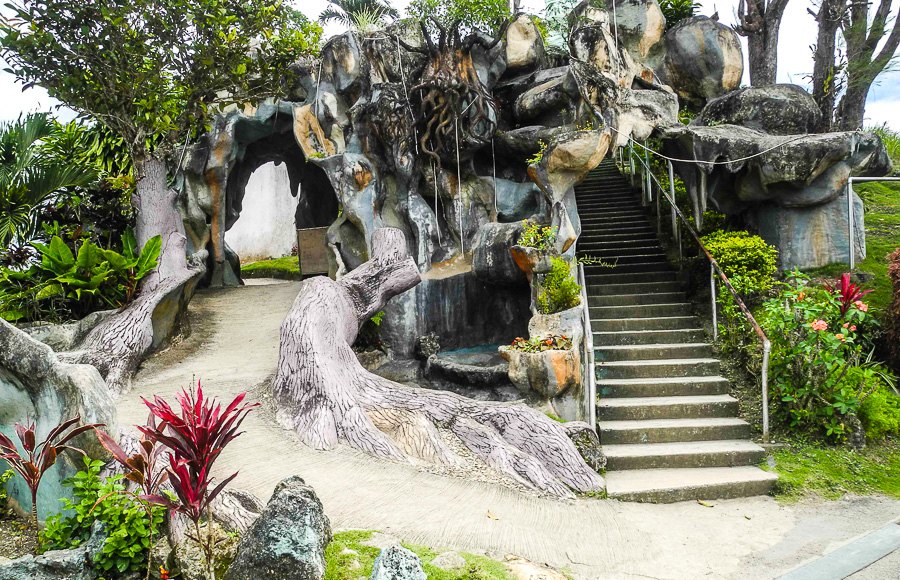
And then we reached the first platform; from there it is on foot only. Tickets are checked again here, and there is a toilet, a restaurant and even some sort of hotel.
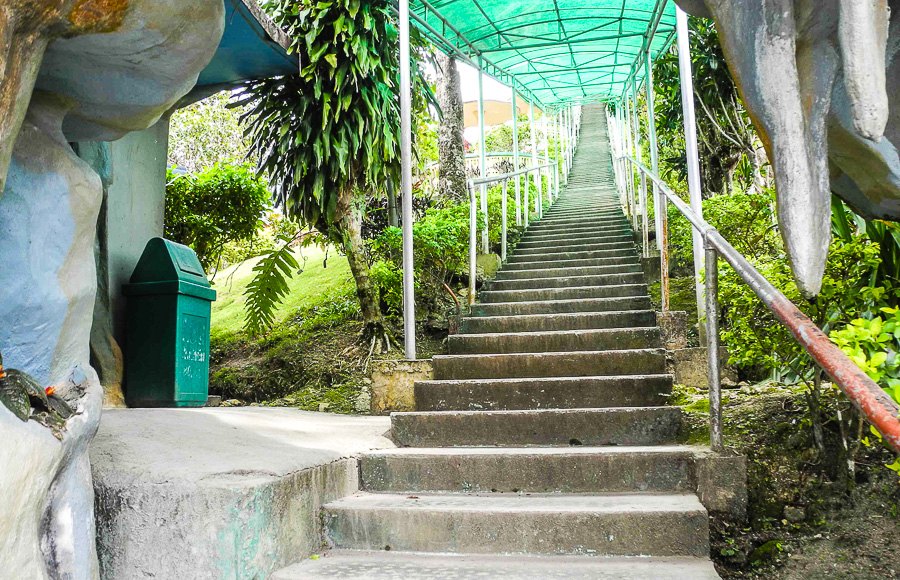
This is what the entrance to the staircase that climbs to the observation deck looks like: 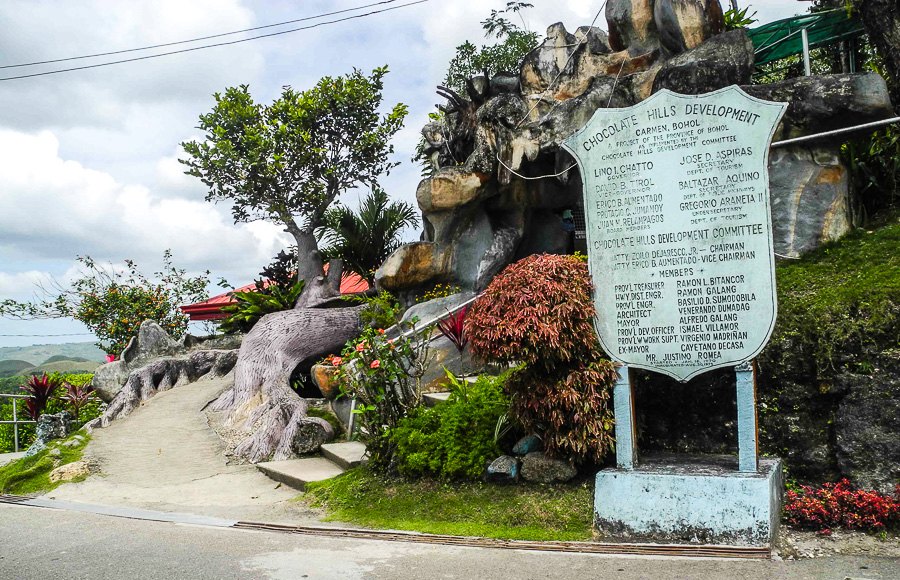
The path on the left is for descending, the one on the right for climbing up:
And here are the hills:
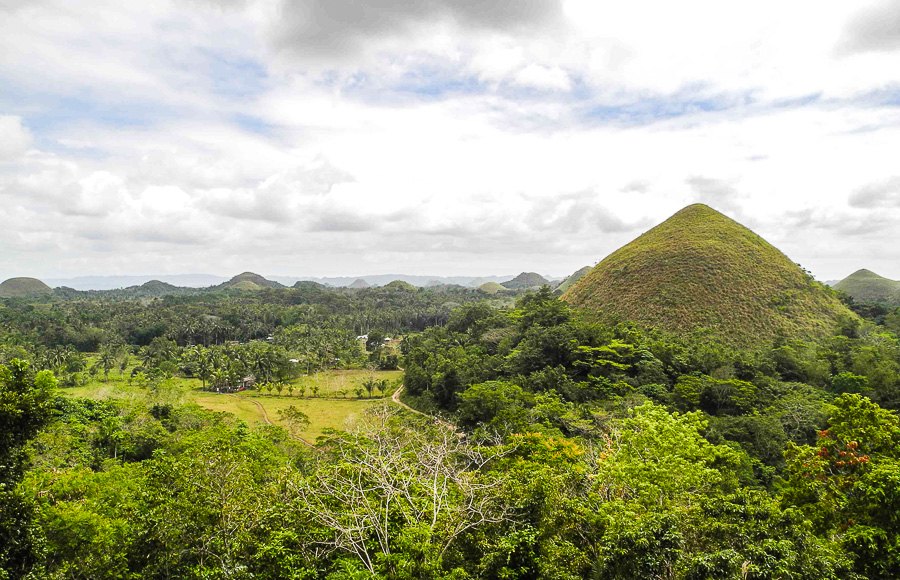
Stunning views — it is a shame photos cannot convey all the beauty.
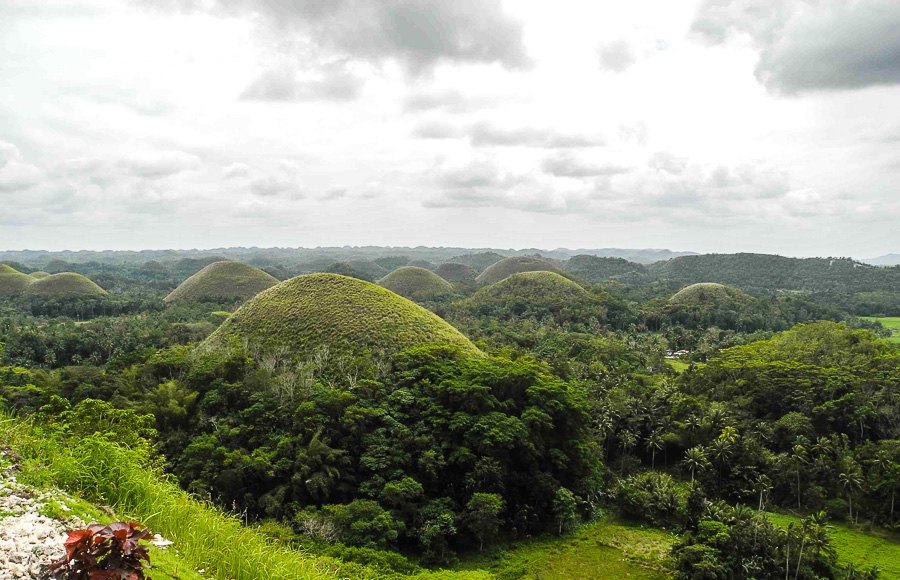
We were lucky: we managed to spend about 20 minutes on the platform all alone. It was so peaceful, as if time had stopped; you simply want to stand there and gaze into the distance…
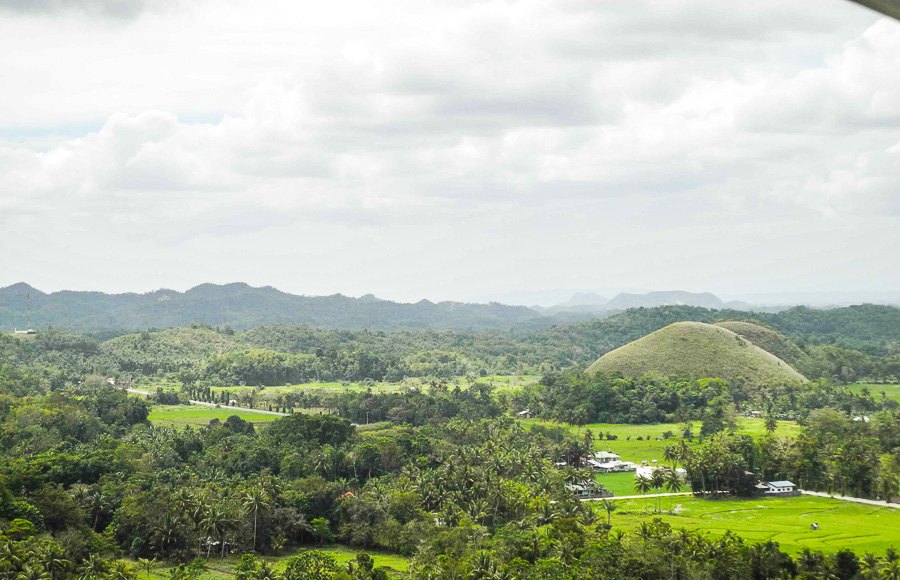
Almost all the hills were green — evidently not the season. They take on that chocolate colour at the end of the dry season, when all the grass covering them scorches; that is when they start to look like truffles. But despite their quite ordinary colour, the views were beautiful, and I wasn’t sorry we had made the trip after all.
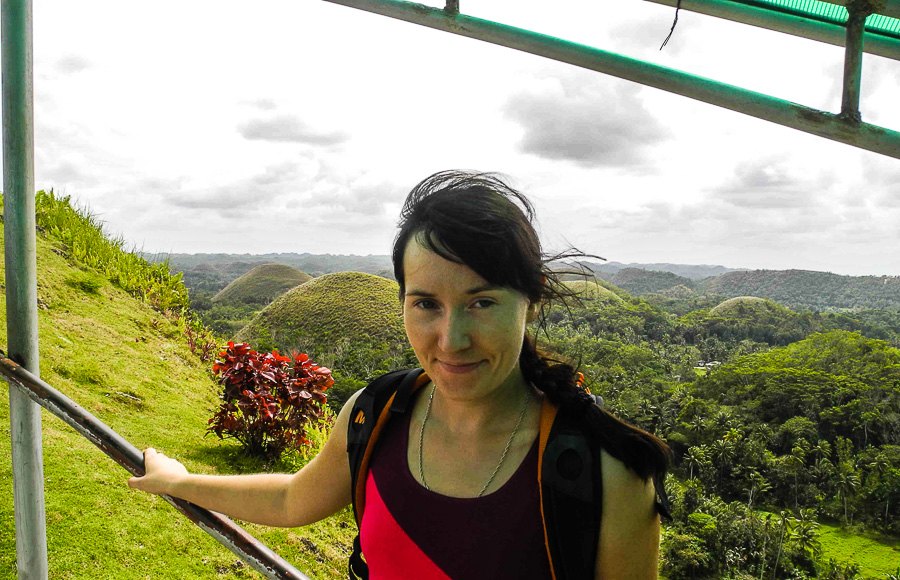
While we were enjoying the views, a whole coachload of Chinese tourists arrived, and there was literally no room left on the platform, so we decided it was time to head back down.
On the way down we came across a statue of the Virgin Mary set into the rock:
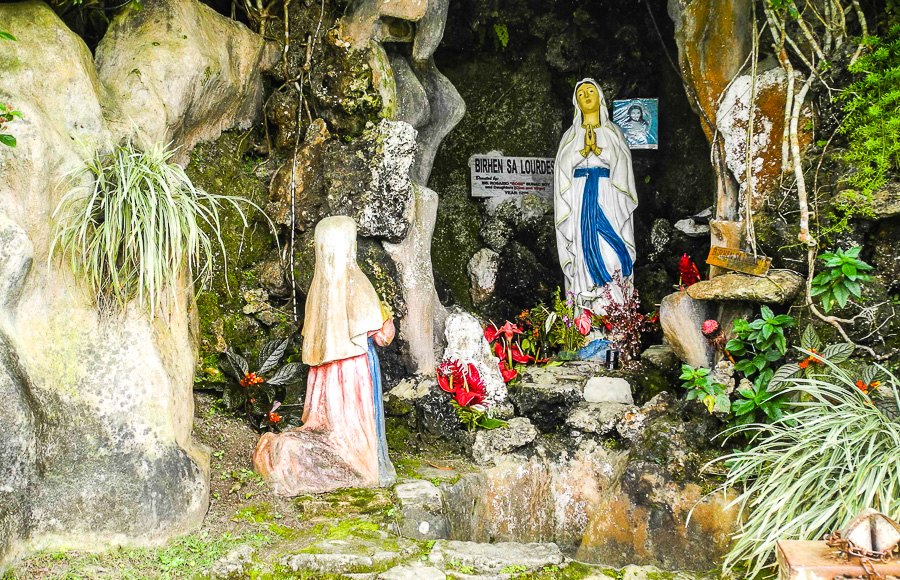
Filipinos are generally very religious (most of the population is Catholic): Bible quotes and words about Jesus are painted on all forms of transport, even state-run buses. Every town has a church, most often either on the main square (as in the town of Loboc) or next to the jetty. Another thing that surprised us was how many people cross themselves when they board transport — we were even a little spooked!
We walked back down to the spot where the bus had dropped us, taking photos along the way:
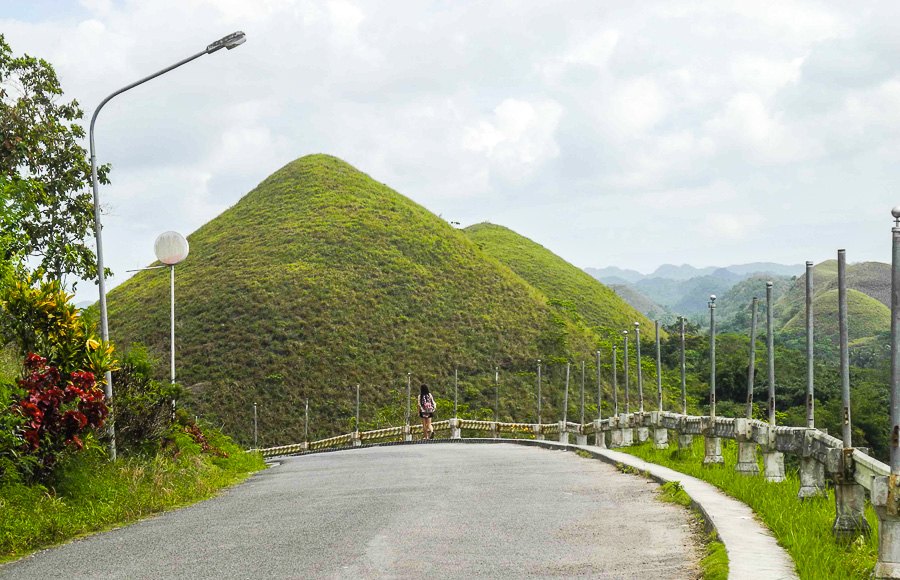
At 13:40 we reached the stop and waited for a bus to Loboc. The Chinese girl, it turned out, also wanted to see the tarsiers, so we waited together.
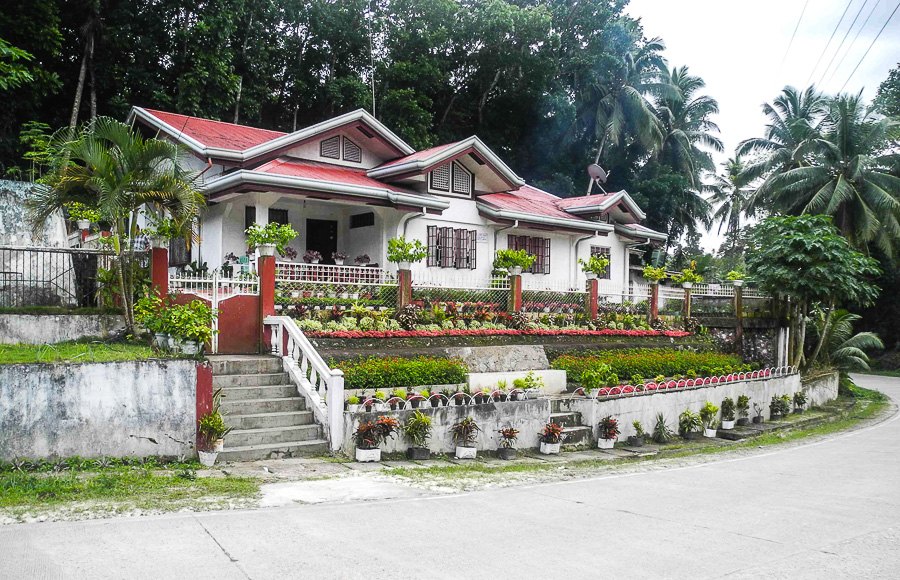
Finally, about twenty minutes later, the bus arrived. The fare to Loboc was 40 pesos each.
Until the earthquake of 15 October 2013, Loboc was home to one of the oldest churches on the island of Bohol. When we were there in 2014 it still lay in ruins, and it was sad to see. Fortunately it has since been restored: the restoration ran from 2017, and on 16 May 2021 the church reopened. And this is what it looked like back then:
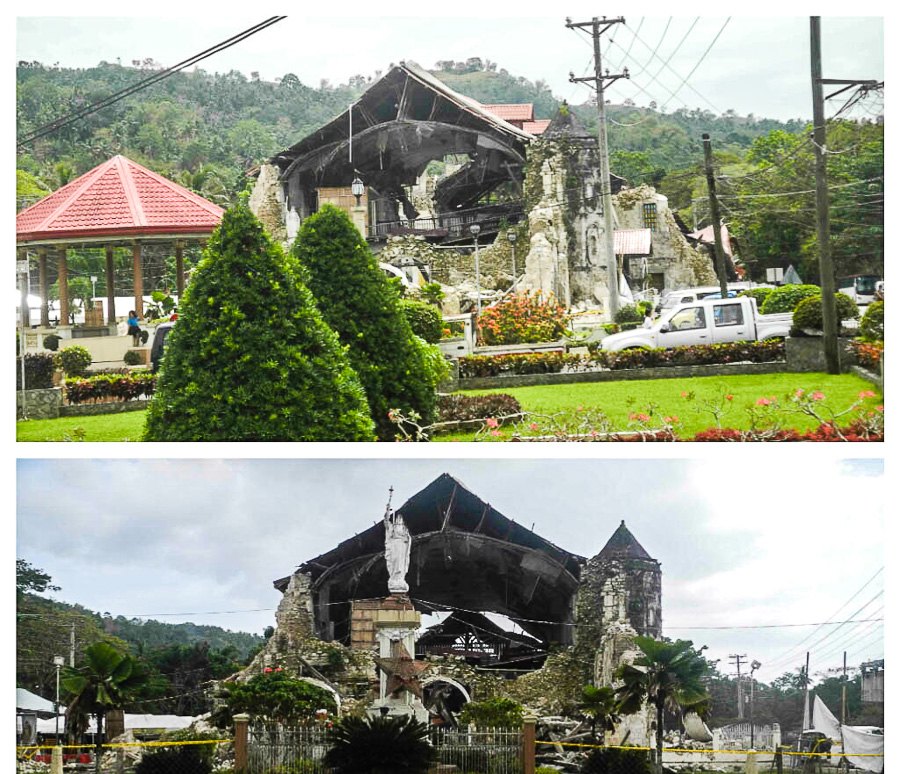
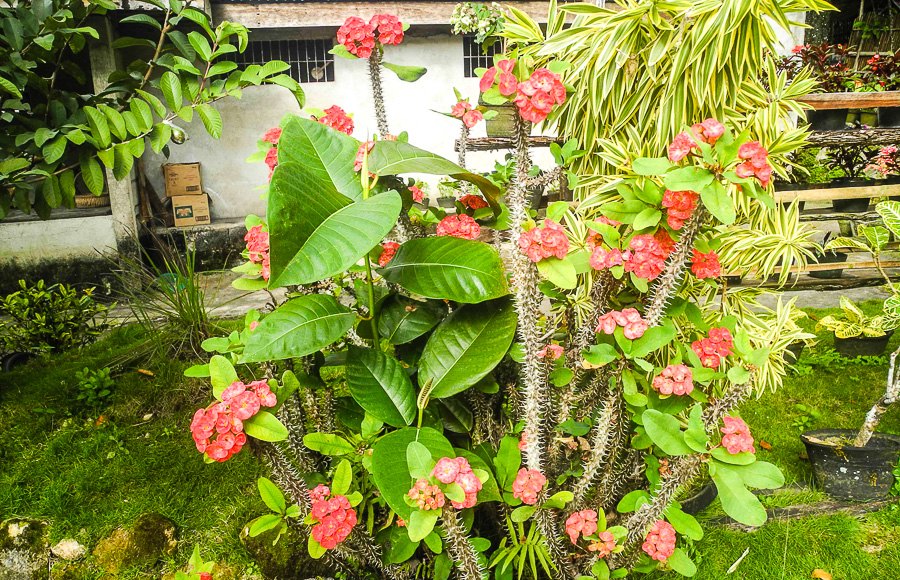
There is nothing to see in Loboc besides the church; the town is just too tiny — I’d even call it a village. The bus dropped us right in the centre, and we had a wander around. It felt like a film set: a town consisting of a single square on which all life is concentrated (the church, the municipal hall, a tourist centre, a pizzeria, a bakery, a few houses, and that’s about it). And it is all very prettily done — flowers and beautiful shrubs.
From Loboc we needed to get to the tarsiers. According to other travellers’ reports, you can catch a jeepney there from Loboc, heading towards the oddly named town of Sikatuna. Unfortunately the Chinese girl had already left while we were taking photos on the square, so there was no one to ask which way to go.
And this is where we went wrong. The drivers of every jeepney that stopped told us they couldn’t take us to the tarsiers. We asked in shops, at the tourist centre and just random passers-by — everyone insisted, as one, that no jeepney goes to the tarsiers, that we needed to wait for a bus, and they pointed us in the direction we had just come from (as we only found out later).
For some reason we simply couldn’t get our bearings on the map. The pin was there, but we had thoroughly confused ourselves about which way we had arrived from and where to go next. So we trusted the locals and boarded a bus that was supposed to take us to the tarsiers (an amusing fact: Bohol even has a phone company called T.A.R.S.I.E.R., an acronym of a much longer name).
So there we are on the bus when we realise we have already been along this road, on the way from the Chocolate Hills. By the time the penny dropped it was too late; just in case, we asked once more whether the bus really went to the tarsiers, and were assured that it did.
It wasn’t a long ride, and soon we arrived:
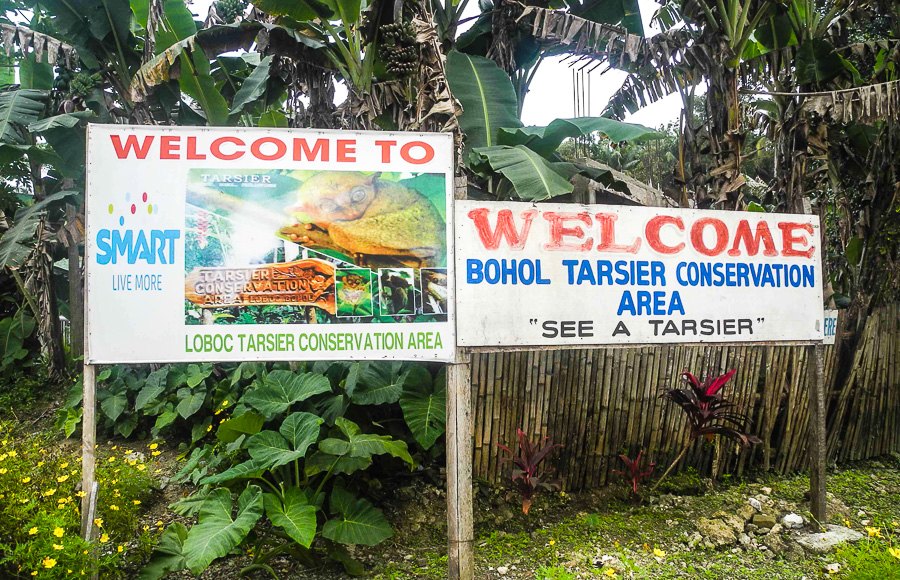
Only later did we understand that we had been brought to the wrong place. Bohol has both dedicated tourist tarsier sanctuaries and parks where the animals live in the wild. We had wanted the natural-habitat kind, where you simply walk through the forest while a local guide spots tarsiers in the trees and shows you where they are hiding. There is a chance you won’t see any at all, of course, but at least they live in conditions that are natural for them.
Tarsiers are very delicate, timid creatures. They say that from severe fright or stress they can even die. In short, captivity doesn’t suit them, especially with everyone jostling to take a close-up photo. We hadn’t wanted to disturb the little animals, yet as it turned out we had even supported this sanctuary by buying tickets.
Tickets, by the way, were 60 pesos per person.
And this is where we had originally wanted to go; entry there is also paid, something like 50 pesos:
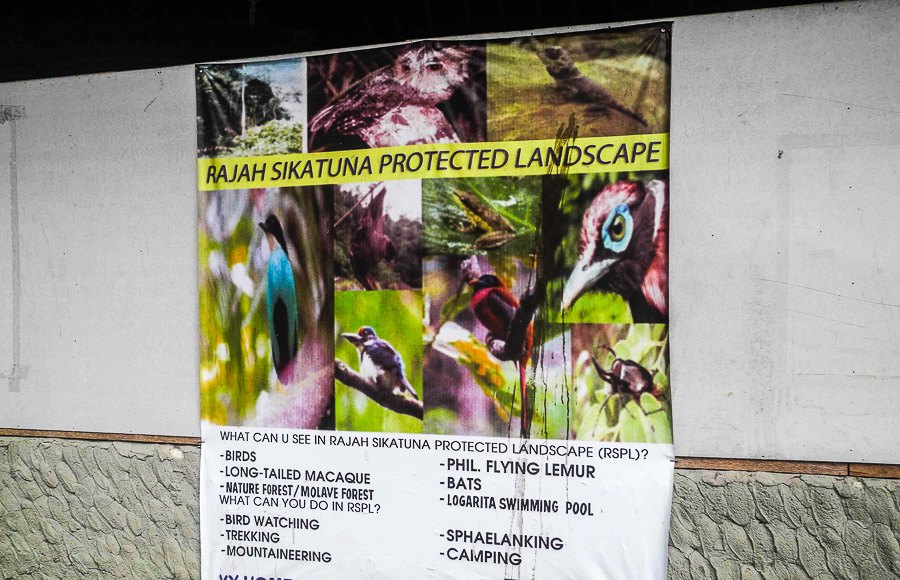
Since we were there, we went in anyway, trying to behave as quietly as possible.
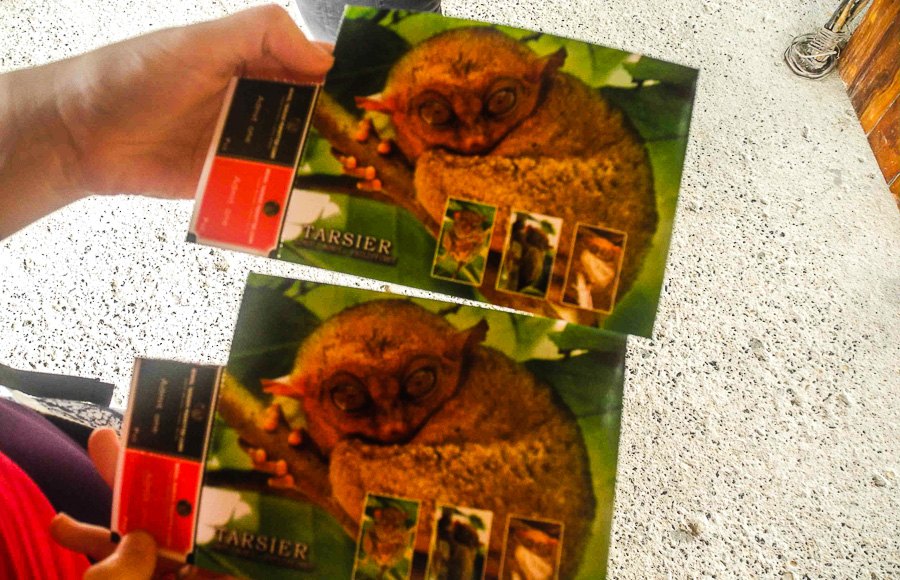
The tickets take the form of postcards: on the back, various facts about tarsiers are printed in English, and you can send the card by post (though in the end we never made it to a post office).
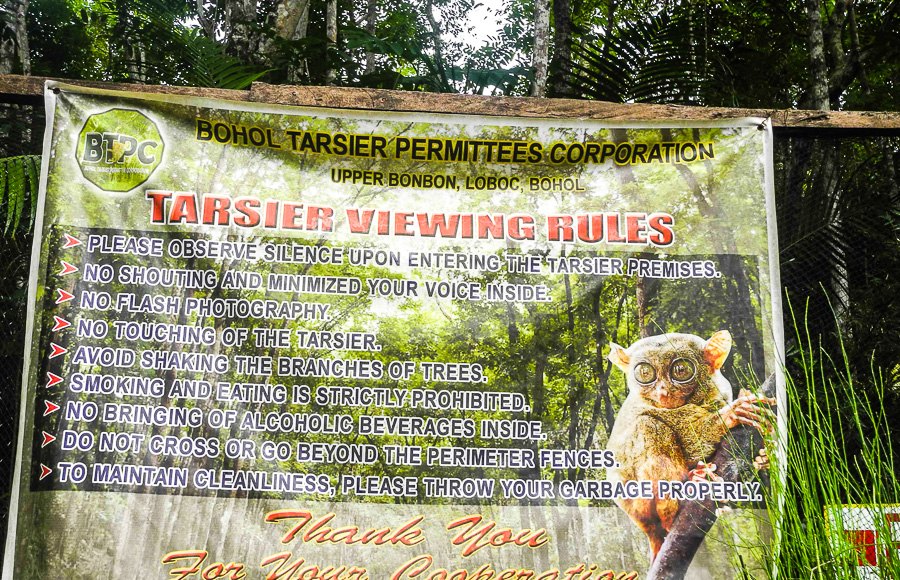
Before the entrance there is a poster with a heap of rules on how to behave:
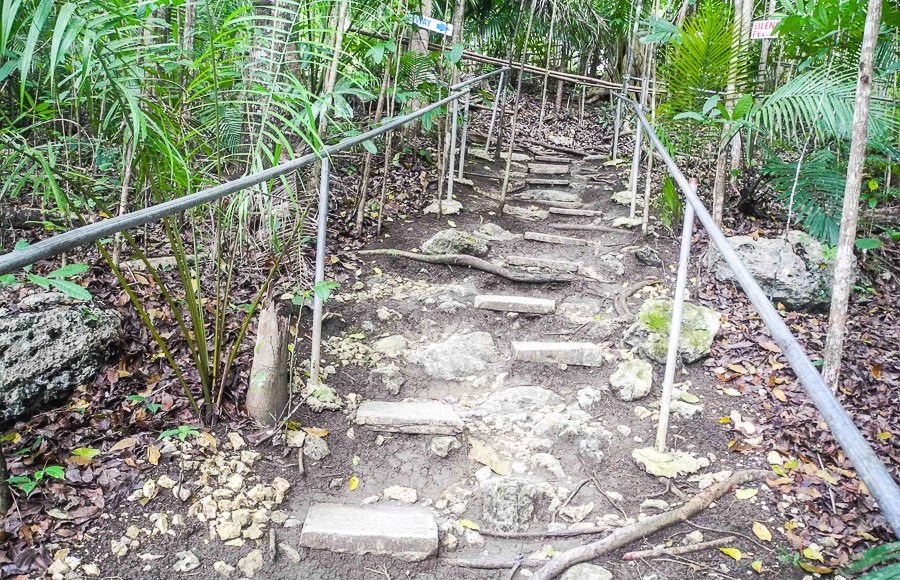
You climb a little staircase like this:
The tarsiers aren’t exactly in cages, but you still feel sorry for them. There were about six of them in the sanctuary altogether, each sitting in its own particular spot, with a member of staff standing next to each one to point out where it was.
In fact they are supposed to sleep during the day, since they hunt at night, so it can’t be much fun for them having people constantly walking past, peering and taking photos. Would you enjoy that?
A sleepy tarsier:
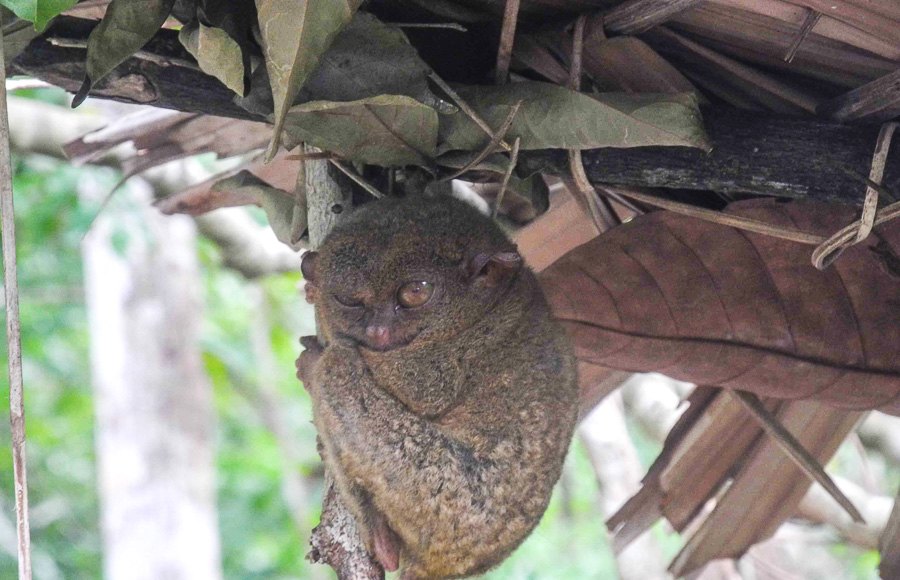
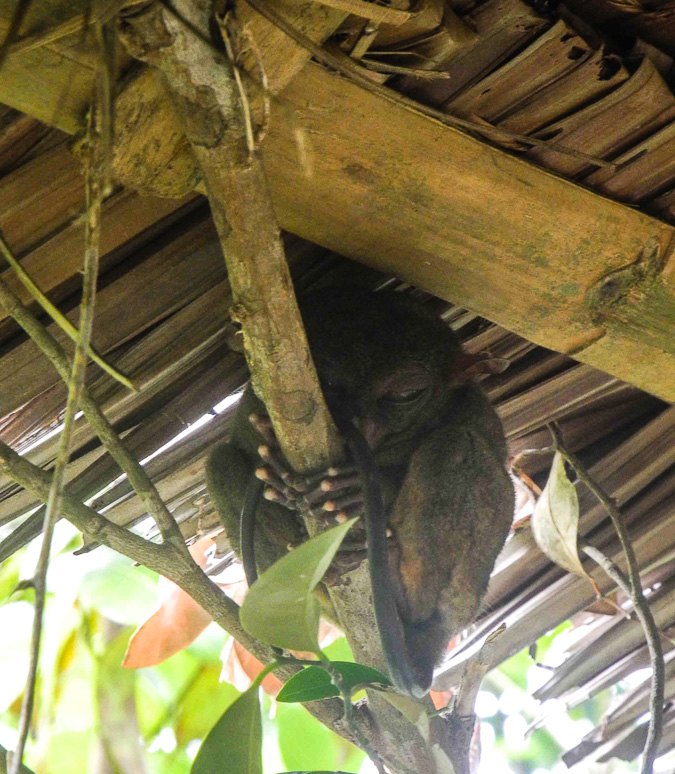
Look at those extraordinarily long fingers:
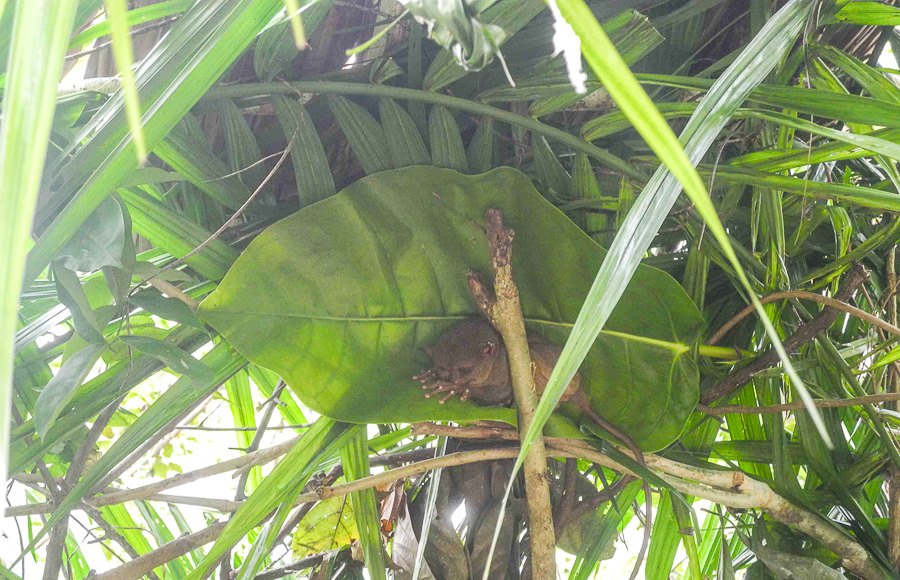
And here it is obvious that this is not their natural environment at all — a leaf laid out like a little dog’s mat:
All in all, the place left us with a rather gloomy impression. The little creatures are undeniably very cute, but you feel sorry for them. So we walked round quickly, had a look (I confess, we took a few pictures) and headed for the bus stop.
It was already about 16:00, and we wouldn’t have made it anywhere else before dark anyway, so we decided to go back to Tagbilaran.
We caught the same bus again, which took us back to Tagbilaran bus station for 40 pesos per person.
The verdict on our trip: we thoroughly enjoyed the journey itself, the Chocolate Hills are stunning, but I never want to go to the tarsier sanctuary again — it only spoiled the mood. All the same, I’d love to come back to Bohol: there’s plenty more to see there, and simply riding around the island is great fun. And I still really enjoy getting everywhere by public transport — no organised tours, no crowds of tourists.
A strange thing: little by little I’m starting to feel completely calm in unknown, unfamiliar places. I used to panic terribly at the unknown, whereas now I’m simply curious. I’ve also noticed that I’ve started remembering the way better and navigating by map more confidently (though I still get confused from time to time) — I used to be a hopeless case when it came to map-reading, so that’s quite a bonus of travelling.