After Bohol, a beach holiday on the island of Malapascua awaited us (or so I hoped).
First we had to get to Cebu, and from there take a boat to Malapascua, which is reached from the northern part of Cebu island.
How to get to Malapascua from Tagbilaran in 2026. The journey still takes a whole day. The quickest option is to sail to Cebu directly from Tagbilaran: the OceanJet fast ferry reaches Pier 1 in about 2 hours; as of November 2026 it runs 12 times a day between 6:00 and 17:40, and an adult ticket in the booking form costs 960 pesos (business class 1,450). Our route via Tubigon is also possible: from there a catamaran and a Lite Ferries ferry run to Cebu’s Pier 3 – in October 2026 there are 6–7 crossings a day from early morning until 22:00, taking 2–3 hours, with tickets at 426–595 pesos depending on the vessel and class. The port terminal fee is paid separately from the ticket.
From the pier, take a taxi to the North Bus Terminal (Cebu North Bus Terminal, next to the SM City Cebu shopping centre), from where the yellow Ceres buses run to the port of Maya in 4–6 hours; the fare is around 220–350 pesos (sources differ). In Maya you pay environmental and passenger fees (120 + 20 pesos), and the public boat to the island costs 200 pesos and leaves as it fills up; at low tide, as in our case, a small boat ferries you out to it for a small extra charge. The last boats leave between 16:30 and 17:30, and the coastguard does not allow the crossing at night, so it is best to leave Cebu before 11:00 – that means taking the 6:00 or 7:05 ferry from Tagbilaran (figures from the carriers and the island’s dive centres, October 2026). You can read more about the road from Cebu, the typhoon season and entering the country in our account of the island itself. Below is the story of our journey in 2014; all the prices in it are from that time.
In a single day we had to cover the following route:
View larger map
We left the hotel (see hotels on Bohol) at around 08:00, caught a tricycle and rode to the bus station for 30 pesos. At the Island City Mall we stocked up on all sorts of treats for the journey and walked on to the station.
We had decided to travel to Cebu the same way we had reached Tagbilaran. That meant first getting to Tubigon.
There is in fact a ferry to Cebu from Tagbilaran too, but we wanted to see a little more of Bohol and ride along the coast right across the island.
At the bus station we were immediately asked where we were going and pointed to the next bus for Tubigon. There are no ticket offices; tickets are bought on the bus itself, from conductors.
The bus left at 08:50. The ticket from Tagbilaran to Tubigon cost us just 50 pesos per person.
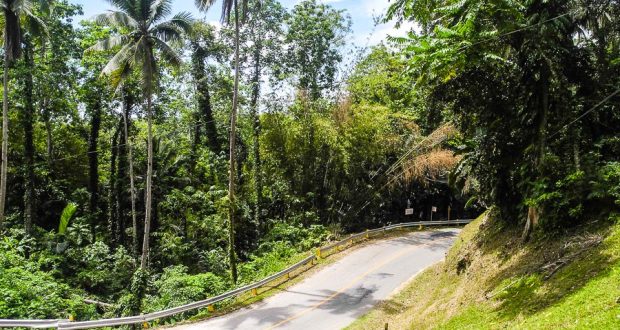
The journey took 2 hours, and only now did we see how badly Bohol had suffered from Typhoon Haiyan.
We took a few photos along the way:
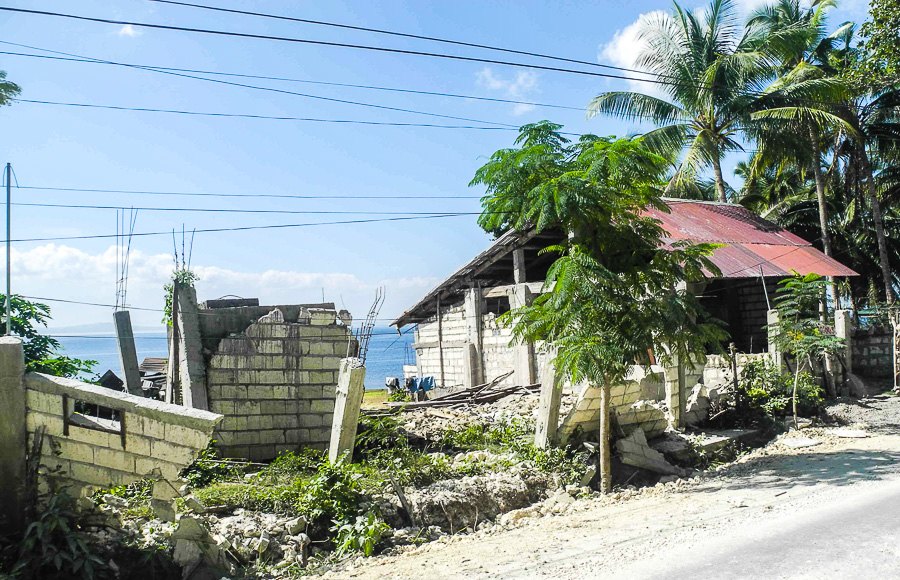
It was sad to see it all: so many local people left without a roof over their heads, many schools destroyed – a truly dismal sight.
Either way, by 10:45 we were already in Tubigon.
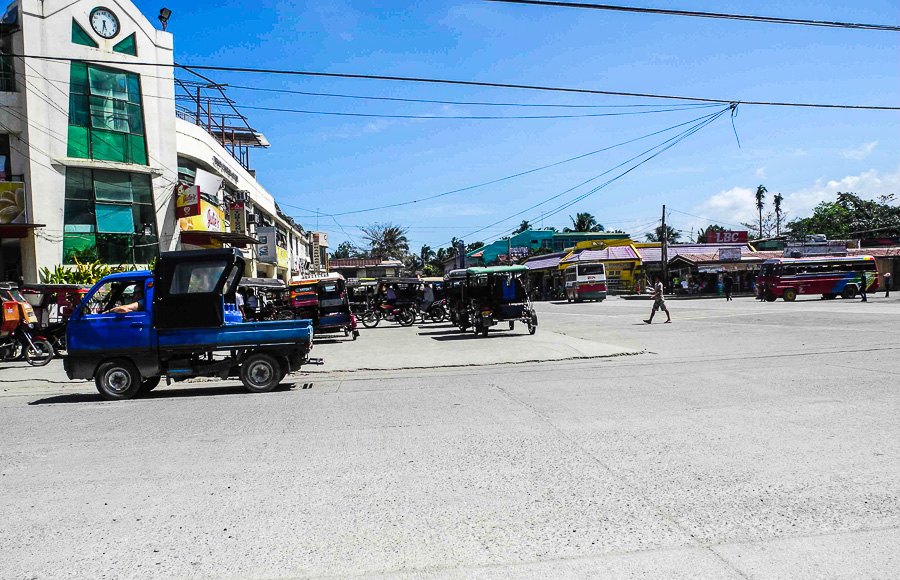
The square we already knew:
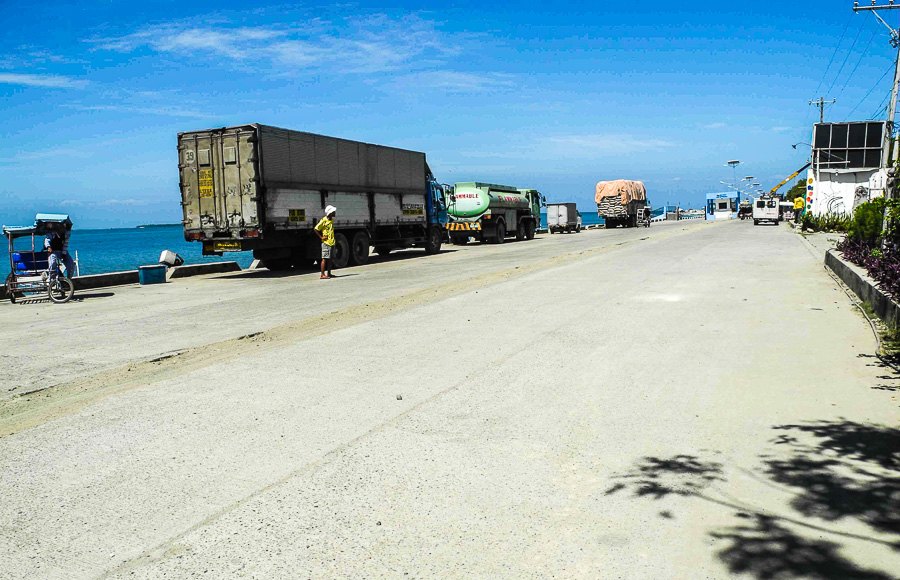
We ran as fast as we could down this path towards the pier:
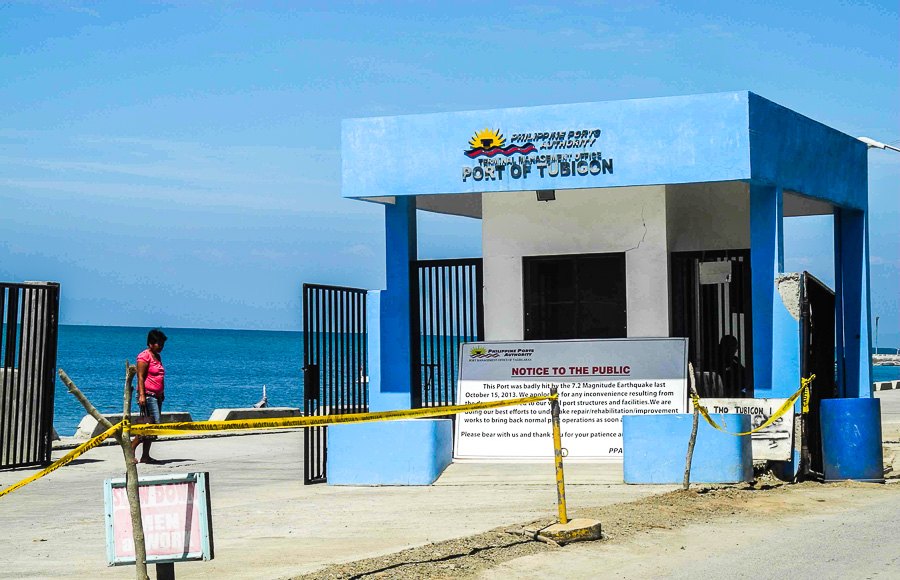
But at the checkpoint we were asked to show our tickets. It turns out you cannot enter the port area without tickets.
The checkpoint where you have to show your tickets:
We asked where we could buy tickets and ran to the ticket office. The ticket offices are right near the spot where the bus had dropped us. There was very little time – I didn’t even manage to take a photo.
The fare from Tubigon to Cebu was 200 pesos per person. The ferry left at 11:00 – there were literally a couple of minutes to go before departure!
Tickets in hand, we finally ran on to the terminal:
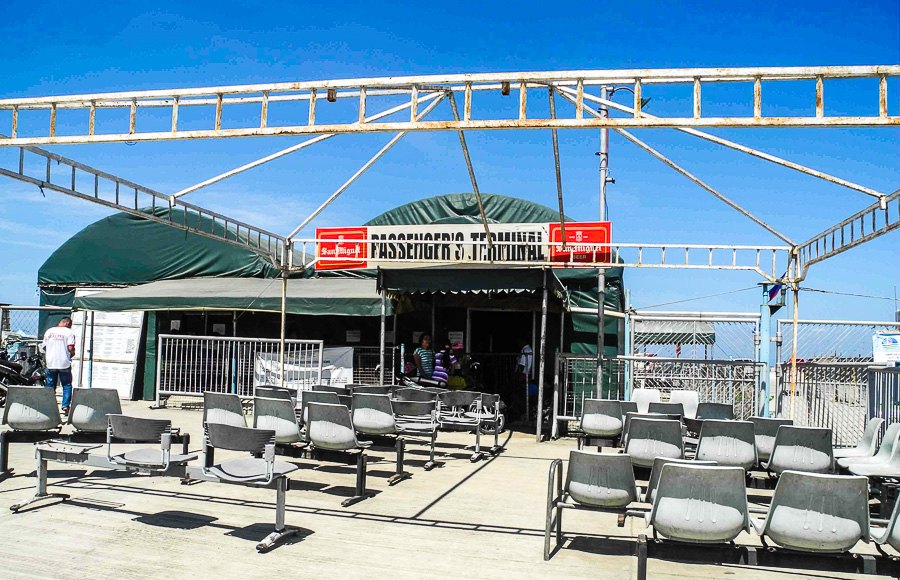
In the Philippines there is a system whereby you pay an extra charge for using the terminal (that is, simply for going in). It is usually a small amount, but it depends on the particular terminal.
At this terminal the charge was 10 pesos per person:
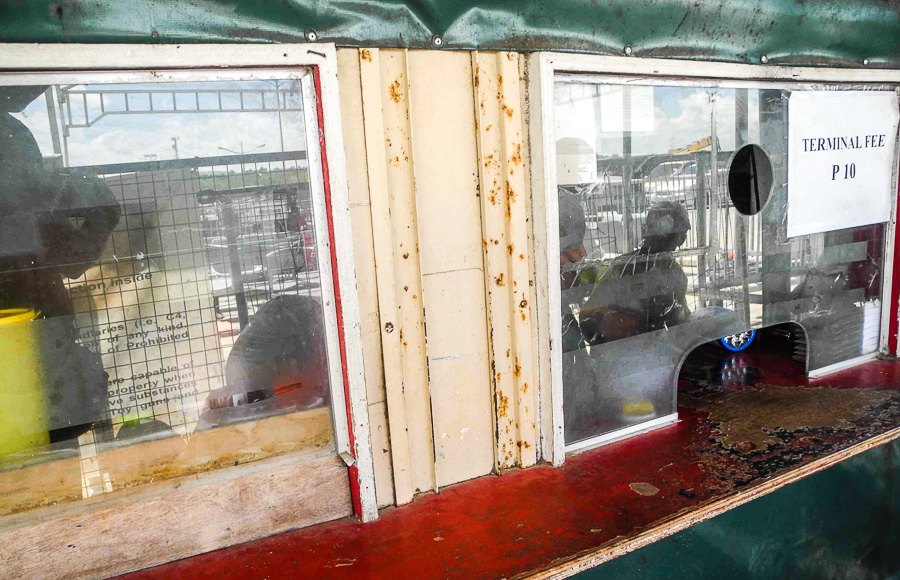
Inside the terminal:
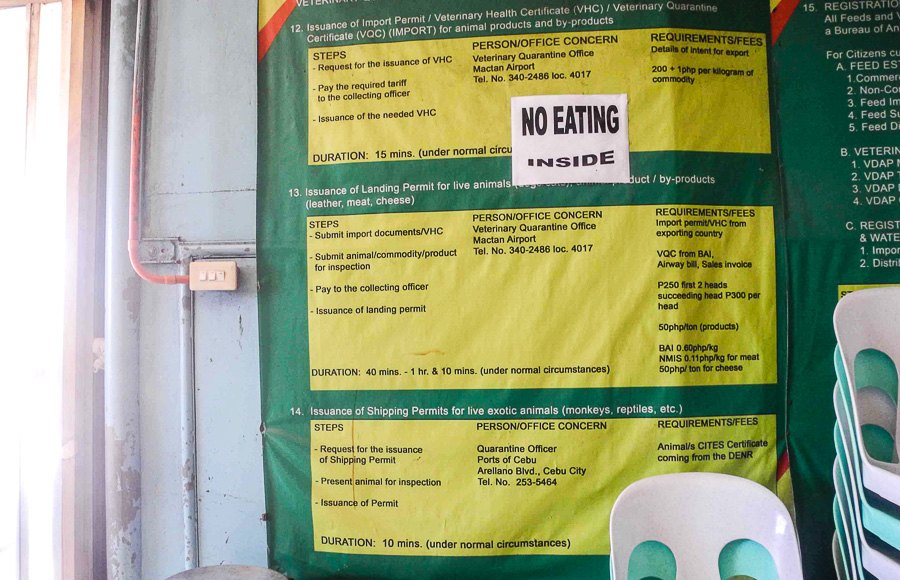
We thought this was our ferry, but it wasn’t. This one is probably cheaper than ours – we boarded it by accident, and it even has two-tier bunks that you can sleep on for the whole trip. The ferry presumably takes a very long time.
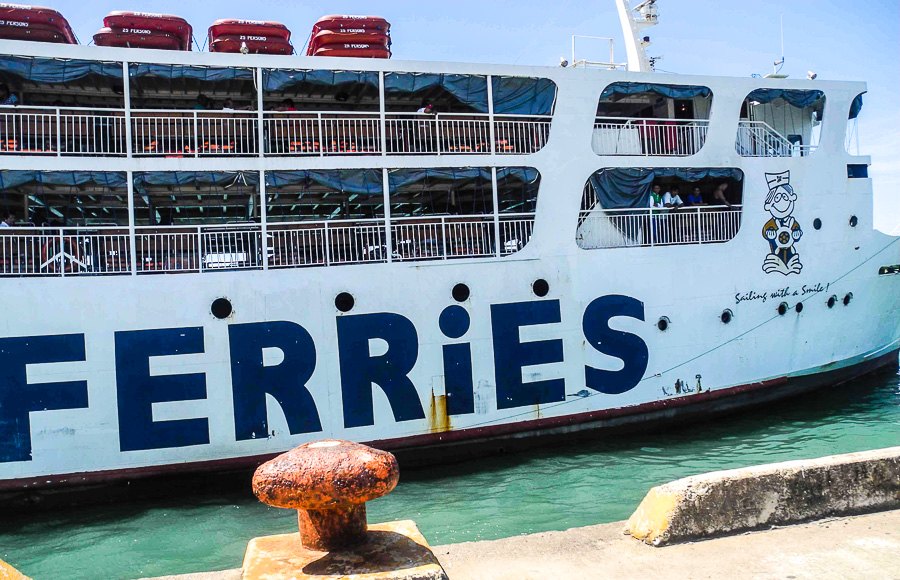
Ours was a small, fast ferry with no open deck; all the passenger seats are in the cabin.
At 12:05 we arrived at the pier on the island of Cebu (Pier 1):
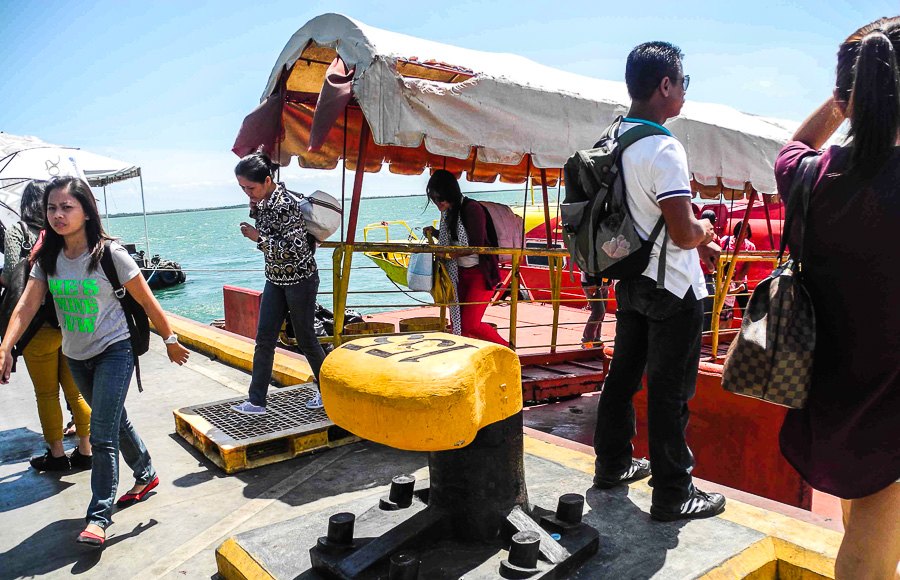
From the pier we needed to get to the North Bus Terminal, from where buses run across the whole island to the village of Maya.
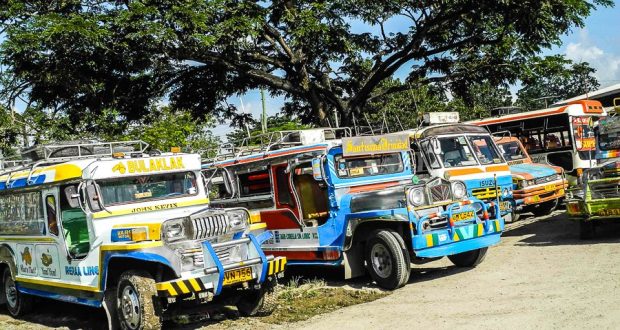
Not far from the pier we spotted a jeepney (the local share taxi) and asked the driver how to get to the North Bus Terminal; he pointed us in the right direction and said that jeepneys numbered 21-0 run that way.
We walked literally a few metres and saw the jeepney we needed. Of course, we weren’t sure we were getting on the right one, so we asked the passengers to be certain. It turned out to be exactly what we needed.
The fare from the Cebu pier to the North Bus Terminal was only 15 pesos for the two of us.
While I was finding this out, we set off, and I simply went cold with horror – it turned out my husband hadn’t managed to squeeze into the tiny jeepney with his rucksack and was left standing outside on the footboard! I had barely managed to squeeze inside myself, practically having to crouch down. But at least I had a small 30-litre rucksack, while Vova’s was a 60-litre one stuffed to the brim. So he rode outside the jeepney for the rest of the journey. I was utterly terrified the whole time – it felt as though he might fall off at any moment, as we were going at a fair speed.
Thankfully everything went smoothly, and at 12:35 we arrived at the North Bus Terminal.
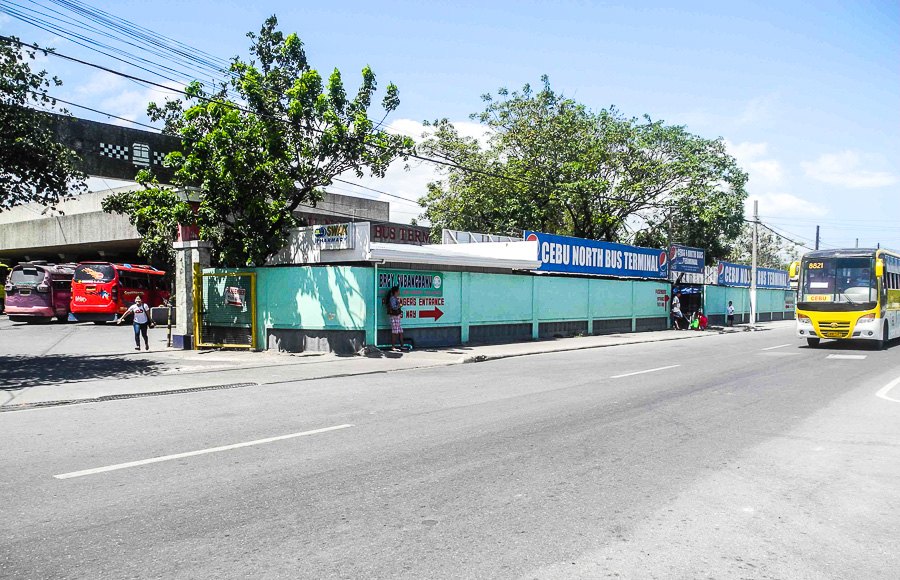
As soon as we arrived, people at the station asked where we were heading and pointed us to the right bus. It was leaving in 10 minutes, so there was still time to stroll around the station and not forget the toilet (very important before the long journey ahead!).
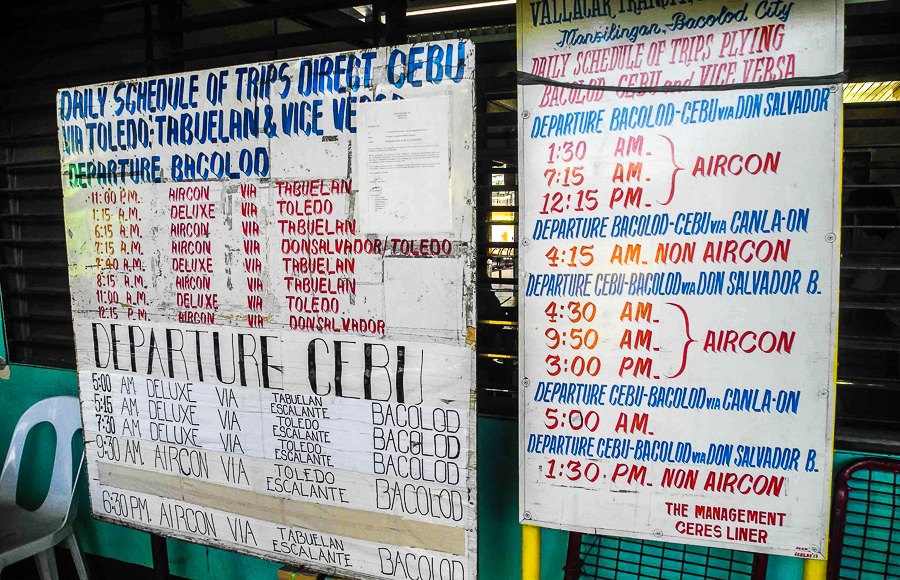
Timetable of buses departing from the North Bus Terminal:
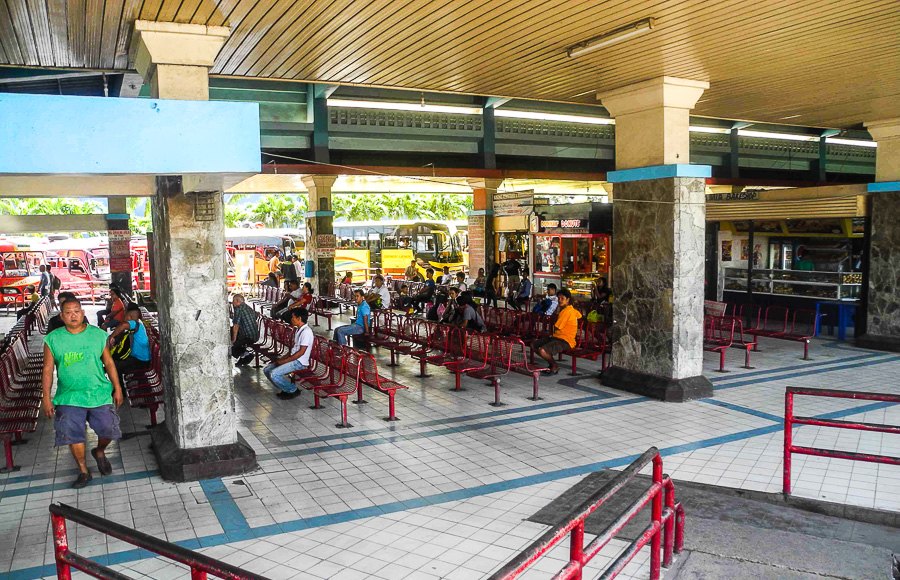
The bus station is open-air, with a small waiting hall and a few stalls selling fast food and snacks.
We bought our tickets on the bus; the fare was 160 pesos per person.
We set off at 12:50. There were few passengers at first, but a couple of hours later there were no free seats left.
The bus was a standard Filipino one, without glass in the windows, with natural ventilation. On a trip like this you should definitely bring close-fitting glasses to protect your eyes from the dust. We drove very fast, yet still managed to capture some excellent views:
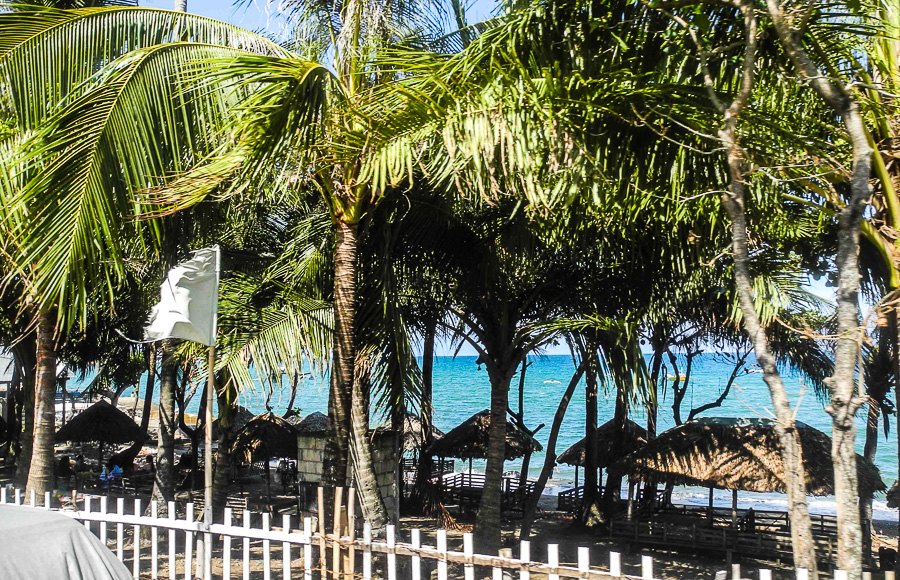
At 14:10 there was a long stop (about 20–30 minutes) not far from the town of Carmen (a popular name – if I remember rightly there was a town of the same name on Bohol too, and indeed many Filipino towns have Spanish names).
A stop practically in the middle of an open field:
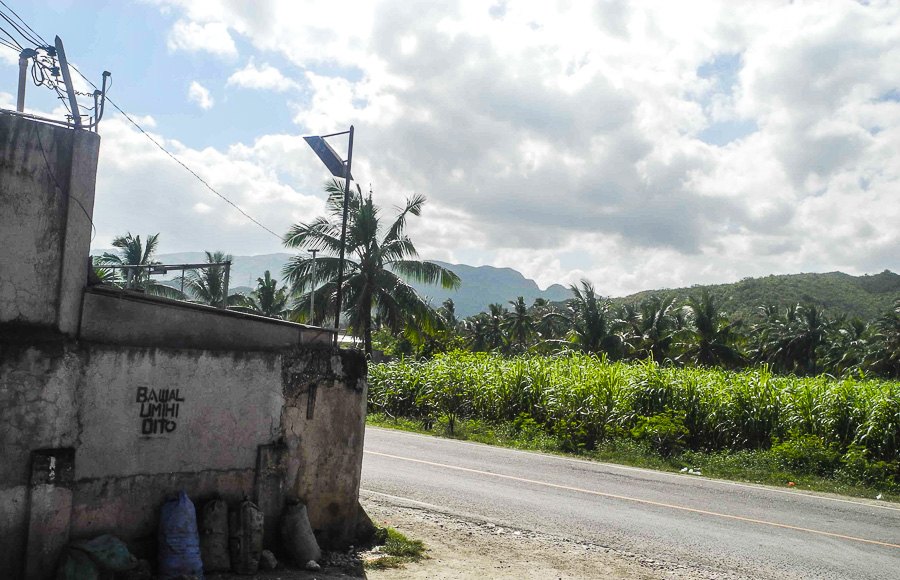
And after that – beauty again! For some reason the journey wasn’t tiring at all; it was so interesting to look out of the window at the changing scenery that the time passed unnoticed.
Part of the way ran along the sea coast:
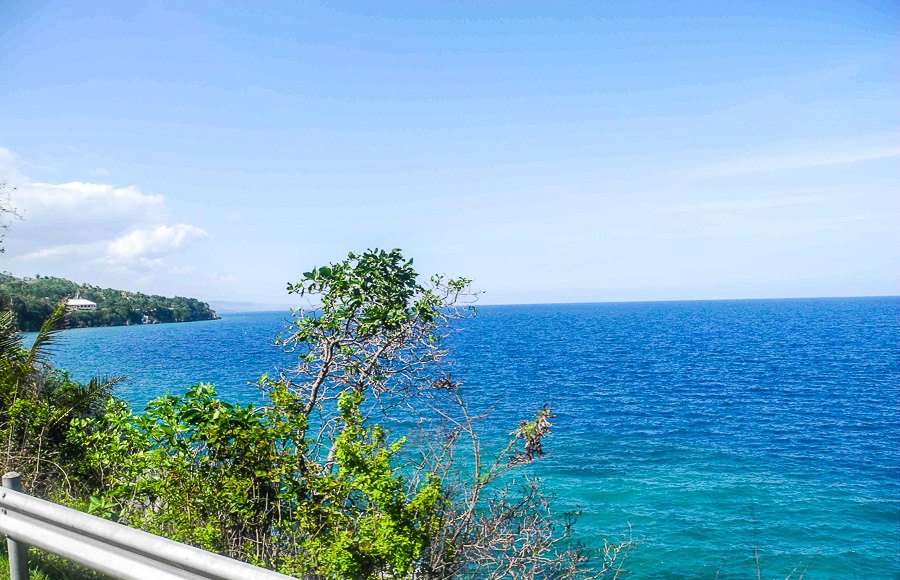
And part of it among mountains and tiny villages:
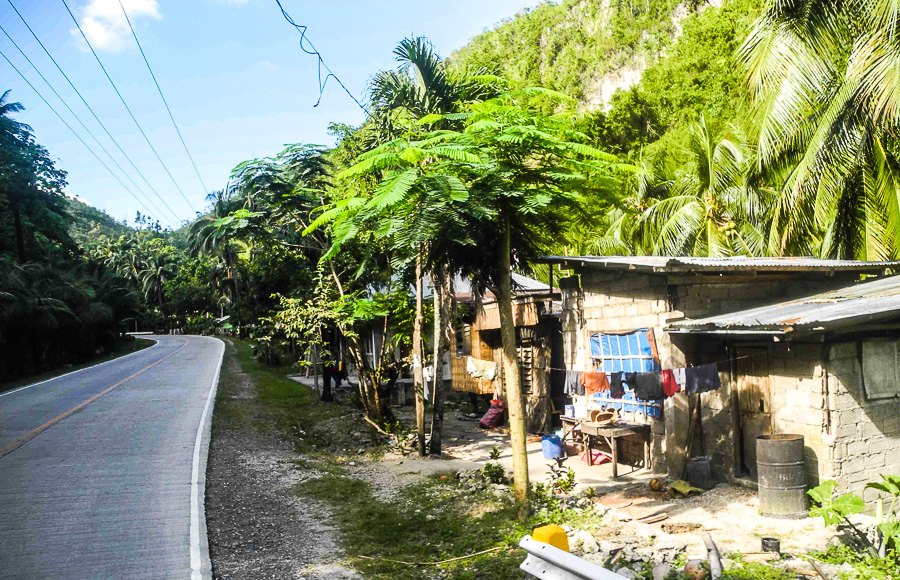
A whole heap of coconut waste! I hadn’t known before that the coconuts sold in our shops back home are only the inner part of the whole nut – something like the stone of a fruit, except that instead of the fruit itself there is this porous husk:
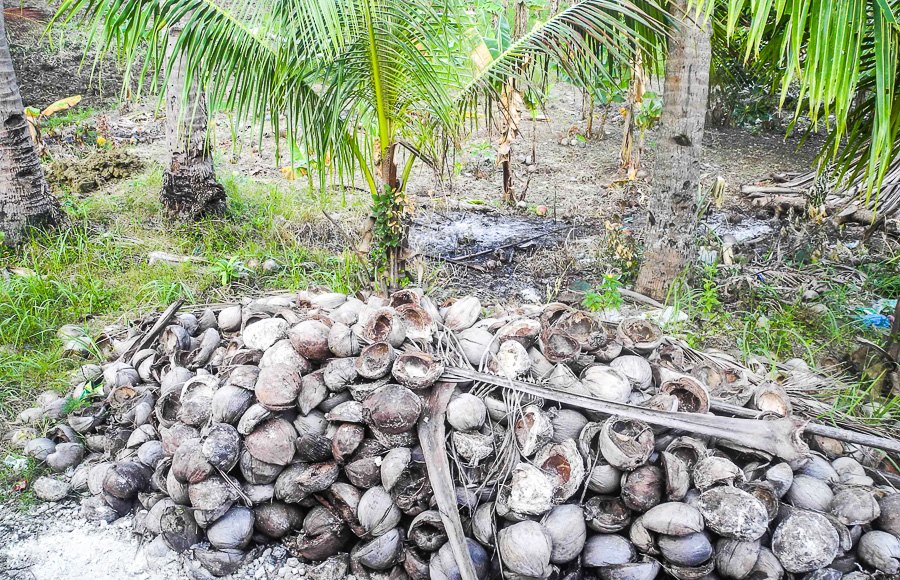
The inside of that husk is the familiar coconut.
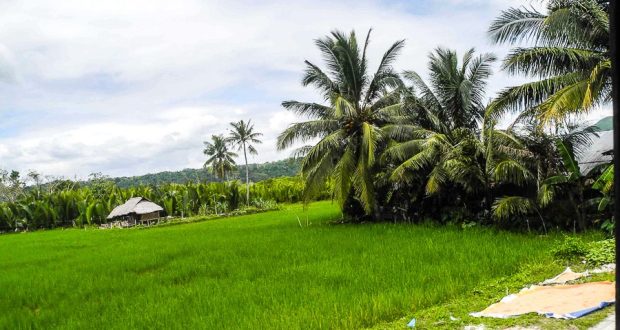
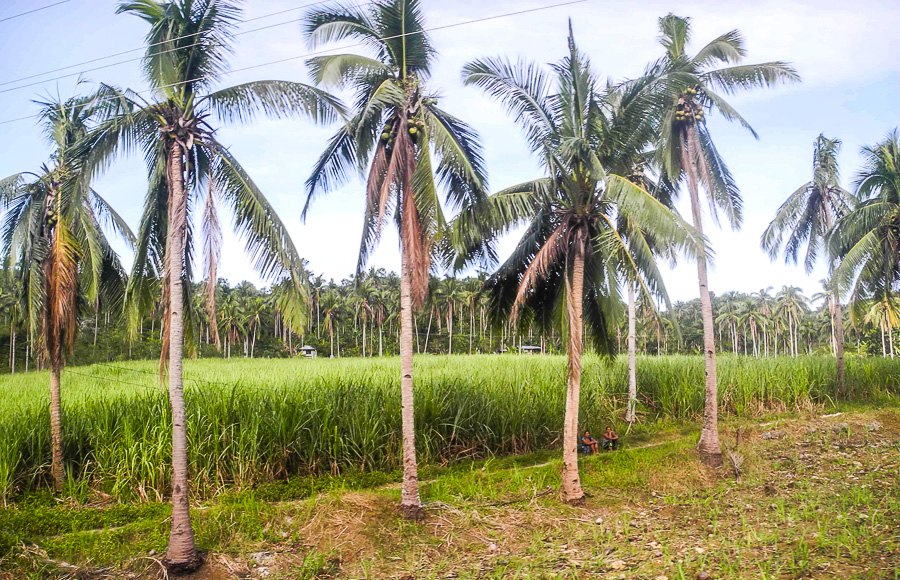
Fields with palm groves:
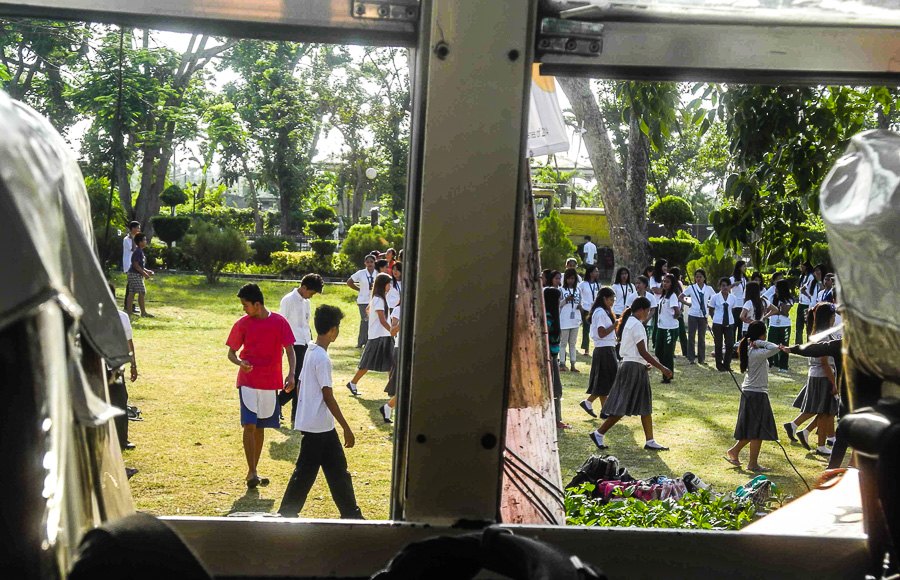
Schoolchildren, all in identical uniforms, even in the most remote villages:
The journey across the island took us more than 4 hours! And we spent the last half hour on tenterhooks: the time was approaching 17:00, and according to information on the internet the last boat to Malapascua left at either 17:00 or 17:30. So there was reason to be nervous, especially as it was unclear whether there was anywhere to spend the night in this little village if we missed the last boat.
The situation was made worse by the bus stopping practically every 100 metres to drop someone off. For some reason in Cebu (and perhaps in other parts of the Philippines too) it is not customary to stop only at designated stops. The bus stops at any request, literally delivering everyone to their doors. It is incredibly nerve-racking when you are running late.
So it was that at 17:10 we – by now the only passengers left on the bus, and therefore even more worried about possibly having to spend the night in the village of Maya – finally arrived at the pier.
The village of Maya is so small that there doesn’t seem to be a single hotel or guesthouse, although one was listed in the Lonely Planet guide. But everything looks so very ruined that staying there would have felt rather scary.
Luckily there were a few other people at the pier, so we didn’t lose hope that a boat would appear soon.
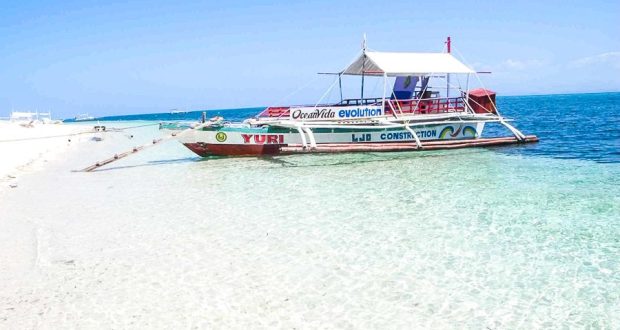
After a while a small boat turned up, and we were actively ushered towards it. More precisely, it wasn’t just a small boat but a tiny skiff that could hold no more than 6 passengers.
The boat ticket cost 20 pesos per person, and the same again for luggage. We paid 60 pesos for the two of us and one big rucksack.
This is how we clambered over the rocks into the boat:
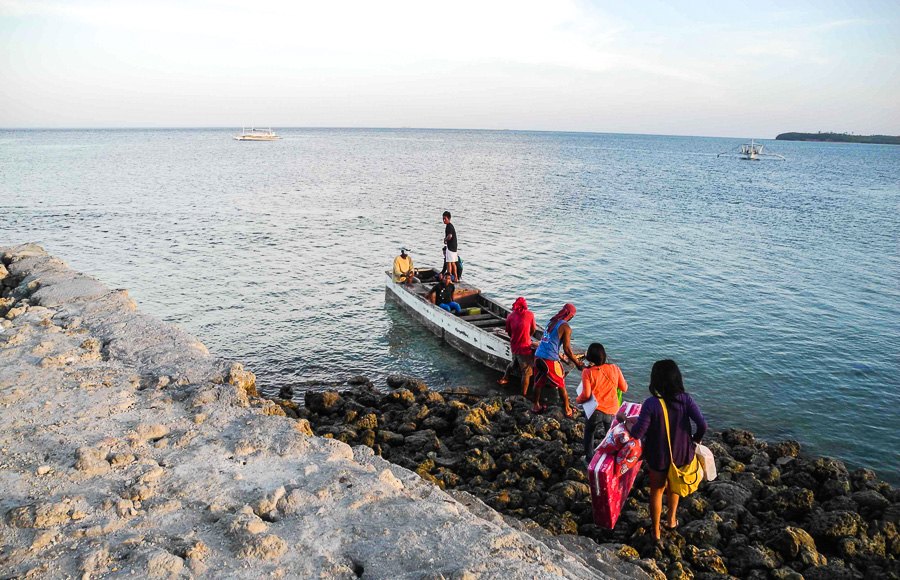
View from the sea of the pier we had sailed from:
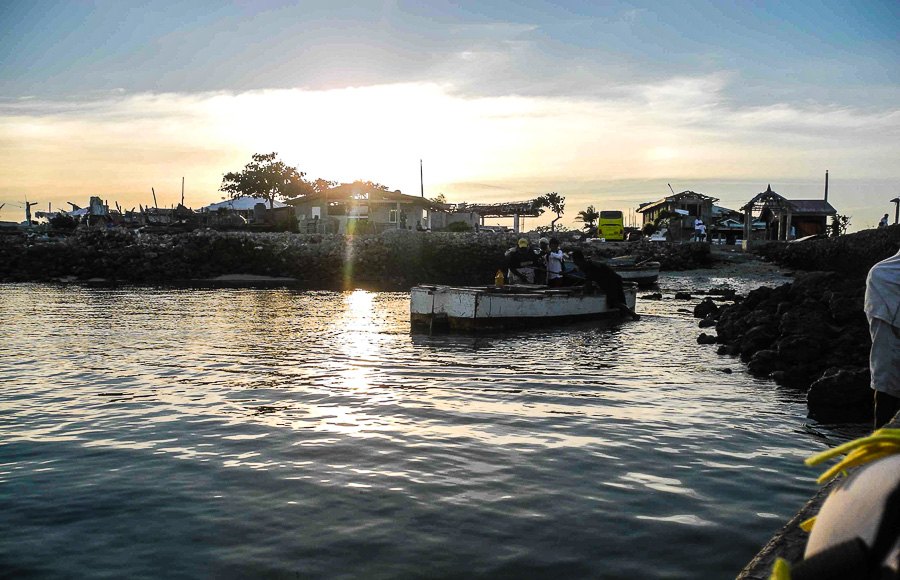
These boats even carry motorbikes! The second boat happened to be carrying a bike and its owner (nothing else would fit, of course).
The boats aren’t even motorised – they move by pushing a long pole against the bottom. At least it wasn’t all the way to Malapascua, only as far as the big boat.
We climbed onto the big boat – you can see the bike sticking out:
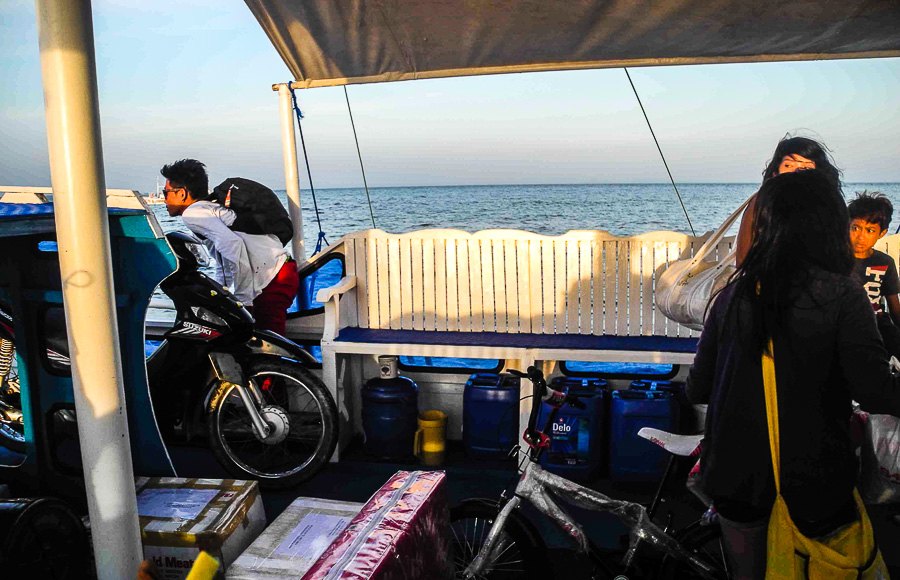
When we boarded, there were already locals on board who had evidently been waiting a long time and looked tired:
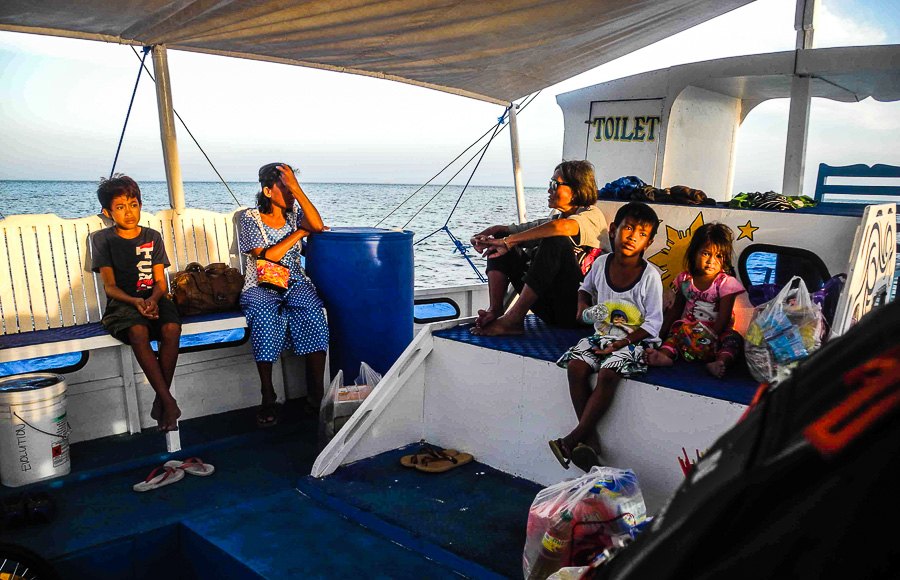
How we transferred from the small boat to the big one is a story in itself. It turned out to be not so simple, given that both boats were rocking and we had rucksacks on our backs that didn’t exactly help our balance! The boats were also of different heights and kept drifting apart from each other – rather tricky, in short.
The ticket on the big boat cost 100 pesos per person. We had read that in theory this was the price of the whole journey from Maya to Malapascua, but in the end we had to pay a little more, counting the small boat. Initially we were quoted a different price, around 200 pesos per person, but we watched how much the other passengers handed over and simply passed over the same without asking questions. So we ended up paying 100 pesos each. We set off at 17:30.
At first we moved without a motor too, pushing off with a pole:
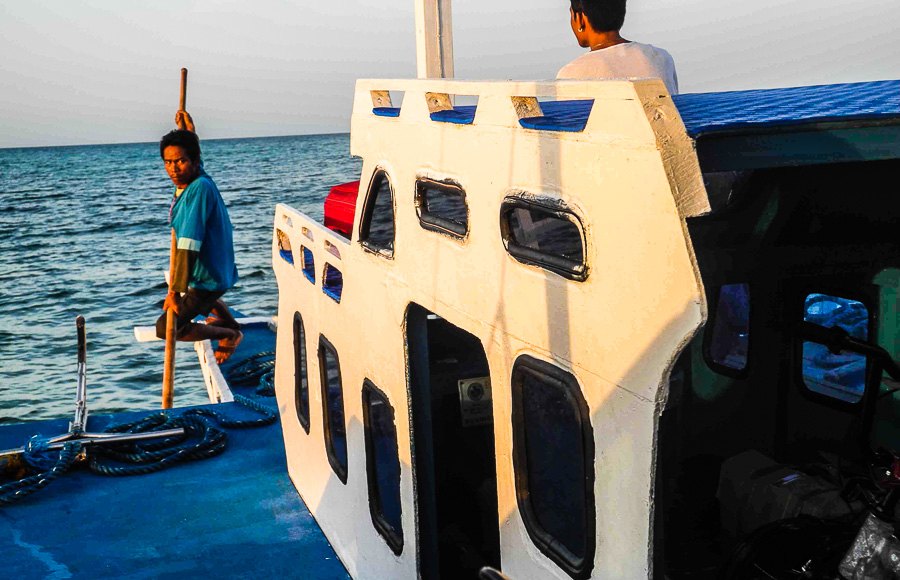
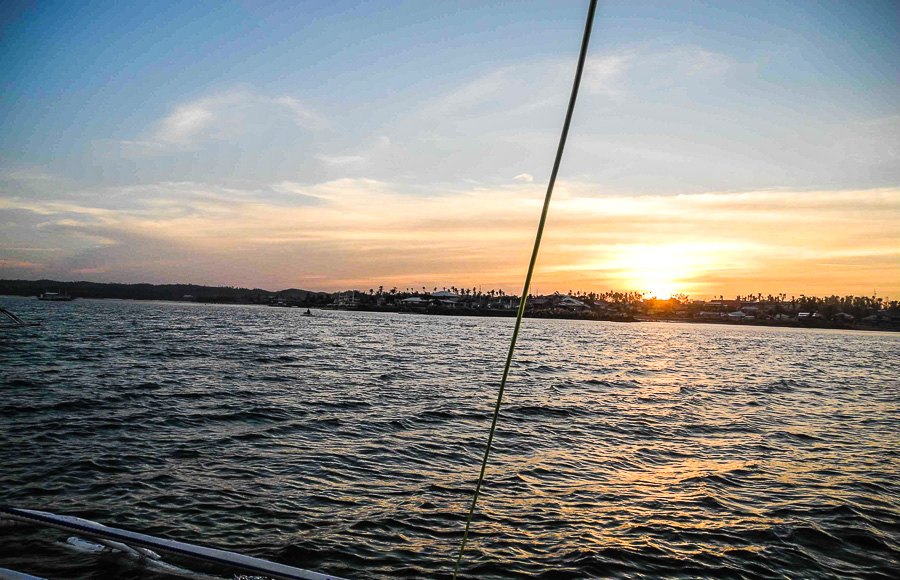
Meanwhile the day was drawing to a close, and from the sea we watched this sunset:
All our fellow passengers – lots of Europeans:
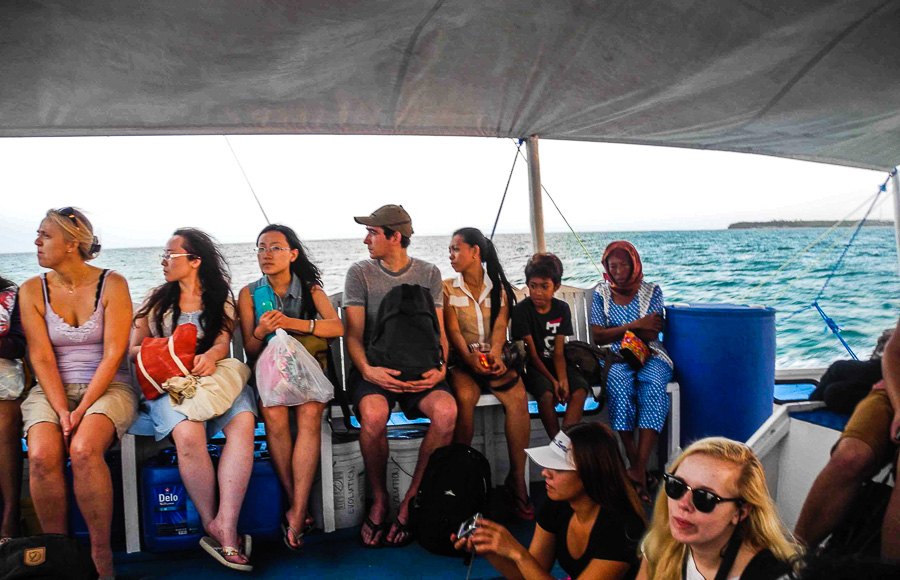
They evidently knew something we didn’t, as all the Europeans had huge bags of food and drink. We even began to think there would be nothing to eat on the island.
While we sailed, it grew dark, and the few lights of Malapascua were already visible in the distance. You could even say the island lay in darkness. And then the boat suddenly stopped. It turned out that to reach Malapascua we had to transfer once again to a tiny boat. The time was already 18:40.
Fine in daylight, but at night, in near darkness, changing boats was not the most pleasant of tasks.
Anyway, somehow we did get ourselves into the little boat and sailed towards the island. Strangely, we were heading not towards the lights but the opposite way, towards some very dark pier. Deep night had fallen and the island was completely invisible; we were moving into darkness.
The sensations from the trip were simply unforgettable! I had the impression we were in some Indiana Jones film – it was frightening, thrilling, fascinating and very unusual all at once! In cities, because of the smog and the light pollution, the stars are almost invisible. But here, in the pitch darkness, a sky stretched above us full of literally millions of visible stars! I had never seen anything like it in my life; the sky was cloudless and you could even make out the Milky Way. What a pity my camera isn’t suited to photographing the night sky – now that beauty lives only in memories.
But along with the incredible beauty came real fear. The boat is small and rocks; the slightest movement disturbs the balance, the boat tilts, and the water is so close you could reach out and touch it. I am generally afraid of opaque water where you can’t see the bottom, and here there was simply black sea all around – I was verging on panic. But I tried not to think about it and looked at the stars. For this – by now the third – boat to Malapascua we paid 20 pesos each (for some reason they didn’t charge for the rucksack this time). About 100 metres from shore the boat stopped and we were told we had arrived. Everyone switched on the torches on their phones and began climbing out. We had to take our shoes off and walk the rest of the way through the water. The depth turned out to be only knee-deep! At first I had thought we would have to swim to the island, just like in the films! Interestingly, the water is crystal clear, and with a torch you could easily see the bottom, so walking was no longer scary, though still very unusual.
Reaching the shore, we met several Filipinos who began asking all the new arrivals where they were heading. They offered motorbike-taxi services. But we decided to walk. I had marked the hotel on the map in advance, so with GPS we found the approximate direction. One Filipino even volunteered to walk with us. At first we refused, of course, thinking he would charge us for guiding us, but he said he didn’t need any money – he simply wanted the island’s guests to feel comfortable here (or something along those lines; I didn’t fully understand). So we walked first along the beach and then turned somewhere inland. It is dark everywhere; lighting on the island is very weak. I thought we would never find our way. Along the way we met only Filipinos and no more Europeans, which actually felt a little scary.
Finally, asking practically everyone we met for directions, at 19:20 we reached the hotel. Amazingly, we found it quite by chance: one of the local girls said she knew where it was and took us there. We stopped somewhere in the darkness; she asked whether we were visiting someone. When we said we had booked a room, she simply brought the keys and led us to it. They didn’t even look at our booking or write anything down at reception (we never actually got as far as reception).
And so ended this long, adventure-filled day, in which we had been on no fewer than 3 islands!
In total:
The cost of the trip for two in 2014 came to 1,185 pesos.
The time spent on the road was just over 11 hours.
Even though it took us practically a whole day, I wouldn’t swap this journey for anything, and next time I would happily do it all over again – it was such an exciting trip, a real adventure.