We arrived in Tagbilaran late at night and spent just two days there. In this article I will sum up all the practical information about this small Philippine town. The most important thing to know: Tagbilaran no longer has an airport of its own — since 28 November 2018 all flights to Bohol have been handled by the new Bohol–Panglao airport on the neighbouring island of Panglao, roughly a 40-minute drive from the town.
1. How to get to Tagbilaran
We travelled to Tagbilaran from Kuala Lumpur.
The old airport in Tagbilaran itself was closed on 27 November 2018 at 18:00, and from the very next morning all flights were moved to the new Bohol–Panglao International Airport on the island of Panglao. It is now the province’s only commercial airport, and it kept the old code — TAG. From there it takes about 40 minutes by car to Tagbilaran (as the Philippine news site Rappler estimated when the airport opened in 2018). There are domestic flights to Bohol from several cities around the country: for example, according to the Inquirer, as of September 2025 Cebu Pacific flies here from Manila, Clark, Iloilo, Davao and El Nido. Manila is easy to reach from neighbouring Southeast Asian countries on budget airlines.
Back in 2014 we did it the simpler way: we travelled first to Cebu and from there took a ferry — a route that still works today. Cebu receives international flights too; its airport is on Mactan island.
Fast ferries from Cebu to Tagbilaran are run, for example, by OceanJet: on 5 October 2026 its booking form showed 12 departures, the first at 05:10 and the last at 17:40, with a journey time of about two hours. An adult ticket costs 960 pesos in tourist class and 1,450 pesos in business class (checked on 25 September 2026). From Tagbilaran to Cebu there are just as many departures at the same prices.
Entry formalities and typhoon season. All arrivals must complete the free electronic eTravel form: the Philippine Bureau of Immigration stresses that it is compulsory for everyone arriving and asks for it to be filled in at least 72 hours before the trip. If you are travelling in November–December, bear in mind that this is still typhoon season: on 4 November 2025 Typhoon Kalmaegi flooded entire towns on neighbouring Cebu. When PAGASA meteorologists declare storm signal No. 1 or higher, the coast guard does not let any vessels put to sea — ferries to Bohol stop running too. OceanJet posts its latest cancellations in the Travel Advisories section of its website.
2. Where to stay
Tagbilaran has quite a lot of inexpensive hotels, but we didn’t notice any signs out on the street, so it is probably better to book in advance — especially if you arrive in town late in the evening. Tricycle drivers usually know where you can stay — a tricycle is the local way of getting around, a bit like a taxi — and if you haven’t booked anywhere, they will help you find a hotel.
We booked our accommodation in advance and recommend you do the same — look for Tagbilaran hotels for your dates.
Our hotel was called Casa Rey Francis Pension House. We haven’t checked whether it is still operating, so for current options it is best to use a Tagbilaran hotel search.
It is located here:
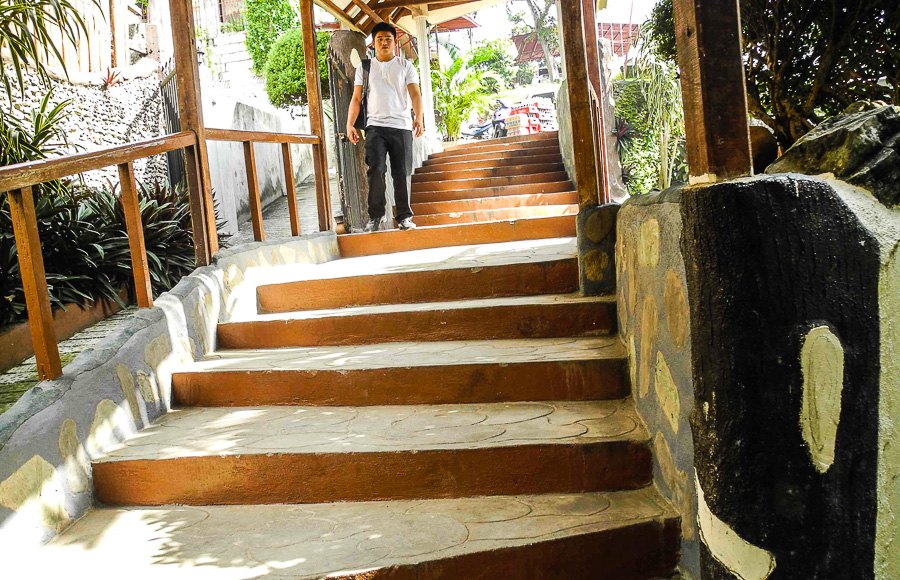
We liked the way the hotel is decorated. Once you pass through the gates onto the hotel grounds, you need to go down a little staircase:
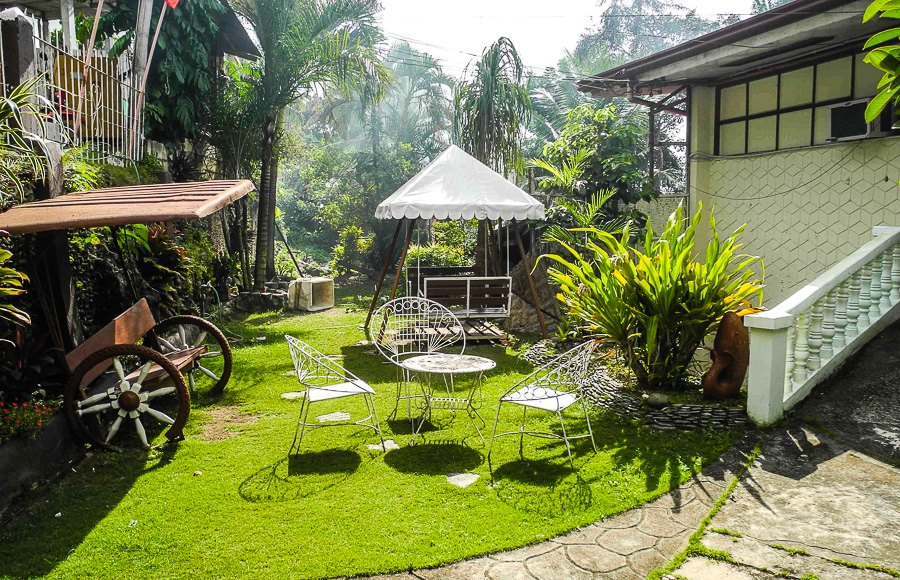
Just in front of the hotel there is a small green courtyard:
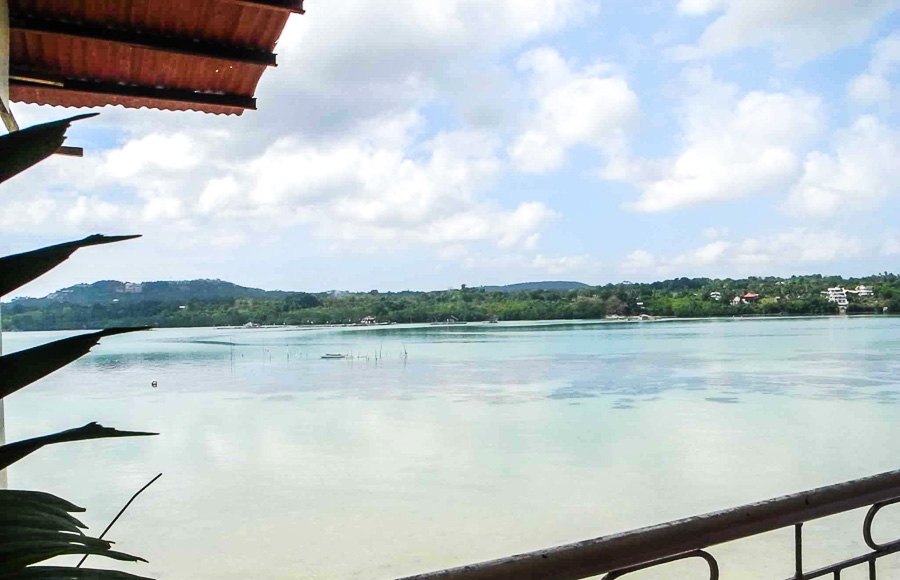
The hotel has a restaurant, and this is the view from it:
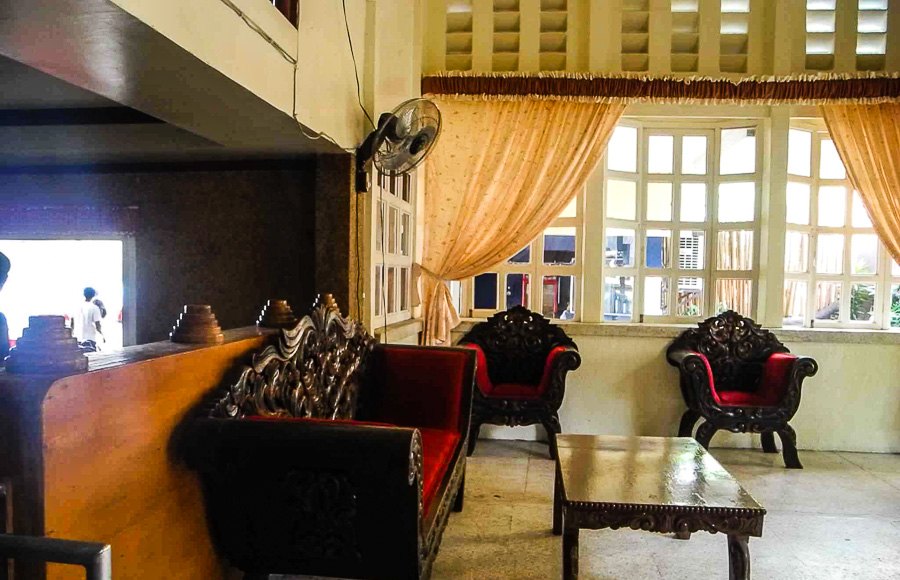
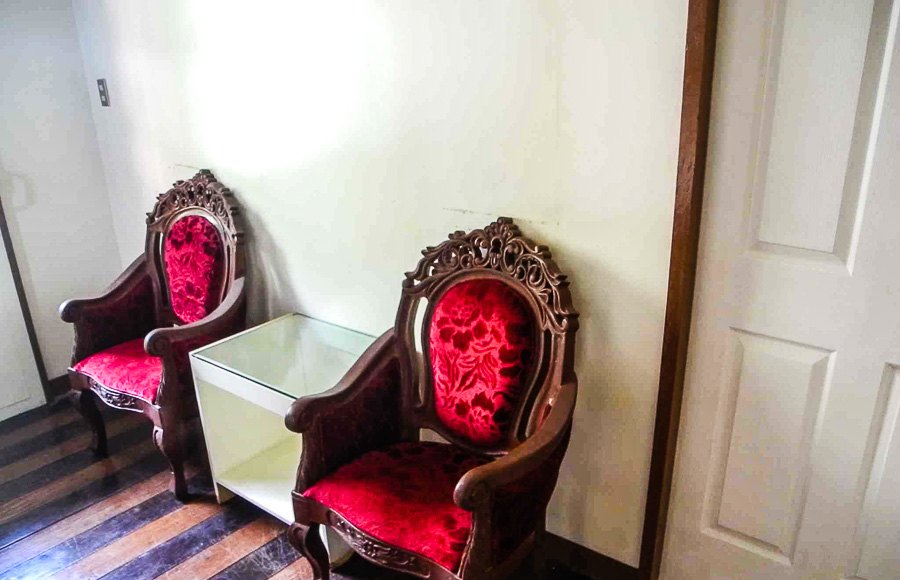
Inside the hotel:
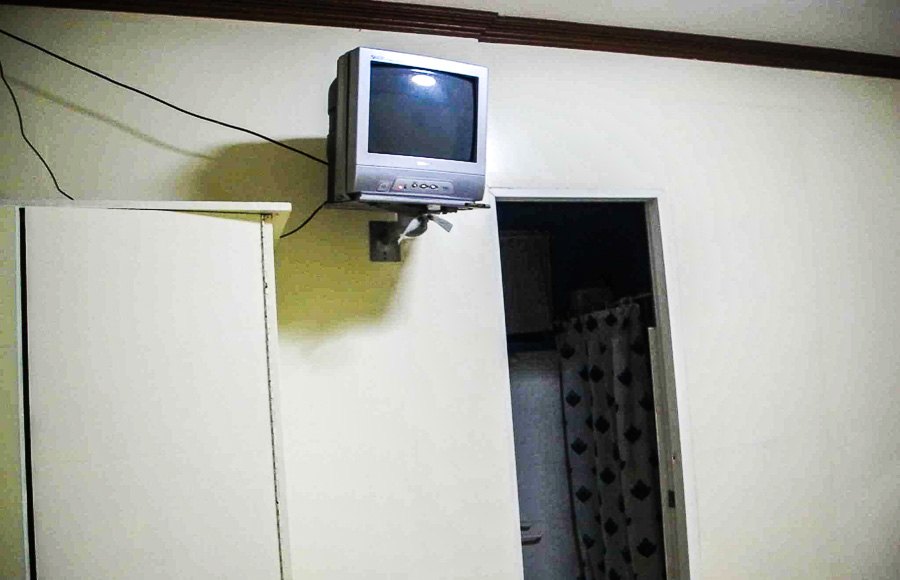
In the room, a television is mounted up near the ceiling:
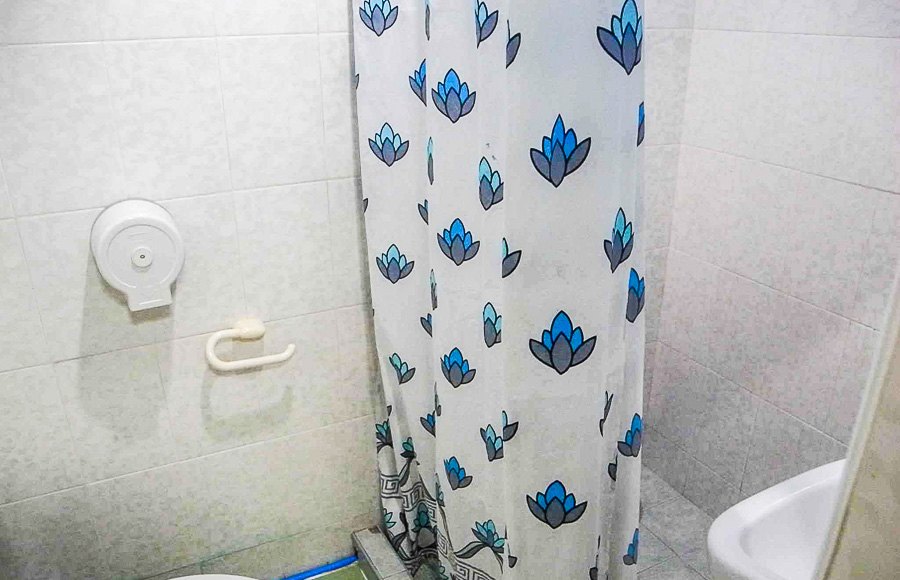
The bathroom:
The room is very simple; for some reason there wasn’t one with a single bed, so we got one with two.
In the room:
- Two beds
- Cold water only
- A small table
- A fan
- A large wardrobe for your things
- Wi-Fi
- Lots of ants
All in all, the hotel looks great from the outside, but the rooms are very mediocre — just as well we were only staying there for two nights.
3. The city centre
If you walk from the hotel along the road, you reach the city centre in about 10 minutes.
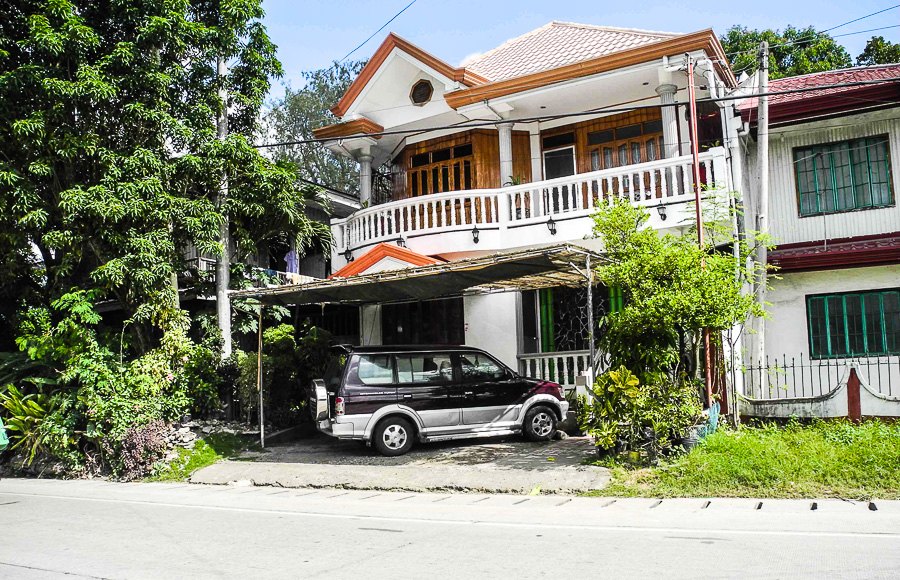
Along the way you pass houses like these:
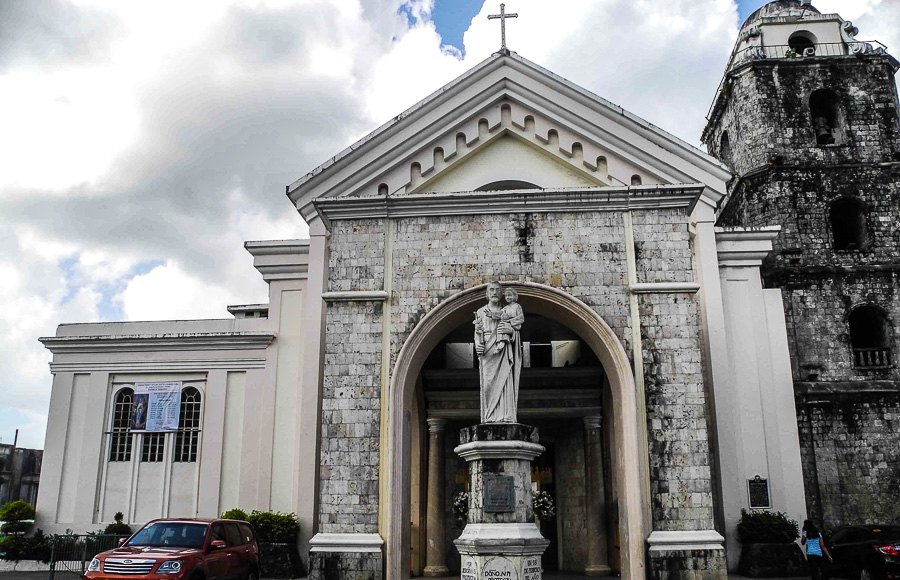
St Joseph’s Cathedral — this is where the city centre begins:
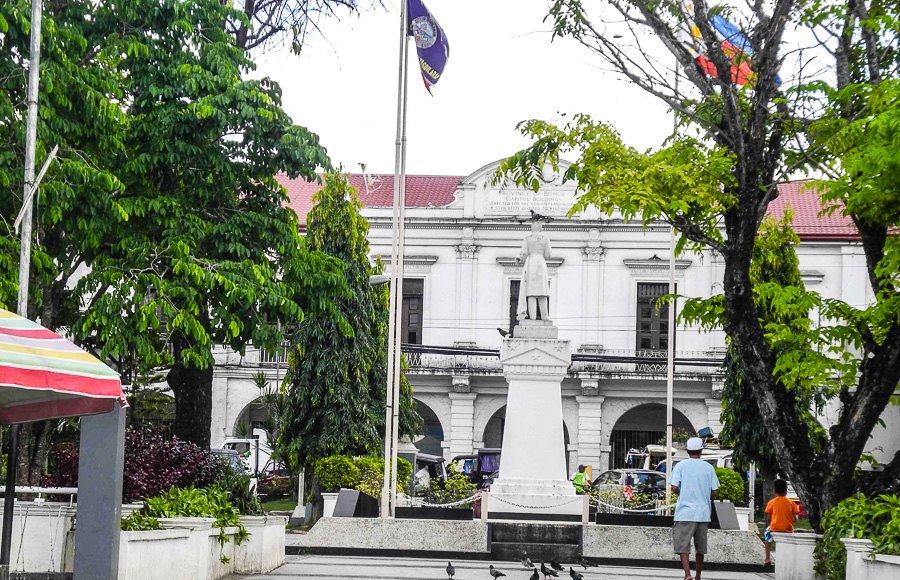
The city park:
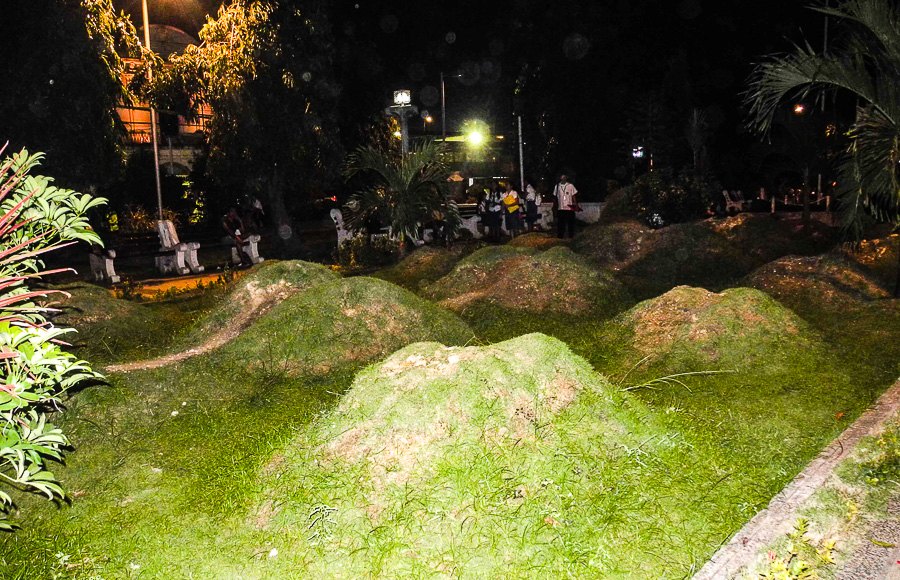
In the park they have made miniature copies of the Chocolate Hills — the originals are, of course, far better. Here is the view at night:
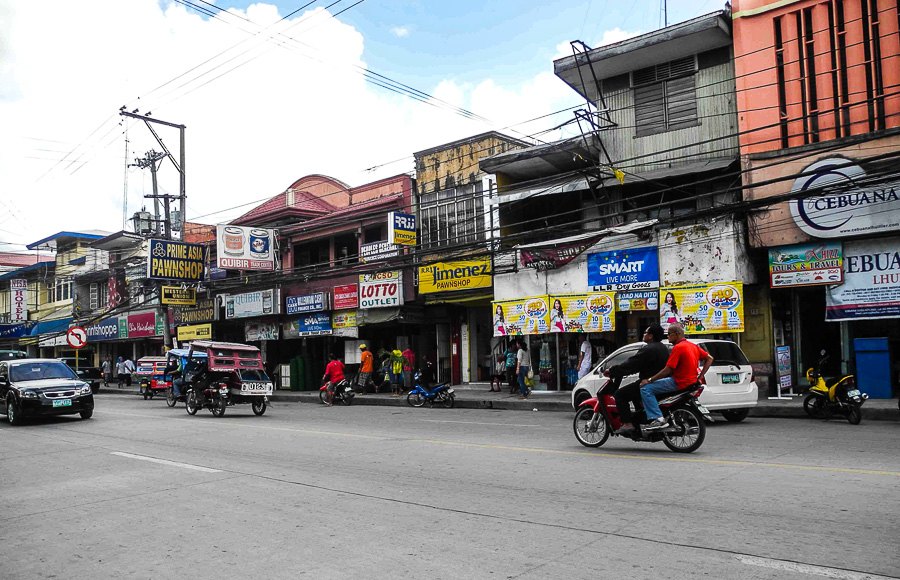
One of the central streets:
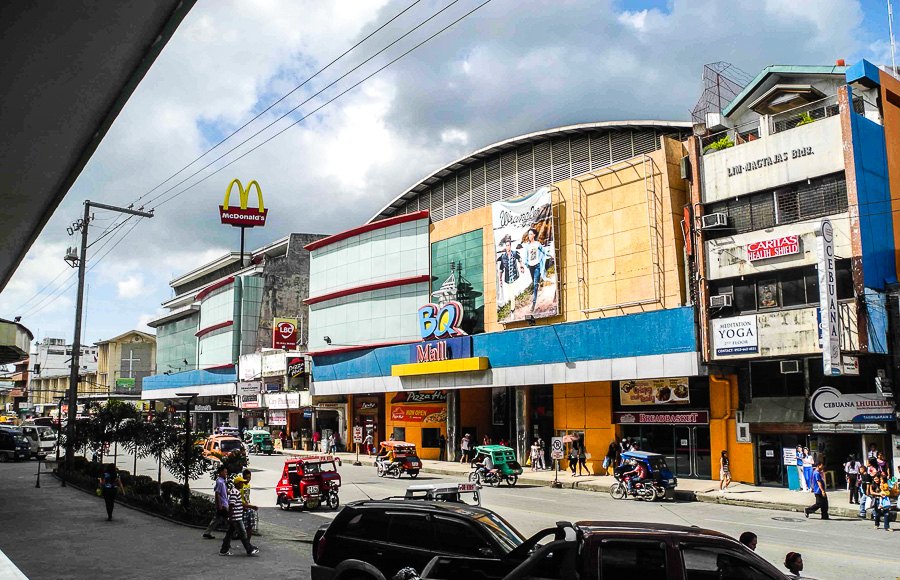
A McDonald’s sign in the distance and the big BQ Mall shopping centre, where you can buy food, fruit and all sorts of other bits and pieces:
4. Money and prices
The Philippine peso is used everywhere in the Philippines.
In 2014 we could pay by card in supermarkets without any problems, but in street stalls and for buying tickets we needed cash — so it is worth keeping some cash on you.
Tagbilaran is full of banks, and I recommend withdrawing money from ATMs inside bank buildings rather than from standalone machines out on the street. If something goes wrong — your card gets stuck, for example — you can go straight to the bank’s staff for help.
In 2014 ATMs charged a fee of 200 pesos for withdrawals from cards issued by foreign banks; what it is now depends on the bank, as we couldn’t find any up-to-date figures. Your own bank may charge an additional fee on top, so it is best to check before you travel.
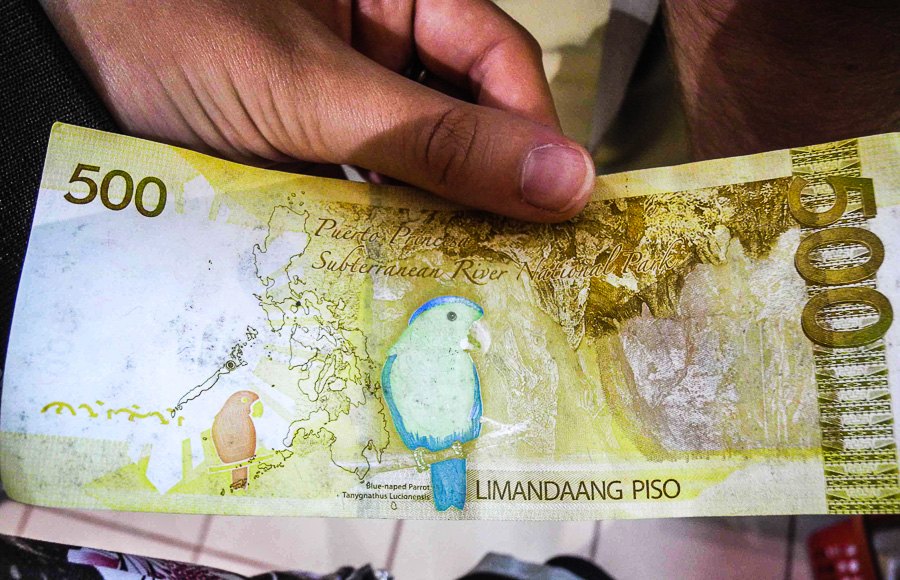
Philippine money is simply stunning — where else have you seen such beauty on banknotes?
We were also very surprised by a price tag in one of the shops:
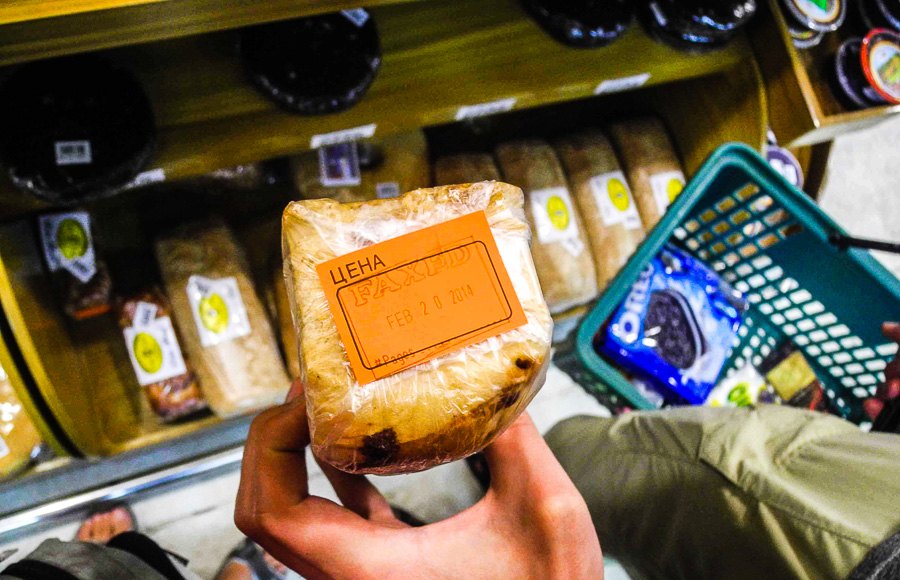
You wonder where they got Russian price tags from!
5. Getting around
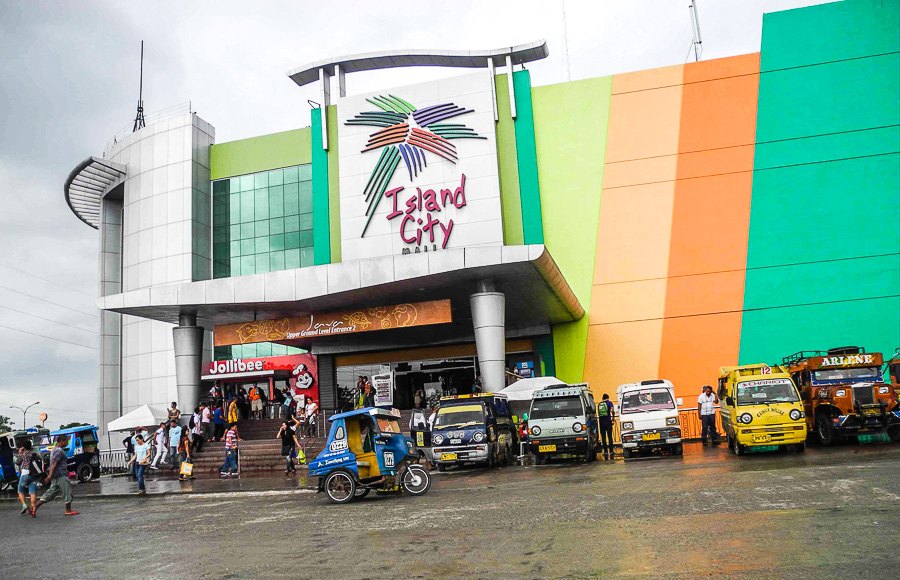
Back in 2014 we didn’t see any motorbike hire on Bohol or in Tagbilaran itself. Most people get around on tricycles and jeepneys, and between towns by bus. A tricycle is a three-wheeled cabin. If you want, two people can squeeze in, even with backpacks, though it really is very cramped. It is used mainly for trips around town, like a taxi. You won’t have to look for one for long: even when you are simply walking along, tricycle drivers will regularly offer you their services. In the photo below, the tricycle is the blue one in the middle.
The price is whatever you agree on. Foreigners are usually charged more and are initially quoted a price several times higher. But we spotted the official fares here and photographed them:
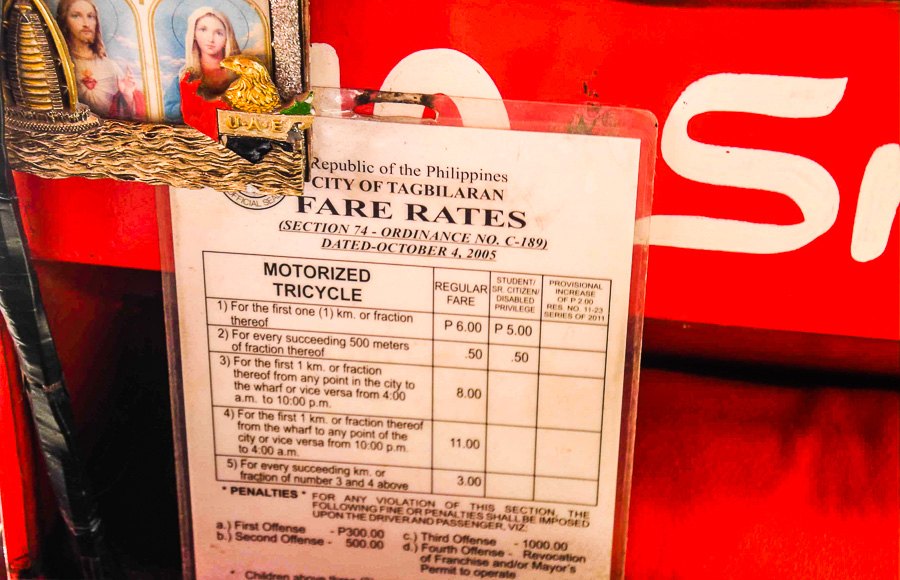
These are the 2014 tariffs: back then we advised using them as a base, adding 10 pesos and agreeing on that price. We couldn’t find the current tariffs, so agree on the fare before you get in.
For travelling between towns you can take a bus — buses in the Philippines are very cheap. For example, in 2014 we were charged 60 pesos each for the trip from Tagbilaran to the Chocolate Hills.
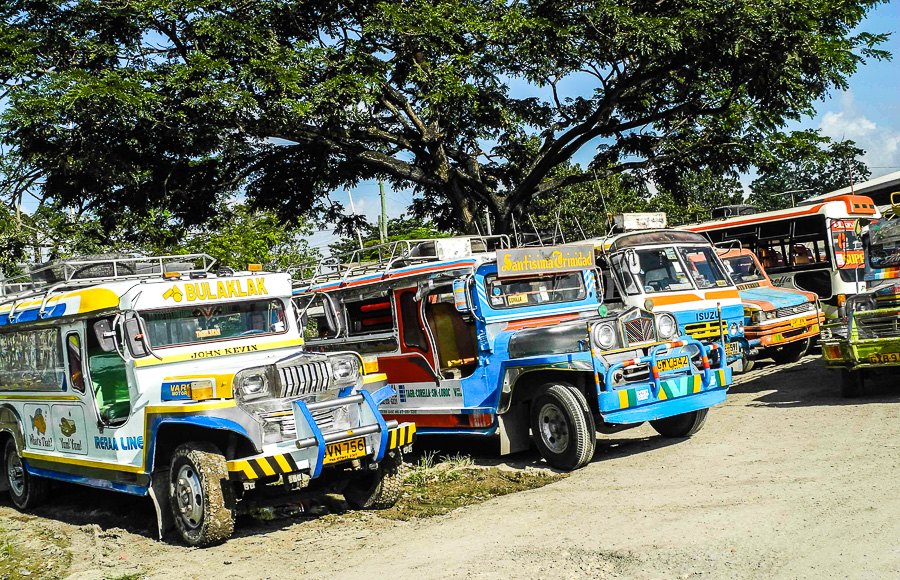
As well as buses, these colourful jeepneys run between towns:
6. Things to do
What does everyone come to Bohol for?
To see the Chocolate Hills and the tarsiers, of course!
What else is there to do on Bohol?
- Call in at the town of Loboc to see one of the oldest Catholic churches on the island. It was badly damaged by the earthquake of 15 October 2013 and, after restoration, the church reopened on 16 May 2021;
- Take a boat trip along the Loboc river (there is a special excursion with lunch on board and a show);
- See the numerous waterfalls and caves;
- On the way from Loboc to the tarsiers you can stop briefly in a mysterious forest. It was planted by people, and it is amazing how cold and dark it becomes as soon as you drive into it.
- Visit the butterfly farm (Simply Butterflies Conservation Center);
- Head over to the island of Panglao, which has beaches where you can swim and, of course, diving. The island is connected to Bohol by road and is very close to Tagbilaran — you can get there by jeepney or tricycle. Bohol’s airport is there now too.
All of these sights can be reached by public transport. But if you don’t want the hassle, you can simply hire a car with a driver who will take you around all the sights in a single day (in 2014 this cost about 2,000 pesos). The easiest way to find a driver is through the hotel reception, or you can ask the numerous tricycle drivers — someone will certainly help you. I would rather find a car through the hotel; it feels more reliable somehow.