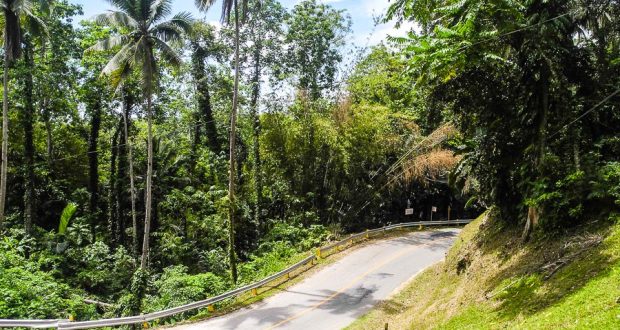
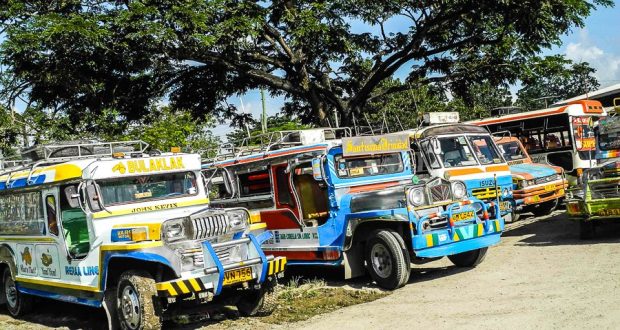
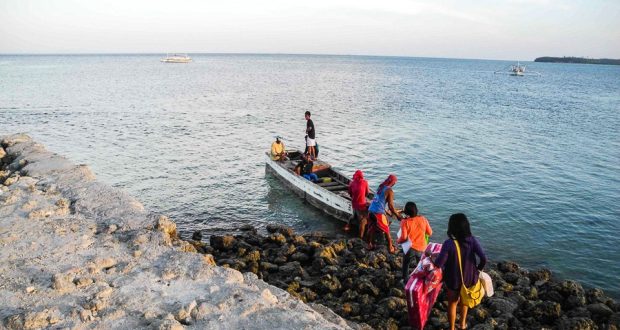
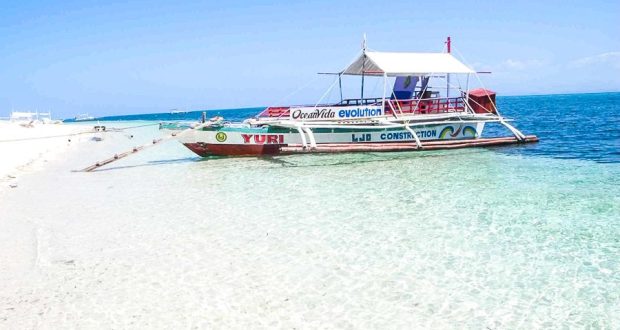
Bohol is a great place for independent travellers – beautiful nature, locals who speak English, cheap food and very cheap buses.
And how else to get around Bohol, if not on the local buses? For me it was a whole attraction in itself. Ordinary long-distance buses in the Philippines come in two kinds: some have closed windows and air conditioning, while others have no glass in the windows at all. And this second kind is absolutely wonderful – these buses simply won me over. It is not cold, the way it is in the air-conditioned buses you get used to, but not hot either, as the breeze blows through beautifully. And because there is no glass, you get excellent photos, while the landscapes drifting past seem to come alive. In these open buses you get a special feeling of being involved in local life.
Though of course there are downsides – the breakneck speed, and combined with the poor roads (when we wrote this article in 2014, many of the island’s roads and bridges still lay in ruins after the powerful earthquake of October 2013) it becomes more like riding a horse at a gallop: clip-clop, clip-clop, clip-clop…
So, off we go. As in Thailand, in the Philippines you often come across shops selling flowers and all kinds of plants; sometimes there are even bushes trimmed into the shapes of various figures and animals – ready-made garden decorations: 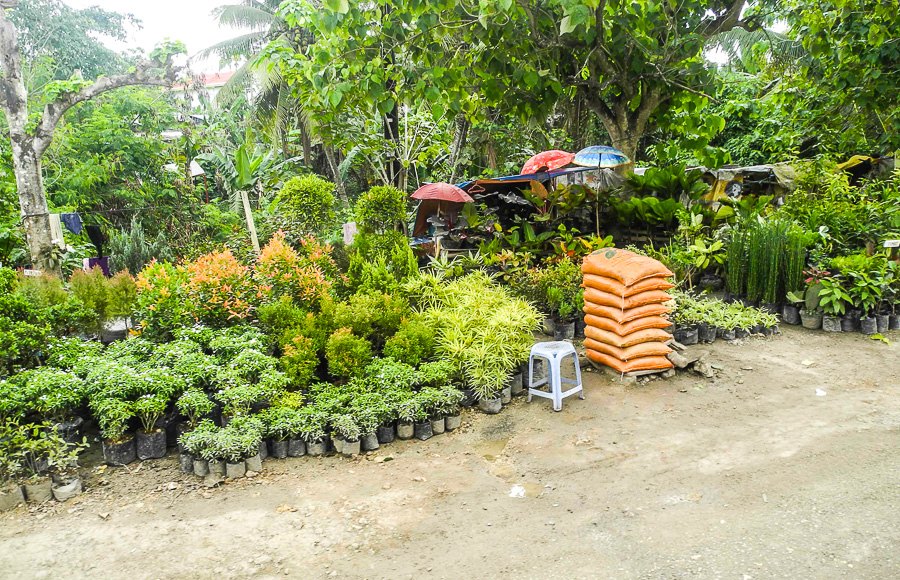
The Philippines may be a poor country, but every so often you pass beautiful villas with well-kept grounds: 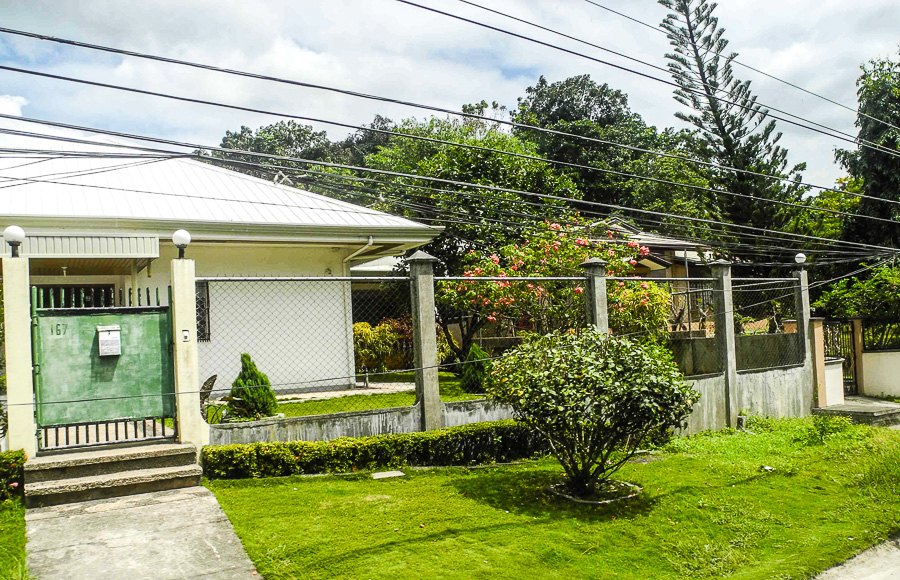
The bus routes run right through the villages, close to the houses, so the whole of Filipino life is on show – you can peer straight into people’s yards: 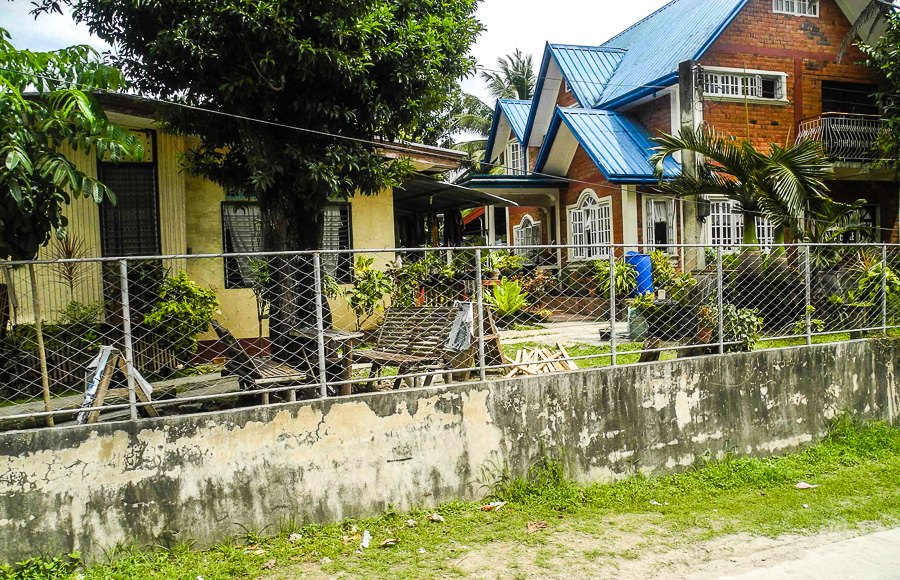
Rice fields – and at the bottom right, rice that has already been harvested is drying in the sun: 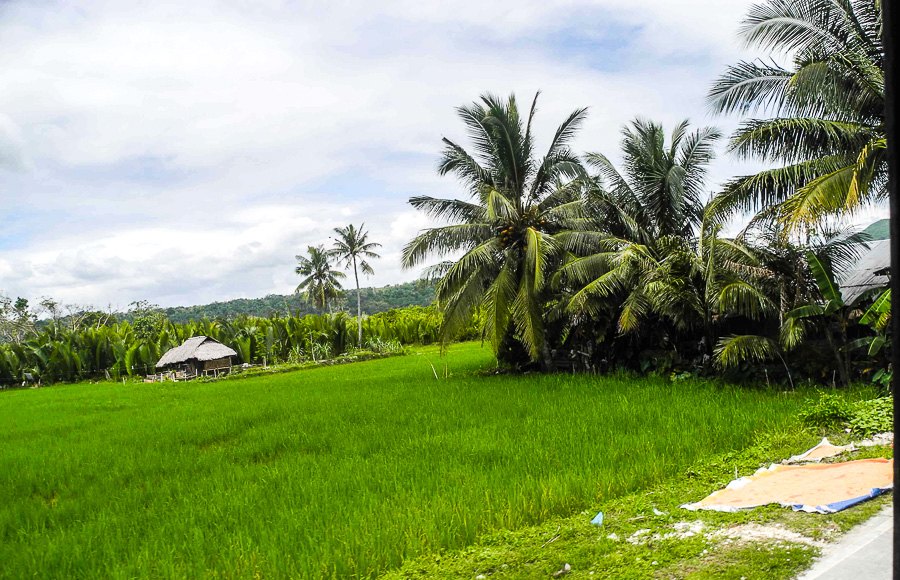
Peeking into yet another yard: 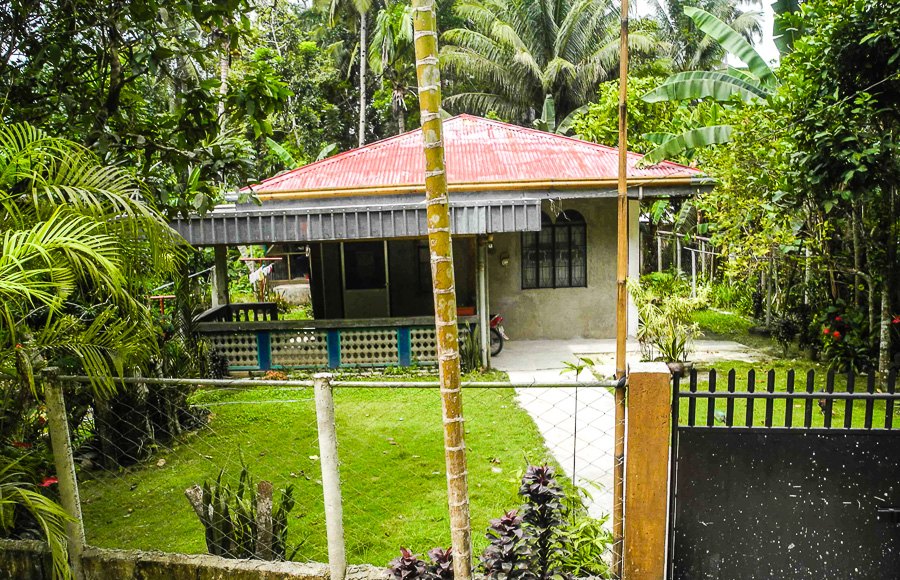
Passing through the town of Loboc: 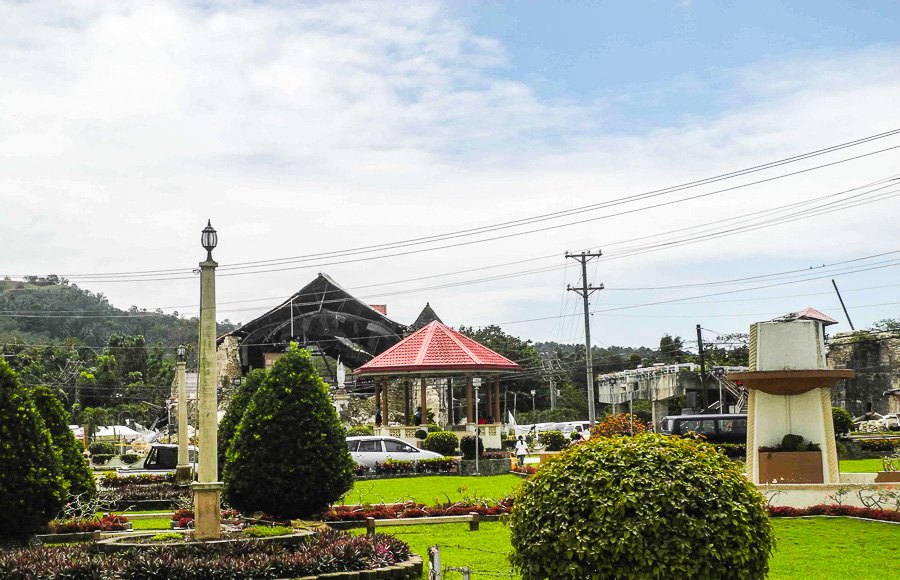
And this is the Loboc River, where you can take a boat trip – an absolutely incredible colour: 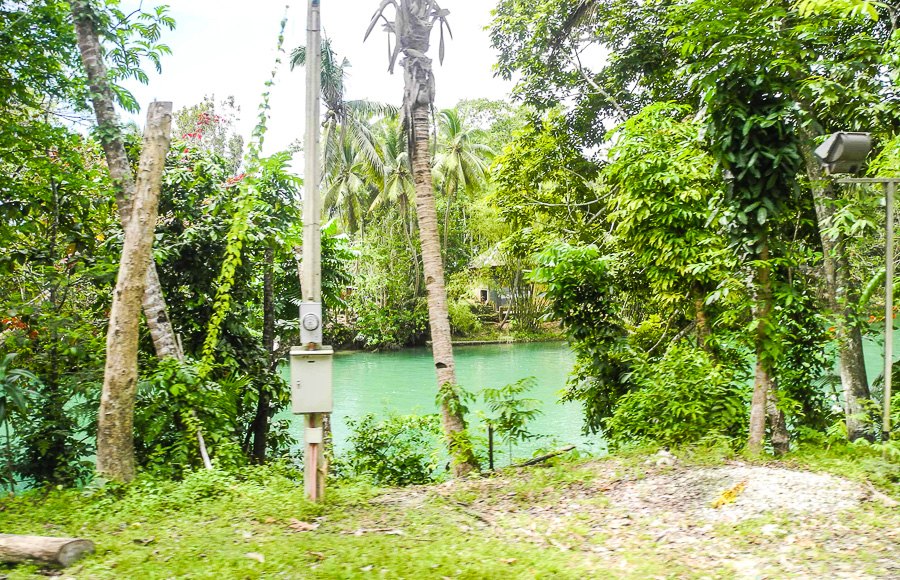
One of Bohol’s schools: 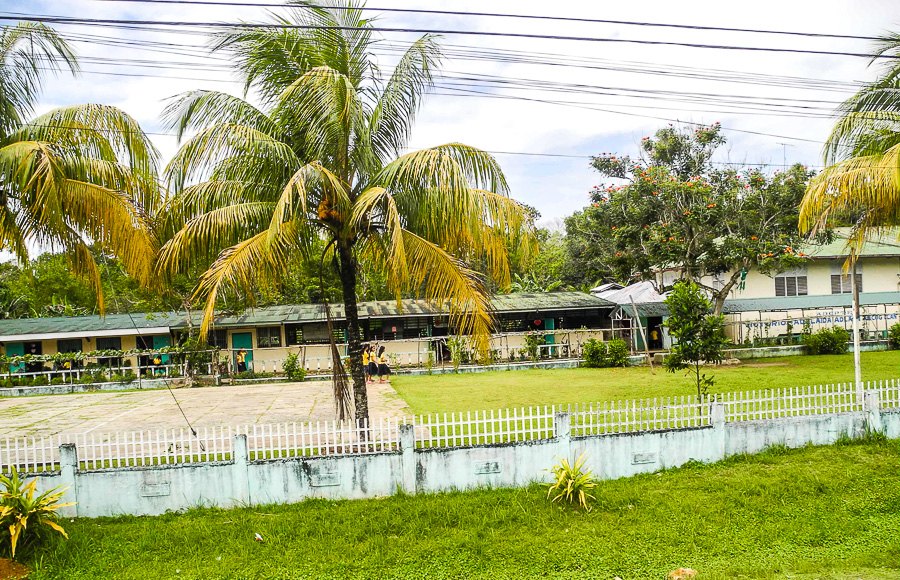
All the schools (and we passed quite a few) look more or less the same – a green field, a basketball court and a single-storey school building stretching along the playgrounds. The children always wear uniform, even in the very smallest villages.
It is striking just how popular basketball is in the Philippines! Besides the obligatory school basketball courts, you come across basketball hoops in the most unexpected places. If a village has even a couple of houses, there are basketball hoops, and someone is always playing with real enthusiasm. It really caught the eye – I don’t even know how to explain such a love of basketball.
A gorgeous villa: 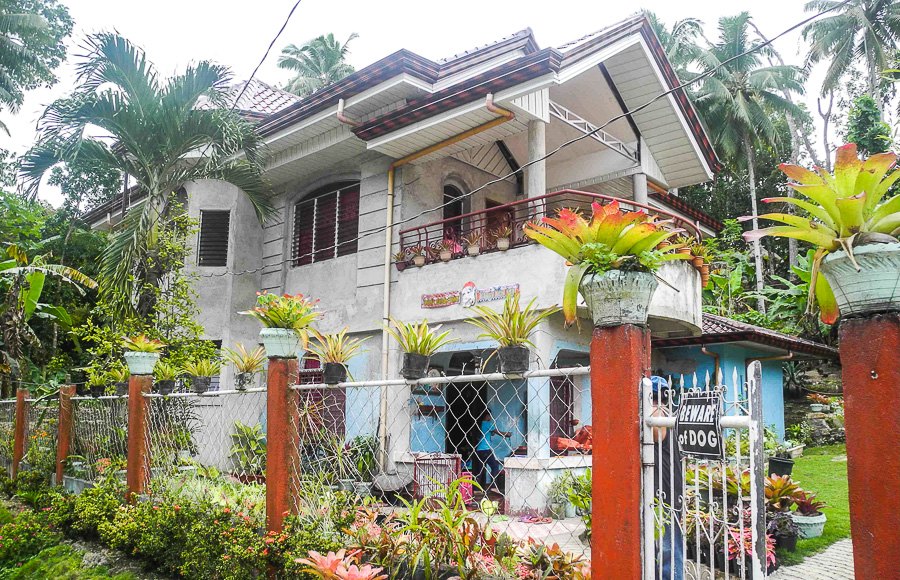
And here is another rice field, only with the rice at an early stage of ripening: 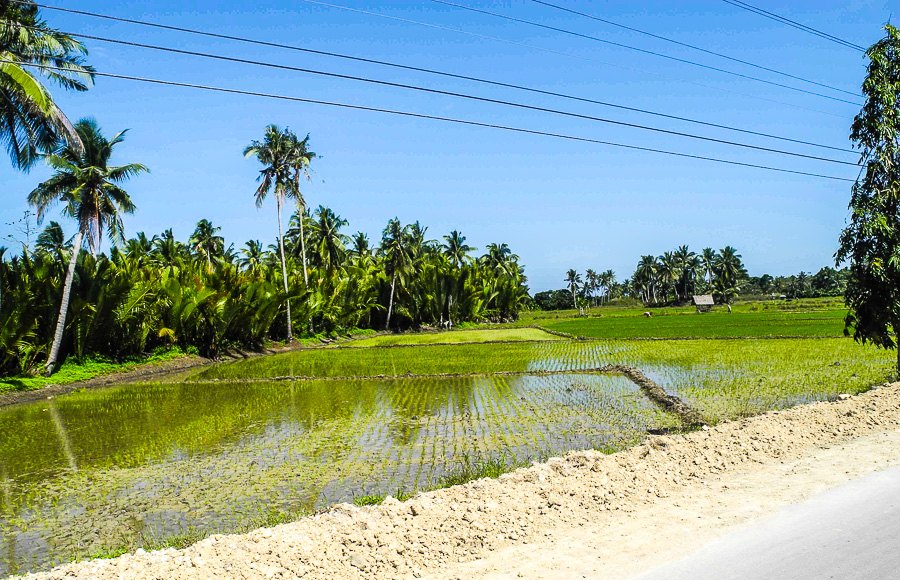
One of the few churches on Bohol that had survived back then. There is a Catholic church in every town, but in 2014 many still lay in ruins after that same earthquake of 15 October 2013, which destroyed or badly damaged old churches all over the island. Restoration has since begun: the famous church in Loboc reopened after renovation on 16 May 2021. 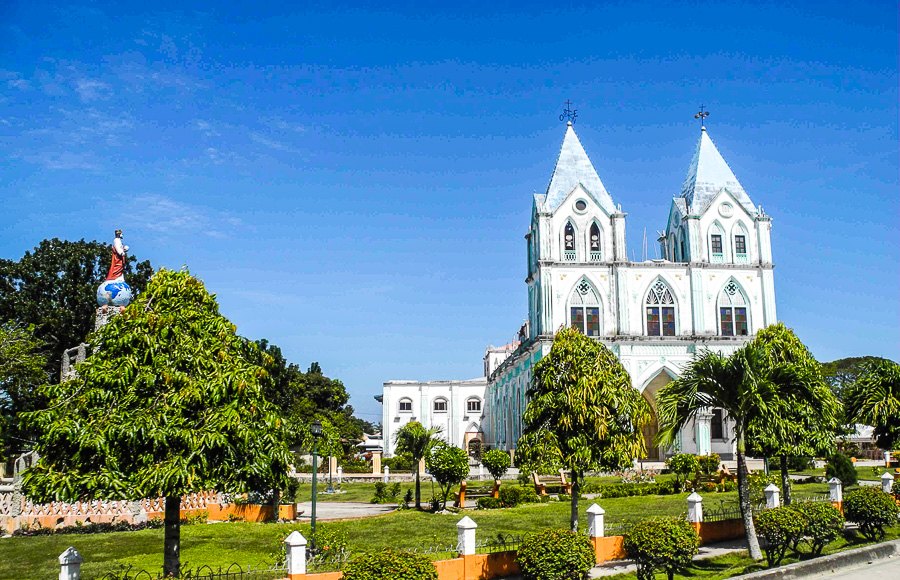
If these photos have made you want to repeat our trip, here is the practical information as it stands today. The easiest way to get to Bohol is via Cebu: fast ferries (OceanJet, for example) run to Tagbilaran in about two hours, and in October 2026 a tourist-class ticket cost 960 pesos. You can also fly in – since late 2018, flights to Bohol have been served by the new Bohol–Panglao Airport on the neighbouring island of Panglao. Before flying, you need to fill in the free eTravel form – the Philippine Bureau of Immigration asks travellers to do this no later than 72 hours before arrival. And a word about the season: November and December are still typhoon season in the Philippines, and when a storm warning is issued the coastguard does not let vessels put to sea, so the ferries do not run on those days. We have gathered all the details about the city, money and transport in our article about Tagbilaran.