Love comes and goes, but you always fancy something to eat — everyone knows the saying, and I am sure your love of Milan will not fade either: see this city once and you will fall for it for good. Food is slightly more of a “problem”, because it is so tasty that, along with the souvenirs, you will most likely take home a couple of extra kilos. And the short answer to the question of this article — what does food cost in Milan? A cappuccino standing at the bar is €1.80, a one-dish lunch in the centre is €11.50–12.50, an aperitivo with a buffet instead of dinner is roughly €8.50–15, so one person spends about €30 a day on food. (Food in Florence is covered in a separate article.)
Milan’s cuisine is magnificent, rice plays a very important role — and the risotto alla milanese (with saffron) is so superb that I think it alone is worth coming to Milan for. Many dishes are served with vegetables, such as the classic vegetable minestrone soup. The baking is gorgeous too: michetta bread — this one is purely Milanese, hollow inside with a crunchy crust — and, of course, panettone. Just bear in mind that panettone is a Christmas thing here: in December every window display is piled high with it, while in summer you will hardly come across it in cafés.
So let us look at the food prices in Milan, what is worth eating and which places to go to. I promise the information will be very useful — shall we begin?
1. Where to eat in Milan
You can find food for every pocket and taste, so choice should not be a problem. You can eat deliciously both in an expensive restaurant and in a more budget one (a trattoria or osteria is the same kind of restaurant with simpler service, more popular with locals, and the food is incredibly tasty); there is also a huge number of inexpensive cafés, and street food is popular.
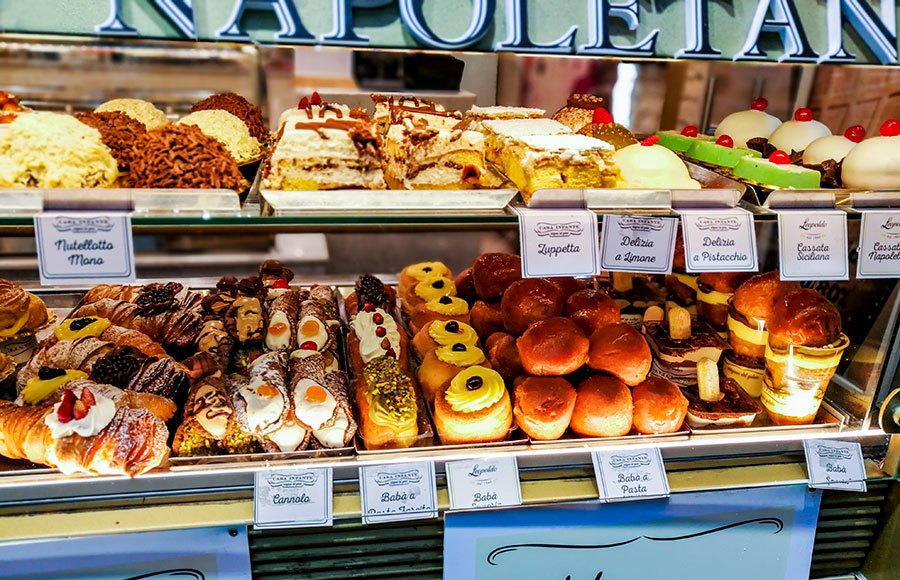
The baking in Milan is simply stunning:
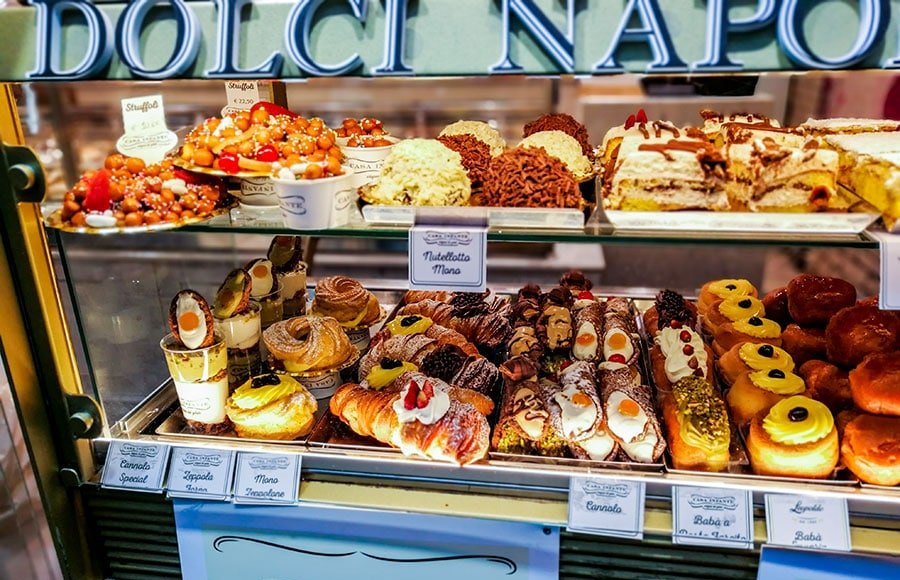
You want to try everything:
To save money, many people buy food in supermarkets or go to food markets (where the choice is very good too), and Milan also has food delivery.
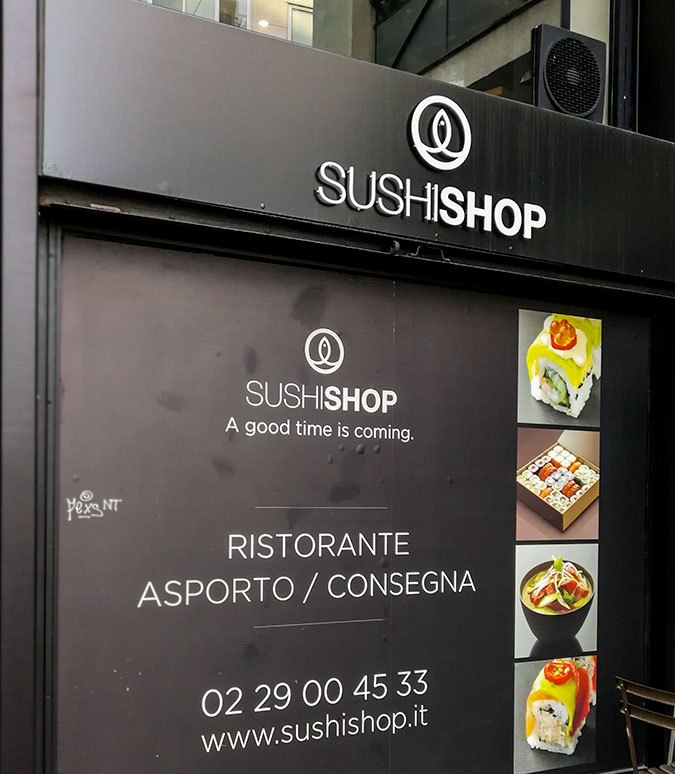
One thing you might not expect: according to the Gambero Rosso food guide, Milan is considered the capital of Japanese cuisine in Italy, and the country’s first sushi restaurant opened here as well, back in 1989. There are a great many Japanese places in the city, and almost every one runs an all-you-can-eat format — you pay a fixed sum and order as much as you can manage. For a hungry traveller that is often cheaper than ordering the same things from the menu. They will deliver, too:
As for supermarket shopping, in the evening they give very good discounts on ready-made food — do make use of that!
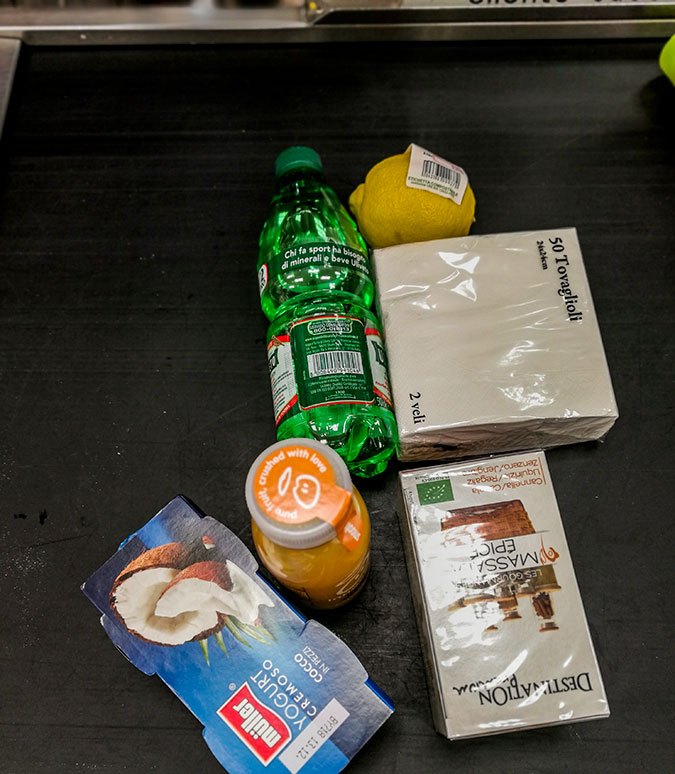
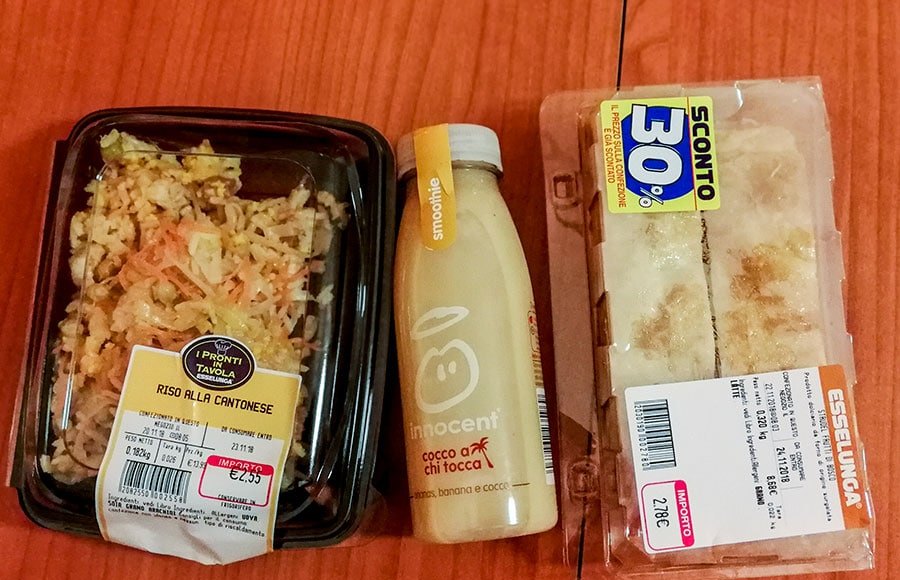
Here, for example, is a small purchase I made at the Esselunga supermarket — €7.40, with a 50% discount on the smoothie. To be upfront about it: this is my receipt from November 2018, and since then the grocery basket in Italy has become almost a third more expensive, so allow for more. And one more important thing: the classic big Esselunga stores stand on the outskirts, while in the centre the chain runs small city shops called La Esse — if you are staying in the centre, those are the ones to look for:
For strudel lovers: in the same supermarket a portion for two cost me just €2.78 — but again, that is a November 2018 price, and I bought it in the evening, at the ready-food discount. The evening discounts still work, by the way, and they are still the best way to save money in Milan:
1.1. How to save on dinner
Milan has a wonderful tradition — the aperitivo. It is the time after work and before the family dinner, meant for meeting friends. Most cafés put out special price tags, a spread of snacks is laid out, and you pay only for your drink. The Milanese gather with friends and enjoy the evening over noisy conversation.
The city is quite often called the capital of the aperitif, by the way! You may also come across the name “happy hour” — which fits very well. It usually starts around 17:00–18:00 and runs until about 22:00, but here is my main tip: go at the beginning. The buffet is at its richest in the first hour or hour and a half, and by 21:00 it is gradually being cleared away — you risk arriving to empty trays for the same money.
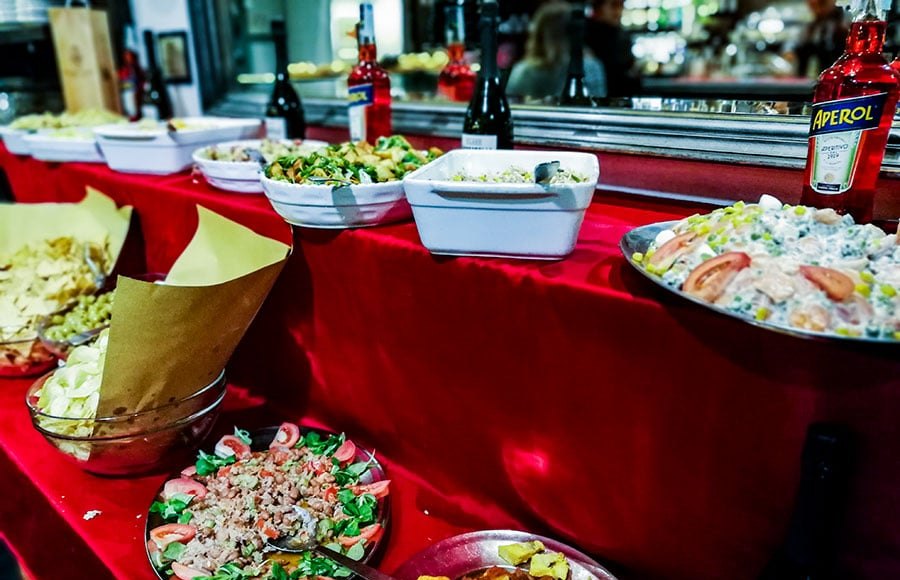
This is what a café looks like during those happy hours. I found this one on Corso Como — a short pedestrian street, about 300 metres, running from Piazza XXV Aprile to Porta Garibaldi station. Get off at the Garibaldi FS metro stop, on the green M2 and lilac M5 lines; the modern Piazza Gae Aulenti is right alongside. Via Montenapoleone, by contrast, is at the other end of the centre altogether — the yellow M3 line and the luxury-boutique quarter, a long walk from Corso Como:
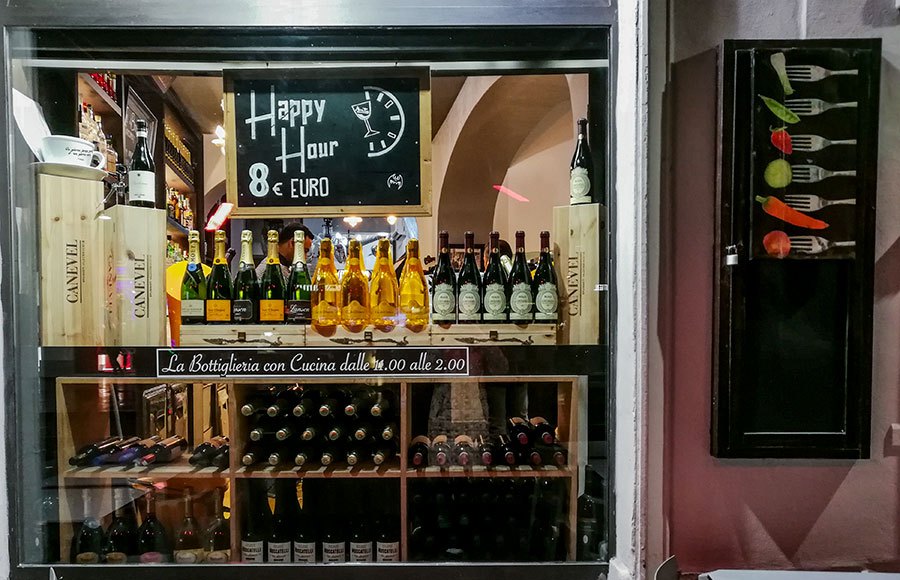
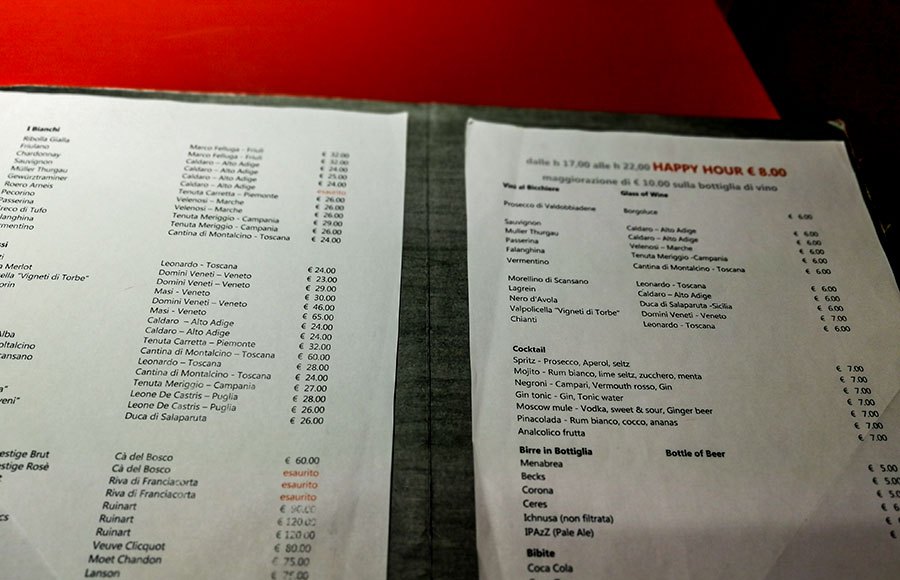
You order any cocktail, wine or soft drink from the menu — and there is nothing more to pay: the food from the buffet is already included in that price. I paid €8 at the time, but I will say honestly: that was November 2018. These days entry to an aperitivo with a decent buffet costs roughly €8.50–15 — €8.50 at the long-established Bar Magenta, €12 at places like Foresta Woodbar, €15 at big buffet venues such as BhangraBar on Corso Sempione:
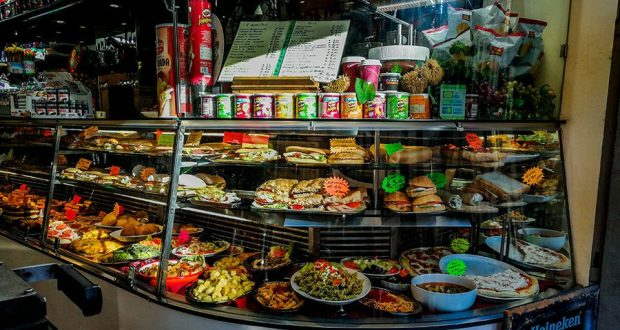
It looks very much like a buffet in the classic sense: you take a plate and pile on as much as you fancy:
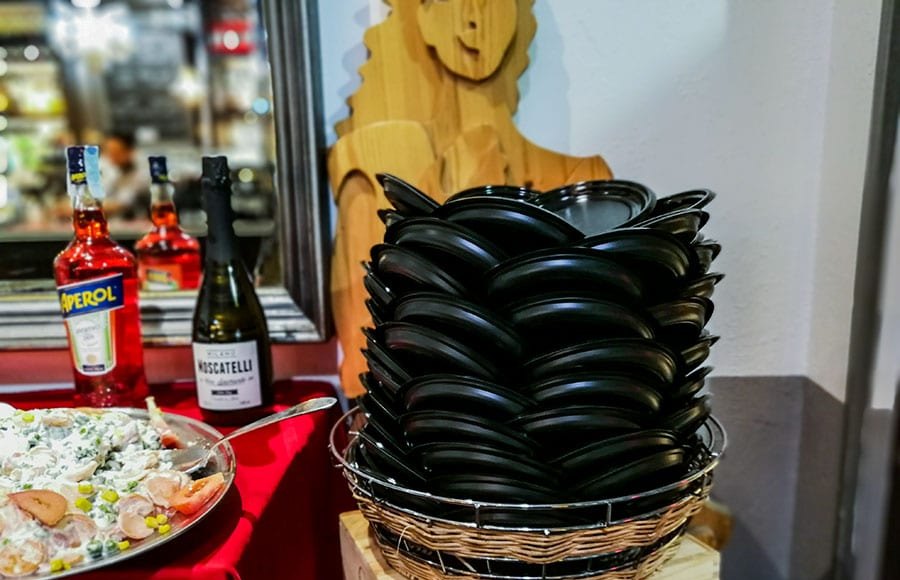
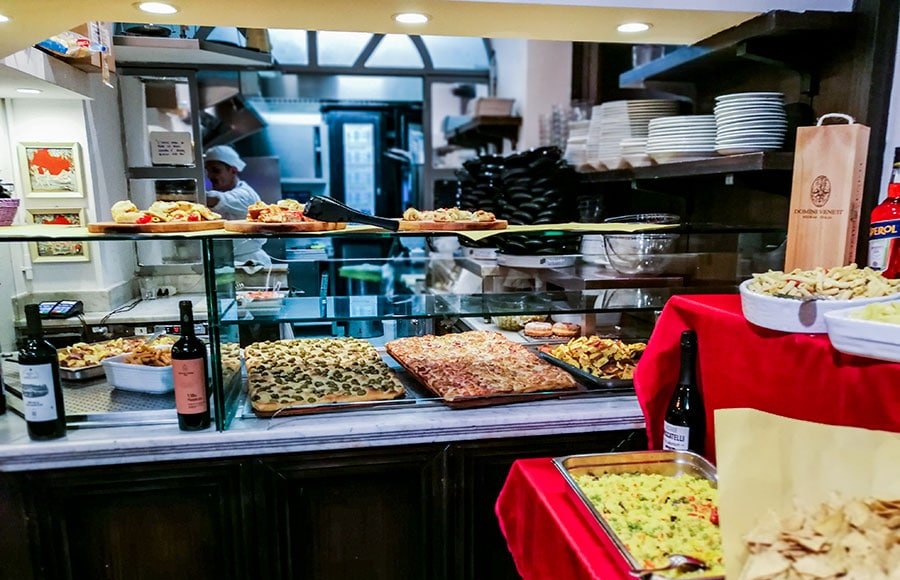
The assortment of dishes changes from café to café; in this one you can have a proper dinner:
Besides salads there is a decent choice of main courses, including the pizza and risotto so popular in Italy:
I chose this dinner option (you could go back for more afterwards):
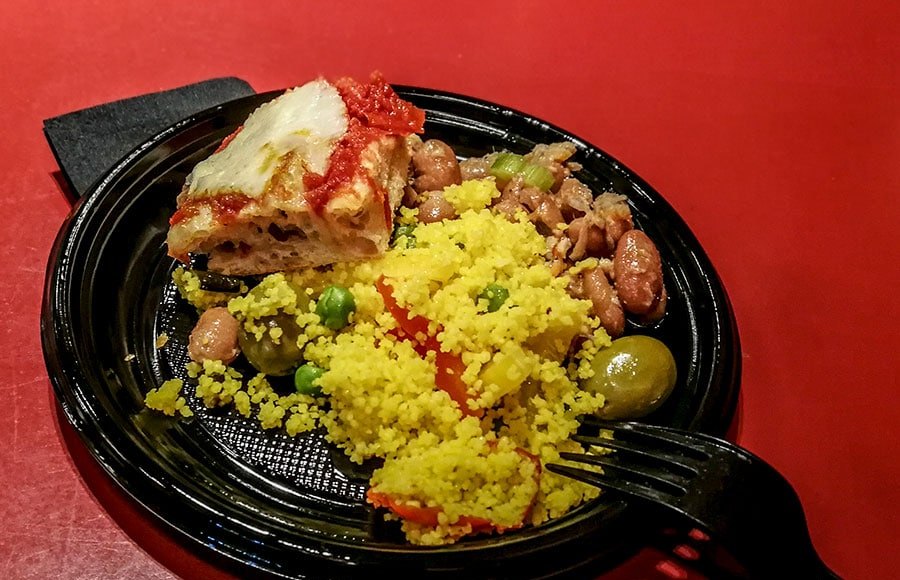
At the door you buy a drink — usually €8–15 — and earn the right to fill your plate with as much food as you wish. Just don’t imagine there is any single “normal” cocktail price in Milan: the spread is monstrous. In an ordinary bar among the offices an Aperol Spritz costs €5.50, the city average is about €10, while in the places that search results offer as the “best spritz in Milan” the average reaches €16–17, and up to €20 on a terrace with a view of the Duomo. So checking the menu before you sit down is nothing to be ashamed of here. But it is very important to find a good café. The more locals, the better the place. In some not especially popular cafés they just put crisps and nuts on the table at aperitivo time — that option, of course, will not do for a filling dinner.
This café was packed with locals (which is exactly why I chose it):
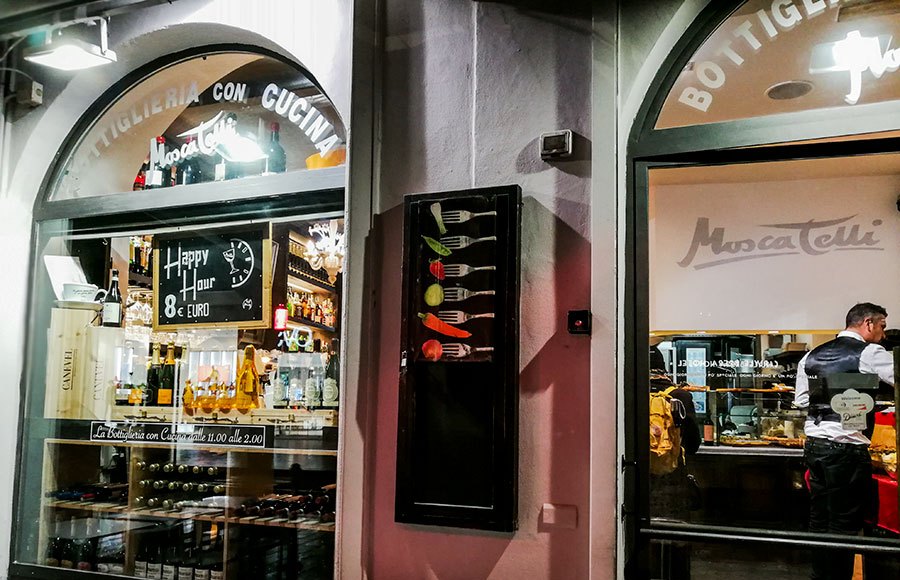
Don’t walk past if there are no free tables — for Italians that is no problem at all, they can happily dine on the steps or standing, because the quality and taste of the food matter more to them. A few places worth going to specifically for the aperitivo: La Baita del Formaggio — a cheese shop at via Vincenzo Foppa 5, working in Milan since 1958; the shop itself is open 8:30–19:30 and closed on Sundays, and their evening get-togethers take place in a separate venue next door, CheesePark. I Pesciolini at corso di Porta Romana 51 is a fish shop with a kitchen, and the aperitivo is fish-based: tartare, carpaccio, raw fish; note that they are closed on Sunday and Monday. And Vino al Vino — a tiny wine bar people go to for a glass of wine rather than for a buffet.
Oddly enough, between 15:00 and 18:00 it is hard to find anywhere for a snack, as most cafés are getting ready for the aperitivo.
1.2. Types of places to eat in Milan
As already mentioned, there are a great many places to eat: restaurants, cafés, trattorias, osterias, street food. Notably, Italians simply adore their cuisine — 80–90 per cent will tell you it is the best in the world and will sing its praises for hours. The cult of coffee here is unbelievable — but about the “fixed coffee price across Italy”, let me be straight with you: it is a myth, there is no single price list. Cheap coffee is coffee at the counter, standing, in an ordinary neighbourhood bar: in Milan an espresso averages €1.27 and a cappuccino about €1.80. Sit down at a table in a tourist spot and the figures are different: at Camparino in the Galleria Vittorio Emanuele an espresso costs €5 and a cappuccino €6. The same drink, the same city, a fourfold difference. Which is exactly why Italians drink their espresso standing up.
Coffee in Italy is simply incredible — in even the most budget café the coffee will be excellent.
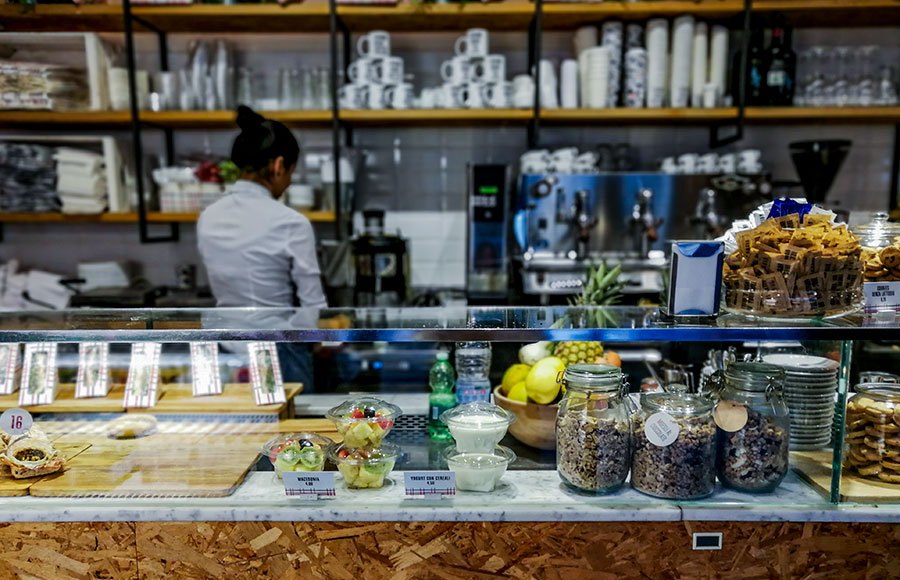
A typical Milanese coffee bar looks exactly like this — cosy, with tasty coffee and plenty of sweets:
Tea, on the other hand, Italians are not very fond of; they tend to see it as a warming drink and will not order it with dessert, believing it would spoil the taste. Tea prices in shops are fairly high too, and the choice is small.
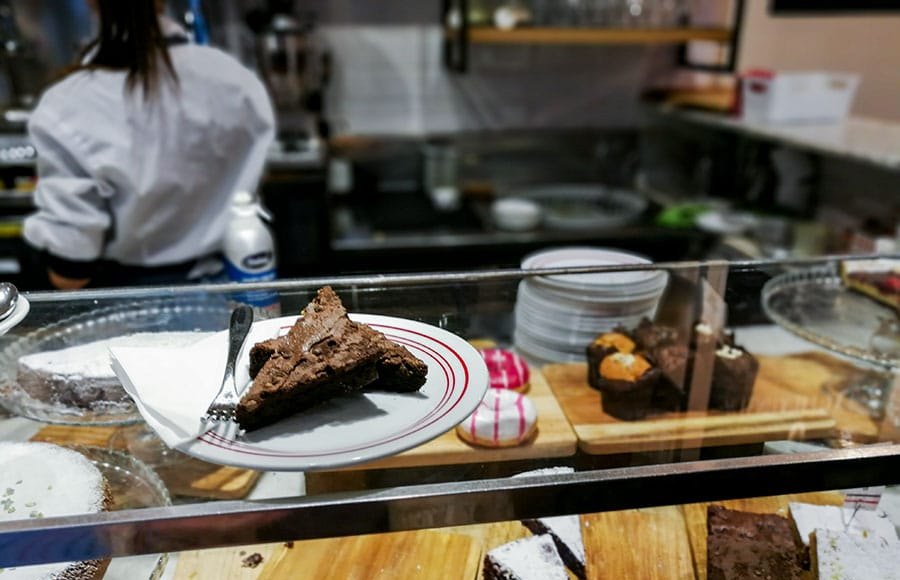
The famous American dessert — the brownie:
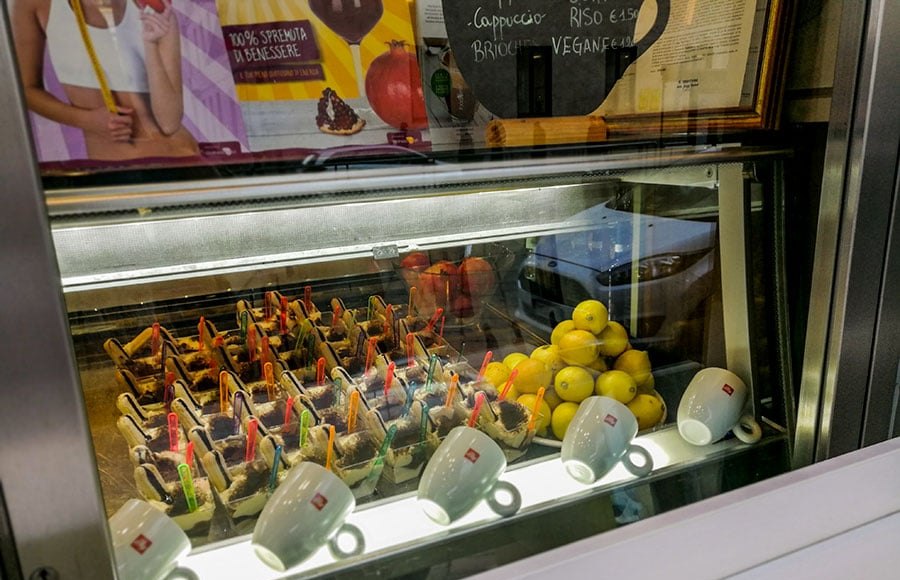
Tiramisù (in central Milan) is sold by the portion — you can buy one and eat it as you walk along:
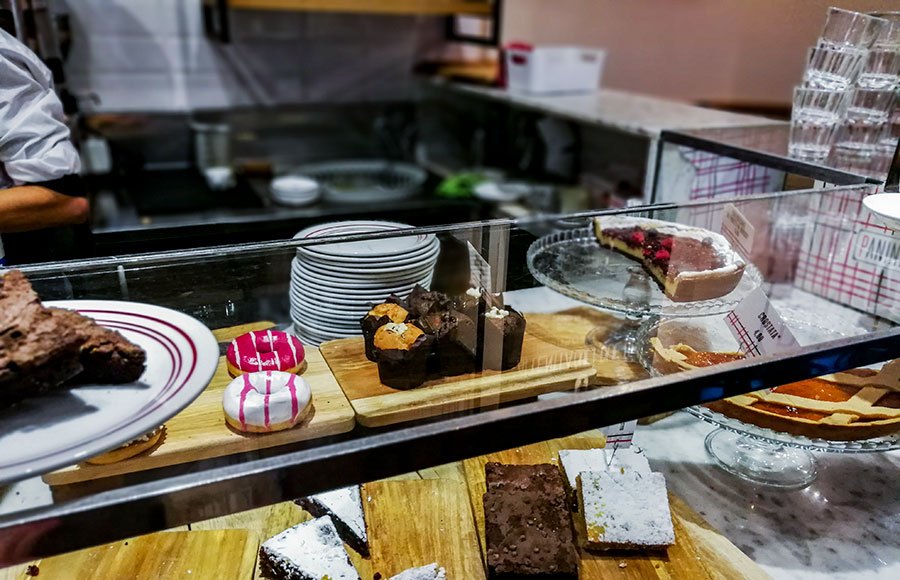
You will come across various kinds of cake in any coffee bar:
In Milan people usually do not order spirits with dinner, except perhaps wine (and that to enhance the taste of the dishes). Italians generally lunch and dine in small cafés, while breakfast happens at home — that meal is not especially important to them, and most often they make do with just a coffee.
Street food is popular with tourists and with the residents themselves. Just bear in mind that half of what is sold on the street arrived in Milan from the south: the fried rice balls arancini and the zeppole doughnuts are Sicilian and Neapolitan, porchetta (a pork roll) comes from central Italy, and stigghiola, which is sometimes called a sausage, is not a sausage at all — it is Palermo street food: lamb offal wrapped around a leek stalk and grilled over coals. The genuinely Milanese street food is the panzerotto, a fried turnover with mozzarella and tomato. For it, head to Luini — a bakery dating from 1888 at via Santa Radegonda 16, literally behind the Duomo; there is always a queue, and it always moves fast.
1.3. Café prices
Everyone wants to know: how much does food cost in Milan?
The city is certainly expensive, but on the whole prices are tolerable, and you can find budget options for breakfast, lunch and dinner. Here are a few examples of prices.
As a rule, cafés closer to the centre are dearer; further away they are cheaper.
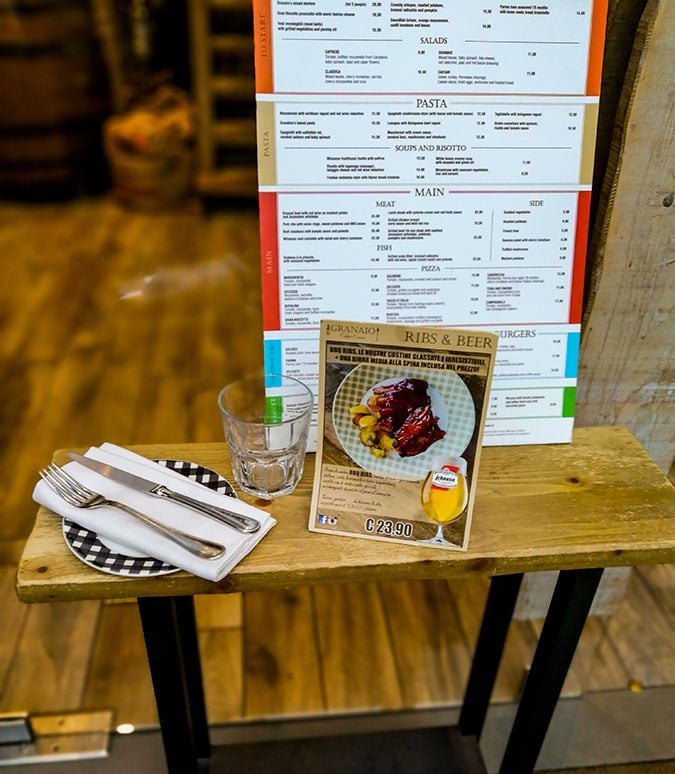
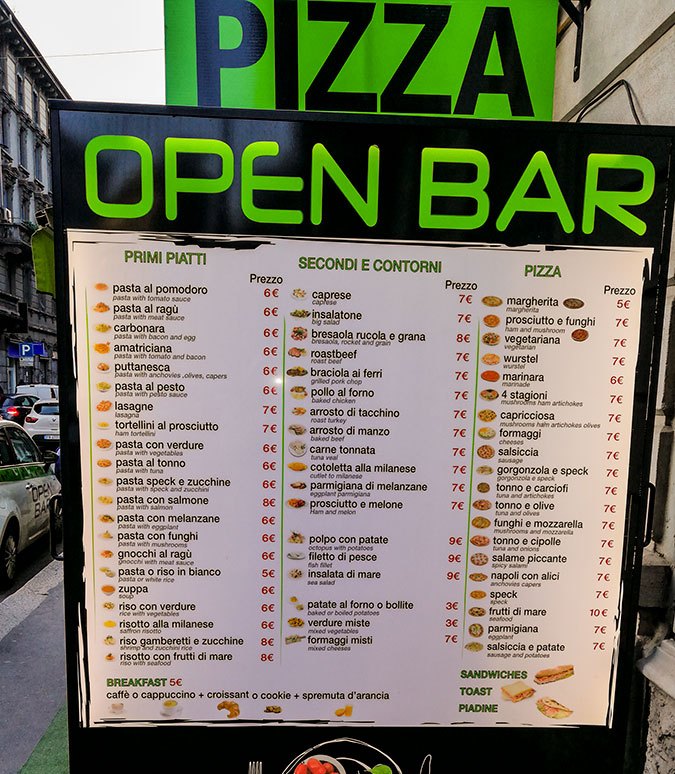
Here is the menu of one café not far from the centre:
And places like this have very low prices, by the way (a café a couple of blocks from the Duomo):
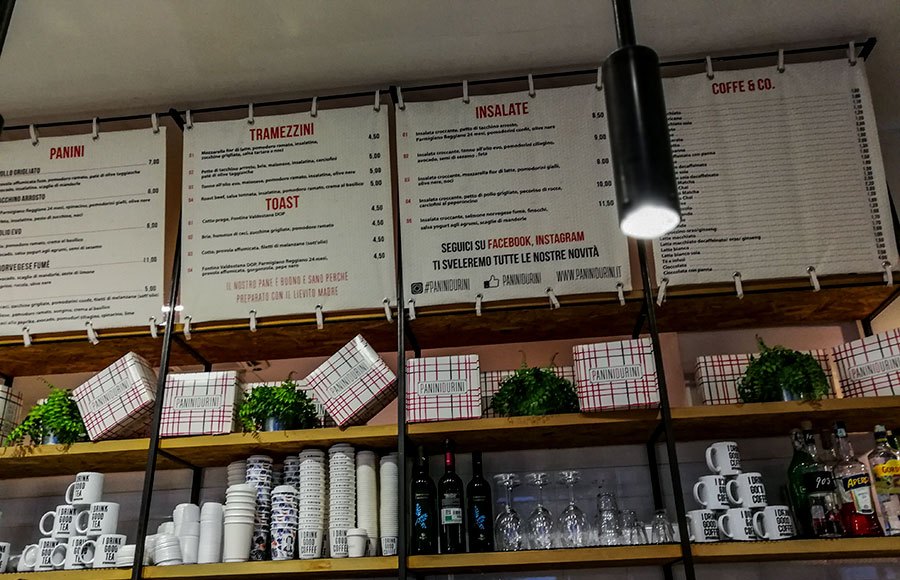
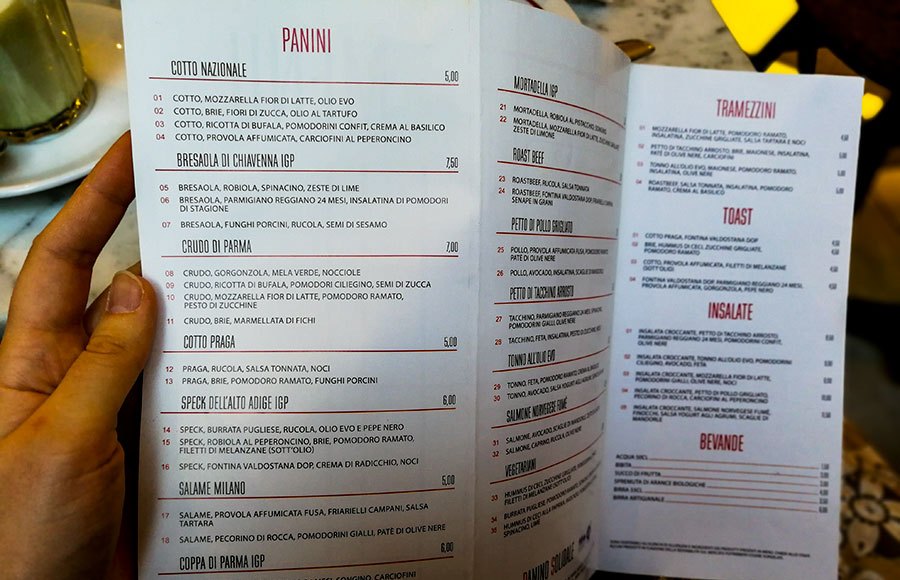
The menu with prices:
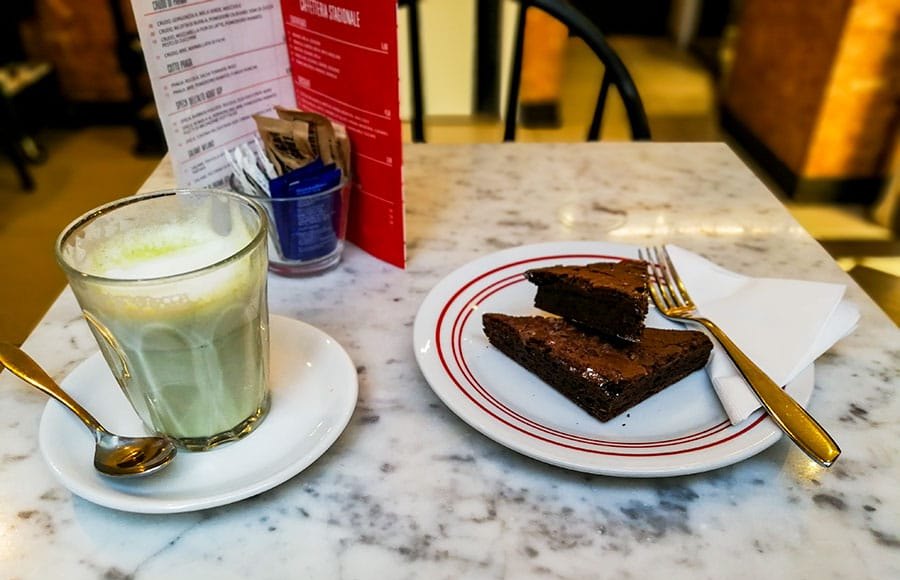
For a small snack I ordered a brownie and a matcha latte — it came to just €6 (that, to remind you, was November 2018). Today a similar snack costs about the same: a slice of cake at €3.50 plus a cappuccino at €1.80 — around €5.30, if you go to an ordinary city café rather than a tourist one:
Decent prices in a café not far from Centrale station:
1.4. What they are obliged to show you before you order
Now for what I myself missed badly on my first visit: what they are entitled to charge you on top, and how to find out in advance. Deciphering the bill after the fact is a dreary business, and the rules are actually simple and work in your favour.
Under the rules published by Milan’s city hall itself, an establishment must: display a menu with prices so that it can be read from the street, before you even go in; keep a drinks price list inside; and, if it offers table service, give you the price list before you place your order and state the service surcharge right there in it. The price of food to take away must also be on the tag at the counter. So if there is no menu outside, that is already a reason to walk past — not out of fussiness, but because that is how it is meant to be.
Now for the famous coperto — the “cover”. It is neither a tip nor a scam: a fixed amount per person for the seat, cutlery and bread. In Italy it is legal (the only exception is the Lazio region, where charging money under that very name is banned — but Milan is not Lazio). The key point is this: the coperto must be announced before you order — in the menu or in the price list. If it surfaces as a surprise only on the bill, you are not obliged to pay it and are within your rights to refuse.
The law sets no ceiling for the coperto, and the amounts vary hugely. At the grand Savini in the Galleria Vittorio Emanuele, for instance, the menu states in black and white €10 per person — for two people that is an extra twenty euros on the bill regardless of how much you ate. Don’t confuse the coperto with servizio: the coperto is a fixed sum per person, servizio is a percentage of the bill; both must be written in the price list in advance. And one more pleasant thing: in Italy establishments are obliged to accept cards — at least one debit, credit and prepaid — so “we only take cash” does not wash here.
And the simplest way to avoid these surcharges altogether is to eat at the counter or take your food away: the coperto is charged for table service, and if you never sat at a table there is nothing to charge it for.
2. How to find a cheap and tasty café
Let me start with this: in the centre it is better not to order a filling lunch of several courses (if you prefer budget travel), because the price differs greatly from places further away or right on the outskirts. You can save by taking small snacks in spots full of local residents. Near the Sforza Castle, for example, that means Cadorna station, which has a great many tasty, budget-friendly places.
And two words that will save you the most money. The first is tavola calda (exactly like that, not “tavolo”): a counter of ready-made hot dishes under glass. You point, pay per portion or by weight, and eat standing or at a table. It is cheap precisely because there is no table service — and therefore neither a coperto nor a service percentage. The second is menù del giorno, the menu of the day: on weekdays ordinary city cafés feed the office crowd, and it is the best price-to-food ratio in town. To give you an idea of today’s figures: in a café in the centre a first course costs €11.50–12.50, a second €11.50–13.50, a side dish €4.50, a panino €6, while a counter breakfast of cappuccino and croissant comes to just €3.40.
Another place well worth knowing: the Mercato Centrale right by Centrale station — via Sammartini, on the corner of piazza Quattro Novembre; metro Centrale FS (green M2 and yellow M3). It is a big food hall with stalls run by different cooks: no booking needed, you take food from any stall, sit wherever you like and order drinks at the table. It is open every day from 6:30 to 23:00 — so whether you have an early train or a late one, you will get a meal there.
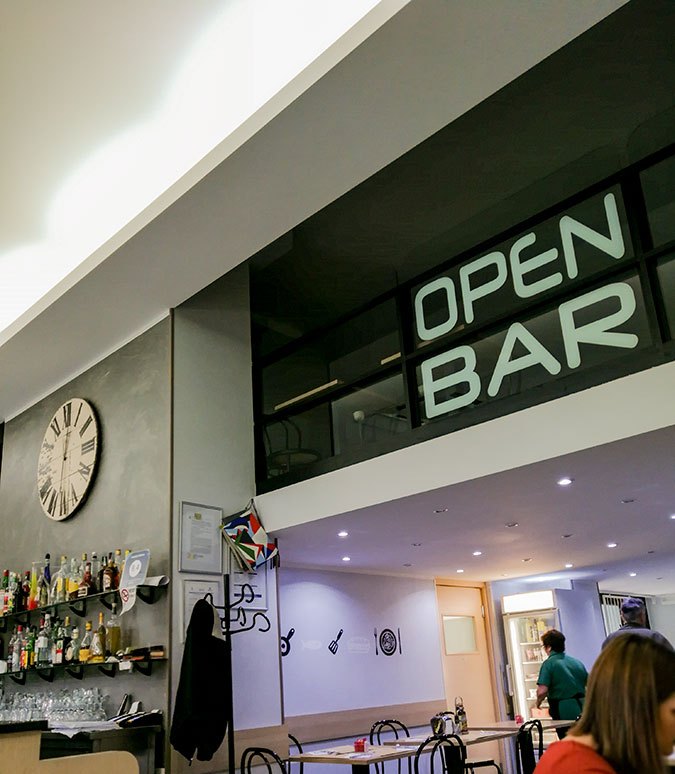
Many cafés, even inexpensive ones, have very interesting design (this café is popular with locals):
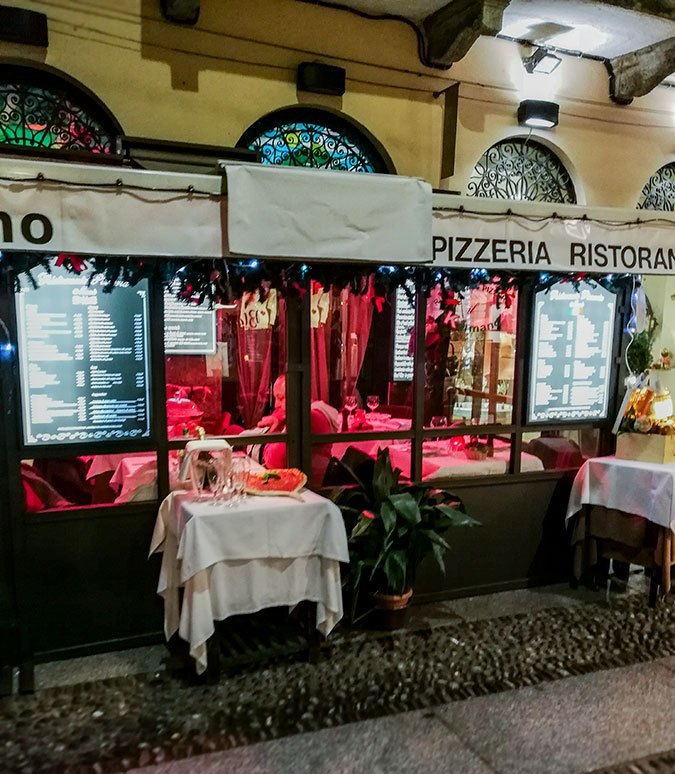
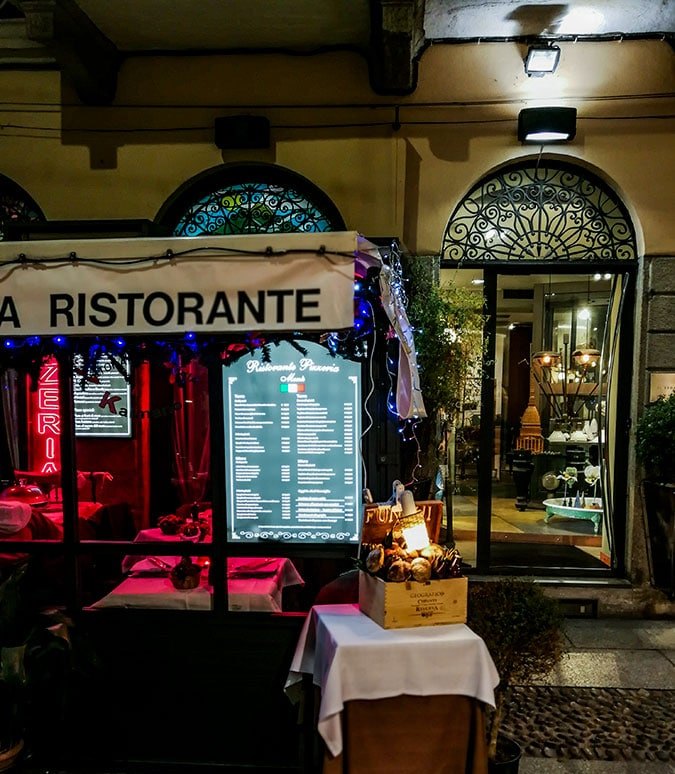
This one is already quite far from the centre, the restaurant ready to welcome guests for dinner:
It often happens that a completely unremarkable place turns out to be really great, with tasty food (this café is in the Centrale station area):
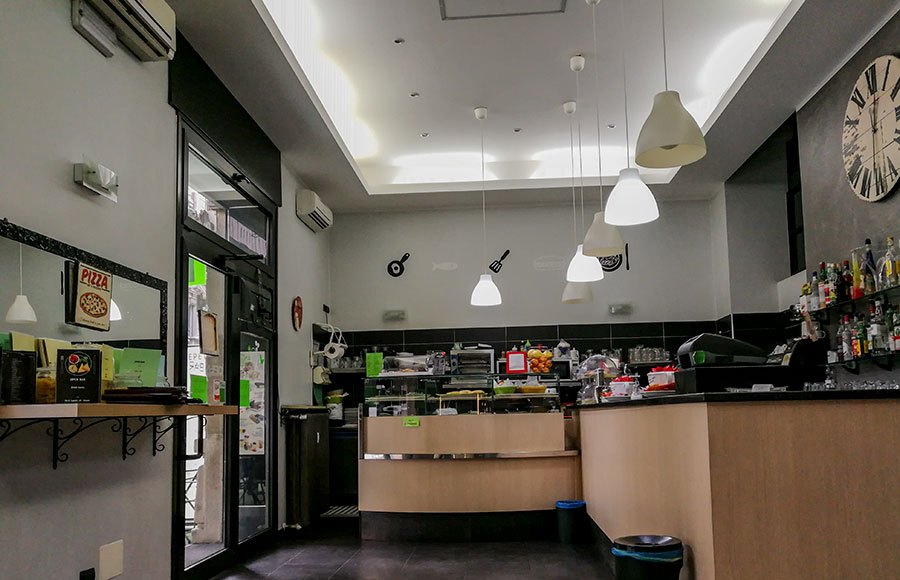
The food here really is very tasty, and the prices are low:
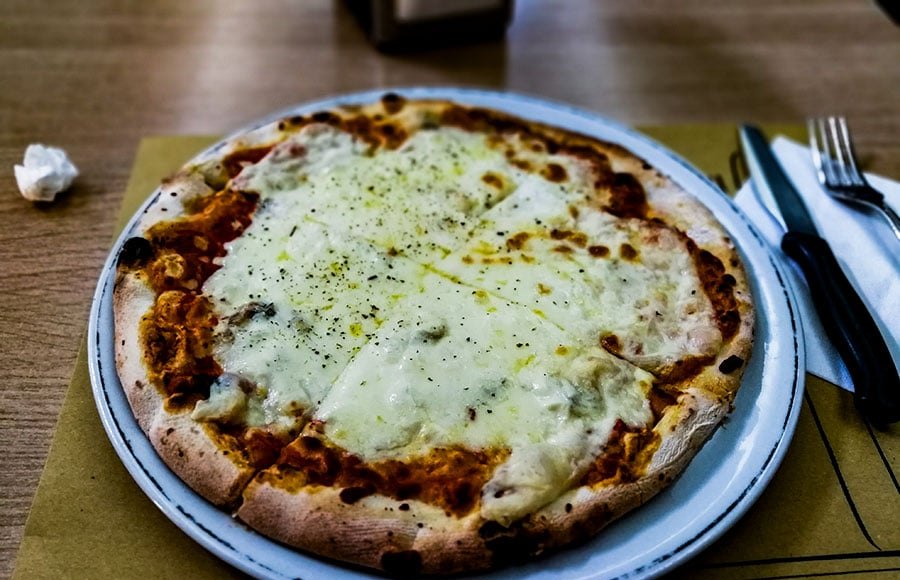
The utterly simple yet universally loved quattro formaggi pizza turned out to be so big and filling that I couldn’t finish it — such a pity:
3. The best cafés in Milan according to reviews
In truth, there are many worthy establishments in Milan. But for now I will tell you about the cafés most popular with tourists:
- Kate away — a very decent place where you can try incredibly tasty pastries and some of the best coffee in the city.
- Torrefazione Moka Hodeidah (spelled exactly like that, with the final “h” — after the Yemeni port of Hodeidah; with a typo you simply will not find the place on the map) — an old family roasting workshop at via Piero della Francesca 8. Be sure to try their chocolate drink and coffee. And if you don’t know what souvenir to bring coffee lovers, just visit this place — you certainly won’t leave without beans and chocolate!
- Ca’ Turati — via Filippo Turati 26, and the customers there are almost all locals. If you want a hearty, inexpensive breakfast, tasty coffee and pastries, this is the place: espresso €1.30, cappuccino €1.80, croissant €1.60, and the “Milano” set breakfast (cappuccino, croissant, freshly squeezed juice and a fruit salad) €9.50. Just check the day of the week: they are open Monday to Friday 7:00–17:30 and Saturday 8:00–15:00, and closed on Sunday.
- Icon Cafè Milano at via Losanna 15 — easygoing prices, generous portions and the cuisine of Salento: pucci, burrata, stracciatella. They have no website of their own, so it is best to check their Instagram for opening hours before you set out.
4. Where to find the best gelato
Gelato is different from ordinary ice cream: it is a hugely popular Italian dessert made from cow’s milk with fruit, chocolate and nuts added. Compared with regular ice cream, gelato contains less milk fat but is churned more gently — which is why it turns out richer in taste and more stretchy. This kind of Italian ice cream is quite popular abroad as well (you can find gelato kiosks in Switzerland, France and Germany).
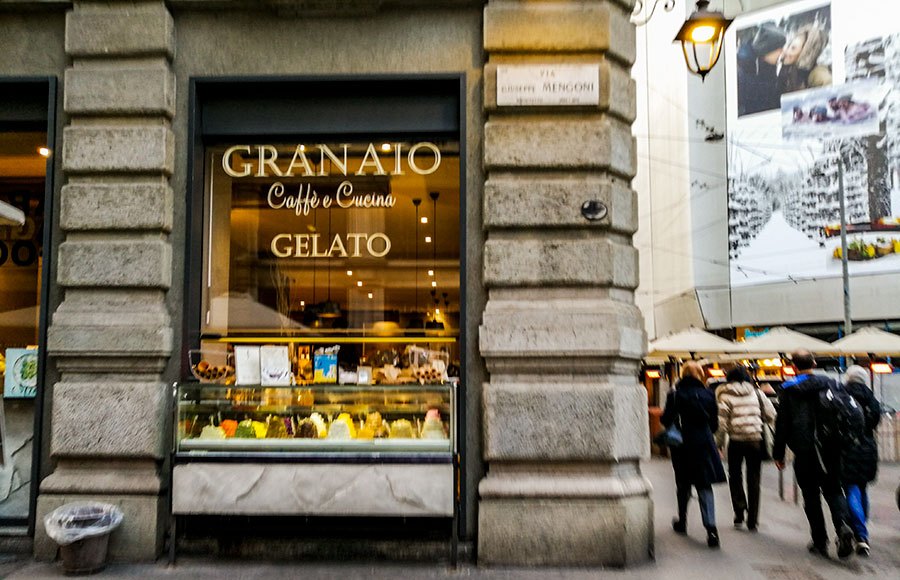
This is what one of the places selling this dessert looks like:
Where in Milan can you eat this wonderful dessert?
- A really great chain is GROM, and it hasn’t gone anywhere: they currently have ten gelaterias in Milan, including on corso Buenos Aires, corso Garibaldi, by San Babila (corso Monforte 2) and on Piazza Gae Aulenti. They are open daily from about 11:00 to 23:30, so you can pop in for a gelato even late in the evening.
- Gelato Giusto at via San Gregorio 17 — this is where they do the unusual: the flavours change, and there are herbal ones such as basil, and matcha too. The list of flavours for a given day hangs on their website, so if you are going for something specific, look it up in advance.
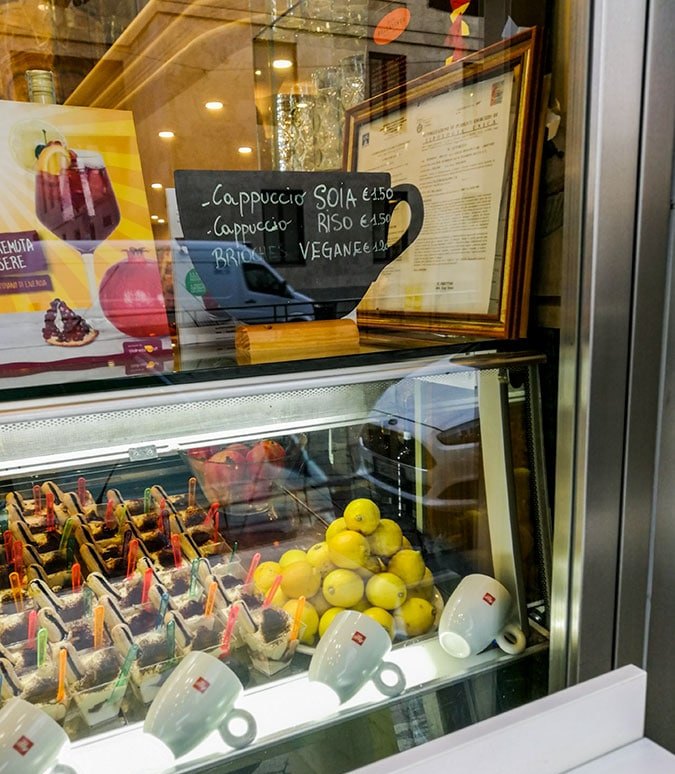
- Vanilla Gelati Italiani — a paradise for vegans: the gelato is made with plant-based milk rather than cow’s milk, there are sugar-free and lactose-free options, and they even have VeganOK certification. Finding them couldn’t be easier — via Pattari 2, literally behind the Duomo, a three-minute walk; open every day 10:30–21:30. Vegan coffee varieties are popular in Milan in general, by the way:
- Biancolatte (written as one word) at via Turati 30 — here you should get the bitter chocolate with salt, an unexpected and very grown-up flavour. It is not only a gelateria but also a café with breakfasts and a patisserie; open from 7:30 on weekdays and from 8:30 at weekends, until 23:00.
5. What food to buy to take home
You absolutely should buy coffee — Italy is famous for precisely this drink, and rest assured the coffee will be superb.
- Italian pasta — a very worthy, tasty and useful gift, as the flavours are completely different (with tomatoes, basil, spinach). Mind you, the best pasta is sold frozen — it is fresh rather than dried.
- Olive oil — the quality is excellent.
- Wine also works well as a gift; you can find both collectable varieties and quite budget ones, and the quality will be top-notch either way.
- Chocolate and sweets — incredibly tasty, ideal as a gift for family or colleagues.
- Cheese — there is simply a huge abundance of this product. The only thing: it is better to take vacuum-packed cheeses so that they survive the journey.
6. Conclusions
Milan is an amazing city with magnificent food — you definitely won’t go hungry.
About the food I can say that it is unquestionably tasty, not exactly cheap, but worth it! Instead of restaurants you can go to small cafés or snack on street food. The average food spend for one person is about €30 a day — and, surprisingly, that figure still holds. I recalculated it against today’s menus: a counter breakfast at €3.40, a one-dish lunch at €11.50–12.50, and in the evening an aperitivo with a buffet instead of dinner at €8.50–15 — which comes out at €24–31. But that is exactly the regime I describe in this article; a full restaurant dinner does not fit into it — there the coperto alone can swallow a tenner. And keep the general background in mind: Milan is the most expensive city in Italy, and the same basket of goods and services costs almost 40% more here than in Naples. I spent less — I had breakfast in the apartment, snacked in small cafés during the day and headed out for aperitivo in the evening. With a child, though, that kind of eating wouldn’t work; during the day you would need to find more substantial meals.
Come to Milan, share your impressions and recommend new, undiscovered cafés!
In Milan I used Airbnb and stayed in an apartment — it turned out much cheaper and more convenient.