Kalemegdan Fortress stands in the old part of Belgrade, right beside the river. So what is there to do here? Stroll around the Upper and Lower Park, explore the old fortress, and enjoy the splendid view from the terrace — the river, the New Town and the island between the Sava and the Danube.
The fortress was first a possession of the Roman Empire, then passed to Hungary, served as the capital of a Serbian despot and was conquered by the Turks… before finally returning to Serbia — this time as a historic landmark.
1. General information about the fortress
Kalemegdan is one of the oldest parks in Europe and is divided into an Upper and a Lower part. The Lower Park is a pleasant place for a walk in good weather and has a children’s amusement park and a zoo.
View of the fortress from the Lower Town:
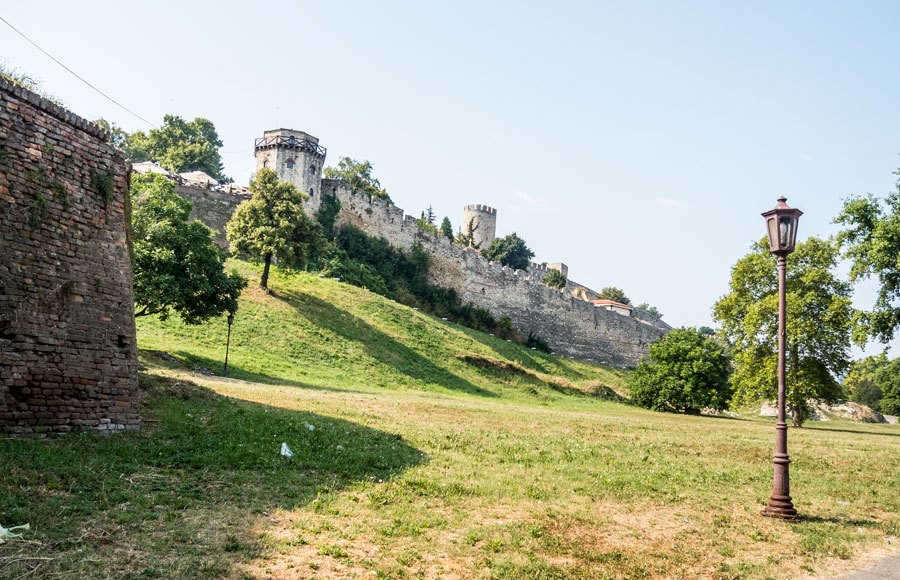
You can tell from the photos alone that the visit will be interesting. The Upper Town holds the fortress itself, several museums and the city’s symbol, the Victor (Pobednik). Originally only the fortress was called Kalemegdan, but today the name extends to the whole park.
Tourist map of Kalemegdan:
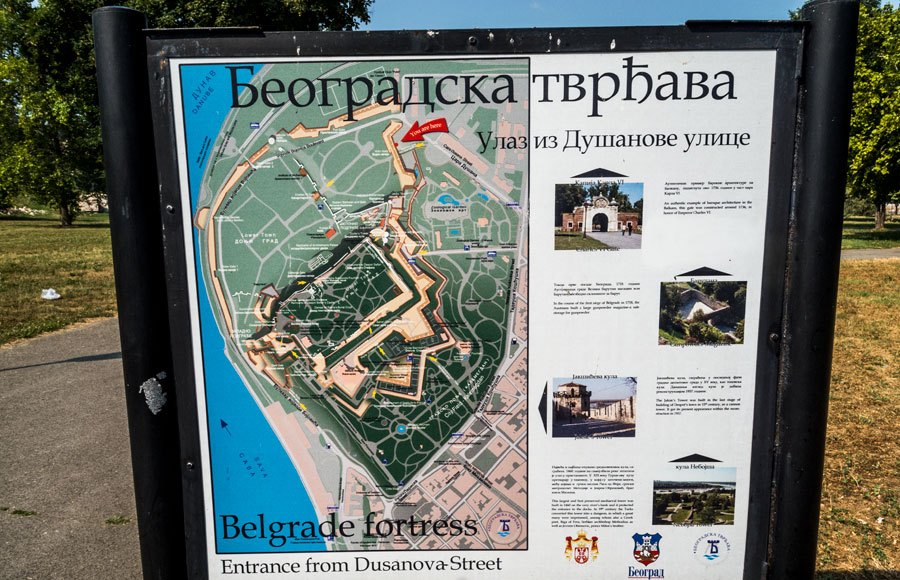
There are also several museums and churches here that we recommend visiting. The fortress is interesting but not very large, and open-air concerts are often held on its grounds in summer. Allow 1.5–2 hours for a walk around the fortress and park — longer if you go into the museums.
1.1. A brief history
When this territory belonged to the Roman Empire, the fortress was called Singidunum. In memory of those times, one of the city’s universities is still called “Singidunum” today.
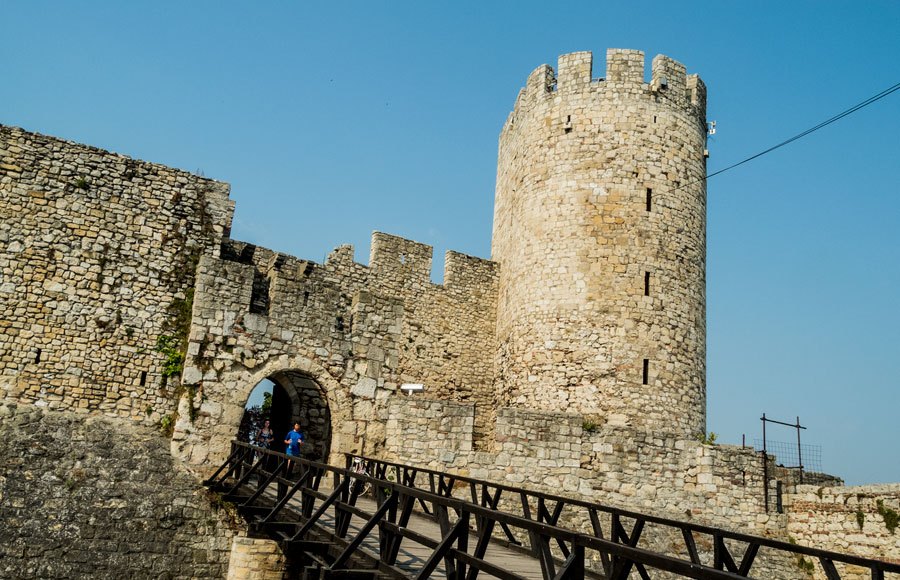
One of the surviving towers:
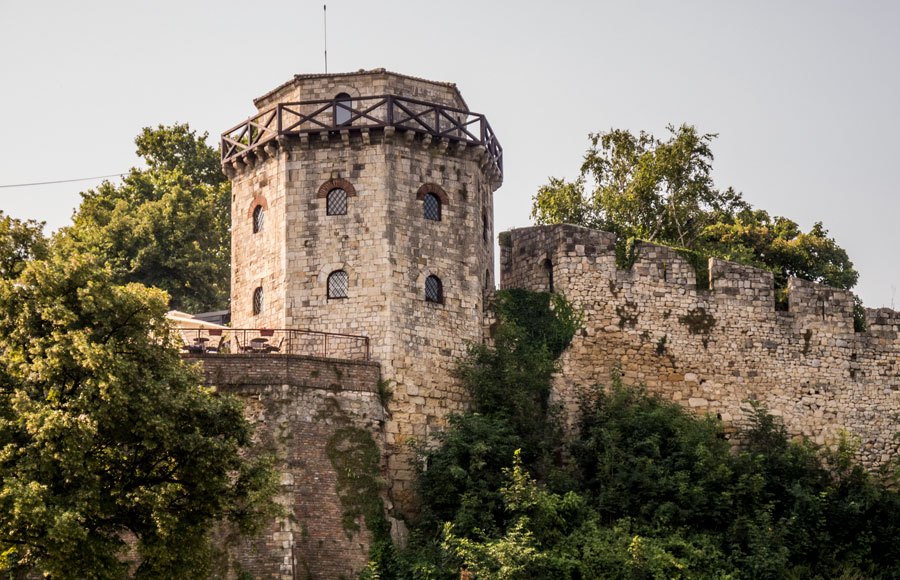
By 441 the fortress had seen fighting with the Goths and the Huns, so the structure had fallen almost into ruin. Only by 535 was it restored, taking on its defensive role once more.
Kalemegdan in all its glory:
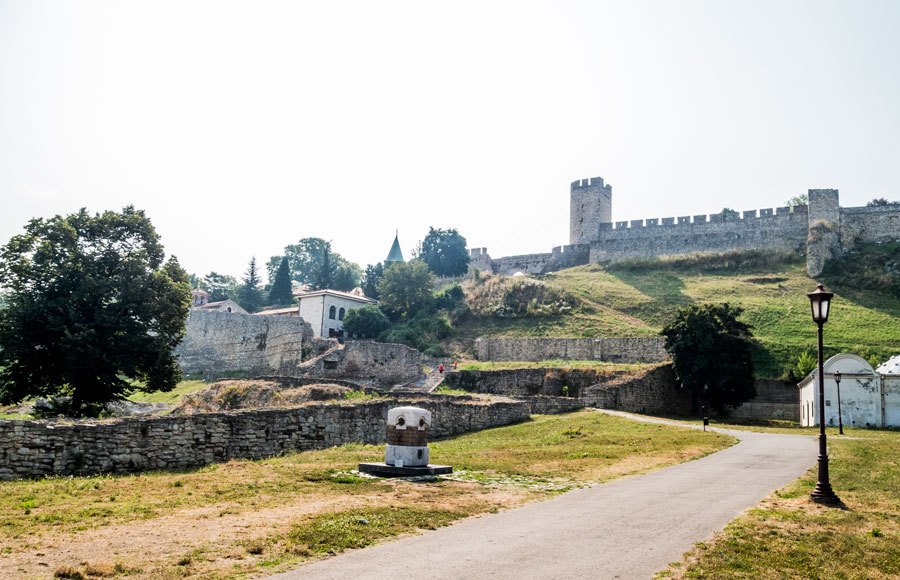
Kalemegdan later belonged to the Hungarians. In 1284 Belgrade was given to the Serbian king Dragutin, who was married to a daughter of the Hungarian king, and in 1404 the Hungarian king Sigismund handed the city over to Despot Stefan Lazarević — Belgrade became the capital of the Serbian state for the first time. After Stefan’s death in 1427 the city reverted to the Hungarians.
The cobbled road is a little awkward to stroll along:
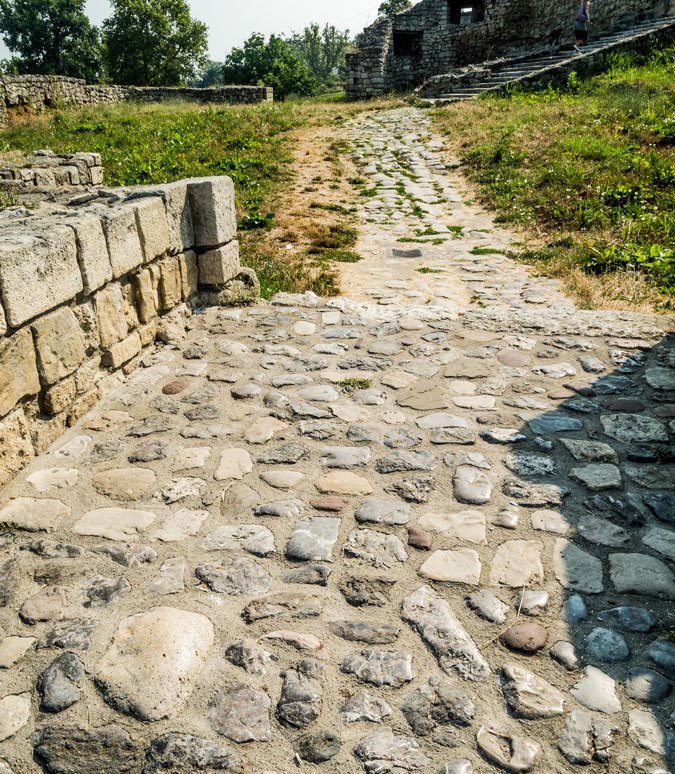
For a very long time the fortress and its grounds essentially were Belgrade — the townspeople lived within its walls under the protection of the guard. In 1521 the Turks captured the city and the fortress, which is how it acquired its Turkish name.
The fortress in miniature:
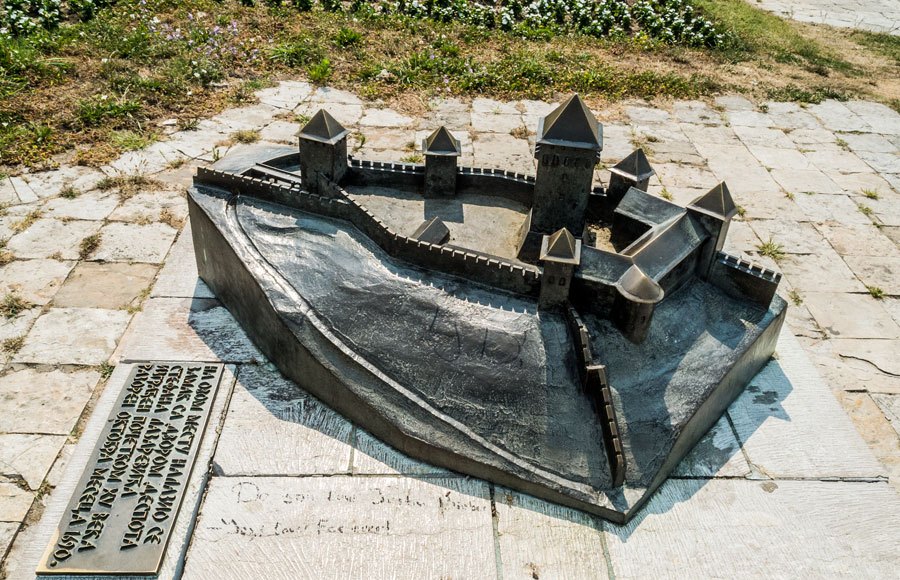
It became Serbian again only in 1867! During the wars (the First and Second World Wars) it was badly damaged and had to be restored yet again.
Today Kalemegdan Park and the remains of the fortress are a lovely place for a walk. There are several museums on the grounds and an open-air display of military equipment, and in 2018, when we were preparing this article, a children’s park with dinosaur figures was also operating by the Stambol Gate. Several cafés and restaurants sit on the Kalemegdan terrace directly above the zoo.
1.2. Where it is
The fortress is in the Old Town. Nearby landmarks are the French embassy, the Austrian embassy and Belgrade Zoo.
Official website: www.beogradskatvrdjava.co.rs
Entry to the park and the fortress grounds is free; you only pay for individual sights — the museums, Nebojša Tower and the Roman Well. From 3 June 2026 the Upper Town gates are closed from 00:30 to 04:30, while Kalemegdan Park and the Lower Town stay open at night.
Location on the map:
1.3. How to get there
- An enjoyable way to walk to Belgrade Fortress is to follow Knez Mihailova Street to the very end. As soon as you cross the tram tracks, you are on Kalemegdan.
- By taxi, simply ask to be taken to Kalemegdan — drivers will know exactly what you mean.
- By tram, take No. 2L to the “Kalemegdan” stop, or Nos. 5 and 10 to the “Kalemegdan (Donji grad)” terminus by the Lower Town. Tram No. 2 without the letter is not running at present (checked against the city operator’s data in September 2026). Public transport in Belgrade has been free for everyone since 1 January 2025.
- By bus it is easiest to ride to Republic Square (the “Trg Republike” stop, served for example by No. 24) and then walk along Knez Mihailova Street. Buses have no stop called “Kalemegdan”.
The park on the fortress grounds:
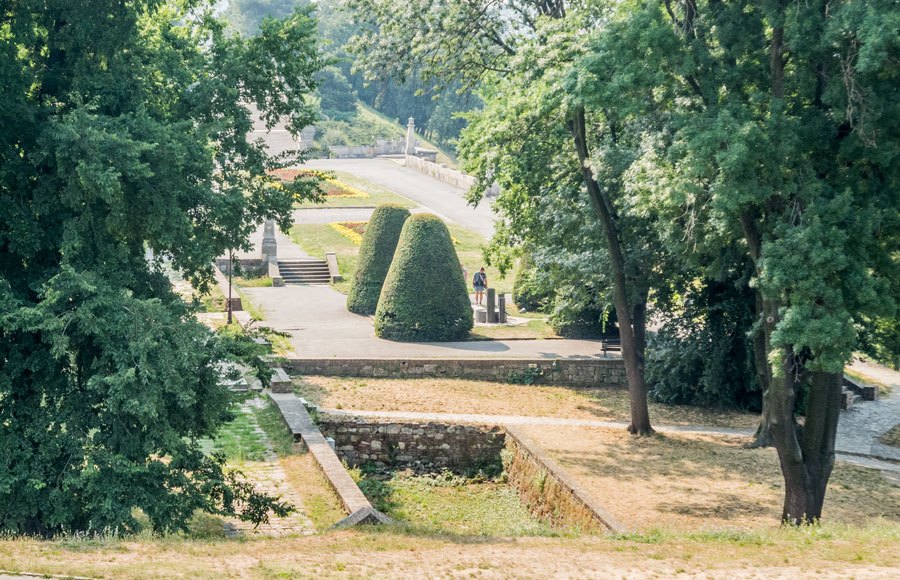
2. A photo tour of the park
2.1. On the fortress grounds
There are several museums on the fortress grounds:
- the Military Museum with an open-air display of equipment;
- a torture museum (the Casemates);
- the children’s Dino Park with dinosaur figures: it was operating in 2018, but its own website would not open in September 2026, so check on the spot;
- the Natural History Museum Gallery.
I suggest paying particular attention to one very interesting structure — Leopold’s Gate. You will see it as you approach the fortress: cross the wooden bridge over the moat, and there it is. A massive stone gateway with two crenellated towers:
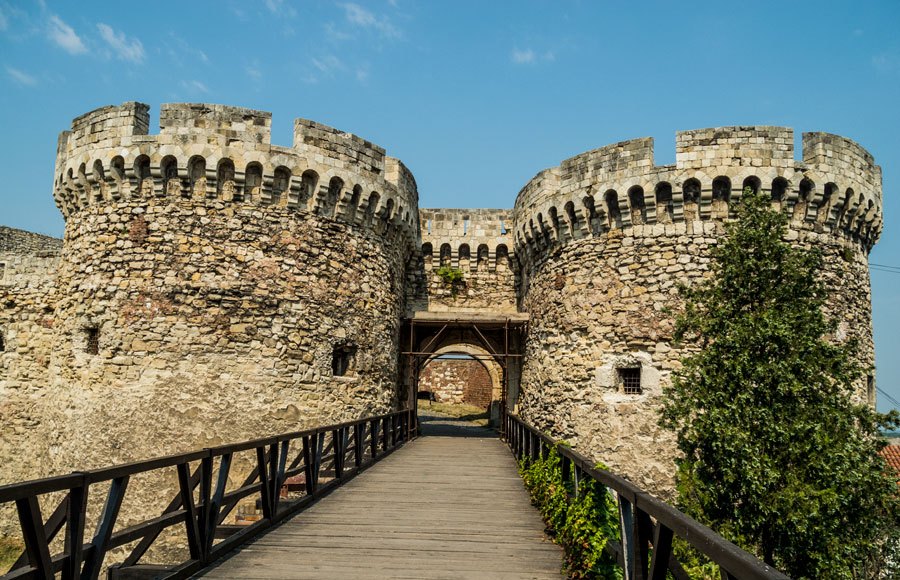
Altogether you pass through three sets of gates — Leopold’s, Zindan and the Despot’s. Today that is easy, as the fortress is happy to welcome tourists. But what must it have been like for enemies fighting their way into Kalemegdan across moats and other obstacles? Belgrade was well guarded.
View of Kalemegdan from the opposite bank:
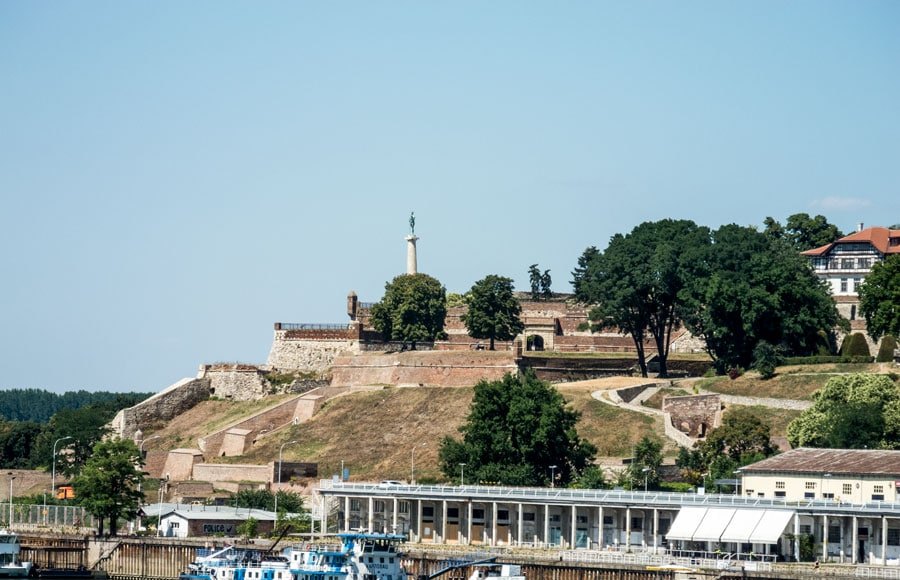
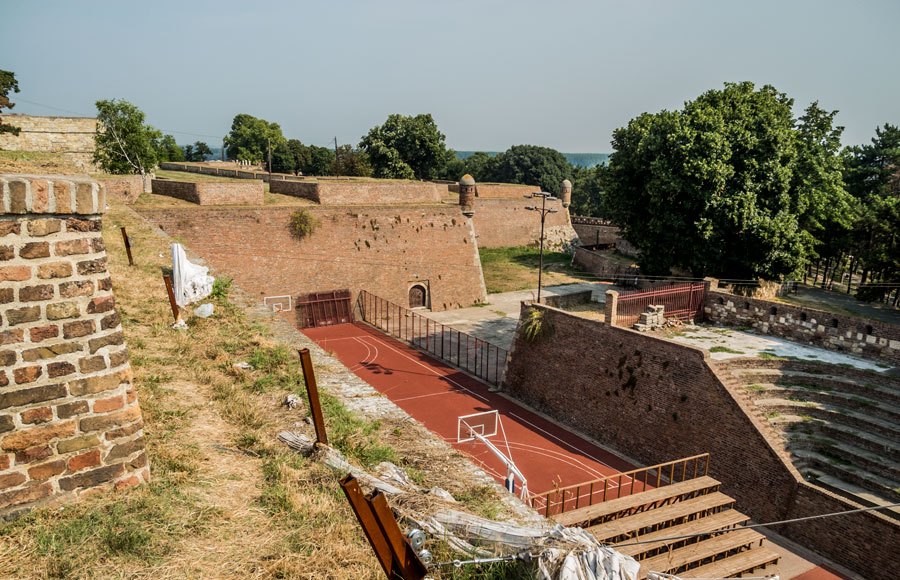
The grounds also have plenty of benches for a rest, cafés and restaurants, and tennis courts. Yes — you can even play sport here.
Have you ever seen sports courts inside a fortress?
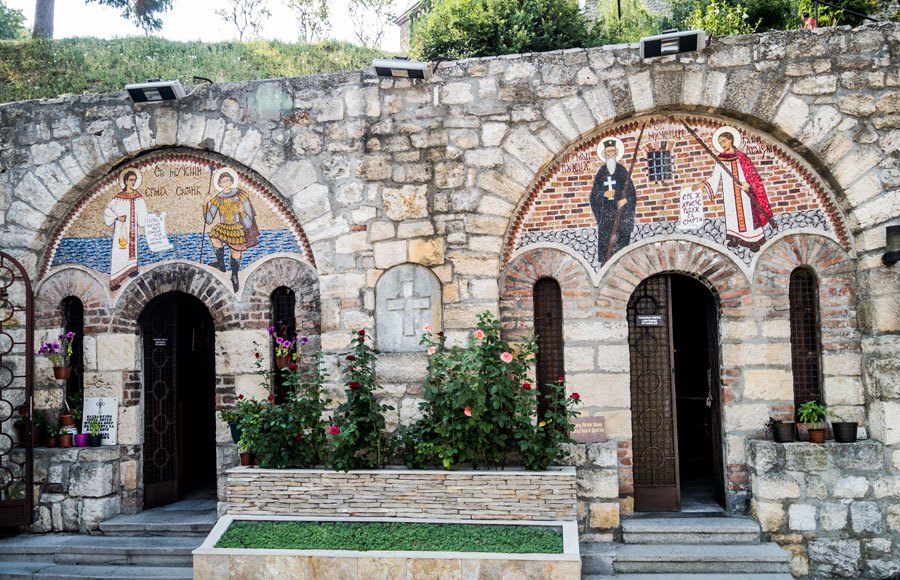
Ružica Church:
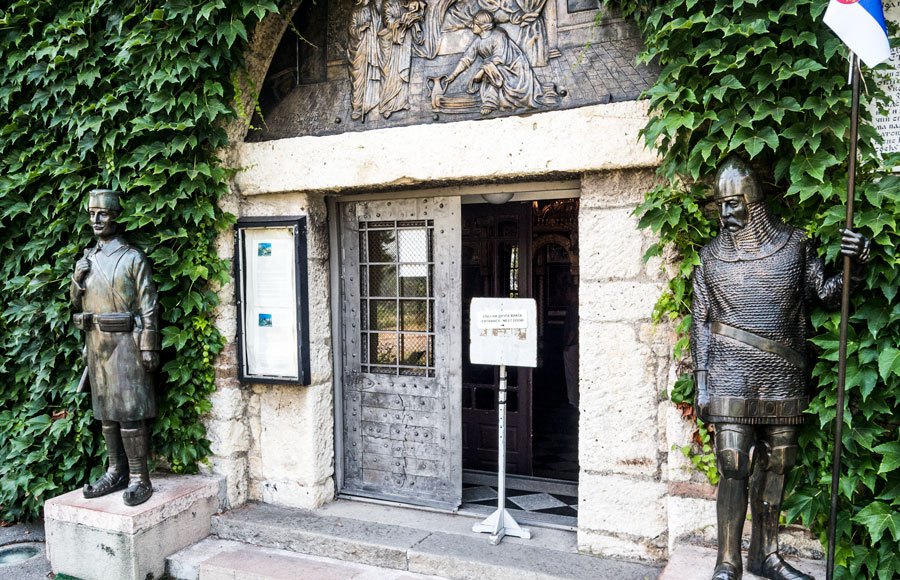
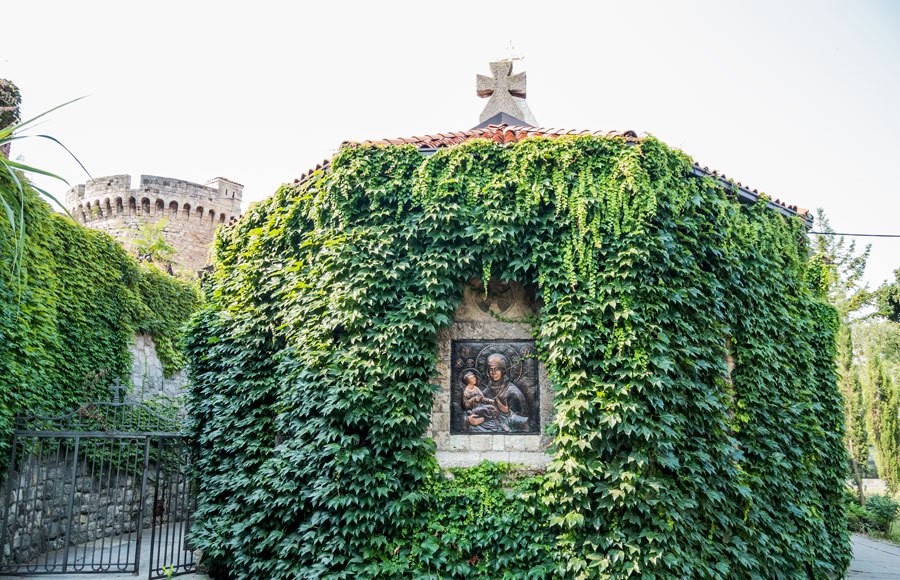
In summer it hides completely beneath a cover of green leaves:
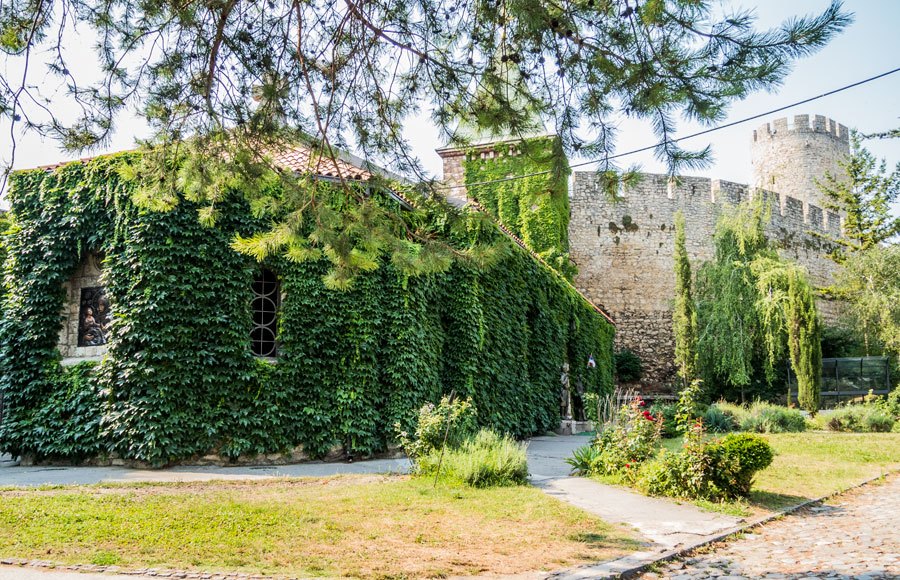
It looks most unusual:
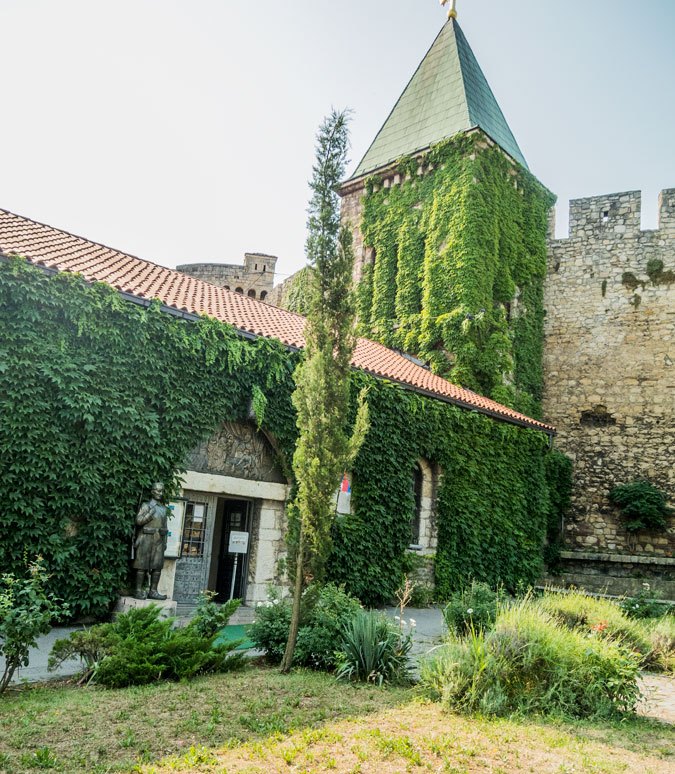
Here is the main entrance:
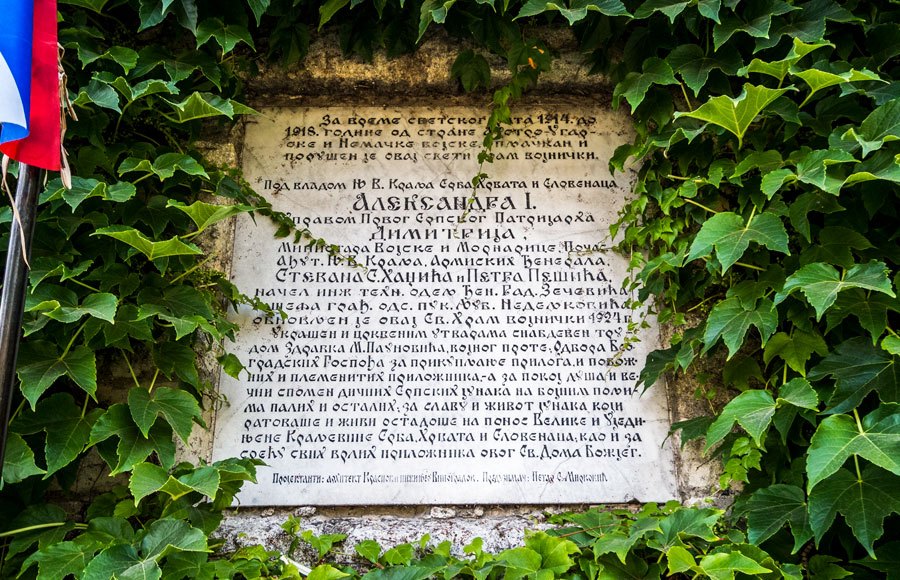
An old plaque:
Ružica Church is a very popular place for church weddings:
The candelabra and the interior decoration are quite unusual. Everything is made from shells, bullets and weapons from the First World War.
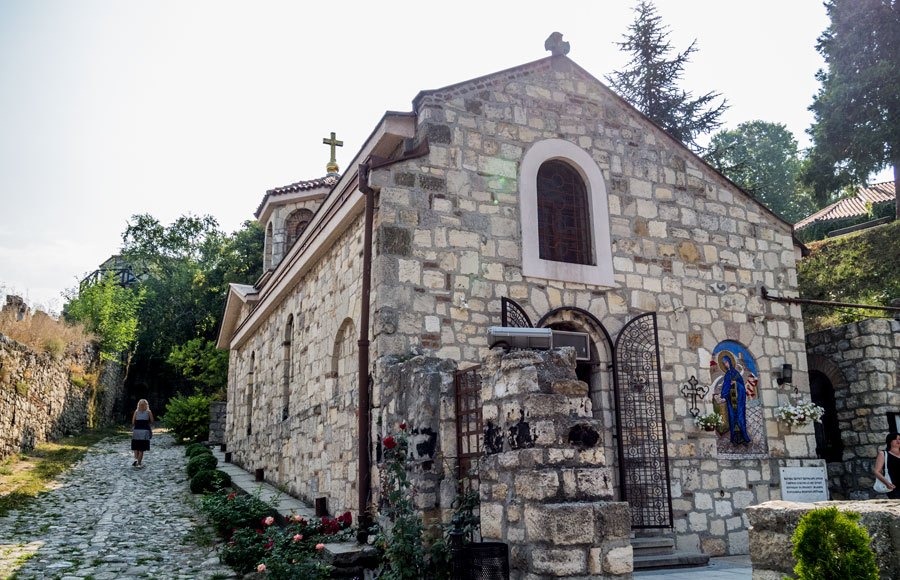
Ružica Church stands next to Saint Petka’s Chapel, where you will also find a spring. You can take the holy water free of charge, or leave a donation of your choosing.
Saint Petka’s Chapel:
2.2. The Military Museum
Its collection holds 30,000 items! The main theme, of course, is Serbia’s weapons and military equipment through different periods of history.
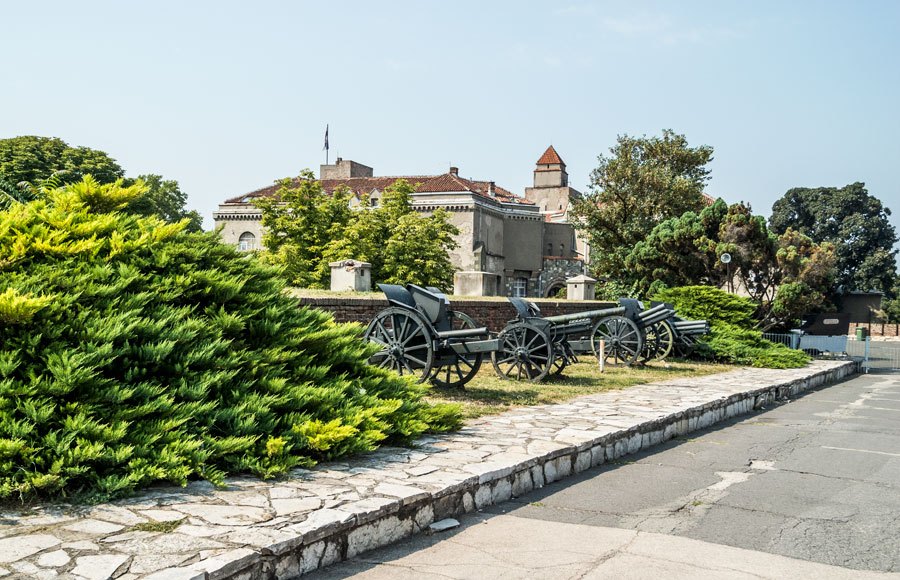
The tank display:
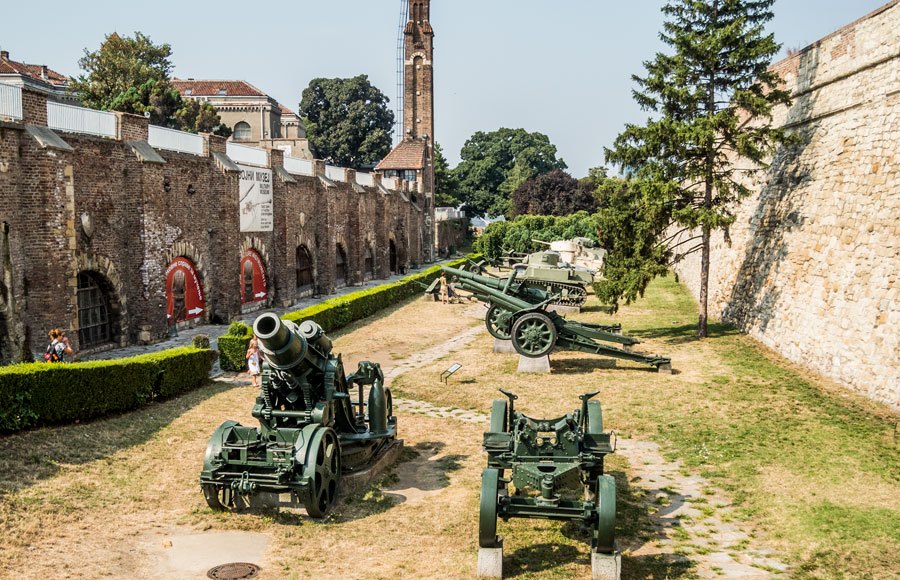
There are also decorations, banners and orders, many of them donated to the museum by their owners. The museum is in the Upper Kalemegdan near the Stambol Gate.
Walk under this clock tower and head down — you will see the equipment display straight away:
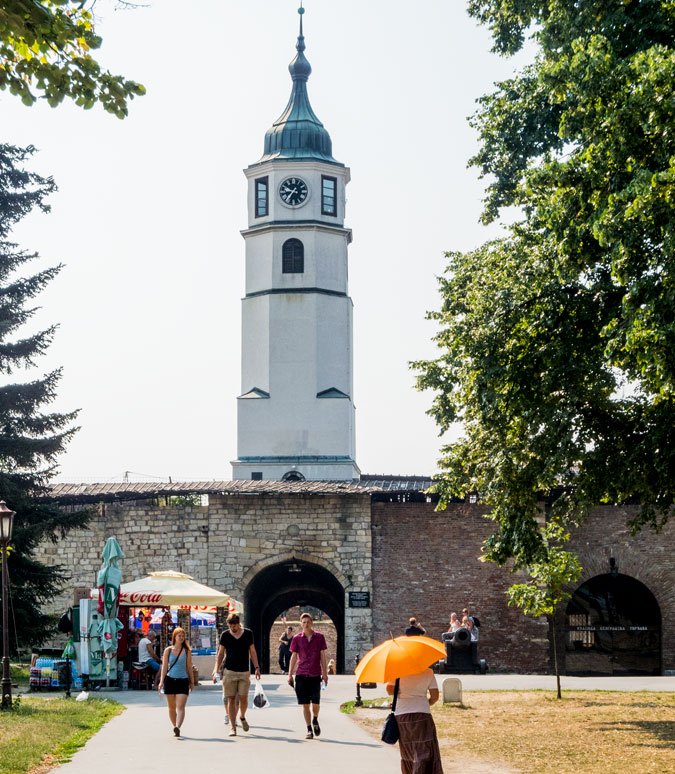
In my view, the most interesting things are outdoors — the more or less modern military hardware of the tank display. Inside the museum are the smaller exhibits. Everything outside can be viewed completely free of charge. According to the museum’s website in September 2026, admission to the museum itself costs 350 dinars (250 for schoolchildren and students). It is open Tuesday to Sunday from 10:00 to 17:00, with tickets sold until 16:00.
By the way, you will come across military exhibits all over the grounds:
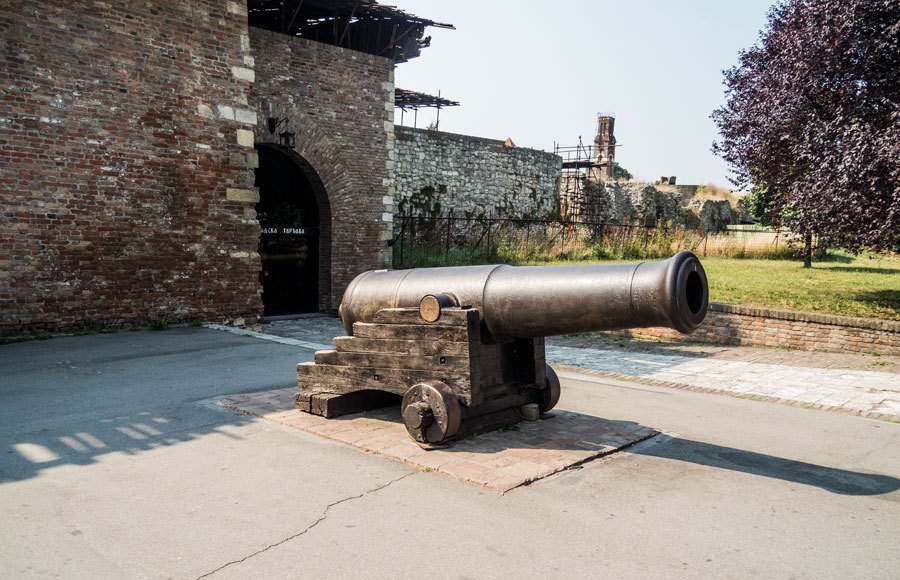
The old gates:
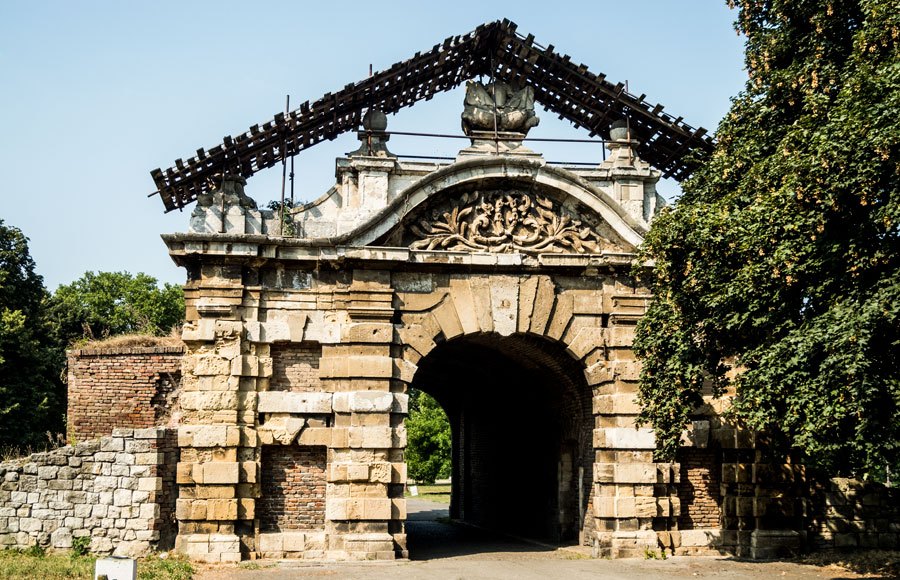
Climbing on the exhibits is not allowed, but walking up to them, taking photographs and touching a piece of history is absolutely fine.
2.3. Nebojša Tower
It is famous as the place where Rigas Feraios, the celebrated Greek revolutionary, was held prisoner. Today Nebojša Tower has become a destination for lovers of contemporary art.
The halls occupy all four floors of the former prison. The ground floor holds the permanent exhibition, dedicated to Rigas Feraios. Artists from abroad often come here to show their work.
And here it is — the dungeon and gallery:
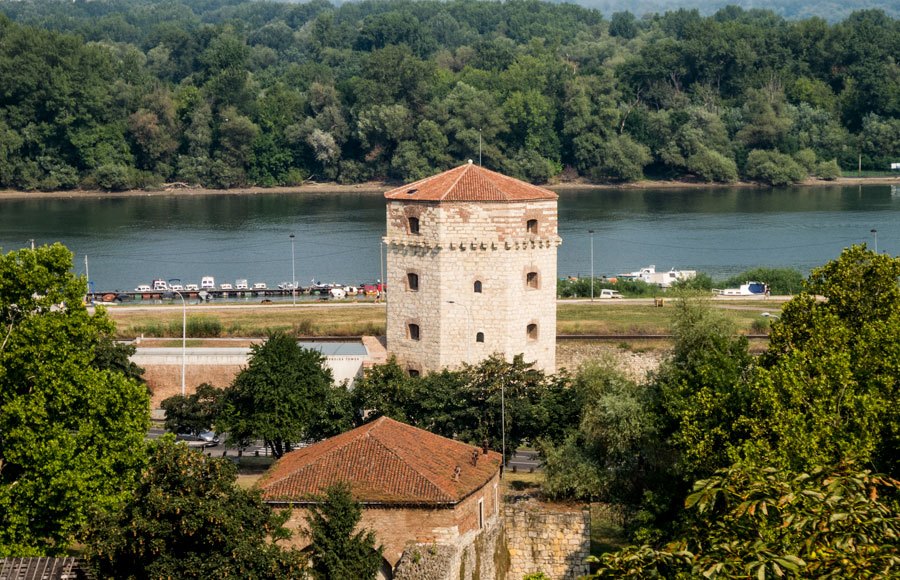
If you enjoy contemporary art, be sure to visit the tower. As of September 2026 it is open Wednesday to Sunday, and a ticket costs 270 dinars (150 for schoolchildren, students and pensioners). Then again, it is also a chance to step inside such a well-known, if grim, historic building.
2.4. The Torture Museum
A rather odd museum, which the faint-hearted and impressionable would do better to skip altogether. When we were there in 2018, admission cost 300 dinars; as of September 2026 the fortress website lists 400 dinars (300 for schoolchildren, students and pensioners). The museum is open Tuesday to Sunday, and from November to March only for groups by prior booking. For that price you can see the history of torture from around the world, with all its instruments and machines.
Welcome:
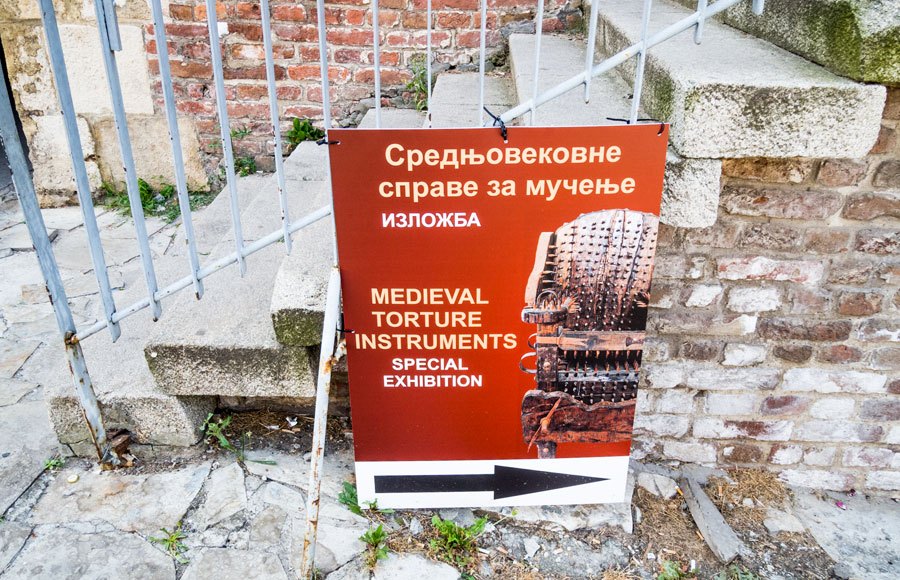
Many of the exhibits are devoted to the Spanish Inquisition in the Middle Ages. Why this museum is located here, of all places, is a mystery. We assumed it is simply entertainment for tourists.
2.5. Views from the fortress
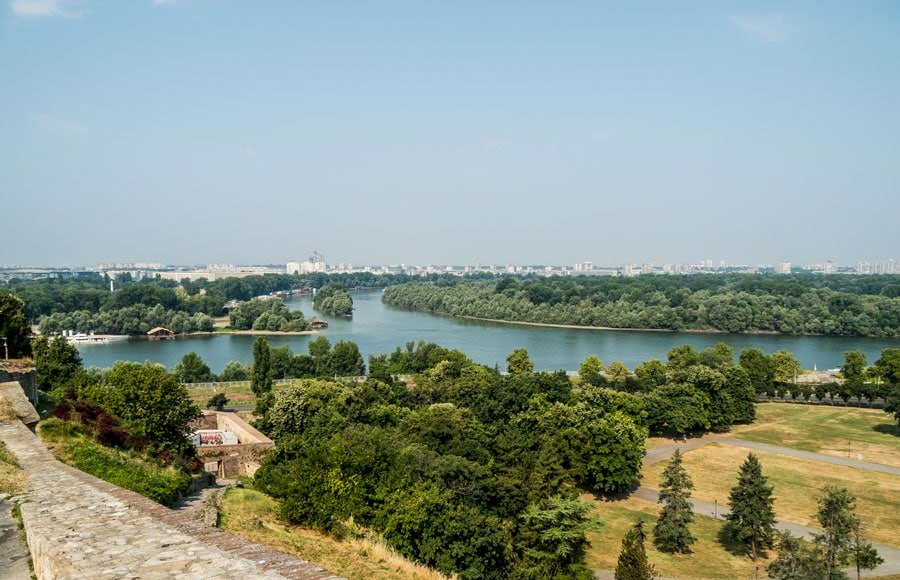
From the fortress you can see the spot where the Sava and the Danube meet. In the Lower Kalemegdan it is especially beautiful in spring, when the poppy fields begin to bloom and the whole ground turns red.
View of the river:
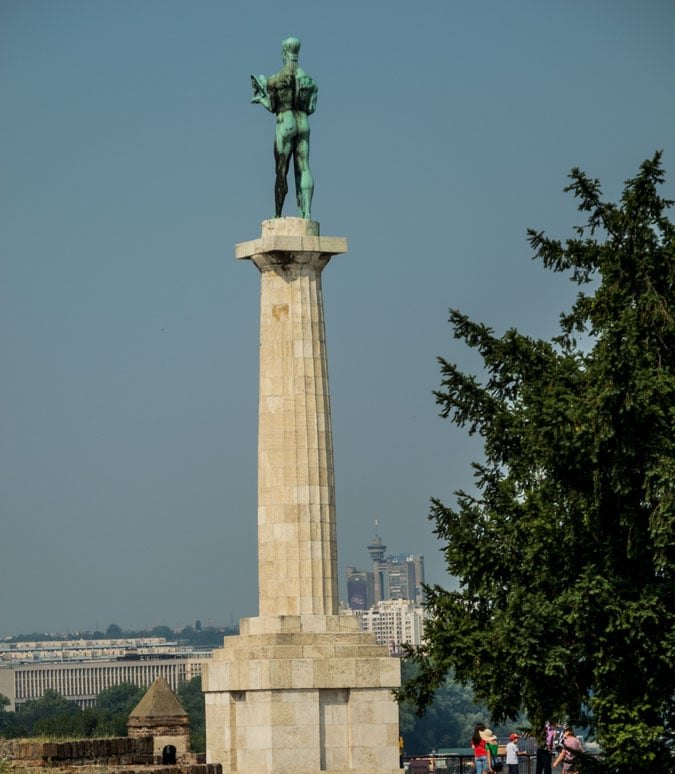
View of the Victor statue and New Belgrade:
2.6. The Gallery
The Gallery is a small exhibition hall of Belgrade’s Natural History Museum on Little Kalemegdan. There is no permanent exhibition; the displays change. As of September 2026 the Gallery is open Tuesday to Sunday (until 31 October from 10:00 to 21:00, and from November to April until 18:00), an adult ticket costs 300 dinars, and on Thursdays from 10:00 to 12:00 entry is free.
Small but interesting:
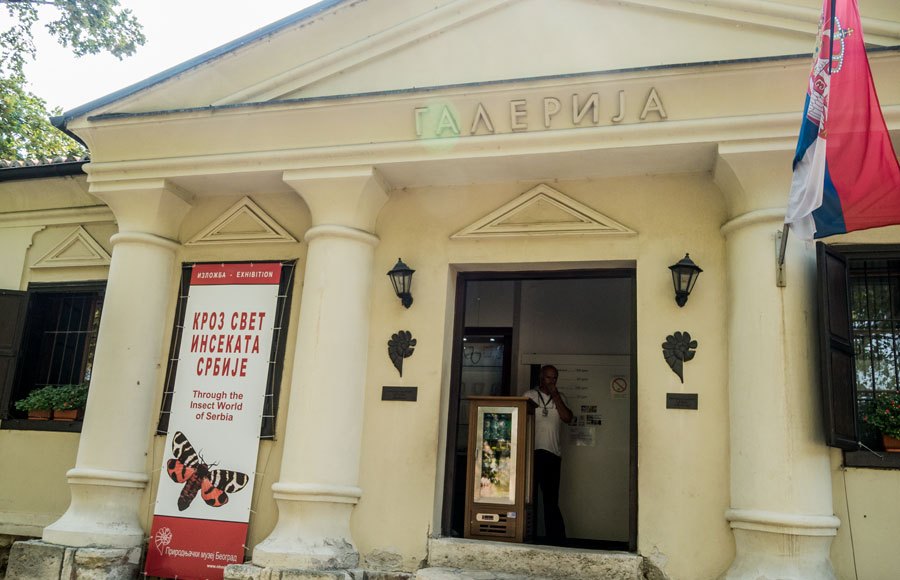
Schoolchildren will enjoy it most. In 2018, when we were there, the themed exhibitions included:
- butterflies;
- meteorites;
- space;
- the world around us;
- nature.
Special lectures for children were also organised from time to time back then. In summer 2026 the Gallery was showing “Fossilorama” and “Mineralis — the Pelagonian Massif”, both open until mid-September, so it is best to check the museum’s website for what is on now.
2.7. Interesting things around the grounds
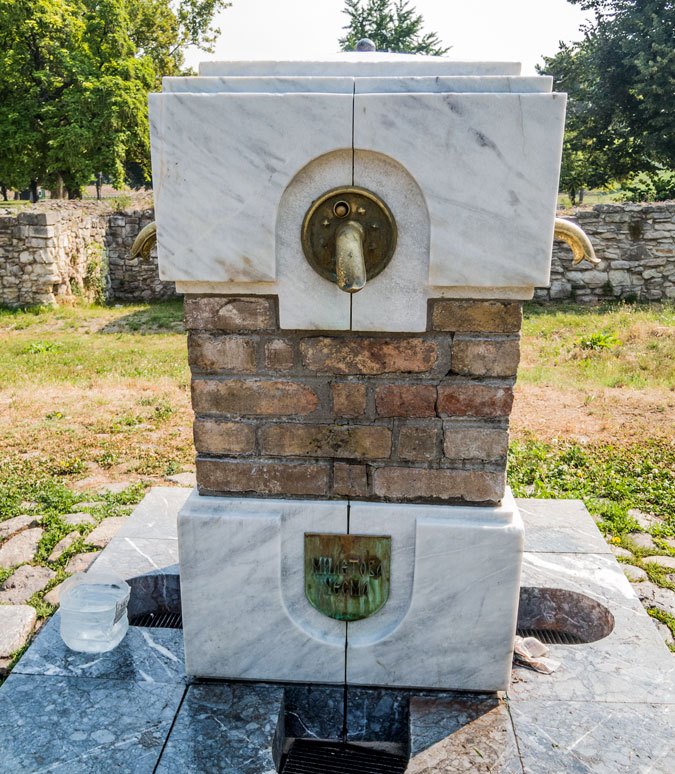
If you are thirsty, don’t rush to buy water — you can drink from fountains like this one:
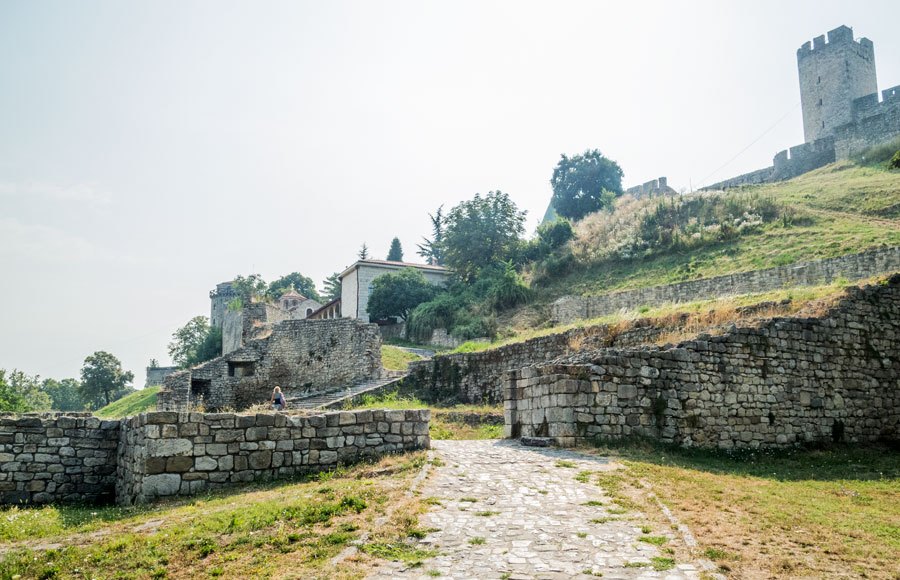
The way from the Lower to the Upper Kalemegdan is a long one — you have to climb an old stone staircase, but it is an interesting walk.
The climb to the top of the fortress:
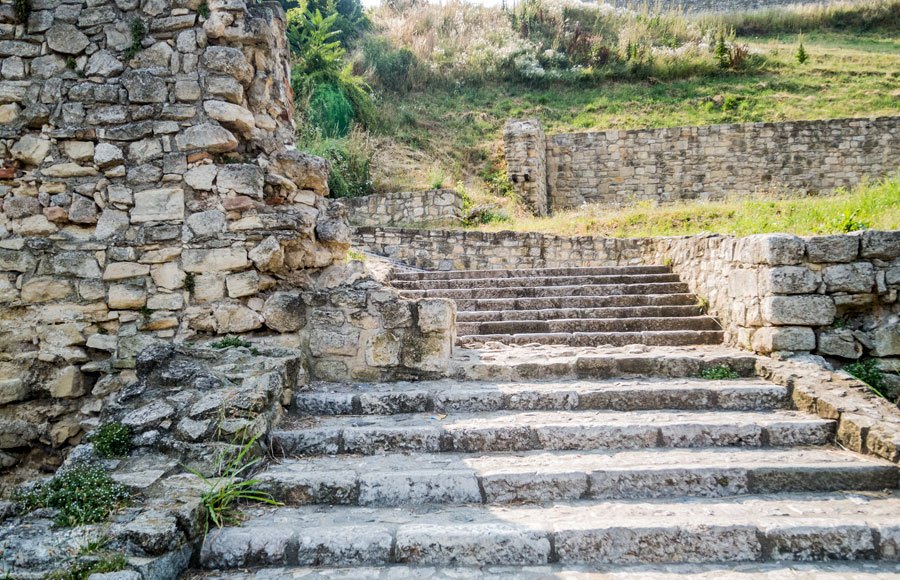
These are the staircases we suggest you climb:
Tourists will always find something to photograph, won’t they?
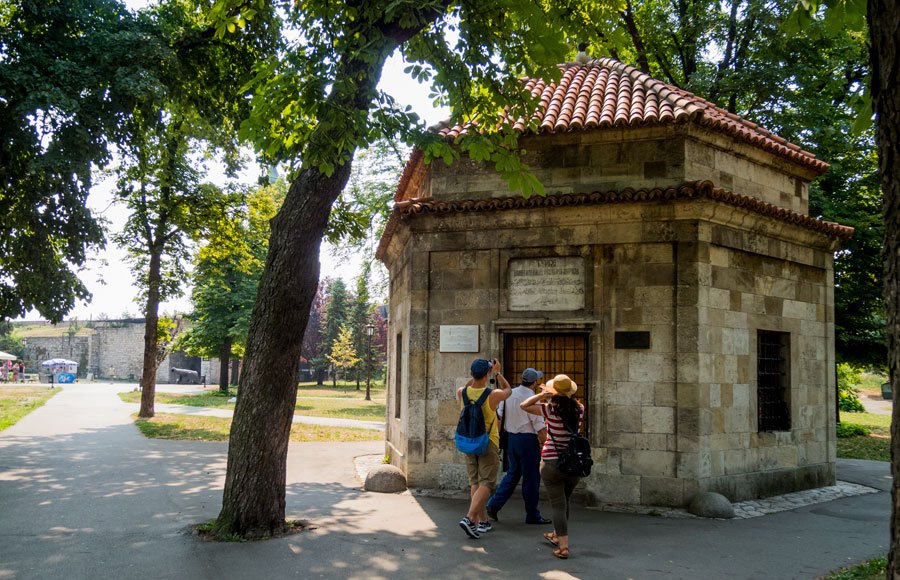
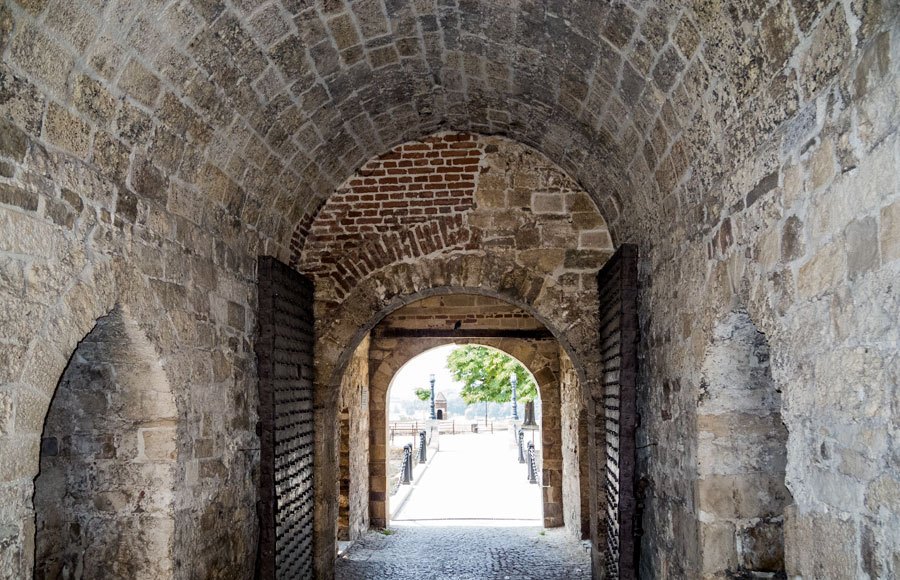
It is quite a stirring feeling to walk through a narrow passage in the wall — you can picture how medieval people once lived here:
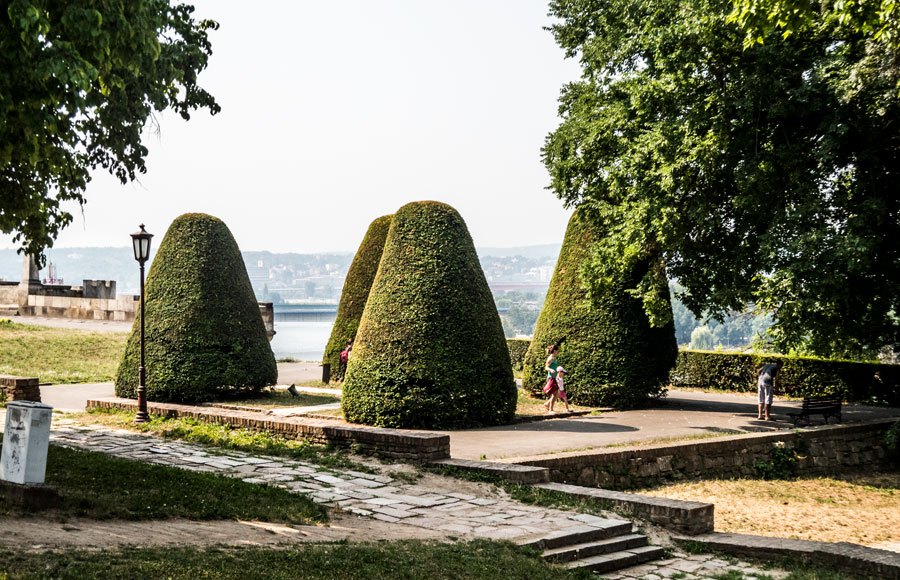
The park is interestingly laid out:
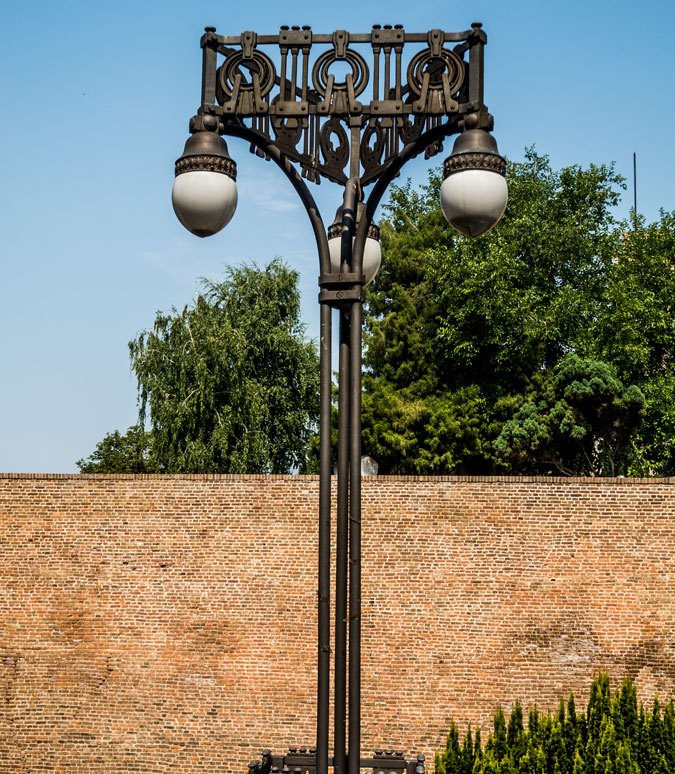
A modern decoration in the park:
And this statue was a gift to Serbia from France:
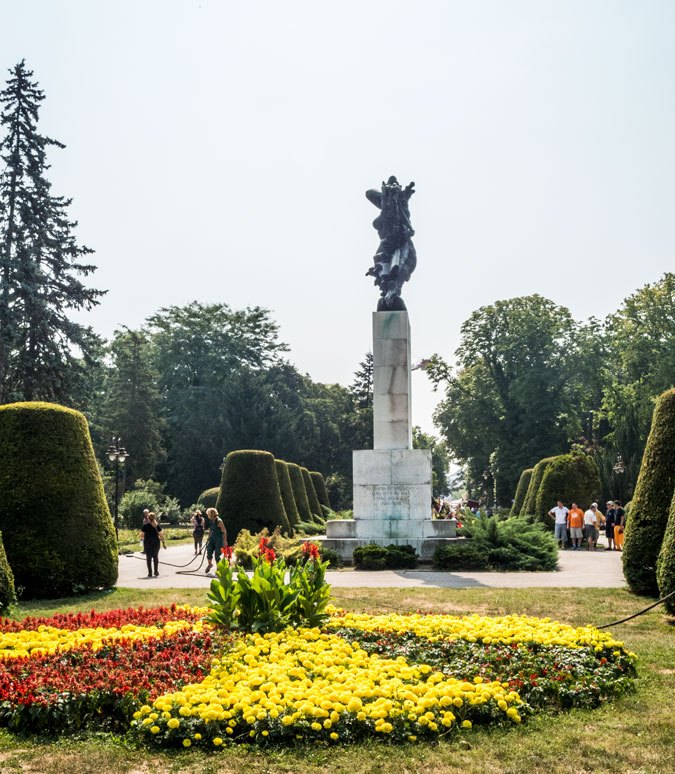
3. Conclusions and impressions
We strongly recommend visiting the fortress. Allow 1.5–2 hours for the walk. It is not only a historic landmark of the city but also a very beautiful place, and you can feel the spirit of old Serbia here.
The konak, or summer residence:
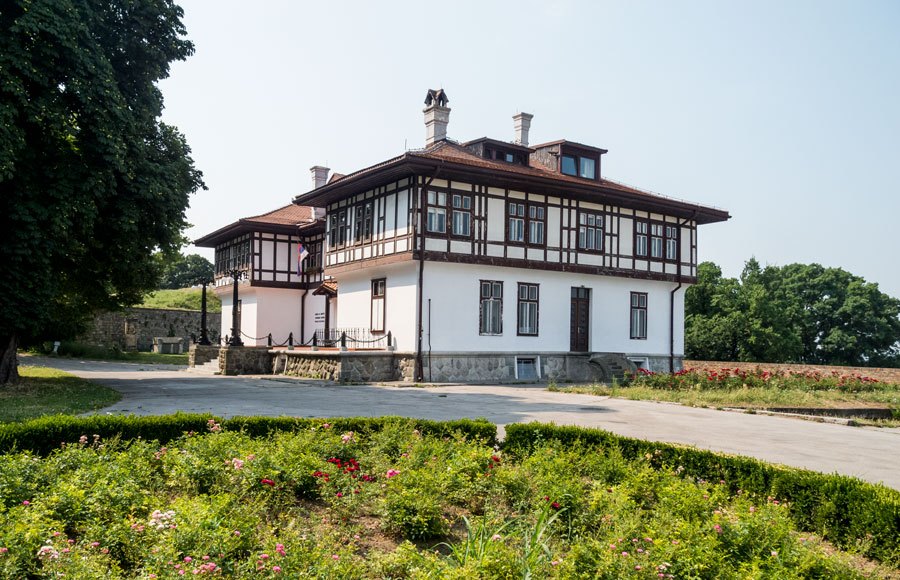
Kalemegdan makes a strong impression:
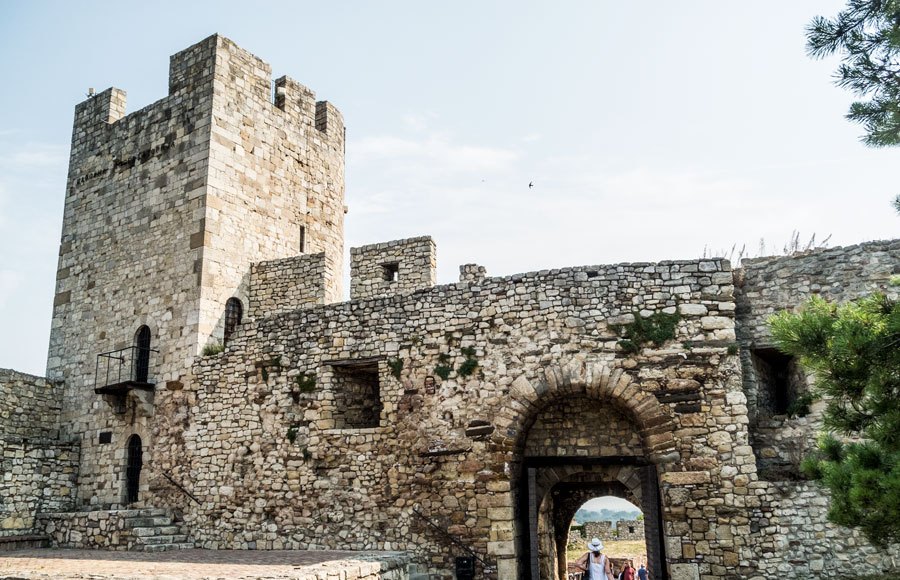
You can wander for hours along medieval lanes like these:
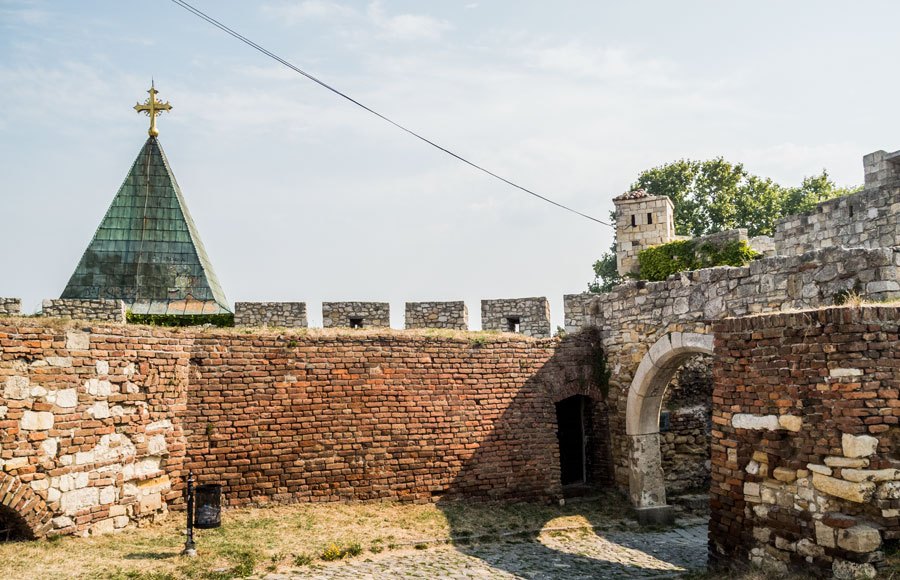
You can relax on the cosy Kalemegdan terrace — have lunch, drink coffee, warm up if you have come in winter. Summer here is certainly more interesting, but Kalemegdan has a special charm in winter too.
A walk along the fortress walls:
We recommend going down to Ružica Church — you will not find an interior like it anywhere else, with lamps and ornaments made from bullets, shells and parts of military equipment.
View of the Upper Kalemegdan:
Have you been to Belgrade? Did you manage to visit Kalemegdan? Do write and tell us your impressions of a walk around the fortress.
Would you like to read our latest articles first? Then subscribe for updates! Share the articles you enjoyed on social media, and write to tell us what else you would like to read about.
And if you are only just planning a trip to Belgrade and have not chosen a hotel yet, I recommend checking a hotel search site (you can see available hotels and apartments there, with prices for your dates).
In Belgrade we used Airbnb and stayed in a flat — it worked out cheaper and more convenient. If you would also rather choose a flat than a hotel, take a look at available accommodation in Belgrade, with prices for your dates.