What are food prices like in Belgrade, and where can you eat well? In short: the cheapest food is in bakeries and at street grills, while a filling, inexpensive meal is best had in an ordinary kafana away from Knez Mihailova and Skadarlija. When we checked menus in September 2026, burek with yoghurt at a bakery cost 390-490 dinars, a pljeskavica at a kiosk 410-690 dinars, a set lunch in a kafana about 815 dinars, and a multi-course lunch around 1,390 dinars; in the tourist quarters the same dishes cost 50-100% more. One surprise: Serbs love breakfasting on buns and huge 300-gram meat pies, washed down with yoghurt — though it hardly shows on their figures, so there must be some Serbian secret. The cuisine is interesting and varied, and even dishes that sound familiar turn out different: the local cabbage rolls are sarma, made with sour cabbage.
1. Where to eat in Belgrade
Touristy and non-touristy places differ enormously in price. What can you eat in Serbia? The local cuisine is hearty and tasty, with a great deal of meat. The meat grill is called roštilj: assorted minced-meat patties and sausages cooked on a grate.
The thick soups are delicious! Note that all čorbas (soups) are thickened with flour, and sometimes soured cream is added too — such a soup can easily replace a starter and a main course. It is worth trying the veal soup with vegetables, teleća čorba. Lighter options are soups with homemade noodles — broth with vermicelli, usually chicken or vegetable.
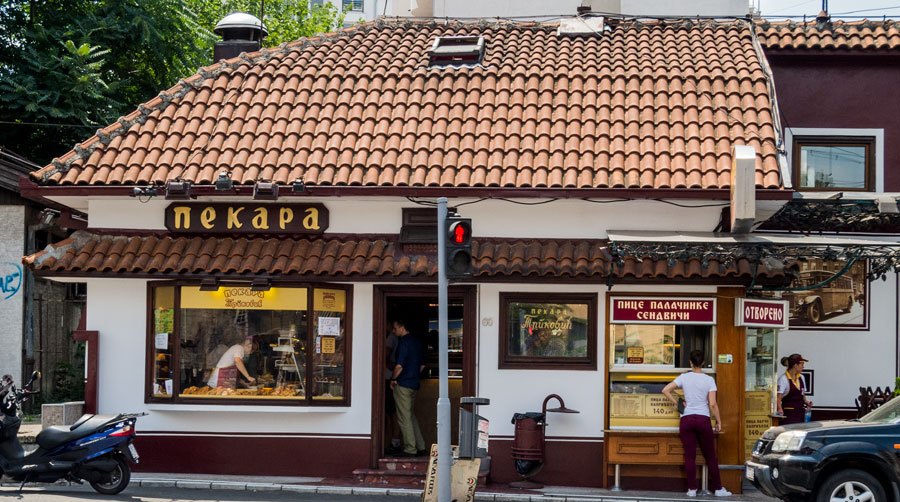
For a snack or breakfast, head to a bakery:
Some dishes are truly original, such as calf’s head “in the stomach”. In fact, the soft meat is cut from the head and baked in the membrane that covers the animal’s stomach. It does not sound great, but it is tasty. It is usually served as a small portion — the dish is very rich.
Another interesting dish is sarma — the local version of stuffed cabbage rolls, made with sour cabbage. It is a festive dish, best tried at someone’s home, of course, but restaurants sometimes cook it well too.
A great deal of attention goes to vegetables. There are 1,001 varieties of vegetable salad: plain vegetables, baked, boiled, grilled, salads with cheese, with soured cream…
You will also come across a “Russian salad”, the local take on Olivier. It is not really worth ordering, though — it tastes nothing like the original.
Price-wise, eating out is relatively inexpensive. Restaurants serving local cuisine are called kafanas. Prices vary, but a full check of Belgrade menus on 6 September 2026 gave the following picture:
- soup in a kafana — 390-830 dinars;
- salad — 390-880 dinars;
- pljeskavica in a kafana — 1,056-2,130 dinars, in a kiosk or bakery — 410-690;
- ćevapi, 5 pieces — 1,240-1,690 in a kafana, 560-780 at a kiosk;
- burek with yoghurt — 390-490 dinars;
- draught beer, 0.5 l — 390-500, espresso 180-260, cappuccino 260-520;
- a shot of rakija — 295-525 dinars, but check the measure: some kafanas pour 0.03 litres, others 0.05, so prices cannot be compared at face value.
Prices in kafanas have risen two- to four-fold since our 2018 trip, and the reason is clear: since 2018, prices in Serbia overall have gone up about one and a half times, groceries 1.6 times, while restaurants and cafés have risen 1.79 times — faster than anything else. And they continue to climb: according to the Statistical Office of the Republic, in August 2026 overall inflation was just 2.2% year on year, but for “restaurants and cafés” it was 6.8%. The cheap food in shops was a one-off effect of a good harvest and state regulation of mark-ups, which was in force from September 2025 to March 2026 and was not extended.
We were not very keen on the local sweets — probably because the dough, creams and ingredients are not the most familiar. The variety, though, is huge. The Ottoman Empire, under whose rule Serbia spent many long years, had an enormous influence here.
Some sweets are frankly Turkish. Baklava, for example — a pastry with honey and nuts.
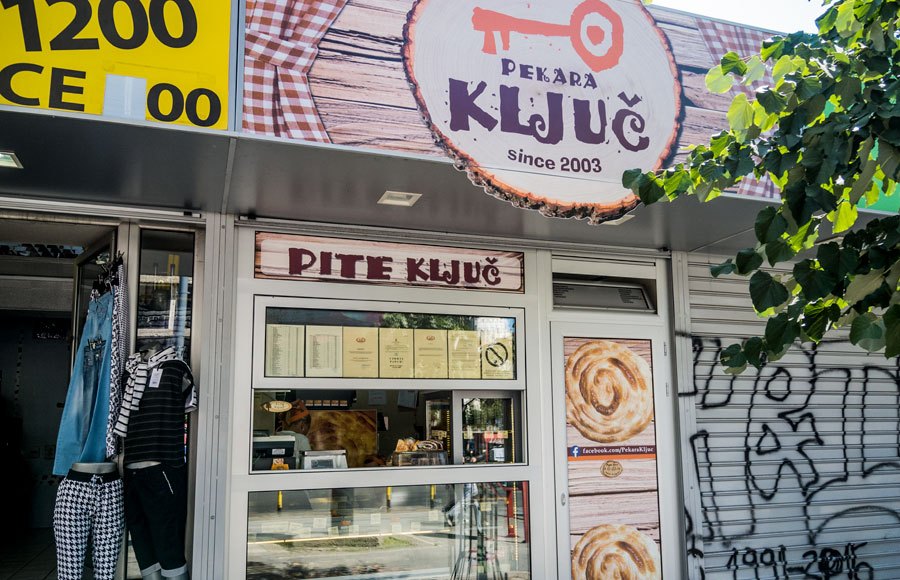
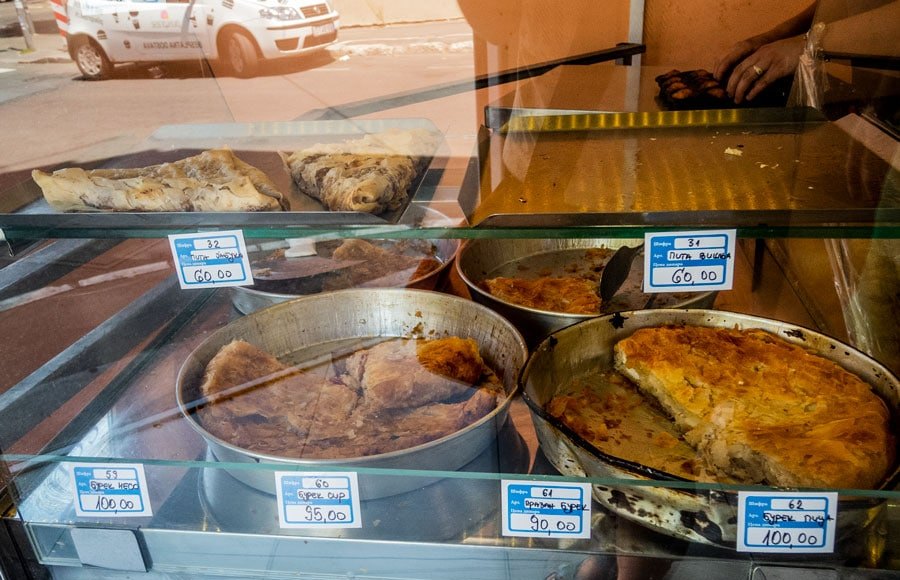
And here are the pies! Or “pite”, as they are called in Serbia:
This is what the pies look like; the price is per piece:
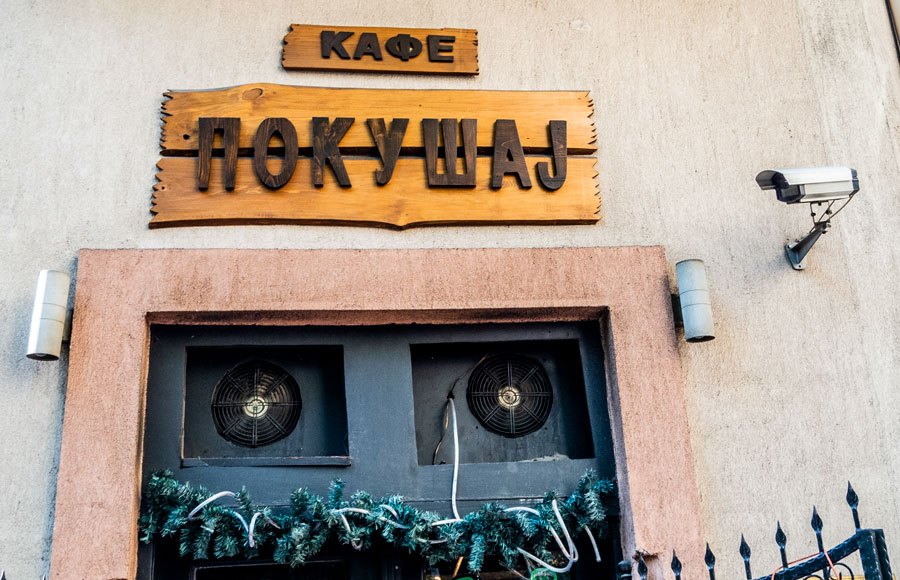
An amusing café name:
In the centre, along the main streets, there are plenty of fashionable cafés where you can find just about anything. One such fashionable and expensive place is Café Monument — though it is not very clear what is so special about it. Salads, sandwiches, juices, coffee, cakes. Prices here are an order of magnitude higher.
1.1. Types of places to eat in Belgrade
Serbs most often have breakfast at home or in bakeries. We were pleased to find that the bread and pastries here are very tasty. Portions are large! A standard portion of meat pie, for example, is 250-300 grams. Around the city there are many cafés where you can pick up food and coffee to go in the morning.
People who work mostly have lunch at work and take food with them; Serbs often complain that café food is expensive. Restaurants serving the national cuisine are a different matter altogether. Back in 2018, 800-1,000 dinars here bought a lunch of several courses. As of September 2026, the figures look like this: a set daily lunch in a kafana costs about 815 dinars, a multi-course lunch for one 1,390 dinars, and a three-course dinner for two 6,000 dinars. The daily menu is still the best-value way to eat.
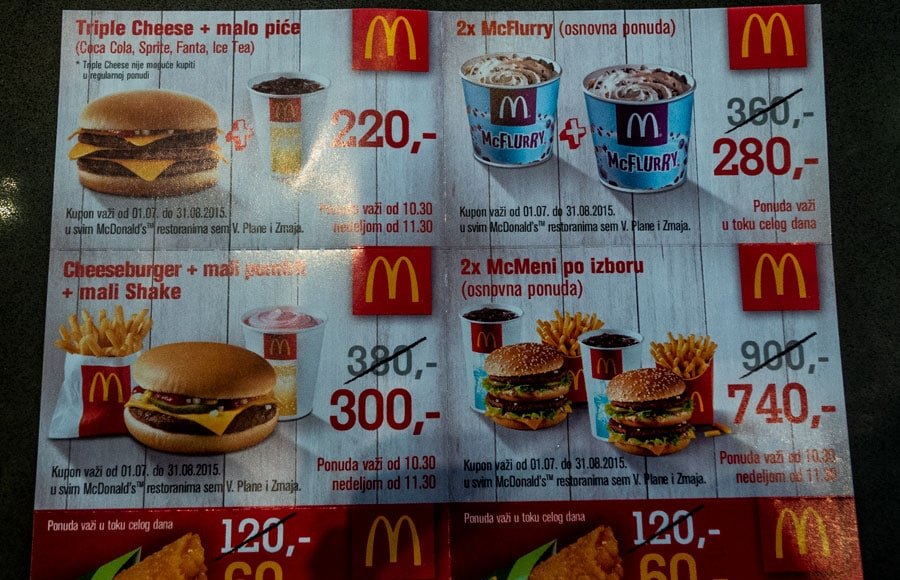
You can also grab a bite at good old McDonald’s — Belgrade has it too.
The McDonald’s prices in the photo below are from 2018. As of October 2026, in the Wolt delivery app (the Terazije restaurant) a Big Mac costs 670 dinars and a Big Mac meal 1,340; prices in the restaurant itself may differ:
Pizza kiosks are scattered all over the city. There is a stand-off between the two biggest pizza chains: the owner of one decided to drive the other off the market, so he placed his restaurants right next to the competitor’s.
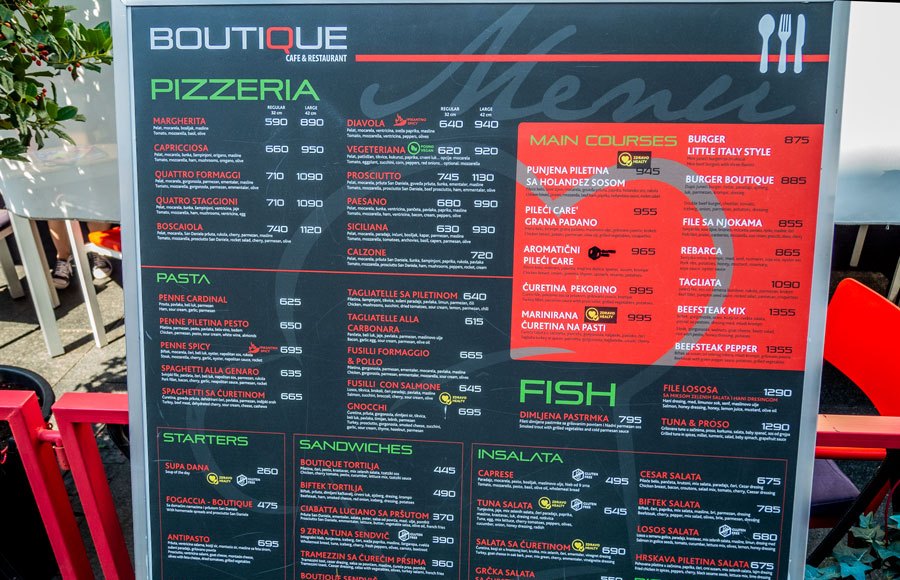
Prices at one café in the centre back in 2018:
Street food has competition — healthy food:
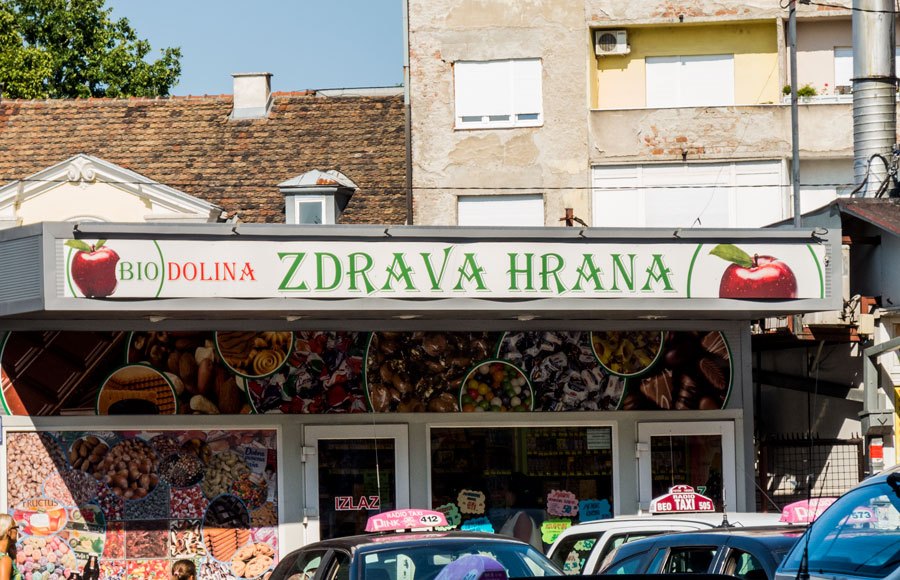
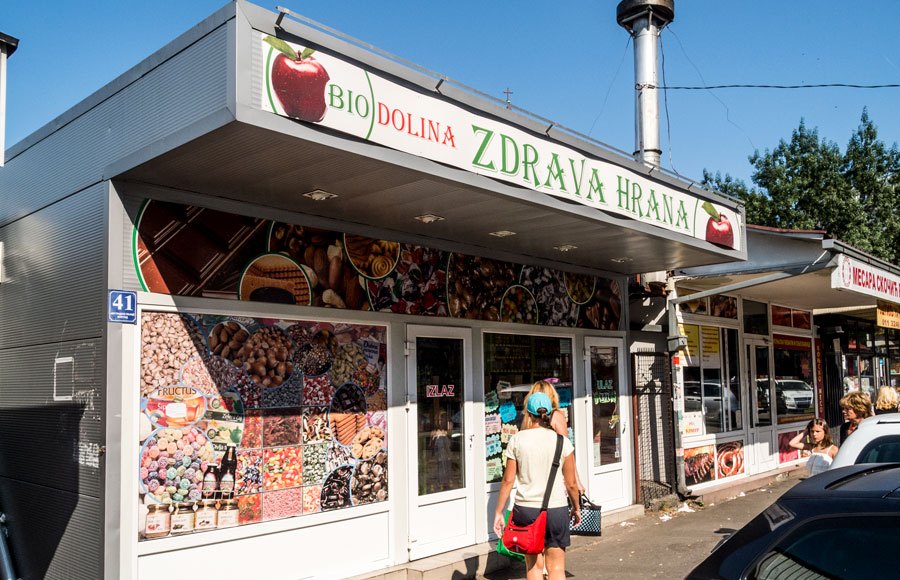
Stepping into an unusual shop:
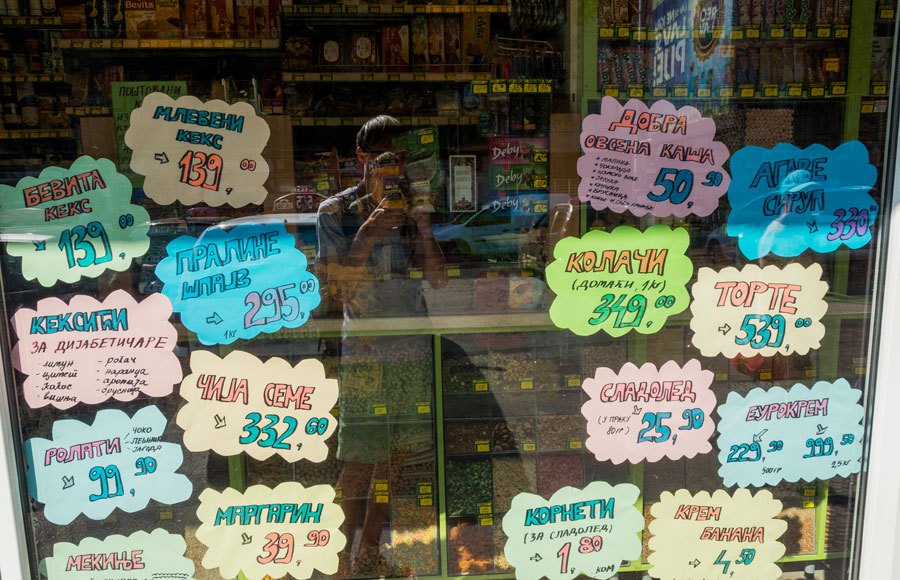
Prices at Zdrava Hrana (“healthy food”) are a little higher — but then health costs more:
There are a great many restaurants of different cuisines, but the leaders are: local, Italian (pizza, pasta), Chinese and Mexican. It is good to see plenty of shops with natural, wholesome products around the city — this way of eating is coming into fashion. They usually sell fresh juices and sandwiches to take away.
1.2. Café prices
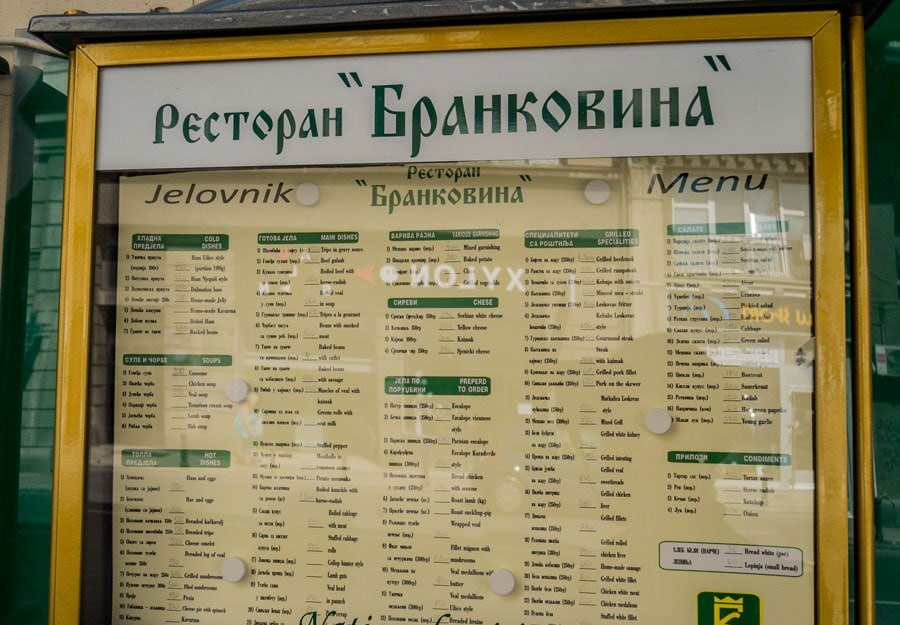
A little about prices in the city’s cafés and restaurants. We managed to eat very cheaply — at the Brankovina restaurant, for example.
Menu and prices in 2018:
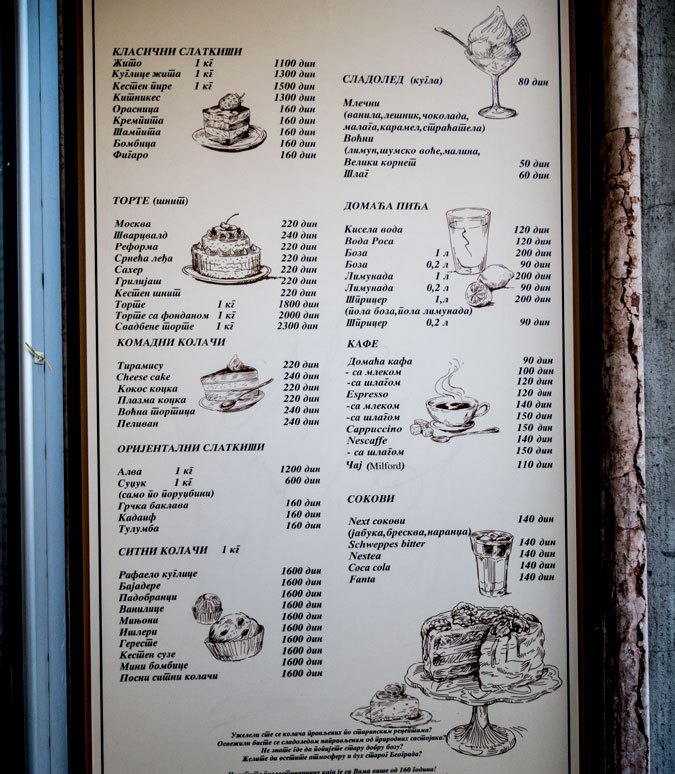
Sweets and desserts were inexpensive too, look:
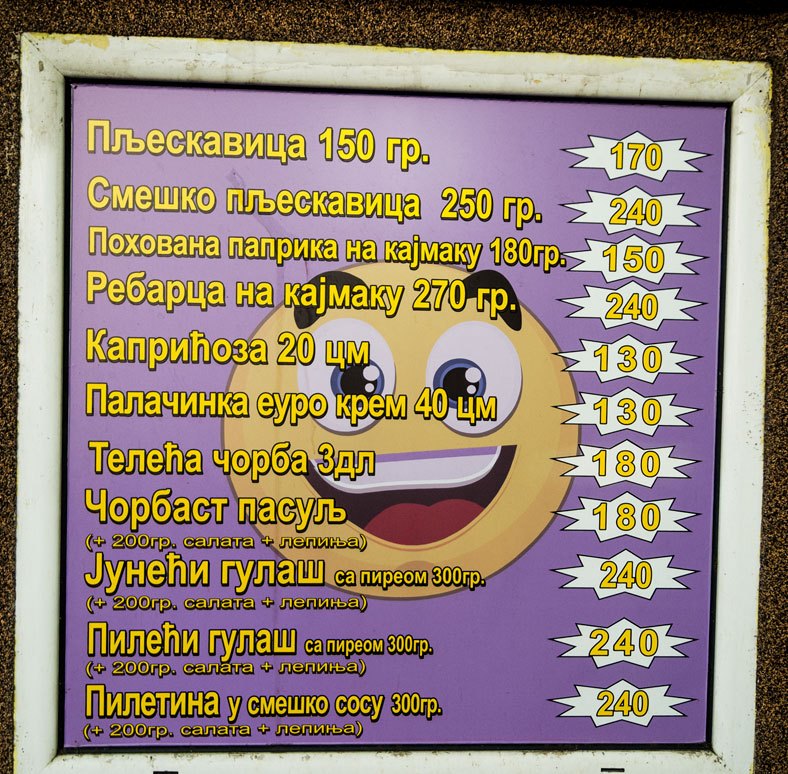
And here is a really cheap café where they feed you well. Back in 2018, prices here started at 250 dinars a portion:
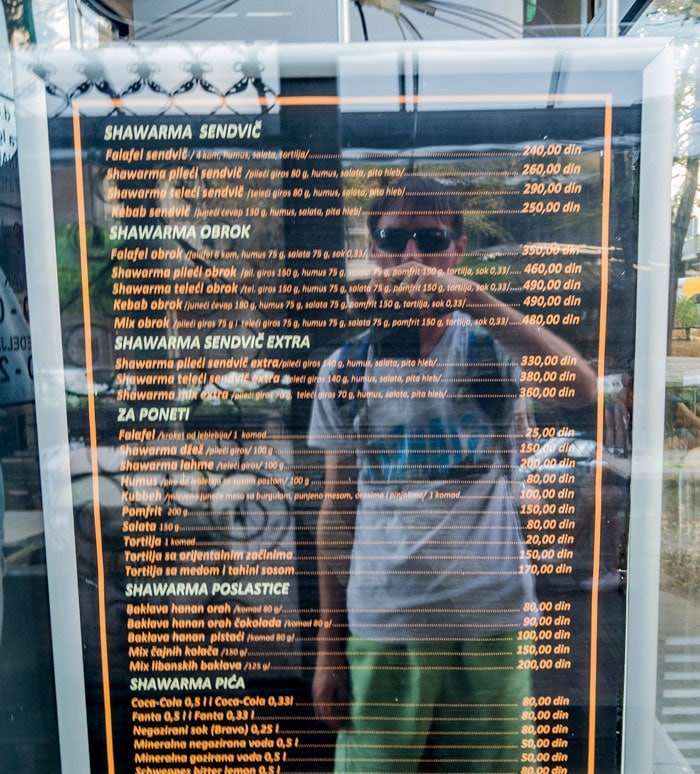
Or this street café. In 2018, sandwiches cost 240-290 dinars — but they are big! Not just a sandwich but a whole lunch. Water, beer and juices are sold here too:
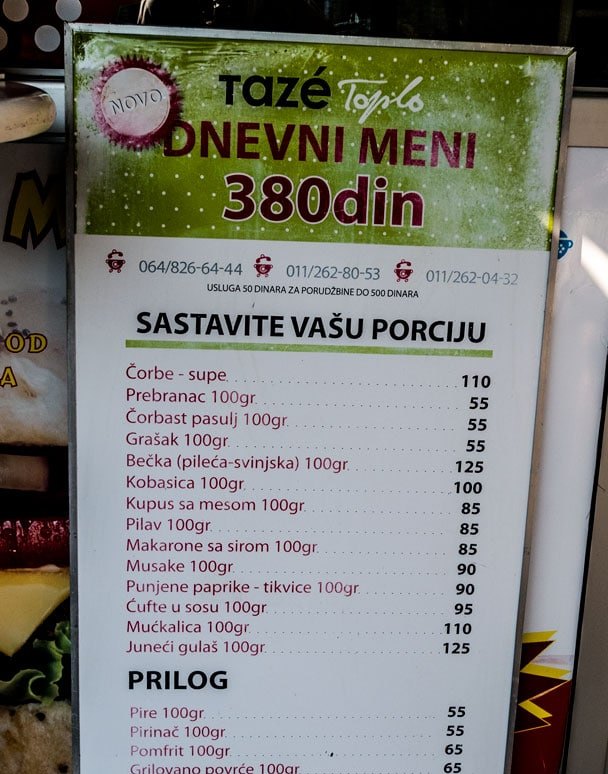
Almost all restaurants offer a daily menu. It usually consists of a first course, a salad and a main, or just soup and a main. You save a lot.
At this café, for example, you could have lunch in 2018 for just 380 dinars (in September 2026 a daily menu in a kafana cost about 815):
1.3. The best cafés in Belgrade, according to reviews
So where can you eat well in Belgrade? Here are a few national-cuisine restaurants in the centre I can recommend:
- Vuk restaurant — Vuka Karadžića 12;
- Proleće kafana — Vuka Karadžića 11;
- The city’s oldest kafana, Znak pitanja (“Question Mark”) — Kralja Petra 6.
And a couple of options for those with a sweet tooth:
- Zlata — Kralja Milana 56. ⚠️ We could not confirm it: the patisserie survives as a single directory listing with no date, and there is no map entry. Call before you visit;
- Hotel Moskva — Terazije 20. ⚠️ Be careful: as of October 2026, part of Café Moskva and the Tchaikovsky restaurant are still temporarily closed for renovation — the announcement is on the hotel’s own website, and breakfasts have moved to the Balkan Hall. The signature Moskva šnit cake costs 760 dinars on the current menu.
Good bakeries:
- Hleb & Kifle (they have hot soups during the day);
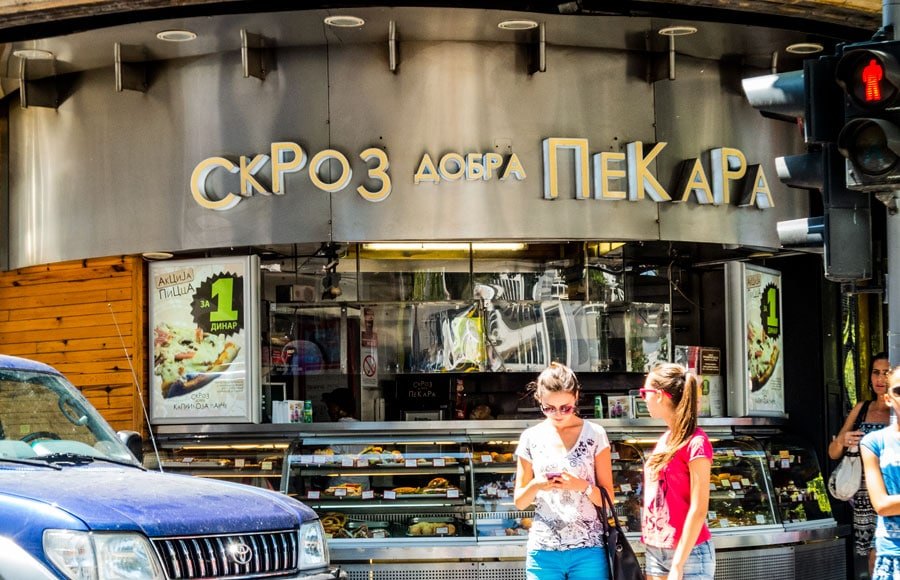
- Skroz dobra pekara;
- Toma (a little pricier, but very tasty pastries and bread). ⚠️ We could not confirm a bakery of this name in Belgrade — it may have closed, or we may have noted the name incorrectly.
What has been confirmed and is operating: Hleb & Kifle has grown to 60 outlets, and it really is at the airport — in both Terminal 1 and Terminal 2. Skroz dobra pekara is in place. Another useful detail: of Belgrade’s 232 bakeries, 41 are open around the clock, and Sunday is not a day off for them — you can find something to eat in Belgrade at any time of day or night.
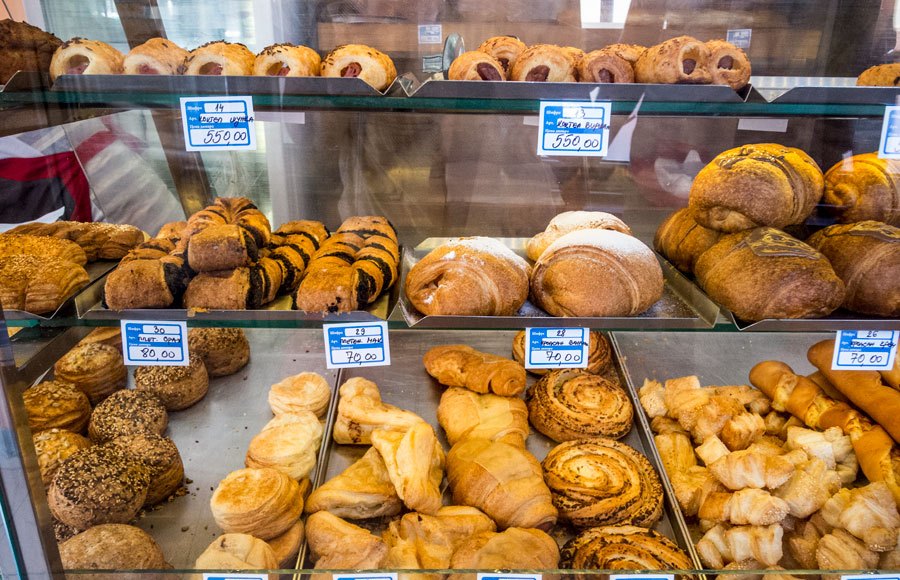
The assortment of a standard bakery:
Big, tasty sandwiches and hot pastries are normal street food:
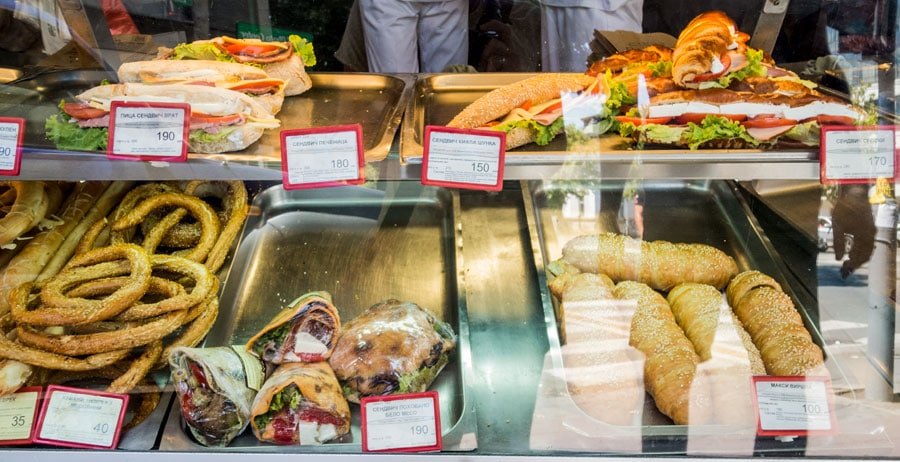
Where are they? All over the city, practically at every turn. These are big bakery chains — Hleb & Kifle, for instance, even has an outlet at the airport.
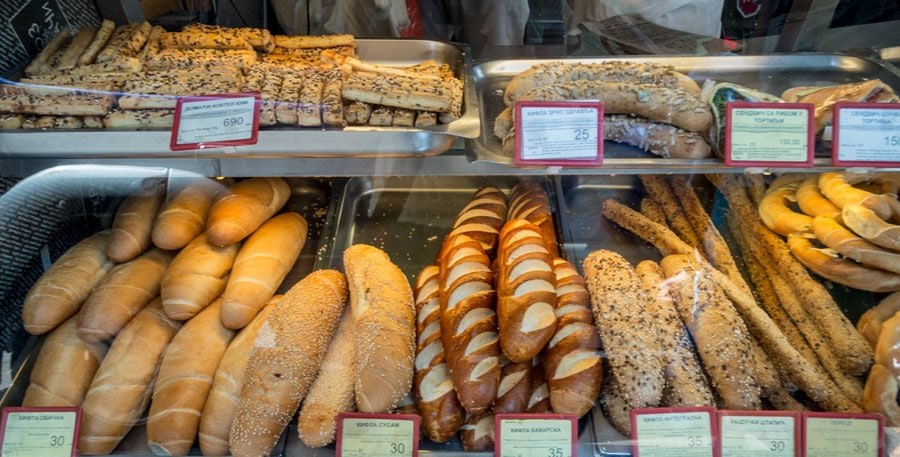
The best restaurants in Belgrade according to Tripadvisor:
- The beautiful but expensive Salon 1905;
- The well-known, and equally pricey, Franš, Bulevar oslobođenja 18G;
- For street Mexican food — generous, tasty and inexpensive — Burrito Madre;
- Pekara Trpković — a legendary bakery that always has a queue for fresh pastries. Note that it has just three branches, not outlets all over the city;
- Zavicaj Restaurant, serving national cuisine.
If you have already been to one of them, tell us your opinion in the comments.
2. How to find an inexpensive, tasty café
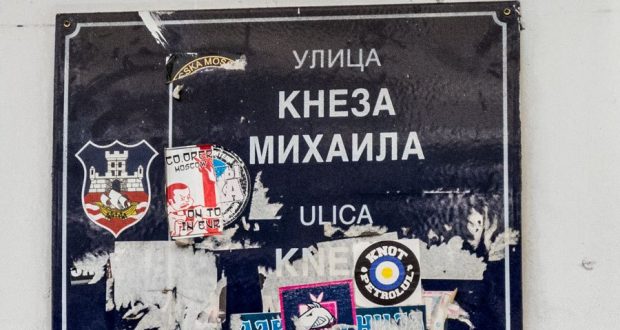
To eat well and cheaply, I would avoid the big tourist areas. Knez Mihailova, Terazije, Skadarlija, Kalemegdan and the part of New Belgrade by the river will not do: the cafés and restaurants here are expensive, prices run 50-100% higher than in the most ordinary kafana — and the portions, incidentally, are smaller.
You will often come across grill stalls on the street. A huge hamburger — two or three times the usual size — with an appetising patty and assorted salads cost 250-400 dinars when we were there; as of September 2026, a pljeskavica at a kiosk is 410-690 dinars. Such fast-food stalls usually have a crowd around them — which means tasty and cheap! What can you order there?
- pljeskavica (the hamburger patty);
- ćevapčići (short minced-meat sausages, about the size of an index finger);
- bela vešalica (pork — shoulder, I’d guess — grilled);
- grilled chicken breast;
- pieces of beef or pork (fillet).
All of this goes into a hefty bun (lepinja). Then you add whatever you like: cabbage, tomatoes, cucumbers, spices, onions, hot peppers, sauces and so on.
A great way to find an inexpensive café or restaurant nearby is simply to ask local young people. They speak English and certainly will not point you to expensive restaurants.
3. Customs, tipping and money — what is worth knowing in advance
Everything below was checked in September 2026.
Tipping. There is no mandatory service charge in Serbia. It is customary to round the bill up or leave about 10%. Leaving a tip by card is almost pointless — only about a quarter of it reaches the waiter. Carry some cash.
Cover charge. Kafanas sometimes have a “kuver” line — 50-100 dinars per person for bread and cutlery. This is legal, but since 1 August 2026 the establishment has been obliged to list it in the menu in advance, so if you see a cover charge on the bill that was not in the menu, you can dispute it.
Tap water is drinkable. Belgrade’s water utility has not recorded a single waterborne epidemic in 130 years; you can safely drink the water and fill your own bottle instead of paying for bottled water.
Money. Bring euros. Exchange offices operate within a narrow band around the National Bank of Serbia’s rate, with commission of up to 1%. Bringing in more than €10,000 requires a declaration.
And here is what you need not worry about. The internet often mentions a smoking ban in Serbian cafés — there is no such ban in Serbia. It was adopted by Republika Srpska in Bosnia, and the two are constantly confused. The same goes for a “tipping law”: there is no separate law in Serbia either.
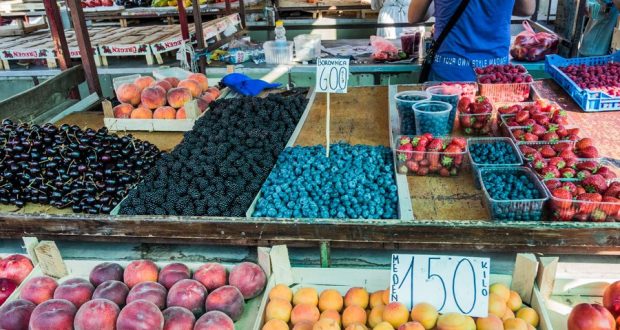
If you cook for yourself. A basket of eleven basic groceries in a Belgrade supermarket costs about 3,540 dinars, roughly €30. According to the chains’ official daily price lists, Maxi is 16-18% more expensive than Idea, Roda and Univerexport and 6% more expensive than Lidl, while Idea and Roda have exactly the same prices. Vegetables are noticeably cheaper in shops than at the market: potatoes at the market cost 150 dinars a kilo, against 80 in the chains.
What is new. Starbucks has been operating in Belgrade since 2019. Burger King, on the other hand, had still not opened as of early October 2026: on 2 October it was announced that the first restaurant would appear this autumn in the Ušće shopping centre, with no exact date yet. McDonald’s has grown to 26 outlets. Among the losses: the oldest kafana, Lipov lad, open since 1928, closed in January 2025, and a betting shop has taken its place. And a noticeable shift for those who remember Belgrade from earlier trips: two-thirds of the river rafts have been removed, and the night-time food scene has moved into the city.
4. Conclusions
Serbia’s interesting and varied cuisine is bound to appeal to travellers. We were pleased by how many places Belgrade has for a quick bite. The national-cuisine restaurants — the kafanas — are well worth seeking out. As everywhere, the further from the centre, the cheaper it will be.
You can also snack on biscuits:
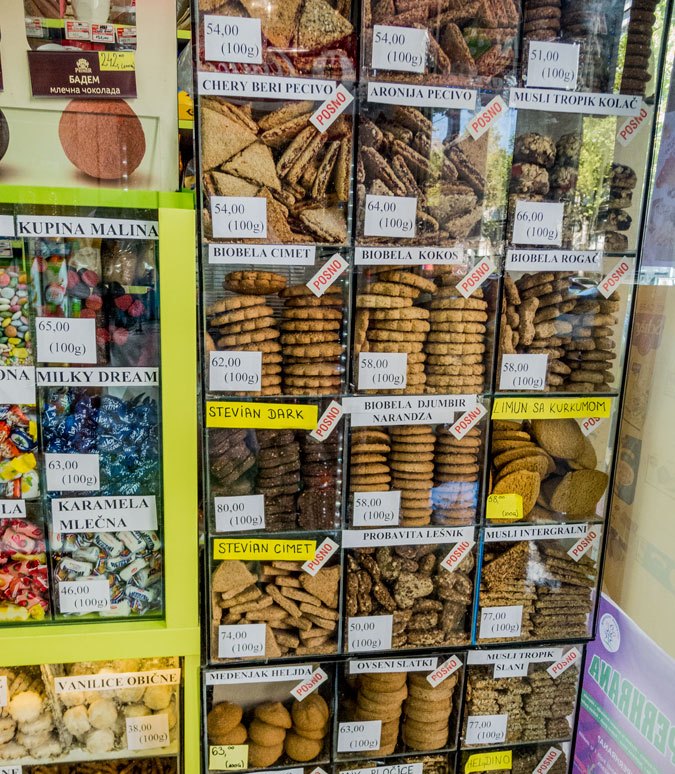
When we were there, the average bill at such a local restaurant was 800-1,000 dinars per person for a lunch of two or three courses with drinks; now it is around 1,400 dinars, and dinner for two comes to about six thousand. Breakfast is still cheapest at a bakery: burek with yoghurt is 390-490 dinars.
Tourist spots, though, are best avoided — high prices, and the quality suffers. Above, we have given several addresses of good, inexpensive cafés.
Food to go, salads:
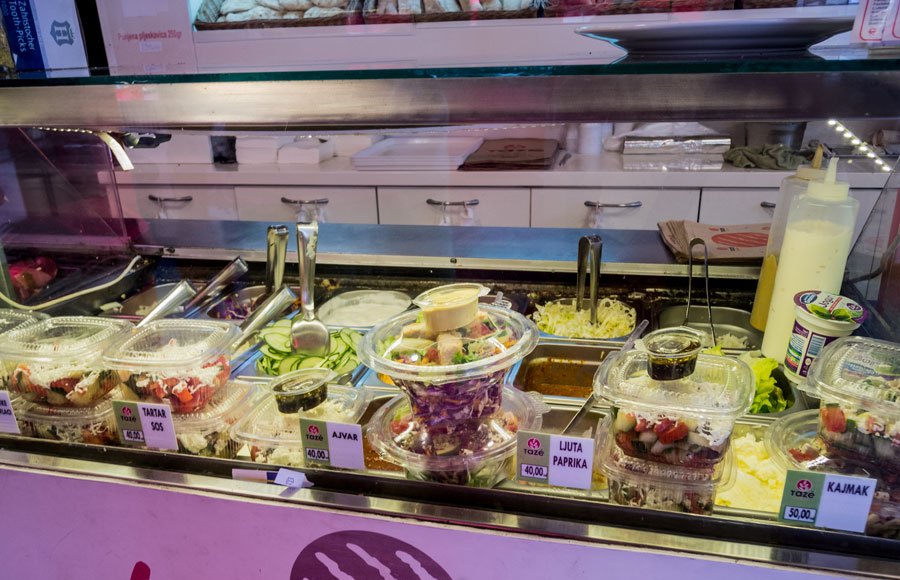
So, what would you like to try from Serbian cuisine? Would you risk eating calf’s head “in the stomach”?
Do subscribe to our blog and share your travel stories with friends on social media. New articles about Serbia and other countries are coming soon. Still have questions? Do ask us in the comments!
In Belgrade we used Airbnb and stayed in an apartment — it turned out cheaper and more convenient.