Knez Mihailova Street — in Serbian Cyrillic Кнез Михаилова, and on maps and in addresses Knez Mihailova — is the main pedestrian street of Belgrade, the capital of Serbia. It runs from Republic Square to Kalemegdan Park and the Belgrade Fortress — roughly nine hundred metres, about fifteen minutes at an unhurried pace. There are no cars, and it is open to everyone at any time of day. It is always full of tourists and stands at the top of almost every list of Belgrade’s sights. What is there to see? Let’s walk it together.
Arriving in Belgrade after Turkey, we wanted to soak up the atmosphere of a European capital straight away, so we headed directly into the heart of the city for a stroll along Knez Mihailova. On signs, in addresses and on maps it is labelled in Serbian — Knez Mihailova — and that is the spelling to type into a satnav, not the translated name.
The street serves as the city’s classic promenade: artists, street musicians and souvenir sellers gather here. You can sit in one of the many cafés watching the passers-by, do some shopping, or simply wander along eating excellent ice cream.
It lies right in the centre, between Republic Square and Kalemegdan. One point that trips up half the guidebooks is worth stating plainly: there is no such thing as “Kalemegdan Fortress”. Kalemegdan is the name of the plateau and of the park around the fortifications, while the Belgrade Fortress itself stands inside that park — so the correct phrasing is “Kalemegdan Park and the Belgrade Fortress”. Here is the street on the map:
And best of all: city transport in Belgrade is free. Since 1 January 2025, travel on city lines costs nothing — no tickets, no cards, no validators; you simply get on and ride. From the airport, bus 72 runs to Zeleni venac in the centre during the day, while at night the 72N goes straight to Republic Square; from Beograd Centar station (known as Prokop) take bus 41A to Studentski trg, and from the bus station the 95, again to Zeleni venac.
After that, navigate by stop names rather than route numbers. The street itself is pedestrianised and public transport runs along the parallel Vase Čarapića street, with stops at both ends: “Trg republike” at the southern end and “Studentski trg” at the northern one, served by trolleybuses 28 and 29 and buses 31 and 41A. At the fortress end, tram 2L passes along Pariska street — the only tram anywhere near the street; the terminus of trams 5 and 10, “Kalemegdan (Donji grad)”, lies another six hundred metres or so further down, below the fortress. Route numbers in central Belgrade are reshuffled from time to time because of roadworks, but the stop names remain.
Knez Mihailova Street:
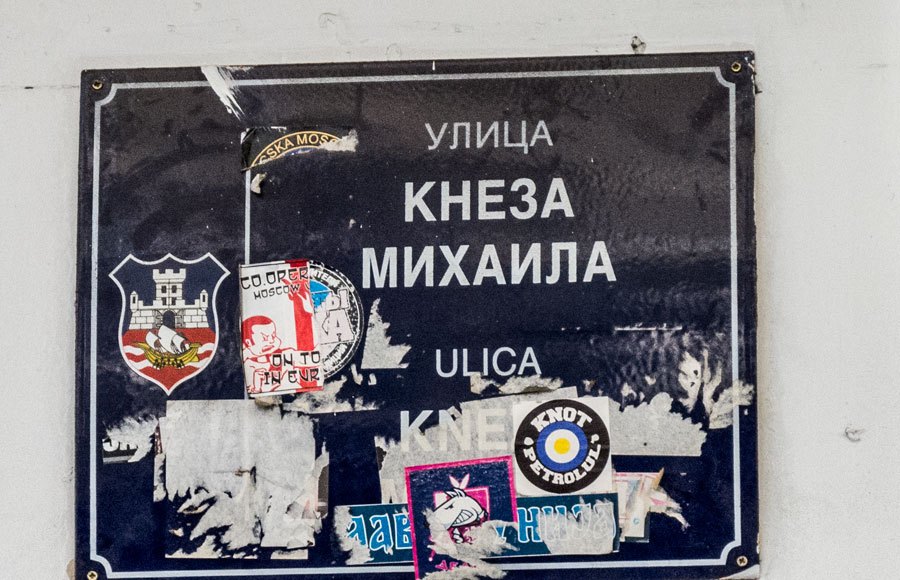
We did, of course, track down the street name sign, but it is not looking its best:
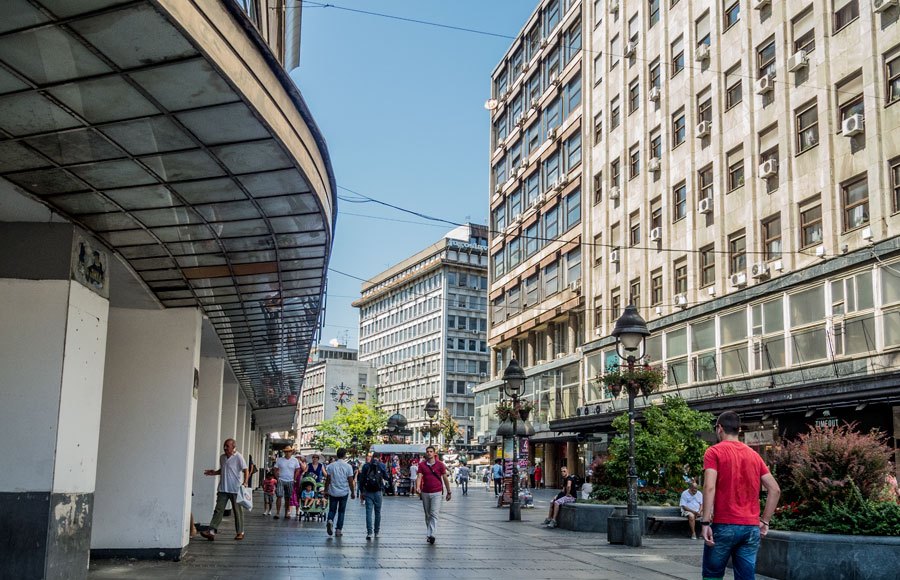
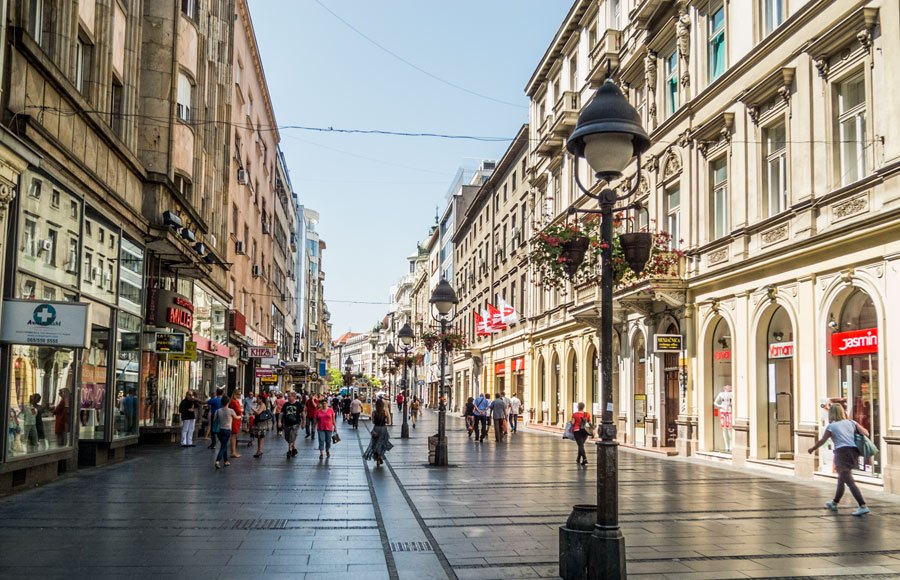
The street itself, though, is rather pleasant — the lanterns decked with flowers are simply delightful:
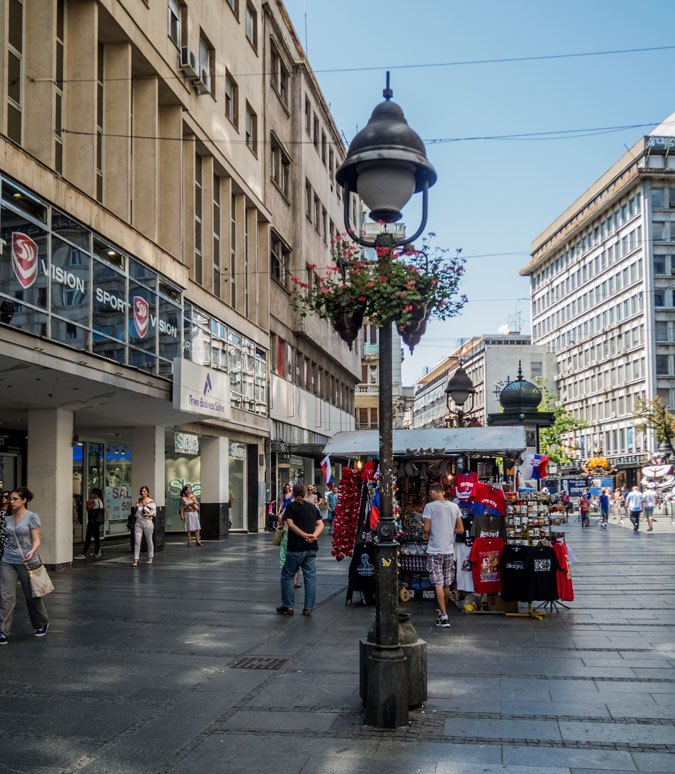
Some of the souvenir T-shirts on sale in the city centre carry a political message:

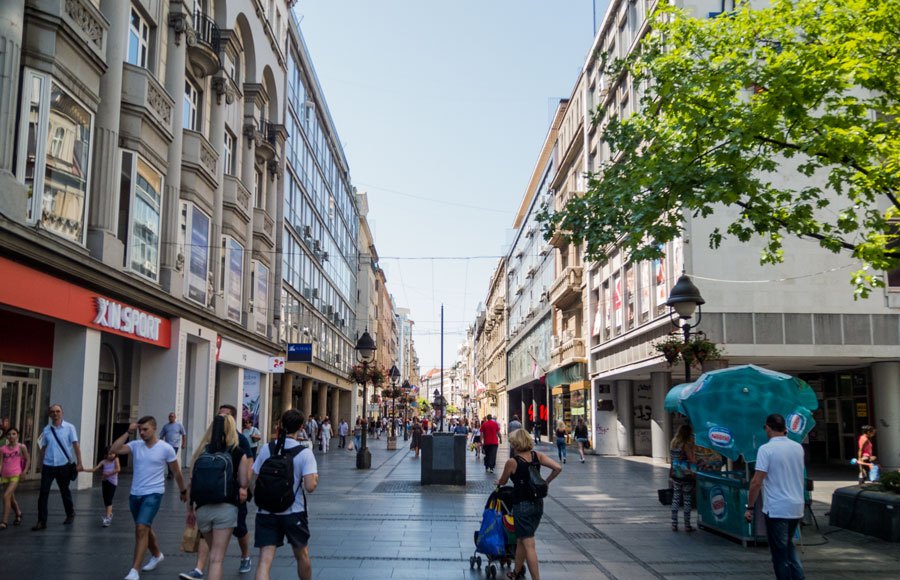
There are always plenty of tourists here:
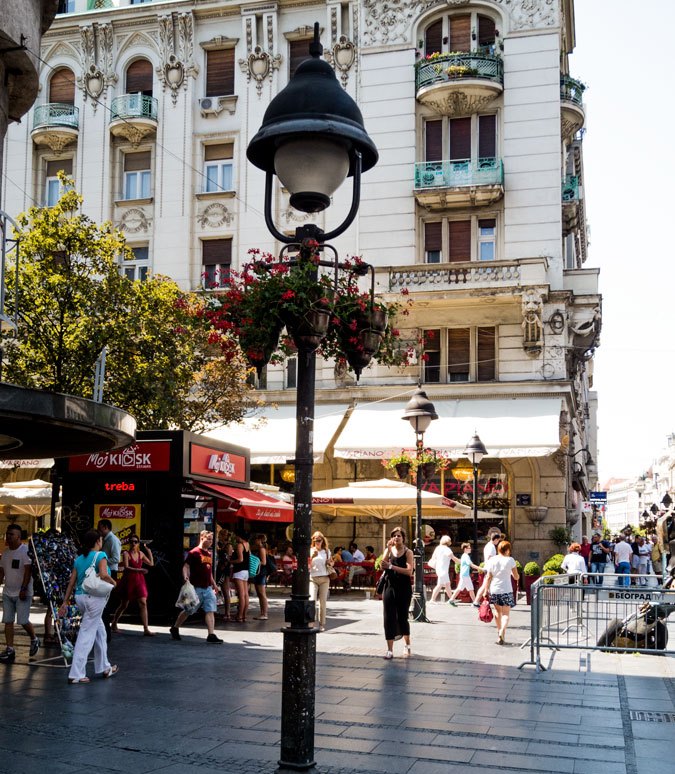
From here it is an easy walk to the second pedestrian street, Skadarlija, the so-called “bohemian” one. Just be sure to measure from the right end — and not only for Knez Mihailova: Skadarska itself runs for almost six hundred metres, and from Republic Square it is about 260 metres to its lower end, three to four minutes on foot, but almost 800 metres and around ten minutes to the upper end, by the Bajloni market. From the Kalemegdan end of Knez Mihailova the walk to Skadarlija is nearly a kilometre, about thirteen minutes. Did you notice anything unusual in the background?
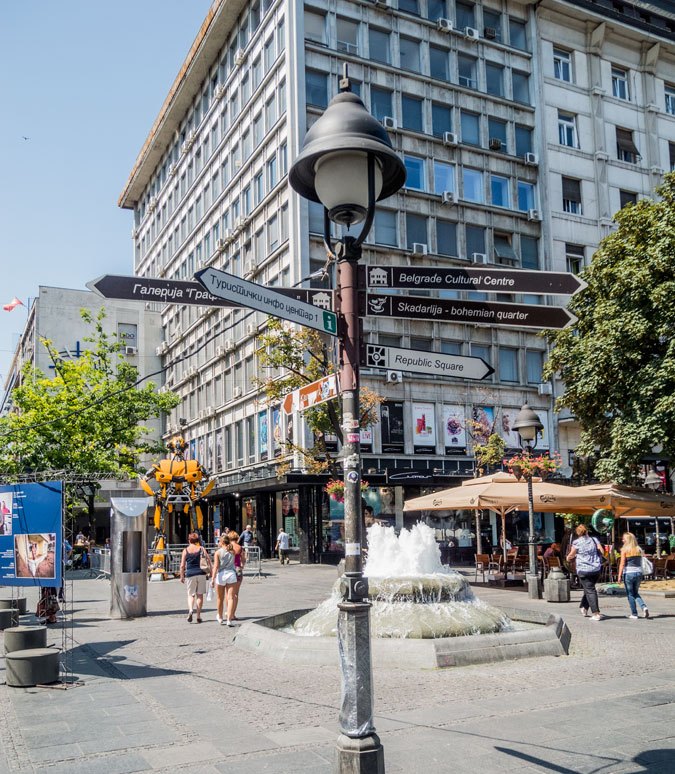
That day — and this was December 2015 — we kept coming across genuine Transformers. There is no permanent exhibition of them on the street: these are street performers and one-off promotions, so don’t count on meeting the robots, but there is always a chance of stumbling across something similar:
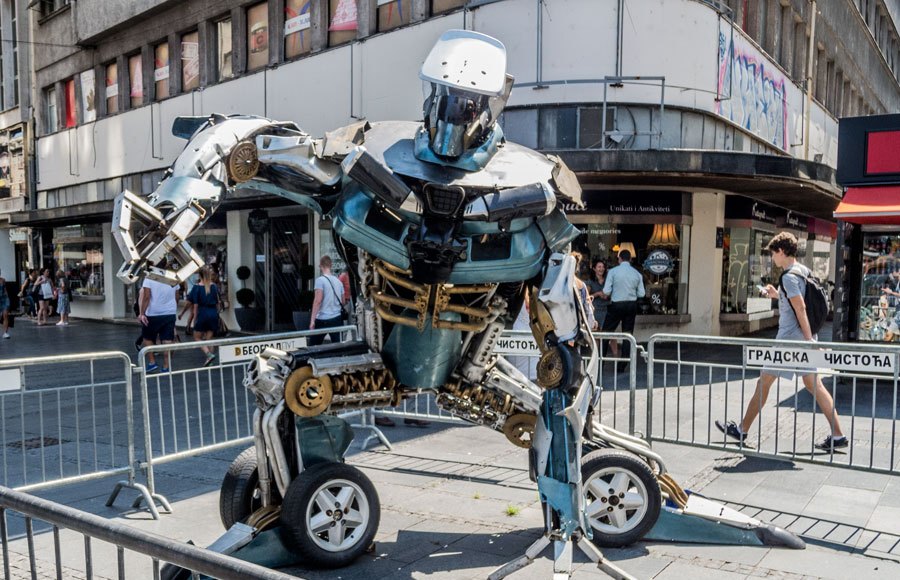
Impressive, isn’t it?
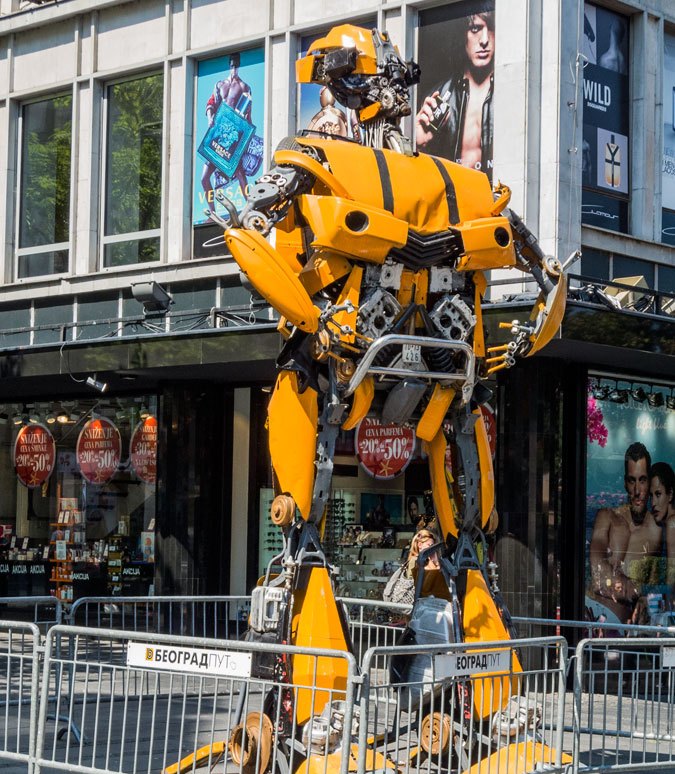
And another one:
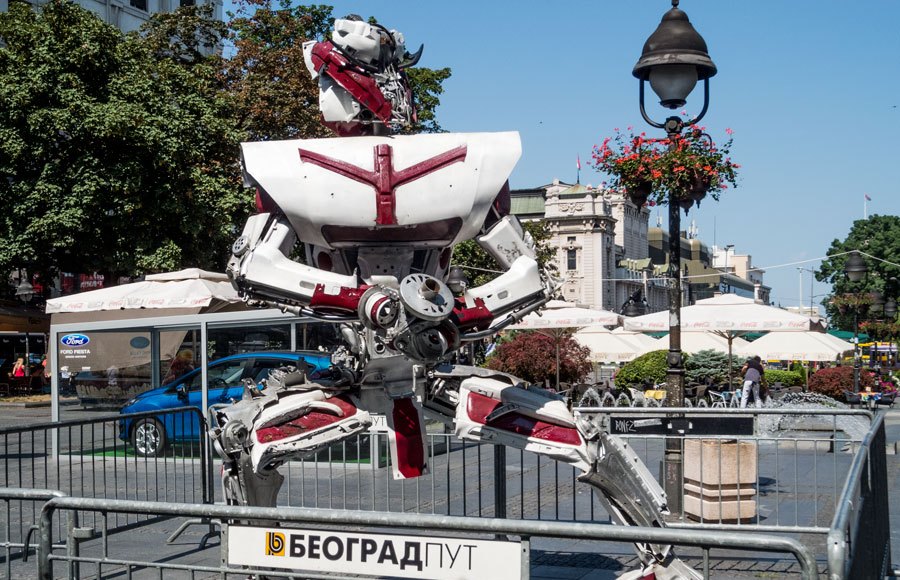
At last, some classic European architecture:
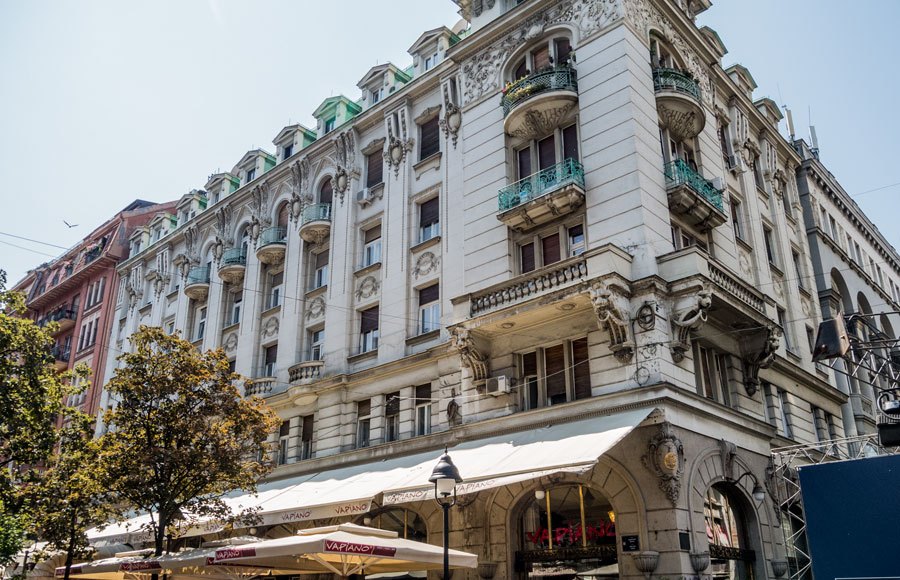
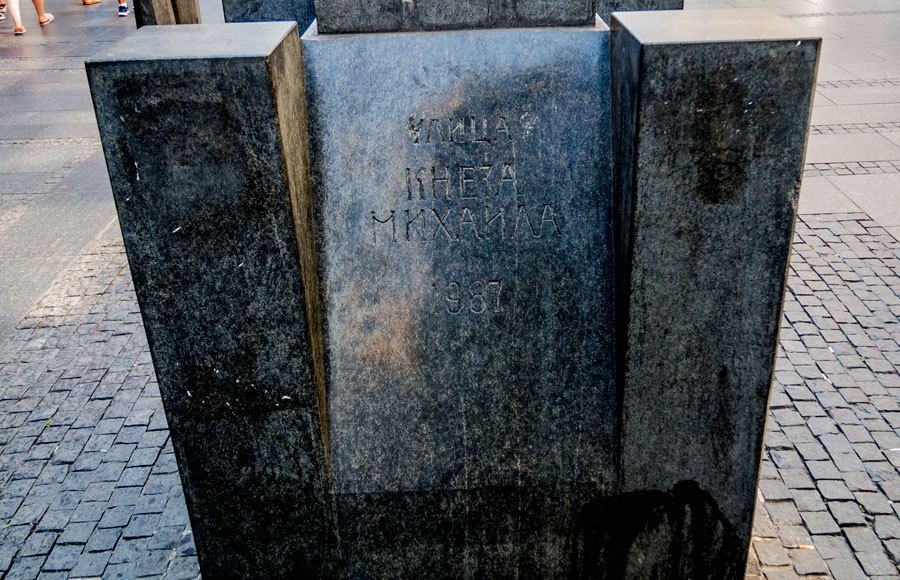
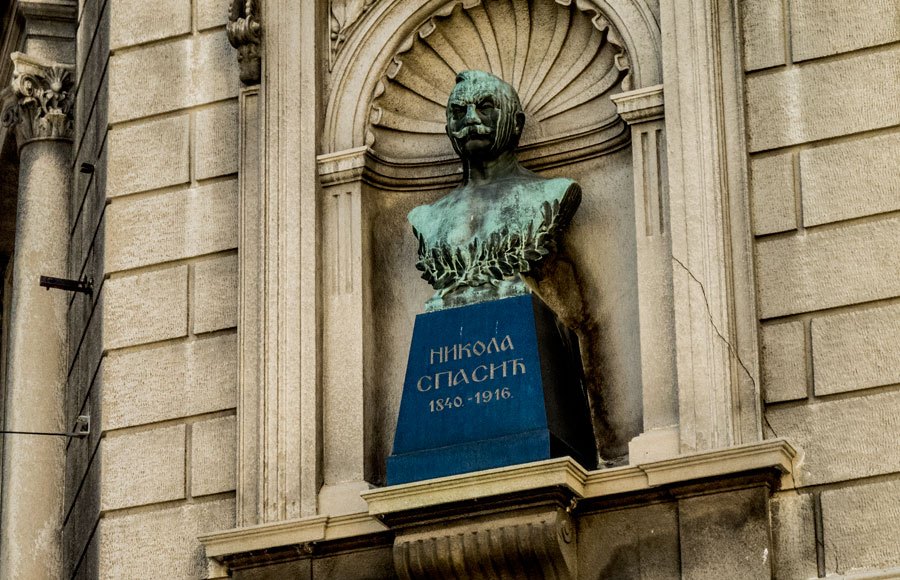
Some of the façades look splendid, others are covered in graffiti — a pity, because the houses really are historic. They are not early nineteenth-century, though: the street as it stands today grew out of the city plan of 1867, and its ensemble took shape in the second half of the nineteenth and the early twentieth century. The former Srpska kruna hotel at No. 56 was built in 1869, Nos. 46, 48 and 50 in 1869–1870, the Nikola Spasić house at No. 33 in 1889 and the palace of the Serbian Academy of Sciences and Arts at No. 35 in 1924; there are even buildings from the late 1950s here — the Press House at No. 6 was completed in 1961. The oldest trace is the Grčka kraljica hotel at No. 51, the only building to survive from the layout that predated 1867: its kafana (a traditional tavern) closed in 2007 and only reopened in July 2025. Nor did the street become pedestrian back in the century before last — cars were removed only on 20 October 1987, to a design by the architect Branislav Jovin. It has carried its name since 1870: Knez Mihailova was the first street in Belgrade to receive an official name, and it has never changed it since:
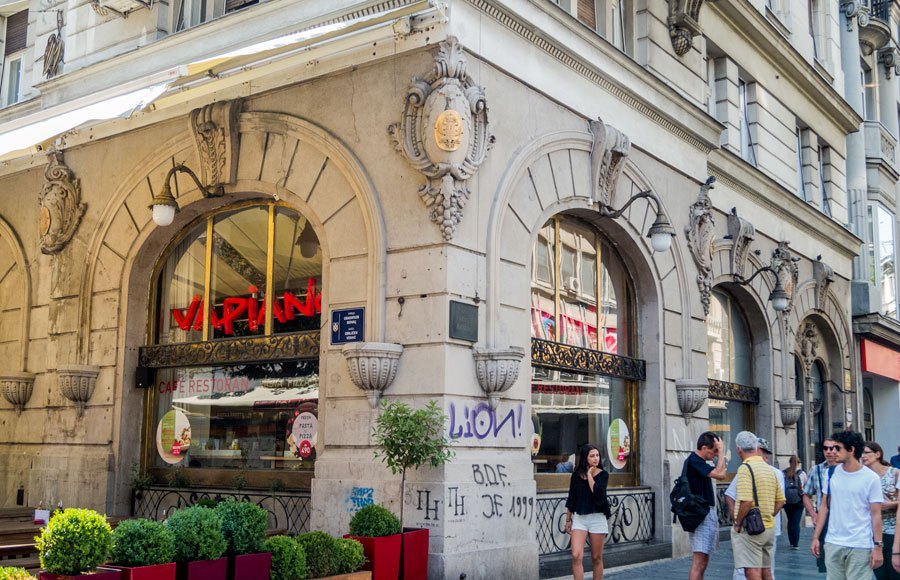
A stunning little balcony:
I don’t know whether the city’s residents like spending time here, but there are certainly always plenty of tourists:
One thing this street certainly has is benches where you can simply sit:
A memorial dating from 1987:
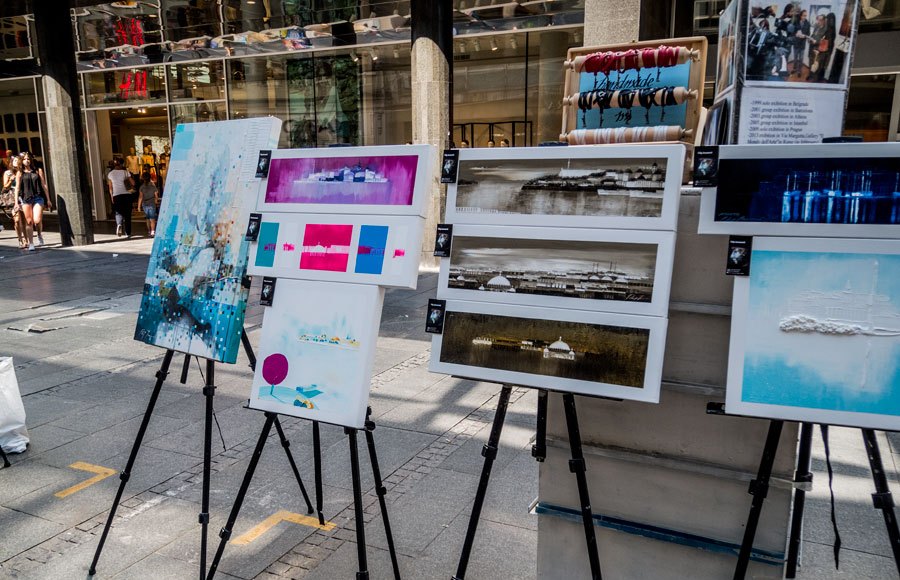
Artists exhibit their work right here:
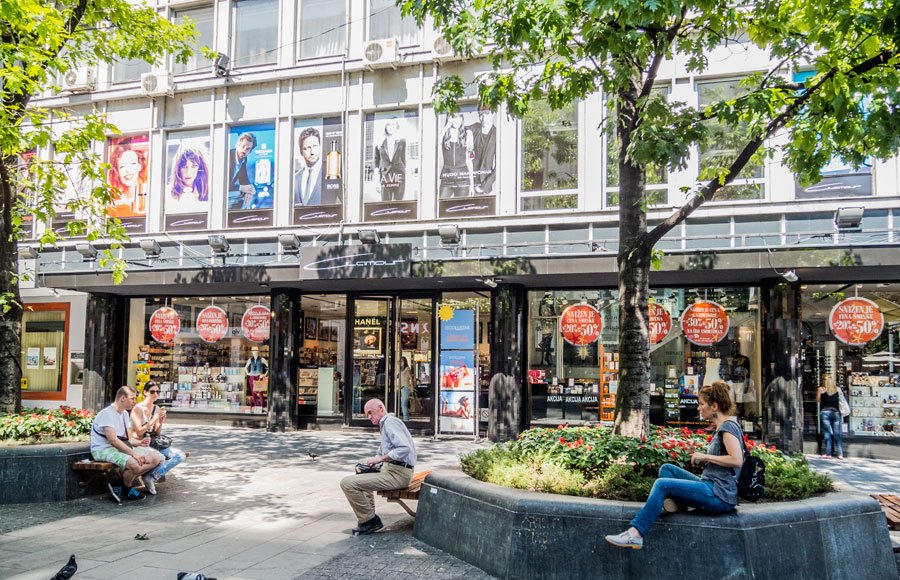
Endless shop windows line the street:
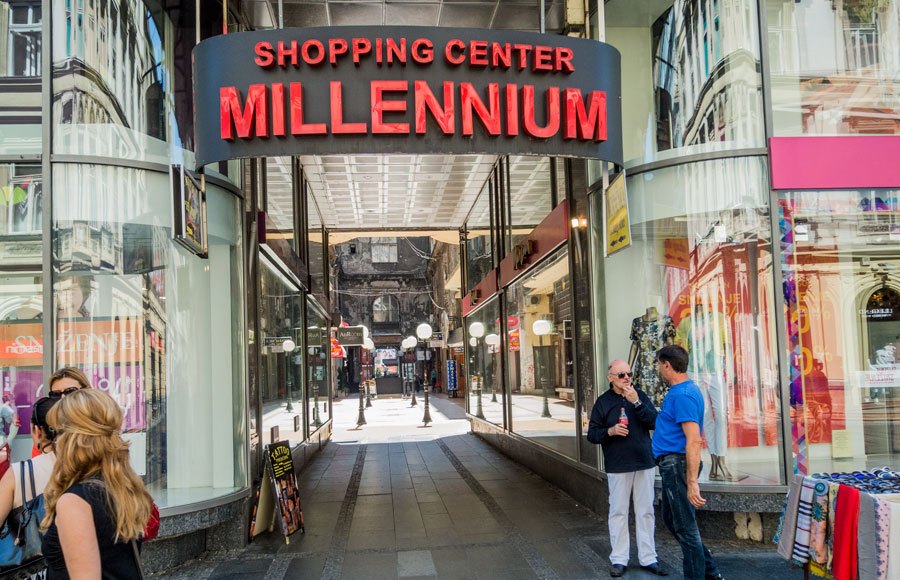
There are shopping centres too — although the main one is not yet in these photos: Rajićeva at No. 54 opened on 14 September 2017, almost two years after our walk. Its shops now open from 10:00 to 22:00:
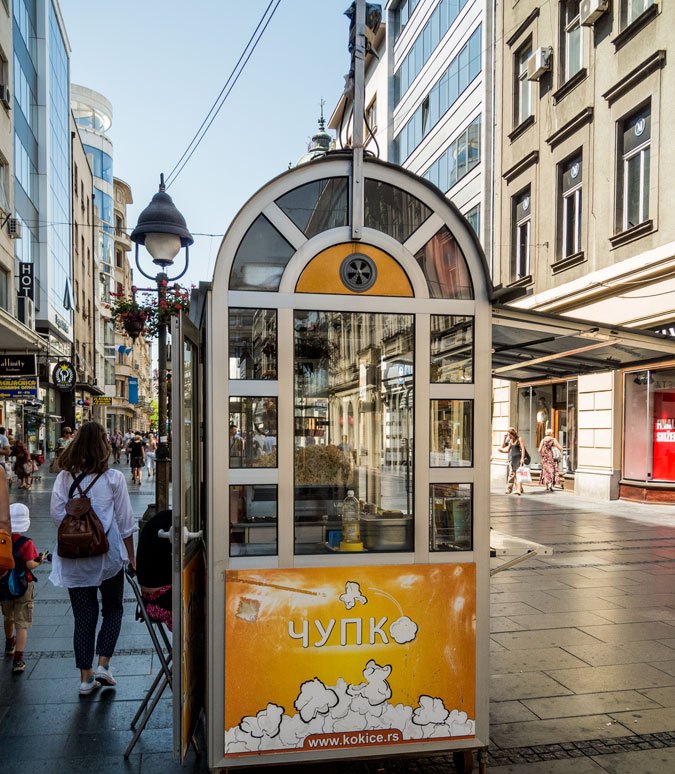
An amusing name for popcorn:
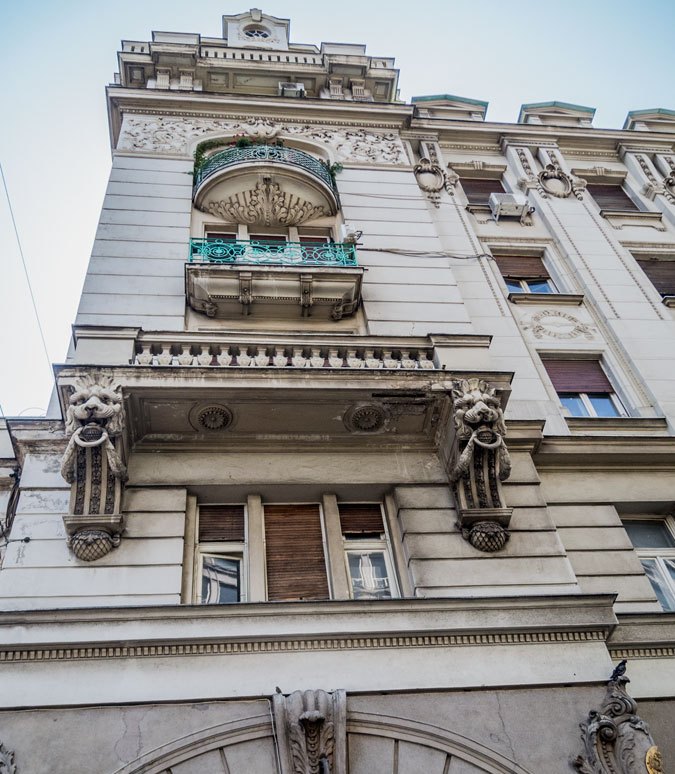
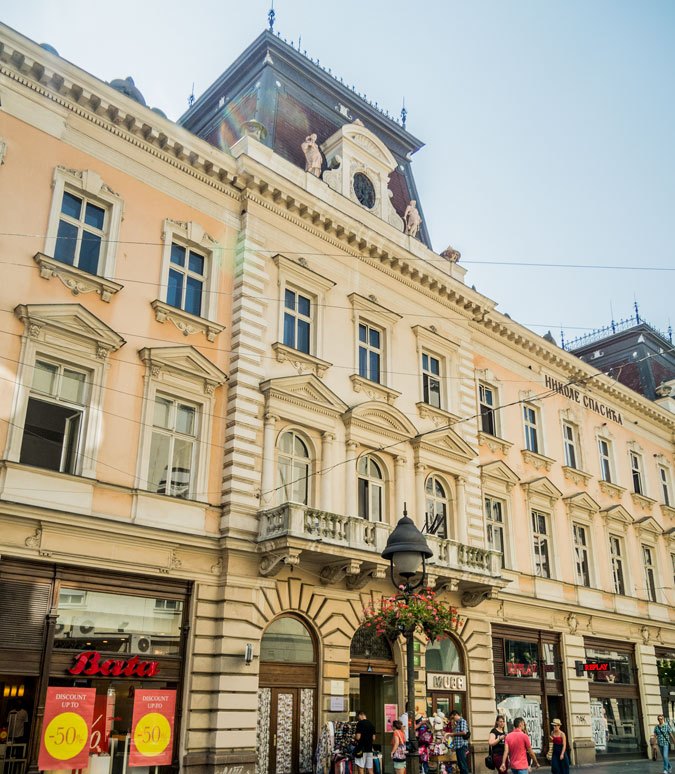
Another handsome house with statues:
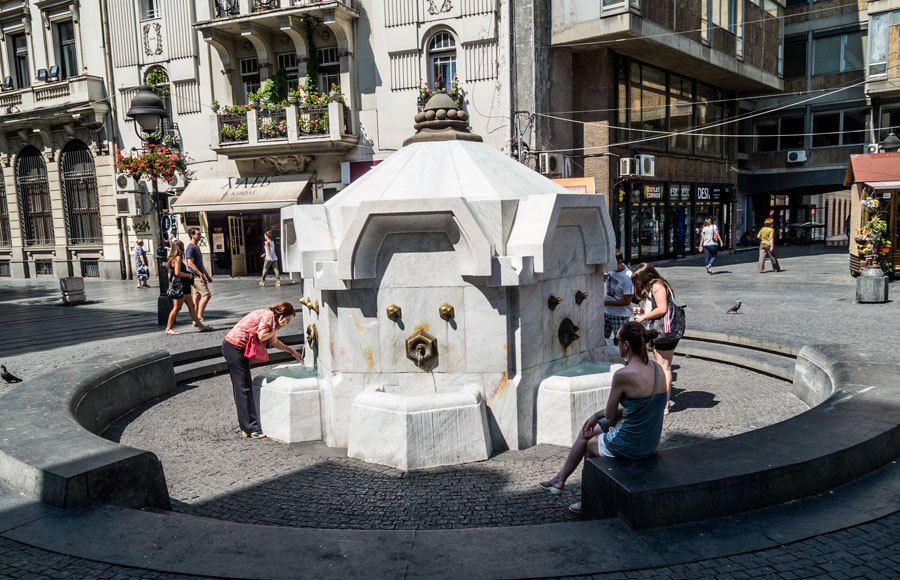
An interesting discovery: people drink the cold tap water here just as it comes — no filters, no bottles; you fill your bottle at a city drinking fountain and walk on. And this is not local carelessness: in February 2026 the Belgrade water utility separately confirmed that water from the city network throughout Belgrade is suitable for drinking and cooking — it is tested in more than seven thousand samples a year. One thing to be precise about: that assurance covers Belgrade’s city network, not “the whole of Serbia” — nobody vouches for water from a random spring or well in the countryside, which has its own checks and its own bans. In the city, drink with confidence, but only from a clearly marked drinking fountain:
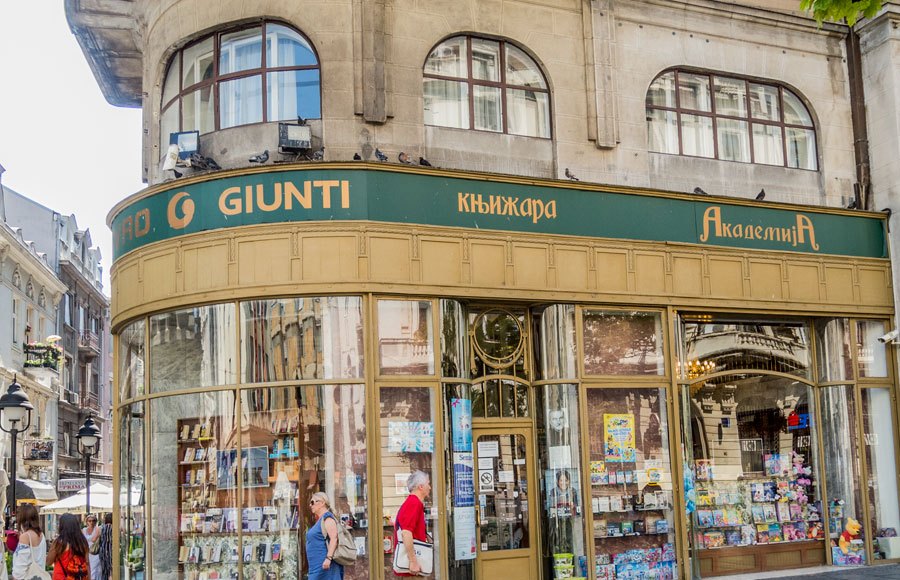
A bookshop:
Every building is famous for something — there are memorials and busts of notable figures everywhere:
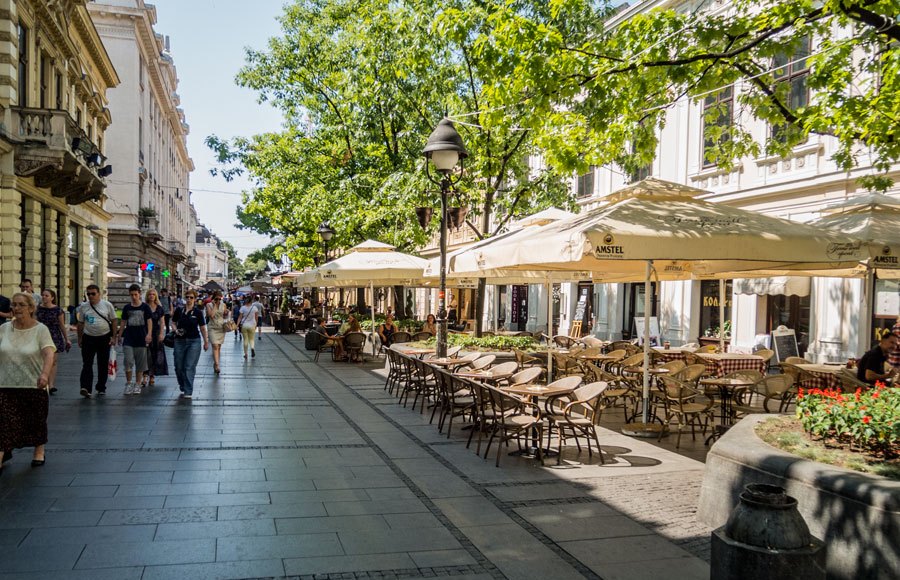
A café that sits empty in the daytime will be packed to the rafters by evening:
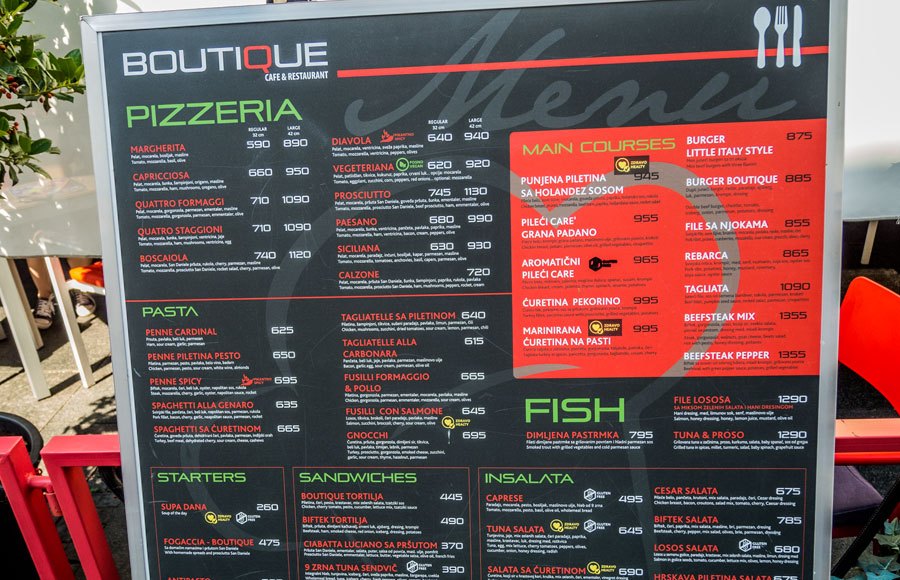
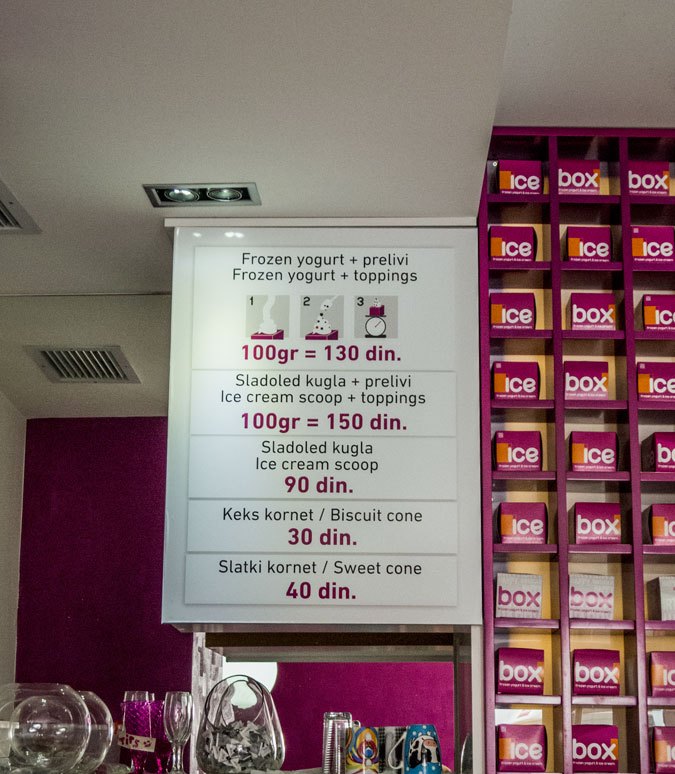
The prices in this window date from December 2015 — treat this shot as a historical record, not a current price list:
How I fancied a frozen yogurt — but by the time we saw this sign I had already bought a scoop of ordinary chocolate ice cream. And all it would have taken was walking another hundred metres or so:
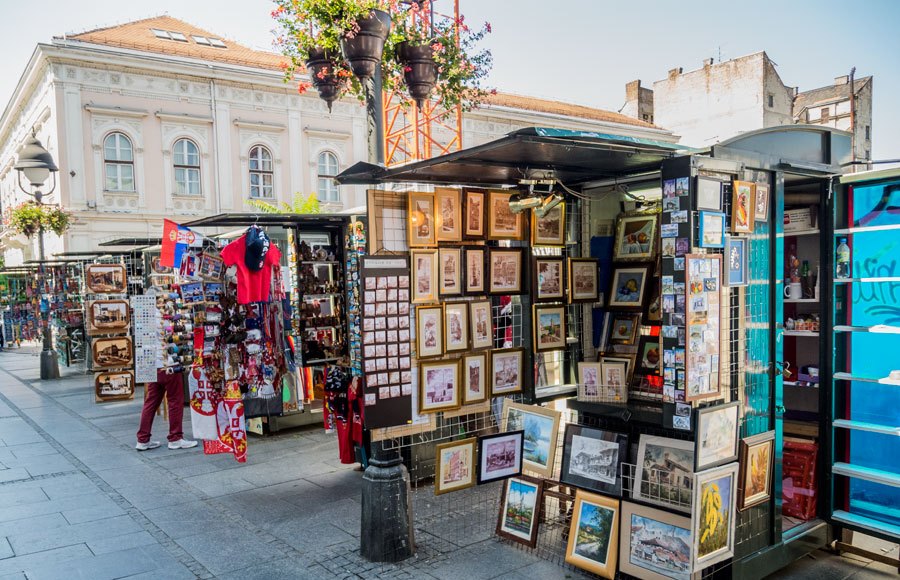
Pictures, souvenirs and the other bits and pieces sold on a pedestrian tourist street in any city in the world:
And here we are at the end of the street: ahead lies the green of Kalemegdan Park, with the Belgrade Fortress inside it. Walking around the park and the fortress grounds is free — there are no ticket offices at the entrance. You pay only for individual sights inside, and the sums are modest: the Roman Well is 170 dinars, the Nebojša Tower 270, the casemates 400 and the Military Museum 350 dinars. The souvenir shop and gallery in the Sahat-kapija clock tower are free to enter. One important detail that is mentioned almost nowhere: since June 2026 the Upper Town of the fortress has been locked at night — the gates are closed from 00:30 to 04:30. Kalemegdan Park and the Lower Town remain open at those hours, but you can no longer climb up to the Victor monument at night:
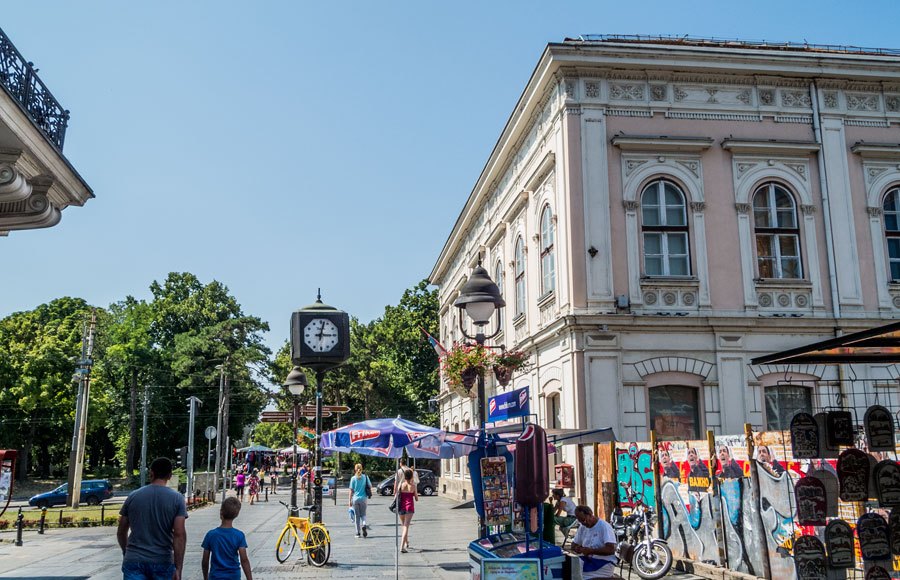
Jumping ahead, I can say that this street really did turn out to be one of the most pleasant places in the city for a walk. So if you ever find yourself in Belgrade, be sure to drop by here too, to get the full impression of the city.
And a few practical details that make this walk much easier. At the southern end of the street, right on Republic Square, stands the National Museum of Serbia: open Tuesday to Sunday (on Thursdays and Saturdays 12:00–20:00, on other days 10:00–18:00, closed on Mondays), the permanent exhibition costs 300 dinars, and every Sunday from 10:00 to 18:00 entry to it is free — in my view the best way to shelter from rain or heat in the middle of the walk. And it is not the only free option: the gallery of the Serbian Academy of Sciences and Arts at No. 35 lets visitors in without a ticket at all times (except Mondays; open 10:00–21:00, on Thursdays until 16:00), while the Zepter Museum at No. 42 is free for everyone on Sundays. So Sunday is the best-value day here and Monday the quietest: the National Museum, Zepter and the Academy gallery are all closed on Mondays, and that day is better spent simply walking the street and Kalemegdan. At No. 56, in the same building as the city library, there is a tourist information centre.
If you want not just to walk but to understand what is around you, local guides run walking tours of Knez Mihailova and Kalemegdan.