Welcome to a virtual tour of the Nikola Tesla Museum in Belgrade! Would you like to learn more about the enigmatic genius of nineteenth-century science? And to watch experiments with electric and magnetic fields performed right before your eyes? Then you will certainly enjoy the Tesla museum, set in an old mansion.
In short, the essentials: the museum occupies a mansion at 51 Krunska Street (the Vračar district, a few minutes’ walk from Slavija Square) and is open daily — Monday 10:00–18:00, Tuesday to Sunday 10:00–20:00. A ticket with a guided tour in English costs 800 dinars, in Serbian 400, and payment is accepted in cash dinars only. We checked the prices and hours against the museum’s official website on 8 October 2026.
Children will be thrilled by this cultural programme, and adults will not be bored — that I can promise you. And yes, this is the only museum in the world that holds Tesla’s authentic personal legacy: his letters, manuscripts, photographs and belongings. The legacy itself, mind you — the world has plenty of exhibitions “about Tesla”, but the originals are kept here.
Is it worth visiting? Our short review
I’ll answer straight away so you don’t have to scroll to the end. Yes, it is worth going — for the working models built from Tesla’s drawings, for the Tesla coil experiment performed right in front of you, and for his personal belongings. But be honest with yourself about what to expect: this is a small museum in an old mansion, not a huge science centre, and visits run in scheduled sessions.
What else is worth knowing before you leave your hotel (all checked against the museum’s official website on 8 October 2026):
- Ticket — 800 dinars with a tour in English and 400 dinars with a tour in Serbian. The tour is included in the ticket; there is no separate charge for it.
- Cash only, and dinars only. The museum accepts neither cards nor euros.
- Hours: Monday 10:00–18:00, Tuesday–Sunday 10:00–20:00. The museum no longer has a closing day.
- Sessions begin on the hour and last about 45 minutes. Individual visitors do not need to book, but it is best to arrive about 15 minutes early.
- Tour language — Serbian or English.
- Getting there: easiest on foot from Slavija Square — and since 1 January 2025 all of Belgrade’s city transport has been free.
- And a rarity that almost nowhere gets mentioned: the urn with Tesla’s ashes stands right here, in the permanent exhibition.
1. A brief historical background
Nikola Tesla was born on 10 July 1856 in the village of Smiljan — then the Military Frontier of the Austrian Empire, now part of Croatia. The date comes with the confusion usual for that region: 10 July is by the Gregorian calendar, while the baptismal record says 28 June by the Julian one — and both dates are correct. His father, Milutin, was an Orthodox priest, so the household was a churchly and bookish one. Where exactly family tradition was steering the boy I will not speculate, but it turned out that the modern history of science very nearly lost such a genius.
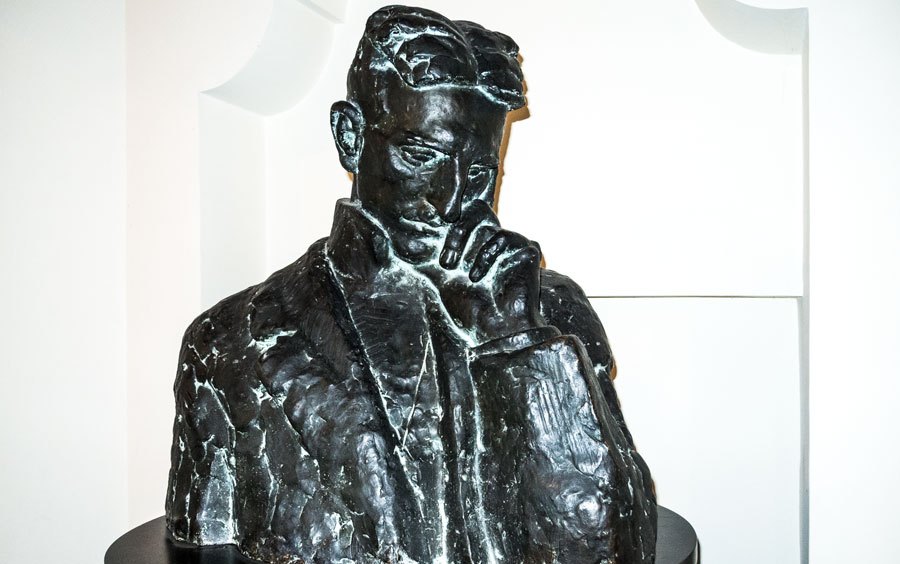
A bust of the scientist:
Instead, he enrolled at the Higher Technical School in Graz to study electrical engineering. While still a student, he came up with brilliant ideas about the imperfections of the Gramme machine.
Next came work as an electrical engineer in Budapest — and it was there, in February 1882, that Tesla conceived the rotating magnetic field, the very idea on which all his fame rests. He built his first induction motor in Strasbourg in 1883. He arrived in New York only on 6 June 1884 and worked for Thomas Edison until 1885. So the common line that “his real science began in America” is simply not true: he had conceived the essentials in Europe, long before Edison.
One of the museum’s exhibits:
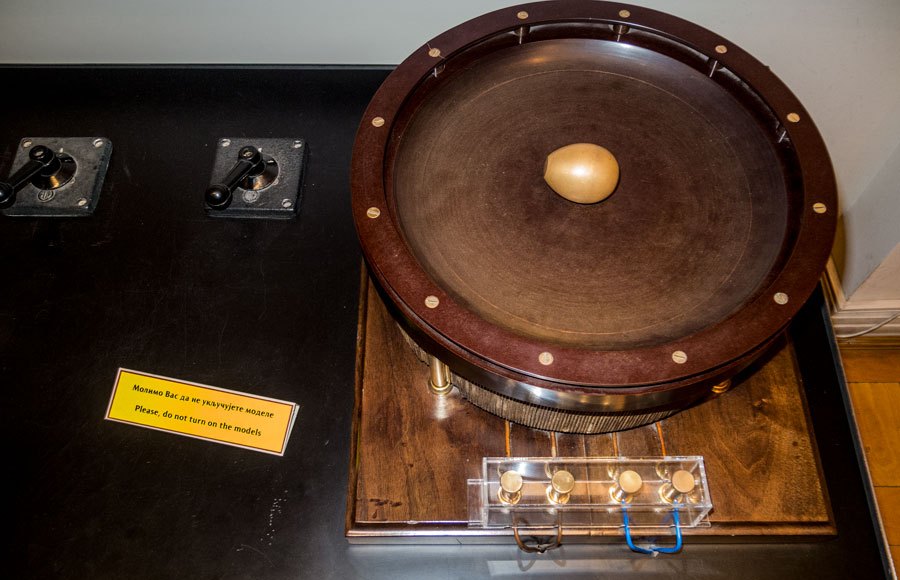
Nikola Tesla’s inventions greatly helped the development of modern technology and overturned the electrical-engineering views of the time. Mystical discoveries and incredible achievements are attributed to him. Legends circulate about Nikola Tesla well beyond the world of scientists!
In the museum you will learn about the scientist’s life, work and discoveries:
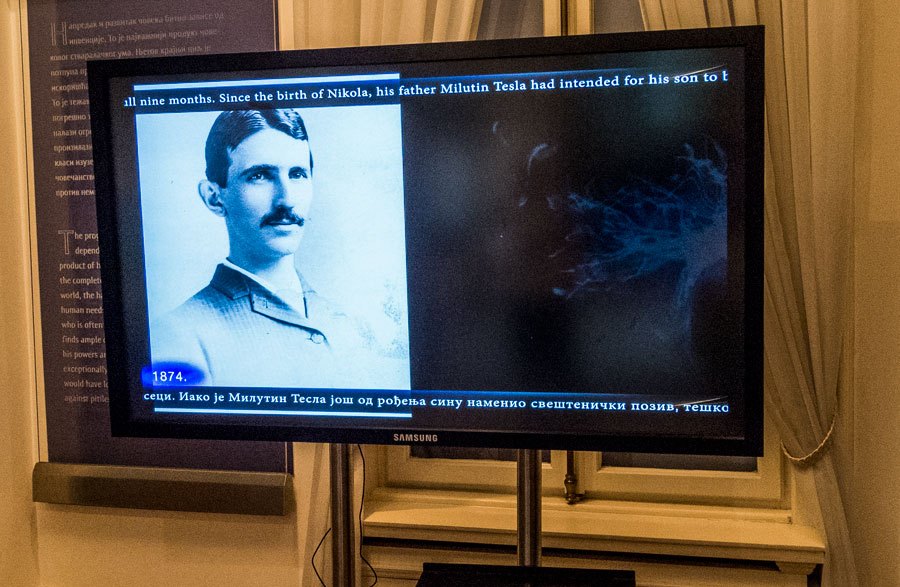
One error lives on in guidebooks: that the museum “opened in 1952”. In fact it was only founded on 5 December 1952, and its doors opened to visitors on 20 October 1955. And straight away, about size, to keep expectations in check: the exhibition is small. The museum occupies an old mansion, and Serbia’s Ministry of Culture itself, when announcing the future move, called the current premises cramped. The density of interesting things per square metre, though, is high:
- working models of devices — they were built from Tesla’s drawings; these are not the historical apparatuses themselves;
- drawings of his inventions;
- sketches of machines and mechanisms in Tesla’s own hand;
- personal belongings and instruments from his laboratories;
- photographs, letters, manuscripts, notebooks;
- the urn with the scientist’s ashes — it has stood in the permanent exhibition since 1957.
I have heard the pretty story about a bequest in Belgrade’s favour many times. The museum’s official history tells it differently. After Tesla’s death, an American court transferred his property to his nephew — Sava Kosanović. It was on Kosanović’s own initiative that the belongings, papers and instruments were sent to Belgrade and donated to the state: a cargo of sixty packages arrived at the port of Rijeka in September 1951. Neither a bequest to the city nor the year 1949 is confirmed by the museum’s primary source.
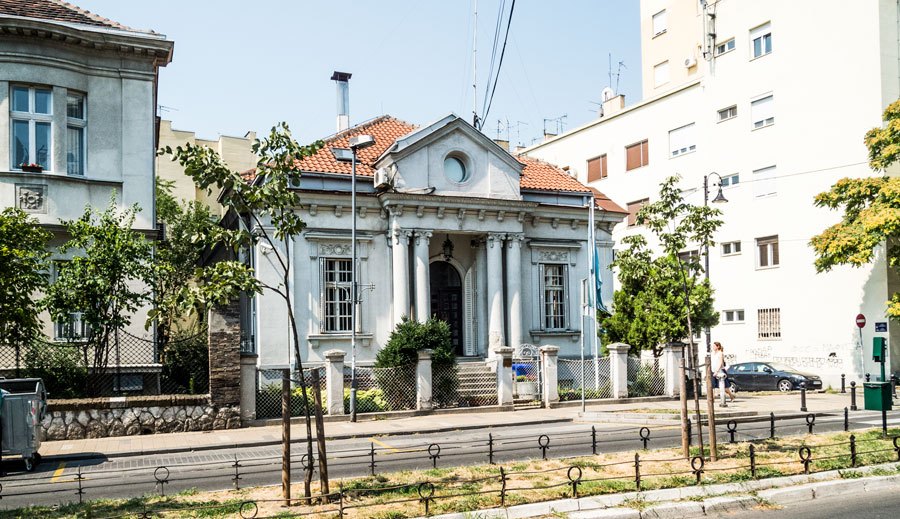
Krunska and the neighbouring streets of Vračar are full of old mansions like this:
And here is what is worth knowing about the archive. There is a widespread legend that most of Tesla’s records have been lost. That is not so: the museum holds 163,911 archival units — manuscripts, calculations, diagrams, drawings, letters. In 2003 UNESCO added this collection to its Memory of the World register. The archive has been digitised and microfilmed, and the museum genuinely helps researchers, but free access to the entire legacy cannot be promised: some materials carry restrictions, and the terms of working with them must be arranged with the museum separately.
One more important thing for the future: a new home is being prepared for the museum. The current site remains at 51 Krunska Street, while the new museum is to get the building of the former Milan Vapa paper factory — almost twenty times more spacious than the present mansion. The Ministry of Culture named June 2027 as the completion date for the project, the works and the fitting-out, and the authorities promise to open the new museum in time for EXPO 2027. In late June 2026, according to the Serbian business press, location conditions were issued for the building’s reconstruction. No closing date for the old address has appeared anywhere: as of 8 October 2026 the official website still invites visitors to Krunska and posts sessions for the coming day — so for now, that is where you go. And, if I’m honest, I am reluctant to say goodbye to the old mansion.
2. Practical information
How do you find the museum? How do you get there from the centre? Let me explain.
2.1. Where it is
Address: 51 Krunska Street. The historic Vračar district, very close to Slavija Square and the Church of Saint Sava. The museum itself names Trg Slavija and Pravni fakultet as the nearest points — a few minutes’ walk from either.
If you are driving, note that the museum is in the second parking zone, which means you can leave a car on the street for a maximum of 120 minutes. The museum names Slavija and Viška as the nearest garages — for half a day in the area it is calmer to park there.
Location on the map:
2.2. How to get there
The museum is not far from the city’s longest boulevard — Bulevar kralja Aleksandra. Trams run along it from almost every part of the city.
You will easily recognise the museum from this photo:
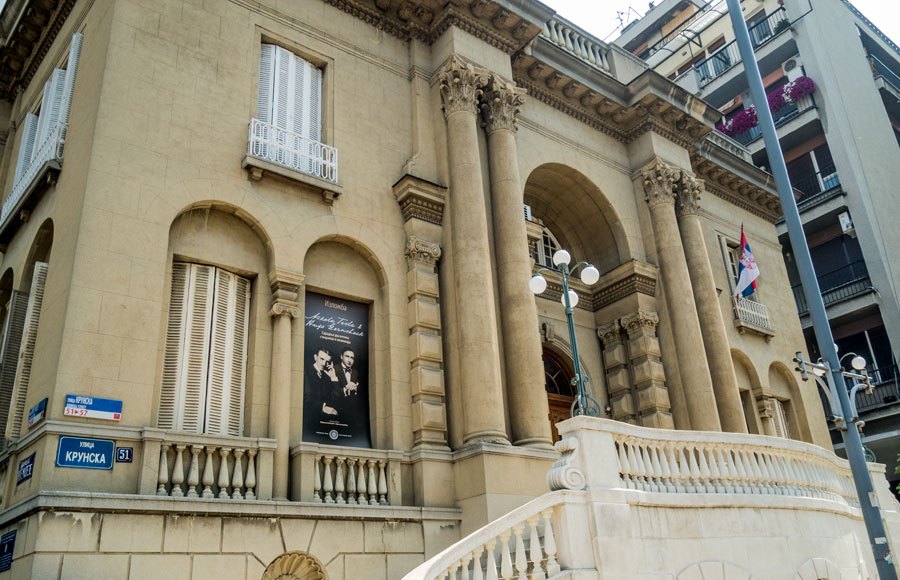
Options along the Boulevard:
- trams 10 and 14 — run to the Pravni fakultet stop in both directions; the most reliable option;
- tram 6 — also works, but at Pravni fakultet it stops in one direction only;
- instead of the familiar 2 and 7, temporary 2L, 2L1 and 7L services are running because of roadworks: they pass Pravni fakultet, but you may not see the plain numbers “2” and “7” on the displays;
- cross tram 5 off the old lists — the line operates, but its current route has no Pravni fakultet stop;
- buses 26, 27 and 33 — all three run and stop at Pravni fakultet.
And now the nicest part for anyone who remembers Belgrade’s ticket kiosks: since 1 January 2025 all city transport in Belgrade has been free. You need neither a ticket nor a travel card — just get on and ride; this applies to all passengers and all scheduled routes of the city system.
Just don’t memorise the route numbers by heart. Because of the works on the Old Sava Bridge, Belgrade’s tram designations are being shuffled these days, and the letter L appears and disappears. Before setting out, look at the current-changes section on bgprevoz.rs — or simply walk from Slavija; it really isn’t far.
Near the stop is the yellow building of the Faculty of Law (Pravni fakultet). Beogradska Street crosses the Boulevard and runs towards Slavija Square. The first major crossroads is the junction with Krunska Street. Simply turn left — it is literally two or three minutes to the museum.
From Slavija I advise simply walking up: it is not even a whole stop, just half a stop. Technically you can ride one stretch to Pravni fakultet, but by the time the tram arrives you will already have walked it. As you climb Beogradska Street, the turn onto Krunska will be on your right.
View of the museum from Krunska Street:
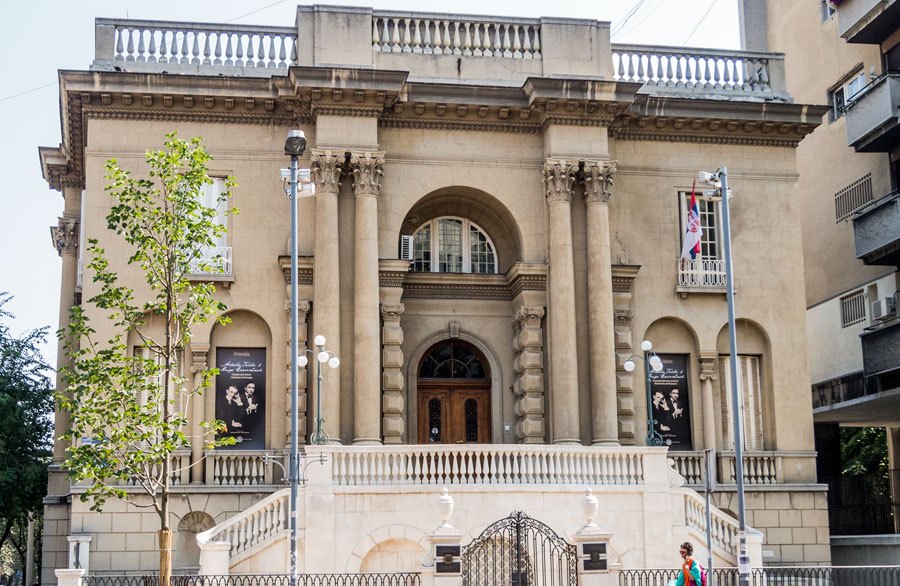
2.3. Visiting hours
Good news here: the museum no longer has a closing day.
- Monday — 10:00–18:00;
- Tuesday–Sunday — 10:00–20:00.
The museum publishes no split into summer and winter schedules — the regime is the same all year round, and no changes from 1 November have been announced on the website (checked on 8 October 2026). One-off changes do happen, though: in August 2026 the museum separately warned that on one particular Monday it would close at 17:00, and for Thursday 8 October it announced a shortened day, until 18:00. So before your visit, look at the News section of the museum’s website. That is also where the pleasant surprises appear: on 10 July 2026, Tesla’s birthday, entry was free and tours ran every half hour; Monday 5 October was free too, for European Heritage Days. I cannot promise such a perk on a permanent basis, but it is certainly worth checking the day before your visit.
And the key point about timing: tours begin on the hour. That matters more than the closing time — arriving at 19:50 is pointless. In the schedule for 10 September 2026 the last session was listed at 19:00 with closing at 20:00, and on 8 October, when the museum was open until 18:00, it was at 17:00. The museum posts the schedule day by day, and it shows the language of each session and whether it is full: on 8 October six of the eight sessions were in English, and the morning Serbian one was marked “full”.
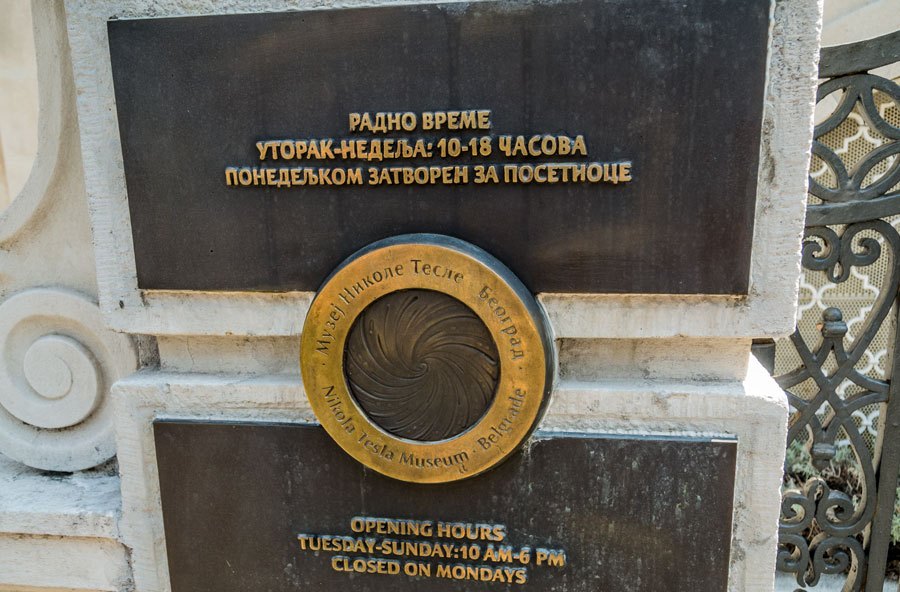
The tour itself lasts about 45 minutes, not a full hour. And one more thing to be honest about: nowhere does the museum promise that you can wander the halls for as long as you like after the session — plan on 60–90 minutes for the whole visit, including the labels and the souvenir shop. It is best to arrive about 15 minutes before the hour.
Individual visitors do not need to book at all — just come by the start of the hour, about fifteen minutes early. Booking is required only for groups of more than 10 people: send the request at least a day in advance, and not to the general address but to the visits department at [email protected].
2.4. Ticket prices
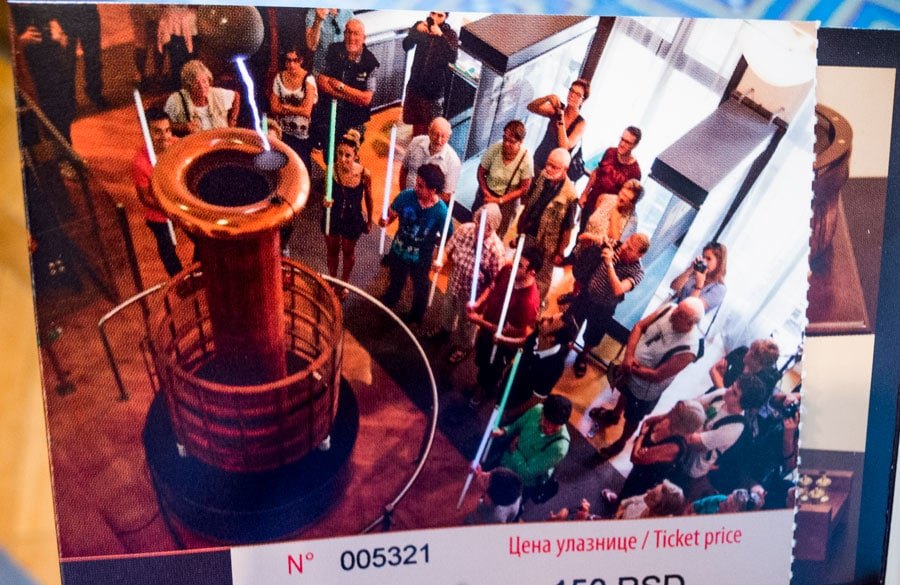
Our ticket back in 2018 cost 150 dinars for everyone alike — it is in the photo below, and I am keeping it as a monument to the era. The current price list is as follows:
- individual ticket with a tour in English — 800 dinars;
- individual ticket with a tour in Serbian — 400 dinars;
- a group of more than 10 people — 500 dinars per person in English and 250 dinars in Serbian, but the group needs a booking;
- visitors with disabilities and their companions — free.
The tour is included in the ticket price; there is no separate charge. And now the thing literally everyone gets caught out by: the museum accepts only cash and only Serbian dinars. Cards are not accepted at all, and neither are euros. There are ATMs and exchange offices at Slavija — change money on the way; it takes five minutes, and without it you simply will not be let into a session.
I found no discounts for children, students or pensioners on the museum’s official pages, so I will not promise any: count on the full rate. The museum does have separate tours for children, but only in Serbian: on Mondays at 10:00 a free half-hour tour for ages 4–7, and at 18:00 a tour for ages 7–10 at 400 dinars (one or two children with a parent); registration at [email protected].
This is what the ticket looks like:
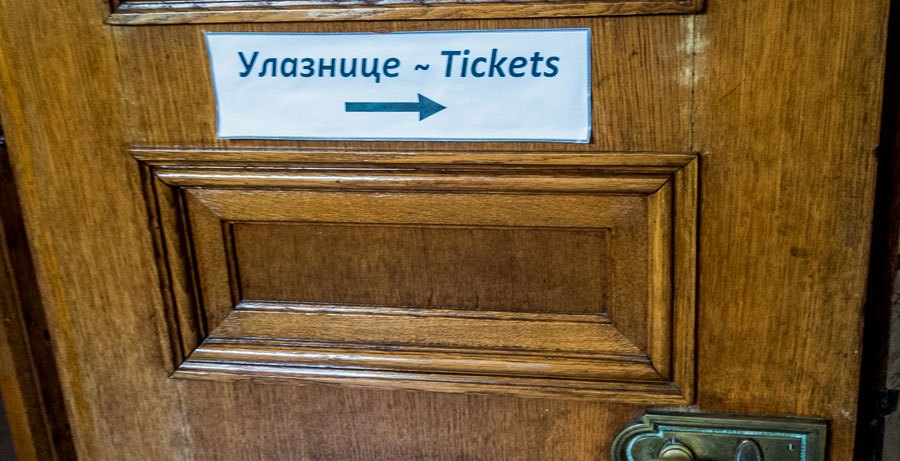
Tickets can be bought right inside:
2.5. Rules worth knowing in advance
The mansion is small, and the rules match. Nothing frightening, but it is better to read this at home than on the doorstep:
- there is no proper cloakroom — you will be asked to leave a rucksack and large items wherever a member of staff indicates, and the museum asks visitors not to bring suitcases or folding bicycles at all;
- photography is allowed only in designated zones, without flash or a tripod; continuous video recording may last no longer than ten seconds and is for personal use only;
- children under 12 are admitted only with an adult;
- no animals are allowed;
- if you have a pacemaker, be sure to tell the guide and follow their instructions — the experiments involve high voltage.
On accessibility the museum writes the following: for blind visitors there are Braille materials and audio support; for the hard of hearing there are printed materials, QR codes and a film with subtitles in eleven languages; and visitors with limited mobility are assisted by two members of staff. Note the wording: this is specifically about help from people. The official page says nothing about a ramp, a lift or an accessible toilet, and I will not invent it — if the question is critical for you, write to the museum in advance. The list of the eleven subtitle languages is not published anywhere either.
2.6. Official website
The session schedule for a particular day, prices and news of one-off changes to opening hours are available only on the museum’s official website: tesla-museum.org. The old address, nikolateslamuseum.org, is also still live but now simply redirects there.
3. A photo tour of the museum
What can you see in the museum? The photos below were taken during our 2018 visit, and from 29 June to 3 July 2026 the museum closed to update its permanent exhibition, so some display cases may look different now. The exhibition is divided into several sections: some exhibits are Tesla’s personal belongings, some are his inventions. You can also see historical documents, vintage newspapers and much more connected with the life and work of Nikola Tesla.
3.1. The scientist’s personal belongings
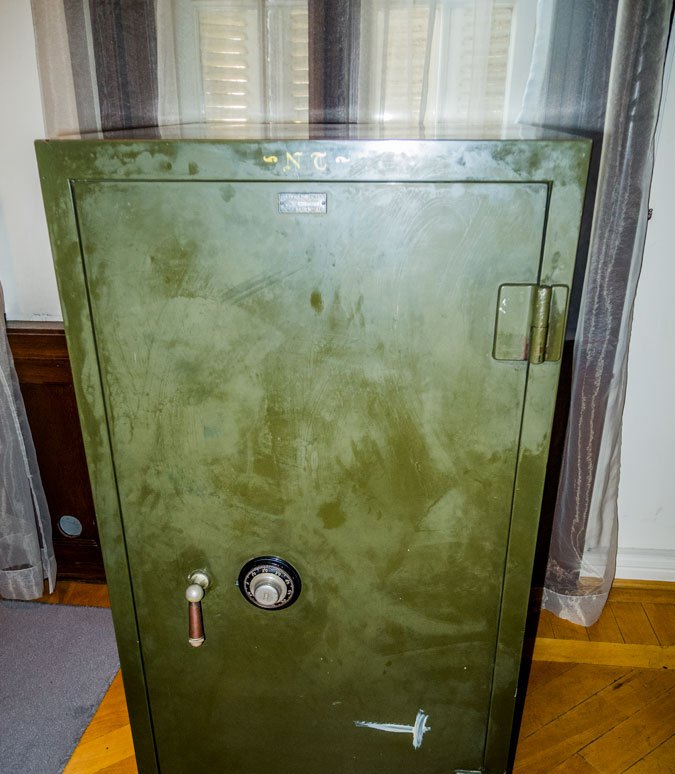
His personal safe:
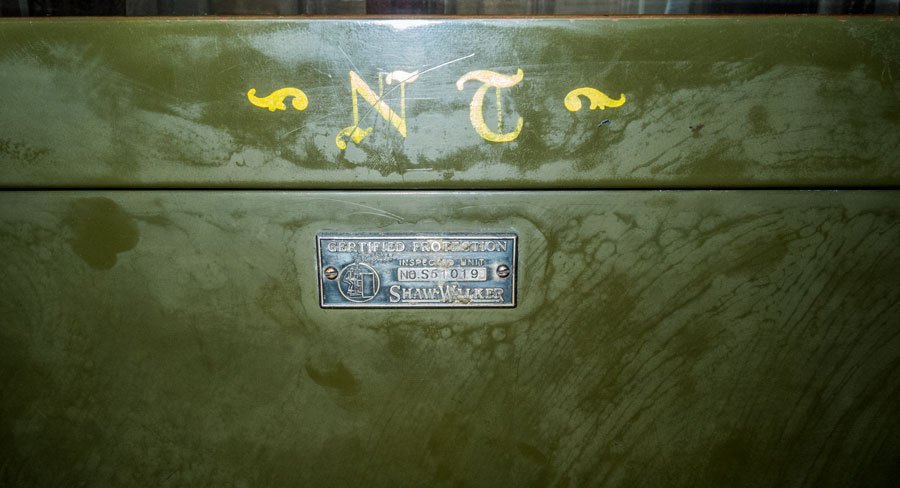
The initials N.T. on the safe:
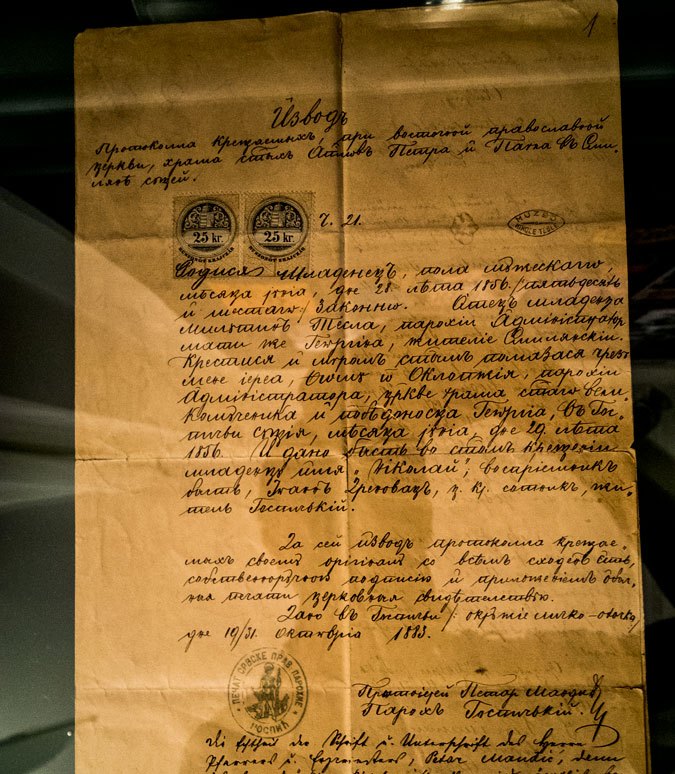
The scientist’s letters:
Instruments and calculating apparatus that belonged to the scientist:
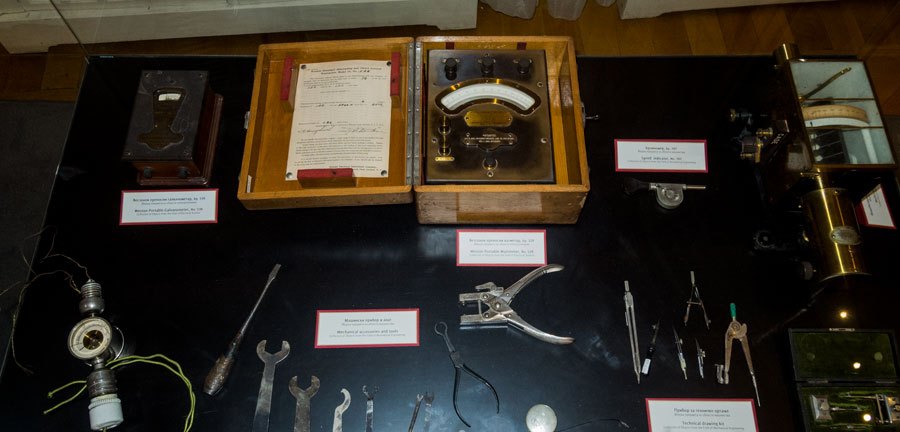
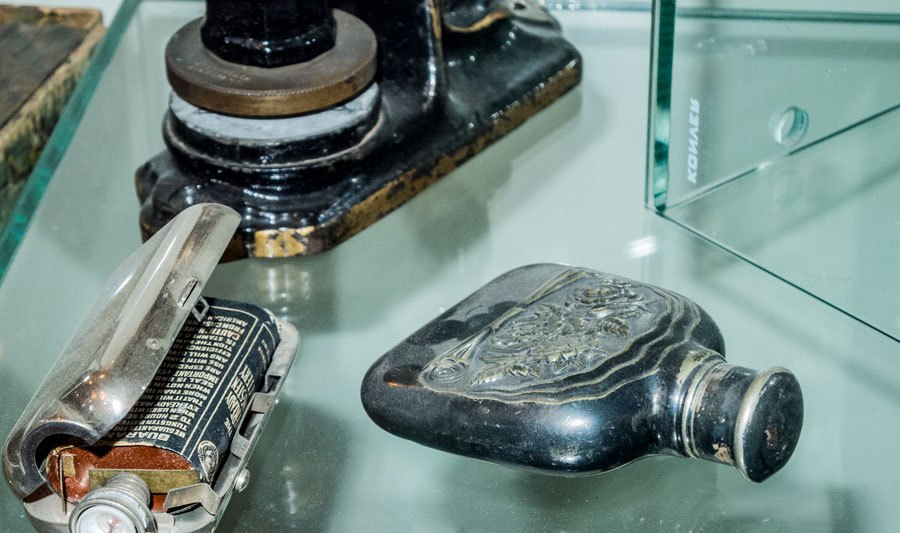
Personal belongings:
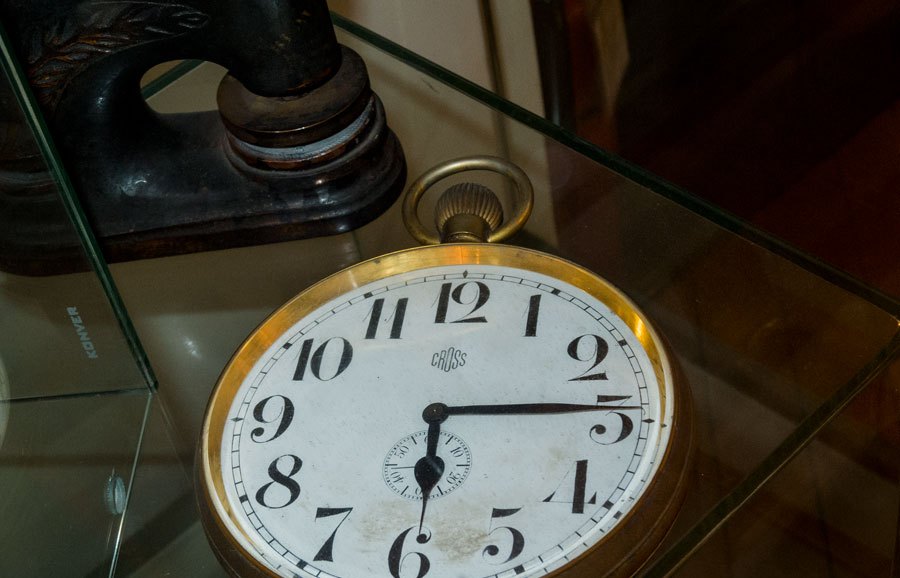
N. Tesla’s pocket watch:
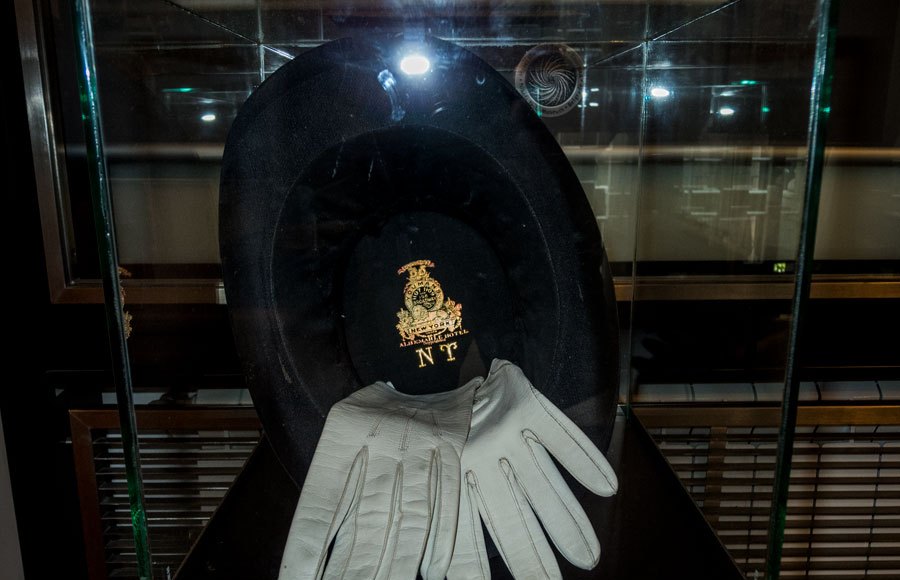
The very hat and gloves — all with their owner’s initials:
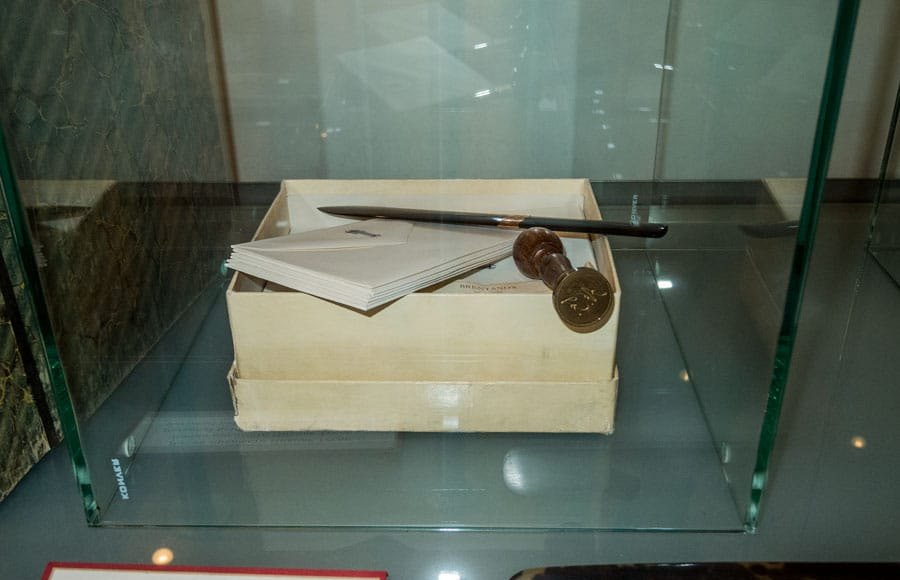
Letters and Tesla’s seal:
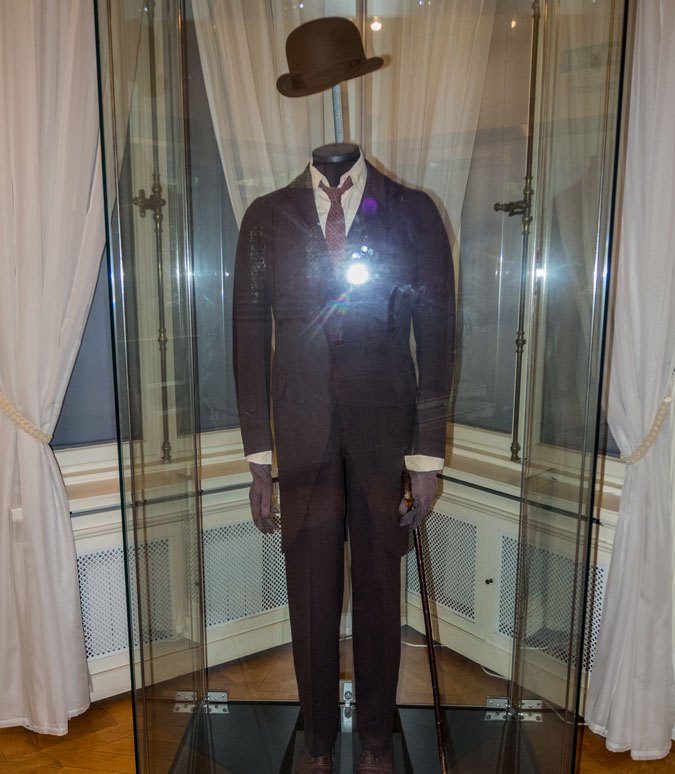
Nikola Tesla’s suit:
3.2. The inventions
Mysterious inventions or practical devices? Practical ones — and that, honestly, is more interesting than any legend. These halls are about the rotating magnetic field, alternating current and radio control — the things our daily life is built on.
One thing is worth knowing. Almost everything standing in the halls that looks like “Tesla’s invention” is a working model built from his drawings. The originals here are of another kind: personal belongings, instruments from his laboratories, papers. And the difference is nicer to understand than not — a model can be switched on in front of you; a museum original cannot.
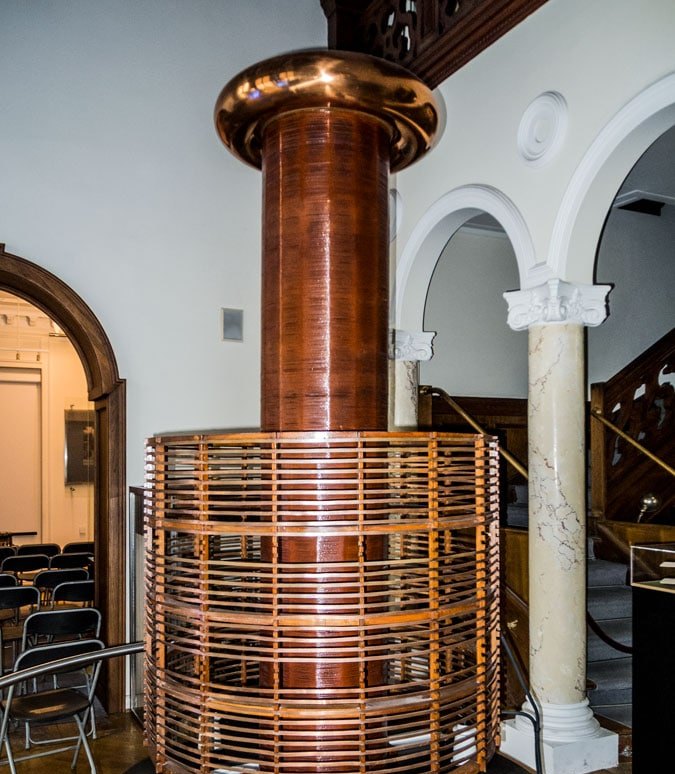
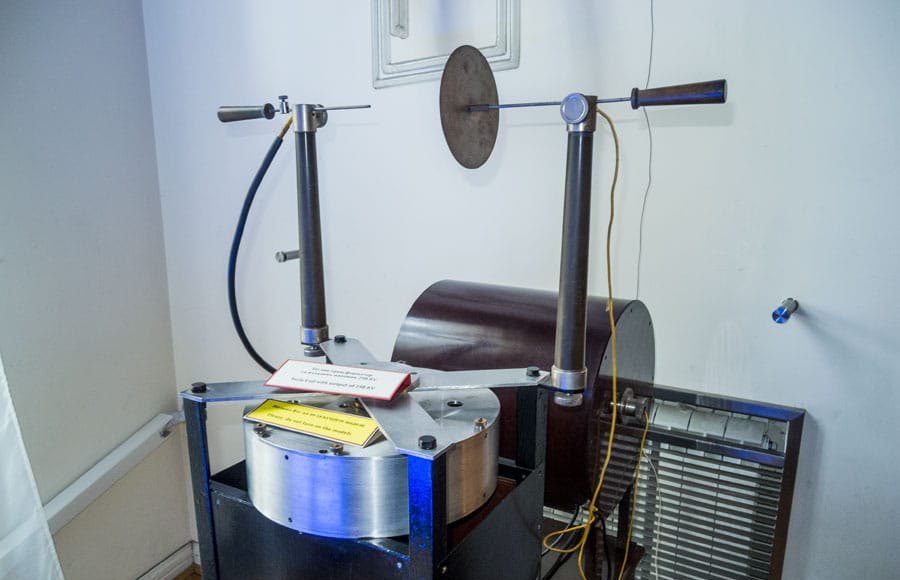
During the tour you can take part in an experiment — all participants are given long lamps and this device is switched on:
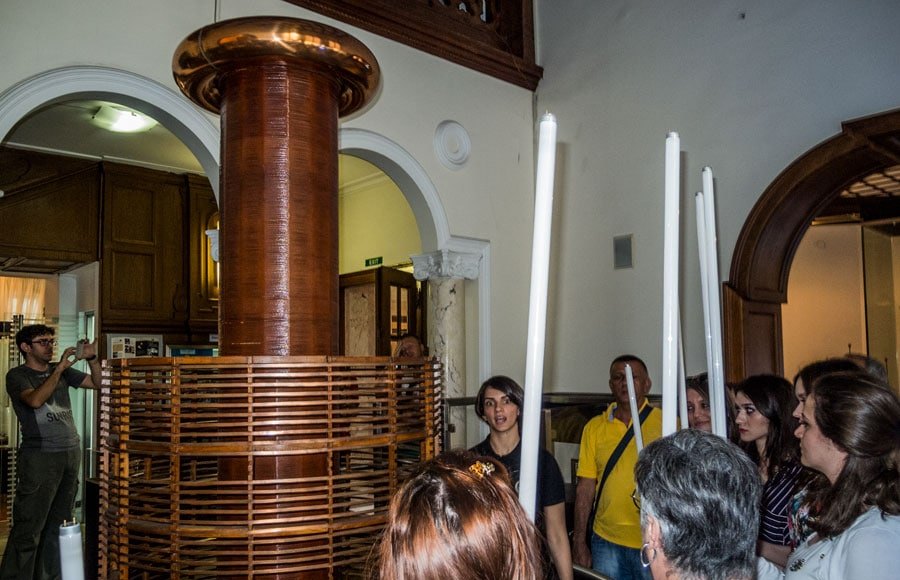
Then the lamps begin to glow (note — all of them without wires!):
You will be told how a magnetic field is created:
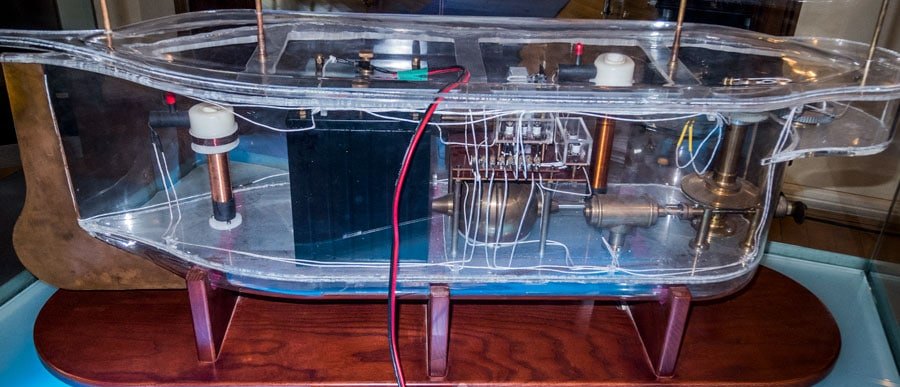
Models of the inventions:
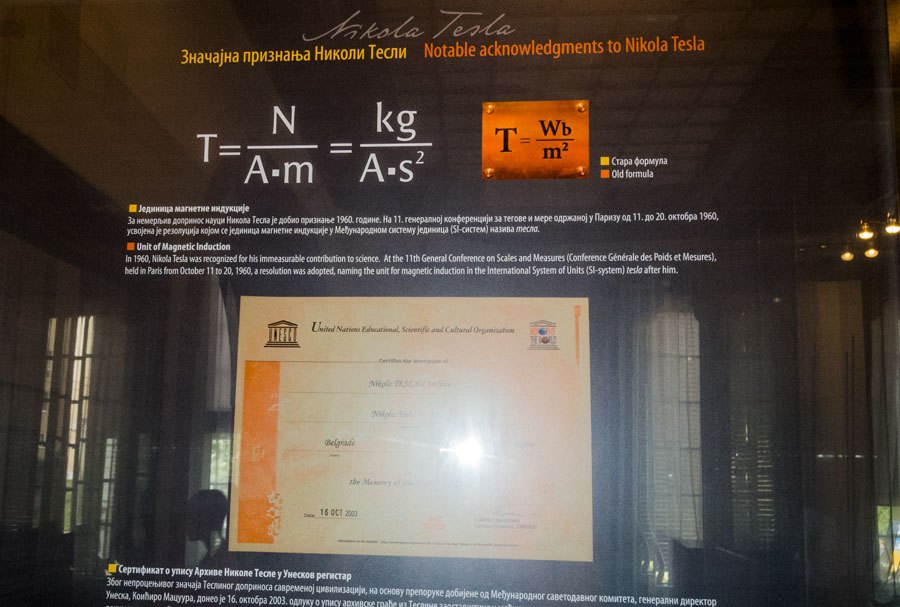
Magnetic induction — magnetic flux density — is measured in teslas.
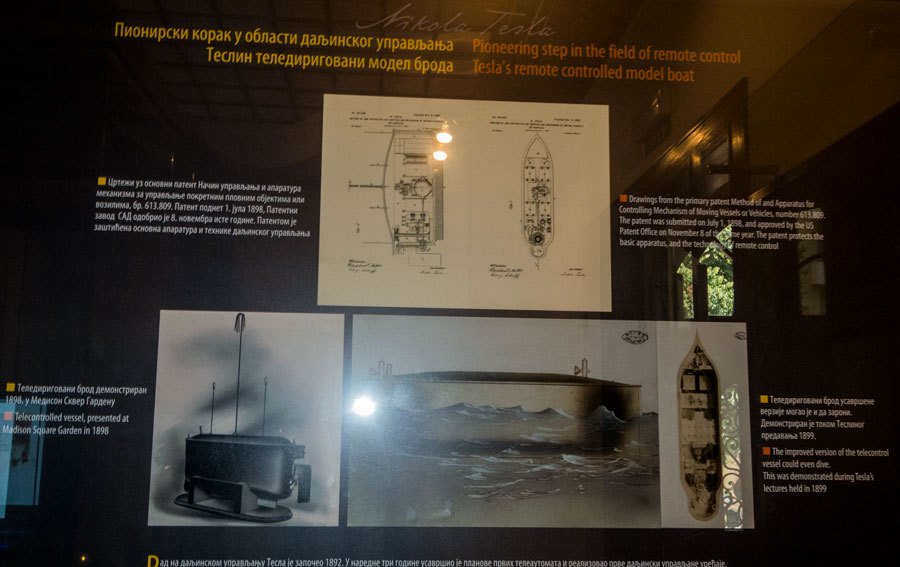
A model of the remote-controlled boat — the very one Tesla demonstrated to the public in 1898. He filed US patent No. 613,809 on 1 July and was granted it on 8 November of the same year:
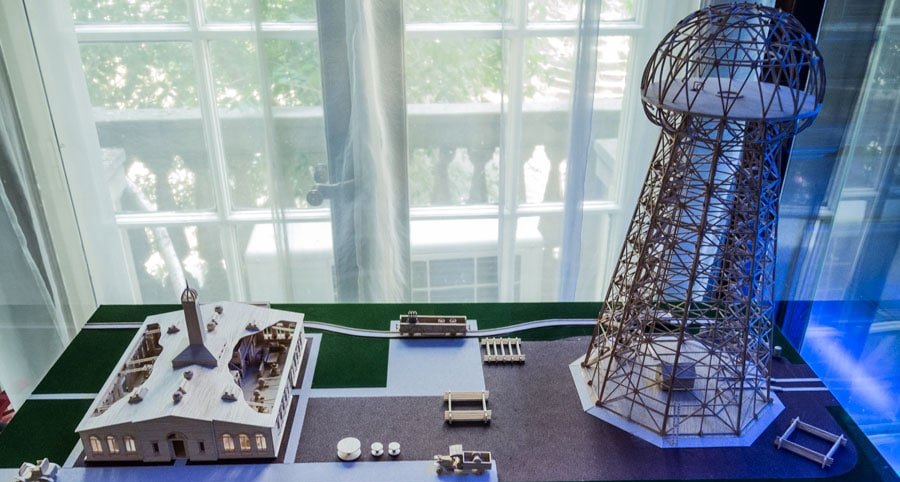
A model of the Colorado Springs laboratory:
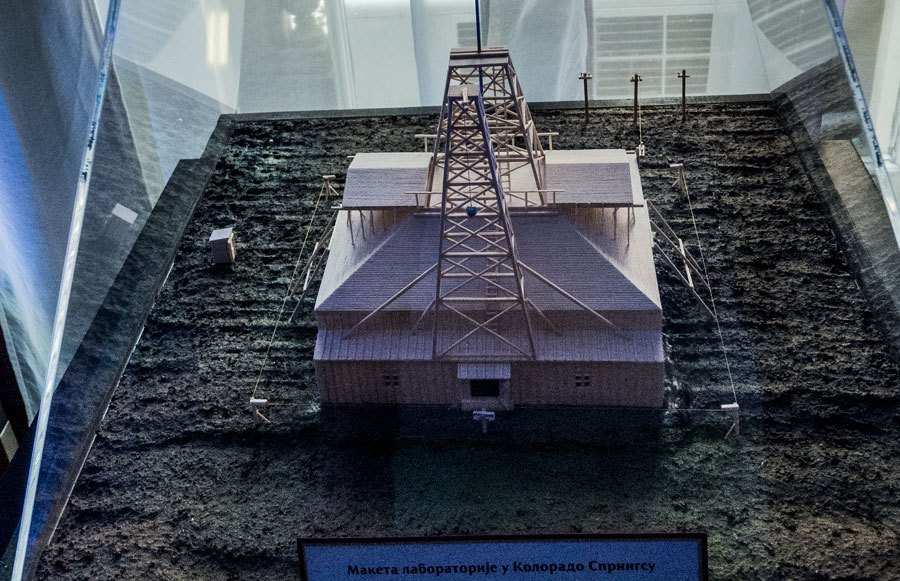
This is what the great scientist’s laboratory looked like:
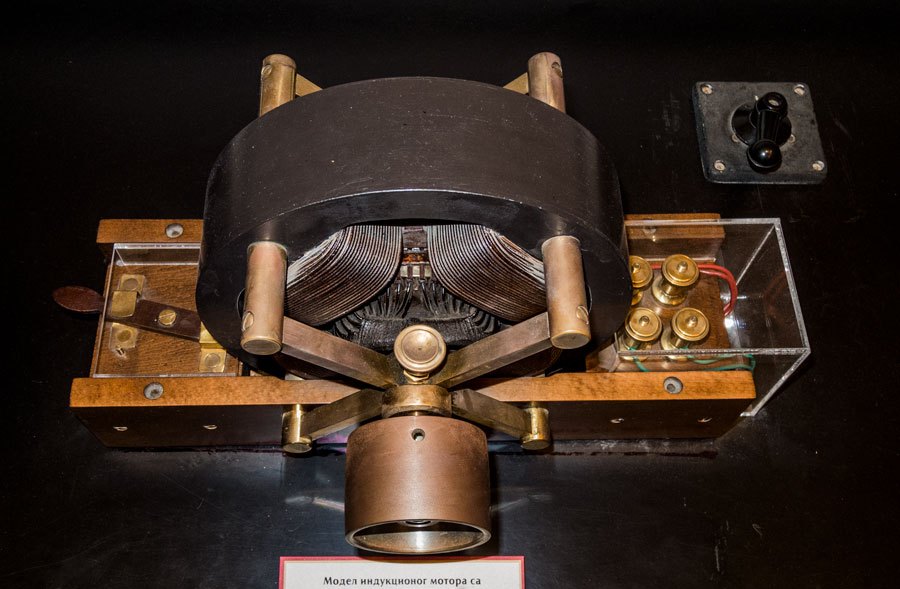
A model of the induction motor:
3.3. Press coverage of Tesla
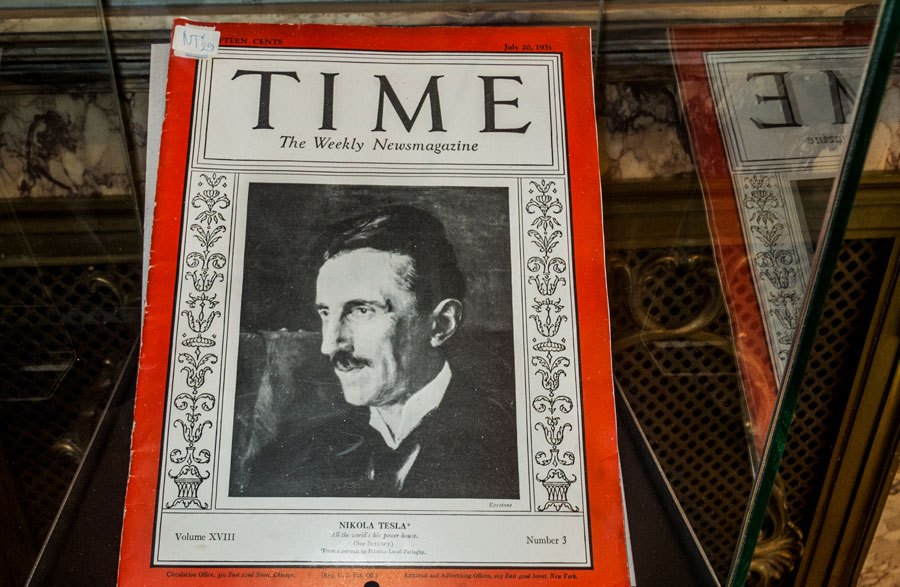
The issue of Time magazine dedicated to Tesla:
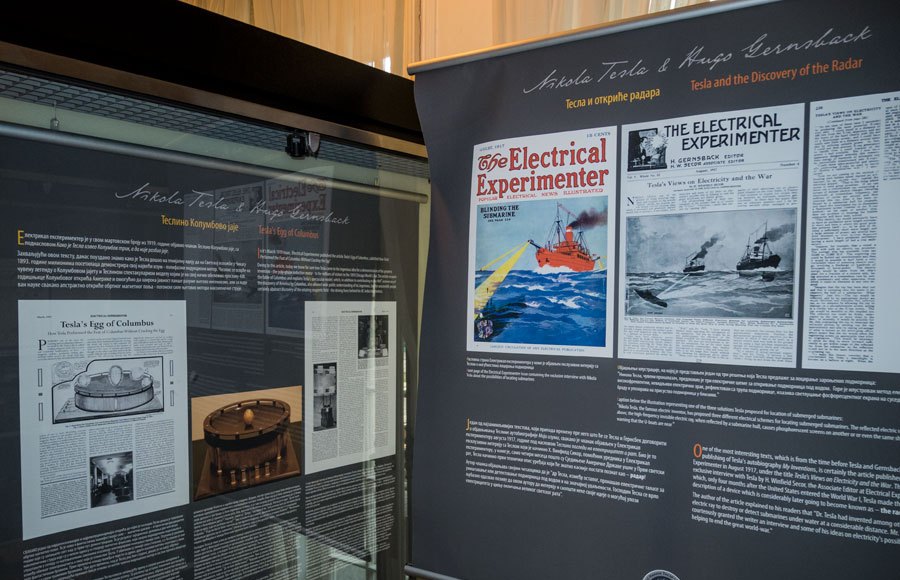
Newspapers from Tesla’s own time:
4. Conclusions
It will be interesting for children and adults alike, because the museum shows experiments and conducts them right before your eyes! Just plan your time on the modest side: the tour lasts about 45 minutes, and allow 60–90 minutes for the whole visit, including the labels and the souvenir shop.
Besides the exhibitions themselves, you can watch and take part in the experiment with the Tesla coil: you are handed long lamps, and they light up without a single wire. This was probably the most interesting part of the visit — and it is done as part of the regular tour, with no extra charge for the show.
One thing has stayed exactly as it was: tours officially run only in Serbian and English. The museum film has subtitles in eleven languages, but their list is published nowhere. And remember the sessions starting on the hour: mistime it and, as once happened to us, you will walk into the middle of someone else’s tour.
In my view, visiting the museum is an absolute must — it is one of Belgrade’s most significant sights, alongside Kalemegdan Fortress and the Church of Saint Sava. But I will be honest, because recent reviews are polar opposites: for some, those forty-five minutes are too few, and the museum itself seems small and packed too tightly with people. It is definitely worth going if you are interested in Tesla himself, the live coil experiment and the scientist’s authentic belongings. But if you are expecting a large interactive science centre to fill half a day — there is none here, and there will not be one until the move to the new building.
Bear in mind that the museum is one of the most popular in the city, which means an influx of schoolchildren during the school holidays. So if you are coming precisely in that period, be prepared for large numbers of people.
Even adults without children will enjoy it here. If not the experiments, then the life story of the great scientist, the chance to see his personal belongings and to stroll through an old Belgrade mansion will certainly be of interest.
Visiting Tesla’s electric museum is an unforgettable experience! It is great that it stands in the centre, in a beautiful old district of the city. I advise combining the visit with a walk around Vračar. There are plenty of nice cafés nearby where you can swap impressions of the museum afterwards.
I recommend including the museum in your Belgrade itinerary even if you are only coming for a few days.
Feel like visiting the museum? Or perhaps you have already been to the Tesla Museum? Share your impressions in the comments!